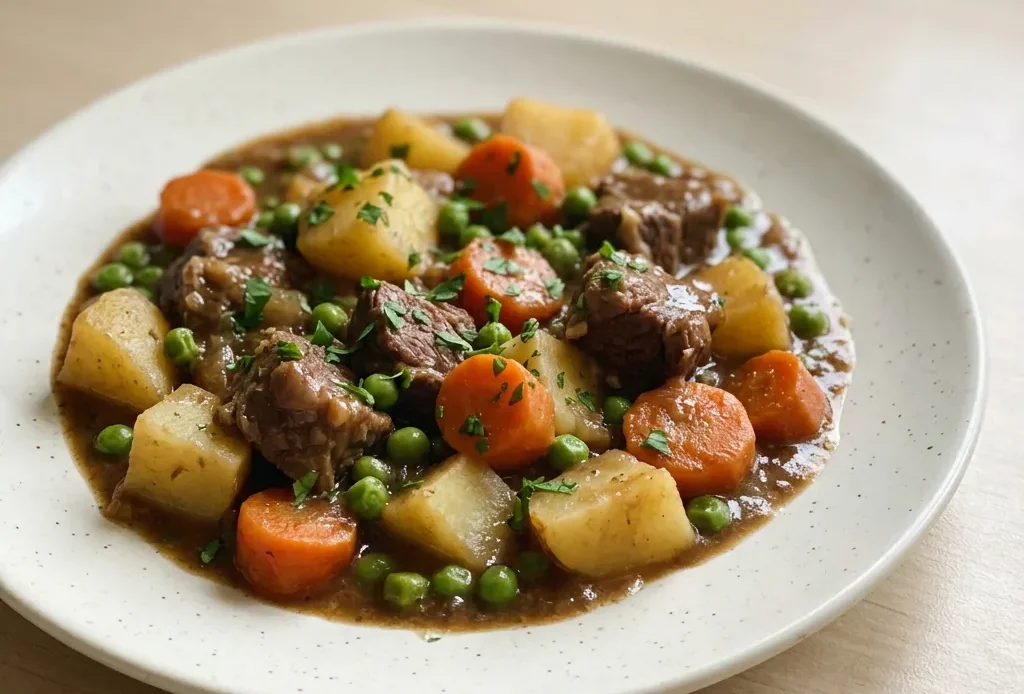
Most slow cooker beef stews end up with meat that’s dry and a broth that’s thin. The fix isn’t more liquid or longer cooking, it’s searing the beef first and thickening at the end. Searing builds a crust that releases flavor and starch into the gravy over hours, and a cornstarch slurry added late gives you control over body without turning the stew into paste.
This crockpot beef stew keeps the beef fork-tender and the gravy rich enough to coat each piece, all with the hands-off convenience you want from a slow cooker.
The Searing Foundation
Searing beef before it goes into the slow cooker does two concrete things. The heat browns the surface through the Maillard reaction, creating a crust that tastes savory and beefy, something boiling can’t do.
That browned coating, helped by the flour, also later releases starches into the stew, thickening the gravy as it cooks. Deglazing the skillet with broth lifts the stuck browned bits, which carry that roasted flavor into the pot. Skip this step and the stew tastes flat, more boiled meat than rich braise.
The flour on the beef does double time: it encourages browning and then, over hours in liquid, helps the sauce turn silky rather than watery.
Umami Boosters
Slow-cooked beef can taste muted. Tomato paste and Worcestershire sauce wake it up.
The paste brings concentrated umami, that deep, almost meaty richness that makes broth taste like it simmered for hours. Worcestershire adds a tangy, savory punch that complements beef without shouting. Together they round out the flavor, filling in the notes that long, gentle heat tends to blur.
You get a stew that tastes fully seasoned, not just salty or beefy. These two ingredients are why the final gravy has complexity, even though the cooking method is hands-off.
Layering for Texture
Not all vegetables survive eight hours in a slow cooker equally. Potatoes and carrots hold their shape, so they go in at the start. Layering them on top of the beef keeps them from sitting directly on the hot bottom, which can turn them to soft mush over the long cook.
Peas are the opposite, they need barely any heat. Adding them frozen at the end lets them warm through while keeping their bright green color and a slight pop when bitten.
The result: each vegetable tastes cooked through but maintains its own character, so the stew isn’t a uniform, soggy mess.
Slurry, Not a Stir-In
Cornstarch thickens quickly, but only if you treat it right. Stirring dry powder directly into hot liquid makes lumps because the starch hydrates unevenly.
Mixing it with cold water first creates a smooth slurry that disperses without clumping. Adding it near the end matters, too: cornstarch breaks down if cooked for hours, losing its thickening power. Stir it in thirty minutes before serving, and the gravy turns glossy and coats the spoon evenly.
No lumps, no thinning, just a stew with body that clings to every piece of beef and vegetable.
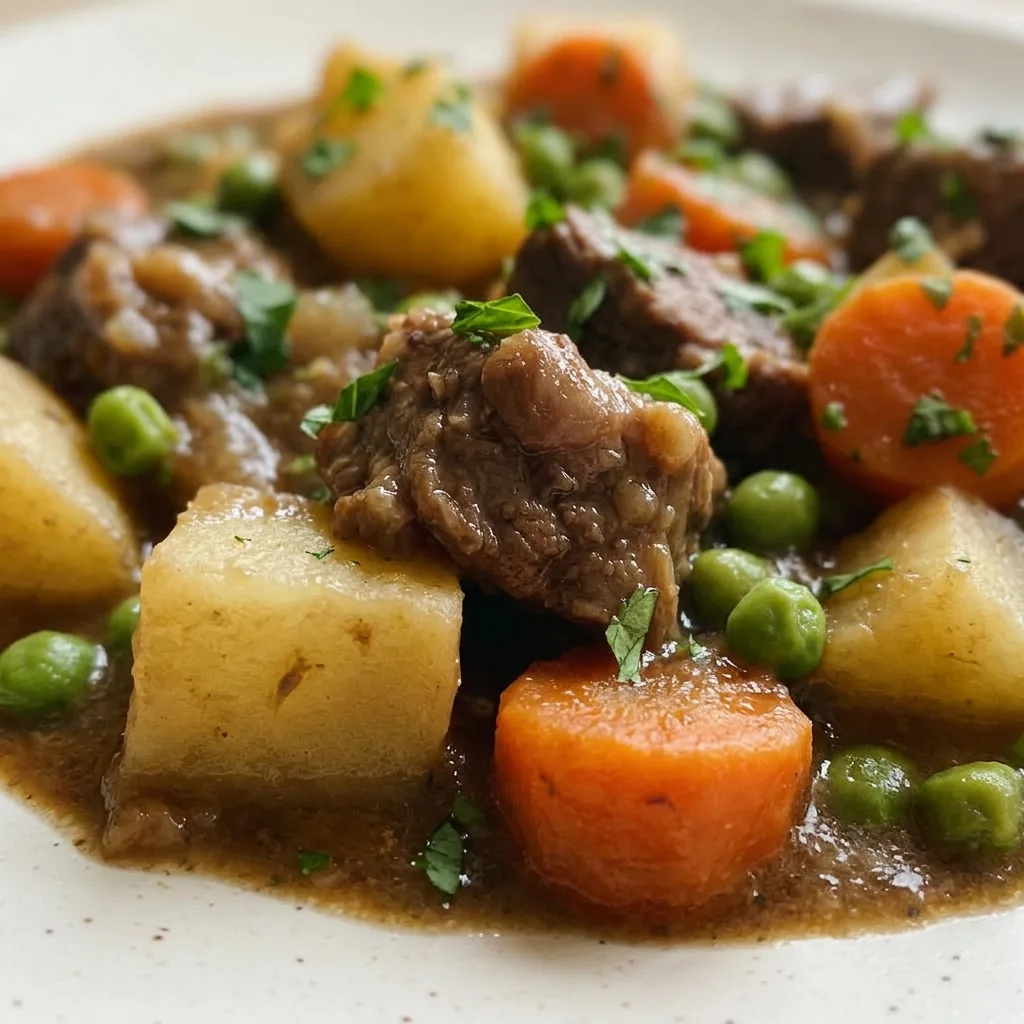
Prep: 20 min · Cook: 8 hr · Total: 8 hr 20 min · Servings: 6 · Calories: 390 kcal
Beef and Veg: What to Look For
Beef Chuck Roast: Cut into 1.5 inch cubes yourself; pre cut stew meat is often uneven and too lean.
Yukon Gold Potatoes: Their waxy texture holds up over long cooking; russets fall apart into starch.
Orange Carrots: Orange carrots are sweeter and more tender than the purple or yellow varieties.
Tomato Paste: Buy double concentrated tube paste; it has deeper flavor than the standard can.
Frozen Green Peas: Frozen peas are already blanched; fresh peas would need longer cooking and lose color.
Build the Stew in Steps
Sear the beef
Pat the beef dry, wet meat steams, not browns. Toss with flour, then sear in hot oil until a dark crust forms, about 2 to 3 minutes per side. If the pan looks bare, you crowded it; sear in batches.
Deglaze and layer
Pour a splash of broth into the hot skillet and scrape up the browned bits. Pour that liquid over the beef in the slow cooker. Stack potatoes and carrots on top, they’ll stay firmer off the hot bottom.
Build the broth
Whisk the remaining broth with tomato paste, Worcestershire, salt, and pepper until smooth. Pour over the vegetables. Don’t stir; the liquid will find its way down as it cooks.
Cook low and slow
Cover and cook on LOW for 7 to 8 hours or HIGH for 4 hours. The beef is ready when it shreds with a fork. If it resists, it needs more time, tough collagen hasn’t melted yet.
Thicken at the end
Mix cornstarch with cold water until no lumps remain. Stir into the stew along with frozen peas.
Cook 30 minutes more. The gravy should coat a spoon; if thin, let it go another 10 minutes.
Finish with parsley
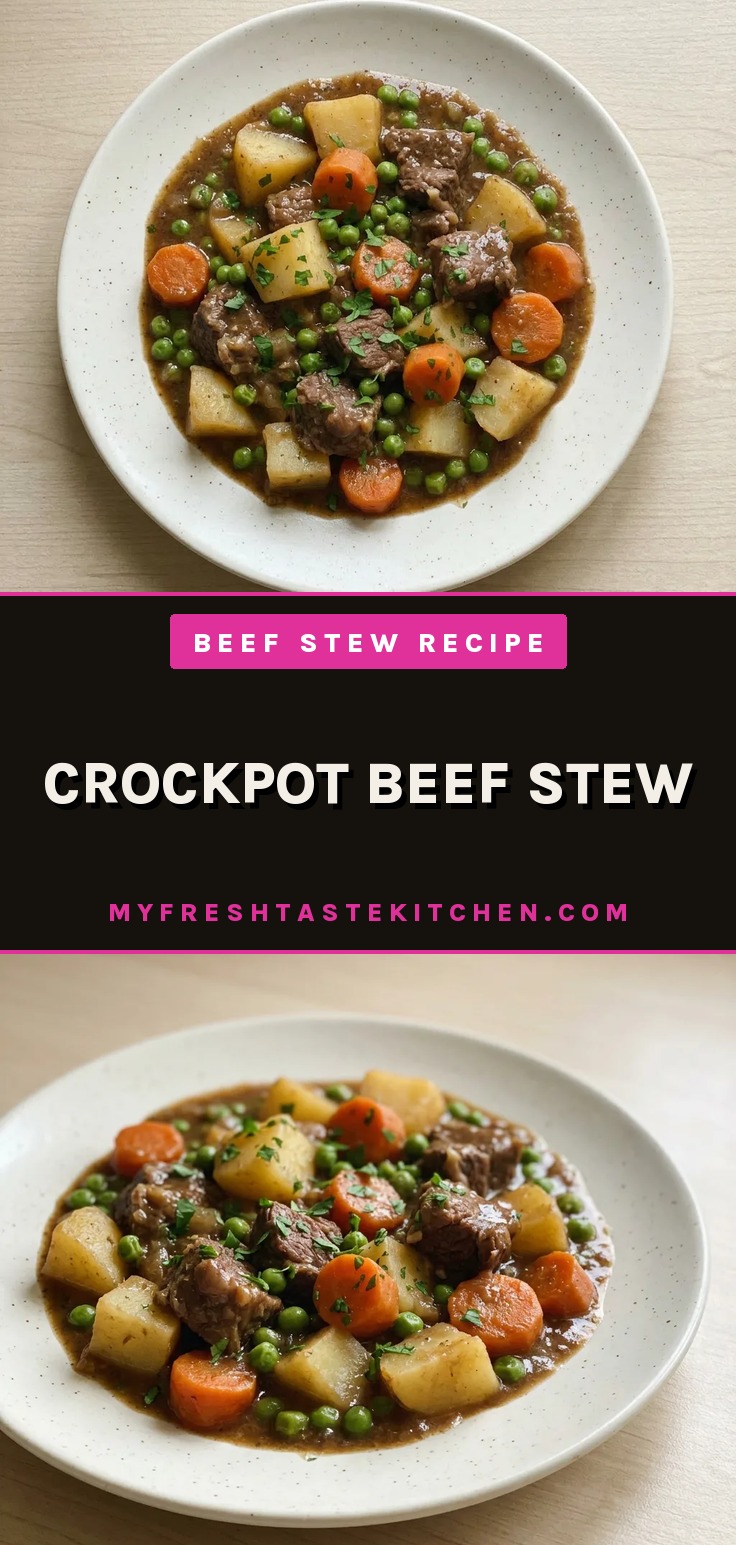
Sprinkle fresh parsley over the stew just before serving. It adds a bright, clean note that cuts through the richness, don’t skip it.
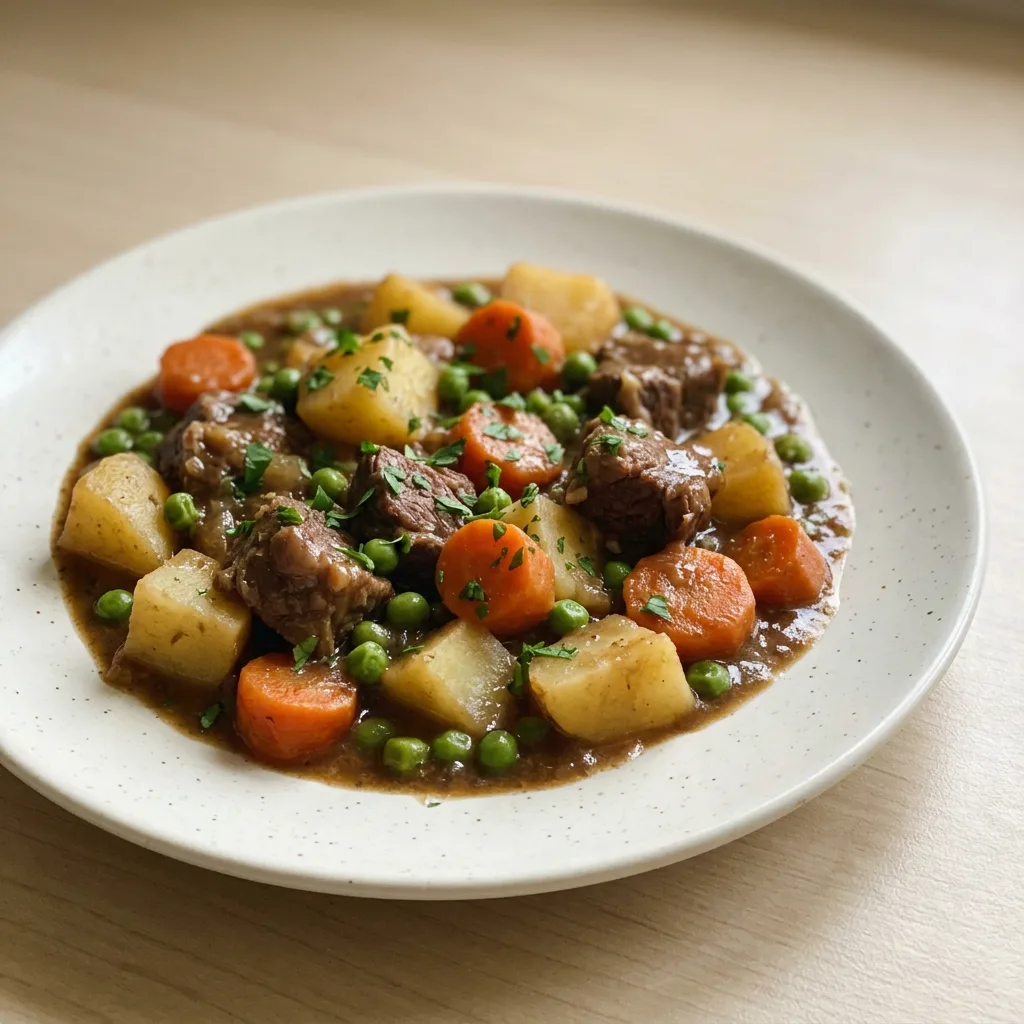
Crockpot Beef Stew: Rich and Hearty Comfort Dinner
Ingredients
Method
Dry and flour beef:
Thoroughly dry the beef cubes using paper towels, then coat them evenly with the flour.Sear beef cubes:
In a large skillet over medium-high heat, warm the olive oil. Arrange the beef in one layer and sear each side for 2-3 minutes until a deep brown crust develops. Move the seared beef to the slow cooker.Deglaze skillet:
Add a small amount of beef broth to the hot skillet and deglaze by scraping up the browned bits. Pour this liquid over the beef in the slow cooker.Layer vegetables:
Place the cubed potatoes, thick carrot rounds, diced onion, and minced garlic on top of the beef in layers.Whisk broth mixture:
In a separate bowl, combine the remaining beef broth, tomato paste, Worcestershire sauce, salt, and pepper. Whisk until smooth, then pour over the vegetables and beef.Slow cook beef:
Put the lid on the slow cooker and cook on LOW for 7-8 hours or on HIGH for 4 hours, until the beef is fork-tender.Thicken with slurry:
About 30 minutes before serving, mix the cornstarch with cold water to create a smooth slurry. Stir this into the slow cooker along with the frozen peas.Add peas and parsley:
Replace the lid and cook for another 30 minutes until the gravy thickens, turns dark brown, and coats a spoon. Sprinkle with fresh parsley before serving.
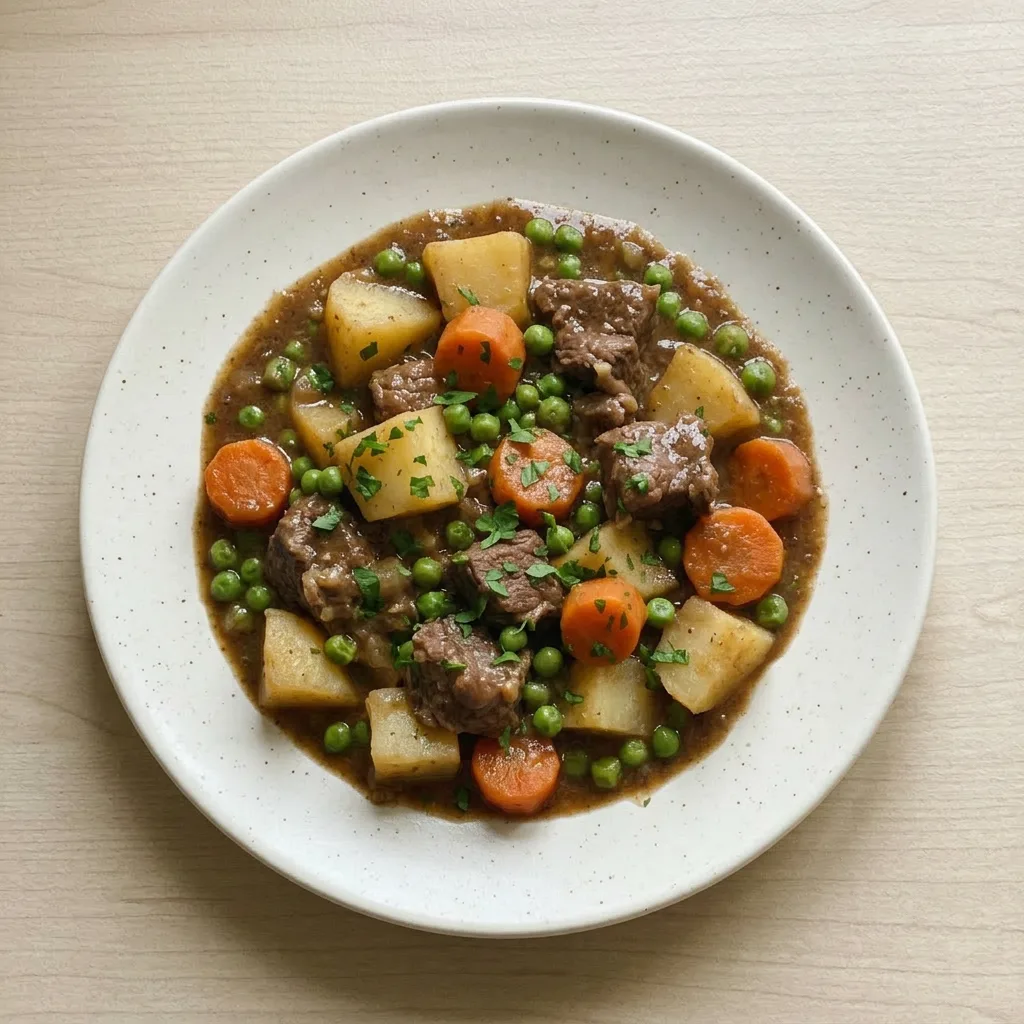
Storage and Reheating
Store leftover stew in an airtight container in the fridge for up to 4 days. The gravy thickens as it sits because the starches from the potatoes and cornstarch continue to absorb liquid.
When reheating, add a splash of beef broth or water to loosen it back to its original consistency. Reheat gently on the stovetop or in the microwave, stirring occasionally, until hot throughout.
The stew freezes well for up to 3 months; cool completely before transferring to a freezer-safe container. Thaw overnight in the fridge before reheating. For best texture, serve the stew within 30 minutes of adding the parsley garnish, as the fresh leaves wilt quickly.
What to Swap, What to Keep in This Stew
Beef Chuck Roast: Bottom round or brisket. Chuck has enough fat and connective tissue to stay moist over 8 hours; bottom round is leaner and can turn dry and stringy. Brisket works but shreds more readily, expect a looser texture.
All-Purpose Flour (for dredging): Gluten-free all-purpose flour blend or cornstarch (same amount). Gluten-free blends thicken similarly but may leave a slightly grittier coating on the beef. Cornstarch works but doesn’t brown as deeply; the crust will be lighter and the gravy a touch less rich.
Yukon Gold Potatoes: Red potatoes or russets. Red potatoes hold up as well as Yukon Golds, no change needed.
Russets break down into starch, thickening the gravy more but leaving you with fewer distinct potato pieces. If you want chunks, stick with waxy or all-purpose potatoes.
Tomato Paste: None, or use ¼ cup crushed tomatoes plus 1 tsp tomato powder (for concentrated flavor). Omitting tomato paste flattens the stew’s savory depth; the gravy tastes one-dimensional. Crushed tomatoes add liquid and acidity but lack umami.
Tomato powder mimics the concentration but may need extra simmering to dissolve.
Tips
- Let the beef come to room temperature for 20 minutes before searing; cold meat lowers the pan temperature and steams instead of browning, weakening the crust.
- Toss the flour-dredged beef in batches; if the pieces touch during searing, they steam and the flour turns pasty rather than forming a crisp crust.
Frequently Asked Questions
Can I cook this stew on high instead of low, and how does that affect the meat?
Yes, cook on HIGH for 4 hours instead of LOW for 7-8. The meat will be tender but may be slightly drier and less succulent because the faster cook gives collagen less time to fully break down into gelatin. The beef should still shred with a fork, but if it resists, it needs more time, tough collagen hasn’t melted yet.
Why is my stew broth thin instead of thick and gravy-like?
Most likely the cornstarch slurry wasn’t given enough time to work: stir it in 30 minutes before serving and cook uncovered if needed until the gravy coats a spoon. If you added the slurry too early, the cornstarch breaks down over hours and loses thickening power. Also check that you used the full ¼ cup flour for dredging, skimping reduces the starch that helps build body.
Can I make this stew ahead of time and reheat it?
Yes, the stew keeps in the fridge for up to 4 days and freezes for up to 3 months. The gravy thickens as it sits, so when reheating add a splash of beef broth or water to loosen it back to its original consistency. Reheat gently on the stovetop or microwave, stirring occasionally, until hot throughout.
For best texture, add the parsley garnish just before serving, not during storage.
