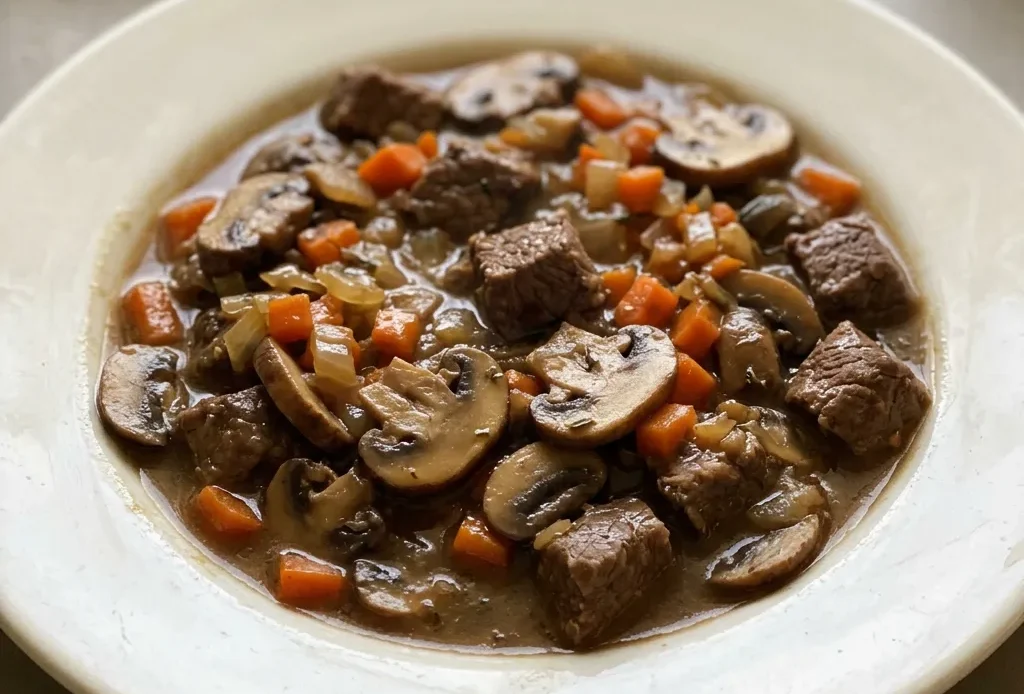
Most beef stew recipes rely on the same formula: brown the meat, dump everything in a pot, and let it simmer. That works, but the beef and mushroom stew here pushes deeper. The real trick isn’t the wine or the long cook, it’s knowing that mushrooms added early don’t just soften; they collapse into the broth, releasing their moisture and absorbing the beef and wine around them.
That exchange turns the mushrooms from a separate ingredient into part of the stew’s fabric, threading savory richness through every spoonful. It’s a small shift in timing that changes the whole dish.
Browning in Batches for a Rich Beef Stew
Browning beef in batches isn’t busywork, it’s the difference between a deep, savory stew and a flat one. When meat hits a hot pan, moisture turns to steam. Crowd the pan and that steam stops browning; you essentially boil the beef.
Working in single layers lets each cube develop a dark crust. That crust, plus the browned bits left in the pot, is concentrated flavor. The flour coating helps form that crust and later thickens the broth as it simmers.
You can see it happen: the fond on the bottom of the pot, not burnt, just mahogany. That’s where the stew gets its backbone.
Red Wine Adds Acidity and Complexity
Wine is optional here, but it does something water or broth alone can’t. Pour it in after the tomato paste and scrape the pot, those browned bits dissolve into the liquid, carrying flavor into every spoonful. The acidity cuts through the richness of beef and broth, keeping the stew from feeling heavy.
Tannins and fruit from the wine play off the mushrooms and thyme, creating a more interesting backdrop. You’ll taste it as a brightness that rounds out the deep, savory notes. Without it, the stew is still good, but a bit one-note.
Why Gentle Simmering Makes Tender Beef
A vigorous boil ruins chuck roast. That cut has lots of connective tissue, which needs time and gentle heat to break down into gelatin. Boiling forces the meat fibers to contract and squeeze out moisture, leaving you with dry, stringy chunks.
A low simmer, just an occasional bubble breaking the surface, lets the collagen slowly melt. You can feel it when you poke a piece with a fork: it should offer no resistance.
That long, slow cook also lets the flour-thickened broth smooth out and the flavors blend. Patience pays off in texture you can’t rush.
Mushrooms Added Early for Deeper Umami
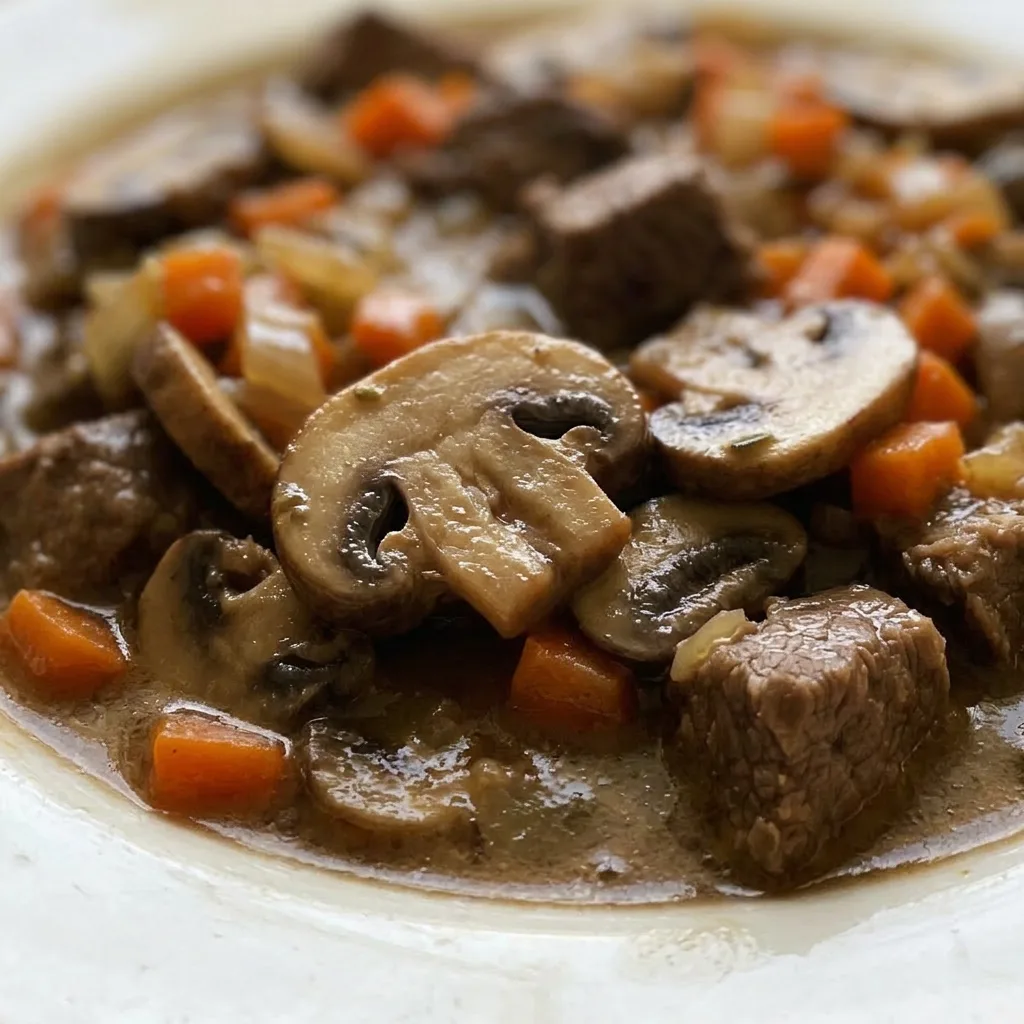
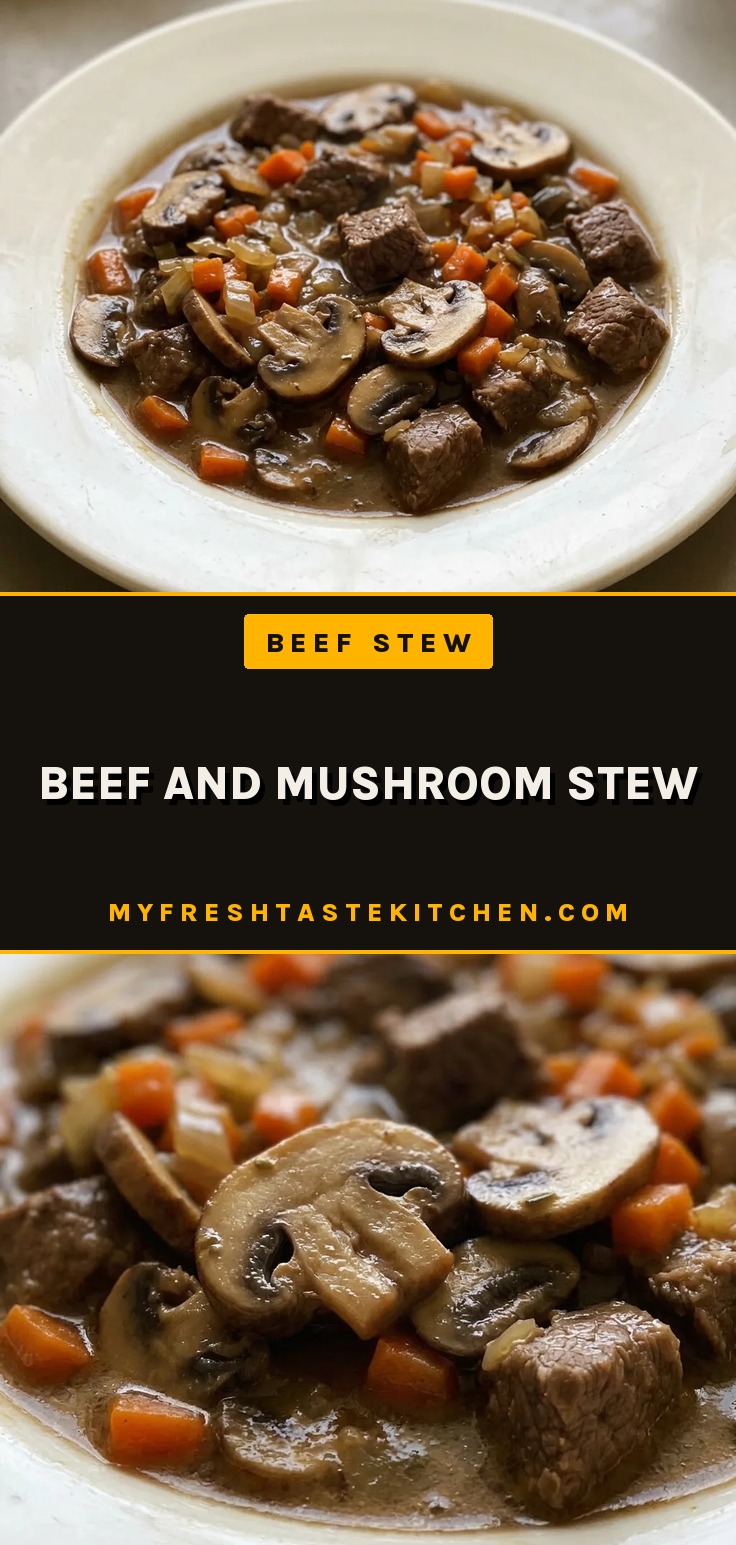
Adding mushrooms at the start, not as a garnish, lets them work into the stew’s foundation. As they simmer, they release moisture and absorb the surrounding broth and wine. That exchange spreads their savory, earthy character throughout the pot.
By the end, the mushrooms are tender but still hold their shape, and every bite of stew carries that umami note. If you added them late, they’d stay separate, like a topping rather than part of the whole.
Here, they merge with the beef and broth, making the beef stew taste more cohesive and complex.
Prep: 20 min · Cook: 2 hr 30 min · Total: 2 hr 50 min · Servings: 6 · Calories: 450 kcal
What to Look for in Each Ingredient
Beef chuck roast: Marbled chuck breaks down into fork-tender meat; leaner cuts like bottom round need careful simmering and may stay drier.
Cremini or button mushrooms: Any common mushroom works; avoid woody stems on portobellos. Slice or quarter depending on your preference for texture.
Red wine: Use a dry red you’d drink, like Merlot or Cabernet. Avoid sweet wines, which can throw the balance off.
Beef broth: Low sodium broth lets you control the final salt level. Homemade is fine, but store bought works too.
How to Build the Beef Stew Step by Step
Dry and Flour the Beef
Pat the cubes dry with paper towels until they feel tacky. Toss with seasoned flour until each piece is coated, no bare spots. A dry surface means a dark crust; a wet one steams.
Brown in Batches
Heat oil and butter until it shimmers. Add beef in a single layer, not touching.
Listen for a steady sizzle, if it fades, you’ve crowded the pan. Turn when the underside is mahogany, about 3 minutes per batch.
Sauté the Aromatics
After removing beef, lower heat to medium. Cook onion and carrots until the onion edges turn golden and the carrots soften, about 5 minutes. Scrape up any fond with the moisture from the vegetables.
Add Garlic and Tomato Paste
Stir in garlic and tomato paste for 1 minute, until the paste darkens to a rusty red and smells sweet. Burnt paste turns bitter, so stop as soon as it deepens in color.
Deglaze with Wine (if using)
Pour in wine, scraping the pot bottom with a wooden spoon until all browned bits dissolve. Let it bubble for 2 minutes, until the wine reduces slightly and smells less alcoholic, more fruity.
Combine and Simmer
Add broth, beef, mushrooms, thyme, and bay leaf. Stir, bring to a gentle simmer, just an occasional bubble breaking the surface, not a rolling boil. Cover and adjust heat to maintain that lazy bubble.
Cook Until Fork-Tender
5 hours. Check at 2 hours: pierce a beef cube with a fork, it should slide in with no resistance. If it still resists, continue, checking every 15 minutes.
The broth will thicken slightly.
Finish and Season
Fish out the thyme sprigs and bay leaf. Taste the broth, it should be rich and savory. Add salt and pepper gradually, tasting as you go, until the flavors sharpen.
Serve hot.
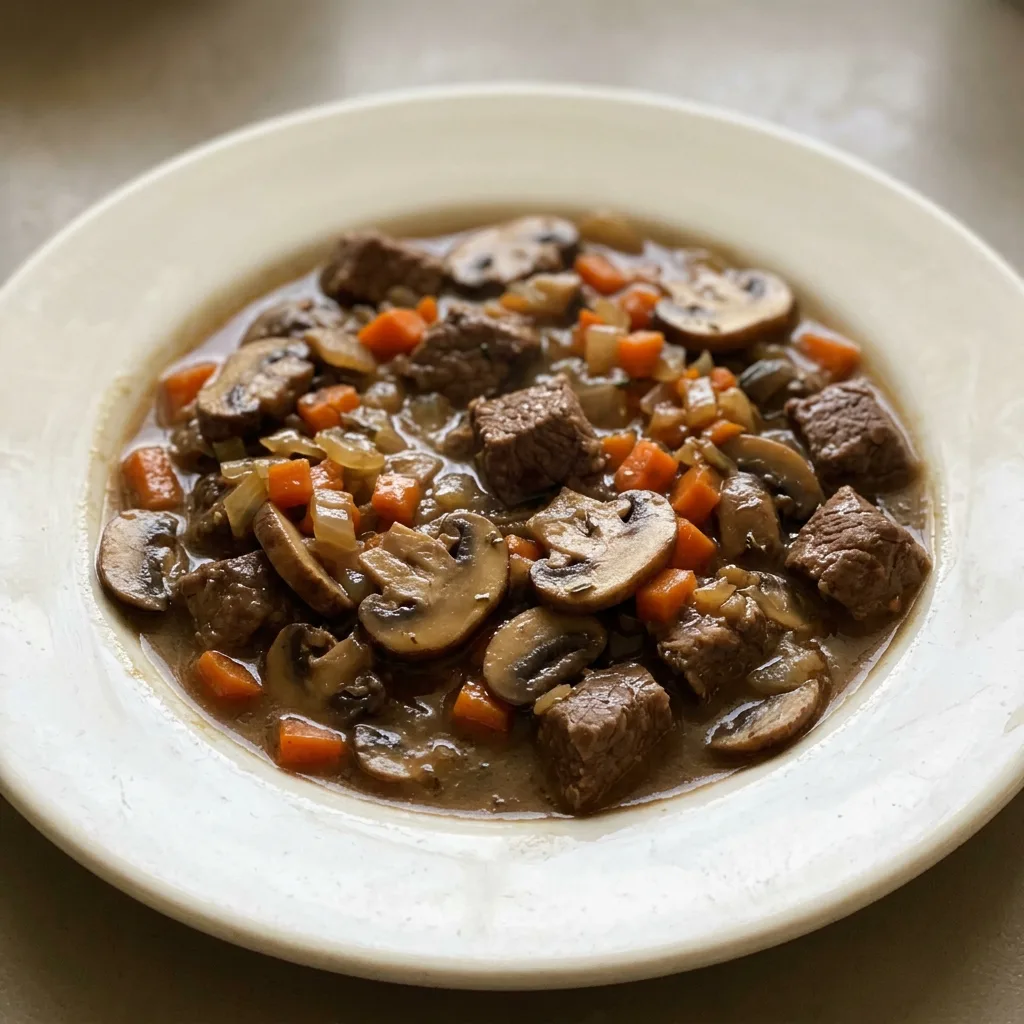
Beef and Mushroom Stew for Cozy Nights
Ingredients
Method
Coat beef with flour:
Dry the beef cubes thoroughly using paper towels, then coat them evenly with seasoned all-purpose flour.Brown beef in batches:
In a Dutch oven over medium-high heat, warm the olive oil and butter. Working in batches, brown the beef on all sides, then transfer it to a plate and set aside.Cook onion and carrots:
Lower the heat to medium. In the same pot, cook the chopped onion and carrots until the onion turns translucent and lightly golden, roughly 5 minutes.Sauté garlic and paste:
Add the minced garlic and tomato paste, stirring for about 1 minute until aromatic.Deglaze with wine:
If using red wine, pour it in and scrape up any browned bits from the pot bottom, then let it simmer for 2 minutes.Add broth and beef:
Pour in the beef broth, return the browned beef to the pot, add the sliced mushrooms, thyme sprigs, and bay leaf. Stir everything together and bring to a gentle simmer.Simmer until tender:
Cover the pot and let the stew cook for 2 to 2.5 hours, or until the beef becomes fork-tender.Season and serve:
Discard the thyme sprigs and bay leaf. Season with salt and pepper to taste, then serve hot.
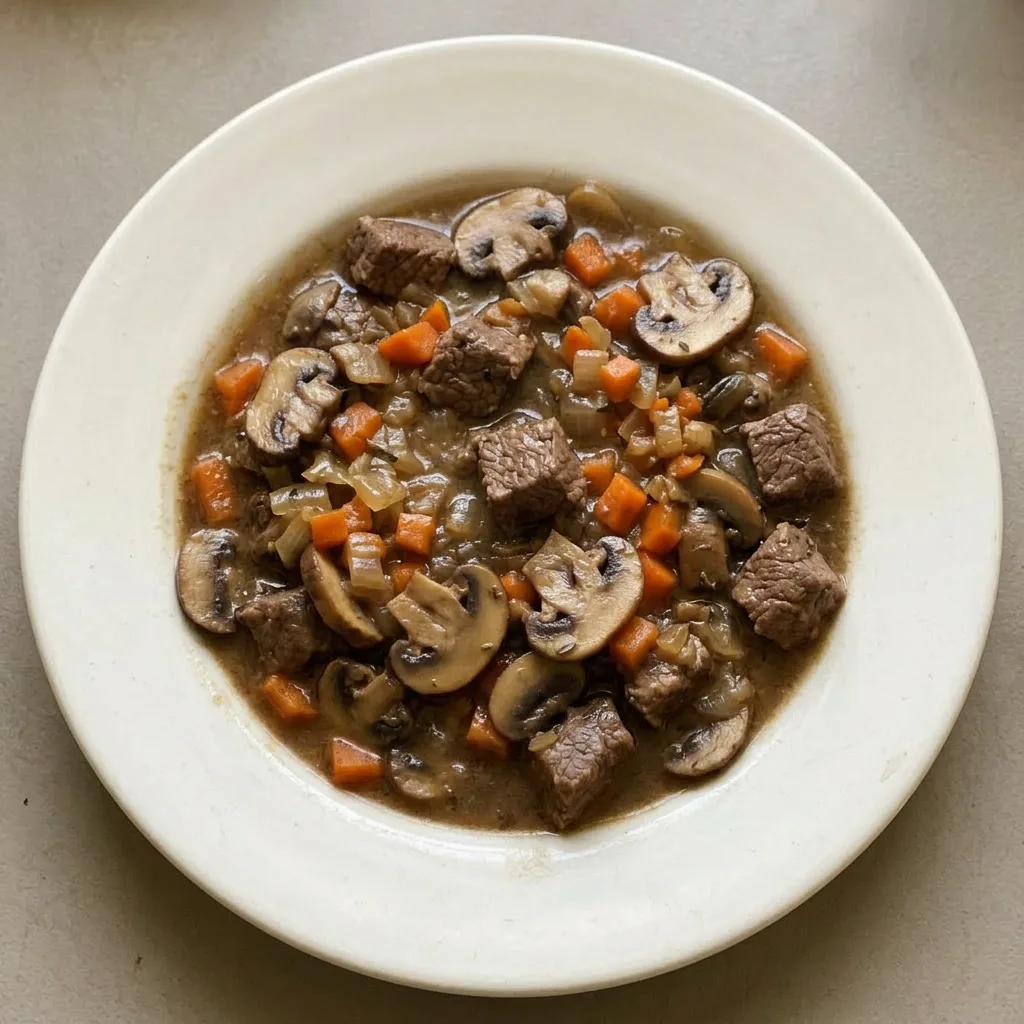
Storage and Serving
This stew tastes best within 2 days of cooking. The flavor deepens overnight, but the beef stays most tender during that window.
Store leftovers in an airtight container in the fridge for up to 4 days. As the stew sits, the starch from the flour continues to thicken the broth, so you’ll notice a denser texture on day two and beyond. To reheat, add a splash of beef broth or water and warm gently over low heat, stirring occasionally, until the stew loosens and is hot throughout.
The stew freezes well for up to 3 months; thaw overnight in the fridge before reheating. Reheat gently to avoid toughening the beef. Serve hot, with a final grind of black pepper if you like.
Tips
- Use a heavy-bottomed pot like a Dutch oven to maintain steady heat during browning and simmering; thin pots create hot spots that burn the fond or cause uneven cooking.
- Season the beef with salt before flouring, not after; salt draws out moisture, so applying it just before coating helps the flour stick and forms a better crust.
Three Swaps That Work, One That Doesn’t
Beef chuck roast: Bottom round or stew meat. Bottom round is leaner, so it can dry out if simmered too long.
Stew meat varies, check the package for cut. Both work if you cook just until fork-tender, not a minute more. You’ll notice the broth may be less rich, but still good.
All-purpose flour: Gluten-free flour blend. Use the same amount.
The stew will thicken nearly as well, though the mouthfeel may be slightly less silky. No one will call it gummy.
This swap saves the dish for anyone avoiding gluten.
Red wine (optional): Extra beef broth or stock. Replace the 1 cup wine with an equal amount of broth.
The stew loses the wine’s acidity and complexity, you’ll taste it as less brightness, a flatter backdrop. Consider adding 1 tablespoon of red wine vinegar at the end to bring back some tang.
Frequently Asked Questions
Can I make beef and mushroom stew ahead of time?
Yes, it keeps well for up to 4 days in the fridge. You’ll notice the broth thickens more as it sits, so when reheating, stir in a splash of beef broth or water to loosen it. Warm gently over low heat to keep the beef tender.
Why is my beef tough after stewing?
The most likely cause is a too-vigorous boil. A rolling boil forces the meat fibers to contract and squeeze out moisture, leaving them dry and stringy.
Your stew should show just an occasional bubble breaking the surface. If you simmered gently but the beef is still tough, it may need more time, check at 2 hours and continue in 15-minute increments until a fork slides in with no resistance.
How do I thicken the stew if it’s too thin?
If the broth is thinner than you like after 2.5 hours, remove the lid and let it simmer uncovered for 10 to 15 minutes. The excess water evaporates and concentrates the flavor. Stir occasionally so the bottom doesn’t scorch, and watch for the broth to coat the back of a spoon.
What’s the difference between beef stew and beef bourguignon?
Beef bourguignon is basically a beef stew made with red wine and often includes pearl onions and mushrooms as a garnish. This recipe uses wine as optional and adds mushrooms early to blend into the broth, so it’s closer to a classic beef stew with a wine boost. Bourguignon also traditionally uses lardons, which aren’t here.
