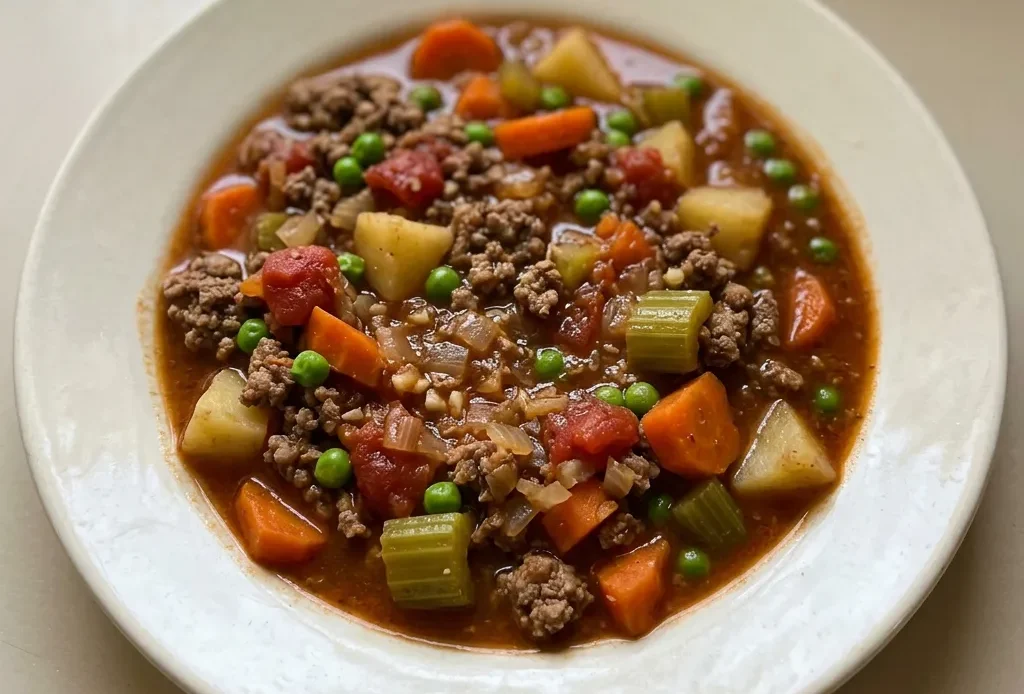
Most hamburger stews end up greasy or bland because the cook skips browning or doesn’t pour off enough fat. That dark fond on the pot bottom is where the beefy flavor lives, scrape it into the broth and you get a stew that tastes like more than just boiled meat and vegetables. This version keeps the process simple: brown, deglaze, simmer.
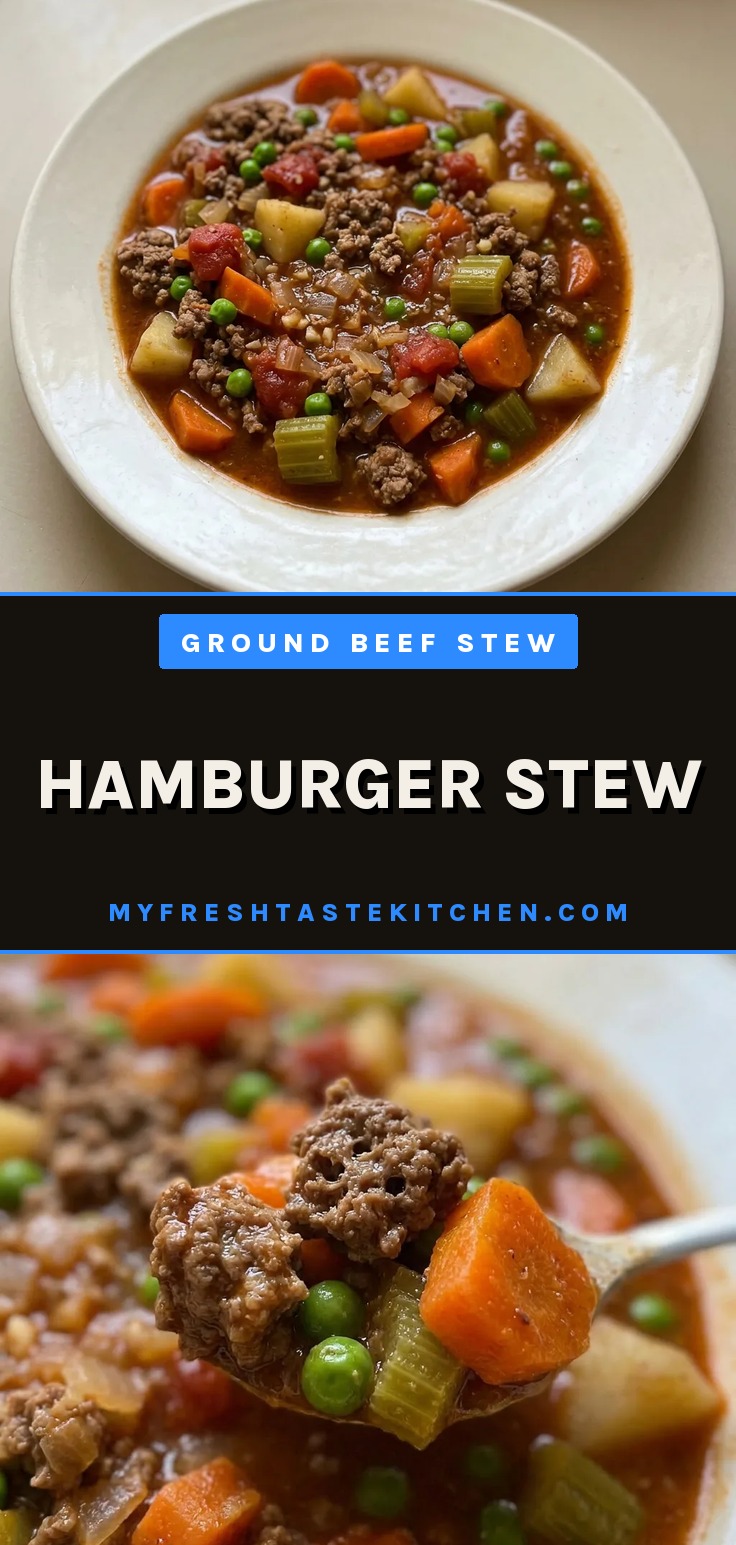
The potatoes and carrots soften but stay distinct, each chunk carrying the seasoned broth inside. It’s the kind of hearty hamburger stew that makes a cold evening feel manageable, no fussing required.
A Savory Browned Base
Browning the ground beef with onion and garlic does more than cook the meat. As the beef browns, a dark fond forms on the pot bottom, that’s concentrated flavor waiting to be released.
The onion and garlic soften alongside, releasing their own savory notes into the fat. Sautéing them together means the aromatics infuse the meat, not just the broth. Pour off excess fat after browning, otherwise the stew turns greasy.
You want the fond and the seasoned meat, not a slick of oil floating on top.
Broth with Backbone
Diced tomatoes and beef broth form the stew’s liquid base, and each plays a distinct role. Canned tomatoes bring acidity and a subtle sweetness that cuts through the richness of the beef. Their juices also contribute umami, that savory depth that makes you want another spoonful.
Beef broth supplies the meaty backbone, reinforcing the browned flavor from the first step. Italian seasoning, typically oregano, basil, thyme, bridges the two, its herbs tying the tomato and beef notes into a single, cohesive broth.
Vegetables That Hold Their Own
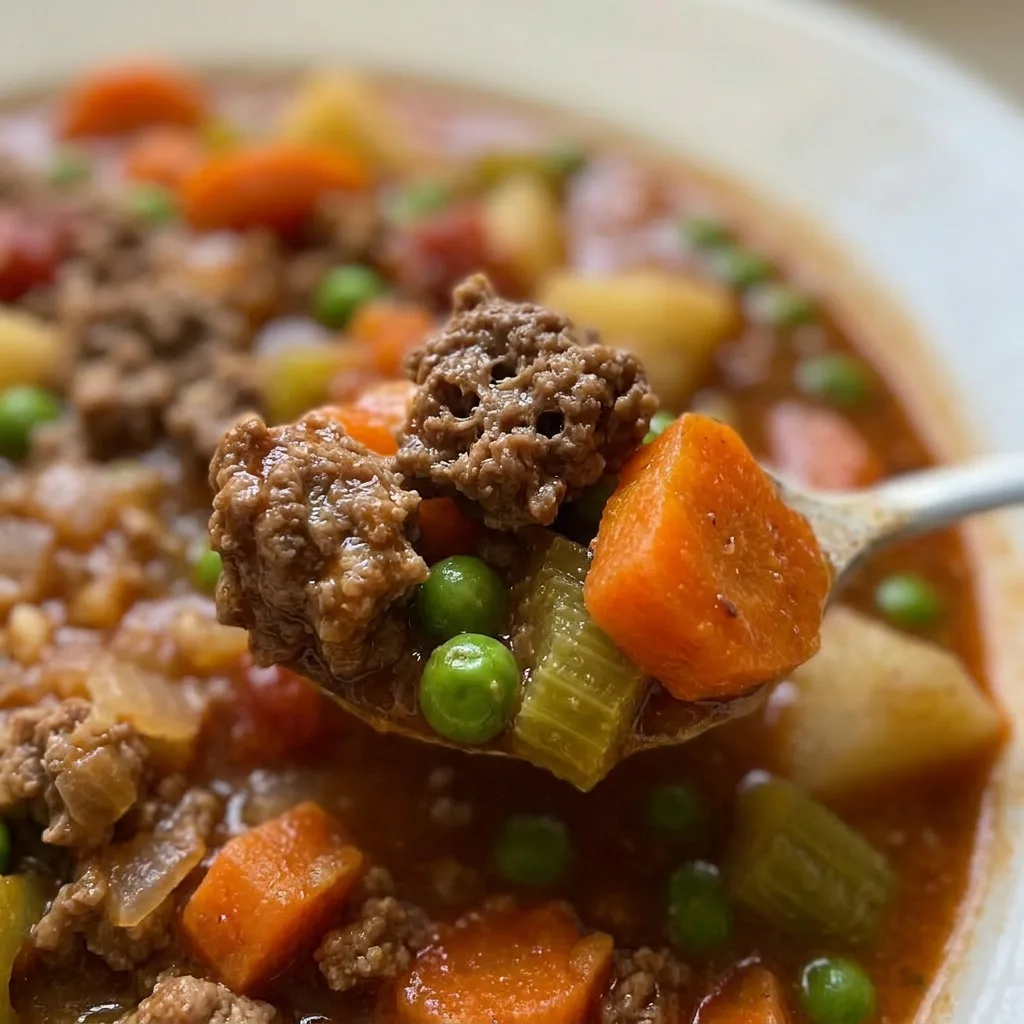
Potatoes and carrots are the right call here because they stay intact during a long simmer. Potatoes soften but don’t dissolve into mush; carrots become tender without losing their shape. That resilience matters when you want distinct bites, not a purée.
More important, both vegetables act like sponges: as they cook, they pull in the surrounding broth, so each chunk tastes of the seasoned liquid. A uniform dice, roughly half-inch cubes, ensures they finish at the same time, no raw centers or overcooked edges.
Prep: 10 min · Cook: 40 min · Total: 50 min · Servings: 6
Ingredients to Watch
Ground beef: 80/20 blend browns well without being too lean; excess fat gets poured off after browning.
Canned diced tomatoes: No need to drain; the juice adds acidity and helps build the broth’s backbone.
Beef broth: Use low sodium so you control the salt; regular broth can make the stew overly salty as it reduces.
Potatoes: Russets or Yukon Golds hold their shape; dice into 1/2 inch cubes for even cooking.
Carrots: Cut them the same size as the potatoes so they soften at the same rate.
Building the Stew, Step by Step
Brown the Beef
Cook the beef with onion and garlic over medium-high heat, breaking it into small pieces. Stop when you see a dark crust form on the pot bottom, that fond is flavor. If the meat releases water instead of browning, the heat is too low; turn it up.
Pour Off Fat
Tip the pot and spoon out the visible fat until just a thin sheen remains. Leave a slick and the stew will taste greasy; remove too much and you lose moisture. The fond stays stuck, that’s fine.
Add Vegetables and Liquid
Stir in carrots, potatoes, tomatoes with their juice, broth, and Italian seasoning. Scrape the bottom to dissolve the fond into the liquid. The broth should turn a deep reddish-brown; if it looks pale, the fond wasn’t dark enough.
Simmer Until Tender
Bring to a boil, then reduce to a gentle simmer, bubbles should just break the surface. Cook uncovered for 30 to 40 minutes.
Test a potato: it should yield to a fork without falling apart. When it does, the stew is done.
Adjust Seasoning
Taste the broth. If it tastes flat, add salt in small pinches until the flavors sharpen. If it lacks depth, a crack of black pepper or a pinch more Italian seasoning brings it back.
Trust your palate.
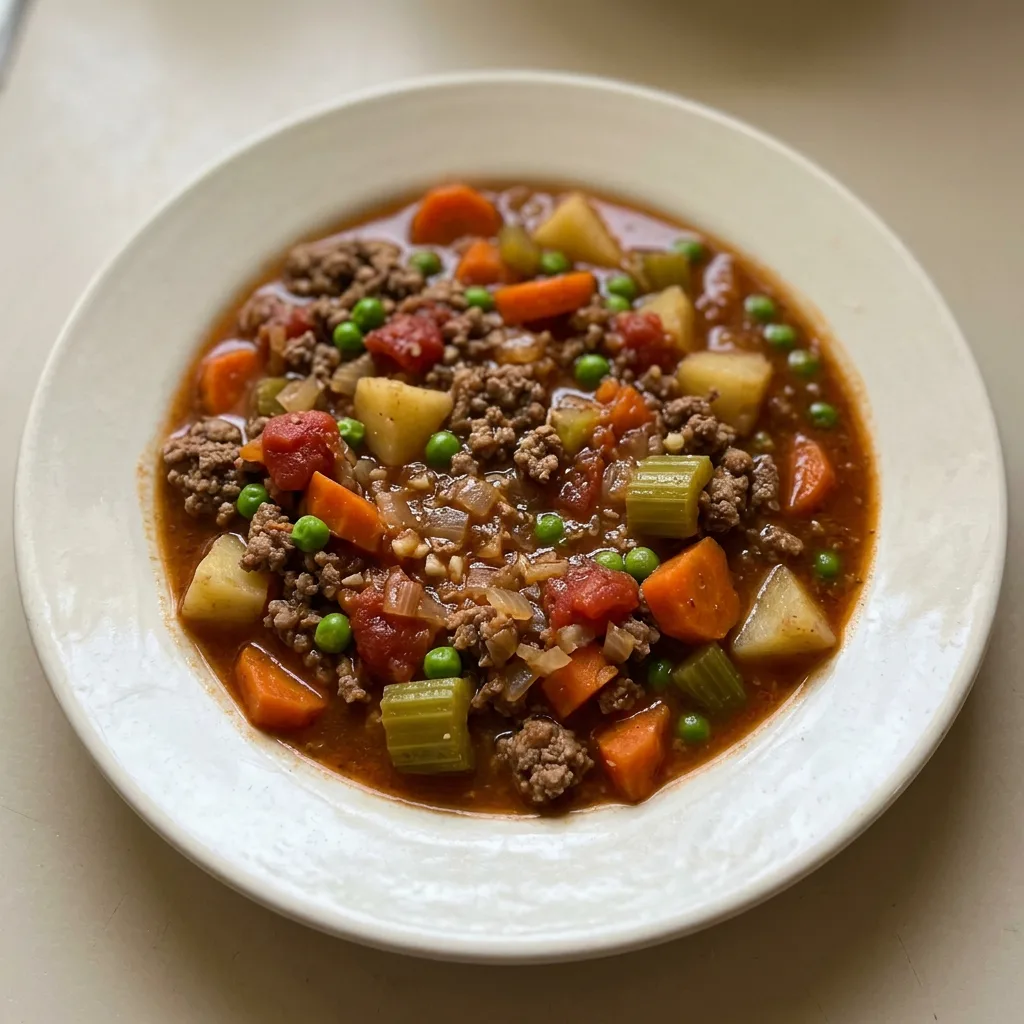
Hamburger Stew
Ingredients
Method
Brown beef and aromatics:
In a large pot, cook the ground beef with the chopped onion and minced garlic until browned. Pour off any excess fat.Add vegetables and broth:
Stir in the chopped carrots, diced potatoes, diced tomatoes (with their liquid), beef broth, and Italian seasoning. Add salt and pepper to taste.Simmer until vegetables soft:
Heat until boiling, then lower the heat and let simmer for 30–40 minutes until the vegetables are soft.Adjust seasoning and serve:
Check the seasoning and adjust if needed. Serve immediately.
Storage and Serving
Cool the stew completely before refrigerating, about 30 minutes at room temperature. Transfer to an airtight container and refrigerate for up to 4 days. The flavors deepen overnight, but the potatoes will continue to soften.
For the best texture, eat within 2 days. To reheat, warm in a pot over medium-low, stirring occasionally, until bubbling.
Add a splash of broth if it thickens too much. Freezing is not recommended; the potatoes turn mealy and the carrots lose structure.
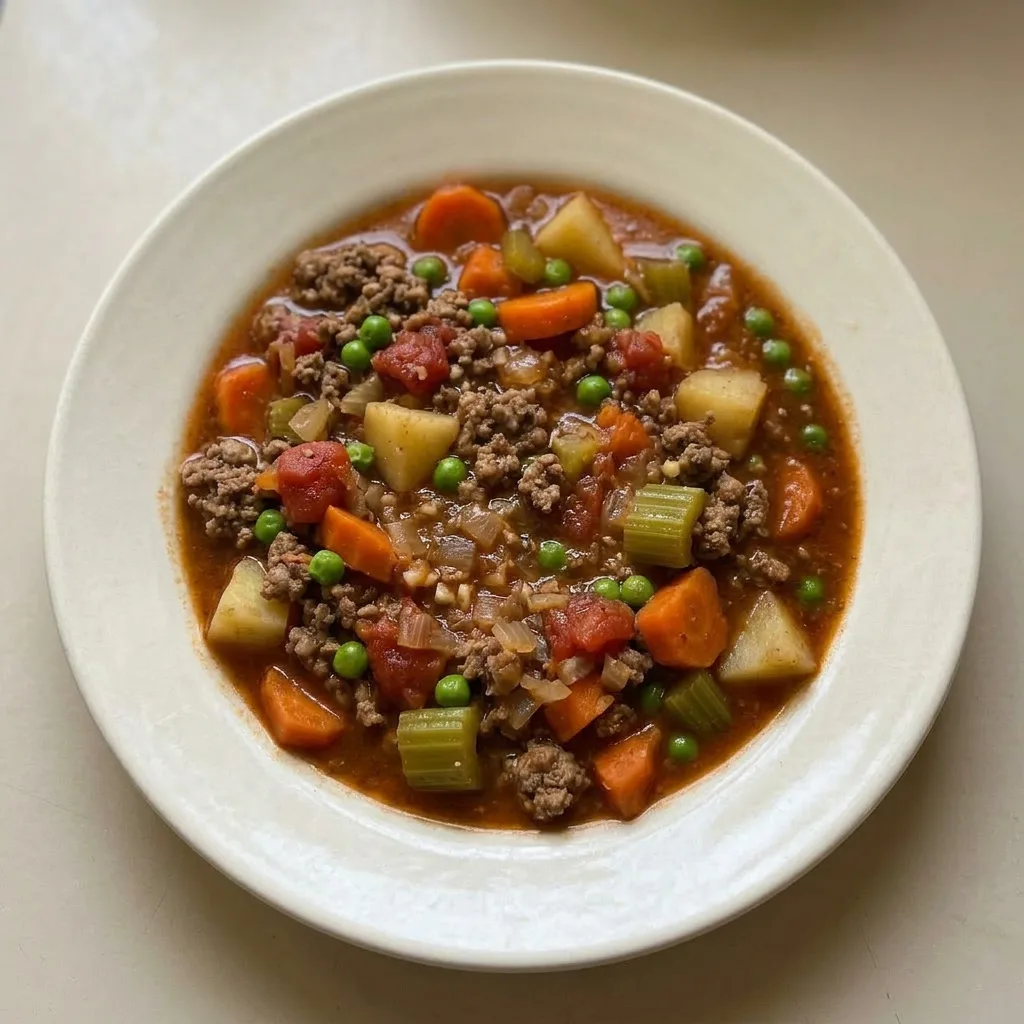
If you must freeze, do so before adding the potatoes and carrots, then add fresh vegetables when reheating. Serve immediately after cooking for the best texture: the potatoes are tender but intact, and the broth is rich.
If making ahead, cook fully, cool, and refrigerate; reheat gently and serve within 2 days.
Tips
- After browning the beef, deglaze the pot with a splash of the beef broth before adding the rest. This lifts the fond off the bottom, ensuring the flavor disperses evenly through the stew rather than sticking and potentially burning during the simmer.
When Swapping Changes the Stew’s Character
Ground beef: Ground turkey or chicken. Leaner poultry browns faster and produces less fond, so the broth will be lighter in color and milder in savory depth. To compensate, brown the meat well and consider adding a splash of Worcestershire or soy sauce for umami.
Beef broth: Low-sodium beef broth or chicken broth. Swapping to low-sodium gives you control over saltiness, regular broth can make the stew overly salty as it reduces. Chicken broth works but shifts the flavor to a lighter, less beefy broth; the stew will taste more like simple beef stew than a rich hamburger stew.
Potatoes: Leave them in. Potatoes are essential for texture, they thicken the broth slightly as they release starch and provide soft, creamy bites. Swapping them out would leave the stew thin and lacking a key component.
If you need a low-carb option, you could omit potatoes and add extra carrots or celery, but the stew will be thinner and less hearty.
Italian seasoning: Dried oregano, basil, and thyme blend (equal parts). Using individual herbs lets you adjust proportions, but store-bought Italian seasoning is convenient and consistent. The swap works fine; the herb blend ties the tomato and beef flavors together.
No measurement change needed, start with the same amount the recipe uses and adjust to taste.
Frequently Asked Questions
Can I make hamburger stew ahead of time and reheat it?
Yes, you can make it ahead. Cool the stew completely, then refrigerate in an airtight container for up to 4 days.
The flavors deepen overnight, but potatoes soften further, so for best texture eat within 2 days. Reheat gently in a pot over medium-low, adding a splash of broth if it thickens.
How do I prevent the potatoes from getting mushy?
Dice potatoes into ½-inch cubes and simmer just until fork-tender, about 30 minutes, then stop. If you cook beyond that, they break down.
Russets or Yukon Golds hold shape best. For make-ahead, accept some softening; reheat gently to avoid further breakdown.
What’s the difference between hamburger stew and chili?
Hamburger stew uses beef broth and Italian seasoning for a tomato-herb broth, while chili relies on chili powder and cumin for a spicier, thicker base. This stew’s vegetables, potatoes and carrots, are chunkier and stay intact, whereas chili often has beans and a saucy consistency. The beef here is also browned for a darker fond, not just simmered.
Can I cook this in a slow cooker instead of on the stovetop?
Yes, but brown the beef first on the stovetop to build fond, then transfer everything to the slow cooker. Cook on low for 6 to 8 hours or high for 3 to 4 hours. Potatoes will soften more than stovetop, so dice them slightly larger, ¾-inch, to help them hold up.
