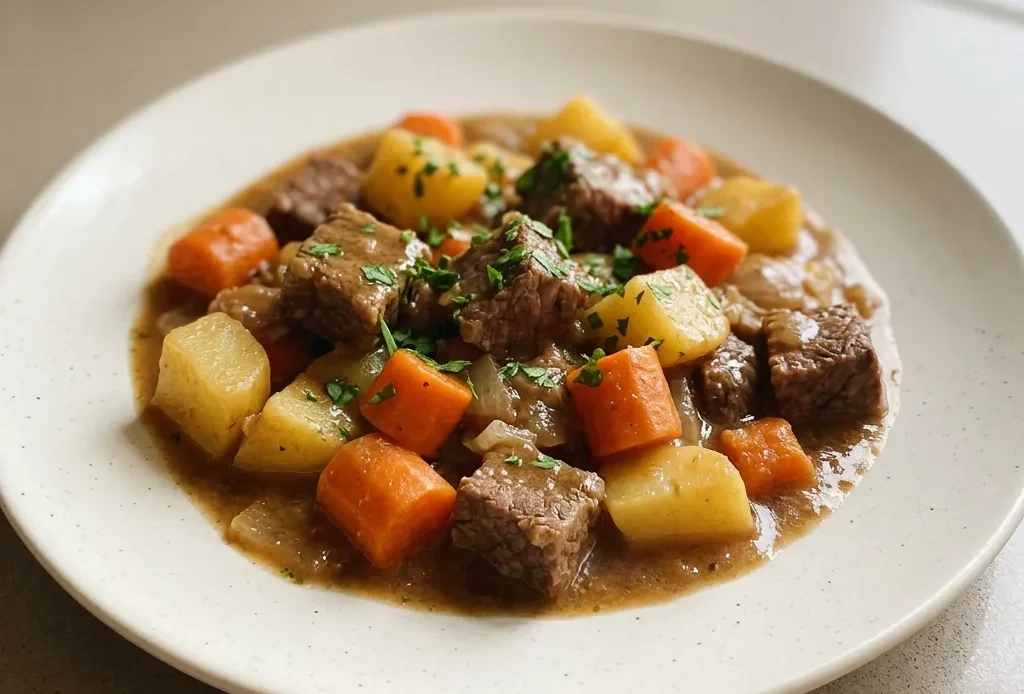
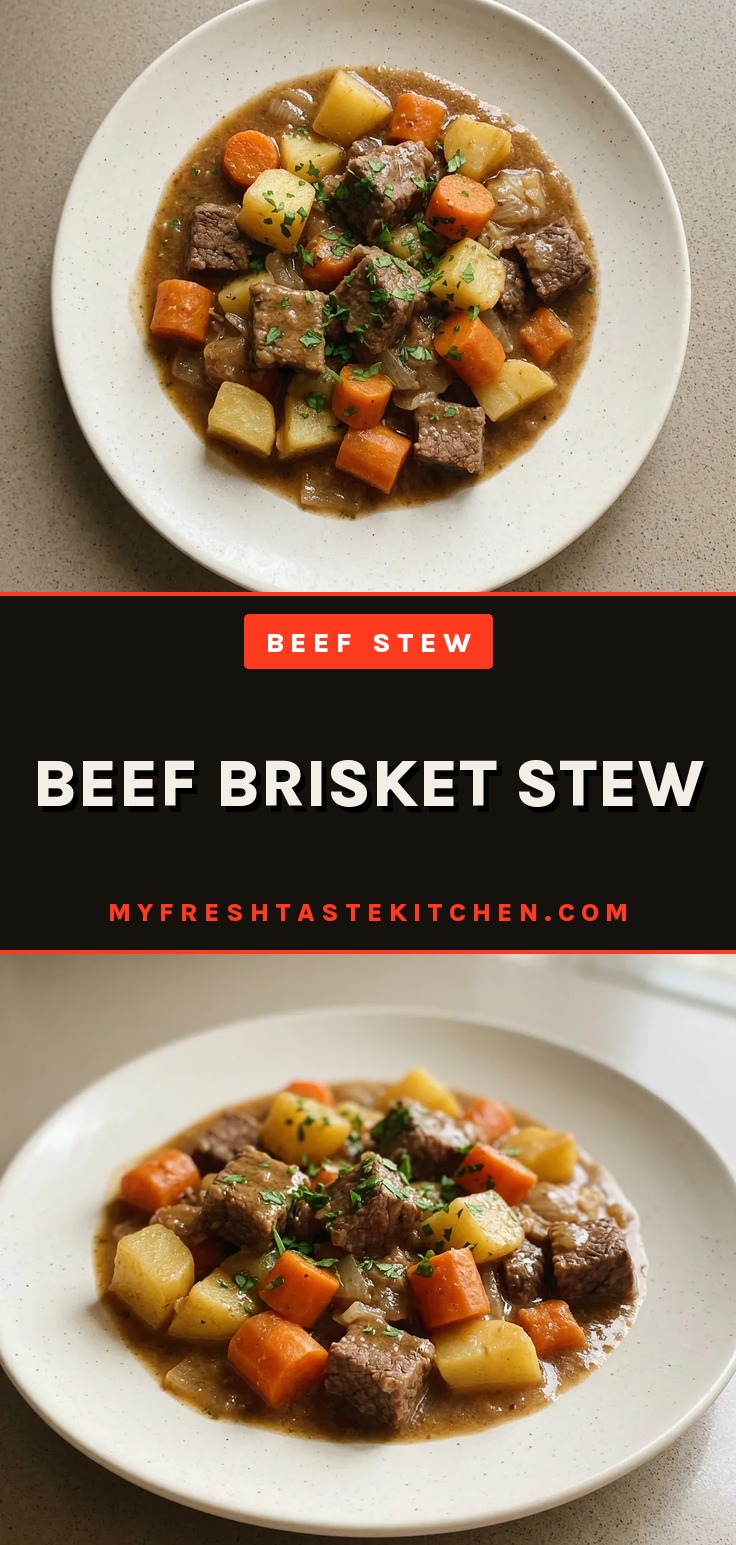
Most beef stews turn out watery or greasy because the cook picks the wrong cut or skips the flour. This beef brisket stew starts with the point cut, loaded with collagen that melts into a silky, clinging broth. The flour coats every cube, so the liquid turns silky instead of thin.
And the wine isn’t just for show, its acidity cuts the fat while tannins give the broth a structured, savory depth. You get a stew that feels substantial without being heavy, and the meat stays fork-tender even after reheating.
Choose brisket for its collagen
Beef stew turns out best when you start with a cut that has plenty of connective tissue. Brisket, especially the point cut, is laced with collagen and intramuscular fat. During a long, gentle braise, that collagen slowly breaks down into gelatin.
Gelatin gives the broth body and a silky, almost sticky richness that coats your tongue. The fat keeps the meat moist, so after hours of cooking each cube stays tender, not dry or stringy. You end up with a stew where the liquid clings to the meat and vegetables, not a thin broth that separates.
Coat with flour for a silky broth
Flour does more than thicken. When you toss the seared brisket and vegetables in flour, it sticks to the fat and moisture on their surfaces.
As the stew cooks, that flour absorbs some of the rendered fat and liquid, forming a suspension that slowly swells. The result is a broth that feels smooth and full, not watery or greasy. Now I make sure to cook the flour until no raw flour remains visible, as the section on flour as thickener explains.
That step prevents any raw flour taste and ensures the thickener integrates evenly. Without it, the stew would separate into a greasy top and thin bottom.
Red wine adds depth without dominating
A dry red wine like Pinot Noir brings two things to the stew: acidity and tannins. The acidity cuts through the beef’s richness, keeping each bite from feeling heavy. Tannins, the same compounds that give red wine its grip, add a subtle structure that makes the broth taste more complex, not just salty or beefy.
When you pour the wine into the pot and scrape up the browned bits (deglazing), those caramelized proteins dissolve into the liquid. That browning carries concentrated savory flavor. The wine doesn’t stand out as wine; it just makes the whole stew taste deeper, rounder.
Add potatoes later for the right texture
Cooking potatoes from the start turns them into mush that clouds the broth. The two-stage oven method solves that. First, the brisket braises alone for two hours, long enough for collagen to break down and meat to become tender.
Then you add the potatoes. They cook only in the final hour or so, just until fork-tender. The oven surrounds the pot with even, gentle heat, so the potatoes hold their shape and the liquid stays clear.
You get discrete potato chunks that are soft inside but not falling apart, and the stew remains hearty instead of turning into a thick purée.
Prep: 20 min · Cook: 3 hr 30 min · Total: 3 hr 50 min · Servings: 8 · Calories: 470 kcal
The ingredients that matter most
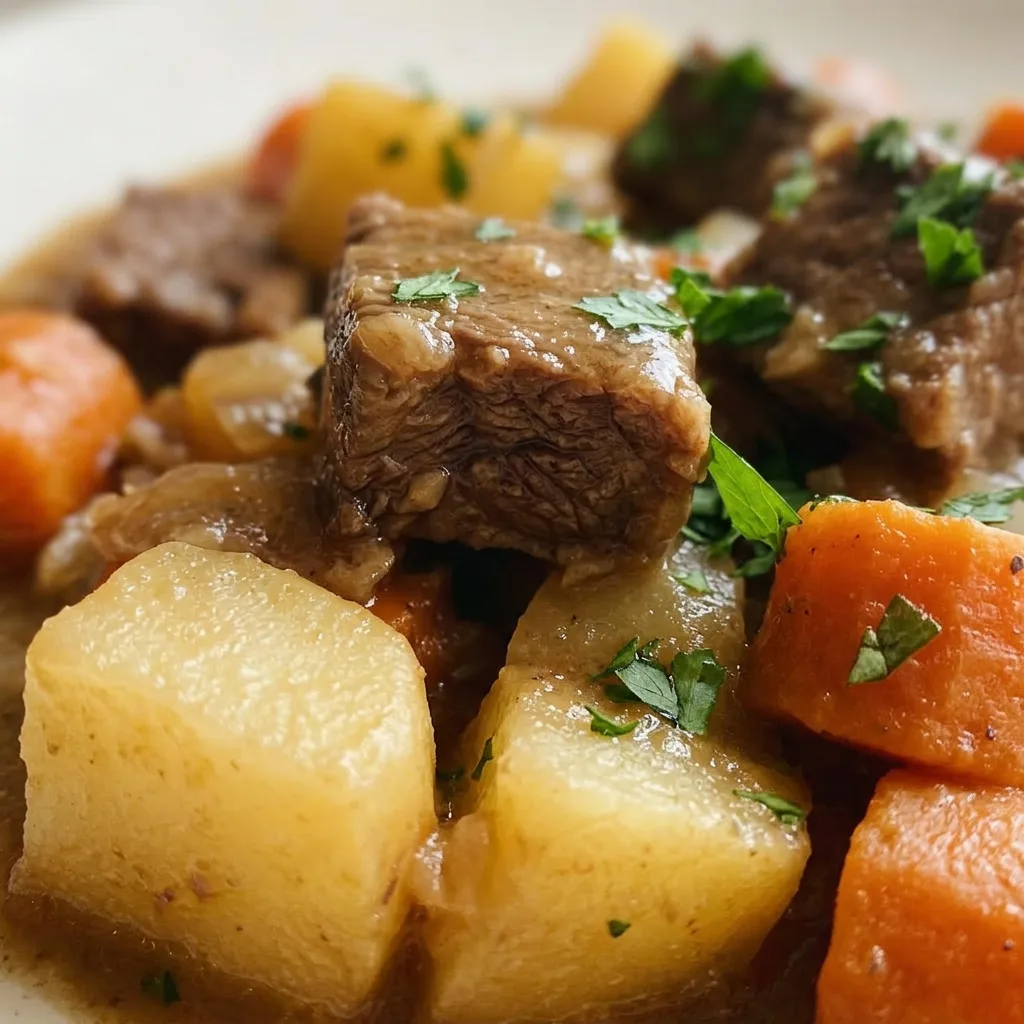
Beef brisket (point cut): Point cut has more fat and collagen, so it stays moist and tender through the long braise.
Dry red wine (Pinot Noir): Use a wine you’d drink; the acidity and tannins deepen the broth without making it boozy.
Golden potatoes: Golden potatoes hold their shape better than russets and turn buttery, not mealy.
Fresh thyme: Sturdy sprigs hold up to hours of cooking; strip the leaves only if using dried.
Build the stew in stages for rich, tender results
Sear in batches
Pat the brisket cubes dry, wet meat steams, not browns. Sear in a single layer; when the pot’s crowded, the meat releases liquid and braises instead of browning. You want a deep brown crust, not gray.
Sweat the aromatics
After removing the meat, the pot should still have a thin layer of fat. If it looks dry, add a splash of oil.
Cook the onions and carrots until they soften and the onions turn translucent, about 3 to 4 minutes. The garlic should be fragrant but not browned.
Add tomato paste and flour
Stir in the tomato paste and cook for a minute until it darkens slightly. Then add the flour and toss to coat everything. You want the flour to disappear into the fat, no white patches left.
This prevents raw flour taste later.
Deglaze with wine
Pour in the wine and scrape the bottom of the pot with a wooden spoon. The browned bits (fond) should dissolve into the liquid. You’ll see the wine turn from clear to a rich brown as it picks up flavor.
Let it bubble for a minute to cook off the alcohol.
Braise covered
Add the stock, bay leaf, thyme, and parsley. Bring to a boil, big bubbles breaking the surface, then cover and transfer to the oven. The steady 350°F heat keeps the liquid at a gentle simmer.
After 2 hours, the meat should be fork-tender but not falling apart.
Add potatoes late
Remove the lid and stir in the potatoes and water. The liquid level should just cover the potatoes; add more water if needed.
Re-cover and cook another 1 to 1½ hours. Test a potato cube, it should yield to a fork with slight resistance, not mush.
Skim fat before serving
Pull the pot from the oven and let it sit for a minute. Use a large spoon to skim off the layer of fat that floats to the top.
You’ll see a clear, rich broth beneath. Remove the bay leaf and thyme stems, then stir in the remaining parsley.
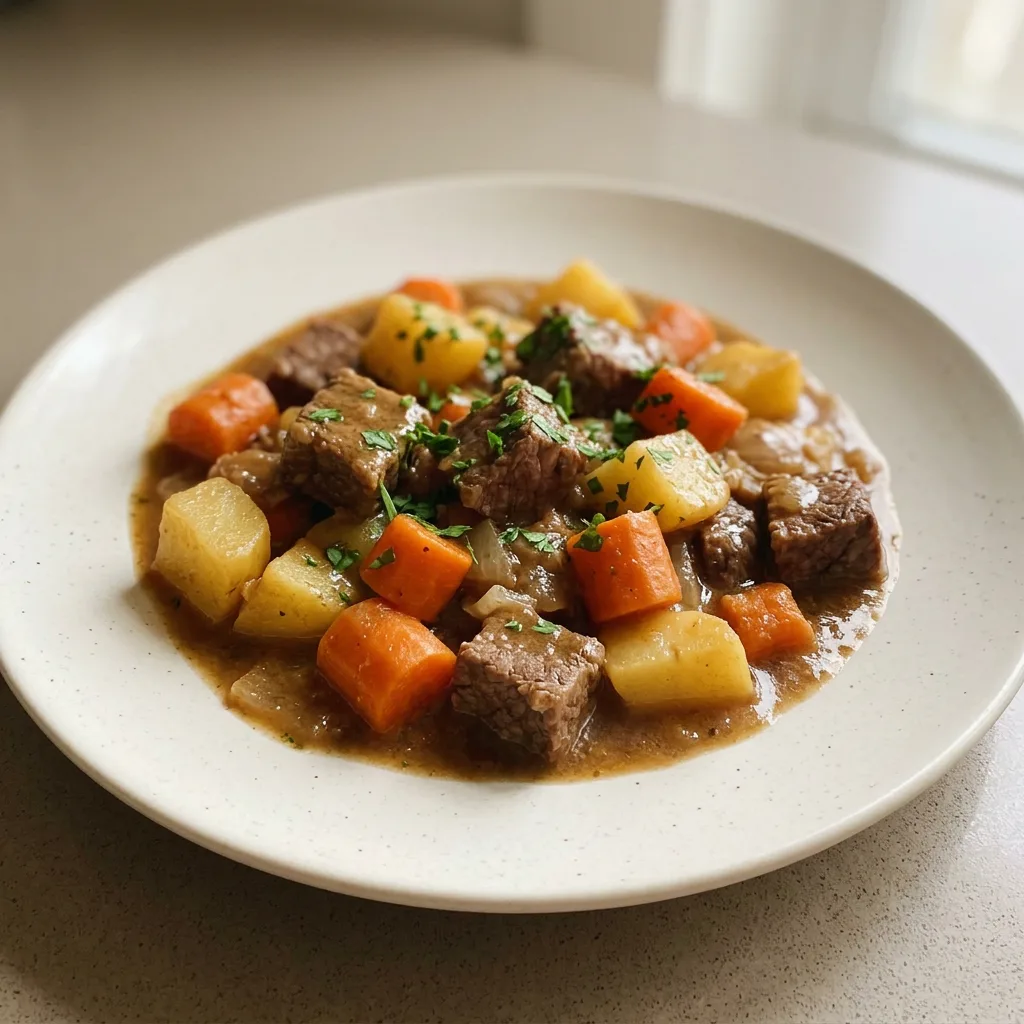
Beef Brisket Stew
Ingredients
Method
Preheat Oven:
Heat oven to 350°F (175°C).Season Brisket:
Dry brisket cubes thoroughly using paper towels. Season with salt and pepper, mixing well to coat uniformly.Sear Brisket:
In a large (5-6 quart) heavy Dutch oven or stock pot over medium-high heat, warm olive oil. When hot, sear brisket cubes in 2-3 batches, flipping with tongs, for roughly 5-6 minutes each batch. Avoid overcrowding the pot.Reserve Brisket:
Move seared brisket to a plate and reserve.Sauté Vegetables:
Put onions, carrots, and garlic into the pot. Sauté and brown for 3-4 minutes until vegetables begin to soften and garlic becomes aromatic.Cook Tomato Paste:
Mix in tomato paste, stir thoroughly, and cook for 1 minute.Return Brisket:
Return seared brisket and any accumulated juices to the pot. Dust with flour and toss to coat meat and vegetables. Cook until no raw flour remains visible.Deglaze with Wine:
Pour in red wine, stirring and scraping up browned residues from the pot’s bottom and sides (deglaze). Cook for 1-2 minutes.Add Stock and Herbs:
Add beef stock, bay leaf, thyme sprigs, and 2 tablespoons parsley. Stir well to combine, breaking up any flour clumps.Braise for 2 Hours:
Bring to a boil, cover pot with lid, and place in the preheated oven. Cook for 2 hours.Add Potatoes:
After 2 hours, take pot out of oven, carefully remove lid. Add potato cubes and 1 cup water, stirring to mix evenly.Finish Braising:
Replace lid and continue cooking in the oven for another 1 to 1 1/2 hours until potatoes are fork-tender.Skim Fat:
Just before serving, use a large metal spoon to skim off excess fat from the surface. Discard bay leaf and thyme sprigs.Garnish and Serve:
Sprinkle with the remaining 1 tablespoon parsley and serve hot.
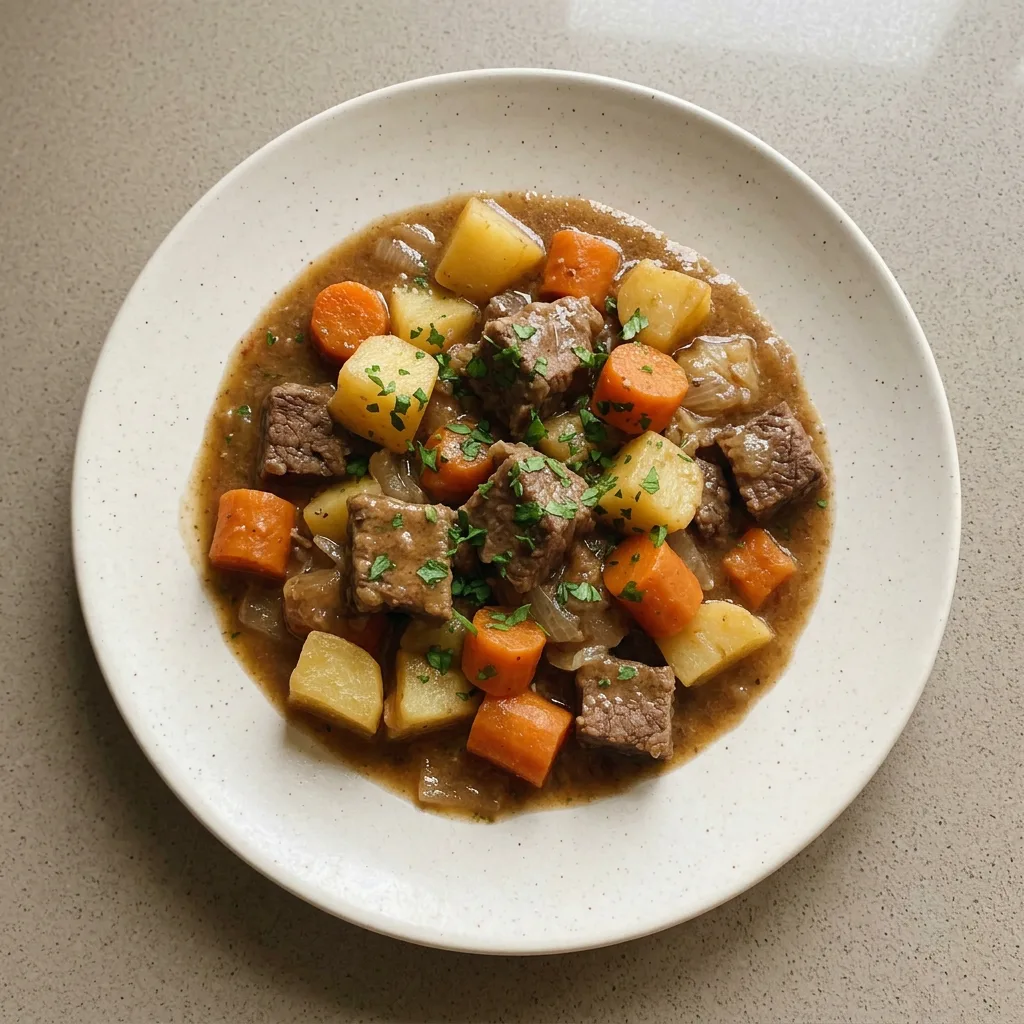
Storage and Reheating
Let the stew cool completely before refrigerating. Transfer to an airtight container; it keeps for up to 4 days. The stew thickens as it cools, so when reheating, add a splash of broth or water to restore the desired consistency.
Reheat gently on the stovetop over medium-low heat, stirring occasionally, until hot throughout. For leftovers, the potatoes soften slightly but remain intact.
Freezing is not recommended, as the potatoes and flour-thickened broth can separate and become grainy upon thawing. Serve hot, garnished with fresh parsley only if you are serving immediately; otherwise add parsley after reheating.
Best eaten within 2 days for the most tender meat and clearest broth.
Tips
- Use a heavy pot like enameled cast iron; it holds heat evenly and prevents scorching during the long oven braise.
- Trim the brisket of hard fat but leave some soft fat; the rendered fat keeps the meat moist and adds flavor.
Three swaps that work in this stew
Red wine: Replace with 1 cup beef broth plus 1 tablespoon red wine vinegar or balsamic vinegar. You lose the tannins that give structure, but the vinegar adds acidity to cut richness. The broth will taste less complex.
Use a full-bodied broth to compensate.
Golden potatoes: Substitute Yukon Gold or red potatoes, cut to the same size. Both hold their shape similarly and stay creamy. Avoid russets, they break down and cloud the broth, turning it starchy.
Fresh thyme: Use 1 teaspoon dried thyme (crumbled) if you don’t have fresh. Dried thyme is more concentrated. Add it with the stock so it rehydrates.
It won’t have the same fresh piney note, but the stew will still taste herbal. Strip leaves from stems before adding.
Frequently Asked Questions
Can I make beef brisket stew ahead of time?
Yes, make it up to 4 days ahead. Cool completely, then refrigerate in an airtight container.
Reheat gently on the stovetop with a splash of broth or water to loosen the thickened stew. The meat stays tender, though potatoes soften slightly.
Why is my stew greasy and how can I fix it?
Most likely you didn’t trim the brisket’s hard fat before cubing, or you skipped skimming at the end. To fix, let the stew sit a minute after cooking, then spoon off the top layer of fat. Next time, trim the brisket of thick, solid fat and sear in batches to render only what’s needed.
How do I know when the brisket is tender enough?
Pierce a cube with a fork, it should slide in with little resistance and the meat should separate easily when pressed. The total oven time is 3 to 3½ hours, but start checking after 3 hours. If the fork meets rubbery resistance, cook another 15 minutes and test again.
Can I cook this stew on the stovetop instead of the oven?
Yes, but you’ll need to maintain a bare simmer, not a boil, and stir occasionally to prevent scorching. The oven provides steady, gentle heat that cooks evenly without you watching the flame. If using the stovetop, expect to check the liquid level and adjust heat more often.
What’s the difference between brisket stew and pot roast?
Brisket stew starts with cubed meat and is served as a thick, spoonable stew with distinct chunks of meat and vegetables in a gravy-like broth. Pot roast is a large whole cut braised and sliced, often served with the cooking liquid as a separate sauce. This recipe’s flour coating gives the stew a silky body that pot roast typically lacks.
