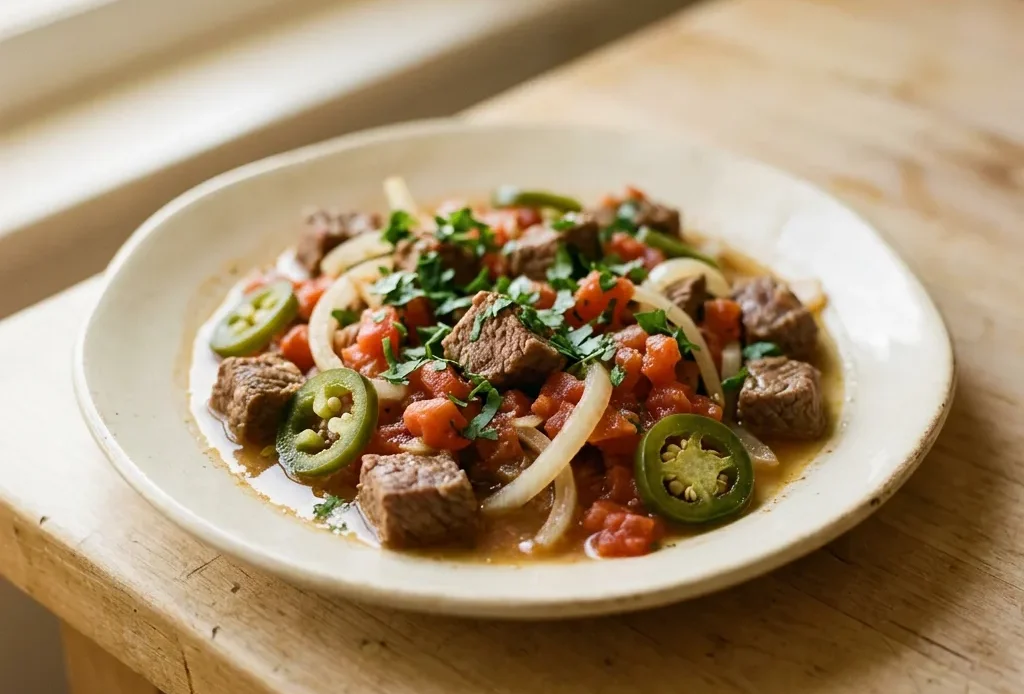
Salting the beef an hour before cooking makes or breaks this stew. That rest draws moisture out and lets it seep back in, so the meat stays juicy through the long simmer instead of turning dry and stiff. It’s the difference between a stew where every bite tastes seasoned and one that’s bland on the inside.
This mexican beef stew isn’t complicated, it just demands that you trust the timing. The rest is browning, softening, and letting the jalapeño and cumin do their work.
Salt the beef an hour ahead
Sprinkling the beef with salt a full hour before cooking does two things. First, the salt works its way deep into the meat, so every bite tastes seasoned, not just the surface.
Second, that rest lets the salt draw moisture out, then the meat reabsorbs it, which breaks down some of the protein structure. That makes the beef noticeably more tender after stewing.
You can feel the difference: the cubes stay juicy and don’t turn stiff or dry during the long simmer. This isn’t a step you should skip; it’s why the finished stew tastes seasoned all the way through, not just on the outside.
Searing builds deep savory flavor
That first blast of high heat does more than brown the beef. It triggers the Maillard reaction, which creates hundreds of flavor compounds that taste rich, meaty, and complex. Those browned bits stuck to the pan, the fond, are pure flavor waiting to dissolve into the stew.
Without searing, the stew would taste flat, like boiled meat. The caramelization also locks in juices, though the main point here is flavor, not sealing.
You want a good crust, but don’t crowd the pan; overcrowding drops the temperature and steams the meat instead of browning it.
Why top sirloin works for this stew
Top sirloin is a lean cut, but it’s naturally tender compared to chuck or brisket. That means you don’t need hours of simmering to get fork-tender pieces.
The 45-minute gentle simmer is just enough to soften the meat without turning it stringy or dry. Keeping the cubes uniform (about 3/4 inch) ensures every piece cooks at the same rate. If you used a tougher cut, you’d need a much longer cook time, and the lean sirloin would dry out before it softened.
The result here: beef that’s tender but still holds its shape, with a clean, beefy taste that the other ingredients don’t overwhelm.
Jalapeño, onion, tomato create the base
The flavor of this stew comes from three vegetables working together. Jalapeño brings heat and a fresh, grassy note; leave the seeds in for more fire, remove them for a milder kick.
Onion, sliced thick and cooked until tender, adds sweetness and a soft texture that contrasts with the beef. The tomatoes (canned, with their juices) give acidity and umami. Dried oregano and cumin tie it all together, adding earthiness and a citrusy warmth.
When you taste the finished stew, you should pick up each element: a little heat, some sweetness, bright acidity. The balance is what makes this taste distinctly Mexican, not just beef in tomato sauce.
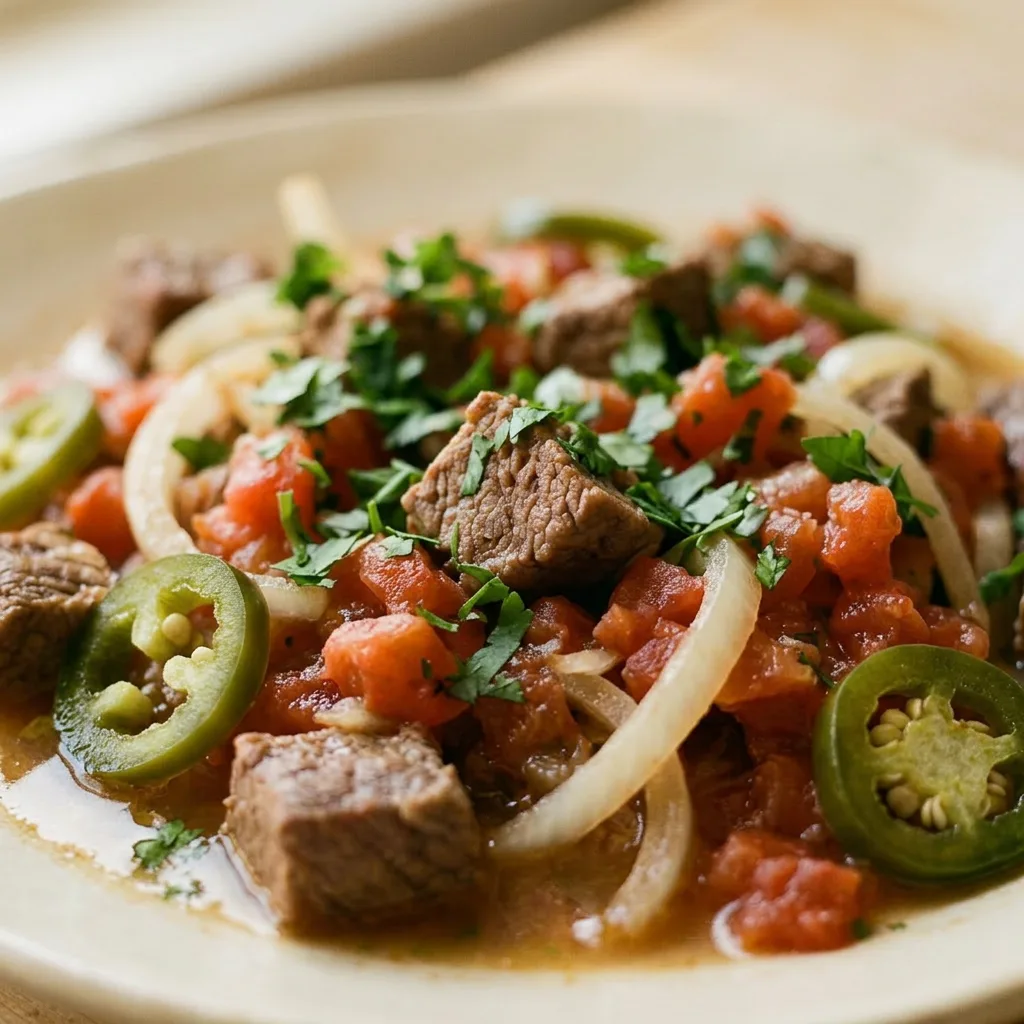
Prep: 1 hr 10 min · Cook: 45 min · Total: 1 hr 55 min · Servings: 8 · Calories: 230 kcal
What to look for in each ingredient
Top sirloin: Buy a whole piece and cube it yourself. Pre-cut stew meat is often scrap pieces that cook unevenly.
Jalapeños: Slice into thin rings, not dice. The seeds add heat; remove them for a milder stew.
Petite diced tomatoes: Use canned with their juices. They’re consistently ripe and add the right acidity year round.
White onion: Slice 1/4 inch thick so they soften but don’t disappear. Yellow onion works, but white is crisper raw.
Build the stew in stages for the right texture
Salt the beef 1 hour ahead
Sprinkle the cubes with 2 teaspoons salt, toss, and let sit uncovered. After an hour, the surface will look damp, not dry. That means the salt has penetrated.
Don’t skip this; it’s why the meat stays juicy through the long simmer.
Sear the beef on high heat
Heat the oil in a cast iron pan or Dutch oven until it shimmers. Add the beef in a single layer, don’t crowd, and let it brown undisturbed for 4 to 5 minutes. You’ll see a deep brown crust form.
If the pan steams instead, the heat is too low or the pan was crowded.
Cook the vegetables until tender
Stir in the onion, sliced jalapeños, oregano, and cumin. Cook, stirring occasionally, until the onion is translucent and softened, about 10 minutes. The bottom of the pan should have browned bits (fond) that will flavor the stew.
Simmer the stew covered on low
Reduce heat to low, add the tomatoes with their juices, and cover. Stir every 5 minutes to prevent sticking.
After 45 minutes, the beef should be tender enough to cut with a spoon, but not falling apart. If it’s still tough, cook 10 minutes more.
Finish with fresh cilantro
Stir in the chopped cilantro off heat. Taste and adjust salt if needed. The stew should be savory, with a gentle heat from the jalapeños and bright acidity from the tomatoes.
Serve directly from the pot.
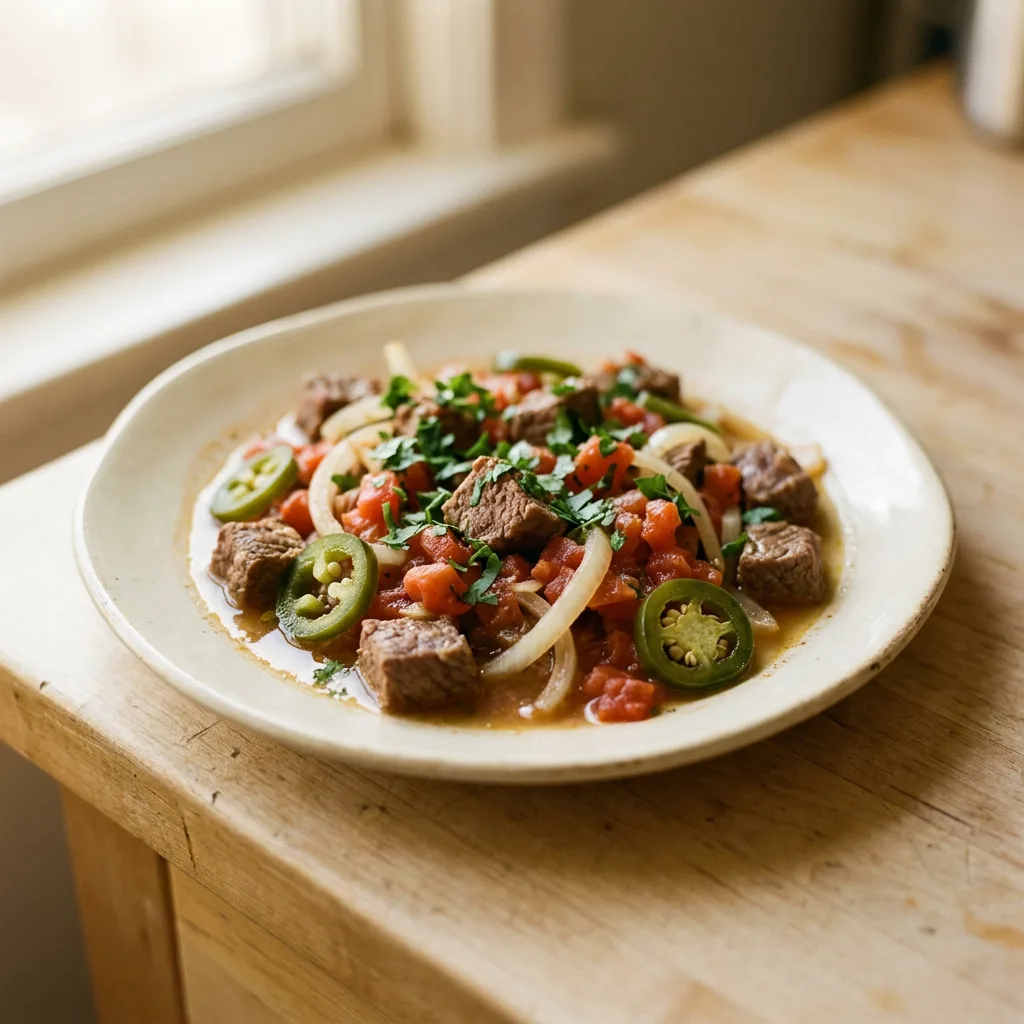
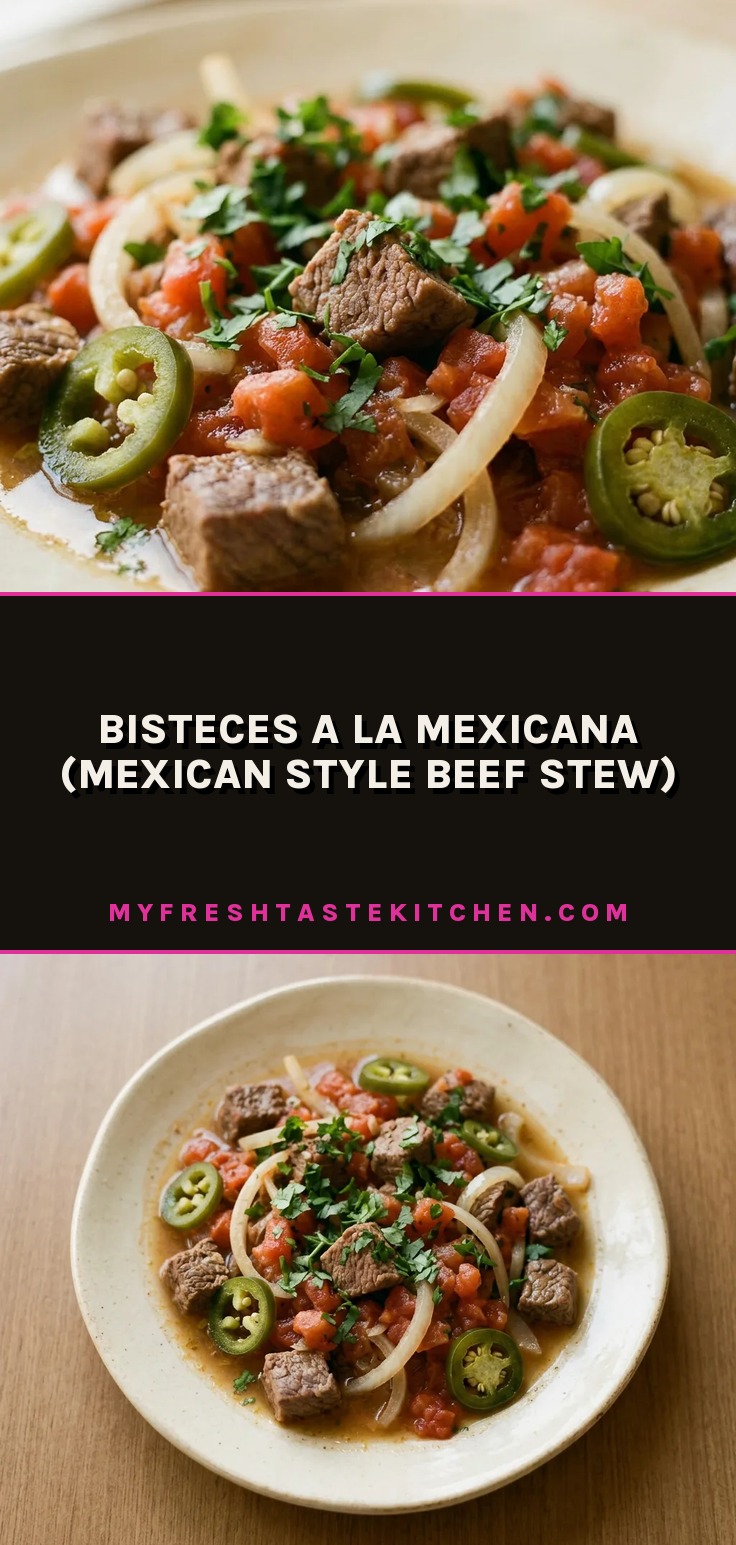
Bisteces a la Mexicana (Mexican Style Beef Stew)
Ingredients
Method
Salt the beef:
Sprinkle the beef with salt and allow to rest for 1 hour.Sear the beef:
In a large cast iron pan or Dutch oven, heat the oil on high. Once hot, add the beef and cook, stirring, for 4 to 5 minutes.Cook aromatics:
Stir in the onion, jalapeño, oregano, and cumin. Cook, stirring occasionally, until the vegetables are tender, about 10 minutes.Simmer with tomatoes:
Lower the heat to low, add the tomatoes, and cook covered, stirring every 5 minutes to prevent sticking, until the meat is tender, roughly 45 minutes. Mix in the cilantro.Serve family-style:
Portion the meat and serve family-style with warm tortillas, rice, and pickled jalapeño on the side, if desired.
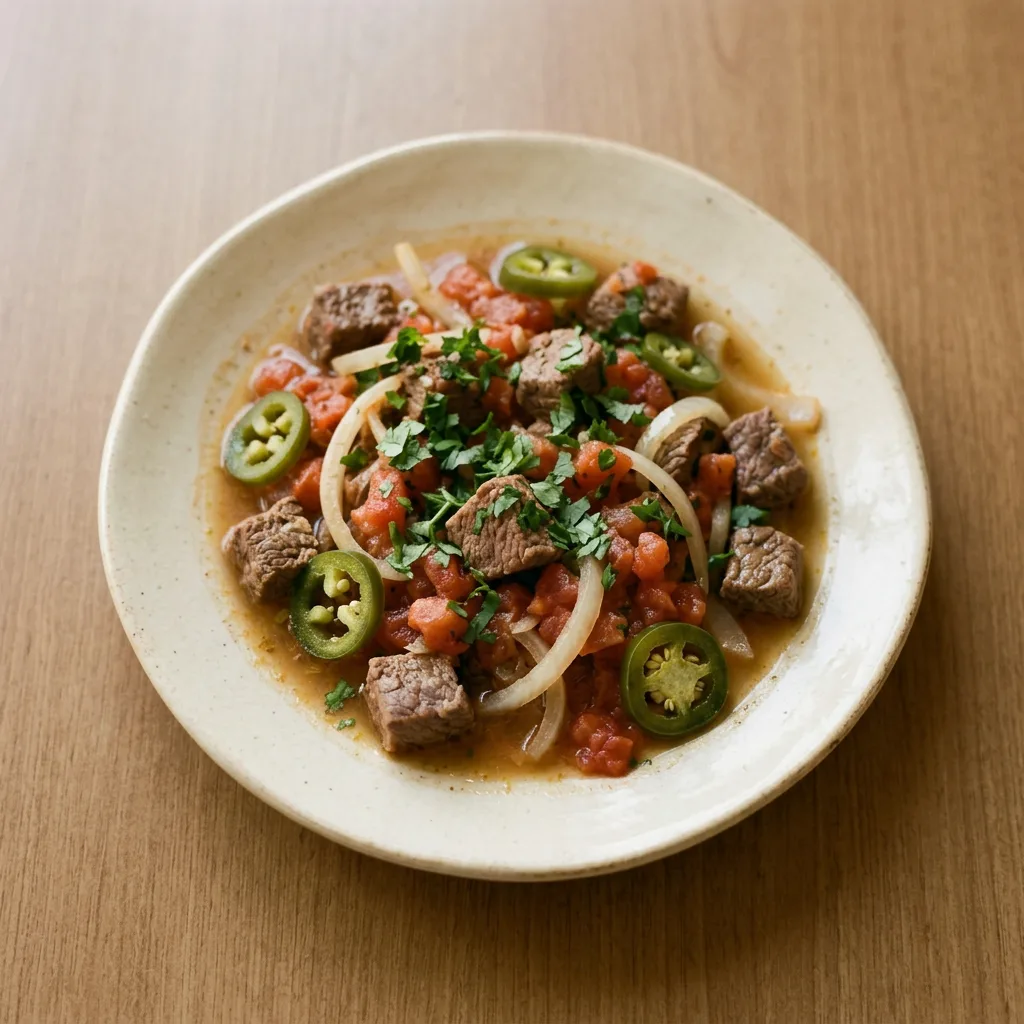
Storage and Serving
This stew tastes even better the next day. Store leftovers in an airtight container in the fridge for up to 4 days.
The stew thickens as it cools, and the flavors deepen, but the texture stays tender. To reheat, warm it in a covered pot over low heat, stirring occasionally, or microwave in 30-second bursts.
Stir in a splash of water or broth if it’s too thick. The stew holds well for 2 to 3 hours on the stove on the lowest setting; cover to prevent drying. Serve with warm tortillas, rice, and pickled jalapeños right after reheating.
For longer storage, freeze the stew without the cilantro for up to 3 months. Thaw overnight in the fridge, reheat gently, then stir in fresh cilantro just before serving. The tortillas and rice don’t freeze well; make them fresh.
Tips
- Toast the cumin and oregano in the dry pan for 30 seconds before adding oil. This releases volatile oils and deepens their flavor, giving the stew a more aromatic, layered taste that you can’t get from adding them straight to the oil.
- Use a cast iron pan or Dutch oven that holds heat well. When you add the beef, the pan temperature drops; a heavy pan recovers heat quickly, ensuring a good sear instead of steaming the meat.
Swapping the beef changes the cook time
Top sirloin: Chuck or brisket. 5 to 2 hours instead of 45 minutes.
Chuck has more connective tissue that breaks down into gelatin, giving a richer, more unctuous stew. The meat will shred rather than stay in neat cubes.
Top sirloin: Boneless, skinless chicken thighs. Use 2 pounds of thighs cut into 1-inch chunks. They’ll cook in about 25 minutes.
The stew will be lighter and less beefy. It’s a different dish, still good, but loses the deep savoriness of beef.
Jalapeños: Serrano peppers. Serranos are spicier and have a brighter, grassier heat.
Use 3 serranos instead of 4 jalapeños. Slice them thin.
The stew will be noticeably hotter; remove seeds if you want mild heat.
Canned petite diced tomatoes: Fresh Roma tomatoes, diced. You’ll need about 1 1/2 pounds.
Fresh tomatoes are less acidic and have more liquid. You may need to simmer the stew uncovered for the last 10 minutes to thicken it. The flavor will be milder and brighter.
Frequently Asked Questions
Can I make this stew ahead of time and reheat it?
Yes. The stew tastes even better the next day.
Store it in an airtight container in the fridge for up to 4 days. To reheat, warm it in a covered pot over low heat, stirring occasionally, or microwave in 30-second bursts.
Add a splash of water or broth if it’s too thick after refrigeration.
How do I prevent the beef from becoming dry or tough?
The salting step is key, 1 hour before cooking lets salt penetrate the meat, keeping it juicy through the 45-minute simmer. Also, cut the top sirloin into uniform 3/4-inch cubes so they cook evenly. If you use a tougher cut like chuck, you must increase the simmer time to 1.5 to 2 hours; otherwise, the lean sirloin will dry out before it softens.
Is this dish traditionally served with rice and tortillas, or are there other sides?
This stew is served family-style with warm soft corn tortillas and cooked rice. Pickled jalapeños are also suggested on the side.
The tortillas and rice are part of the intended serving, not an afterthought. The stew itself is saucy enough to spoon into tortillas or over rice.
