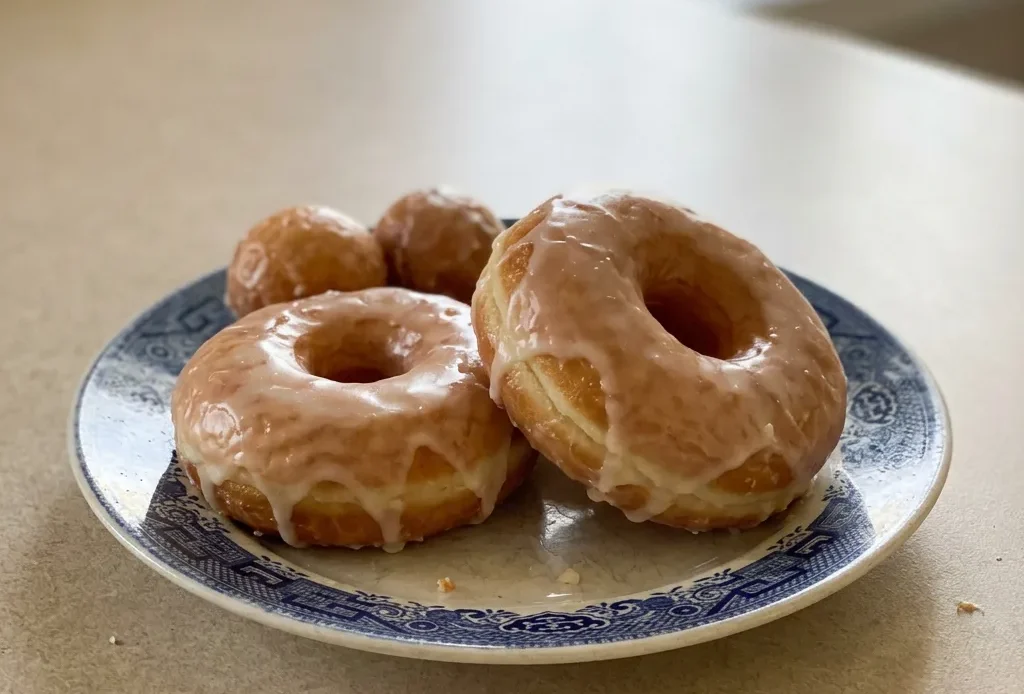
The single hardest part of making glazed donuts from scratch is getting the crumb right. Too dense and they’re sinkers; too airy and they collapse.
A tangzhong starter solves both problems by locking in moisture without making the dough slack, so these homemade glazed donuts stay soft even after a crackly glaze sets. That cooked flour paste is the difference between a donut that tastes like it came from a bakery case and one that reminds you why you usually buy them.
Tangzhong’s tenderness
That cooked flour-water paste, the tangzhong, is what makes these donuts soft and tender even a day later. By pre-gelatinizing the starches, the dough can hold onto more moisture than it otherwise could.
The extra liquid stays trapped in the crumb, so the donuts feel soft rather than dry or dense. You’ll notice the difference when you bite into one: the interior is almost cloud-like, and it doesn’t turn stale by the next morning. That same moisture also helps the crumb stay pliable under the glaze, so the coating doesn’t turn the donut into a soggy mess.
The tangzhong essentially locks in softness, giving you a donut that’s as good hours later as it is fresh from the fryer.
Two rises for flavor and lift
Why not just shape and rise once? The first rest after mixing, the bulk fermentation, does more than relax the gluten. During that 30 to 45 minutes, the yeast starts working, producing subtle fermentation byproducts that deepen the dough’s flavor.
You won’t get that complexity if you skip straight to shaping. The second rise, after cutting, is all about volume. As the homemade donuts proof on their parchment squares, they puff up, trapping air that will expand in the hot oil.
That’s what gives them an airy, open crumb rather than a dense, bready texture. Each rise has a distinct job: the first develops taste, the second develops structure.
Without both, you’d end up with flat, one-note donuts.
Glaze set time
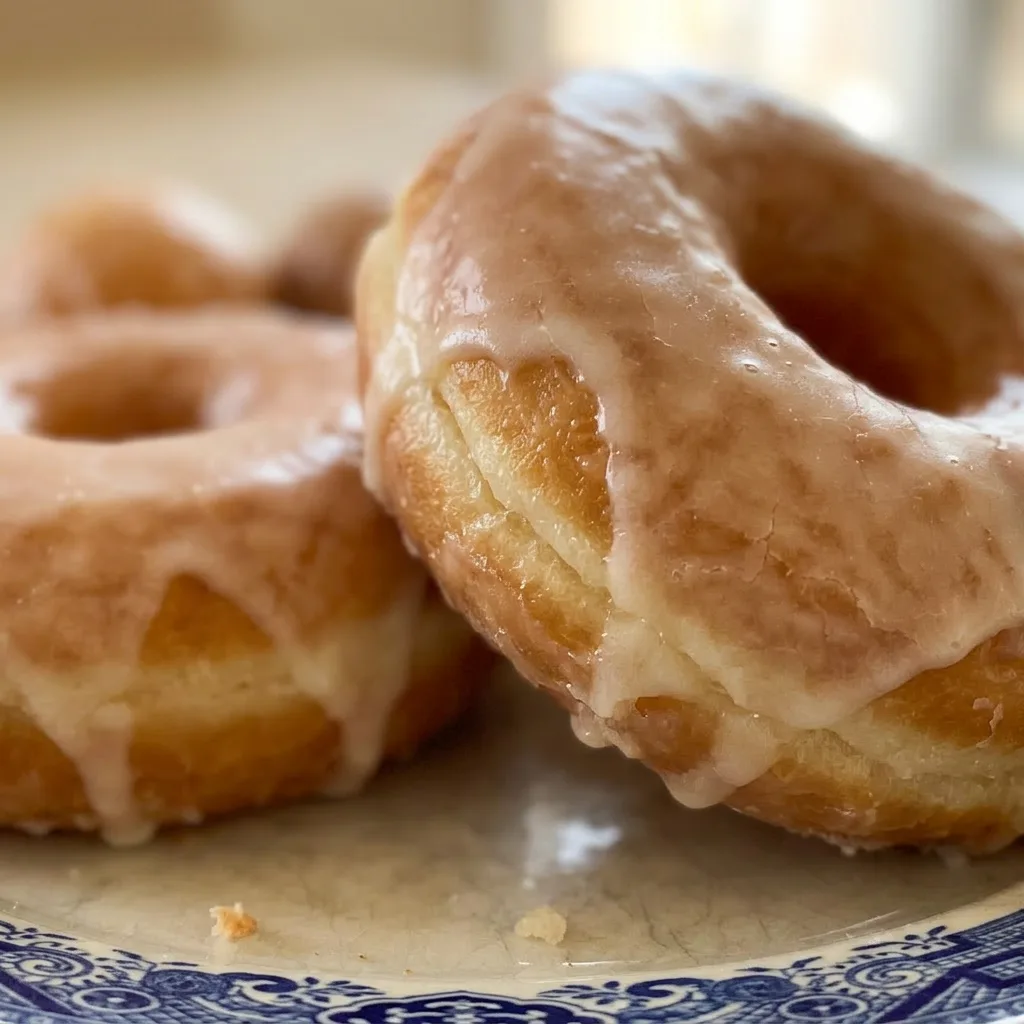
The glaze goes on right after frying, while the donut is still warm. That heat thins the glaze slightly, letting it seep into the surface pores and form a thin, bonded layer. As the donut cools over the next hour, that layer hardens into a crisp, crackly shell that doesn’t smudge when you pick it up.
If you try to stack or store them too soon, the glaze will stay tacky and stick to everything. That 45 to 60 minutes isn’t optional, it’s the difference between a polished, stable finish and a messy, sticky coating.
The texture of the set glaze is satisfying, a brittle snap that contrasts with the soft crumb. Wait it out, and the donuts look and feel like they came from a shop window.
Prep: 3 hr 45 min · Cook: 15 min · Total: 4 hr · Servings: 8 · Calories: 340 kcal
Why these four ingredients matter most
Bread flour: Its higher protein content builds the gluten network needed for a light, airy crumb that holds up to frying.
Instant yeast: It mixes directly with the dry ingredients and gives a reliable, fast rise without proofing first.
Whole milk: The fat and solids enrich the dough and help keep the crumb tender, so use whole, not skim.
Neutral oil: Pick one with a high smoke point and no flavor, like canola or avocado, so it doesn’t compete with the glaze.
How the method builds a better donut
Make the tangzhong
Whisk water and bread flour in a saucepan over medium heat. The paste should thicken into a stiff, pudding-like consistency that pulls away from the sides as you stir. If it stays runny, cook a minute longer.
Mix the dough
Combine dry ingredients, then add milk, egg, and tangzhong. After 2 minutes on low, the dough should be shaggy but cohesive. If it looks dry and crumbly, add a teaspoon of milk; if soupy, a tablespoon of flour.
Incorporate the butter
Add butter a tablespoon at a time on low speed. Each piece should disappear into the dough before the next goes in. If the dough starts sliding around the bowl, slow the mixer and let it re-engage.
Knead until smooth
Knead on medium-low for about 12 minutes. The dough should feel smooth and elastic, not sticky. Tear off a small piece and stretch it: you should see a thin, translucent membrane without tearing.
If it rips easily, knead 2 to 3 minutes more.
First rise (bulk fermentation)
Let the dough rest in a greased bowl until it looks puffy and has risen about 1.5 times its original size, 30 to 45 minutes. It should feel airy when you poke it, not dense. If it hasn’t moved after 45 minutes, your yeast might be old.
Shape the donuts
Roll the dough to an even 3/4-inch thickness. Cut with a donut cutter, then gently knead scraps, rest 5 to 10 minutes, and cut again. The dough should be soft but not sticky; dust with flour only if it sticks to your hands.
Second rise (proofing)
Place each donut on a parchment square and cover loosely. Let them rise until doubled in size and soft to the touch, about 45 to 65 minutes. They should feel light and airy, not taut.
If they deflate when touched, they’ve over-proofed, fry them immediately.
Fry the donuts
Heat oil to 350°F. Lower donuts on their parchment into the oil, then remove paper with tongs.
Fry 2, 3 at a time for about 2 1/2 minutes total, flipping halfway. They should turn deep golden brown with a ring of lighter color in the middle. If they brown too fast, the oil is too hot.
Make the glaze
Whisk powdered sugar, hot water, vanilla, and salt until smooth. The glaze should be thick but runny enough to coat the back of a spoon. If it’s too thick to dip, add hot water a teaspoon at a time; if too thin, add more powdered sugar.
Glaze and set
Dip warm donuts fully into the glaze, letting excess drip off. Place them on a wire rack and let them sit untouched for 45 to 60 minutes. The glaze should turn from glossy to matte and feel dry to the touch.
If it’s still tacky, wait longer.

Homemade Glazed Donuts
Ingredients
Method
Make Tangzhong Paste:
Combine the water and bread flour in a small saucepan, whisking them together. Set over medium heat and cook, whisking continuously, until the mixture becomes a thick paste, roughly 4–5 minutes. Transfer to a small bowl and reserve for later use.Mix Dough Ingredients:
In a stand mixer bowl equipped with the dough hook, mix the bread flour, sugar, yeast, and salt. Pour in the milk, egg, and tangzhong. Knead on low speed for 2 minutes until the dough comes together.Knead in Butter:
While the mixer runs on low, incorporate the softened butter one tablespoon at a time, ensuring each addition is fully absorbed before adding the next. After all butter is added, raise the speed to 2 on a KitchenAid and knead for 12 minutes, or until the dough is smooth, elastic, and passes the windowpane test.First Rise:
Form the dough into a ball and put it in a lightly greased bowl. Cover and allow it to rest at room temperature for 30–45 minutes.Cut Parchment Squares:
While the dough rests, cut out 8–9 squares of parchment paper.Roll and Cut Donuts:
Transfer the dough to a floured work surface, dust the top with flour, and roll it to a thickness of 3/4 inch. Using a large round donut cutter, cut out donuts (you should get about eight from dough rolled to 3/4 inch). Gently knead the leftover dough together, let it rest for 5–10 minutes, then roll and cut again.Proof Donuts:
Set each donut on a parchment square and arrange them on a baking sheet. Loosely cover with plastic wrap and let them rise until puffy and doubled in size, about 45–65 minutes.Heat Oil:
When the donuts are roughly halfway through their final proof, begin heating 3–4 inches of oil in a heavy pot to 350°F (175°C). Line a baking sheet with a wire rack. Monitor the temperature; if the oil reaches 350°F (175°C) before the donuts are ready, lower the heat slightly to maintain it until proofing finishes.Fry Donuts:
In small batches, use a metal slotted spoon to carefully lower 2–3 donuts (still on their parchment) into the hot oil, then remove the paper with tongs. Fry for about 2 1/2 minutes total, flipping once halfway, until golden brown. Move to the wire rack to drain.
Prepare Glaze:
In a medium bowl, whisk the powdered sugar, hot water, vanilla, and salt until smooth. Adjust the consistency with more water or powdered sugar to achieve a thick yet pourable glaze.Glaze Donuts:
Dip each donut on both sides into the glaze, allowing excess to drip off, then return them to the wire rack over the baking sheet.Set and Serve:
Let the donuts sit for about 45–60 minutes until the glaze sets completely, then serve and enjoy!
Storage and Serving
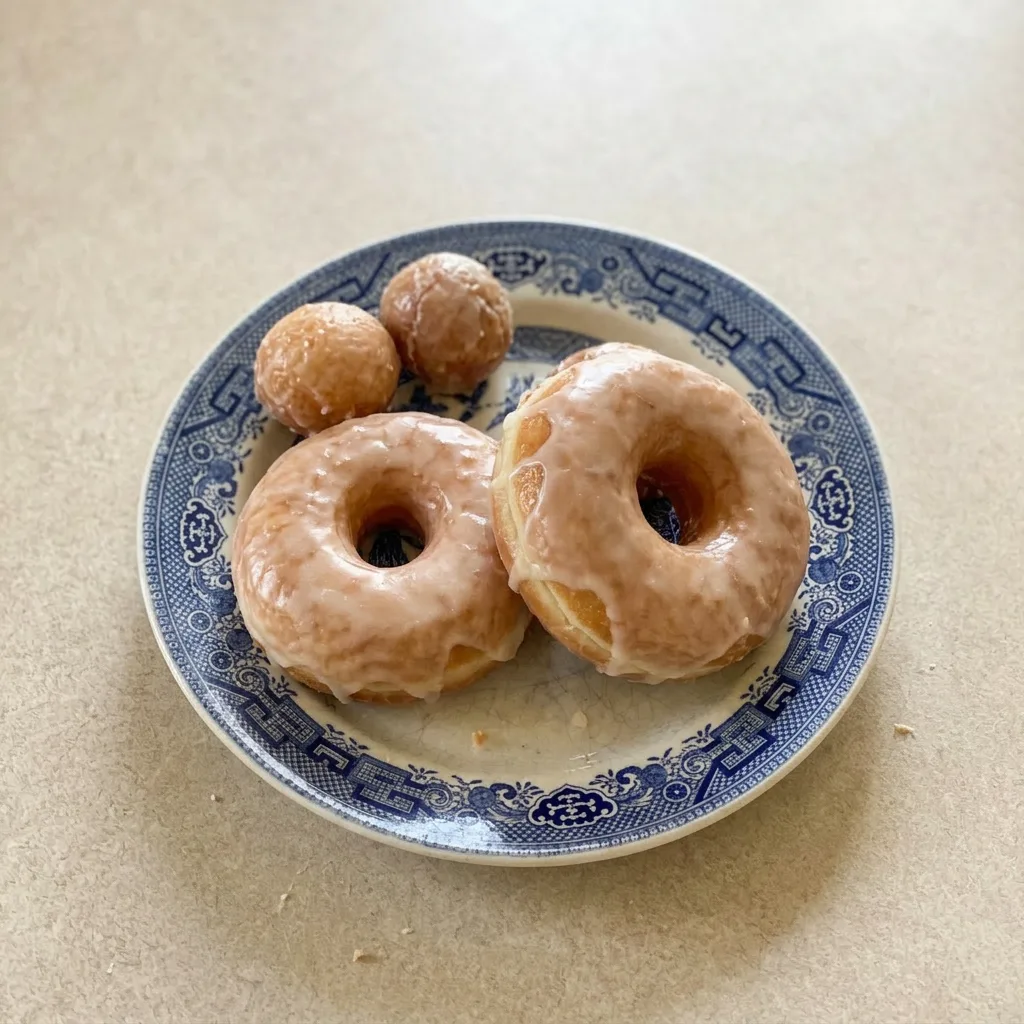
For the best texture, serve glazed donuts within a few hours of glazing. The glaze sets firm and crackly, while the crumb stays soft thanks to the tangzhong. If you must store them, keep them in a single layer in an airtight container at room temperature for up to 1 day.
Avoid the fridge: it dries out the crumb and softens the glaze. After a day, the glaze will lose its snap and the donut will become softer, though still pleasant.
These donuts don’t freeze well once glazed; the glaze weeps and turns sticky on thawing. However, you can freeze unglazed fried donuts for up to 1 month. Thaw at room temperature, then reheat in a 350°F oven for 3 to 4 minutes before glazing.
The glaze must be applied after reheating, not before freezing, to maintain its crisp finish.
What you can swap without wrecking the donut
Bread flour: All-purpose flour, same amount by weight (about 460g total for the 3 cups + 2 tablespoons plus the 1/4 cup in the tangzhong). Use a scale.
All-purpose has less protein, so the crumb will be slightly less chewy and a bit more tender. The donuts won’t puff quite as high, but they’ll still be soft and airy.
If you use volume measures, spoon and level the flour, don’t scoop.
Whole milk: Any milk or unsweetened non-dairy alternative (almond, oat, soy) at room temperature. Lower-fat or non-dairy milk reduces richness slightly, the crumb will be a hair less tender and the flavor a touch leaner.
Non-dairy milks with stabilizers (like oat) work fine; thin ones (like rice milk) may make the dough a bit slack. Use the same volume.
Unsalted butter: Vegan butter (stick form, at least 80% fat) at room temperature. Vegan butter has a higher water content, so the dough may feel a little softer and need an extra minute or two of kneading. The flavor will be slightly different, but the texture stays remarkably close.
Add it in the same way, one tablespoon at a time.
Vanilla paste or extract: Vanilla extract works exactly as written. For a different flavor, substitute 1 teaspoon of almond extract, but go easy, it’s potent.
Almond extract changes the glaze’s character entirely, giving a marzipan-like note. The glaze consistency remains the same. Start with 1/2 teaspoon, taste, and add more if you want.
Tips
- When frying, use a spider skimmer to gently submerge the donuts for the first 15 seconds; this prevents the parchment from burning and ensures even browning.
- After glazing, place the donuts on a wire rack set over a baking sheet lined with parchment for easier cleanup; the excess glaze drips onto the parchment, not the sheet.
Frequently Asked Questions
Can I make the dough the night before and fry them in the morning?
Yes, you can refrigerate the dough after the first rise. Shape the donuts in the morning, let them proof until doubled (45 to 65 minutes at room temperature), then fry. The cold dough will need a few extra minutes to proof; look for the same puffy, soft feel before frying.
Why did my donuts come out greasy?
Greasy donuts usually mean the oil wasn’t hot enough. At 350°F, the crust sets quickly and seals against oil absorption.
If the oil is below 325°F, the donuts soak up fat instead of forming that barrier. Check your thermometer next time, or use the bread cube test: a 1-inch cube should turn golden brown in about 60 seconds.
How do I know when the oil is at the right temperature without a thermometer?
Drop a 1-inch cube of bread into the oil; it should turn golden brown in about 60 seconds. If it browns in 40 seconds, the oil is too hot; if it takes 90 seconds, too cool. Adjust the heat accordingly.
The donuts should fry for about 2 1/2 minutes total, so matching that timing gives you the right temp.
Can I bake these donuts instead of frying?
No, this recipe is designed for frying only. The tangzhong and high hydration work with the rapid heat of oil to create a soft, airy crumb.
In an oven, the donuts would bake up drier and denser, with a crust that won’t match the fried version. For baked donuts, you’d need a different formula.
My donuts didn’t rise much; what went wrong?
Most likely your yeast was old or the liquids were too hot. Instant yeast needs temperatures below 120°F to stay active; if your milk or tangzhong was warmer, it killed the yeast.
Check the expiration date on your yeast, and use a thermometer next time. 5 times the original size in 30 to 45 minutes; if it hasn’t moved by then, the yeast is the culprit.
