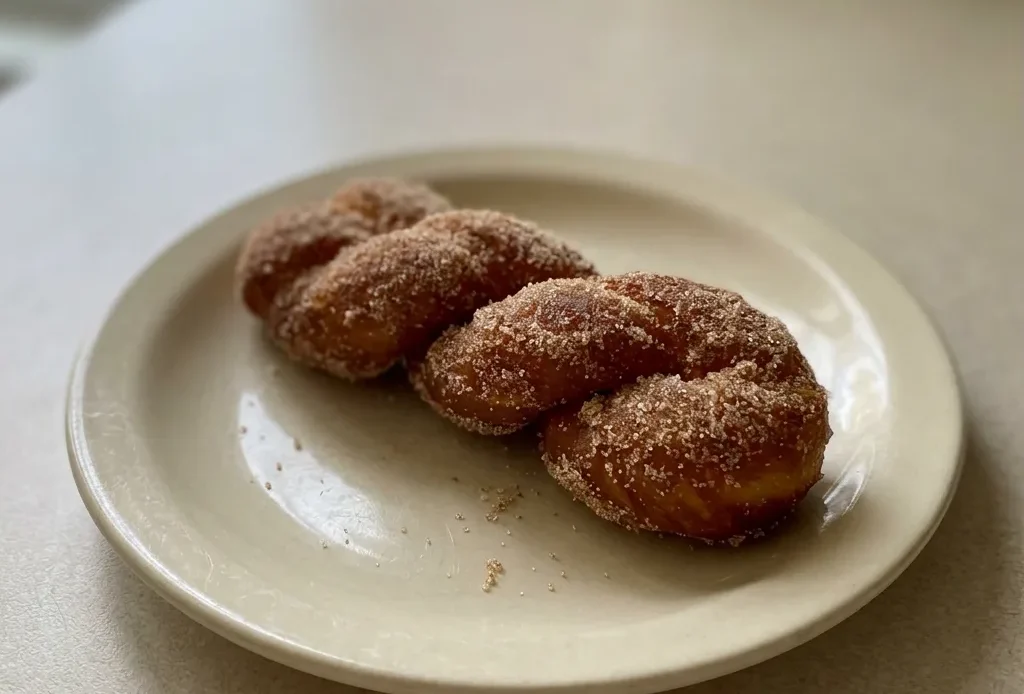
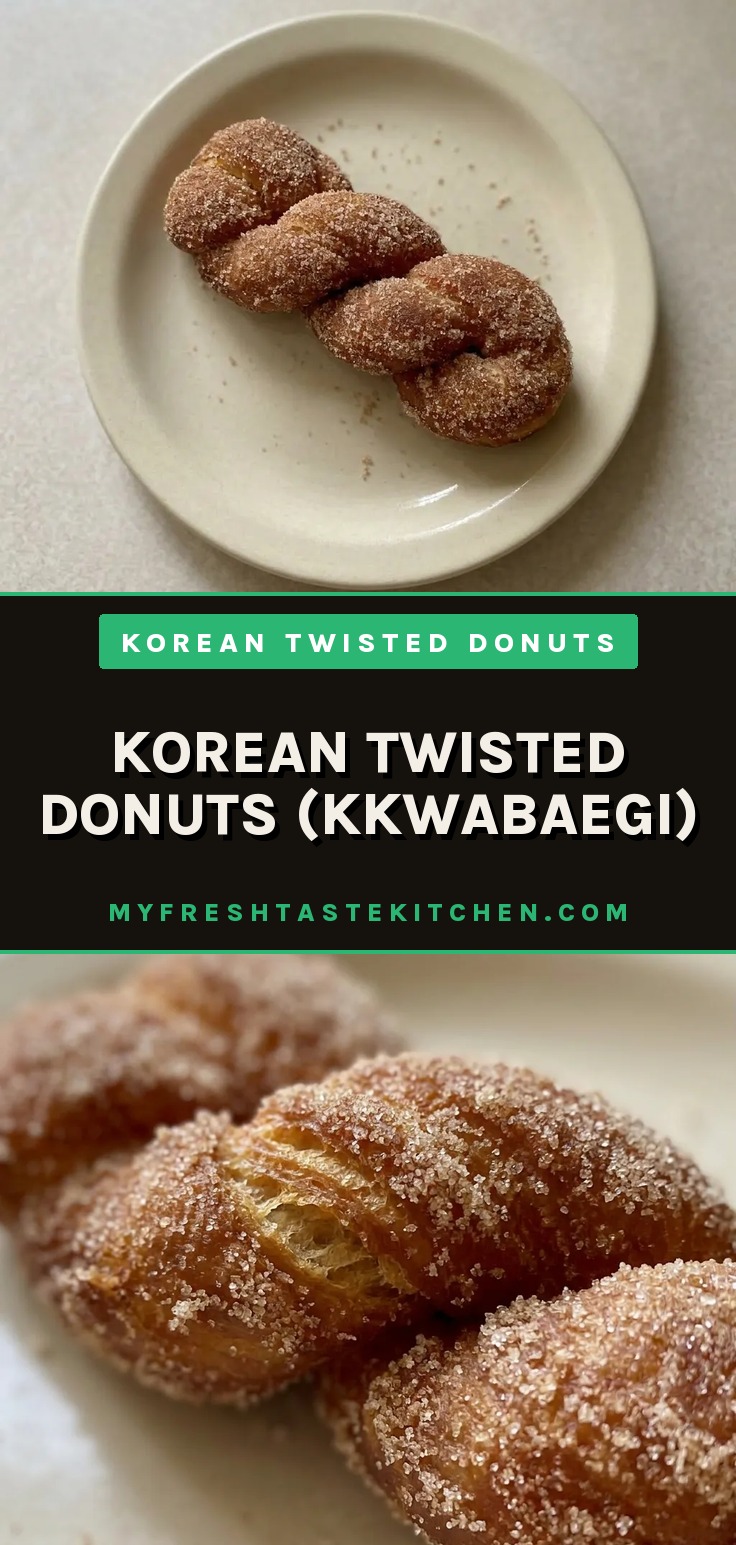
Not a glazed ring or a filled bomboloni, these Korean twisted donuts (kkwabaegi) are a different breed. Their signature chew comes from a double proof that builds gluten without making the dough tough, and the twist creates natural pull-apart segments that fry evenly.
The lower oil temperature is deliberate: it lets the center set before the crust over-darkens, so you get a crisp, cinnamon-sugar shell over a soft, bouncy crumb. A hand-rolled korean twisted donuts rewards patience with shaping and timing, rush either rise, and you’ll end up with a dense, greasy coil instead of the airy, resilient texture that makes this dessert worth the two-hour process.
Why two rises for a chewy donut?
The first proof, after mixing, lets gluten strands align and strengthen. You’ll see the dough double, that structure traps gas, giving the donut its signature chew. The 20-minute rest before that?
It relaxes the gluten so you can roll the ropes without them snapping back. After twisting, the second proof does something different: it plumps the shaped dough, creating air pockets that stay open during frying. A dense, flat donut means you rushed this step.
Both proofs together build the contrast: a resilient, bouncy crumb that yields without feeling heavy. Homemade donuts rely on this rhythm, no shortcuts.
How does twisting change the fry?
A twisted rope exposes more surface to oil, so it cooks evenly from edge to center. The coils also create natural break points, you pull apart segments instead of biting through a solid ring.
But if the ends come undone, the whole thing unravels into a straight strip. Now I always pinch the ends firmly and give them an extra squeeze before dropping them in the oil. Dusting the dough with flour keeps the strands from fusing during the final proof.
Skip that, and you might lose the twist altogether. This donuts recipe rewards careful shaping: the result is a coil that fries into a golden, pull-apart treat.
Why fry at 325°F, not hotter?
At 325°F, the donut heats through at the same pace the crust browns. Crank the oil to 350°F, and the outside will darken before the center sets, you’ll crack into a raw, doughy core.
The range matters: stay between 300°F and 325°F. A thermometer is your best friend here; the temperature drops when you add cold donuts, so you need that buffer. Low heat also minimizes oil absorption, leaving the crust crisp rather than greasy.
donuts come from patience, not high heat. Watch the color shift to deep gold, and you’ll know the interior is cooked through.
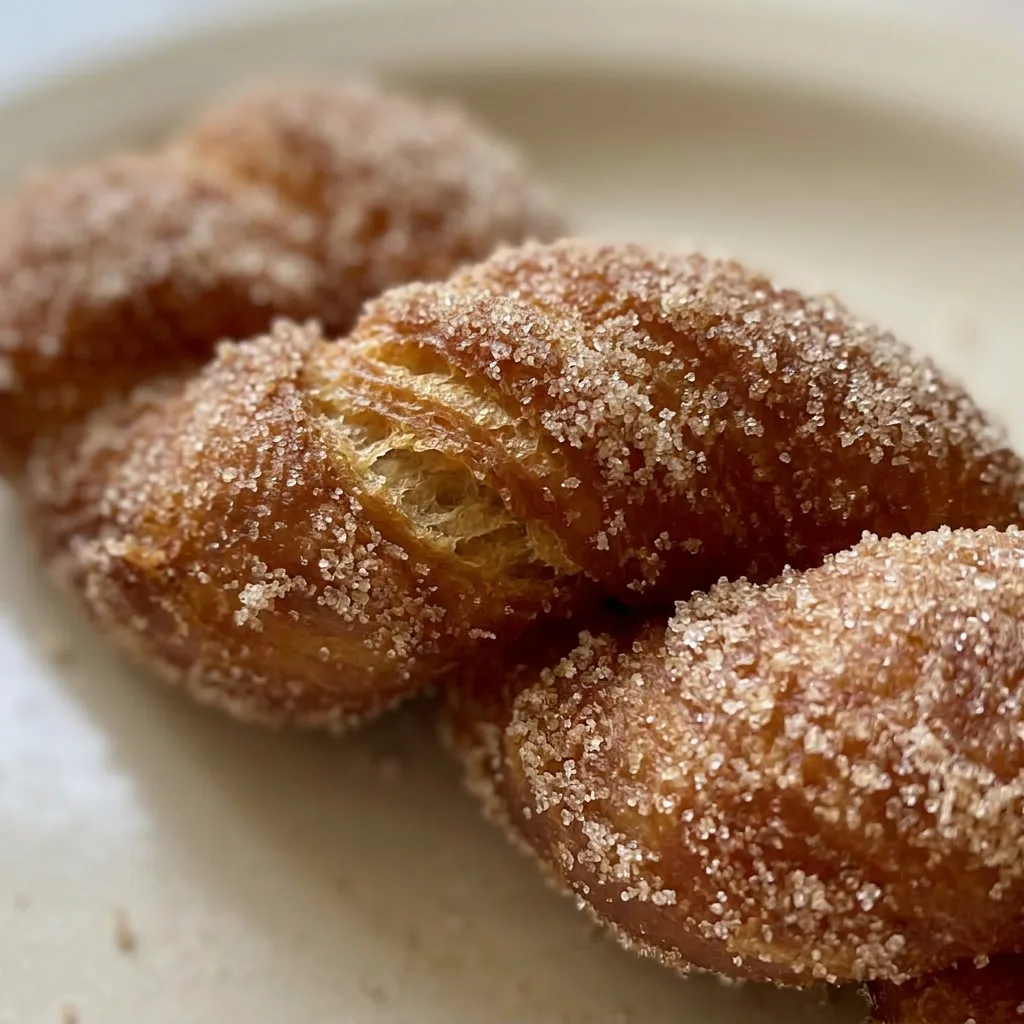
Prep: 10 min · Cook: 10 min · Total: 2 hr 20 min · Servings: 6 · Calories: 240 kcal
What to Look For in Kkwabaegi Ingredients
Active dry yeast: Check the expiration date. Dead yeast won’t foam and your donuts won’t rise.
All-purpose flour: Fluff, spoon, and level to avoid packing. Too much flour makes dense donuts.
Unsalted butter: Softened to room temperature so it creams into the dough without lumps.
Oil for frying: Use neutral oil with a high smoke point, like canola or vegetable.
Cinnamon sugar: Mix right before coating; clumps form if it sits too long.
How to Tell When Your Kkwabaegi Dough Is Ready
Activate the yeast
Scatter yeast over warm milk, stir, and let sit 3 to 5 minutes. You’ll see bubbles on the surface and smell that yeasty aroma. If nothing happens, the milk was too hot or the yeast is dead, start over.
Mix and first rest
Combine dry ingredients, then add the milk mixture and egg. Stir until a shaggy dough forms, then knead until no dry patches remain. Cover and rest 20 to 30 minutes.
The dough will relax, making rolling easier later.
Add butter and proof
Knead in softened butter until the dough feels smooth and no longer greasy. Form a ball, cover, and let proof until doubled, 45 minutes to 1 hour. Press a finger into the dough, if the indentation stays, it’s ready.
Shape and twist
Divide dough into 6 pieces. Roll each into a 12-inch rope, ½ inch thick.
Hold both ends and twist in opposite directions, then lift to coil. Pinch ends tightly so they don’t unravel. Dust with flour if sticky.
Second proof
Place twisted donuts on a parchment-lined pan, 1 inch apart. Cover and proof until doubled, 45 minutes to 1 hour.
They should look puffy and feel airy when gently touched. Underproofed donuts will be dense.
Fry at the right temperature
Heat oil to 325°F. Use a thermometer, anything above 325°F browns the crust before the center cooks. Fry in batches, turning once, until deep golden brown, about 3 to 4 minutes total.
Drain on a rack.
Coat immediately
Toss hot donuts in cinnamon sugar while they’re still warm. The sugar sticks better and creates a crisp coating. Let cool slightly before pulling apart.
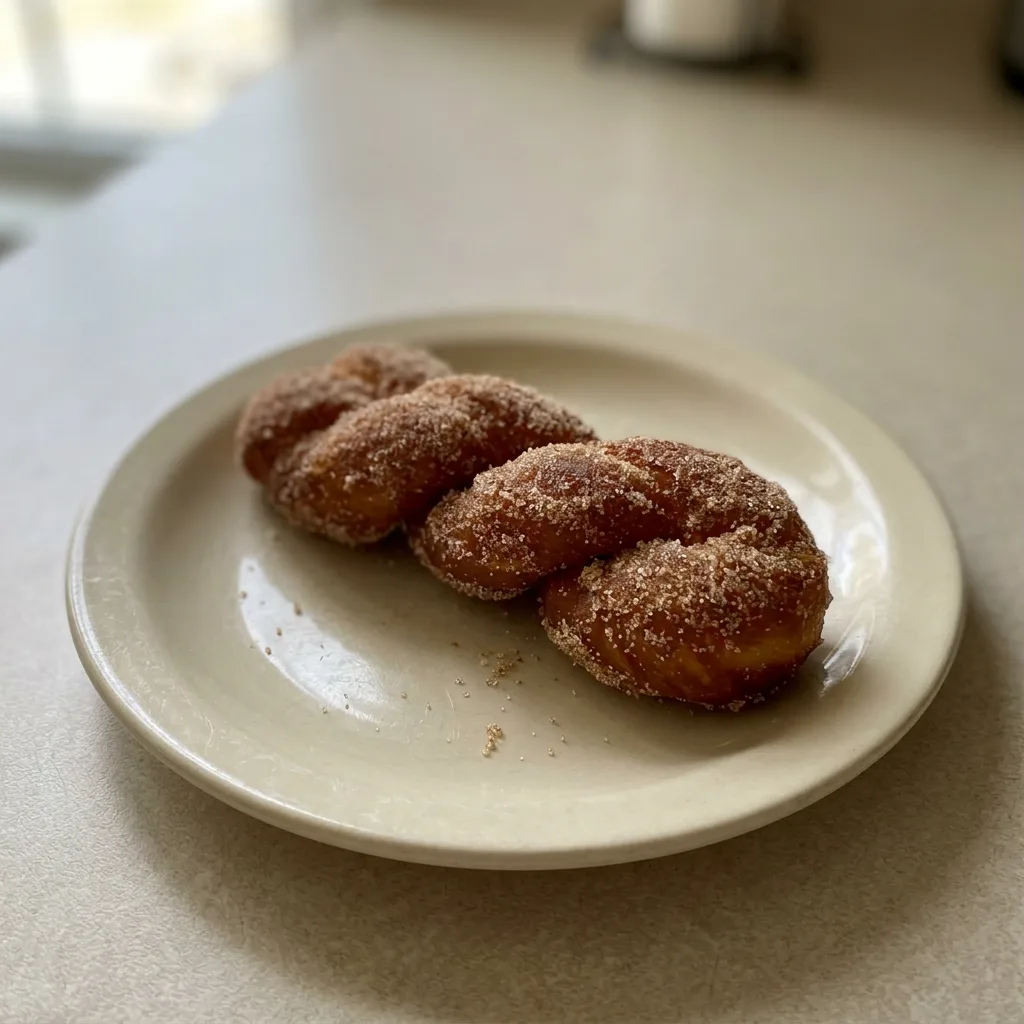
Korean Twisted Donuts (Kkwabaegi)
Ingredients
Method
Activate Yeast in Milk:
Scatter the active dry yeast over the warm milk. Give it a stir and let sit until the yeast dissolves and becomes active, roughly 3 to 5 minutes.Whisk Dry Ingredients:
In a bowl, whisk together the flour, 3 tablespoons sugar, and salt until well combined.Mix and Rest Dough:
Once the yeast has dissolved, pour the milk mixture and egg into the flour. Stir until the dough begins to come together, then knead until no dry patches remain. Cover and allow to rest in a warm spot for 20 to 30 minutes. (A stand mixer may be used.)Knead in Butter:
After the rest, incorporate the softened butter and knead until it is fully worked in and the dough feels smoother. Form into a ball, cover, and let proof in a warm area until it doubles in volume, approximately 45 minutes to 1 hour.Prepare Sheet Pan:
While the dough proofs, prepare a sheet pan by lining it with parchment paper.Divide Dough into Six:
Once doubled, turn the dough out onto a clean surface. Knead briefly to release gas, then cut into 6 equal portions.Shape Twisted Donuts:
Shape each portion into a thin rope about ½ inch thick and 12 inches long. Grasp both ends and twist in opposite directions. Lift the rope by the ends so it coils onto itself. Pinch the ends together and adjust the twists as desired. Place on the prepared pan, leaving at least 1 inch between pieces. Repeat with remaining dough. Dust with flour if sticky.Proof Shaped Donuts:
Let the shaped dough rest in a warm place until doubled, about 45 minutes to 1 hour.Mix Cinnamon Sugar:
In a shallow bowl, combine the ⅓ cup sugar and cinnamon; set aside.Heat Oil to 325°F:
When the donuts are almost doubled, heat oil in a deep fryer or pot to 325°F (165°C), using about 1 to 2 inches of oil. Keep the oil temperature between 300°F (150°C) and 325°F (149-163°C).Snip Parchment Around Donuts:
While the oil heats, snip the parchment around each donut with scissors, leaving a small piece attached at the ends to help with handling.Fry Donuts Until Golden:
Using the parchment, gently lower the donuts into the hot oil without deforming them. Fry in batches if necessary. After a few seconds, pull the parchment out of the oil. Continue frying until both sides are golden brown, about 3 to 4 minutes total. Transfer to a rack or paper towels to drain.Toss in Cinnamon Sugar:
While still hot, toss the donuts in the cinnamon sugar. Let them cool a bit before serving.
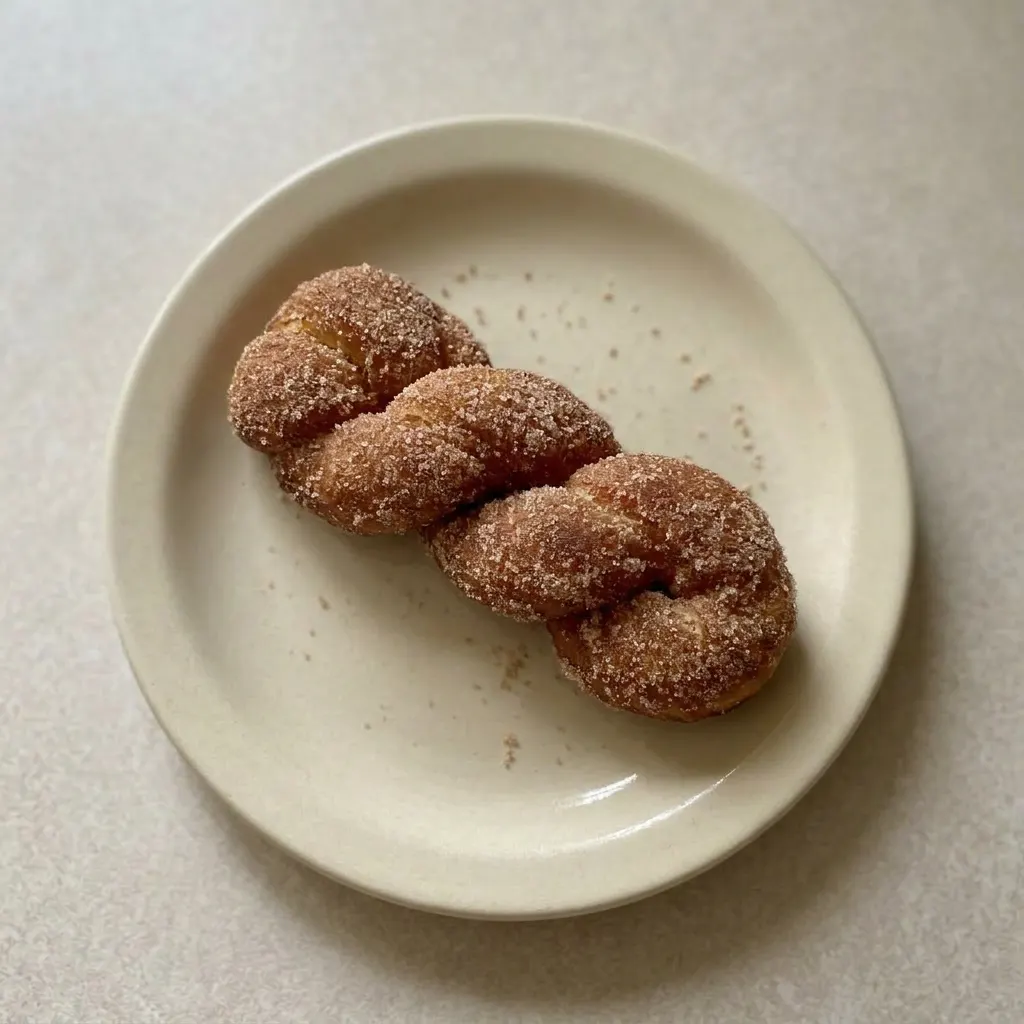
Swapping flour or yeast in these twisted donuts
Active dry yeast: Instant yeast (same amount, skip proofing step). You can add instant dry yeast directly to the flour without dissolving it in milk first. The donuts will rise just as well, with no change in flavor or texture.
All-purpose flour: Bread flour (same amount by weight). Bread flour has more protein, which gives the donuts a noticeably chewier, more resilient crumb. The dough will feel slightly stiffer and may need a touch more milk if it seems dry.
Unsalted butter: Vegan butter or coconut oil (same amount, softened). Vegan butter works fine; the donuts will be slightly less tender but still soft.
Coconut oil makes them a bit firmer and adds a faint coconut flavor, mild but present. For dairy-free, either is a solid choice.
Storage and Serving
These donuts are best eaten within a few hours of frying, while the exterior is crisp and the interior is soft. For leftovers, store in an airtight container at room temperature for up to 2 days. The sugar coating will soften the crust over time, and the donuts will become chewier.
To restore some crispness, reheat in a 300°F (150°C) oven for 5 minutes. Do not refrigerate; the cold dries them out and hardens the texture.
Freezing is not recommended, the thawed donuts turn greasy and lose their characteristic pull-apart texture. If you must make ahead, fry the donuts, cool completely, and store uncovered at room temperature for a few hours, then reheat as above, but note the coating will have softened.
Toss in cinnamon sugar just before serving for the best crunch.
Tips
- Use a digital thermometer to confirm the milk is between 95 to 105°F (35 to 40°C); too hot kills the yeast, too cold delays activation.
Frequently Asked Questions
Can I make the dough ahead and refrigerate overnight?
You can, but the texture will change, the second proof in the fridge slows fermentation, leading to a denser, less airy crumb. The recipe builds two proofs into the 2-hour rise for a reason; refrigeration extends that timeline. If you need to prep ahead, fry the donuts, cool them uncovered, then reheat in a 300°F oven for 5 minutes just before serving.
The sugar coating will have softened, so toss them in fresh cinnamon sugar after reheating.
Why did my donuts come out greasy?
Greasy donuts usually mean the oil temperature was too low, below 300°F, so the donuts soaked up oil instead of forming a quick crust. Watch the color: they should turn deep golden brown in about 3 to 4 minutes total. Another cause is overcrowding the pot, which drops the oil temperature.
Fry in batches, keeping the oil between 300°F and 325°F, and drain on a rack rather than paper towels to avoid steaming.
How do I know when the oil is at the right temperature without a thermometer?
Drop a small piece of dough into the oil, if it sizzles immediately and rises to the surface within a few seconds, the oil is around 325°F. If the dough sinks and sits at the bottom, the oil is too cold; if it browns in under 30 seconds, it’s too hot. The oil should shimmer slightly but not smoke.
A wooden chopstick is another test: insert it into the oil; if steady bubbles form around the tip, you’re in range.
What’s the difference between Kkwabaegi and regular yeast donuts?
Kkwabaegi are twisted into ropes, which creates more surface area for even frying and natural break points when you pull them apart. The double proof gives them a chewy, bouncy crumb rather than the airy, bread‑like texture of a standard ring donut. They’re also fried at a lower temperature (325°F) to keep the interior soft while the crust crisps, and tossed immediately in cinnamon sugar for a crunchy coating that regular glazed donuts lack.
