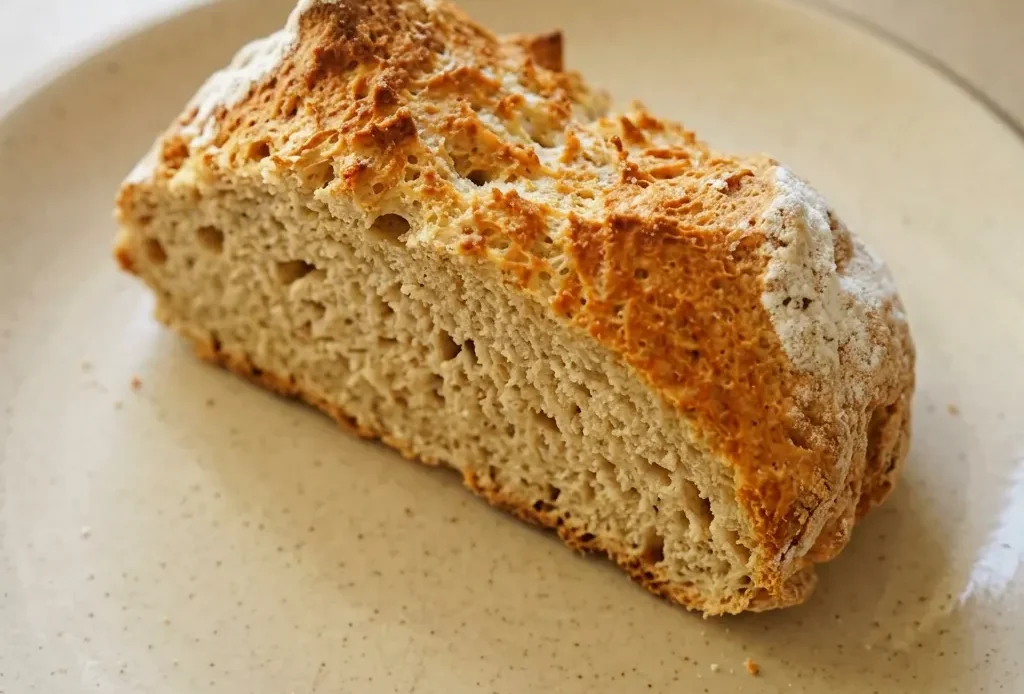
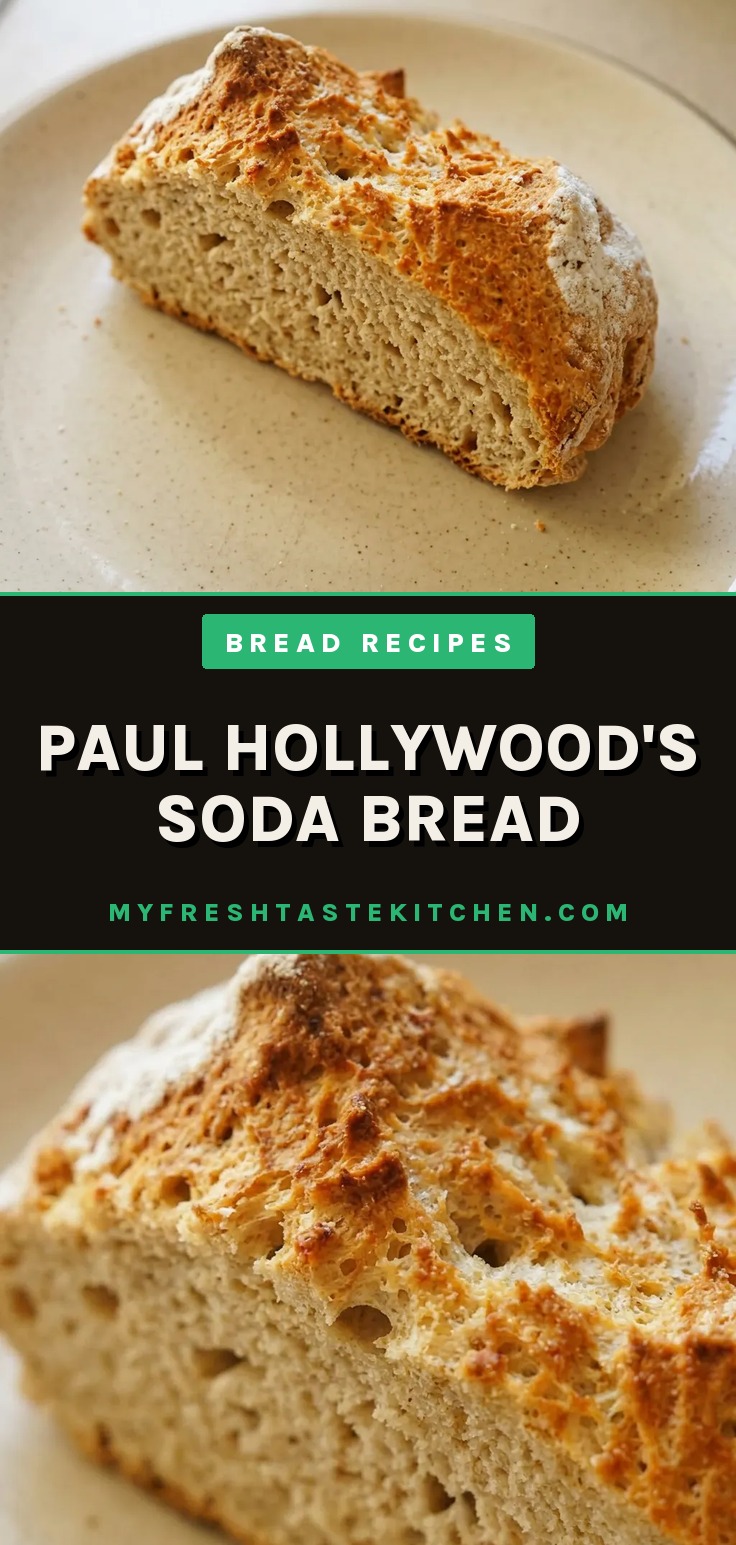
Paul Hollywood’s soda bread proves that Irish soda bread doesn’t have to be a hockey puck. The whole trick is trusting a wet, sticky dough and handling it barely at all, overwork it and you’ll crush the air that the buttermilk and baking soda just created. This version gets a tender crumb and a crisp crust without yeast, and it comes together fast enough that you can bake it while soup simmers.
Reach for buttermilk, not milk
Buttermilk does double duty here. Its acidity reacts with the baking soda to create carbon dioxide bubbles that lift the dough, that’s the entire rise, since there’s no yeast.
Without enough acid, the bread would be dense and flat. The tang it leaves behind is what gives soda bread its signature flavor, balancing the whole wheat’s nuttiness. Buttermilk also tenderizes the crumb; the acid weakens gluten bonds just enough so the bread stays soft, not tough.
You can taste the difference: a flat, chalky loaf versus one that’s moist and lively. Stick with real buttermilk for a result that actually delivers.
Cut a deep cross on top
That cross isn’t just for tradition, it’s structural. The deep cut lets heat penetrate to the center of the dough, so the interior bakes through before the crust burns.
As the bread expands in the oven, the cross opens up, directing the rise outward instead of splitting the loaf haphazardly. Without it, the top can crack irregularly, and the center might stay underdone.
The cross also creates those soft, floury peaks that tear apart easily at serving. It’s a simple shape that solves two problems at once, and it tells you at a glance that the bread was scored with intent.
Knead lightly, not thoroughly
Soda bread gets its tenderness from minimal handling. Kneading develops gluten, which gives yeast breads their chewy structure, but here, that structure would make the crumb tough and bready. You want just enough kneading to bring the dough together into a round, roughly 30 seconds.
The dough should feel sticky, not smooth and elastic. Overworking it deflates the gas bubbles from the baking soda reaction, leaving a dense, rubbery loaf. A light touch keeps the crumb open and tender.
Judge by the feel: if the dough springs back when poked, you’ve gone too far.
Start with a screaming hot oven and hot sheet
The initial blast of heat is what sets the crust. A preheated oven, and a hot baking sheet, hits the dough immediately, driving off surface moisture and creating a crisp shell.
If the sheet is cold, the bottom stays pale and soft, and the loaf spreads instead of rising tall. The hot sheet also helps the bottom crust firm up fast, so the bread holds its shape. You want a golden, crunchy exterior that contrasts with the soft interior.
That snap comes from the temperature shock, not from baking longer. The oven has to be ready before the dough is.
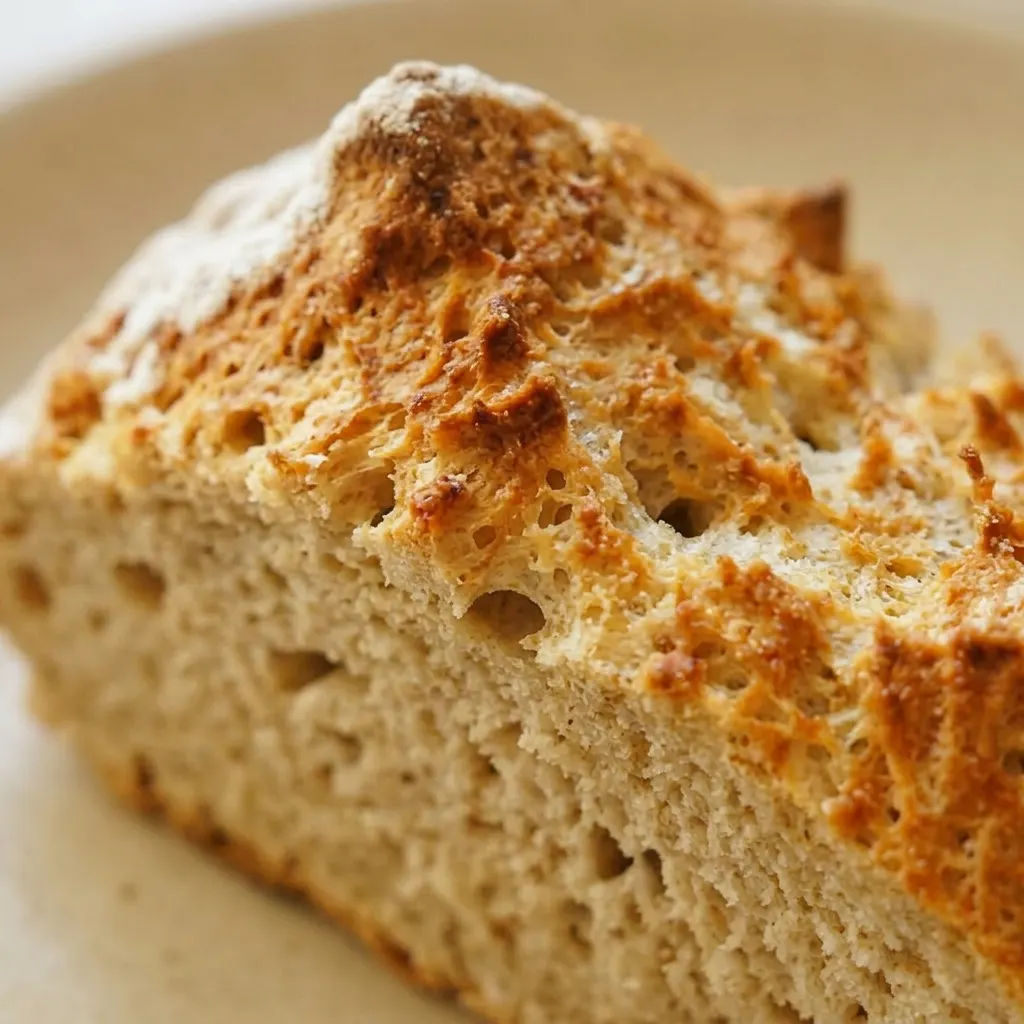
Prep: 5 min · Cook: 35 min · Total: 40 min · Servings: 1 · Calories: 2030 kcal
Two flours, one purpose
All-purpose white flour: Use plain white flour for structure; bread flour makes the crumb too chewy.
Whole wheat flour: Whole wheat adds nutty flavor and texture; go for fine-milled, not coarse.
Baking soda: Check it’s fresh: expired soda won’t react fully, leaving the bread flat.
Buttermilk: Real buttermilk is key; its acidity activates the soda and tenderizes the crumb.
Work the dough fast, then get it in the oven
Mix the dry ingredients
Sift the two flours, baking soda, and salt into a large bowl. Use your fingertips to lift and blend; you want the soda evenly dispersed, no white streaks later.
Add the buttermilk
Make a well in the center and pour in all the buttermilk at once. Stir with a wooden spoon in rapid circular strokes until the dough comes together into a shaggy, sticky mass, no dry pockets left.
Knead just enough
Turn the dough onto a floured counter. With floured hands, fold it over itself two or three times, about 30 seconds total.
The dough should feel tacky and soft, not smooth or elastic. Stop when it holds a round shape.
Score the top
Place the round on a floured baking sheet. Using a sharp knife, cut a deep cross, about 1/2 inch deep, from edge to edge. The cut should open the dough, not just score the surface.
Bake until hollow
Slide the sheet into the preheated oven (390°F) and bake for 30 to 35 minutes. The loaf is done when the crust is deep golden brown and tapping the bottom produces a hollow sound. Cool completely on a wire rack before slicing.
Paul Hollywood’s Soda Bread
Ingredients
- 2 cups all-purpose white flour 250 g
- 2 cups whole wheat flour 250 g
- 1 tsp salt
- 1 tsp baking soda
- 2 cups buttermilk 500 ml
Instructions
Preheat Oven:
Heat the oven to 390°F (200°C).Sift Dry Ingredients:
Sift the white flour, whole wheat flour, baking soda, and salt into a large bowl. Blend gently using your fingertips.Mix in Buttermilk:
Create a depression in the middle and pour in the buttermilk. Stir rapidly to produce a tender, sticky dough.Knead Dough Briefly:
Transfer the dough to a lightly floured counter and knead for a short time until it holds together and can be formed into a round.Score Deep Cross:
Dust a large baking sheet with flour, set the loaf on it, and score a deep cross on the top with a sharp blade.Bake Until Golden:
Sprinkle with flour, then bake for 30-35 minutes until the crust is golden and the bottom sounds hollow when tapped.Cool on Rack:
Let cool on a wire rack.
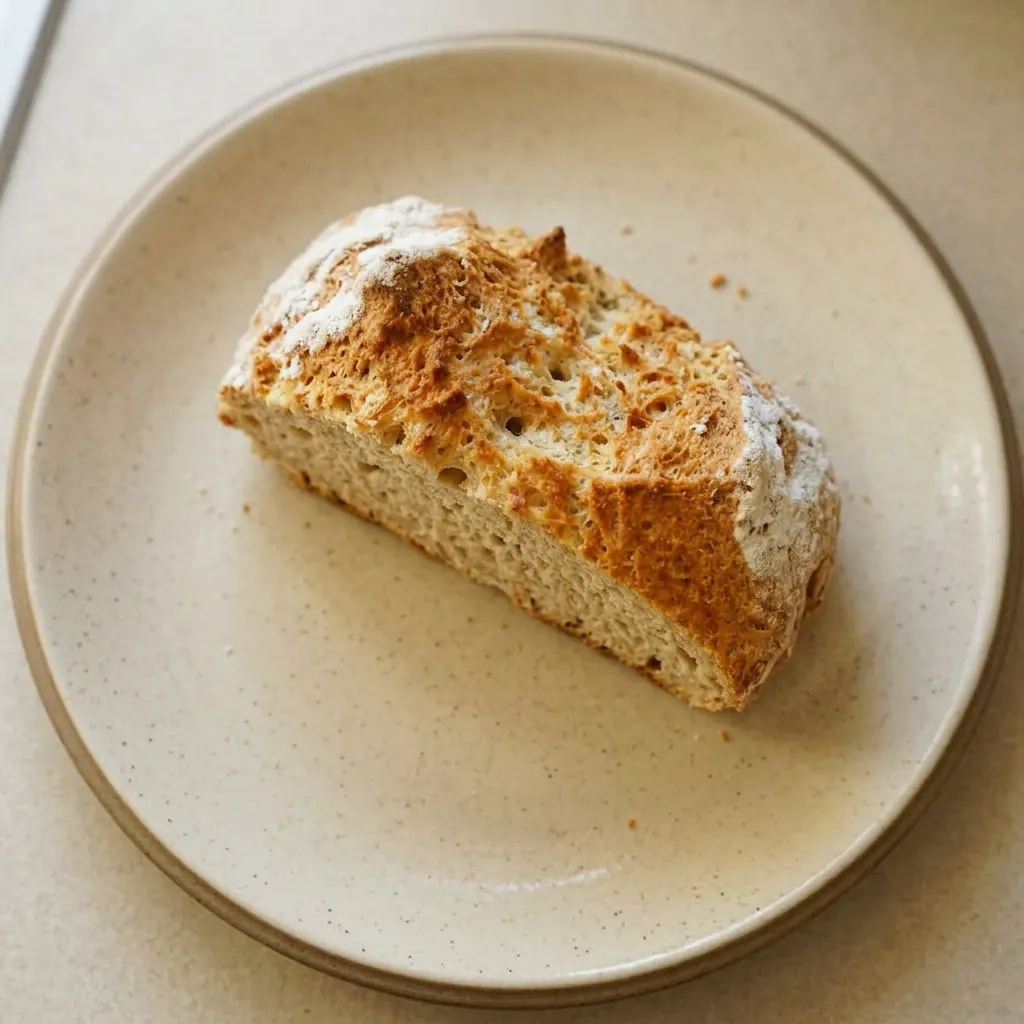
Swap buttermilk only if you must, and watch the crumb
Buttermilk: Acidified milk: 2 cups milk + 2 tbsp lemon juice or white vinegar, rest 10 min. The acidity drops; the bread will rise less and taste milder. The crumb will be denser and less tender, but it still works in a pinch.
Real buttermilk gives a more open, moist crumb and that tang.
Whole wheat flour: Up to half (1 cup) replaced with white flour. A lighter, less nutty flavor with a finer crumb and less chew. The bread will be less rustic and more like a white scone.
Beyond half, the texture suffers, too soft and cakey, losing the whole wheat’s structure.
All-purpose white flour: Bread flour. The crumb turns chewier and tougher, closer to bread than soda bread.
The gentle kneading doesn’t break down bread flour’s extra gluten, so the texture gets rubbery. Stick with all-purpose for the intended soft, tender bite.
Baking soda: Baking powder (triple the amount: 3 tsp). Baking powder contains its own acid, so you can use sweet milk instead of buttermilk. But the flavor loses the tang, and the rise is less vigorous, expect a denser, slightly cakey loaf.
Not a direct swap; better to find a different recipe.
Storage and Serving
Soda bread is best served the day it’s made. The crust stays crisp and the crumb remains tender and moist. After that, the bread dries out quickly.
Store leftovers wrapped in a clean kitchen towel at room temperature for up to 2 days. Do not refrigerate; the fridge accelerates staling. To revive day-old bread, warm slices in a 350°F oven for 5 minutes.
The heat restores some crust crunch and softens the interior. Soda bread freezes well.
Wrap the cooled loaf tightly in plastic wrap then foil, and freeze for up to 3 months. Thaw at room temperature still wrapped, then reheat as above. The texture after freezing will be slightly drier than fresh, but still pleasant.
If you plan to freeze, slice before freezing so you can pull out individual pieces.
Tips
- Check your baking soda’s freshness by dropping a pinch into vinegar; if it doesn’t fizz vigorously, replace it. Old baking soda won’t give the bread enough lift.
- Use a digital scale to measure flours by weight rather than volume. Scooping packed flour can add 20% more, making the dough too dry and dense.
I see people pummeling this dough like it’s a yeasted bread, and then they wonder why it comes out tough as a brick.
Frequently Asked Questions
Can I make soda bread ahead of time?
You can, but expect a trade-off. The crust will soften and the crumb will dry out after the first day.
If you need to bake ahead, freeze the cooled loaf wrapped tightly; it keeps for up to 3 months. Thaw at room temperature still wrapped, then warm slices in a 350°F oven for 5 minutes to restore some crunch.
Why did my soda bread turn out dense and heavy?
Most likely you overkneaded the dough. Soda bread needs only about 30 seconds of gentle folding, if the dough springs back when poked, you’ve gone too far and deflated the gas bubbles. Another common cause is expired baking soda; check that it fizzes when mixed with vinegar.
Finally, if you used low-acid milk instead of buttermilk, the reaction won’t produce enough lift.
How is Irish soda bread different from American soda bread?
Irish soda bread traditionally uses just flour, salt, baking soda, and buttermilk, with a coarse, tender crumb from whole wheat flour. American versions often add sugar, butter, eggs, and raisins, making it sweeter and more like a scone or cake. The Irish loaf relies solely on the baking soda, buttermilk reaction for rise, so it’s denser and less rich.
Should I serve soda bread warm or at room temperature?
Room temperature is best for the intended texture. Slicing while warm can compress the crumb and make it gummy. If you want warmth, toast slices lightly, that crisps the crust without ruining the interior.
Soda bread dries quickly, so serve the day it’s baked for the most tender bite.