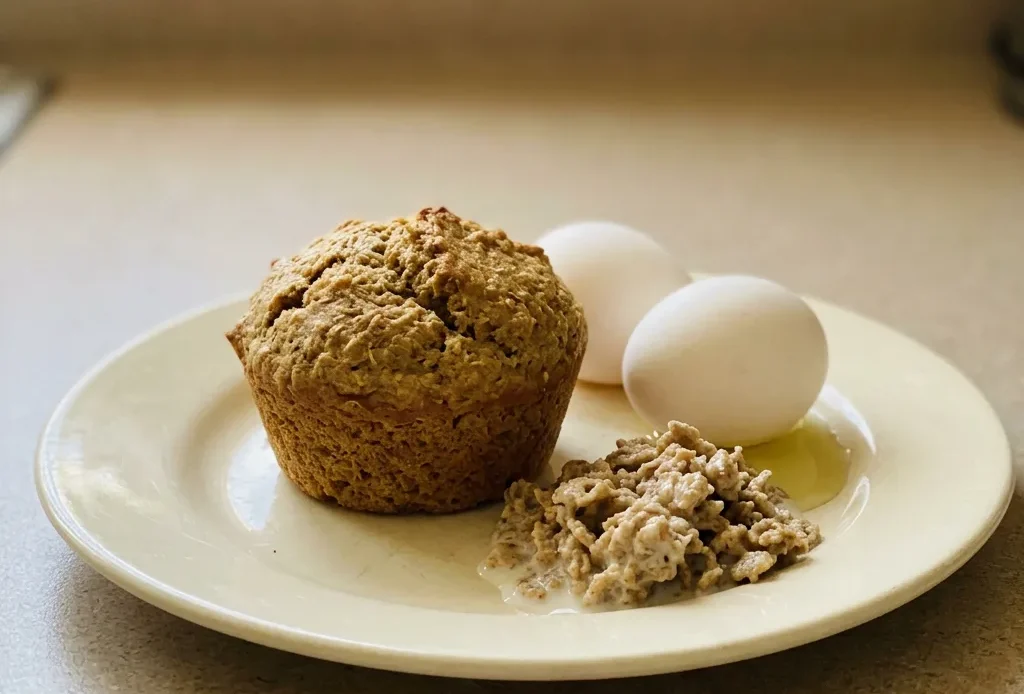
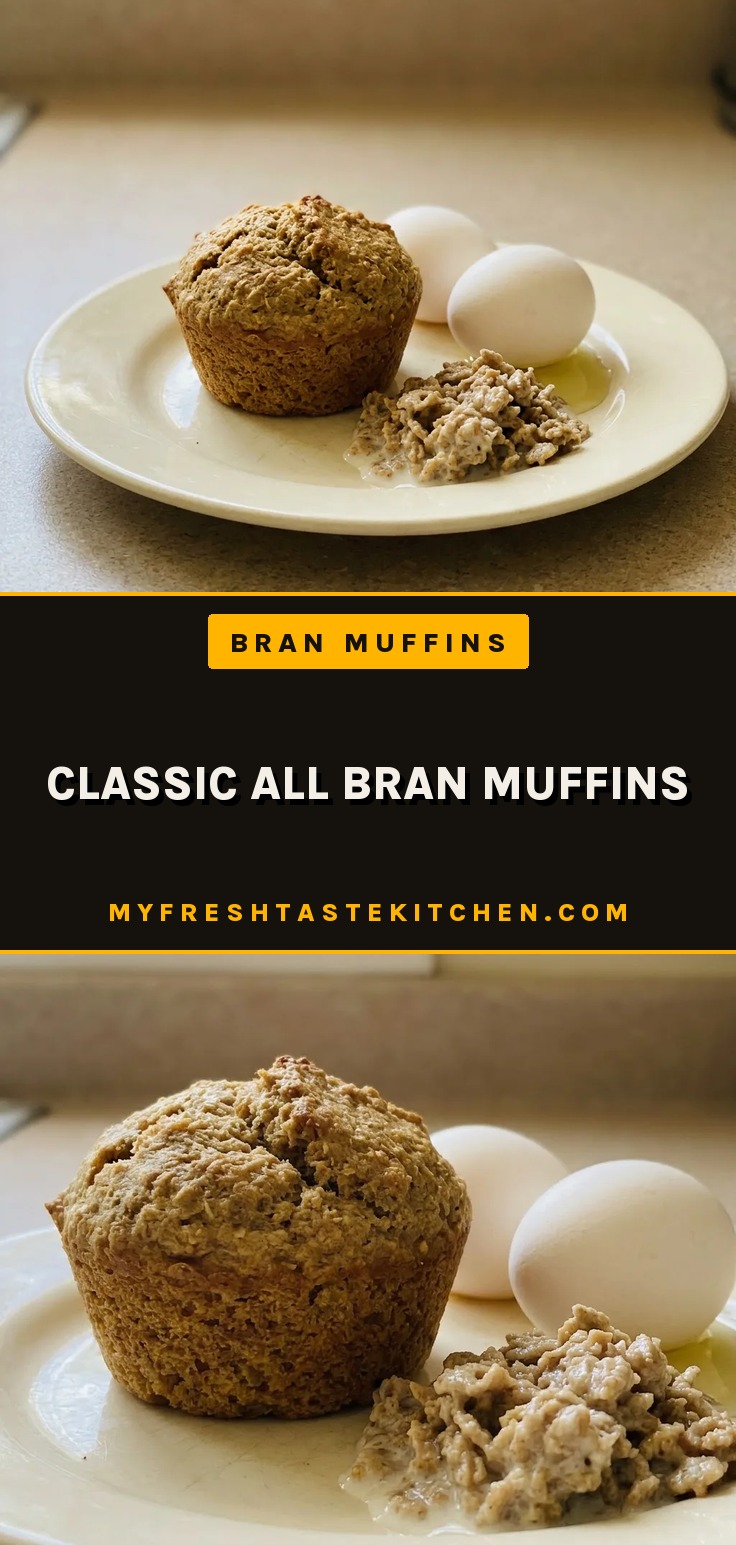
Bran muffins have a reputation for being dry, gritty, and about as exciting as a cardboard box. These aren’t those.
The trick is soaking the cereal until it’s fully swollen before you even think about flour, that’s what gives a tender crumb instead of a sandy one. Brown sugar does double duty, adding moisture and a molasses warmth that makes the whole thing taste richer than it has any right to. If you’ve tried other all bran muffins recipe and ended up with hockey pucks, this approach fixes it.
No fuss, no gimmicks, just a muffin that actually delivers on moist.
The first time I made these, I whisked the batter smooth because I thought lumps were bad. They came out like hockey pucks.
Soaking all bran prevents grit
All-Bran cereal is essentially toasted wheat bran, dry, fibrous, and thirsty. When you mix it with milk and let it sit, the flakes soften and absorb liquid until they’re pliable.
Skip that soak or rush it, and those crunchy bits stay crunchy in the baked muffin, giving you a gritty, sandy texture instead of a moist crumb. The milk gets fully taken up, creating a wet paste that blends seamlessly into the batter. You’ll notice the cereal goes from crisp and light to soft and swollen; that’s when you know it’s ready.
This step is important for tender bran muffins with all bran cereal.
Brown sugar keeps them moist and flavorful
Brown sugar isn’t just for sweetness, it brings molasses, which adds a rich, caramel-like depth that plays off the bran’s earthy notes. That molasses also pulls in moisture from the air and holds onto it in the crumb, so the muffins stay tender for days. Swap in granulated sugar and you lose that flavor dimension, plus the muffins dry out faster.
When you bite into one, you taste a rounder, warmer sweetness than plain white sugar gives. That’s the brown sugar doing its work, keeping the texture supple and the flavor complex. Good moist bran muffins recipes rely on it.
Mix minimally for tender crumb
Flour develops gluten when it’s agitated, and gluten makes baked goods tough. Here you want a light muffin, so you stir the dry ingredients into the wet just until the flour disappears, lumps are fine.
Overmixing turns the batter elastic and the finished muffin dense, even rubbery. The bran itself gives the muffin plenty of structure; you don’t need extra support from gluten.
You can see when it’s right: the batter looks shaggy and uneven, not smooth. That’s the cue to stop.
Bran muffins that come out tender start with a restrained hand.
Extra baking powder lifts the heavy bran
Bran is dense, it weighs down a muffin batter. To get a light, domed top instead of a hockey puck, this recipe uses a full tablespoon of baking powder for only 1¼ cups flour. That’s about double the usual ratio.
The baking powder starts reacting as soon as it hits the wet ingredients, producing bubbles that expand in the oven’s heat. You need to get the batter into the pan quickly and bake right away; any delay lets those bubbles escape. The result is a muffin that rises well, with a tender, open crumb rather than a compact brick.
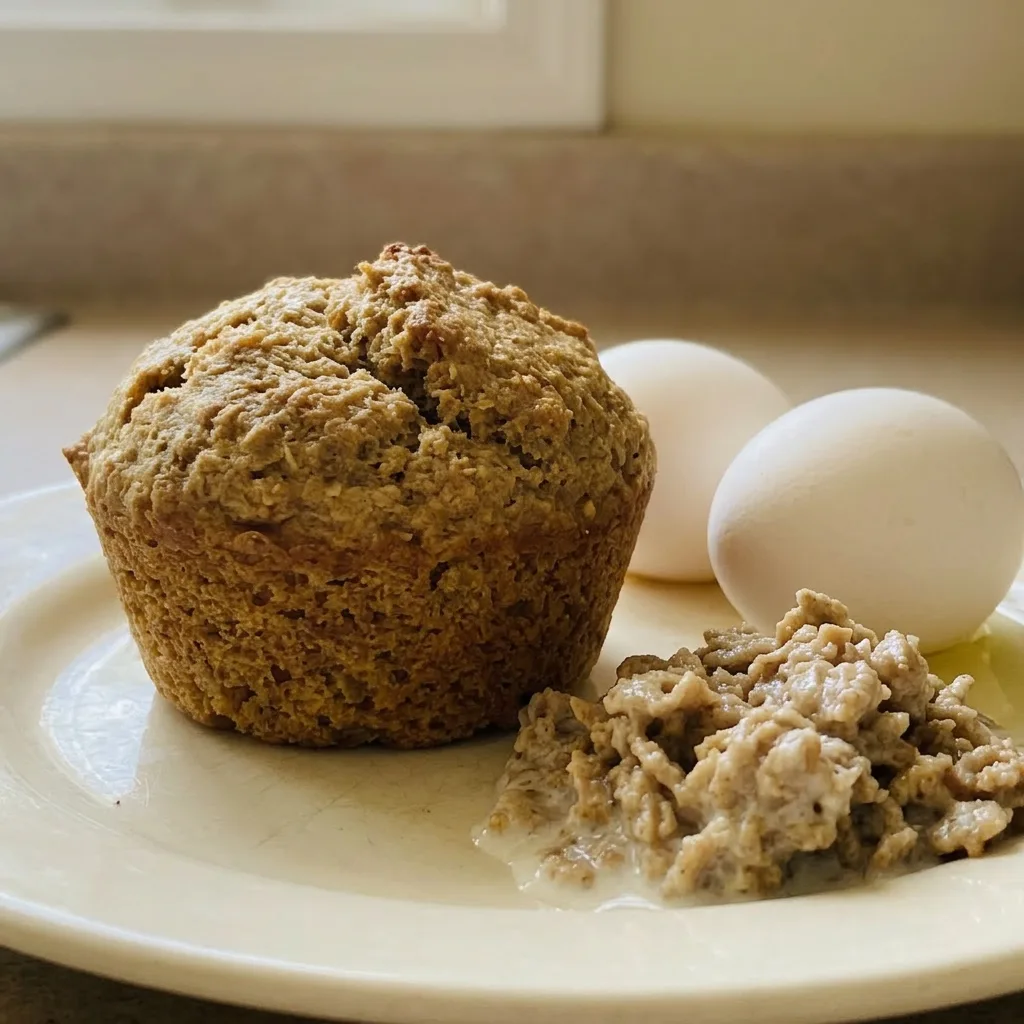
Prep: 10 min · Cook: 20 min · Total: 30 min · Servings: 12 · Calories: 140 kcal
What to know about the ingredients
All-Bran cereal: Buy the original all bran cereal, not a bran flake variety; the texture and absorbency differ significantly.
Milk: Whole milk gives the richest texture, but 2% works; skim makes muffins less tender.
Brown sugar: Use packed light or dark brown sugar; dark adds more molasses flavor and moisture.
How to make classic all bran muffins
Soak the cereal
Mix cereal and milk in a bowl. Let it sit until the flakes are soft and swollen, about 5 minutes. If you stir too soon, you’ll feel crunchy bits, wait until they’re fully hydrated.
Add wet ingredients
Whisk in eggs and oil until the mixture is uniform. It should look like a thick, wet paste with no dry cereal remaining. Any lumps here are fine; they’ll disappear in the next step.
Combine dry ingredients
Add flour, brown sugar, baking powder, and salt to the wet mix. Stir with a fork first to distribute, then switch to a spoon. Stop as soon as the flour disappears, the batter will look shaggy and lumpy.
Overmixing makes muffins tough.
Fill and bake
Divide batter evenly among 12 greased muffin cups. Bake at 400°F for 18 to 22 minutes. The muffins are done when a toothpick inserted in the center comes out clean and the tops spring back when pressed.
Cool properly
Let the muffins rest in the tin for 5 minutes. This steams them off the bottom so they release easily.
Then transfer to a wire rack to cool completely. Skipping this step can make them stick or become soggy.
Classic All Bran Muffins
Ingredients
- 2 cups all bran cereal 160 g
- 1 3/4 cups milk 420 ml
- 2 large eggs
- 1/4 cup vegetable oil 60 ml
- 1 1/4 cups all-purpose flour 156 g
- 1/2 cup packed brown sugar 110 g
- 1 tablespoon baking powder 14 g
- 1/2 teaspoon salt 3 g
Instructions
Preheat oven and grease tin:
Set oven to 400°F (205°C). Grease a muffin tin with baking spray and put aside.Soak cereal with milk:
In a bowl, mix cereal with milk; let sit until cereal softens and soaks up the milk. Add eggs and vegetable oil; stir until uniform.Mix dry ingredients:
Into the wet mixture, incorporate flour, brown sugar, baking powder, and salt. Briefly stir with a fork, then mix with a spoon only until combined. Avoid overmixing.Bake muffins:
Divide batter among the muffin tin cups. Bake 18-22 minutes. Allow to cool in tin for roughly 5 minutes, then move to a wire rack.
Which swaps work in all bran muffins?
All-Bran cereal: No direct swap. Other bran cereals (like bran flakes) are too thin and won’t absorb milk the same way, leading to a wet or dense mess.
Stick with original All-Bran. The cereal’s structure is what holds the batter together. Change it and you’ll likely end up with gummy pockets or a collapsed muffin.
Milk: Buttermilk or a plain dairy-free milk (unsweetened almond, oat, soy) can replace the milk 1:1. Buttermilk adds tang and makes the crumb more tender. Dairy-free milks work but the muffin may be slightly drier; compensate by not overbaking.
All-purpose flour: Whole wheat pastry flour can replace all-purpose 1:1. Regular whole wheat will make them denser.
Whole wheat pastry flour gives a nuttier flavor and whole-grain texture without turning the muffin into a brick. Regular whole wheat will be noticeably heavier.
Eggs: For an egg-free version, try a flax egg (1 tablespoon flaxseed meal + 3 tablespoons water per egg, let sit 5 minutes). Use 2 flax eggs total.
Flax eggs bind the batter but the muffin will be slightly less tender and a bit more crumbly. The bran’s moisture helps hold it together, so the swap is viable.
Tips
- Use a cookie scoop to portion batter evenly into the muffin tin. This ensures all 12 muffins bake at the same rate, since the batter is heavy with bran and doesn’t self-level. Uneven portions lead to some overbaked and some underbaked.
- Let the batter rest for 5 minutes after mixing before scooping. This gives the baking powder time to start reacting and the bran to absorb any remaining liquid, producing a more uniform batter that rises evenly.
Storage and Serving
Store cooled muffins in an airtight container at room temperature for up to 3 days. The bran keeps them moist longer than plain muffins, but after day 3 the crumb starts drying out.
To restore softness, microwave a muffin for 10 to 15 seconds. For longer storage, freeze muffins in a zip-top bag for up to 3 months. Thaw at room temperature or rewarm in a 300°F oven for 5 to 7 minutes.
The texture after freezing is nearly as good as fresh. Avoid refrigerating; it speeds staling. Serve muffins within a day of baking for the best moist-tender crumb.
No finishing touch is needed; these are ready to eat once cooled.
Frequently Asked Questions
Can I make the batter the night before and bake in the morning?
No, the batter must be baked immediately after mixing. The baking powder starts reacting as soon as it hits the wet ingredients; waiting lets those bubbles escape, and you’ll get flat, dense muffins instead of tall, domed ones.
Why did my muffins turn out dry and crumbly?
Overmixing is the usual suspect, it develops gluten, which turns the crumb tough and dry. Stir just until the flour disappears, lumps welcome. Another possibility: the cereal didn’t soak long enough; it needs to be fully swollen so it releases moisture during baking.
How do I know when the muffins are done baking?
Insert a toothpick into the center of a muffin; it should come out clean, with no wet batter clinging. Also press the top lightly, if it springs back, they’re done. Start checking at 18 minutes, the lower end of the 18 to 22 minute window.
Can I freeze these muffins for later?
Yes, freeze cooled muffins in a zip-top bag for up to 3 months. Thaw at room temperature or rewarm in a 300°F oven for 5 to 7 minutes. The texture after freezing holds up nearly as well as fresh.
What makes these different from regular bran muffins?
Soaking All-Bran cereal in milk creates a wet paste that keeps the crumb tender, not gritty. Brown sugar adds moisture and a rich molasses flavor, while a full tablespoon of baking powder lifts the dense bran for a light, domed top. The result is a moist, flavorful muffin, not a dry health-food brick.