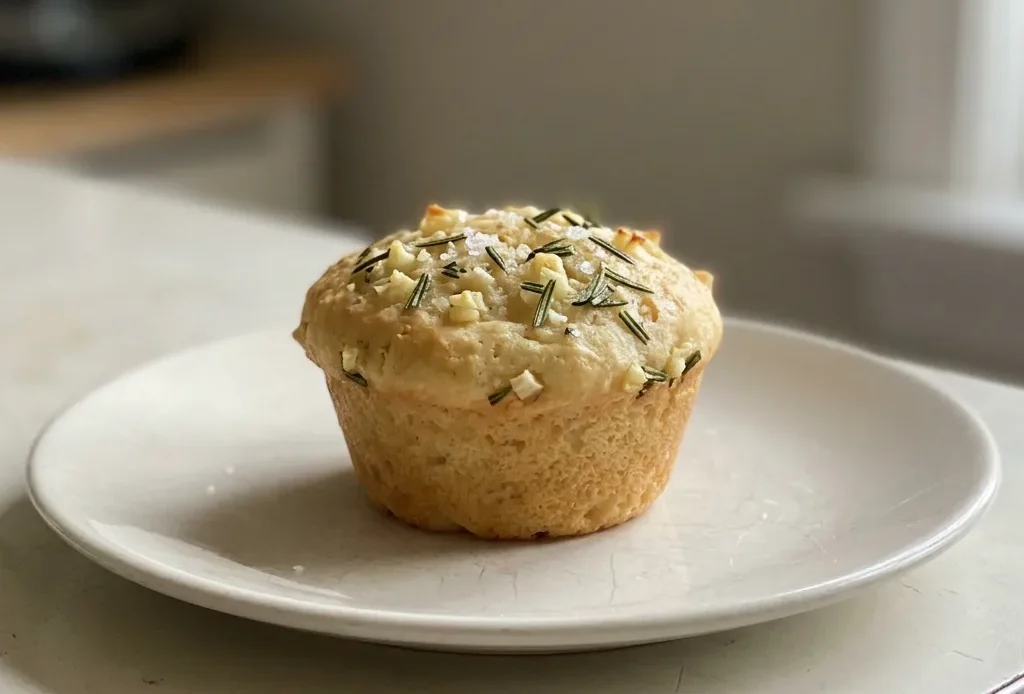
The biggest risk with quick-bread-style focaccia muffins is a dry, hockey-puck crumb, especially when you skip yeast and rely on baking powder for lift. These garlic rosemary focaccia muffins dodge that by leaning hard into olive oil, which keeps the interior tender even as the exterior bakes up crisp. The trick is treating the batter gently: overmixing develops gluten fast, and a dense muffin is nearly impossible to undo.
Rosemary and garlic come through clearly against the rich oil base, but the real win is the texture, moist, almost airy, nothing like a typical muffin.
Olive oil builds the tender crumb
Olive oil does more than add flavor, it’s what gives these muffins their signature tender, almost airy texture. Unlike butter, which solidifies when cool, oil stays liquid at room temperature. That means every bite stays moist, never dry or crumbly.
The high oil content also mimics the open crumb of focaccia, creating small pockets of air without needing a long rise. And because oil coats the flour proteins, it limits gluten formation, so the muffins stay soft rather than tough.
That same oil crisps the exterior as it bakes, giving you a faintly golden, slightly crunchy shell. No frying needed, just the heat of the oven doing its work.
Garlic and rosemary: a savory balance
Fresh garlic and rosemary anchor the flavor profile of these muffins. The garlic, minced fine, releases its pungent aroma as it bakes, softening into mellow, sweet notes that don’t overpower.
Rosemary’s earthy, piney character cuts through the richness of the olive oil, preventing the whole thing from tasting greasy. Both are used in generous amounts, three cloves and two tablespoons of rosemary, so they stand out clearly against the oil base. When you bite in, you taste garlic first, then rosemary lingers.
That contrast keeps each bite interesting. Too little of either, and the muffins taste flat.
Baking powder for quick, reliable rise
This recipe skips yeast for a reason. Baking powder reacts immediately when mixed with liquid, so there’s no waiting for dough to proof. That means you can go from bowl to oven in minutes.
The trade-off is a denser crumb than yeasted focaccia, but the muffins still come out light, not heavy. The key is that baking powder works the same way every time, regardless of kitchen temperature or humidity. No worrying about dead yeast or underproofed dough.
For these muffins, that reliability matters more than achieving an airy, holey interior. The result is consistent, tender muffins that rise evenly in the tin.
Why warm water matters for hydration
Warm water does two jobs here. First, it helps the baking powder dissolve evenly throughout the batter, so you don’t get pockets of unreacted leavening that cause lopsided muffins.
Second, it hydrates the flour properly, allowing gluten to develop just enough for structure without turning tough. The temperature matters: water that’s too hot can trigger the baking powder too early, causing it to fizz out before the muffins hit the oven. Too cold, and the reaction slows, leading to a denser, flatter muffin.
Aim for warm tap water, about 110°F, so the batter comes together smoothly and rises as soon as it bakes.

Prep: 15 min · Cook: 20 min · Total: 35 min · Servings: 12 · Calories: 150 kcal
Picking the Right Olive Oil for These Muffins
Olive oil: Use a good quality extra virgin olive oil for flavor, not a cheap or light oil that will taste bland.
Garlic: Fresh cloves only, not jarred minced garlic, which can be watery and less pungent.
Rosemary: Fresh rosemary, not dried. Dried won’t soften and distribute as well in the quick batter.
Baking powder: Make sure it’s not expired. Old baking powder won’t give enough lift for a light muffin.
The first time I made these, I stirred the batter like I was punishing it, and the muffins came out like hockey pucks. Then one day I was distracted and barely mixed it, those turned out, so now I always stop way earlier than feels right.
Mix the Batter Like a Pro
Whisk the dry ingredients
Whisk flour, baking powder, and salt in a large bowl. No lumps, no shortcuts, this aerates the flour so the muffins rise evenly.
Combine wet ingredients separately
Stir warm water and olive oil together until emulsified. It will look cloudy, that’s fine. Warm water dissolves the baking powder evenly when mixed in.
Add wet to dry, then garlic and rosemary
Pour the liquid into the dry mix, then add garlic and rosemary. Stir with a spatula just until no dry flour remains. Batter will be thick and shaggy, overmixing makes muffins tough.
Fill the muffin tin
Grease a 12-cup muffin tin well. Spoon batter into each cup about three-quarters full.
The batter won’t spread much, that’s normal. Sprinkle sea salt on top if you want.
Bake until golden and set
Bake at 400°F for 20 minutes. The tops should be golden brown, and a toothpick inserted in the center of a muffin should come out clean. The edges will pull away slightly from the tin.

Garlic Rosemary Focaccia Muffins
Ingredients
- 2 cups all-purpose flour 240 g
- 1 tablespoon baking powder
- 1 teaspoon salt
- ½ cup olive oil
- 1 cup warm water
- 3 cloves garlic minced
- 2 tablespoons fresh rosemary chopped
- sea salt for sprinkling on top Optional
Instructions
Preheat oven:
Preheat oven to 400°F (205°C).Whisk dry ingredients:
In a large bowl, whisk together flour, baking powder, and salt.Mix wet and dry:
In a separate bowl, mix warm water and olive oil. Pour into dry ingredients.Add garlic and rosemary:
Add minced garlic and chopped rosemary; stir until just combined. Do not overmix.Grease and fill muffin tin:
Grease a muffin tin with cooking spray or oil. Fill each cup about ¾ full.Sprinkle sea salt:
Sprinkle sea salt on top if desired.Bake until golden:
Bake for 20 minutes until golden and a toothpick inserted comes out clean.Cool before serving:
Cool for a few minutes before serving warm.
Storage and Serving
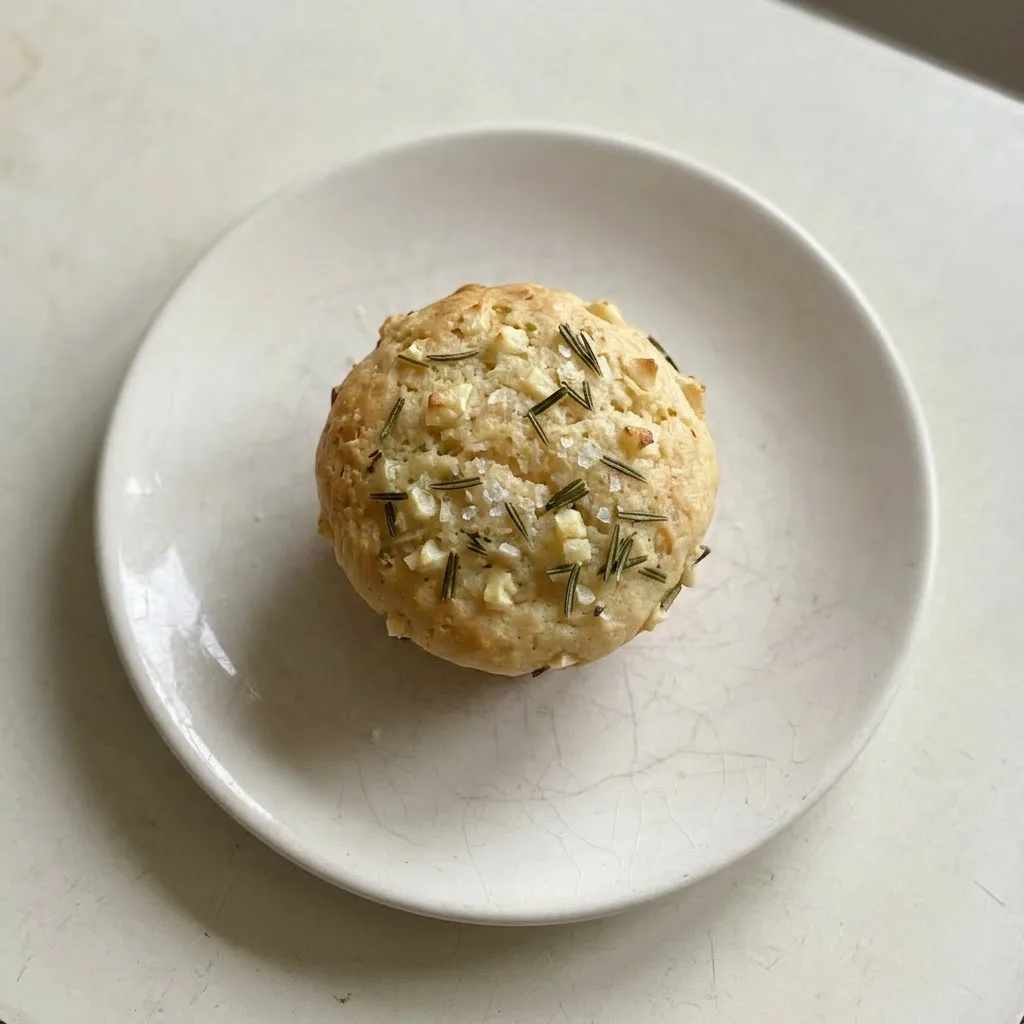
These muffins are best served warm, within 30 minutes of baking, when the exterior is crisp and the interior is tender. Store leftover muffins in an airtight container at room temperature for up to 2 days.
The texture will soften over time as moisture from the air migrates into the crust. To restore crispness, reheat in a 350°F oven for 5 minutes.
Microwaving will make them soggy. For longer storage, freeze the baked muffins in a zip-top bag for up to 1 month. Thaw at room temperature, then reheat in the oven as directed.
Do not freeze the batter; the baking powder loses its lift. If making ahead, bake the same day and store at room temperature; the muffins lose their best texture after 2 days.
The Three Swaps Worth Making (and One to Skip)
All-purpose flour: Gluten-free 1:1 baking flour blend. Use the same volume.
The muffins will be more delicate and slightly crumbly, with a less open crumb. Add a tablespoon of water if the batter seems stiff.
Olive oil: Melted butter. Use 1/2 cup melted butter cooled slightly. The muffins will be richer and denser, with a firmer crumb that turns less tender as they cool.
The exterior won’t crisp as much, and the flavor shifts from fruity to buttery, still good, but the texture changes noticeably.
Fresh rosemary: Dried rosemary. Use 2 teaspoons dried, rubbed between your palms to release oils.
Dried rosemary won’t soften as much in the quick bake, so you’ll get slightly chewier bits. The flavor is more concentrated but less bright. Not a dealbreaker, just different.
Garlic: Garlic powder. Don’t.
Fresh garlic’s moisture and pungency are key here. Powder won’t bloom in the short bake and leaves a dusty, flat taste.
Stick with fresh.
Tips
- If you have a kitchen scale, weigh the flour instead of scooping it. Scooping can pack in up to 30% more flour, making the muffins dense and dry. Fluff the flour in its container, spoon it into the measuring cup, then level off with a knife.
- Let the batter rest for 5 minutes after mixing. This allows the baking powder to activate and the flour to fully hydrate, resulting in a more even rise and a softer crumb without any extra stirring.
Frequently Asked Questions
Can I make these ahead of time and reheat them?
Yes, but they’re best within 30 minutes of baking. Store at room temperature in an airtight container up to 2 days. Reheat in a 350°F oven for 5 minutes to restore crispness, microwaving makes them soggy.
Why did my muffins turn out dense and not fluffy?
Most likely you overmixed the batter, which develops too much gluten. Stir just until no dry flour remains, a few lumps are fine. Another check: your baking powder may be old; it loses potency after 6 months.
How do these differ from traditional focaccia bread?
Focaccia is a yeasted bread with a long rise and open, airy crumb. These muffins use baking powder for a quick rise, so the crumb is tighter, still tender from the olive oil, but denser than classic focaccia.
Can I freeze the baked muffins for later?
Yes, freeze baked muffins in a zip-top bag for up to 1 month. Thaw at room temperature, then reheat in a 350°F oven for 5 minutes. Do not freeze the batter, baking powder loses its lift.