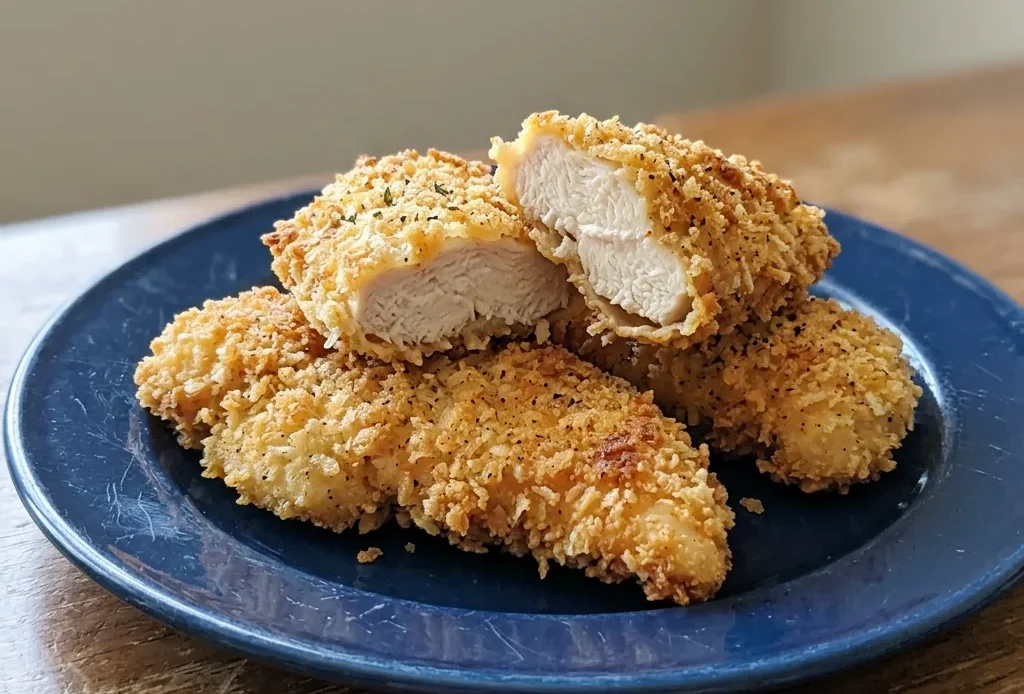
Most homemade chicken tenders turn out soggy within minutes, but the fix isn’t more oil or a hotter pan. It’s the triple-coating technique: flour, egg, panko, each layer doing a specific job that a single thick batter can’t match. The flour dries the surface so steam can’t soften the crust, the egg glues everything on, and those big panko flakes create air pockets that stay crisp instead of soaking up grease.
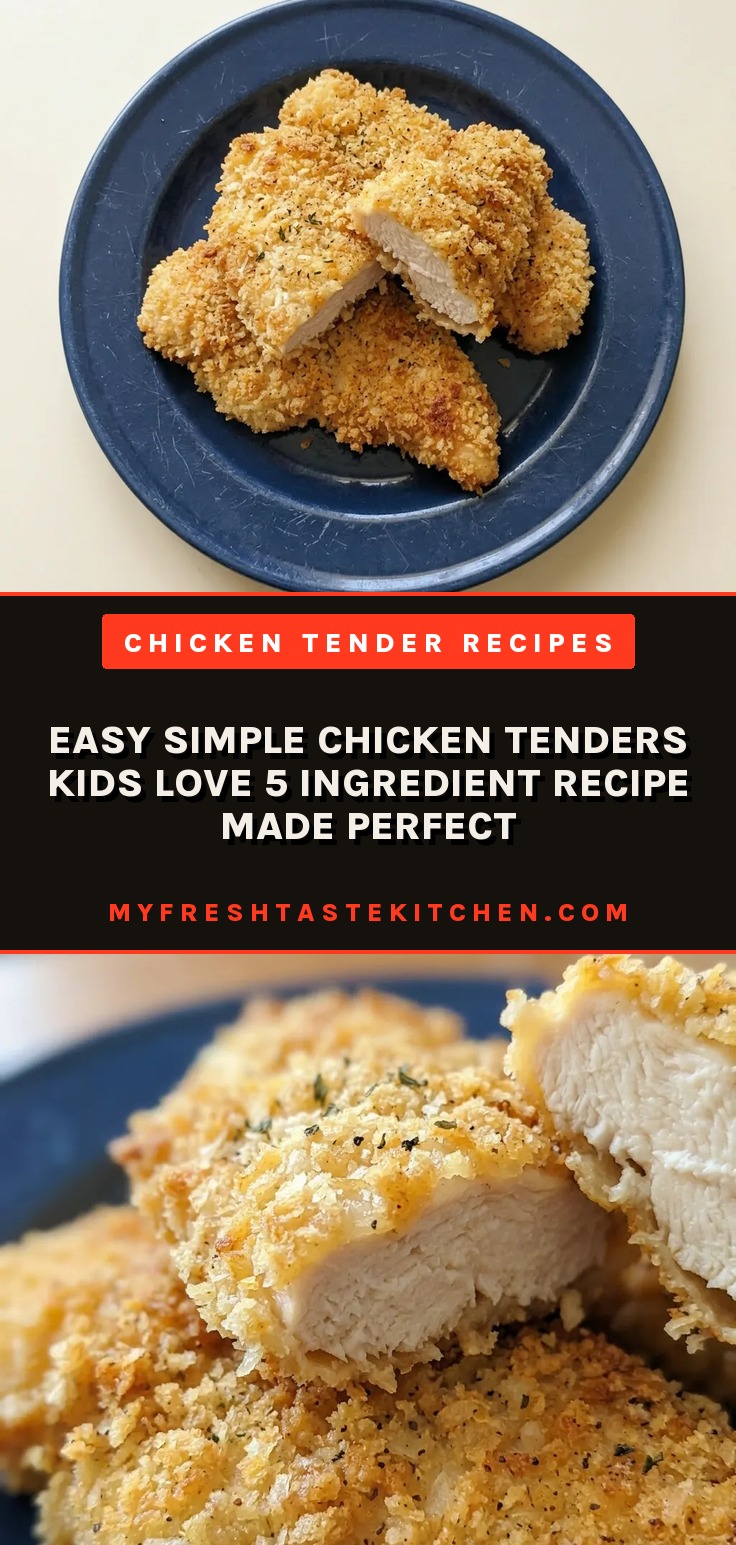
That’s the whole secret behind this easy simple chicken tenders kids love 5 ingredient recipe made.
Dry the chicken for a crunch that stays
Paper towels do more than blot. They pull surface moisture off the tenders, and that matters because wet chicken steams as it fries. Steam softens the breading before it can crisp.
A dry surface also lets the flour cling evenly, no bare patches where oil seeps straight in. You’ll see the flour stick in a thin, even coat.
That first layer is what catches the egg and then the panko. Skip the drying and you end up with patchy, soggy spots.
Nothing subtle about it: the crust either shatters or it doesn’t.
Panko makes a lighter, crunchier crust
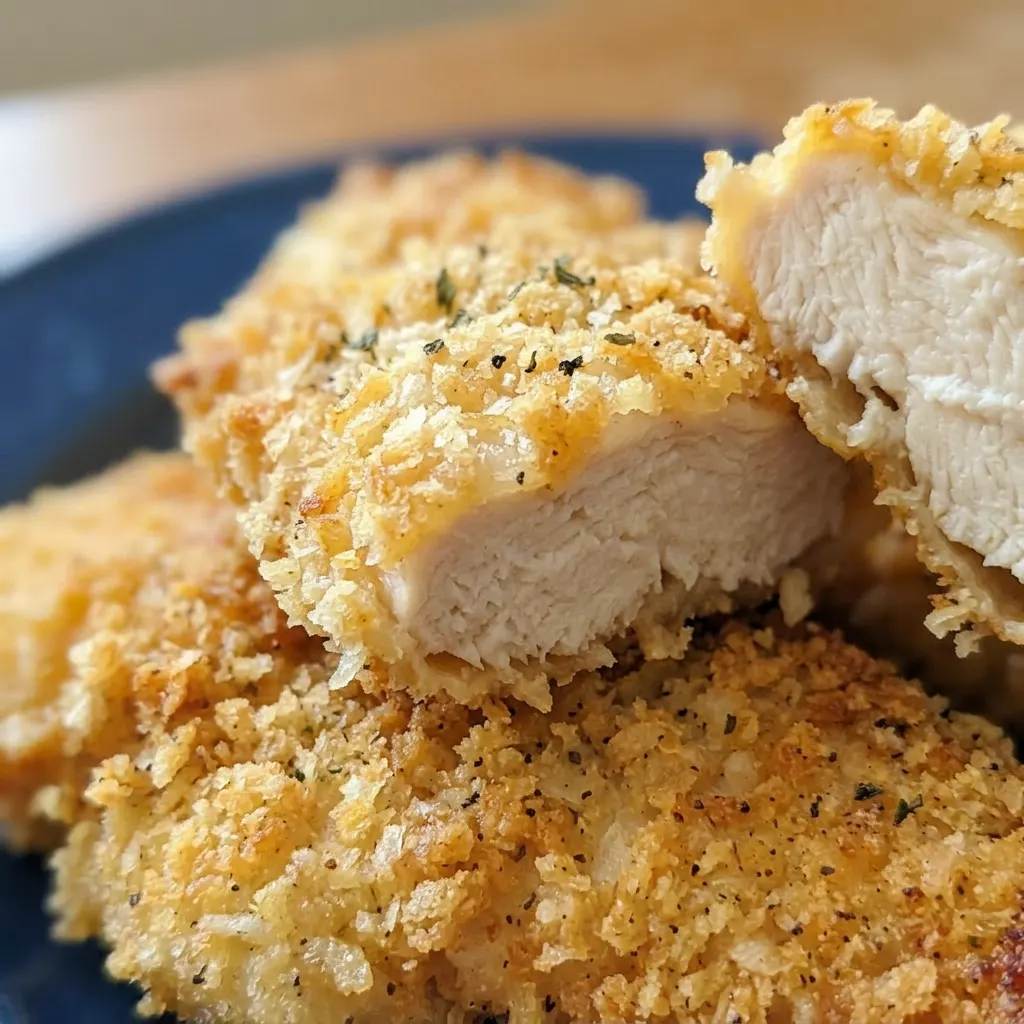
Panko breadcrumbs are bigger and flakier than the fine sandy kind. Those flakes create more air gaps, so they absorb less oil. Less oil means they stay crisp instead of turning greasy.
If you want even more crunch, do a double dip, egg, panko, then egg, panko again. The second layer doesn’t make the coating heavy; it builds more of those flaky shards. You’ll hear the difference when you bite: a clean snap, not a dull crunch.
This is the simplest way to get restaurant-style texture at home.
Why 1/4 inch oil hits the sweet spot
That shallow depth is deliberate. With more oil, the chicken floats and the breading can brown before the inside cooks through.
With less, you get uneven heat and dry spots. At 1/4 inch, the tenders sit half-submerged, sizzling steadily.
You’ll see the oil shimmer but not smoke, that’s your cue. The crust fries golden without burning, and the chicken stays juicy because the heat penetrates at the same pace as the browning.
No flipping guesswork. Just even color, edge to edge.
Prep: 10 min · Cook: 10 min · Total: 20 min · Servings: 4 · Calories: 280 kcal
A Few Ingredient Details Worth Knowing
Chicken tenders: Buy whole tenders or slice breasts into uniform 1/2-inch strips so they cook evenly in the same time.
Panko breadcrumbs: Standard panko, not the fine kind. The big flakes stay crisp because they absorb less oil.
Eggs: Use large eggs. Smaller ones won’t give enough liquid to coat the flour evenly.
Vegetable oil: Any neutral high-smoke point oil works. Avoid olive oil; it burns before the chicken is done.
I once served tenders with half the breading in the pan and the other half sliding off like a sad, greasy mess.
The coating sequence locks in crunch
Dry each tender
Press paper towels firmly over the chicken until the surface feels tacky, not slick. If the towel sticks or tears, you haven’t dried enough.
Season the flour
Whisk the salt, pepper, and garlic powder into the flour until the color is uniform. Taste a pinch, it should be distinctly seasoned, not bland.
Coat in flour first
Drop a tender into the seasoned flour, turn to coat, then shake off the excess. You want a thin, even dusting, not a clumpy layer. Bare spots mean the egg won’t stick.
Dip in egg
Submerge the floured tender in beaten egg, letting any excess drip off for a second. The egg should coat every part of the flour, but not pool on the chicken.
Press into panko
Lay the egg-coated tender onto the panko and press firmly so crumbs adhere on all sides. The breading should look shaggy, not smooth, that’s the texture that crisps.
Check the oil temperature
Heat oil until it shimmers and a pinch of panko sizzles immediately on contact. If the oil smokes, it’s too hot, pull the pan off the heat briefly.
Fry in batches
Lower tenders into the oil without crowding; each needs room to bubble. You should hear a steady sizzle, if it goes silent, the oil is too cool.
Flip once
Cook until the bottom edge turns deep golden, about 3 to 4 minutes, then flip. The second side should take the same time. Resist moving them earlier; the crust needs to set.
Rest on paper towels
Transfer cooked tenders to a paper-towel-lined plate and let sit 1 to 2 minutes. You’ll see oil wick away onto the towel. Skipping this step makes the bottom soggy.
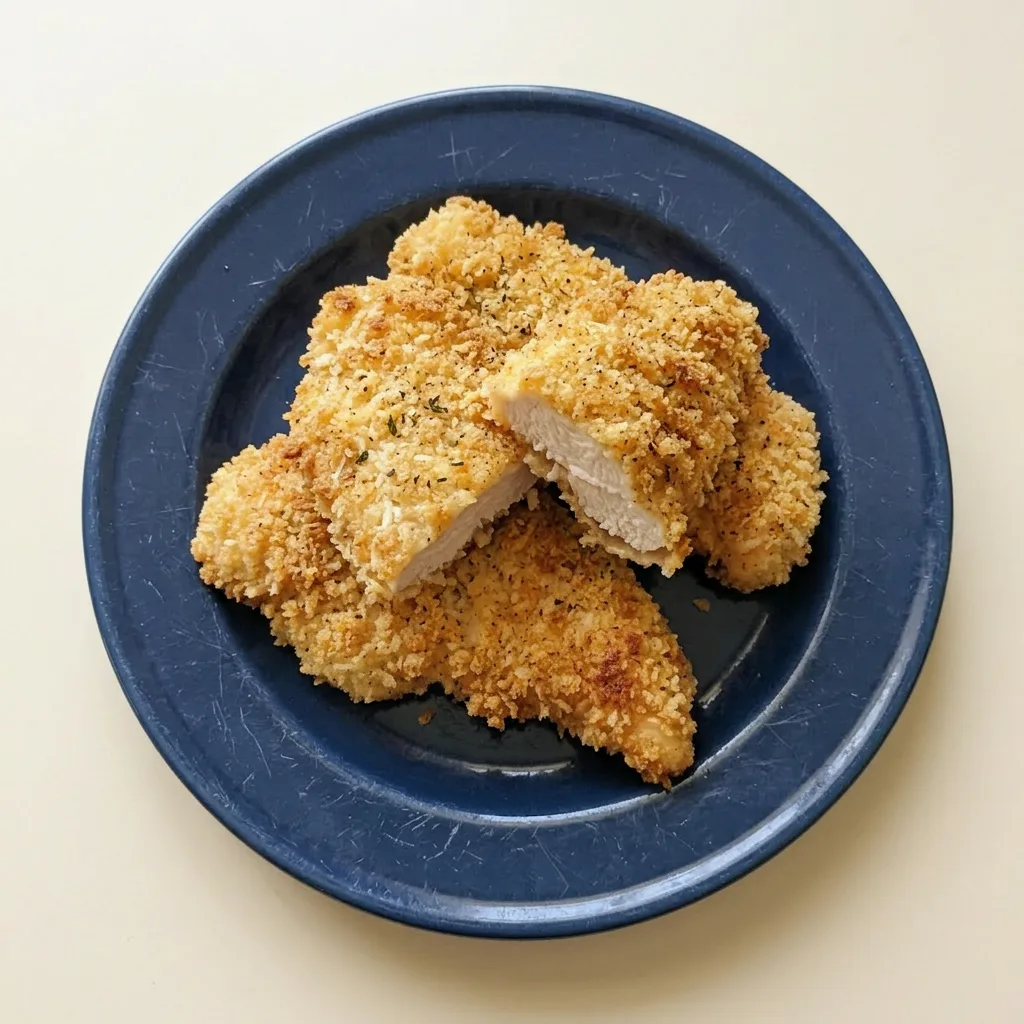
Easy Simple Chicken Tenders Kids Love 5 Ingredient Recipe
Ingredients
- 1 lb boneless, skinless chicken tenders (or thinly sliced chicken breasts)
- 1 cup all-purpose flour 120g
- 1 tsp salt
- 1/2 tsp black pepper
- 1/2 tsp garlic powder
- Optional: pinch of smoked paprika or dried herbs
- 2 large eggs, beaten
- 1 cup panko breadcrumbs 100g
- Vegetable oil, for frying
Instructions
Dry Chicken Tenders:
Use paper towels to thoroughly dry the chicken tenders, promoting a crunchy crust.Set Up Breading Station:
Arrange three shallow dishes: one containing flour whisked with salt, pepper, and garlic powder (plus optional paprika or herbs); one with whisked eggs; and one with panko breadcrumbs.Coat in Seasoned Flour:
Coat each tender in the seasoned flour, tapping off any surplus.Dip in Beaten Eggs:
Submerge the floured chicken in the beaten eggs.Press into Panko Crumbs:
Firmly press the chicken into panko breadcrumbs so it is entirely covered. For added crunch, repeat the egg and breadcrumb coating (optional).Heat Oil in Skillet:
Pour vegetable oil to a depth of roughly 1/4 inch in a large skillet over medium heat. Wait until it shimmers but does not smoke.Add Tenders to Oil:
Gently lower the tenders into the hot oil, leaving space between each piece.Fry Until Golden Brown:
Cook for 3-4 minutes on each side until golden brown and fully cooked (internal temperature 165°F (75°C)/74°C). Adjust the heat if needed to avoid burning.Drain on Paper Towels:
Move the finished tenders to a paper-towel-lined plate to absorb extra oil, then let them sit for 1-2 minutes.Serve with Dipping Sauces:
Present warm alongside preferred dipping sauces.
Double-coat for crunch, or adjust the crumbs
Panko breadcrumbs: Crushed cornflakes or gluten-free breadcrumbs. Cornflakes stay extra crispy.
Gluten-free breadcrumbs work, but they soak up more oil, so the crust feels heavier. Skip a double coat with cornflakes, the second layer makes them too dense.
All-purpose flour: Gluten-free all-purpose flour blend. Most blends handle the flour step the same way.
The crust may be slightly more delicate, but it still fries up golden. No need to change the amount.
Large eggs: Buttermilk (1/4 cup per egg) or a slurry of 2 tbsp water + 1 tbsp flaxseed meal per egg, let sit 5 minutes. Buttermilk gives a tangy, tender coating that browns faster; reduce heat slightly to avoid burning. Flax slurry works but doesn’t grip panko as tightly, so some crumbs fall off during frying.
Vegetable oil: Canola, peanut, or avocado oil. All three have high smoke points and neutral flavor, so the swap is invisible. Avoid olive oil, it smokes before the chicken is cooked through.
Tips
- If the breadcrumb burns immediately or the oil smokes, remove the pan from the heat for 30 seconds and lower the burner before continuing.
Storage and Reheating
These tenders are best eaten within 15 minutes of frying, while the crust is shatter-crisp. For leftovers, cool them completely on a wire rack (not stacked) so steam doesn’t soften the breading. Store in a single layer in an airtight container lined with paper towels, then cover with more towels before sealing.
Refrigerate up to 3 days. The panko will soften over time, but reheating in a 400°F air fryer for 3 to 4 minutes or a 375°F oven for 5 to 6 minutes restores most of the crunch.
Skip the microwave it turns the coating rubbery. If you want to freeze, do it after step 6 (before frying): arrange breaded tenders on a parchment-lined tray, freeze solid, then transfer to a freezer bag. Fry from frozen, adding 1 to 2 minutes to the cook time.
Do not freeze cooked tenders they’ll turn soggy upon thawing.
Frequently Asked Questions
Can I make these chicken tenders ahead of time and reheat them?
Yes, but they’re best within 15 minutes of frying. For leftovers, cool them on a wire rack, then store in a single layer with paper towels in an airtight container in the fridge for up to 3 days. To restore crunch, reheat in a 400°F air fryer for 3 to 4 minutes or a 375°F oven for 5 to 6 minutes, skip the microwave, it turns the coating rubbery.
If you want to prep ahead, freeze breaded tenders (after step 6) on a tray, then bag them; fry from frozen, adding 1 to 2 minutes.
How do I keep the breading from falling off while frying?
The most common culprit is not pressing the panko firmly enough onto the egg-coated chicken, really push it in so the crumbs stick. Also make sure the flour coating is even and not too thick; excess flour creates a barrier that the egg can’t grip.
If you’re still losing breading, the oil might be too cool; it should sizzle steadily when you add a tender. A double dip (egg then panko again) also helps lock the coating on.
What’s the best way to tell when the chicken tenders are fully cooked?
Use an instant-read thermometer inserted into the thickest part; it should read 165°F (74°C). If you don’t have one, cut into the thickest tender, the juices should run clear and the meat should be opaque all the way through, not pink. The tenders are thin, so they typically cook in 3 to 4 minutes per side at medium heat; if the crust is deep golden but the inside isn’t done, lower the heat slightly next time.