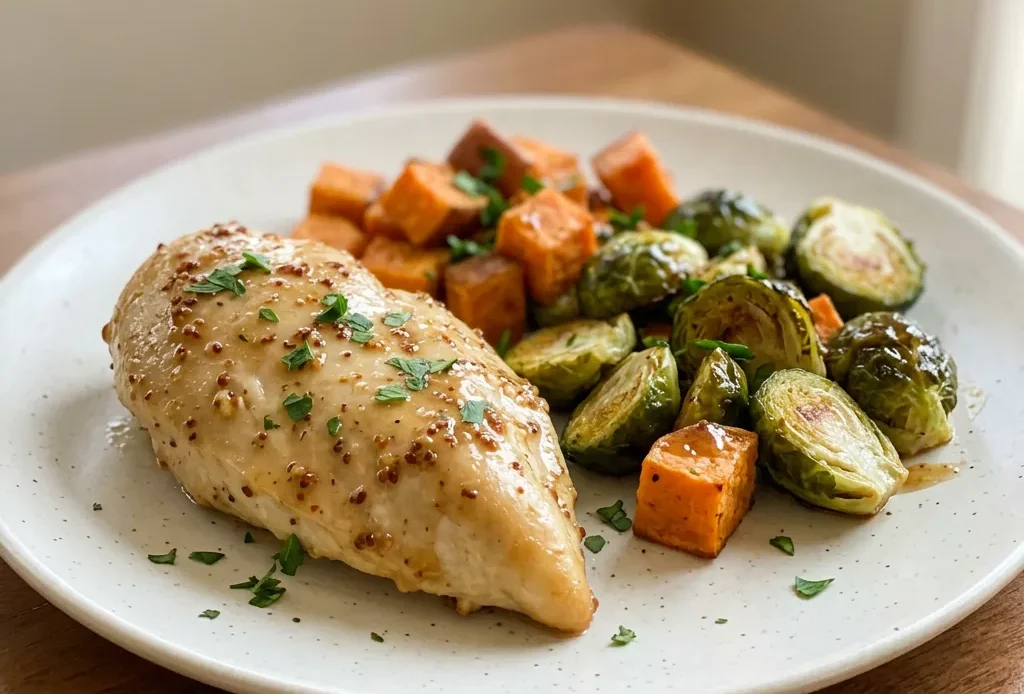
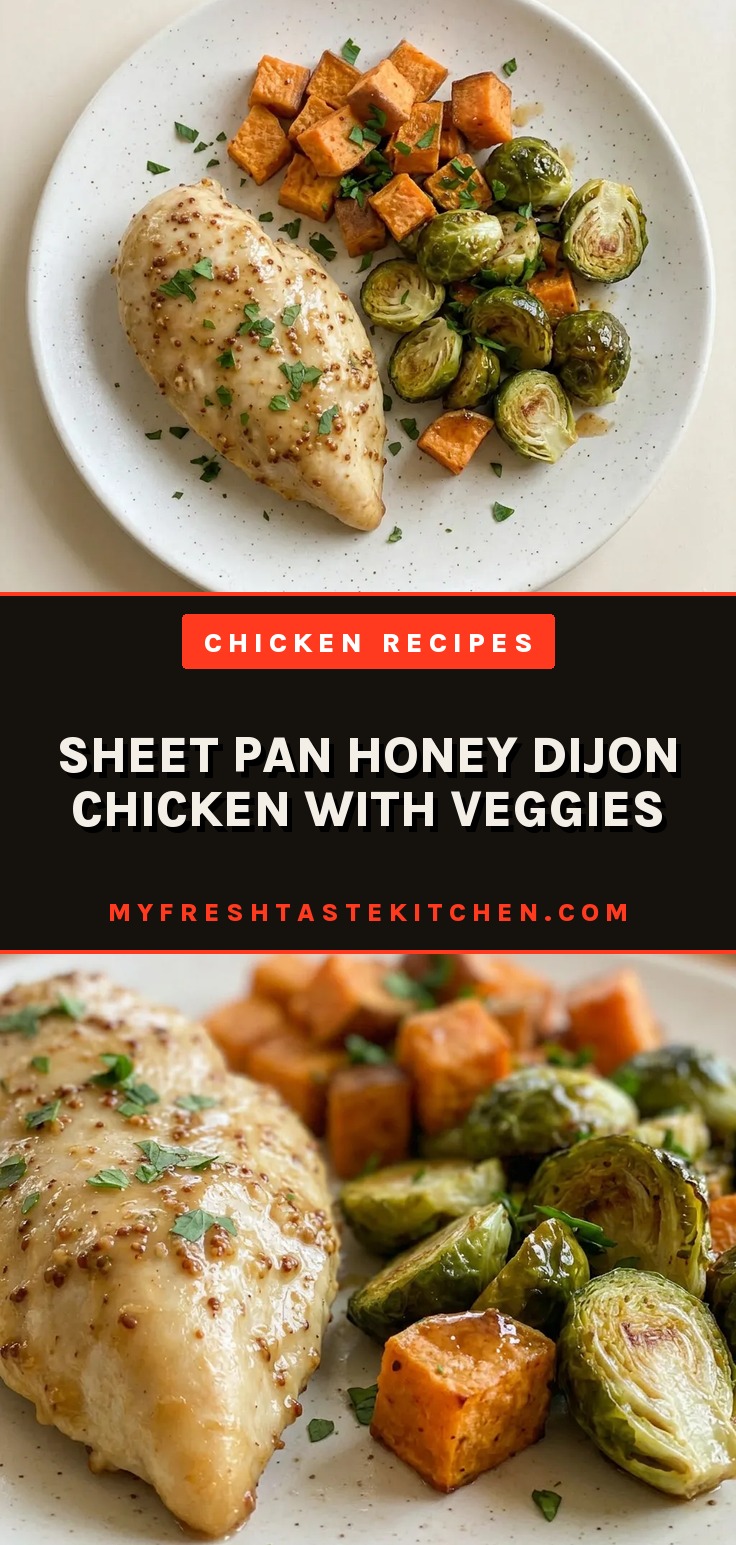
The most common mistake with sheet pan chicken and vegetables is soggy skin and dry meat, a paradox that usually comes from overcrowding the pan or pulling the chicken too late. This sheet pan honey dijon chicken with veggies sidesteps both traps: the vegetables release steam that keeps the breasts tender, while the glaze caramelizes into a sticky, browned coating that clings without burning. You get a complete dinner from one pan, and the only trick is trusting your thermometer at 165°F.
I pulled out a chicken breast that looked but cut into it and saw sad, dry shreds. The veggies were good, but the star was ruined.
Why sheet pan works here
A single pan means chicken and vegetables roast together, sharing space without extra dishes. The vegetables release moisture as they cook, which keeps the chicken breasts from drying out.
Meanwhile, the high heat caramelizes the honey Dijon glaze on the chicken and brings out natural sugars in sweet potatoes and Brussels sprouts. Now I cut the sweet potatoes into 1-inch cubes and halve the Brussels sprouts so everything finishes together, and I pull the chicken at 165°F without fail.
You get even browning and tender meat without constant monitoring. That combination of convenience and reliable results makes this a go-to for chicken and brussel sprouts recipes or any chicken and vegetable recipes.
Glaze does double duty
Half the honey Dijon glaze coats the vegetables before they hit the pan. As they roast, the sweet-tangy mixture soaks into the Brussels sprouts and sweet potatoes, giving them flavor from the inside out.
The remaining glaze gets brushed onto the chicken breasts, where it forms a sticky, lacquered coating that browns under the broiler. You taste that concentrated sweetness against the mustard’s sharpness in every bite. That’s the payoff for dividing the glaze: each component gets the right treatment without one overpowering the other.
For baked chicken recipes, this method delivers a glossy finish that looks as good as it tastes.
Why these vegetables pair well
Sweet potatoes and Brussels sprouts have similar roasting times when cut properly. One-inch cubes of sweet potato match the size of halved sprouts, so both become tender and caramelized at the same moment. High heat pushes them to develop crispy edges while staying soft inside.
The sweetness of the potatoes contrasts with the slightly bitter, nutty sprouts, making the dish more interesting than either alone. You get a range of textures and flavors from a single pan. That balance is what makes this work for chicken and potatoes recipes where you want variety without extra effort.
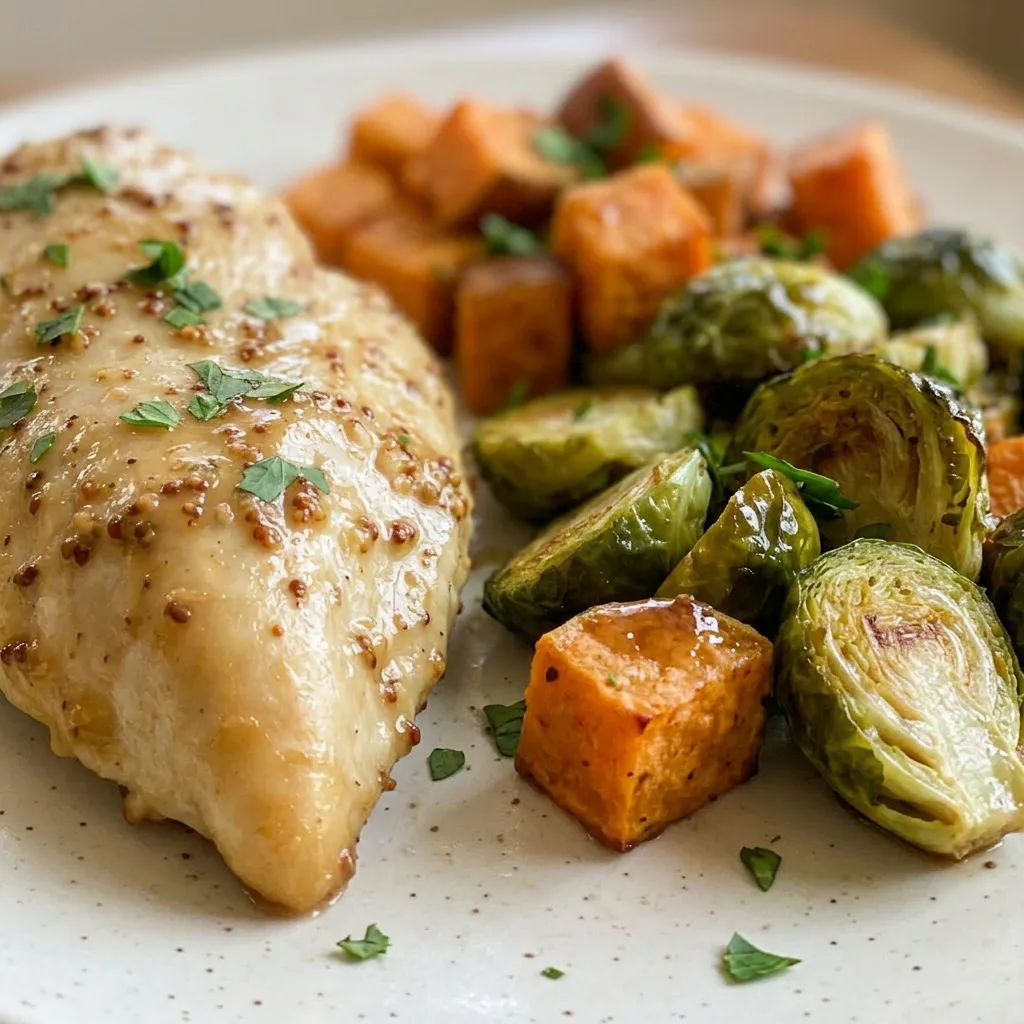
Prep: 15 min · Cook: 30 min · Total: 45 min · Servings: 4 · Calories: 430 kcal
What to look for in the ingredients
Chicken breasts: Buy similar sized pieces so they cook evenly in the same time frame.
Brussels sprouts: Pick firm, bright green sprouts; trim the stem ends and halve them lengthwise.
Sweet potatoes: Cut into uniform 1 inch cubes so they finish roasting at the same time as the sprouts.
Honey: Use a runny, mild honey; thick or strongly flavored honey can overpower the Dijon.
Build the glaze first, then divide it
Heat the oven and prep pan
Set oven to 400°F. Line a sheet pan with parchment or foil. This catches drips and makes cleanup fast, no scrubbing later.
Mix the honey Dijon glaze
Whisk honey, Dijon, 1 tbsp oil, garlic, salt, pepper, and optional paprika or herbs until smooth. Taste it: you want a balanced sweet-tangy punch.
Toss vegetables with half the glaze
In a bowl, coat sweet potatoes and Brussels sprouts with remaining 1 tbsp oil and half the glaze. Toss until each piece glistens, no dry spots.
Arrange chicken and vegetables on pan
Spread vegetables in a single layer. Tuck chicken breasts among them, leaving a little space. Crowding leads to steaming, not roasting.
Brush remaining glaze onto chicken
Use a brush to paint the reserved glaze onto each breast. Cover the top evenly; the glaze will caramelize into a sticky, browned coating.
Roast until chicken hits 165°F
Bake 25 to 30 minutes. Check chicken with a thermometer at the thickest part: 165°F means it’s done. Vegetables should be tender and caramelized at the edges.
Broil for a glossy finish
Switch to broil for 1 to 2 minutes. Watch closely, the sugar in the glaze can burn fast. You want deep amber spots, not blackened patches.
Rest and garnish
Let pan rest 5 minutes. The chicken relaxes, juices redistribute. Sprinkle parsley on top, it adds a fresh note against the sticky glaze.
Sheet Pan Honey Dijon Chicken with Veggies
Ingredients
- 1 ½ lbs boneless skinless chicken breasts about 3–4 pieces
- 2 tbsp olive oil divided
- 3 tbsp honey
- 2 tbsp Dijon mustard
- 2 garlic cloves minced
- 1 lb Brussels sprouts trimmed and halved
- 2 medium sweet potatoes peeled and cut into 1-inch cubes
- ½ tsp salt or to taste
- ¼ tsp black pepper
- ½ tsp smoked paprika optional
- 1 tsp fresh rosemary or thyme chopped (optional)
- 1 tbsp fresh parsley chopped (for garnish)
Instructions
Preheat oven and prepare pan:
Heat oven to 400°F (205°C). Cover a large sheet pan with parchment or foil to simplify cleanup.Whisk honey Dijon glaze:
In a small bowl, combine honey, Dijon mustard, 1 tbsp olive oil, minced garlic, salt, pepper, and optional smoked paprika or herbs. Whisk until smooth; set aside.Toss vegetables with glaze:
Put sweet potatoes and Brussels sprouts into a large bowl. Drizzle with the remaining 1 tbsp olive oil and half of the honey Dijon mixture. Toss thoroughly to coat.Arrange vegetables and chicken:
Arrange vegetables in a single layer on the prepared pan. Place chicken breasts on the same pan, leaving space between all items.Brush chicken with glaze:
Apply the remaining honey Dijon glaze generously onto the chicken using a brush.Bake until chicken is done:
Bake for 25–30 minutes, until chicken reaches an internal temperature of 165°F (75°C) and vegetables are tender with light caramelization.Broil for browning:
For a browned top, set oven to broil and cook for an additional 1–2 minutes, monitoring closely to avoid scorching.Rest and garnish with parsley:
Take out of the oven and allow to rest for 5 minutes. Garnish with fresh parsley before serving.
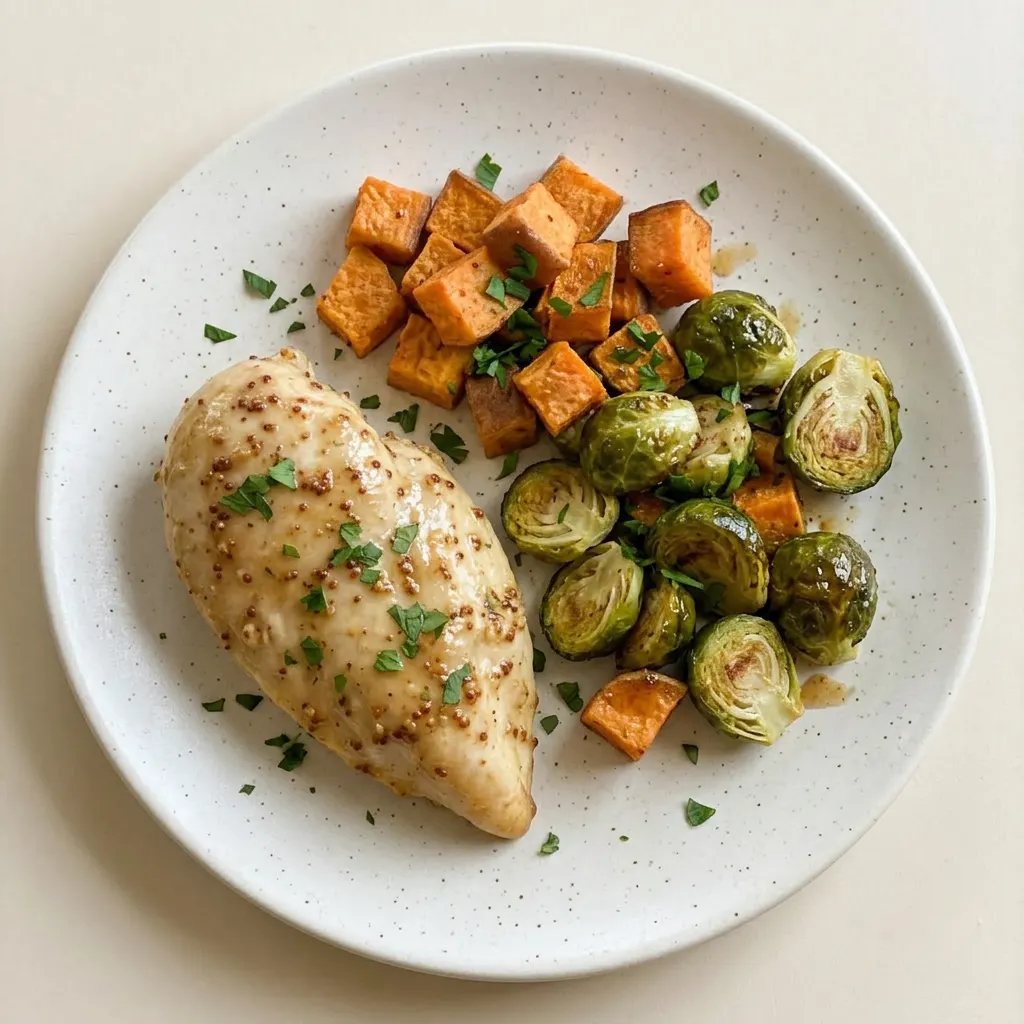
Smart swaps for this sheet pan dinner
Chicken breasts: Boneless skinless chicken thighs. Thighs stay juicier and can handle a few extra minutes without drying. Cook time may shorten slightly check for 175°F internal temp.
Honey: Maple syrup. Maple syrup is thinner and less sweet than honey. The glaze will be runnier; reduce syrup by 1 tablespoon to keep it from pooling.
Flavor shifts to woody maple rather than floral honey.
Brussels sprouts: Broccoli florets (about 1 lb). Broccoli cooks faster than sprouts. Cut florets into similar size, then add them 10 minutes into roasting so they don’t turn mushy while the sweet potatoes finish.
Storage and Serving
This dish is best eaten right after it rests. The chicken stays juicy, the vegetables keep their caramelized edges, and the glaze is still sticky and glossy. If you have leftovers, store them in an airtight container in the fridge for up to 3 days.
The chicken will firm up and the vegetables will soften as they sit, but reheating in a 350°F oven for about 10 minutes helps restore some of the original texture. Avoid microwaving, which makes the chicken rubbery and the vegetables soggy.
You can also reheat individual portions in a skillet over medium heat with a splash of water to loosen the glaze. The parsley garnish should be added fresh just before serving, whether you’re eating it right away or reheating leftovers. Don’t freeze this dish; the chicken breasts become dry and stringy, and the vegetables turn mushy upon thawing.
Tips
- Pat the chicken breasts dry with paper towels before applying the glaze. Moisture on the surface dilutes the honey Dijon mixture and prevents it from sticking, so the glaze slides off rather than forming a lacquered coating. Dry chicken lets the glaze cling and caramelize evenly.
- Use a silicone brush instead of a pastry brush for the glaze. Silicone bristles don’t absorb the sticky honey Dijon mixture, so you apply a thicker, more even layer. A pastry brush soaks up the glaze, wasting some and leaving a thinner coat that may burn before browning.
Frequently Asked Questions
Can I use chicken thighs instead of breasts?
Yes, swap boneless skinless thighs for the breasts. Thighs stay juicier and can handle a few extra minutes without drying. Check for 175°F internal temp instead of 165°F.
How do I prevent the chicken from drying out?
Pull the chicken at exactly 165°F with a thermometer, that’s the main safeguard. The vegetables release moisture as they roast, which also helps keep the breasts tender. Resting 5 minutes after baking lets juices redistribute.
Can I prep this dish ahead of time?
You can toss the vegetables with oil and glaze up to a day ahead, but brush the glaze onto the chicken just before baking. The cooked dish keeps in the fridge up to 3 days; reheat in a 350°F oven for about 10 minutes to restore texture.
What if I don’t have a broiler?
Skip the broiler step entirely, the chicken will still cook through and the glaze will caramelize during roasting. Just bake the full 25 to 30 minutes until the chicken hits 165°F and the vegetables are tender.
How do I know when the chicken is done without a thermometer?
Cut into the thickest part of a breast; the juices should run clear and the meat should be opaque throughout with no pink. If you’re unsure, err on the side of undercooking, you can always return it to the oven for a few more minutes.