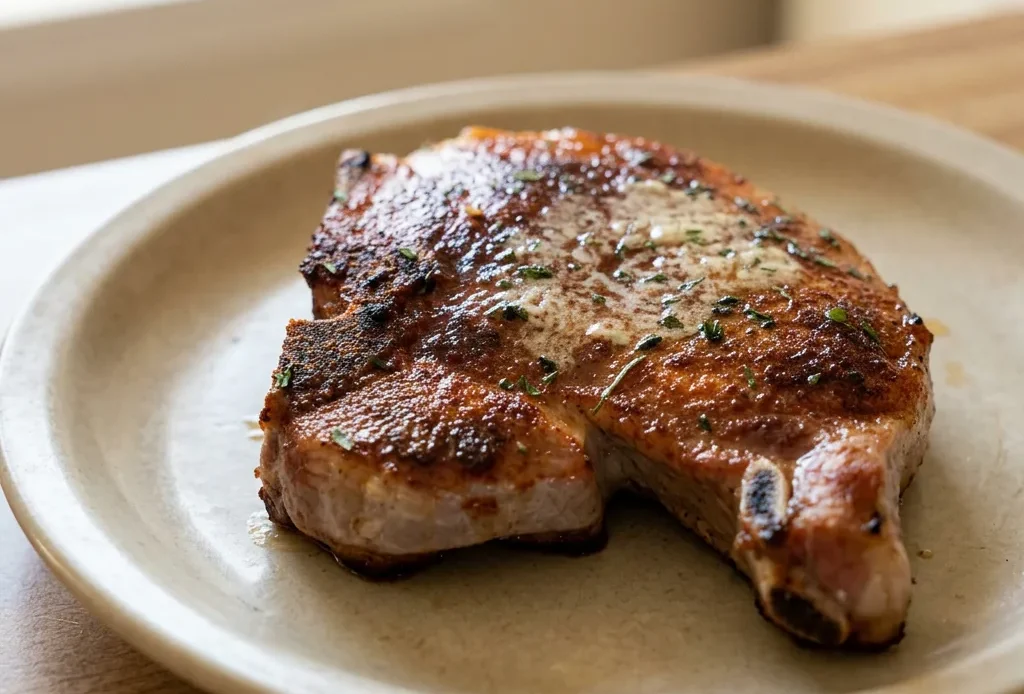
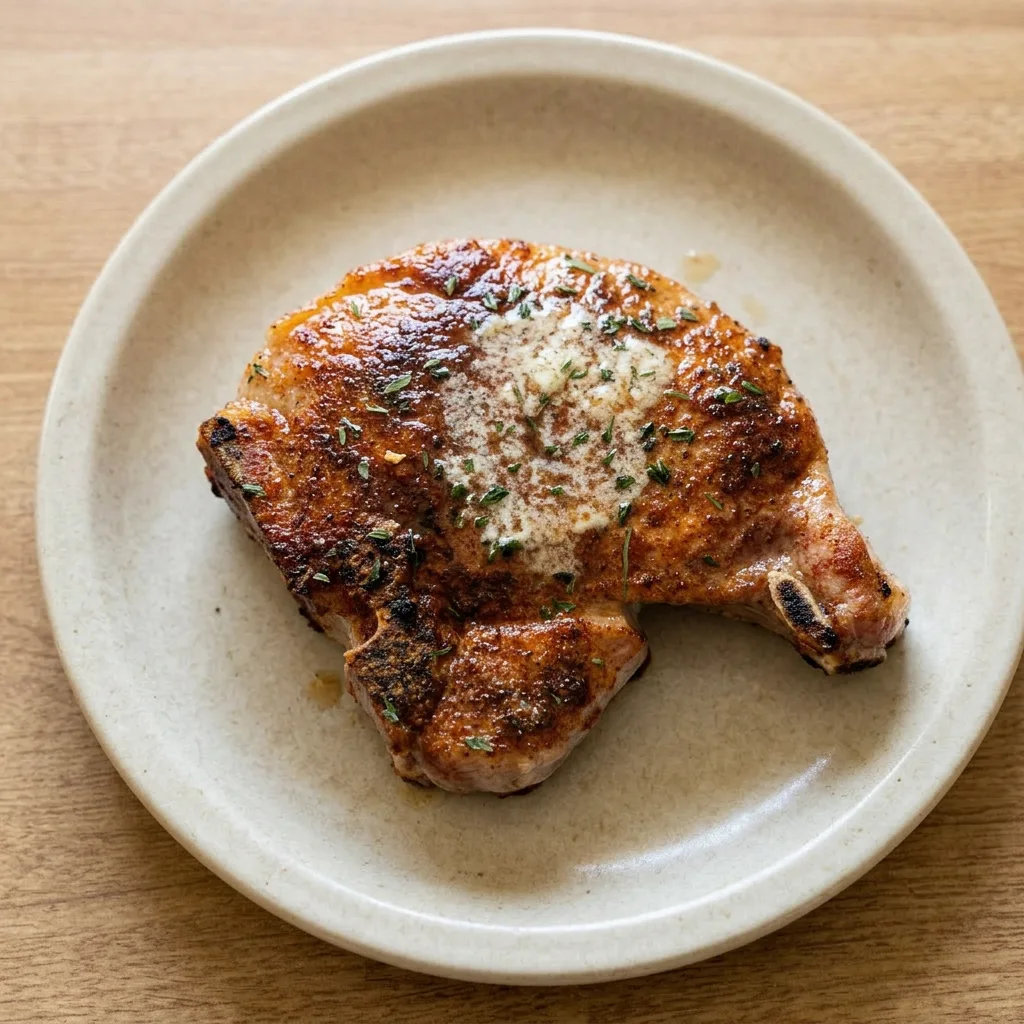
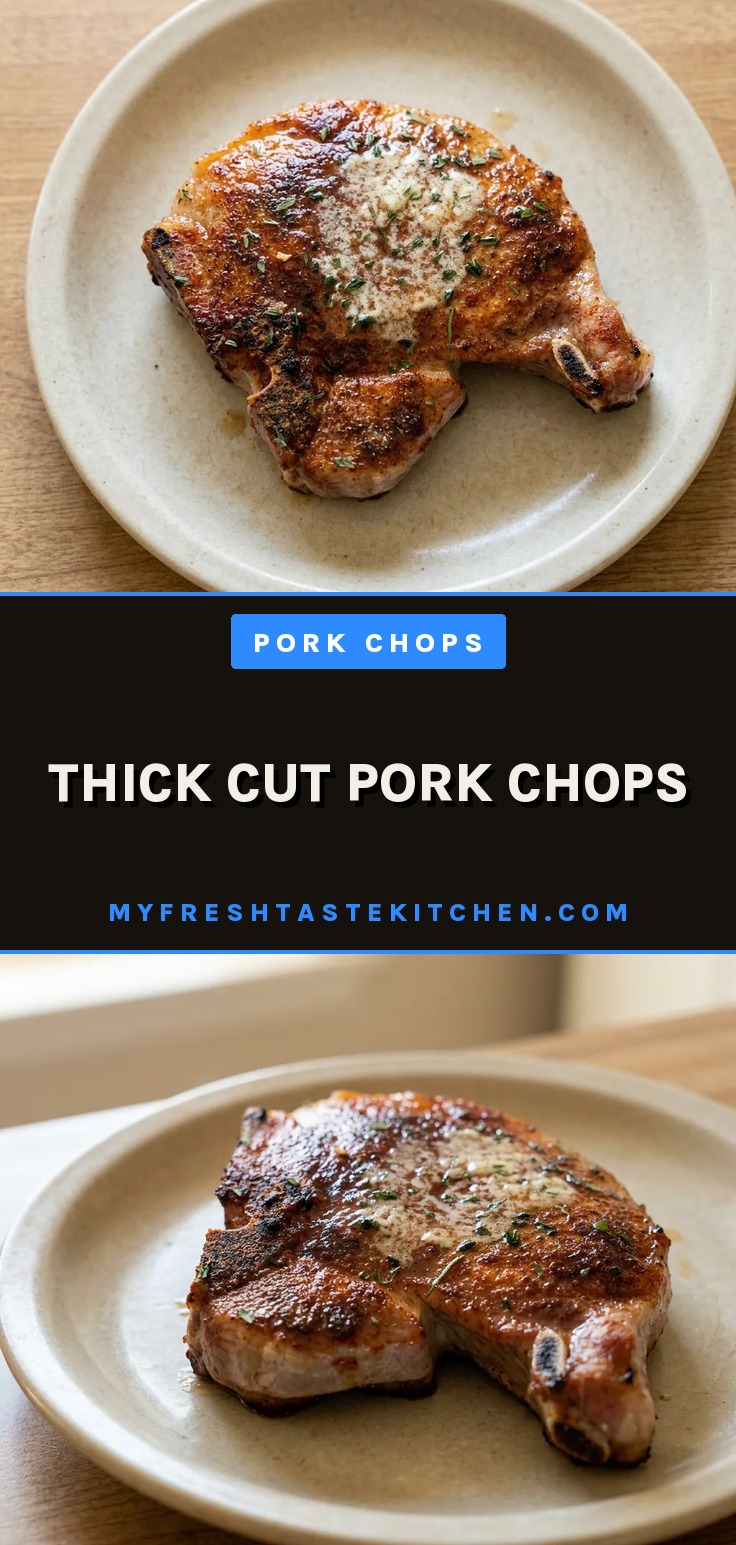
The crust on these thick cut pork chops comes out dark, tacky, and sweet-salty, with a shine that says the butter did its work. You get that caramelized shell without any stovetop splatter, and the interior stays juicy because the chop is thick enough to survive the heat. 5-inch cut to take a full blast of oven heat without drying, it works because the sugar and butter build a protective glaze while the meat slowly comes to temp.
A thermometer is important here; the visual cues are too subtle to judge doneness by eye alone.
I pulled them out of the oven and the surface was dry and crackly; when I cut into one, the meat was pale and fibrous, not juicy at all.
A thick chop survives high heat
When you roast pork at 425°F, thin chops dry out before they develop any crust. 5 to 2 inches thick gives you a buffer, the exterior can caramelize while the interior stays moist.
That thickness also means the meat doesn’t tighten up as fast, so you get a tender bite, not a dry one. The rule is simple: if you want oven-baked pork chops that aren’t shoe leather, go thick. You’ll taste the difference in every slice.
Brown sugar builds the crust
At 425°F, brown sugar melts and darkens into a sticky, caramelized coating. That sweetness isn’t just for show, it balances the salt and garlic, and it gives the crust a deep color you don’t get from spices alone.
The paprika and chili powder add a gentle warmth without heat, rounding out the flavor. Salt does double duty: it seasons the meat and helps the surface brown evenly. The result is a savory-sweet bark that clings to the chop.
Butter bastes from the top down
Now I always place that pat of butter on top before roasting, it melts and bastes the chop, keeping the meat moist and adding richness. As the butter slides down the sides, it coats the surface, mixing with the rub to create a glazed finish.
Without it, the exposed tops of thick chops can dry out before the center comes to temp. The butter also carries the spice flavors into every bite. It’s a small addition that changes the whole eating experience.
Resting keeps the juices inside
Pull the chops from the oven and let them sit for a full 10 minutes. During that time, the juices that pooled near the surface slowly migrate back into the meat fibers.
If you cut too soon, those juices run onto the cutting board, leaving you with dry, stringy pork. Resting on the hot baking sheet keeps the chops warm while the internal temperature settles.
After ten minutes, each slice is evenly moist and tender.
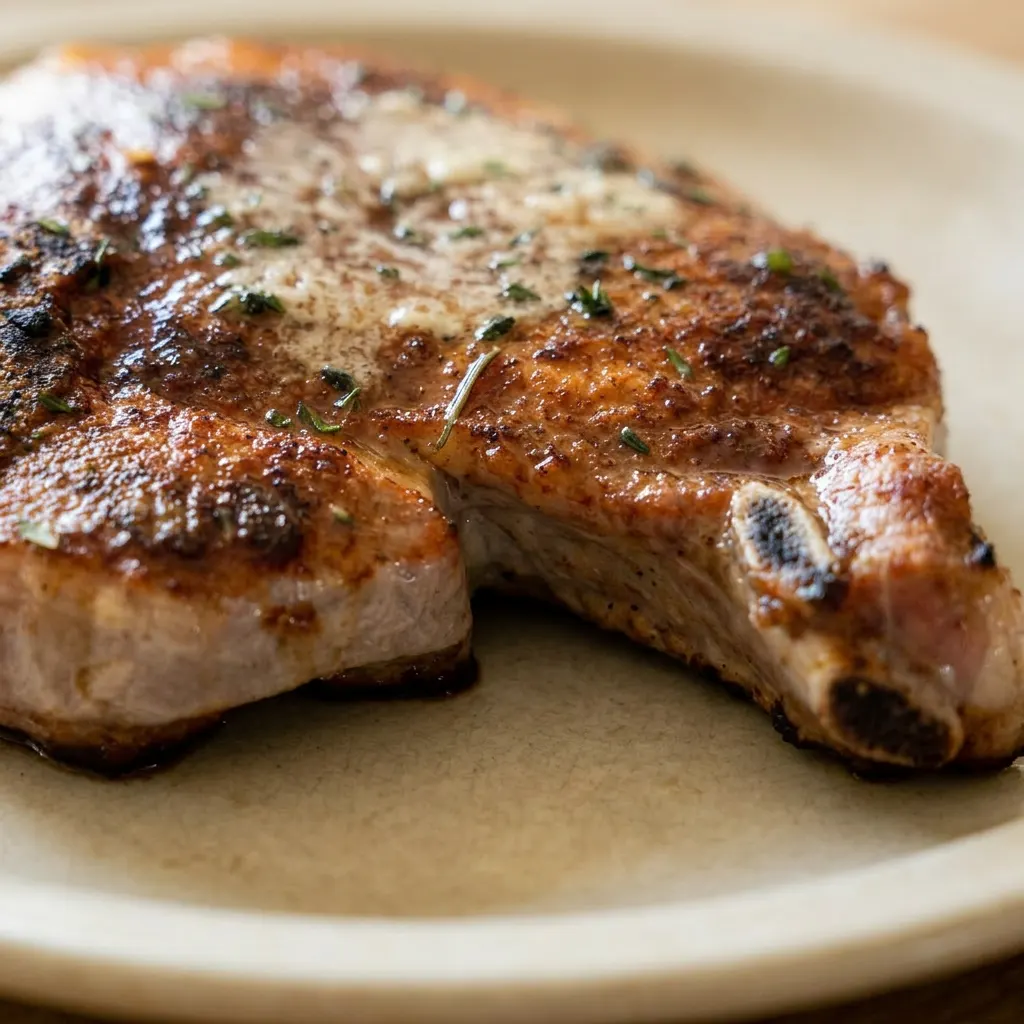
Prep: 10 min · Cook: 24 min · Total: 44 min · Servings: 4 · Calories: 150 kcal
What to look for at the store
pork chops: Buy chops cut 1.5 to 2 inches thick; thinner ones dry out before the crust forms.
brown sugar: Use light or dark brown sugar; dark gives a deeper caramel color and flavor.
butter: Unsalted butter lets you control the salt; salted works if you reduce the rub salt slightly.
Build the crust before the heat hits
Mix the rub
Stir salt, garlic powder, brown sugar, paprika, and chili powder together. The sugar should feel gritty against the salt and spices; if it’s clumpy, press out the lumps with your fingers.
Coat the chops
Pat the rub onto both sides of each chop, then shake off the excess. You want an even, sandy coating, not a thick paste. Bare spots will brown less; heavy piles can scorch.
Add the butter
Set a pat of butter on top of each chop. Place it dead center. As the oven heats, watch the butter melt and run down the sides, it should glaze the whole surface, not pool on the pan.
Roast until done
Slide the sheet into a 425°F oven and set a timer for 24 minutes. At the end, poke an instant-read thermometer into the thickest part: you’re looking for 145°F exactly. The crust should be deep brown and tacky, not black.
Rest on the tray
Pull the sheet out and let the chops sit undisturbed for 10 minutes. Don’t tent or cover them. The surface stays crisp while the juices settle; after 10 minutes, a slice releases barely any liquid on the board.
Thick Cut Pork Chops (Baked)
Ingredients
- 3 pieces pork chops 1.5-2 inches thick each
- 3 tbsp butter sliced into 3 pieces
- 1/2 tsp thyme
- 1 tbsp salt
- 1 tbsp garlic powder
- 1/2 cup brown sugar 100 g
- 3/4 tsp paprika
- 3/4 tsp chili powder
Instructions
Apply Dry Rub:
Heat oven to 425°F (220°C). Combine all dry rub components: salt, garlic powder, brown sugar, paprika, and chili powder. Evenly apply the rub to both faces of each pork chop, shaking off extra. Arrange chops on a baking sheet.Roast Pork Chops:
Cut butter into 3 equal portions and place one atop each chop. Roast for 24 minutes (timing depends on thickness) until the thickest part hits an internal temperature of 145°F (65°C).Rest Before Serving:
Take the baking sheet out of the oven and allow the chops to sit on the tray for 10 minutes before cutting and serving.
Keep thick bone-in chops; adjust the sugar and butter carefully
pork chops: boneless pork chops (same thickness). Boneless chops cook slightly faster and don’t have the bone’s insulating effect; check temperature 2 to 3 minutes early. The crust and juiciness remain similar, but the texture is slightly less forgiving if overcooked.
brown sugar: coconut sugar (same amount by weight, about 100 g). Coconut sugar caramelizes less aggressively, so the crust will be lighter and less sticky. The sweetness is milder and earthier; the chops won’t develop that deep mahogany color.
brown sugar: maple syrup (use 1/3 cup, 80 ml, and reduce other liquids if any). Maple syrup adds moisture, thinning the rub into a wet paste. The crust will be less crisp and more glazed; drippings may pool on the pan.
Oven temperature remains 425°F, but watch for faster browning, the sugar in syrup can scorch.
butter: ghee or coconut oil (same amount by volume, 3 tbsp). Ghee works identically to butter, with a slightly nuttier flavor. Coconut oil adds a light coconut scent and behaves the same; both keep the chop moist but won’t create the same rich basting effect.
For dairy-free, use ghee or coconut oil.
Tips
- Pat the pork chops dry with paper towels before applying the rub. Moisture on the surface steams instead of browning, preventing the crust from forming properly and diluting the rub’s adhesion.
Storage and Serving
These chops are best eaten right after the rest time, while the crust is still crisp and the meat is juicy. For leftovers, transfer the chops to an airtight container and refrigerate for up to 3 days. The crust will soften, and the meat will dry out slightly over time.
To reheat, place the chops on a baking sheet in a 300°F oven for 8 to 10 minutes, just until warmed through. A quick sear in a hot skillet also works. Avoid the microwave, which turns the crust gummy and dries the meat.
You can freeze the cooked chops for up to 1 month, but expect the texture to become drier and the crust less crisp after thawing. Thaw overnight in the fridge, then reheat gently. Do not freeze the leftovers with the butter pat, as it can turn rancid.
For best results, eat within 2 days.
Frequently Asked Questions
Can I make these pork chops ahead of time and reheat them?
You can, but the crust softens and the meat dries slightly. Reheat on a baking sheet at 300°F for 8 to 10 minutes or sear in a hot skillet; skip the microwave. Best eaten within 2 days.
How do I know when the pork chops are done without a thermometer?
You can’t reliably, because thickness and oven variation make timing unreliable. The crust should be deep brown and tacky, not black, but that only tells you the surface. A thermometer is the only sure way to hit 145°F.
What’s the difference between this recipe and pan-seared pork chops?
Pan-searing gives a thinner, crunchier crust from direct contact with hot oil. This oven method relies on the butter basting and sugar caramelizing in still heat, producing a thicker, glazed coating. The interior cooks more gently, so it’s less prone to drying.
Can I use boneless pork chops instead of bone-in?
Yes, but use the same thickness, 1.5 to 2 inches. Boneless chops cook 2 to 3 minutes faster because the bone insulates; check temp earlier. The crust and juiciness stay similar, but the texture is less forgiving if you overcook.
Why are my pork chops dry even though I followed the recipe?
Most likely the chops were thinner than the specified 1.5 to 2 inches, thinner chops dry out before the crust forms. Also check that your oven runs hot; 24 minutes at 425°F is right for thick chops, but an inaccurate oven can overshoot. Next time, use a thermometer.