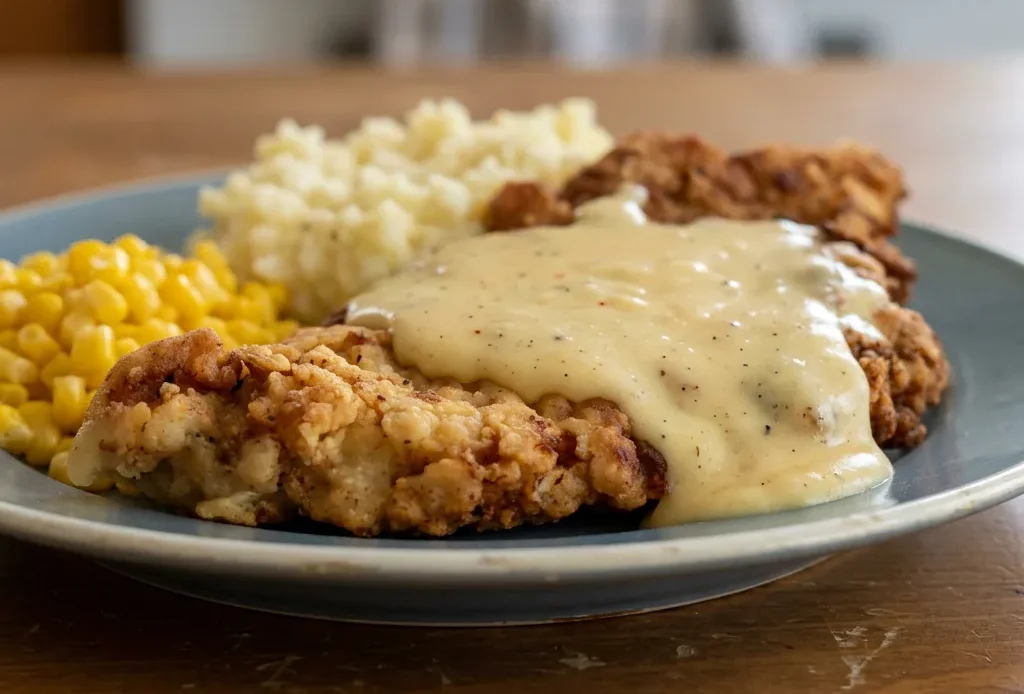
This isn’t chicken fried steak. Country fried pork with white gravy swaps beef for pork, but keeps the same crunchy, gravy-drenched comfort. Thin pork chops fry fast, so the crust stays crisp and the meat tender, even under a blanket of smooth gravy.
The double-dredge builds that craggy shell, and cayenne in both the flour and gravy ties it together with quiet heat. It’s a one-pan meal that delivers on nostalgia without fuss.
The first time I made this, I skipped the second egg wash and just did a single dip. The crust was thin and fell apart, and the pork ended up greasy and sad.
Why double-dredge for the crust?
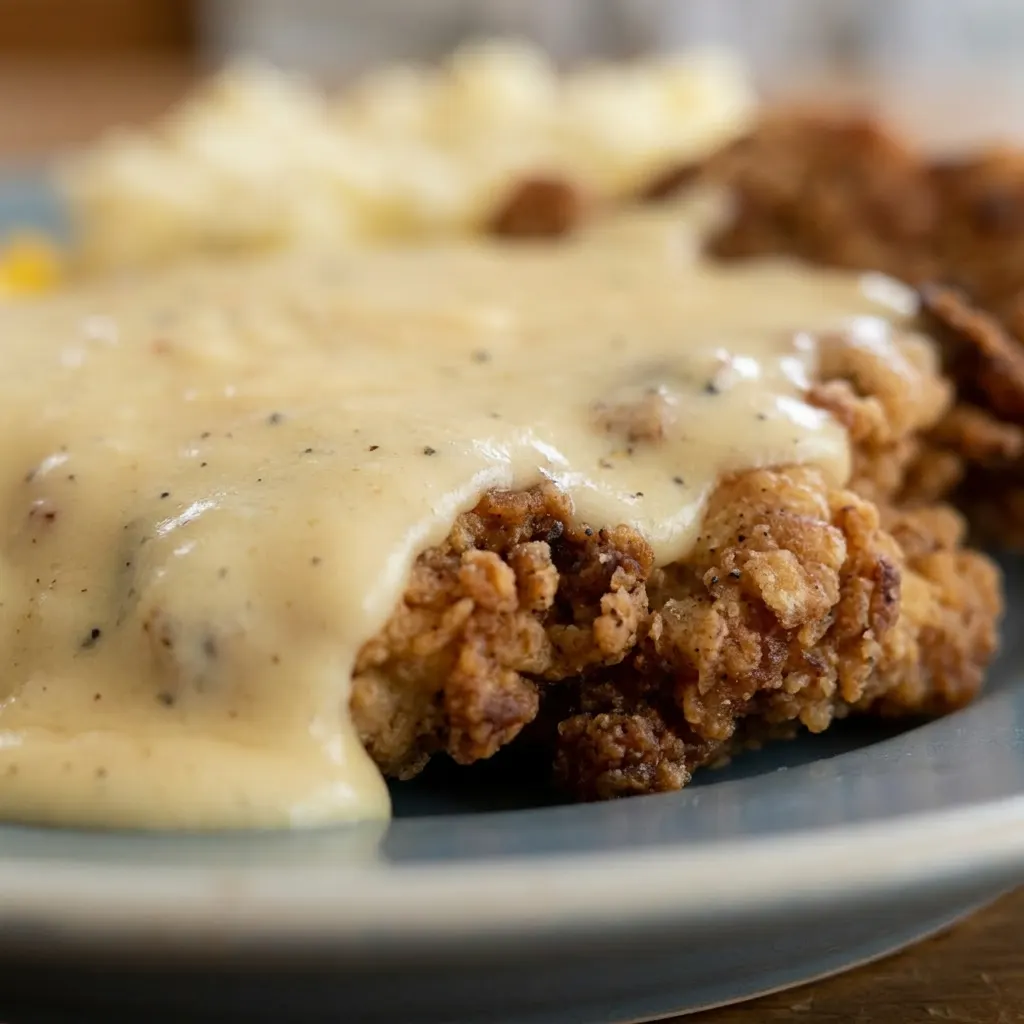
A single dip in flour doesn’t build enough armor against a blanket of gravy. The double-dredge, egg-milk, flour, then egg-milk, flour again, creates a thick, craggy coating that stays crunchy even after the gravy sits.
The flour gets seasoned with cayenne for a quiet heat that builds as you eat. The egg wash acts like glue, gripping each layer so the crust doesn’t slip off in the pan.
Now I always do the full double-dredge: egg-milk, flour, egg-milk, flour again, that thick coating stays crunchy even under the gravy.
How does the gravy stay smooth?
Lumps come from dumping flour into hot liquid without a buffer. Here, the gravy begins as a roux: butter and flour cooked together until bubbly and light golden. That pre-cooking kills the raw flour taste and sets the stage for smooth thickening.
When you pour in the milk, do it gradually while whisking, this lets the starch particles disperse evenly before they can clump. The same cayenne that seasons the pork appears in the gravy, too, linking the two components.
You want a gravy that coats a spoon without being pasty.
Why thin cuts for frying?
Thick pork chops need long cooking to reach 145°F, and by then the exterior is often overdone or the interior dry. Thin chops or tenderloin, about 1/2 inch thick, fry in 2 to 3 minutes per side, just long enough to turn the crust golden and the inside juicy. The quick heat also keeps the crust from soaking up excess oil.
You get a crisp shell and a tender center, and the thinness means more surface area for that gravy to cling to.
Prep: 30 min · Cook: 40 min · Total: 1 hr 10 min · Servings: 4 · Calories: 1110 kcal
Ingredient callouts for the crust and gravy
Pork chops or tenderloin: Buy thin cut chops, about 1/2 inch thick, so they fry in 2 to 3 minutes without drying out.
Milk: Whole milk gives the gravy richer body and better cling than skim or 2%.
Cayenne pepper: A pinch in both the flour and gravy builds a quiet heat that ties the dish together.
Canola oil: Use a neutral oil with a high smoke point; don’t let it smoke before adding the pork.
Build the crust and fry fast
Set up the dredging station
Two shallow dishes: one with egg and milk whisked until uniform, the other with flour, cayenne, salt, and pepper stirred together. Have a plate ready for the coated chops.
Season the pork
Sprinkle both sides of each chop with salt and pepper. Don’t skimp, this is the only seasoning the meat gets before the crust goes on.
Double-dredge each chop
Coat in egg-milk, then flour, then egg-milk again, then flour again. Press the flour on so it sticks. You want a thick, craggy layer, not a thin dusting.
Heat the oil
Pour canola oil to a depth of about 1/4 inch in a large skillet. Heat over medium-high until it shimmers. A drop of flour should sizzle on contact.
Fry the pork
Lay chops in the hot oil without crowding. Cook 2 to 3 minutes per side; the crust should turn deep golden brown. The internal temp should hit 145°F.
Work in batches if needed.
Drain on paper towels
Transfer cooked chops to a paper towel-lined plate. The towels soak up excess oil so the crust stays crisp, not greasy.
Start the gravy roux
In a medium saucepan, melt butter over medium heat. Whisk in flour, salt, pepper, and cayenne. Cook, whisking constantly, until the mixture bubbles and turns light golden, 3 to 5 minutes.
Add milk gradually
Pour in the milk while whisking nonstop. Adding slowly lets the roux absorb the liquid without lumps. Keep whisking until the gravy is smooth and thick enough to coat a spoon, about 10 to 12 minutes.
Pour over pork and serve
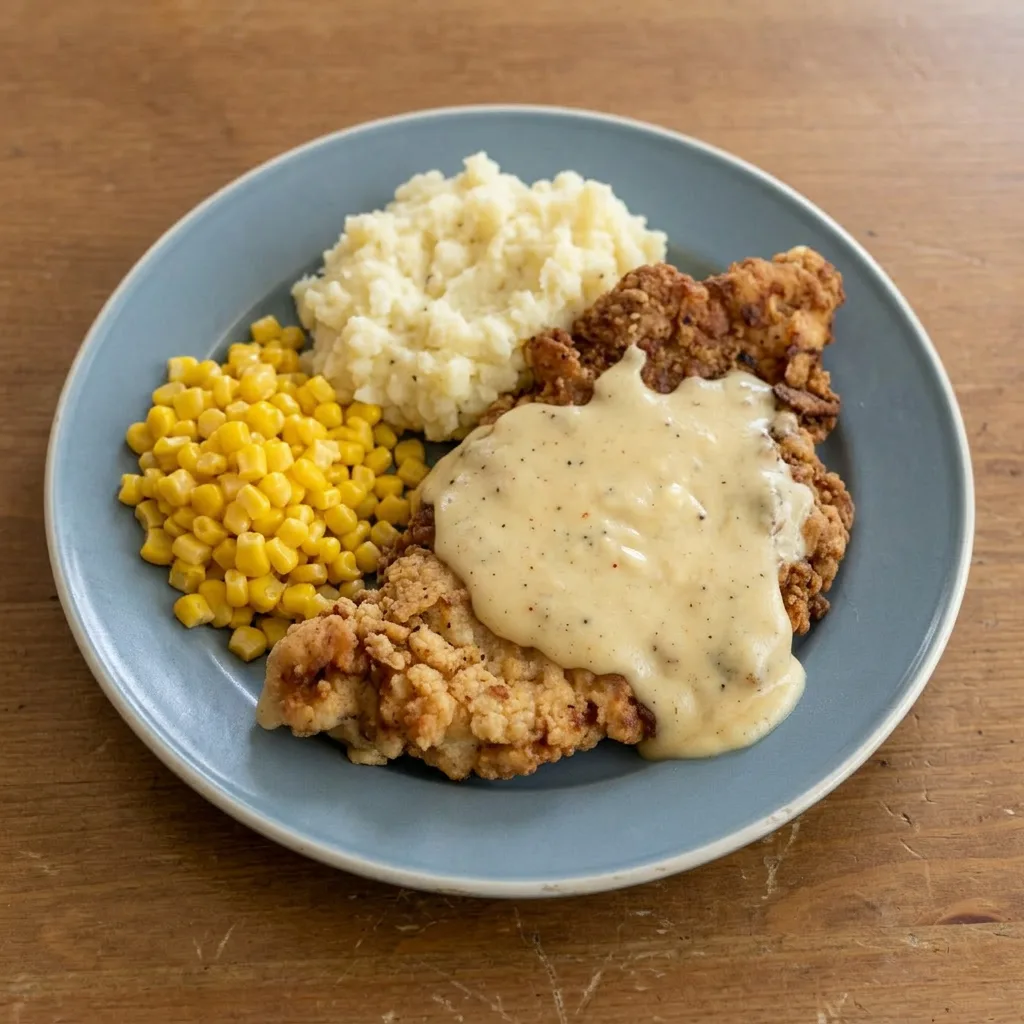
Spoon the hot gravy over the fried chops. The crust should stay crunchy even under the gravy, if it softens, you cooked the roux long enough to avoid a paste.
Country Fried Pork with White Gravy
Ingredients
Pork
- 2 lb thin pork chops or tenderloin 907 g
- 2 large eggs
- 2 cups all-purpose flour 256 g
- 1 1/2 cups milk 355 ml
- canola oil for frying
- cayenne pepper to taste
- salt and black pepper to taste
Gravy
- 4 tbsp unsalted butter 57 g
- 1/4 cup all-purpose flour 32 g
- 1/8 tsp cayenne pepper
- 2 cups milk 473 ml
- salt and black pepper to taste
Instructions
Pork
Prepare breading stations:
Arrange two pie plates or shallow baking dishes. In the first, beat eggs with 1 1/2 cups milk until combined. In the second, stir together 2 cups flour, cayenne, salt, and black pepper.Season pork chops:
Sprinkle both sides of the pork with salt and pepper.Double coat pork chops:
Coat each pork piece first in the egg mixture, then the flour mixture, then back in the egg mixture, and finally in the flour mixture again. Place on a plate.Heat oil in skillet:
Pour about 1/4 inch of canola oil into a large skillet and heat over medium-high until shimmering.Fry pork chops:
Fry each pork chop for 2-3 minutes per side, until golden and fully cooked (internal temperature reaches 145°F (65°C)/63°C). Transfer to a paper towel-lined plate to drain.
Gravy
Make roux for gravy:
In a medium saucepan over medium heat, melt butter. Whisk in 1/4 cup flour, salt, pepper, and 1/8 tsp cayenne. Cook, whisking constantly, for 3-5 minutes until bubbly and light golden.Add milk and thicken:
Gradually pour in 2 cups milk while whisking continuously to avoid lumps. Continue cooking, whisking occasionally, until the gravy thickens, about 10-12 minutes. Season to taste.Serve with gravy:
Pour the gravy over the pork chops and serve.
What to swap (and what to leave) in country fried pork
Pork chops or tenderloin: Chicken breast or thighs, pounded to even thickness. The cook time stays similar if you keep pieces about 1/2 inch thick. White meat stays leaner but can dry out a minute sooner; thighs stay juicy with a slightly different flavor.
All-purpose flour: Gluten-free all-purpose flour blend (with xanthan gum). The dredge will stick but the crust turns less craggy and more delicate.
The gravy will thicken but may feel slightly thinner; you can simmer an extra minute to compensate. Start with the same volume the recipe uses.
Milk (in dredge and gravy): Unsweetened oat milk or cashew milk (not almond or rice). Oat or cashew milk mimics whole milk’s body in the gravy; almond or rice makes a thin, watery gravy that won’t coat the pork. The egg-milk wash still clings fine.
Use the same cup-for-cup amounts.
Egg: None, do not substitute in the dredge. No egg replacer builds the same sticky glue for the double-dredge.
Without it, the flour layers slide off in the hot oil and you get a bare, greasy chop. Leave the egg in.
Storage and Serving
Serve the pork and gravy immediately after pouring. The crust is at its peak right then. If you have leftovers, store the pork and gravy in separate containers.
The breading softens quickly when in contact with gravy. In the fridge, the pork stays crisp for about one day if stored in a single layer in an airtight container.
After that, the crust turns chewy. The gravy keeps for 3 to 4 days. Reheat the pork in a 350°F oven on a wire rack for 5 to 7 minutes to restore some crunch.
Reheat the gravy on the stovetop over low heat, whisking in a splash of milk if it thickened. Freezing is not recommended for the assembled dish.
The gravy freezes okay for up to one month, but the pork’s crust won’t survive thawing. For make-ahead, fry the pork and make the gravy, then keep them separate. Warm the pork in the oven and the gravy on the stove, then combine just before serving.
Tips
- Check the oil temperature with a wooden chopstick or skewer: if bubbles stream steadily around it, the oil is ready. If the bubbles are too violent, the oil is too hot and will burn the crust before the pork cooks through.
- Use a heavy skillet like cast iron for frying. It holds heat better than thin pans, so the oil temperature drops less when you add the pork, leading to a more even, crisp crust.

Frequently Asked Questions
Can I make the gravy ahead of time and reheat it?
Yes. Make the gravy, cool it, then refrigerate in a sealed container for up to 4 days.
Reheat on the stovetop over low heat, whisking in a splash of milk if it thickened too much in the fridge. Don’t pour it over the pork until you’re ready to serve, or the crust will soften.
Why did my breading fall off during frying?
Most likely the oil wasn’t hot enough when the pork went in, it should shimmer, and a pinch of flour should sizzle on contact. If the oil is too cool, the coating soaks up grease and slides off. Also check that you pressed the flour firmly onto each layer during the double-dredge; a loose dusting won’t stick.
How is country fried pork different from chicken fried steak?
The technique is nearly identical, both use a double-dredge and cream gravy, but the meat changes the character. Chicken fried steak is made with tenderized cube steak (beef), which has a looser grain and cooks up chewier. Country fried pork uses thin pork chops or tenderloin; the fat in the pork keeps the meat juicier and the flavor milder.
The crust and gravy are built the same way.