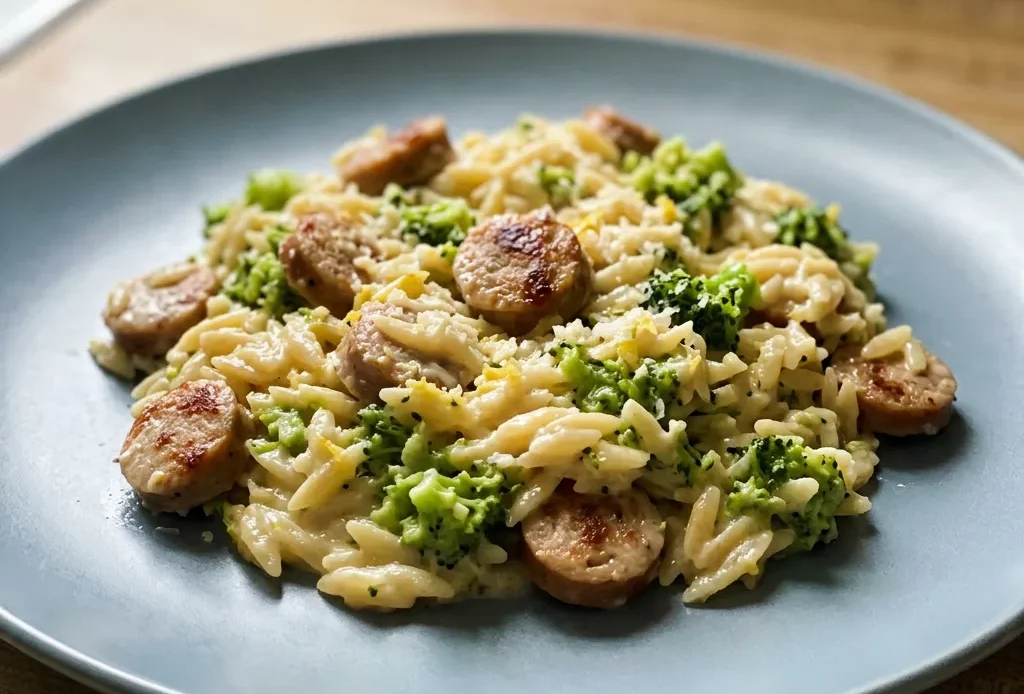
The trick to this skillet dinner isn’t the sausage or the broccoli, it’s browning the orzo in the rendered fat before adding liquid. That short toast firms the grains so they keep a slight bite even after simmering, and it builds a nutty base that plain pasta can’t touch. The rest is assembly: smoky sausage, tender broccoli, a bright lemon-Parmesan finish.
Chicken sausage and broccoli orzo comes together fast, but the toasting step is where the depth happens.
Why toast orzo before adding liquid?
Toasting orzo in the skillet after removing the sausage is a short step that pays off. You’ll see the pasta turn a shade darker and smell a nutty aroma.
That toasting firms up the grains so they hold their shape during simmering instead of turning mushy. The color and flavor deepen, giving the finished dish a toasted grain note you won’t get from boiling alone. It takes just a minute or two, and the same pan still has the sausage drippings, so the toasting happens in fat that’s already flavored.
One skillet builds deeper flavor
Browning the sausage first leaves browned bits stuck to the pan. That’s fond, and it’s pure savory flavor.
When you add the broth and orzo, those bits dissolve into the liquid, seasoning everything without extra work. You also keep the rendered fat from the sausage, which enriches the broth as it simmers. No need to wash a pan between steps.
The result is a dish that tastes like it took longer than it did, all from letting the first step do double duty.
Small broccoli pieces cook fast and blend in
Chopping broccoli into small florets, about the size of the orzo, lets it cook through in the same time the pasta finishes. No need to blanch or steam separately.
The small pieces tuck into the orzo, so every forkful gets a bit of broccoli. If you use frozen broccoli, it’s already cut small; just add it straight from the bag. You’ll see the florets turn bright green and tender in about five minutes, and they soften enough to mix into the creamy sauce without staying crunchy.
Lemon and Parmesan finish the sauce without cream
Adding lemon zest and juice at the very end keeps their brightness front and center. The heat wilts the zest slightly but doesn’t cook away the aroma.
Parmesan stirred in at the same time melts into the remaining liquid, creating a light creamy coating around the orzo. You don’t need cream or butter, the starch from the pasta and the cheese do the work.
The lemon cuts the richness of the sausage and cheese, so the dish tastes balanced, not heavy.
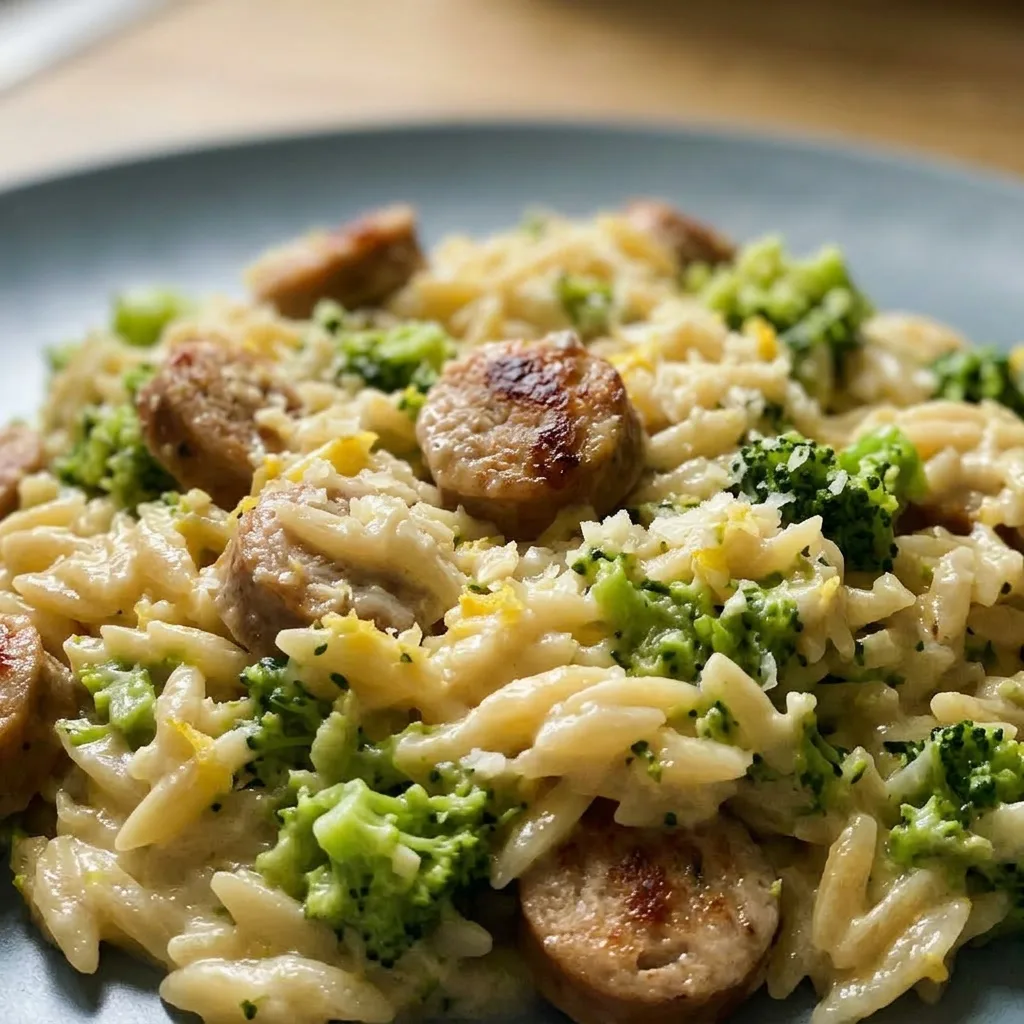
Prep: 10 min · Cook: 20 min · Total: 30 min · Servings: 4
What to look for in each ingredient
Chicken sausage: Buy fully cooked smoked sausage; raw sausage needs longer cooking and changes the timing.
Orzo: Use standard dry orzo, not whole wheat or gluten free; those cook differently and may break down.
Broccoli: Finely chop fresh florets so they cook in 5 minutes; frozen is fine and needs no thawing.
Parmesan: Buy a block and grate it yourself; pre shredded has anti caking stuff that won’t melt smoothly.
Lemon: Get a firm, bright yellow lemon for zest and juice; bottled juice lacks the aromatic oils.
Build the dish in one skillet, layering flavors as you go
Brown the sausage
Heat the olive oil over medium heat and add the sausage rounds. Let them sit undisturbed until the bottoms are deeply browned, you’ll see a dark crust form and hear a steady sizzle. Stir and cook until both sides are well marked, about 3 to 4 minutes total.
Toast the orzo in the rendered fat
Remove the sausage to a plate, leaving the fat and browned bits in the pan. Add the dry orzo and stir constantly for 1 to 2 minutes. The grains will turn a shade darker and you’ll smell a nutty aroma, stop as soon as they start to take on color.
Bloom the garlic
Push the orzo to the side, add the minced garlic, and stir for about 30 seconds until fragrant. If the pan seems dry, add a splash of broth. The garlic should soften without browning, once you smell it, move on immediately.
Simmer the orzo and sausage
Pour in the broth, scrape up any stuck bits, then return the sausage. Bring to a gentle simmer, small bubbles breaking the surface, not a rolling boil. Scatter the broccoli on top without stirring; it will steam as the orzo cooks.
Cook until orzo is al dente and liquid is mostly absorbed
Let it simmer uncovered for about 5 minutes. The orzo should be tender but still have a slight bite, and the broccoli will be bright green and fork-tender. Most of the liquid should be absorbed, leaving a creamy-looking sauce around the pasta.
Finish with lemon and Parmesan
Remove the pan from heat. Stir in the lemon zest, juice, and grated Parmesan until the cheese melts and the sauce turns creamy. Taste and adjust salt and pepper, the sausage and broth are already salty, so go easy.
If the orzo thickens too much, add a splash of warm broth to loosen.
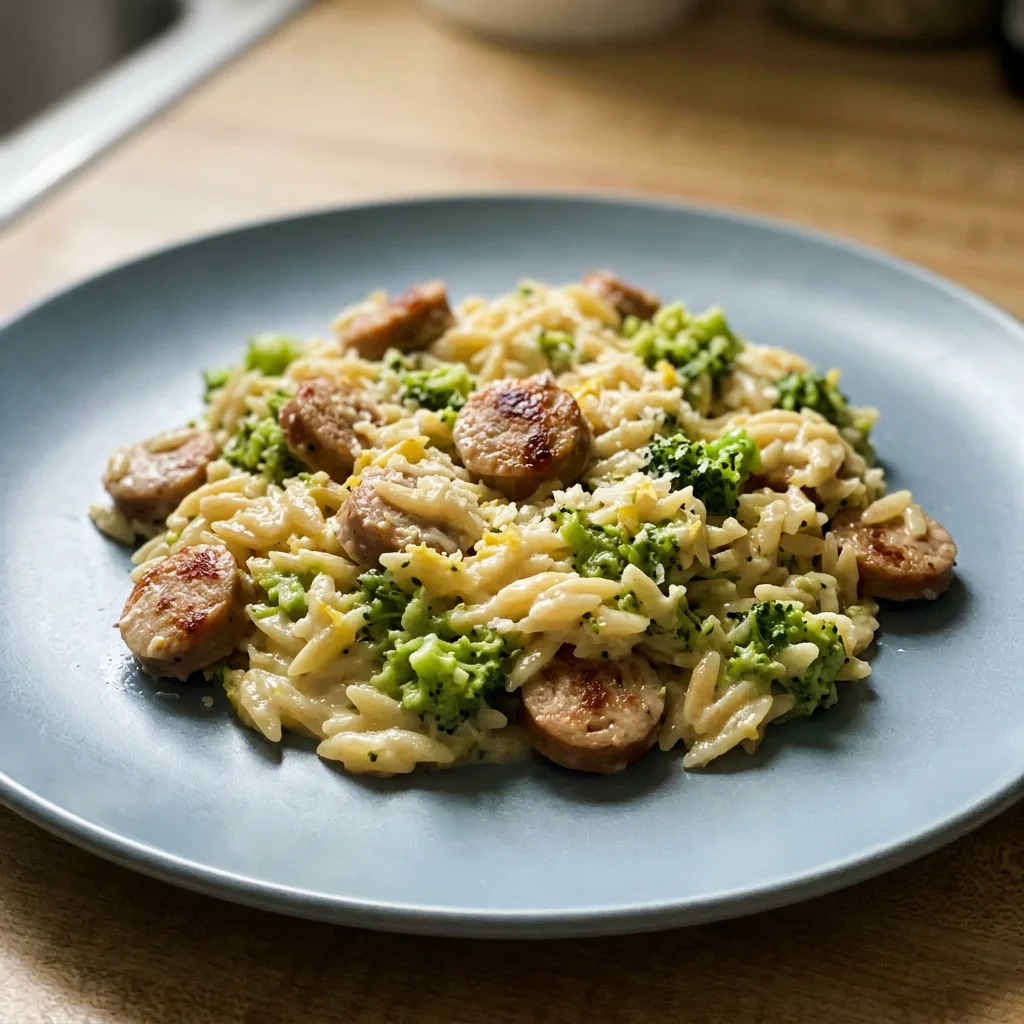
Chicken Sausage and Broccoli Orzo
Ingredients
Method
Warm olive oil:
In a large skillet, warm olive oil over medium heat.Brown sliced sausage:
Add the sliced chicken sausage and cook until browned.Remove sausage:
Remove sausage, leaving drippings in the pan.Toast orzo:
Add orzo to the same skillet and toast for 1-2 minutes.Sauté garlic:
Stir in minced garlic and cook until aromatic.Simmer broth:
Pour in chicken broth and bring to a gentle simmer.Return sausage:
Return the browned sausage to the skillet.Add broccoli:
Once simmering, scatter chopped broccoli on top.Cook broccoli:
Cook for about 5 minutes until broccoli is tender.Mix in lemon and cheese:
When orzo is tender and liquid is mostly absorbed, mix in lemon zest, juice, and Parmesan.Season to taste:
Season with salt, pepper, or extra broth to reach desired consistency.
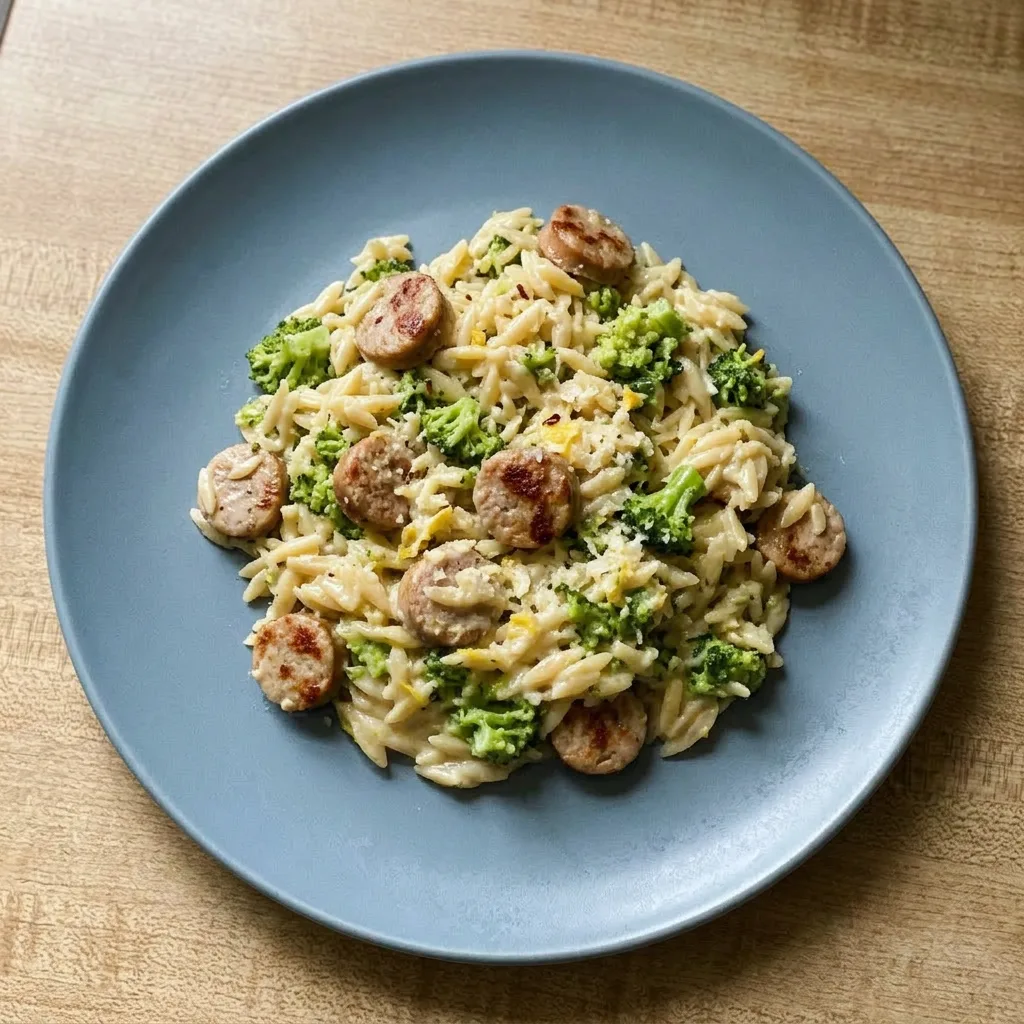
Swapping the main players without breaking the one-pot balance
Chicken sausage: Turkey kielbasa or plant-based sausage (like Beyond or Field Roast). Turkey sausage is leaner, so you’ll get less rendered fat, add a splash of olive oil if the pan looks dry after browning. Plant-based sausage often releases more moisture; cook it until that liquid evaporates and the slices brown, or the orzo may turn gummy.
Flavor shifts: turkey is milder, plant-based versions are often smoky or spiced, adjust salt and herbs to match.
Orzo: Ditalini, stelline, or another small pasta shape of similar size. Cooking time stays close to 5 minutes, so check the package and taste a minute early.
Larger or thicker shapes will need more liquid and time, don’t use them unless you adjust broth volume. Gluten-free orzo exists but cooks mushier; cook it 2 minutes less and stir in a tablespoon of olive oil at the end to keep grains separate.
Broccoli: Frozen chopped spinach (thawed and squeezed dry). Spinach wilts in about a minute, so stir it in after the orzo is tender. It adds no crunch and turns the dish green, but the flavor stays mild.
Do not use fresh spinach without chopping, it will clump. No need to chop frozen spinach; it’s already broken up.
The dish loses the broccoli’s slight chew, but the lemon and Parmesan still pop.
Parmesan: Pecorino Romano or a dairy-free grated alternative (like Follow Your Heart or Violife). Pecorino is saltier and sharper; cut added salt by half. Dairy-free Parmesan melts differently, stir it in off heat and add a splash of broth if the sauce doesn’t thicken.
The final dish will be less creamy and the cheese flavor more subtle, but the lemon will still provide lift. Pre-shredded dairy-free blends often contain starch; they clump, so grate from a block if possible.
Storage and Serving
This dish is best served right after finishing: the orzo is tender, the sauce is creamy, and the lemon and Parmesan are bright. For leftovers, transfer to an airtight container and refrigerate within two hours. The orzo will absorb liquid as it sits, so after a day the texture becomes denser and less saucy.
It keeps well for up to 3 days, but the sauce thickens noticeably. To reheat, add a splash of chicken broth or water per serving and warm gently in a skillet or microwave, stirring occasionally, until the orzo loosens up and the sauce becomes creamy again. The broccoli will soften further but won’t turn mushy if you don’t overcook.
Freezing is not recommended because the orzo’s texture suffers during thawing, becoming grainy; the cheese sauce can also separate. If you must freeze, freeze the cooked sausage and broccoli separately, then make fresh orzo and sauce when reheating.
Tips
- Use a rasp-style grater for the Parmesan; it creates fine, fluffy shreds that dissolve instantly into the hot orzo, avoiding clumps.
- If your orzo absorbs all the broth before it’s tender, add hot water a quarter cup at a time and continue simmering until al dente.

Frequently Asked Questions
Can I use a different type of pasta instead of orzo?
Yes, but stick to small shapes like ditalini or stelline that cook in about 5 minutes. Larger pasta will need more liquid and time, throwing off the one-pot balance. The toasted flavor and creamy texture come from orzo’s size and starch, so a swap changes the final dish noticeably.
How do I prevent the orzo from becoming too sticky or mushy?
Toast the dry orzo in the sausage drippings for 1 to 2 minutes until it darkens and smells nutty, that firms up the grains so they hold their shape. Also, don’t stir the orzo once you add the broth; let it simmer gently until most liquid is absorbed. Over-stirring releases extra starch and makes it gluey.
Can I make this dish ahead of time and reheat it?
It’s best fresh, but you can refrigerate leftovers for up to 3 days. The orzo absorbs liquid as it sits, so when reheating, add a splash of broth or water per serving and warm gently, stirring until creamy again. Freezing is not recommended, the orzo turns grainy and the cheese sauce can separate.
What’s the difference between this dish and a classic Italian orzo recipe?
Classic Italian orzo is often boiled separately and tossed with butter and cheese, or served in a broth-based soup. Here, the orzo is toasted in rendered sausage fat and simmered with broccoli and sausage in one skillet, creating a creamy, risotto-like texture without cream. The lemon and Parmesan finish brightens it, but the method is more about layering flavors in a single pan than following a traditional Italian technique.