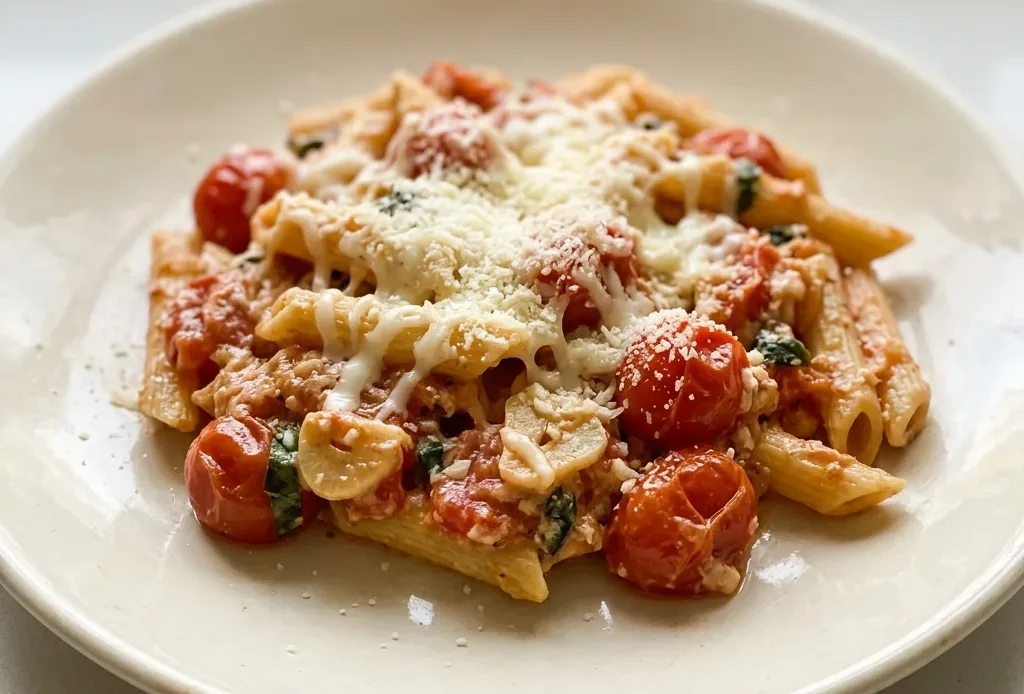
Working with a whole wheel of Brie instead of shredded cheese changes the timing: you have to wait until the rind softens enough to stir into a sauce, but there’s no grating, no roux, no extra cream. The real trick is that the Brie acts as its own vessel, the rind holds the molten cheese in place while the tomatoes burst around it, so you can walk away for the full 35 minutes.
That hands-off window is the only hard part; once it comes out, you stir and the sauce comes together in seconds. This baked brie pasta leans on that one moment of patience, and the rest is assembly.
Set the Brie whole in the center of the tomatoes
When you bake the Brie surrounded by cherry tomatoes and oil, the rind acts as a natural barrier. It keeps the cheese from scorching or breaking before the interior fully melts.
The tomatoes release their acidic juices as they burst, and the oil helps create a smooth emulsion. After baking, stirring integrates the melted cheese with the tomato juices into a cohesive sauce. You end up with a creamy, non-curdled sauce that coats the pasta evenly.
Why Brie’s high butterfat matters for the sauce
Brie is a soft-ripened cheese with a high butterfat content. That fat is what gives the sauce its rich, silky texture that clings to pasta. The edible rind adds a subtle earthy flavor and helps stabilize the emulsion as it melts.
Unlike hard cheeses that can turn stringy or oily when melted, Brie liquefies completely without separating. The result is a rich, cohesive sauce that doesn’t need extra cream or butter.
Let cherry tomatoes and basil balance the richness
Cherry tomatoes burst open during baking, releasing juices that carry acidity and sweetness. That acidity cuts through the fatty Brie, keeping the sauce from feeling heavy.
Fresh basil adds a bright, aromatic note that complements the creamy sauce without overwhelming it. Together, they create a balanced flavor profile where no single element dominates.
No extra cream or butter is needed, the tomatoes and basil do the work.
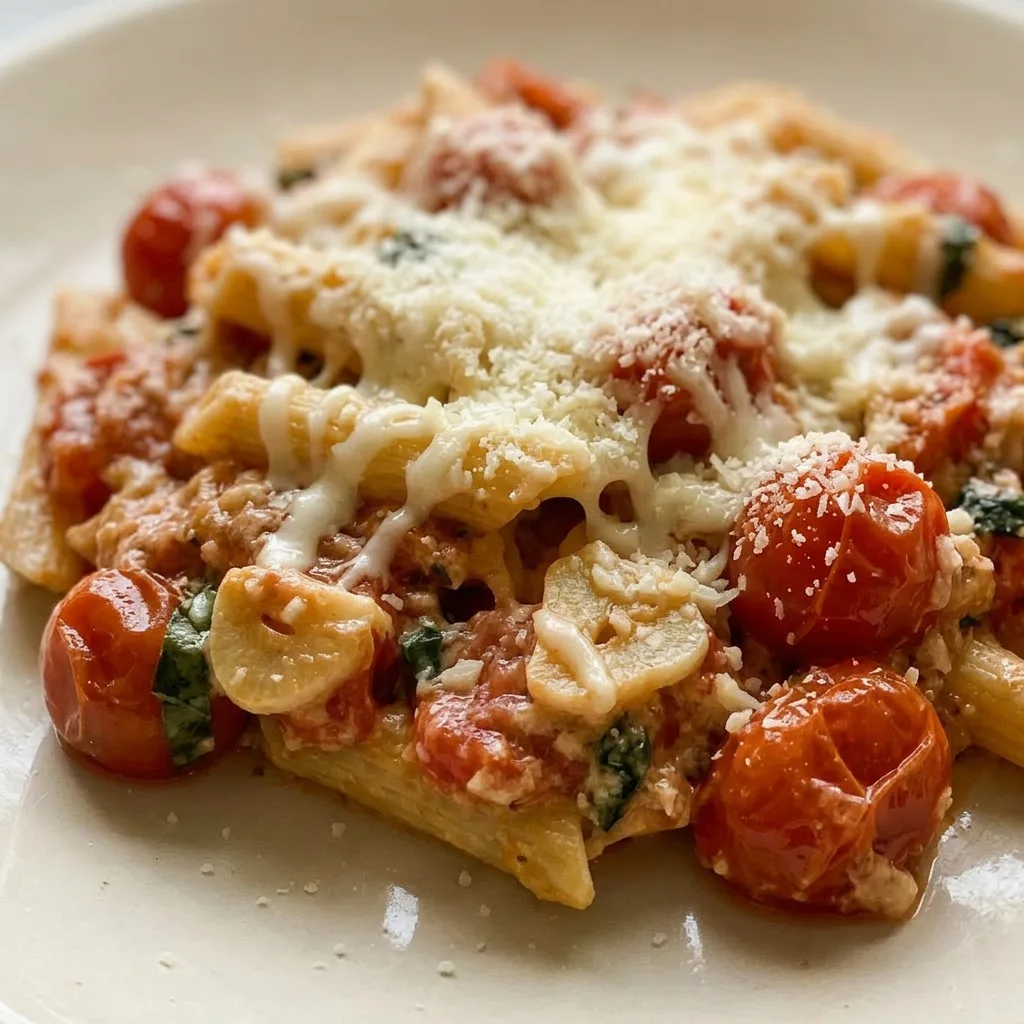
Prep: 5 min · Cook: 35 min · Total: 40 min · Servings: 6 · Calories: 350 kcal
The Brie and tomatoes are the sauce, so choose both well
Brie cheese: Buy a whole wheel with the rind intact; the rind stabilizes the sauce as it melts.
Cherry tomatoes: Use firm, ripe cherry tomatoes; they burst open and provide the acidity to balance the fat.
Fresh basil: Use fresh basil, not dried; its bright flavor cuts the richness of the melted cheese.
Pasta: Pick a short shape like penne or fusilli; the sauce clings to the ridges and curves.
Build the sauce as you stir
Set the dish in a cold oven
Place the baking dish in the cold oven, then set to 350°F. That way the Brie and tomatoes warm up evenly. No need to preheat, the gentle start prevents the cheese from splitting before it melts.
Watch for the tomatoes to blister
After 35 minutes the tomatoes will be wrinkled and blistered, some burst open. The Brie will look soft and puffed. The rind should be pliable, not hard.
If the tomatoes look shriveled but not blistered, give it a few more minutes.
Stir immediately out of the oven
Right when the dish comes out, use a fork or spatula to mash the Brie into the tomatoes. You’ll see the cheese liquefy into a creamy sauce. The rind will separate, fish out the tough white pieces.
The sauce should look smooth, not grainy.
Taste and adjust the salt
Add the drained pasta and toss. Brie varies in saltiness, so taste the sauce before adding extra salt.
The tomatoes should provide enough acidity to cut the richness. If the sauce tastes flat, a pinch of salt or a splash of pasta water helps.
Finish with cheese if you like
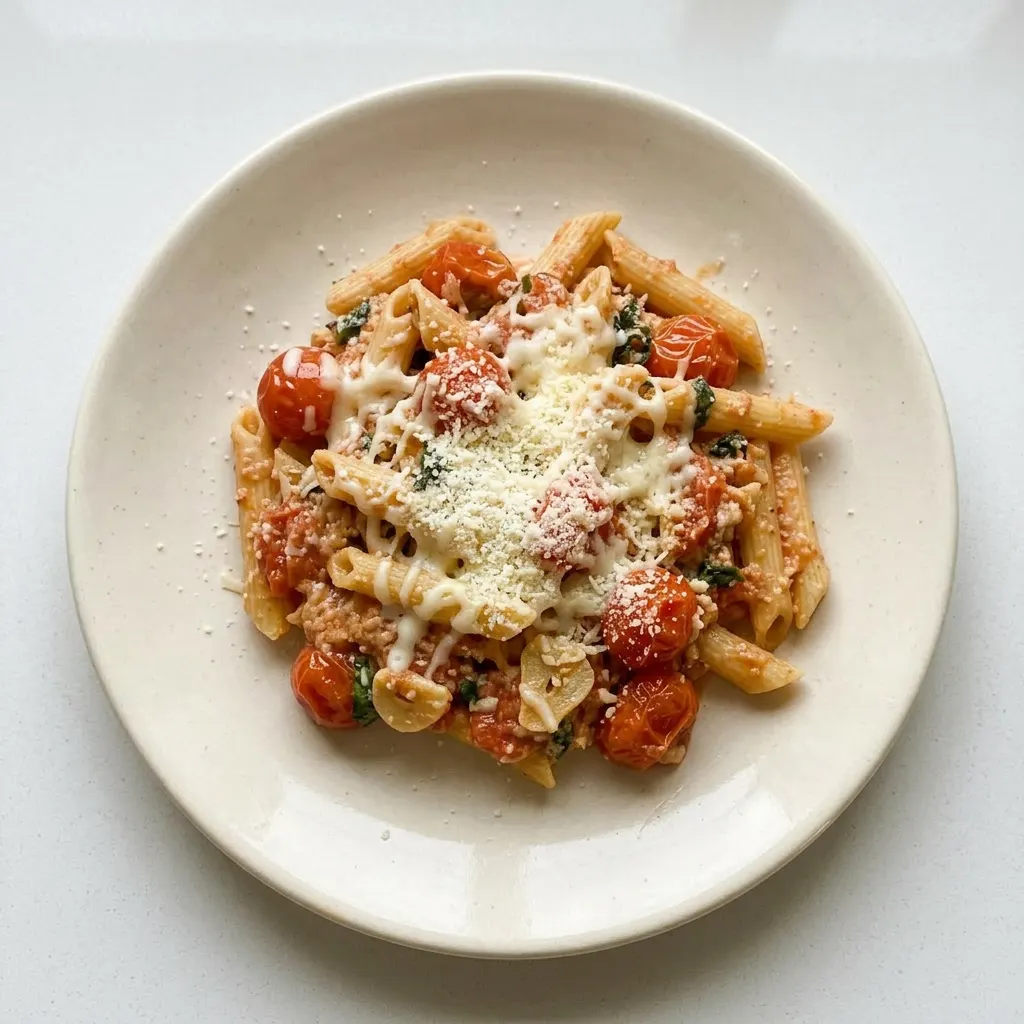
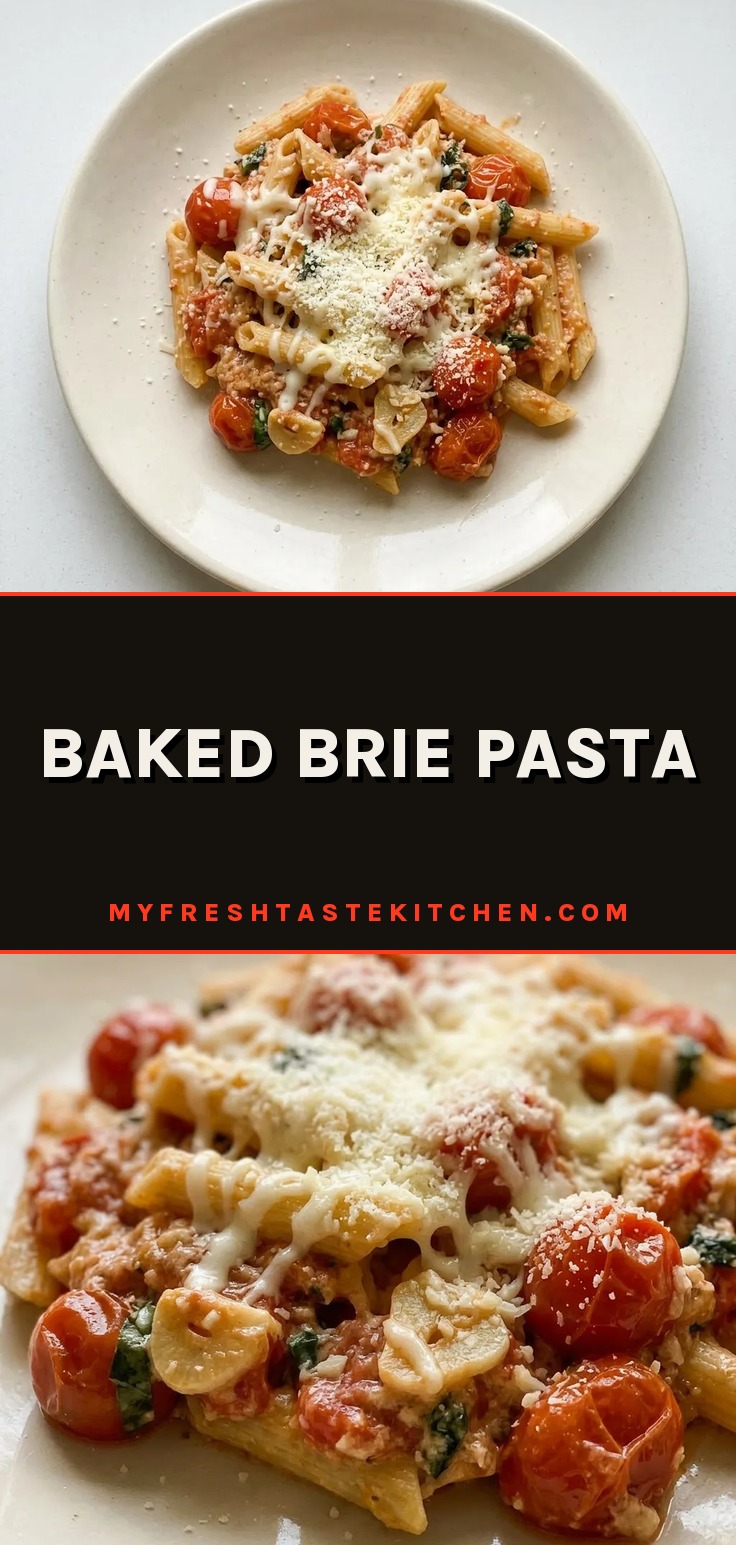
Top with shredded mozzarella and grated Parmesan for a bubbly, browned crust. If you skip them, the sauce is still silky, just less gooey. Either way, the Brie does the heavy lifting, so don’t overdo the extras.
Baked Brie Pasta
Ingredients
- 2 cups cherry tomatoes
- 2 tablespoons fresh basil torn or chopped; or substitute fresh thyme
- 3 garlic cloves sliced
- 2 tablespoons olive oil
- 1 (8-oz.) wheel Brie cheese
- 10 ounces uncooked pasta
- shredded Mozzarella cheese optional
- Parmesan cheese for serving optional
Instructions
Preheat oven:
Set the oven to 350°F (175°C).Assemble dish:
Place cherry tomatoes, basil, and garlic in a 9×13-inch baking dish. Coat with olive oil, then set the Brie in the middle and drizzle with more olive oil.Bake Brie:
Bake for 35 minutes, until the Brie’s rind softens and the interior is fully melted.Cook pasta:
Meanwhile, boil the pasta in salted water following package instructions. Drain and reserve.Combine and serve:
Take the dish from the oven, promptly stir the Brie with the tomatoes to form a sauce. As the rind detaches from the melted cheese, pick it out and discard. Combine with pasta, then top with optional Mozzarella and Parmesan before serving.
Storage and Serving
Serve immediately for the creamiest texture. The sauce is at its best right after stirring, while the Brie is still fully emulsified with the tomato juices.
Leftovers keep in an airtight container in the fridge for up to 3 days. The sauce thickens as the cheese fat solidifies when chilled. To restore its creamy consistency, reheat gently in a skillet or microwave with a splash of pasta water or milk, stirring often.
Avoid high heat, which can cause the sauce to separate. The pasta will soften further upon storage, so reheated leftovers won’t have the same al dente bite.
Freezing is not recommended; the Brie sauce can turn grainy and the pasta becomes mushy when thawed.
Don’t swap the Brie, but you have room with the tomatoes and basil
Cherry tomatoes: Grape tomatoes or halved Roma tomatoes. Grape tomatoes are nearly identical, just a little firmer; Roma halves release more juice and less sweetness, so the sauce will be slightly thinner and less bright. If using Roma, reduce the olive oil by 1 tablespoon to compensate for extra liquid.
Fresh basil: Fresh thyme or fresh oregano. Thyme adds an earthy, slightly lemony note that still cuts richness.
Oregano is more pungent and can dominate, use half as much, then taste. Dried herbs won’t work here; they lose brightness and can turn bitter during baking.
Brie cheese: No good swap; use a Camembert only if you accept a milder, less creamy sauce. Camembert has a lower butterfat content and a thicker rind, so the sauce will be less silky and the rind may not fully soften. A double- or triple-cream Brie is fine, but a firmer cheese like Gruyère or mozzarella will not melt into a smooth emulsion, you’ll get a curdled, greasy mess.
Tips
- For easier rind removal, let the baked Brie cool for 1 to 2 minutes before stirring; the rind will separate more cleanly from the melted cheese.
- Use a wooden spoon or silicone spatula to stir the sauce; metal utensils can react with the tomato acidity and leave a metallic taste.
I still gently nudge the Brie with a fork after 35 minutes to check if it’s soft before stirring, saves me from a greasy mess every time.
Frequently Asked Questions
Can I make this pasta ahead of time and reheat it?
You can, but the texture suffers. The sauce thickens as the cheese fat solidifies when chilled.
To restore creaminess, reheat gently with a splash of pasta water or milk, stirring often. Avoid high heat or the sauce may separate, and the pasta will be softer than al dente.
Why did my Brie sauce turn grainy or separate?
Most likely the Brie was overheated or stirred too late. If the dish sits too long after baking, the cheese can break. Reheat gently with a splash of pasta water while whisking to bring it back together.
Another cause: using a Brie that’s too ripe or not fully melting before stirring.
How do I know when the Brie is fully melted and ready to stir?
After 35 minutes, the Brie will look soft and puffed, and the rind should be pliable, not hard. The tomatoes will be wrinkled and blistered, some burst open.
If you gently press the Brie with a fork, it yields easily and the interior is liquid. If the rind feels stiff or the cheese hasn’t collapsed, give it a few more minutes.
Can I use a different type of pasta shape?
Yes, but short shapes with ridges or curves work best, penne, fusilli, or farfalle cling to the sauce. Long noodles like spaghetti can be used but the sauce may pool at the bottom instead of coating evenly. Avoid very delicate shapes that might break when tossing.
Is this dish supposed to be served immediately or can it sit?
Serve immediately for the creamiest texture. The sauce is at its best right after stirring, while the Brie is still fully emulsified. If it sits, the sauce thickens as it cools; you can revive it with a splash of pasta water and gentle reheating, but the initial silky consistency won’t return.