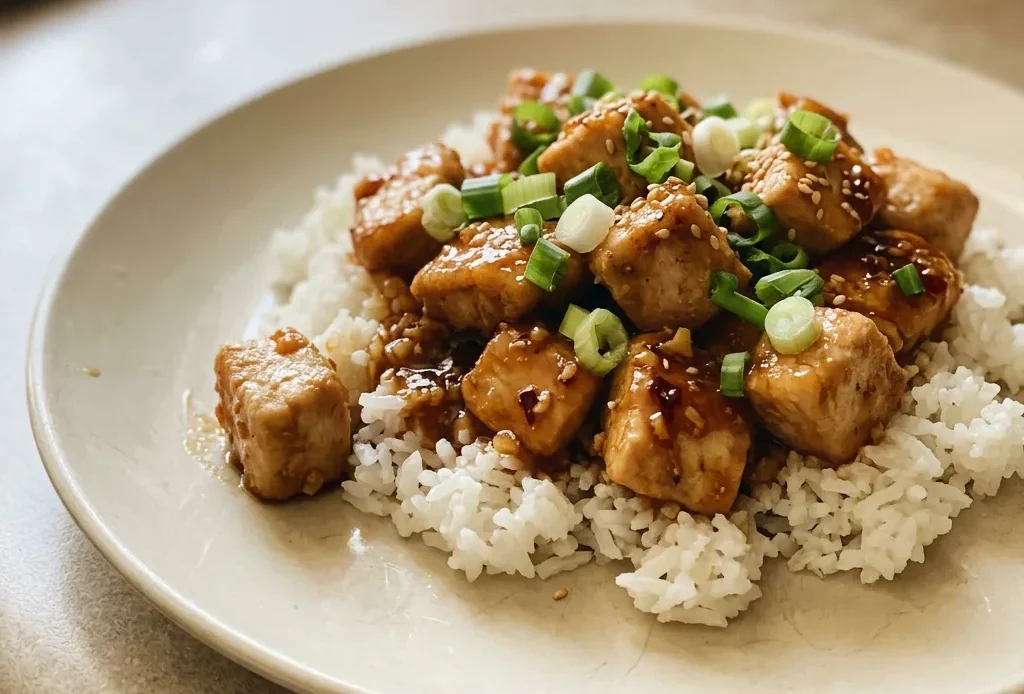
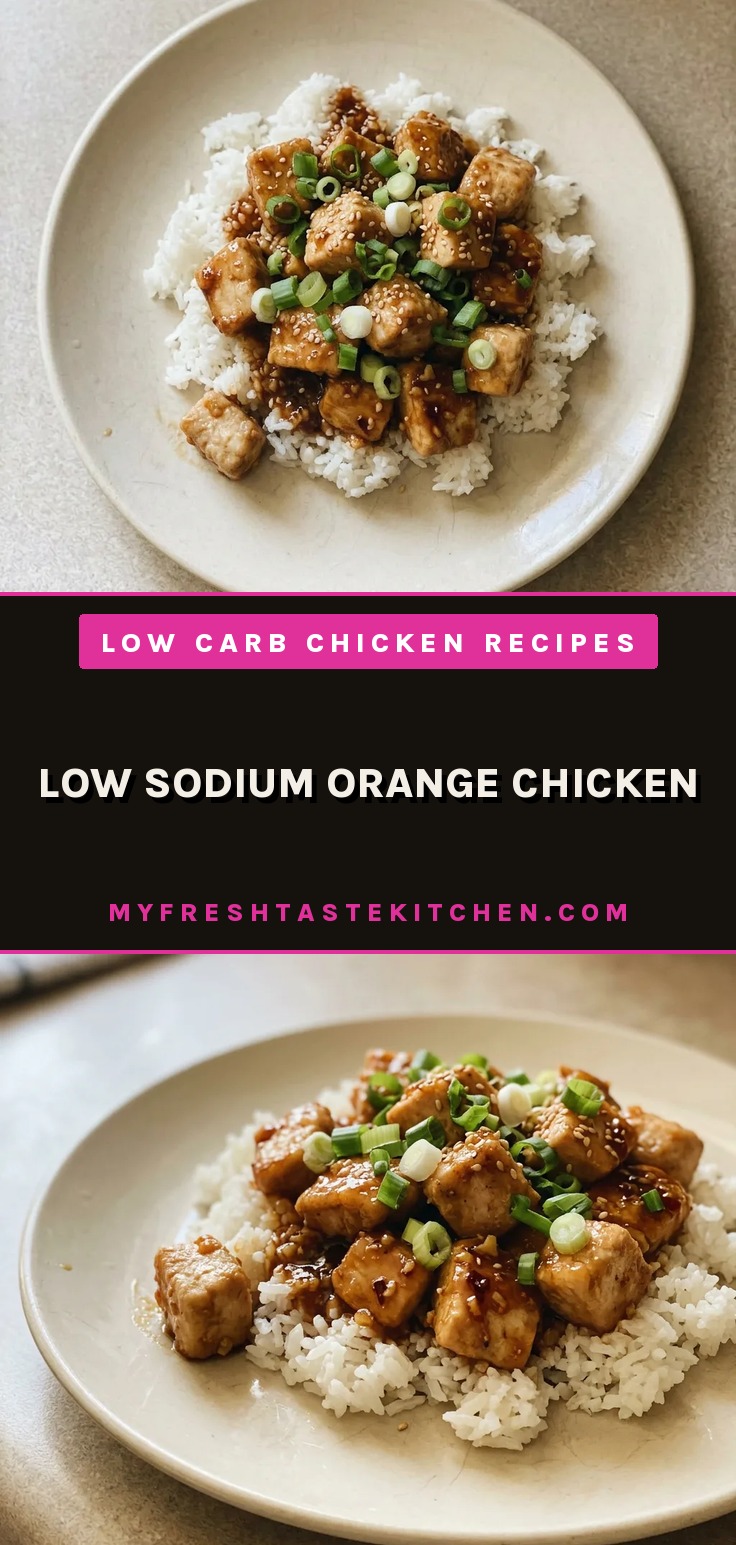
The glossy orange glaze clings to each cube of chicken without turning gummy or slipping off. A light dusting of brown rice flour keeps the coating distinct from the sauce, so every bite has a slight resistance before giving way to tender meat.
The sweet-savory balance comes from unsweetened orange juice and honey, cut by reduced-sodium soy sauce and fresh ginger, no cloying syrup here. This low sodium orange chicken delivers a takeout-style finish that doesn’t rely on heavy batter or excess sugar. The key is letting the sauce simmer until it coats the back of a spoon, then resting the dish off heat so the starch firms up and the glaze sets.
It’s a straightforward technique that rewards patience.
I still dust the chicken with brown rice flour even when I’m out and have to borrow from a neighbor’s pantry.
Coat the chicken in brown rice flour
Brown rice flour gives a lighter, crisper coating than all-purpose. When you simmer it in the sauce, the coating stays distinct rather than turning gummy. The grains don’t absorb as much moisture, so you get a tender bite with a slight texture.
After cooking, the chicken holds that separate layer when coated in the glaze. It’s a straightforward change that makes a noticeable difference in the final dish.
Balance sweet with savory in the sauce
Honey and orange juice bring sweetness, but the soy sauce and ginger cut through it with salt and warmth. The result isn’t cloying, it’s a sticky glaze that tastes rounded.
The ginger adds a gentle heat, while the soy sauce provides the backbone. Together, they create a sauce that coats without overwhelming.
It’s a good option for low calorie chicken recipes because the flavor comes from real ingredients, not heavy syrups.
Simmer the sauce to concentrate and thicken
You need that 15-minute simmer to let the sauce reduce. As it bubbles, water evaporates, and the flavors intensify.
The cornstarch works properly once heated through, giving the sauce body. If you skip this step, the sauce stays thin and won’t cling. Let it go until it coats the back of a spoon, that’s your cue.
The result is a thick, glossy glaze that hugs each piece of chicken.
Rest the dish for a clingier coat
After you return the chicken to the sauce and cook briefly, pull the pan off the heat. Let it sit for 5 minutes.
Off the burner, the sauce continues to set, getting thicker as it cools slightly. During that rest, the starch firms up, and the sauce adheres to every nook. You’ll see the sheen change as it clings.
No need to rush, this pause ensures each piece is evenly coated.
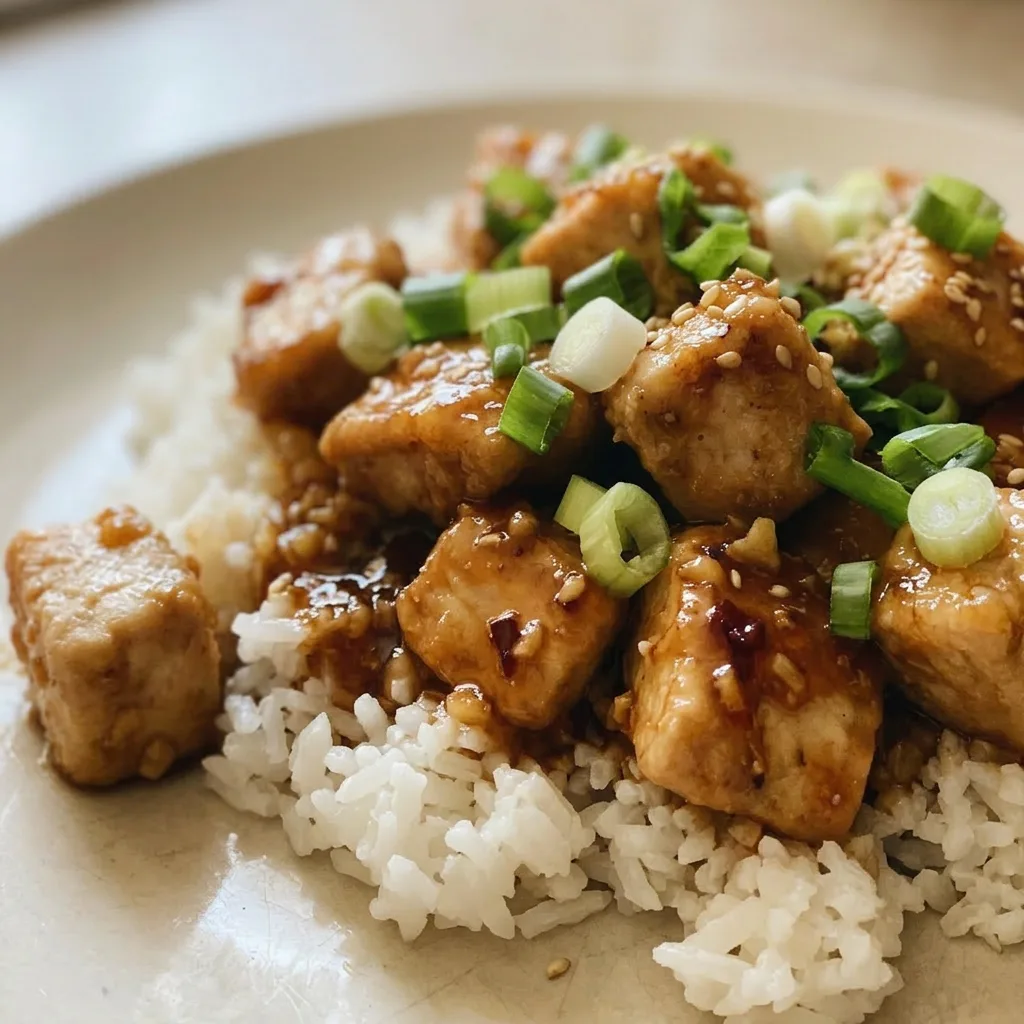
Prep: 5 min · Cook: 25 min · Total: 30 min · Servings: 6 · Calories: 310 kcal
Ingredient Choices for a Lighter Glaze
Brown rice flour: Keeps the coating crisp and separate from the sauce, unlike all-purpose which turns gummy.
100% pure orange juice, unsweetened: Unsweetened keeps the sugar in check; you control sweetness with honey.
Reduced sodium soy sauce: Lets you salt the dish without overshooting, since the sauce reduces and concentrates.
Chili garlic sauce: Adds heat without extra sodium, but it’s optional if you skip spice.
Cornstarch: Thickens the sauce without altering flavor; whisk it in well to avoid lumps.
Build the coating and sauce for the right texture
Coat the chicken
Toss the raw cubes in brown rice flour until each piece is lightly dusted. You want a thin, even layer, clumps mean uneven browning. Shake off excess in the bowl.
Brown the chicken
Sear the coated chicken in hot sesame oil over medium heat. The edges should turn golden, not dark brown. If the flour sticks to the pan, add a splash of water to lift it, don’t let it burn.
Mix the sauce
Whisk orange juice, soy sauce, honey, garlic, ginger, zest, pepper, chili garlic sauce, red pepper flakes, and cornstarch until smooth. No lumps left, cornstarch hides in corners. Taste it; it should be sweet-savory with a kick.
Thicken the sauce
After removing the chicken, pour the sauce into the skillet. Bring to a boil over high heat, then reduce to medium and simmer 15 minutes.
Stir often. It’s ready when it coats the back of a spoon, thick and glossy.
Finish and rest
Return chicken to the skillet, stir to coat, and cook 2 minutes. Then pull off heat and let rest 5 minutes. The sauce will tighten as it cools; you’ll see it cling.
Don’t skip the rest, it makes the difference between a glaze and a runny sauce.
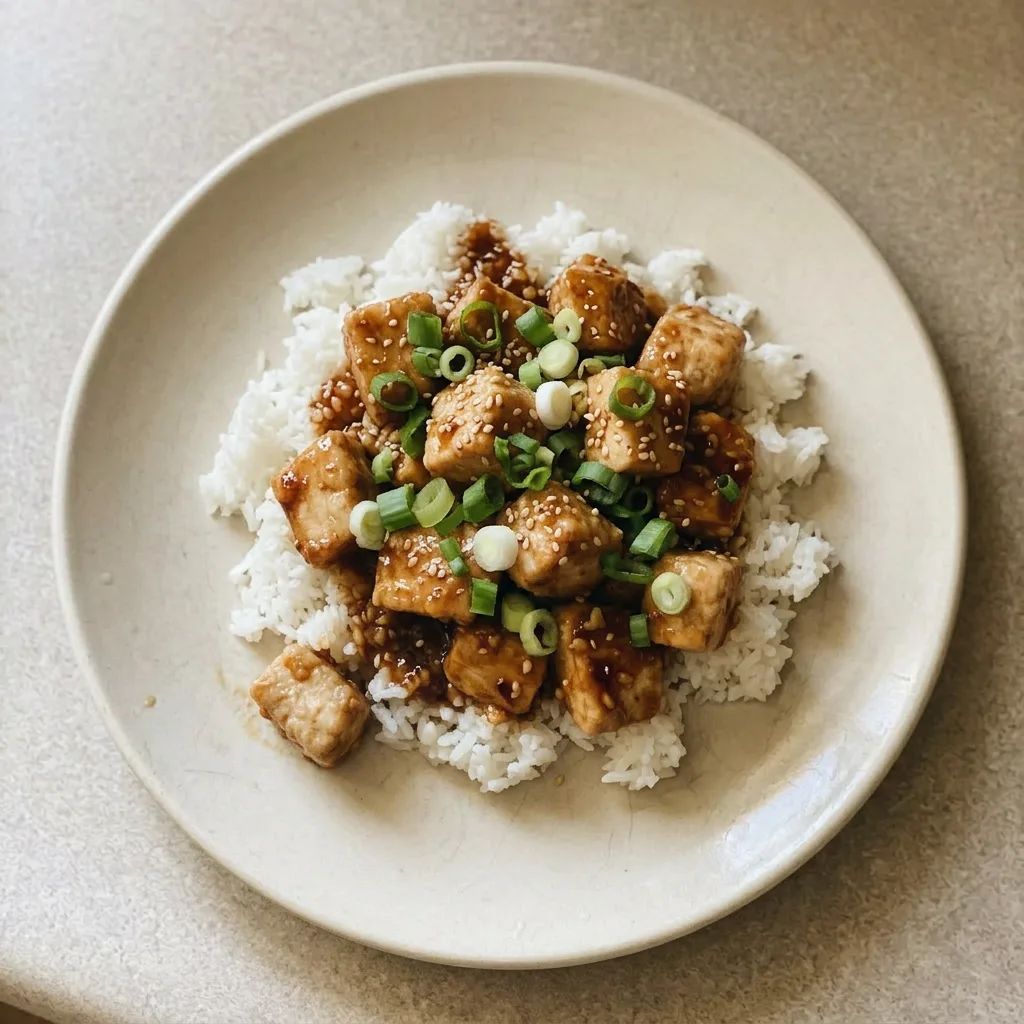
Low Sodium Orange Chicken
Ingredients
- 1 tablespoon sesame oil
- 2 pounds boneless skinless chicken breasts or thighs, diced into 1-inch cubes
- 1/4 cup brown rice flour (or sub in regular flour)
- 2 cups 100% pure orange juice, unsweetened
- 1/4 cup reduced sodium soy sauce
- 1/4 cup honey
- 4 garlic cloves, minced
- 2 teaspoons freshly grated ginger
- 2 teaspoons orange zest
- 1/2 teaspoon freshly ground black pepper
- 1-2 teaspoons chili garlic sauce optional
- 1/8-1/4 teaspoon red pepper flakes optional – depending on how spicy you like it
- 1 tablespoon cornstarch
- Sliced green onion
- Sesame seeds
Instructions
Coat chicken with flour:
Put the raw cubed chicken in a large bowl and coat evenly with flour.Cook chicken in sesame oil:
Warm sesame oil in a large skillet over medium heat. Add the chicken and cook until edges are lightly browned and meat is cooked through, roughly 10 minutes. If the flour begins sticking to the pan, add a small amount of water.Whisk sauce ingredients together:
In a separate bowl, combine the sauce ingredients and whisk until smooth and free of lumps.Remove chicken from skillet:
When the chicken is done, take it out of the skillet and place it in a separate bowl.Discard liquid, add sauce:
Discard any liquid from the skillet, then pour the prepared sauce into the same skillet.Boil then simmer sauce:
Increase heat to high and bring the sauce to a boil. Then lower the heat to medium and let it simmer for about 15 minutes, stirring frequently, until it begins to thicken.Return chicken to sauce:
Return the chicken to the skillet and stir to coat with the sauce. Cook for another 2 minutes. Allow to rest for 5 minutes so the sauce thickens further.Serve over rice with garnish:
Serve hot over rice or quinoa, garnished with sliced green onion and sesame seeds.
Swapping the Sweetener and Acid Without Breaking the Glaze
Honey: Maple syrup or agave nectar, same amount (1/4 cup). Maple syrup adds a subtle woodsy note, agave stays neutral. Both thin the sauce slightly, so simmer an extra minute or two to re-thicken.
Orange juice (100% pure, unsweetened): Any unsweetened 100% juice, tangerine, blood orange, or a blend. Avoid ‘from concentrate’ with added sugars; they throw off sweetness balance.
Flavor shifts to the fruit used. Acidity varies; taste the sauce before simmering and adjust honey if needed.
Chili garlic sauce: Sriracha, same amount (1 to 2 teaspoons). Or skip entirely for no heat.
Sriracha is thinner and slightly sweeter. The heat level is similar but the sauce may need an extra minute of simmer to tighten.
No swap changes the dish’s core.
Brown rice flour: Do not swap with all-purpose flour. The coating will turn gummy in the sauce. All-purpose absorbs more moisture and softens.
The chicken loses the light, distinct coating that brown rice flour gives. Use potato starch or white rice flour for a similar crispness.
Tips
- Grate the ginger directly over the bowl of sauce ingredients to capture the juices; a microplane yields a fine paste that dissolves without fibrous strings.
- Zest the orange over the same bowl so the volatile oils fall into the liquid; avoid the white pith, which adds bitterness.
Storage and Serving
This dish is best served within 30 minutes of the final rest, while the sauce is still glossy and the coating is slightly crisp. After that, the sauce continues to thicken and the chicken softens. Store leftovers in an airtight container in the fridge for up to 4 days.
The sauce may thin upon reheating; pour leftovers into a skillet and simmer briefly to restore thickness. The chicken holds its texture well for a day or two, but after that the coating softens further.
You can freeze the cooked chicken and sauce together in a freezer-safe container for up to 3 months. Thaw overnight in the fridge and reheat in a skillet, adding a splash of orange juice if the sauce seems dry. Garnish with fresh green onion and sesame seeds only right before serving; stored garnishes become limp.
Frequently Asked Questions
Can I make this low sodium orange chicken ahead of time?
Yes, but the coating softens over time. You can prep the sauce and coat the chicken raw, then cook fresh.
Or cook fully, store in the fridge up to 4 days, and reheat in a skillet to restore some sauce cling. The 5-minute rest after cooking matters for texture, so if reheating, let it sit again briefly.
Why did my sauce turn out too thin?
Most likely you didn’t simmer it long enough, the recipe calls for 15 minutes at a medium boil after the initial boil. The sauce should coat the back of a spoon. If it’s still runny, simmer another 2 to 3 minutes, stirring.
A too-thin sauce can also mean the cornstarch wasn’t fully whisked in; check for lumps before cooking.
How is this different from takeout orange chicken?
Takeout versions often use a thick, sugary batter and heavy syrup. Here, brown rice flour gives a light coating that stays crisp in the sauce, and unsweetened orange juice balanced with honey and soy sauce creates a less cloying glaze. The simmer concentrates real flavors, not added sugar or MSG.
Can I use chicken thighs instead of breasts?
Yes, the recipe already lists thighs as an option. They’ll be juicier and more tender, but the browning time stays about 10 minutes. Cut them to the same 1-inch cubes so the cooking is even.
The sauce coats just as well.