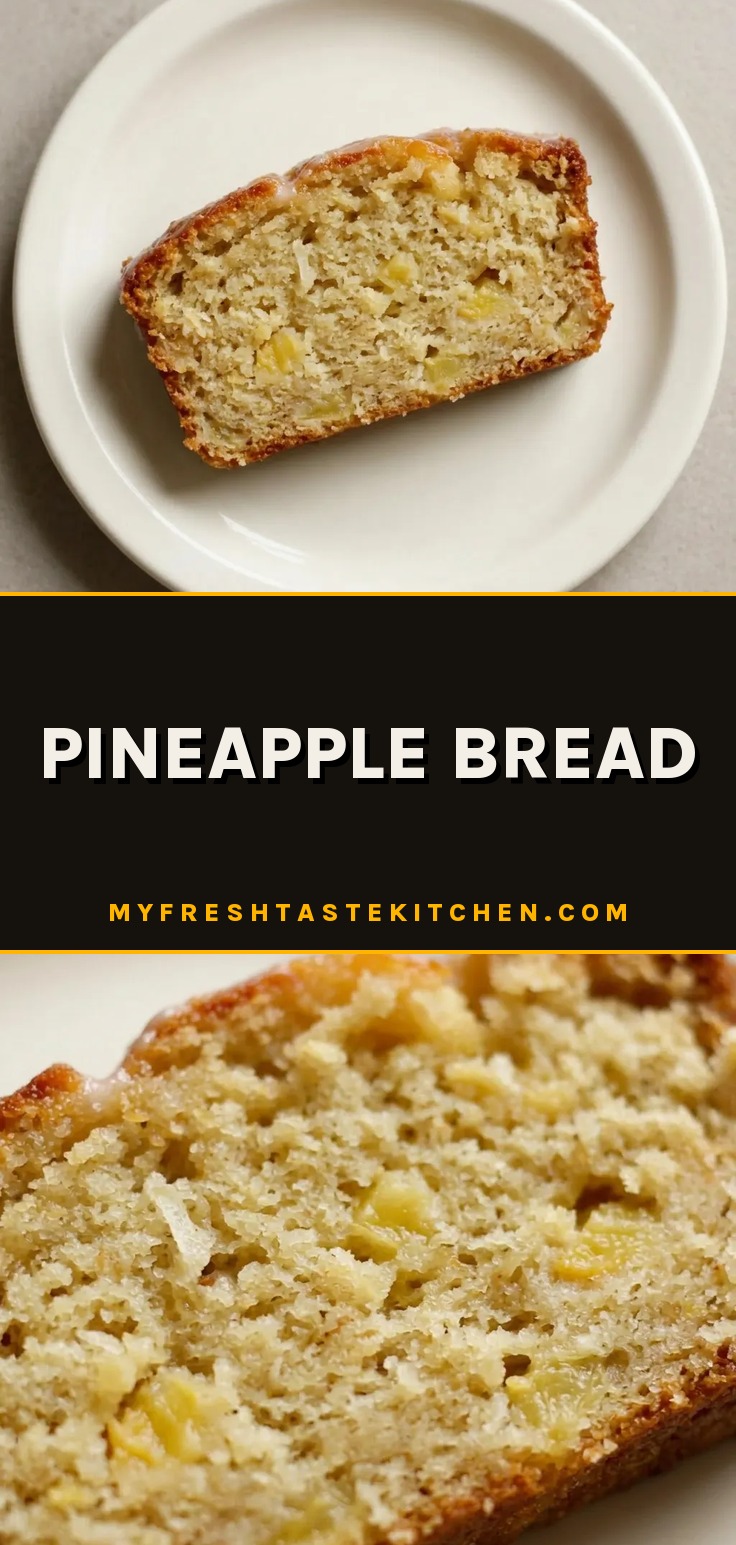
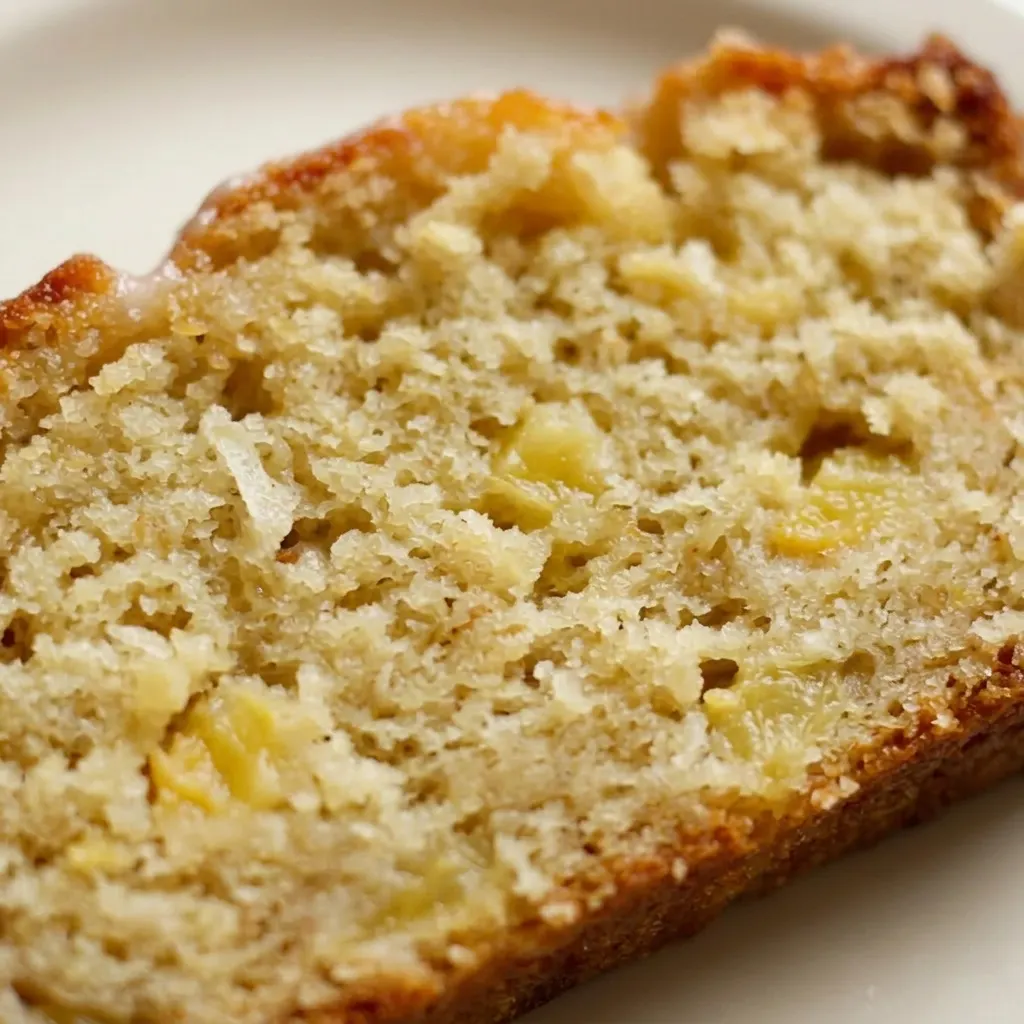
A slice of this bread is soft, almost cushiony, with little pockets of pineapple that burst against your tongue. The crumb stays tender for days, not because of any trick but because the batter starts with the right amount of moisture, and keeps it.
That’s the subtle challenge with pineapple bread: the fruit brings so much liquid that it’s easy to end up with a gummy or dry loaf. This version walks the line, and once you feel how the batter behaves, you’ll see why it works.
Keep the crushed pineapple undrained
The can of crushed pineapple comes packed in its own juice, and you pour the whole thing in, juice and all. That juice is the liquid that hydrates the flour and sugar, making a batter that bakes up tender. The pineapple pieces themselves stay as soft, juicy pockets throughout the crumb.
Drain them and you lose that moisture, leaving you with a denser, drier loaf. The amount of liquid from the can is exactly what this batter needs; no extra milk or water required. When you stir it in, the batter should look thick but scoopable, not stiff.
That’s the sign the pineapple’s moisture is doing its job.
Choose oil over butter for a softer crumb
Vegetable oil is the fat here, not butter, and that choice matters for texture. Oil stays liquid at room temperature, so the bread feels moist even after it cools.
Butter, on the other hand, hardens as it cools, making the crumb firmer. The 2/3 cup sugar is moderate, enough to sweeten the bread without masking the pineapple’s brightness. Together, the oil and sugar tenderize the crumb by coating the flour proteins, limiting gluten formation.
The result is a soft, cake-like texture that holds up to the juicy pineapple pieces. It’s a classic quick bread move: fat and sugar work together to keep things tender.
Understand quick bread mixing for a tender loaf
This is a quick bread, leavened with baking powder, not yeast. That means you mix the dry and wet ingredients separately, then combine them with a few stirs. Overmixing is the enemy, it develops gluten, and gluten makes the bread tough and dense.
You want to stop as soon as the flour disappears, even if a few lumps remain. The batter will be thick but pourable, like a muffin batter. Bake it just until a toothpick comes out clean, and you get a soft, cake-like crumb.
Push the mixing too far and you’ll notice the bread is heavy and compact, not tender.
Add coconut or nuts for texture contrast
Shredded coconut brings a chewy bite and a tropical note that plays off the pineapple. Nuts like walnuts or pecans add crunch and a toasty richness. Both are optional, but they give the bread another layer without overwhelming the main fruit.
The coconut stays moist from the batter, so it doesn’t dry out; the nuts stay crunchy because they’re folded in whole. If you skip them, the bread is still good, just a straightforward pineapple loaf. With them, each slice has little surprises of chew or crunch.
Choose one or both, depending on what you have on hand.
Prep: 15 min · Cook: 1 hr 5 min · Total: 1 hr 20 min · Servings: 6 · Calories: 180 kcal
Pineapple, oil, and add ins
Crushed pineapple with juice (8 oz can): Buy the can packed in juice, not syrup, and pour the entire can in undrained.
Vegetable oil (or melted butter): Oil keeps the crumb soft at room temperature; butter gives a firmer texture.
Shredded coconut (optional): Use unsweetened shredded coconut to avoid extra sweetness, or sweetened for a sweeter loaf.
Chopped nuts (optional, like walnuts or pecans): Toast nuts briefly before folding in to deepen their flavor without burning.
Mix and bake a tender pineapple loaf
Prep the pan and oven
Set oven to 350°F. Grease a 9×5-inch loaf pan or line it with parchment.
If using butter, grease well, the sugar can stick. Parchment makes removal foolproof.
Whisk dry ingredients
In a large bowl, whisk together flour, baking powder, salt, and sugar. Break up any clumps in the sugar. The mixture should look uniform, no streaks of baking powder.
Combine wet ingredients
In another bowl, whisk eggs, oil, vanilla, and the entire can of crushed pineapple with its juice. The mixture will look thin and frothy; that’s fine.
Mix wet into dry
Pour the wet mixture into the dry. Stir with a spatula just until the flour disappears, about 10 strokes.
A few lumps are okay. The batter should be thick but scoopable, not stiff.
Fold in optional add-ins
If using coconut or nuts, fold them in with a few turns. Scrape the bottom to distribute evenly. The batter will look bumpy with visible bits.
Bake until done
Pour batter into the pan and smooth the top. Bake 55 to 65 minutes. At 50 minutes, check with a toothpick, it should come out clean or with a few moist crumbs.
If the top browns too fast, tent loosely with foil for the last 15 minutes.
Cool before slicing
Cool the bread in the pan for 10 minutes, then run a knife around the edges and turn it out onto a wire rack. Let it cool completely; slicing warm will make it crumble.
Pineapple Bread (Coconut Loaf)
Ingredients
Method
Preheat Oven and Prep Pan:
Heat oven to 350°F (175°C). Grease lightly or line a 9×5-inch loaf pan with parchment.Mix Dry Ingredients:
Combine flour, baking powder, salt, and sugar in a large bowl; whisk together.Whisk Wet Ingredients:
In a separate bowl, whisk eggs, oil, vanilla, and the full can of crushed pineapple (including juice).Combine Wet and Dry:
Add the wet mixture to the dry ingredients; stir just until incorporated—do not overmix. If using, fold in optional coconut or nuts.Bake Until Golden:
Transfer batter to the prepared pan; smooth the surface. Bake for 55–65 minutes, until a toothpick inserted in the center comes out clean. If the top browns too quickly, loosely cover with foil for the last 15–20 minutes.Cool and Serve:
Cool in the pan for 10 minutes, then turn out onto a wire rack. Slice and serve warm or at room temperature.
Storage and Serving
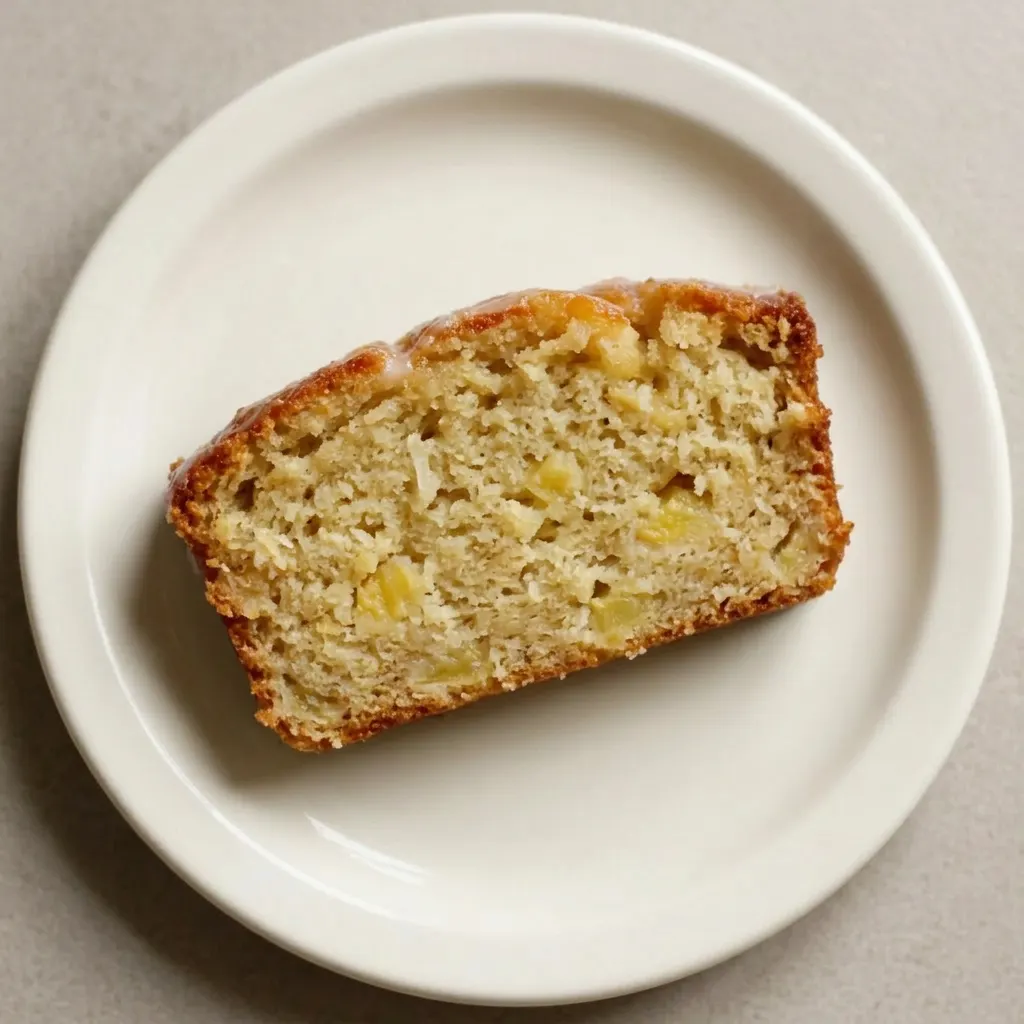
Pineapple Bread keeps best at room temperature in an airtight container for up to 3 days. The oil keeps the crumb moist, but the bread is at its most tender the first day.
After that, it firms up slightly but stays pleasant. For longer storage, wrap the loaf tightly and refrigerate for up to a week; cold slows staling, but the bread may dry out a bit. To restore softness, warm a slice in a 300°F oven for 5 minutes or microwave for 10 seconds.
You can also freeze the baked bread (whole or sliced) for up to 3 months. Thaw at room temperature, then rewarm. Serve slices warm or at room temperature.
If you added a glaze or sugar dusting at the end, apply it just before serving so it doesn’t dissolve into the crumb.
Swapping pineapple bread ingredients: what works, what doesn’t
Crushed pineapple with juice: Fresh pineapple, finely crushed, plus liquid to match the canned juice volume. Canned pineapple is a consistent source of both fruit and liquid.
Fresh pineapple works if you crush it fine (or pulse in a food processor) and add water or pineapple juice to equal the 8 oz total liquid from the can. The enzyme bromelain in fresh pineapple can break down gluten during mixing, making the crumb softer, sometimes too soft if left to sit. Mix and bake immediately to avoid a mushy texture.
Draining fresh pineapple and using less liquid will dry out the bread.
All-purpose flour: Gluten-free all-purpose flour blend (with xanthan gum). A 1:1 gluten-free flour blend works here because the batter is thick and doesn’t rely on gluten structure. The crumb will be a bit more tender and may crack slightly on top.
Do not use coconut or almond flour, they lack starch and will make the bread dense and greasy. Measure by weight (250 g) for accuracy; by volume, spoon and level.
Vegetable oil: Melted butter, coconut oil (melted), or applesauce (for lower fat). Oil gives the softest, moistest crumb at room temperature. Butter makes it firmer and richer, but the bread will be less tender when cool.
Coconut oil works, but use refined for neutral flavor. Applesauce (1/2 cup) replaces all the oil: the bread will be denser and more cakey, less moist, still edible but not as rich.
If using butter, expect a slightly lower rise.
Sugar: Reduce to 1/2 cup (100 g) for a less sweet loaf, or swap 1/4 cup with brown sugar for molasses notes. Sugar does more than sweeten: it tenderizes the crumb and helps browning. Dropping below 1/2 cup makes the bread noticeably less sweet and slightly drier.
Brown sugar adds moisture and a deeper flavor but can make the crumb more dense. Do not use liquid sweeteners like honey or maple syrup without reducing other liquid, the batter will be too wet.
Tips
- Tent the top with foil if it’s browning too fast, but check at 55 minutes first; overbaking dries out the bread even if it looks pale.
- Let the bread cool completely in the pan on a wire rack before turning out, not just 10 minutes; warm bread is fragile and the moisture inside can cause it to tear.