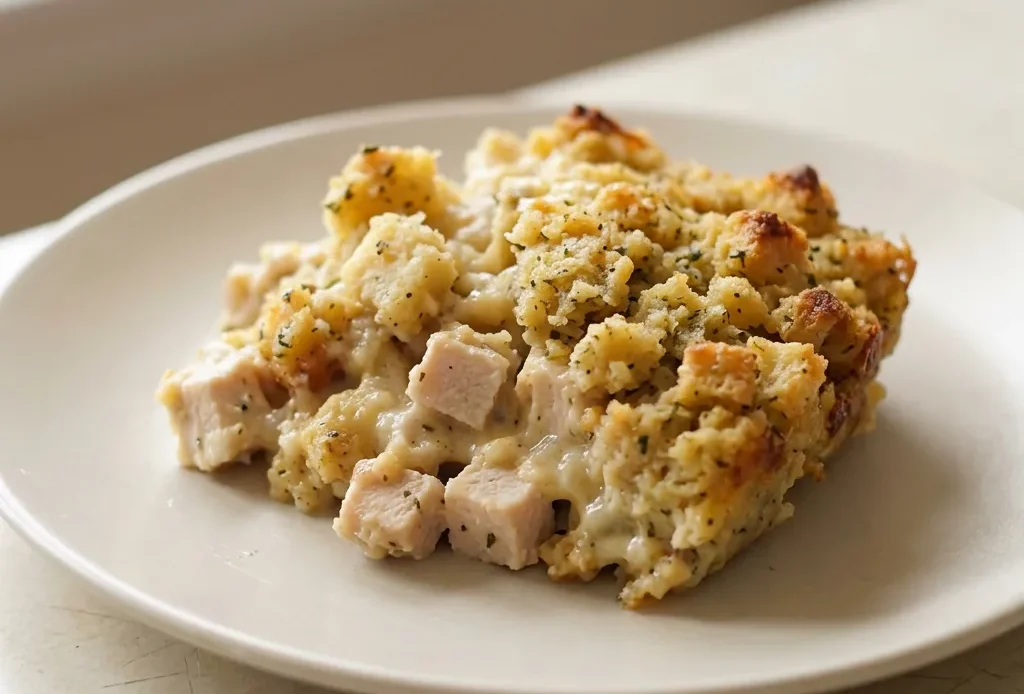
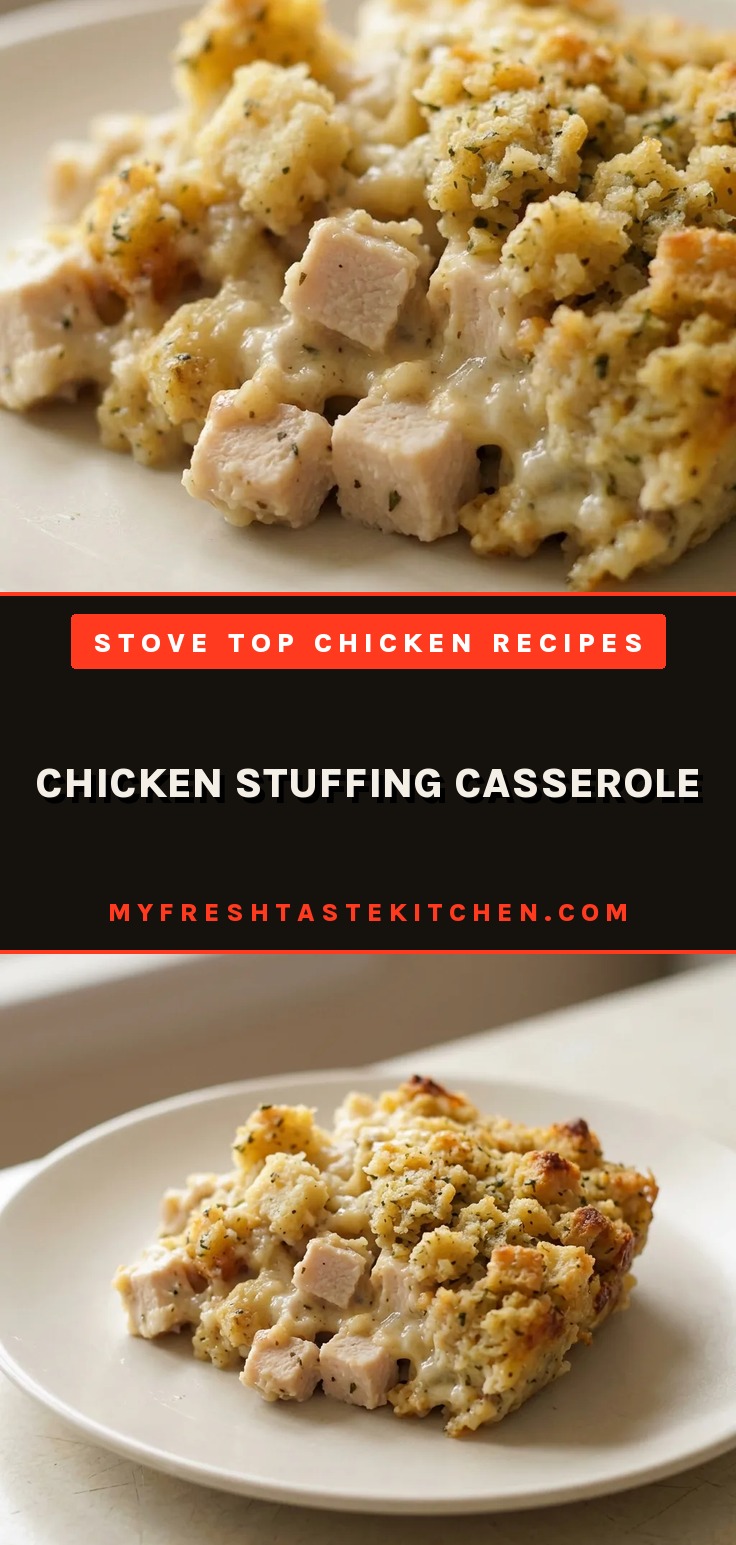
The biggest mistake with chicken stuffing casserole is piling the chicken in overlapping chunks, the pieces on top stay pink while the ones underneath dry out. A single, even layer solves that, letting each bite come out tender. Layer creamy sauce over that, then a fluffy stuffing topping that stays crisp on top thanks to a covered-then-uncovered bake.
This chicken stuffing casserole comes together fast enough for a weeknight, but the contrast in textures makes it feel like more effort than it is.
I once poured cold broth over the stuffing mix and the top came out with hard dry bits and a gluey paste underneath.
Single Layer of Chicken
Arranging the chicken pieces in a single layer matters because crowded, overlapping chunks won’t cook at the same rate. The ones on top end up underdone while the bottom ones dry out.
With direct contact to the soup mixture, each piece stays moist. You can see the difference when you pull the dish out: evenly cooked chicken throughout, no pale spots or rubbery bits.
Soup and Sour Cream Combo
The cream of chicken soup gives body and a savory base to the sauce, but alone it can feel flat. Sour cream adds a gentle tang that cuts through the richness and keeps the casserole from tasting one-note.
Together they coat the chicken without thinning out during baking. That creamy layer also protects the meat from drying as it cooks.
Why Warm the Broth First
Now I always warm the broth until it’s steaming before stirring into the stuffing mix. Cold broth won’t hydrate the bread evenly, you end up with dry, crunchy pockets in the topping.
Hot liquid gets absorbed fast, giving you a fluffy, tender layer instead of a mix of soggy and hard bits. The stuffing stays light and holds its shape on top.
Covered Then Uncovered Baking
Foil traps steam, so the chicken cooks gently without the top burning before the meat is safe. Lift the foil too early and the stuffing darkens while the chicken still needs time. Taking it off at the end lets the stuffing crisp up, you get that golden, slightly crunchy top against the creamy casserole underneath.
The result is a contrast in textures that makes the dish work.
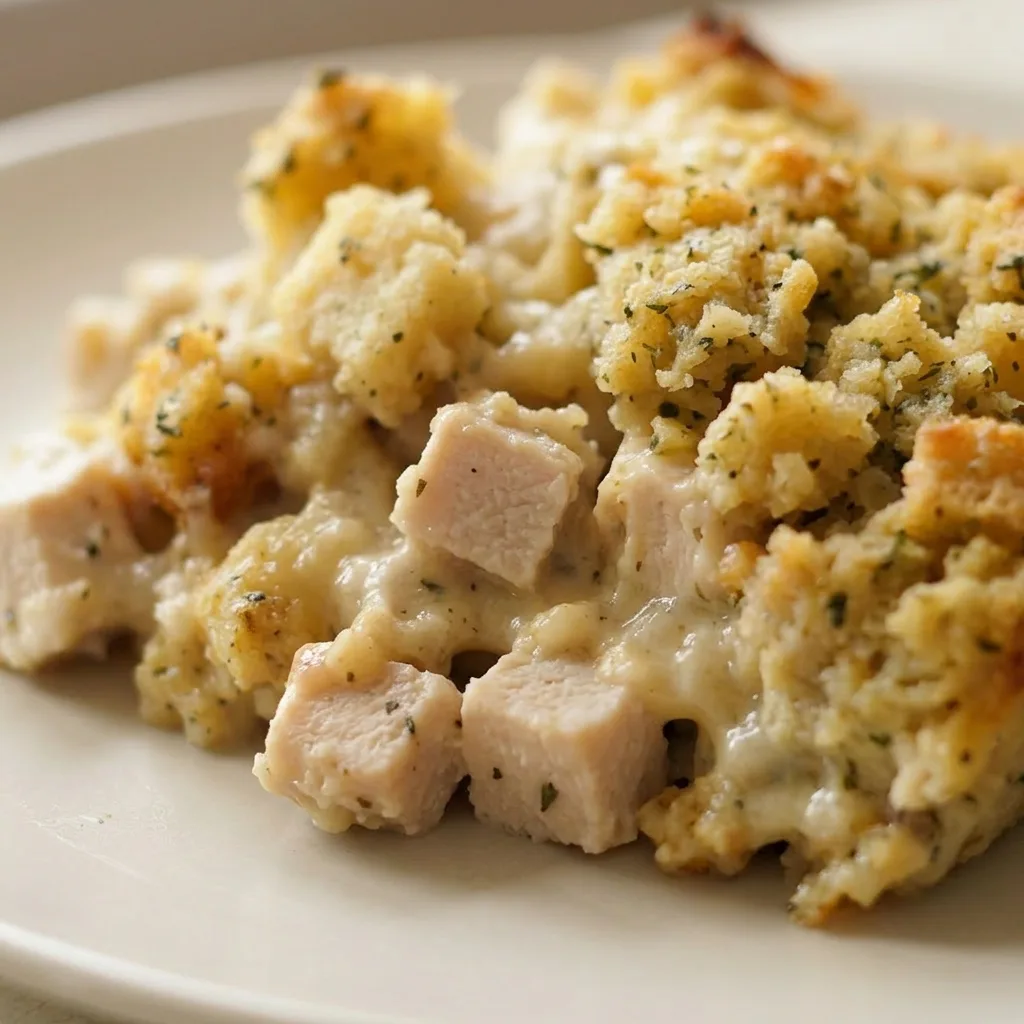
Prep: 10 min · Cook: 40 min · Total: 50 min · Servings: 6 · Calories: 210 kcal
Ingredient Notes for Chicken Stuffing Casserole
Chicken breast: Dice into small, even chunks so they cook through in the same time as the stuffing.
Cream of chicken soup: Standard condensed kind works fine; no need for reduced fat, it thins the sauce.
Sour cream: Full fat gives the creamiest texture; low fat can make the sauce watery.
Stuffing mix: Use any brand of dried bread stuffing; seasoned or unseasoned both work here.
Chicken broth: Low sodium lets you control salt; regular broth is fine but skip extra salt.
Building the Casserole
Arrange the Chicken
Spread diced chicken in a single layer across the dish. Overlap pieces? The top ones will stay pink while bottom ones dry out.
Even spacing means every chunk cooks at the same rate.
Mix the Creamy Base
Stir the soup and sour cream until smooth, no white streaks. This combo coats each chicken piece, you want it to cling, not pool. Pour evenly so no meat sits bare.
Hydrate the Stuffing
Warm the broth until you see steam rise, cold liquid leaves dry, crunchy pockets in the stuffing. Pour it over the mix and toss; every crumb should feel damp, not soaked.
Layer the Topping
Spread the stuffing evenly over the soup layer. Gaps let steam escape, making the topping crusty before the chicken cooks. A solid blanket traps moisture for tender meat.
Bake Covered
Seal with foil and bake 30 minutes. Peek too soon?
Steam escapes and the stuffing browns while chicken stays raw inside. Wait, the foil keeps everything moist.
Uncover and Finish
Carefully remove foil, hot steam rush. Bake 10 to 15 minutes more until the top is golden and the chicken hits 165°F. Stick a thermometer in the thickest chunk; clear juices mean done.
Chicken Stuffing Casserole
Ingredients
- 1-2 pounds chicken breast, diced into small chunks
- 2 cans cream of chicken soup
- 1/3 cup sour cream
- 1 box stuffing mix
- 1 1/2 cups chicken broth
- 1/2 teaspoon salt
- 1/4 teaspoon ground black pepper
Instructions
Preheat oven and coat dish:
Set oven to 350°F (175°C). Coat a 9×13-inch baking dish with non-stick spray.Arrange chicken in dish:
Arrange the diced chicken in the dish, trying to form a single layer.Mix soup and sour cream:
Combine the cream of chicken soup and sour cream in a bowl, then pour this mixture over the chicken.Warm broth and mix stuffing:
Warm the chicken broth in a microwave for 1 minute or on the stovetop until heated. Mix the warm broth with the stuffing mix, then spread this evenly over the soup layer.Bake covered then uncovered:
Cover the dish with foil and bake for 30 minutes. Remove the foil carefully and continue baking for 10-15 minutes, until the chicken’s internal temperature reaches 165°F (75°C).
Storage and Serving
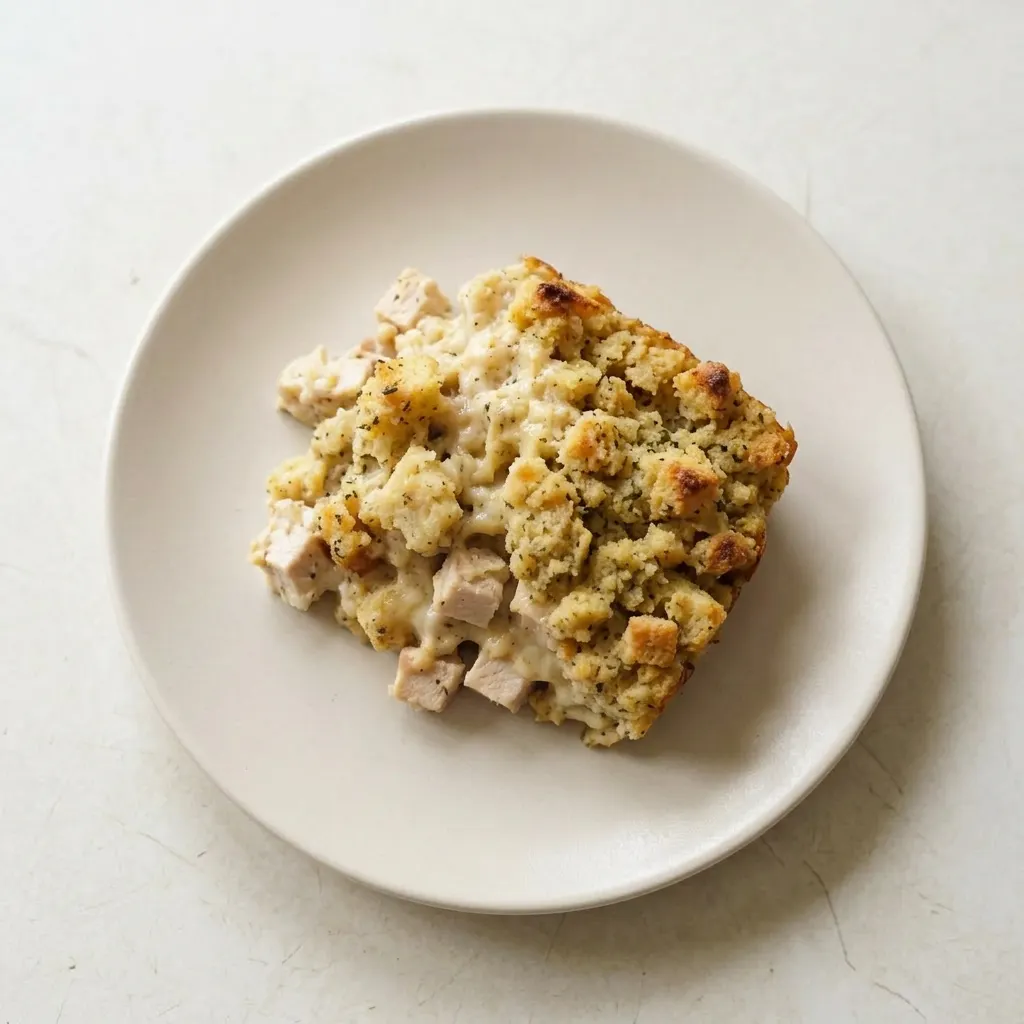
This casserole is best served within 30 minutes of pulling it from the oven, the stuffing stays crisp on top and the sauce is still creamy. Once it sits, the stuffing absorbs moisture and softens; that’s fine if you like it tender, but for the initial meal, don’t let it rest longer than that. Refrigerate leftovers in an airtight container for up to 3 days; the stuffing will continue to soften, but the flavors deepen.
To reheat, use a 350°F oven or a microwave: cover with foil in the oven to prevent the top from drying out, or microwave in short bursts, covering the dish with a damp paper towel to add steam. The chicken will stay moist if reheated gently. Freezing is not recommended, the dairy in the sauce can separate and the stuffing turns soggy upon thawing.
If you must freeze, do it before baking: assemble the casserole, cover tightly, and freeze for up to 1 month. Thaw overnight in the fridge, then bake as directed, adding 10 to 15 minutes to the covered baking time.
Swapping Ingredients Without Breaking the Casserole
Cream of chicken soup: Cream of mushroom soup. Swaps the savory base for an earthy, mushroom-forward flavor.
The texture stays the same, thick and creamy, so the casserole bakes up just as rich. No other adjustments needed; use the same two cans.
Sour cream: Plain Greek yogurt (full fat). Yogurt brings a tangier edge and cuts some richness.
It holds up during baking without curdling if you keep it full fat. Low-fat or nonfat yogurt will break and turn the sauce watery. Start with the same 1/3 cup, then taste and adjust after baking if needed.
Chicken broth: Vegetable broth. Vegetable broth works fine for hydrating the stuffing, just expect a milder, less chicken-y flavor. The stuffing still puffs up light and crisp.
Use the same amount, 1 1/2 cups, warmed until steaming. If you’re looking for chicken casserole recipes with stuffing that are vegetarian, swap the soup and chicken too, but that’s a whole different dish.
Stuffing mix: Gluten-free stuffing mix. Gluten-free mixes often have a crumblier texture and absorb liquid faster. Check the package instructions, some need less broth.
Start with 1 cup of broth instead of 1 1/2, then add more if the stuffing seems dry after mixing. Over-hydrating turns it dense, so err on the dry side; it will soften further as the casserole bakes.
Tips
- If your stuffing topping browns too fast after removing the foil, tent a small piece of foil loosely over the top. This slows browning without trapping steam, so the chicken continues to cook through.
- Use an instant read thermometer inserted sideways into a chicken chunk to get an accurate reading without hitting the dish bottom. The dish holds heat and can give a false high reading if the probe touches metal.
Frequently Asked Questions
Can I make this casserole ahead of time and refrigerate before baking?
Yes, you can assemble it a day ahead and refrigerate before baking. Cover tightly with foil and store in the fridge for up to 24 hours.
When ready to bake, add about 10 to 15 minutes to the covered baking time since you’re starting from cold. The stuffing will hydrate a bit more as it sits, so the topping may be slightly denser than a freshly made one.
How do I know when the chicken is fully cooked without a thermometer?
The chicken is done when the juices run clear and the meat is no longer pink in the center. Cut into the largest piece with a knife and check that the texture is firm and opaque, not soft or translucent.
The stuffing will be golden and the top layer will feel set. If you see any pink or jelly-like spots, return the dish to the oven for 5 more minutes.
Is this casserole supposed to be soupy or thick when it comes out of the oven?
It should be thick and creamy, not soupy. The sauce will cling to the chicken and stuffing rather than pooling at the bottom of the dish.
If it looks thin, it likely needs more time, the sauce thickens as it bakes and rests. After baking, let it sit for 5 to 10 minutes; the sauce will further set as it cools.