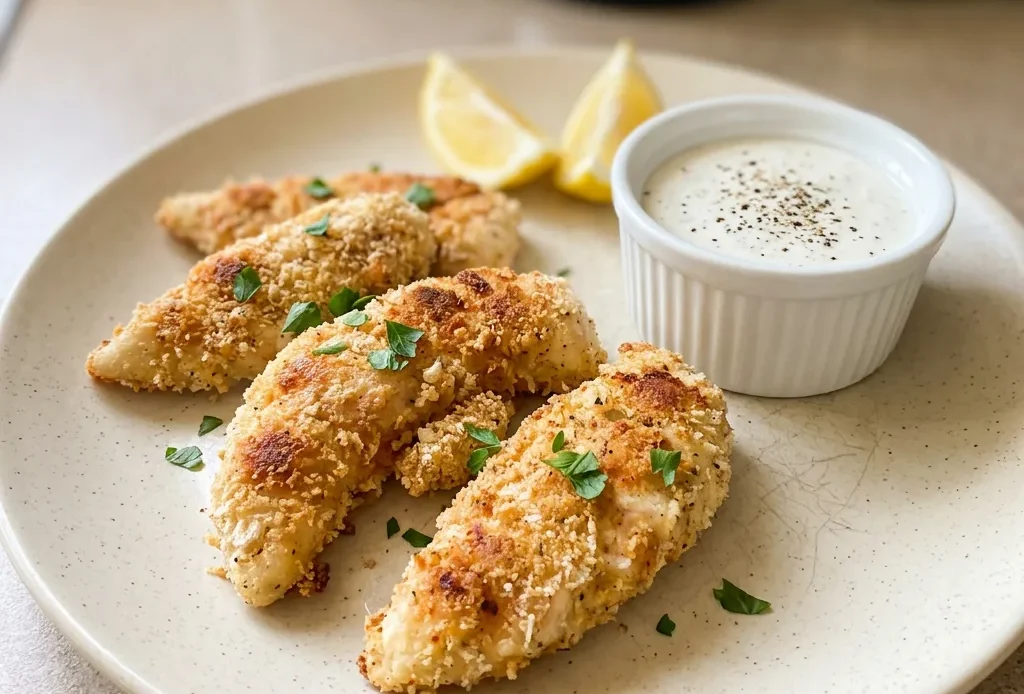
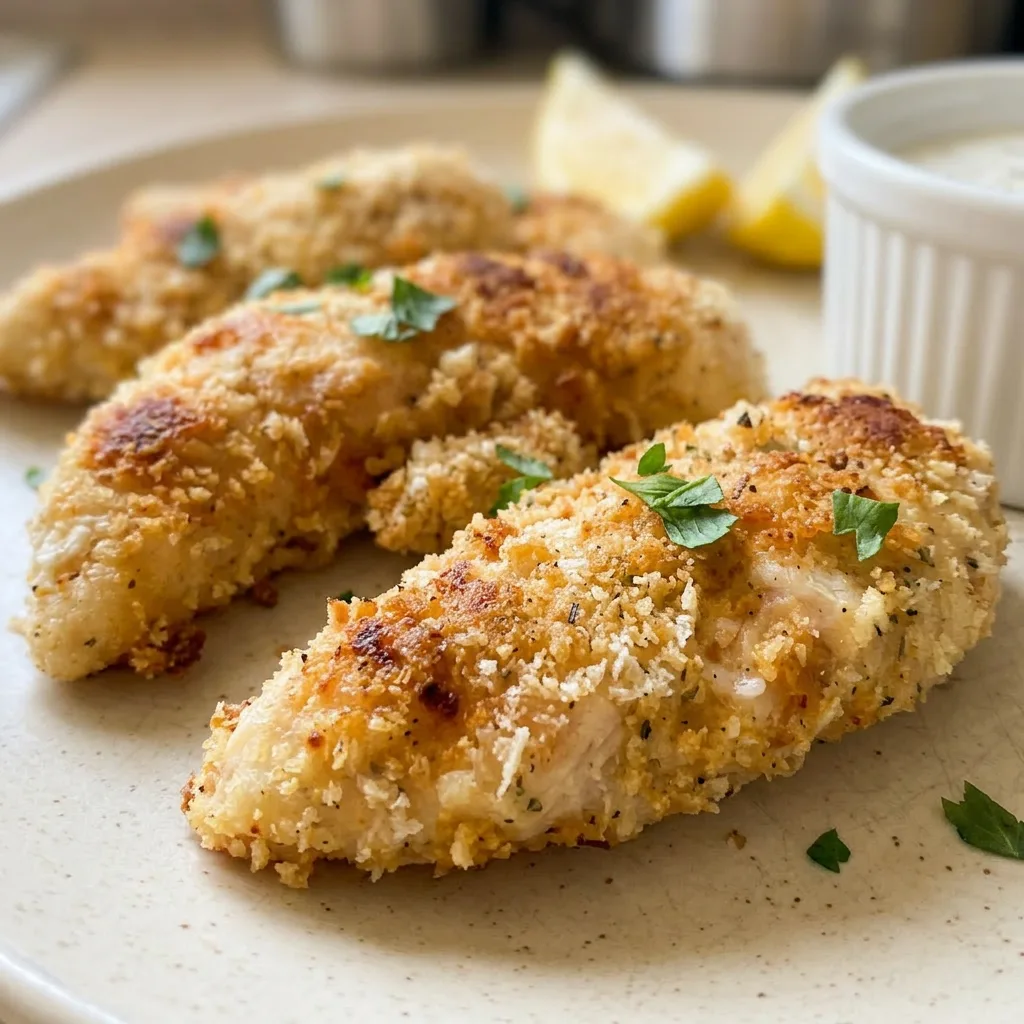
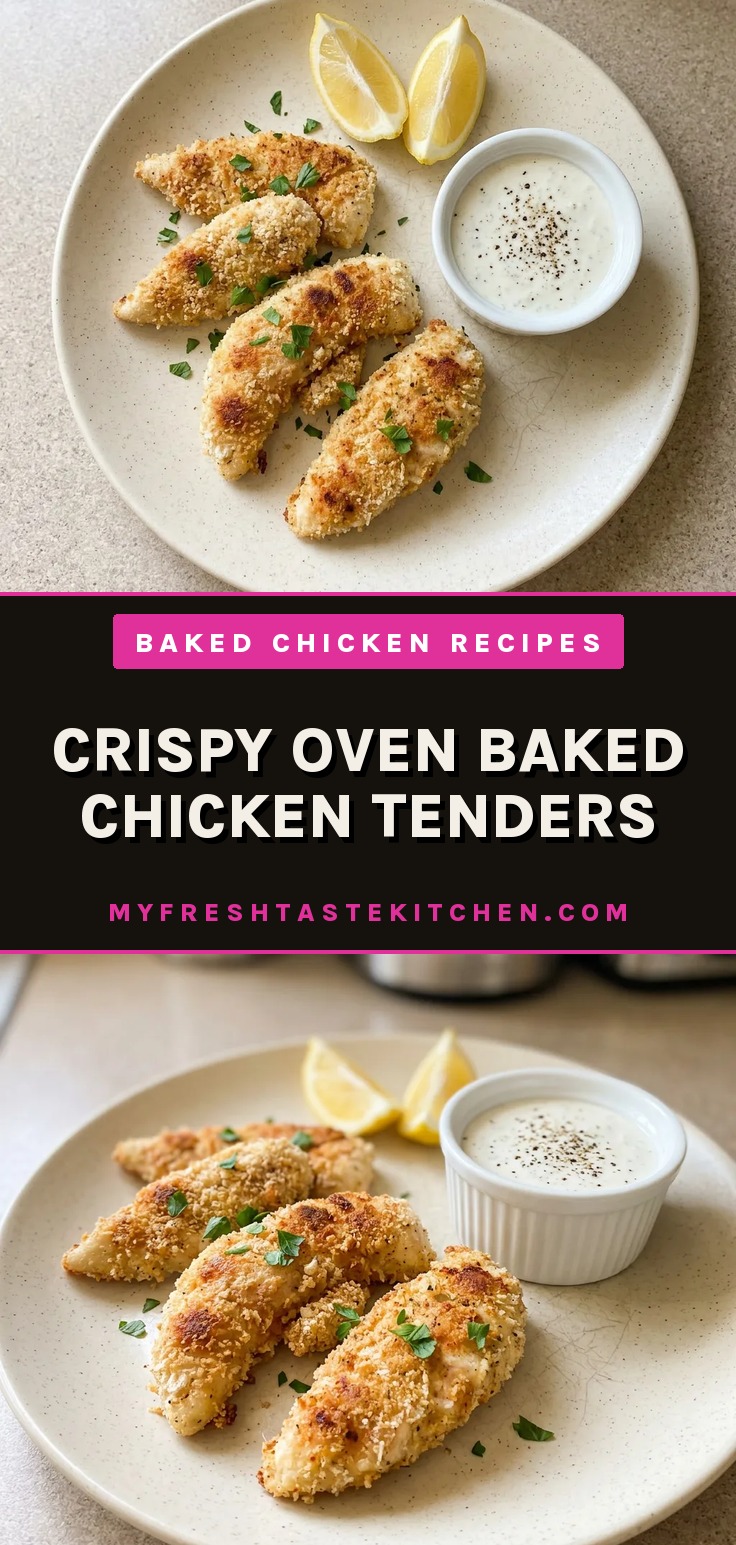
This is not fried chicken. These are crispy oven baked chicken tenders that crack when you bite them, with a crust that holds tight from first dip to last. The trick isn’t in the oven alone, it’s in the order you coat them.
Get that right, and you skip the grease without losing the crunch.
Why coat chicken in flour before the egg wash?
Flour gives the egg something to grab onto. Without it, the egg slides off the slick chicken surface, and the breadcrumb layer ends up patchy or falls off entirely. That initial dusting also wicks away surface moisture, so the coating stays dry and crisp during baking.
But go easy, tap off the excess. A thick flour clump turns pasty, not crunchy.
The flour layer is thin, barely there, yet it’s what locks the crust in place.
What makes panko breadcrumbs extra crunchy in the oven?
Panko’s larger, flakier shape creates air pockets that crisp up rather than compress into a dense shell. Regular breadcrumbs pack tighter, so they tend to steam instead of crunch when baked without deep oil.
A light spray of cooking oil on the tenders mimics frying’s browning, it helps the panko toast evenly and turn golden without needing a vat of oil. The result is a crust that shatters when you bite it.
Is flipping half way really necessary?
Oven heat comes from the top and bottom, but the sheet pan itself conducts heat into the chicken’s underside. If you don’t flip, the side against the pan steams while the top browns. Flipping swaps their positions, so both sides get direct heat and the coating crisps uniformly.
It also guarantees the chicken cooks through without the bottom side drying out or turning leathery. A simple turn at the midpoint makes a noticeable difference in texture.
Prep: 10 min · Cook: 20 min · Total: 30 min · Servings: 4 · Calories: 710 kcal
A Few Ingredient Notes for These Tenders
chicken tenders: Buy fresh, not frozen; frozen tenders release water as they thaw, which makes the coating soggy.
breadcrumbs (panko or regular): Panko gives a lighter, crunchier crust than regular breadcrumbs because its large flakes create air pockets.
paprika: Use sweet paprika, not smoked or hot, unless you want a different flavor profile entirely.
How to Get a Shatter-Crisp Oven-Baked Crust
Set up the breading station
Arrange three shallow dishes: flour, beaten eggs with milk, and seasoned breadcrumbs. Have the chicken tenders and a parchment-lined sheet pan ready. This assembly-line flow keeps your hands from getting bogged down.
Dredge in flour
Drop a tender into flour, turn to coat, then lift and tap firmly against the dish edge. You want a thin, even dusting, no clumps. If flour feels damp or pasty, you left too much on; that turns gummy in the oven.
Dip in egg wash
Submerge the floured tender completely in the egg-milk mixture. Let excess drip off for a couple seconds. The egg should cling evenly; if it beads up and runs off, the flour layer was too thin or patchy.
Press into breadcrumbs
Place the wet tender into the seasoned breadcrumbs. Press firmly so crumbs stick all over, including edges.
Lift and gently shake off loose crumbs. The coating should look dry and rough, not slick or bare in spots.
Arrange and spray
Set coated tenders on the prepared sheet, spaced at least an inch apart, crowding traps steam. Mist the tops generously with cooking spray. You want a visible sheen; that oil is what turns panko golden and crunchy, not pale and dusty.
Bake and flip
Bake at 400°F for 10 minutes, then flip each tender using tongs. The flipped side should be light golden; if it’s still pale and wet, give it 2 more minutes before flipping. Return to oven and bake another 8 to 10 minutes.
Check for doneness
The tenders are done when the coating is deep golden brown and crunchy to the touch, press one; it should feel firm, not squishy. If unsure, cut into the thickest piece: juices run clear, no pink. Overbaking dries the meat, so pull them at that moment.
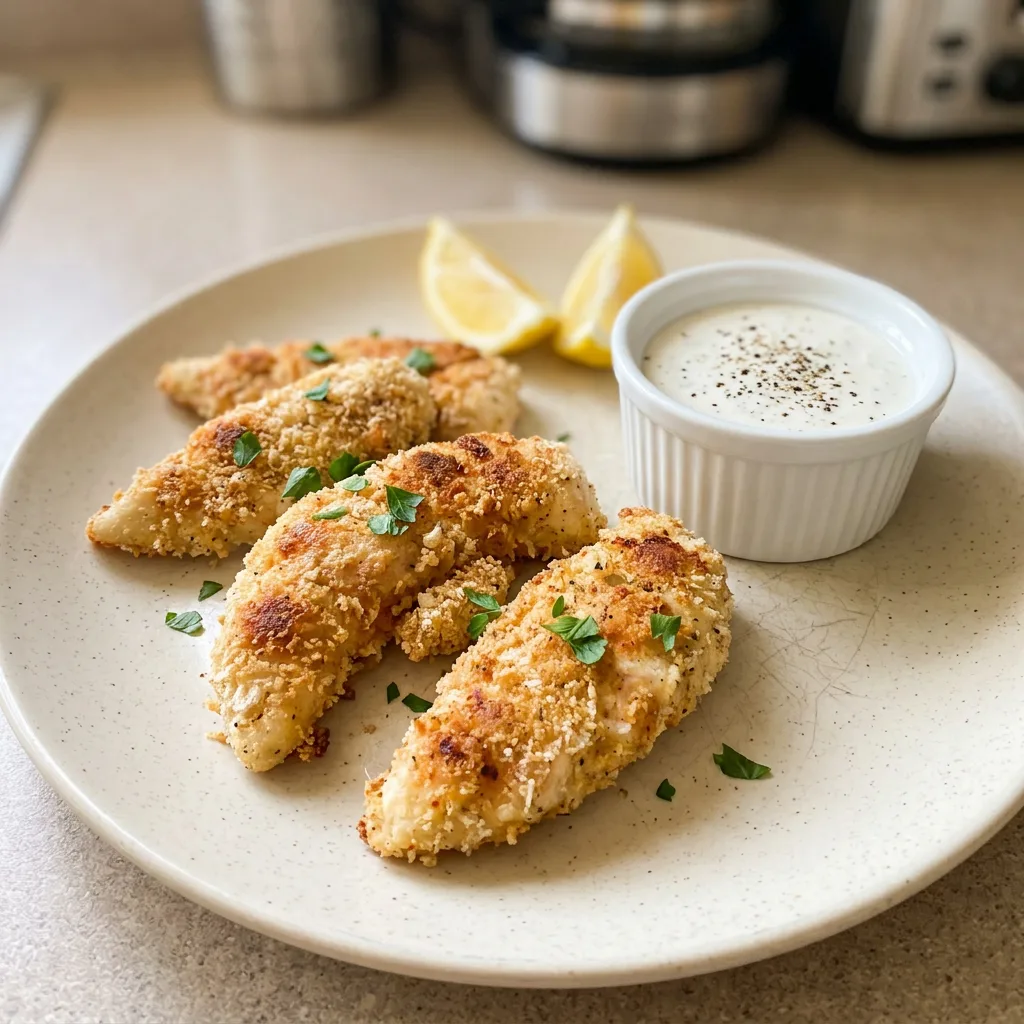
Crispy Oven Baked Chicken Tenders
Ingredients
Method
Preheat Oven and Prep Sheet:
Heat oven to 400°F (205°C). Lay parchment on a baking sheet or coat it lightly with grease.Prepare Flour Dish:
Put flour into a shallow dish.Whisk Egg Mixture:
In another shallow dish, beat eggs with milk until combined.Mix Breadcrumb Coating:
In a third shallow dish, stir together breadcrumbs, garlic powder, paprika, salt, and pepper.Dredge in Flour:
Coat each chicken tender in flour, then tap off extra.Dip in Egg:
Submerge in egg mixture, making sure it’s fully covered.Coat with Breadcrumbs:
Press into breadcrumb blend, ensuring an even layer.Arrange and Spray:
Arrange coated tenders on the prepared sheet. Mist tops with cooking spray to promote browning.Bake Until Golden:
Bake for 18-20 minutes, flipping once halfway, until chicken is fully cooked and coating is golden and crunchy.Serve with Sauce:
Serve right away with preferred dipping sauces. Options: Honey Mustard (blend equal honey and Dijon), Ranch, or BBQ.
Storage and Serving
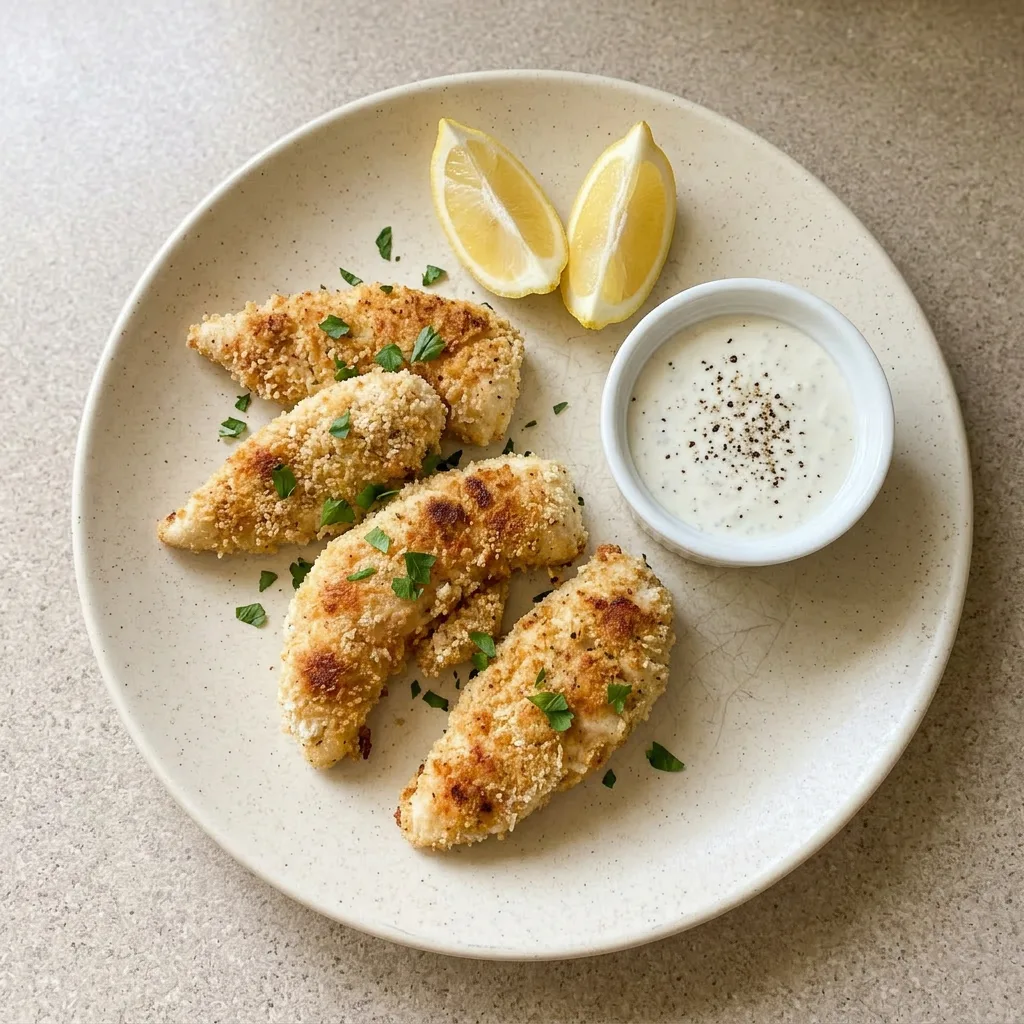
Serve the chicken tenders immediately after baking for the crispiest crust. The coating starts softening within 15 minutes as steam escapes the meat, so plan to eat them right away. For leftovers, cool completely to stop residual steam, then store in an airtight container in the fridge for up to 3 days.
The breading will lose crunch as it absorbs moisture. To restore crispiness, reheat in a 400°F oven on a wire rack over a baking sheet for 5 to 7 minutes. Avoid the microwave, which turns the coating rubbery.
Freezing is not recommended; the breading becomes soggy upon thawing and reheating.
Tips
- Pat the chicken dry with paper towels just before coating. A damp surface makes the flour layer slide off or turn pasty, while a dry surface lets the flour cling evenly and stay light.
- Let the coated tenders rest on the baking sheet for 5 minutes before spraying with oil. This sets the breading so it doesn’t wash off when you mist it, and the flour fully hydrates for a sturdier crust.
How to Swap the Breadcrumb Crust Without Losing the Crunch
breadcrumbs (panko or regular): Crushed cornflakes or pork rinds (for gluten-free or keto). Crushed cornflakes give a similar shatter-crunch but toast faster, check for doneness a couple minutes early. Pork rinds (finely ground) add a savory note and stay crisp, but they don’t brown as much; skip the extra cooking spray to avoid greasiness.
all-purpose flour: Almond flour or coconut flour (for gluten-free). Almond flour works as a 1:1 swap but feels grainier and browns faster, watch the oven time.
Coconut flour is more absorbent; use half the amount and expect a drier, slightly crumbly coating. Either way, the egg wash is still needed to hold the crumbs.
chicken tenders: Boneless chicken breasts, sliced into strips. Works fine, but the strips cook faster because they’re thinner.
Check for doneness around 15 minutes total. The coating doesn’t stick as well on the cut sides, press crumbs firmly into those raw edges.
eggs (in egg wash): Buttermilk or plain yogurt (for an egg-free wash). Buttermilk or yogurt adheres similarly but makes a slightly thinner coating. The crust won’t puff as much and may look less golden, bake an extra 2 minutes if needed.
Don’t skip the flour dusting; it’s even more critical here to prevent the wash from sliding off.
Frequently Asked Questions
Can I make these chicken tenders ahead of time and reheat them?
You can, but the texture won’t match fresh-baked. The coating starts softening within 15 minutes as steam escapes the meat. For best results, cool leftovers completely, store in an airtight container in the fridge for up to 3 days, then reheat in a 400°F oven on a wire rack for 5 to 7 minutes.
Avoid the microwave, it turns the coating rubbery.
How do I keep the coating from falling off when baking?
The most likely cause is skipping the flour dusting. Flour gives the egg wash something to grip; without it, the egg slides off and the breadcrumb layer peels away.
Also, press the breadcrumbs firmly into the chicken, including edges, and mist generously with cooking spray, dry crumbs don’t adhere well. If the coating still falls off, you may have skipped tapping off excess flour, which can create a pasty layer that separates.
What’s the difference between oven-baked and fried chicken tenders in texture?
Oven-baked tenders are crunchier but drier, the crust shatters because baking dries out the breading, while frying keeps the coating oil-moist. The meat itself stays tender, but the exterior lacks the greasy sheen and soft crunch of deep-fried. Baked tenders also brown unevenly without flipping halfway, so the side against the pan steams instead of crisps.
The trade-off is a lighter, less heavy feel.