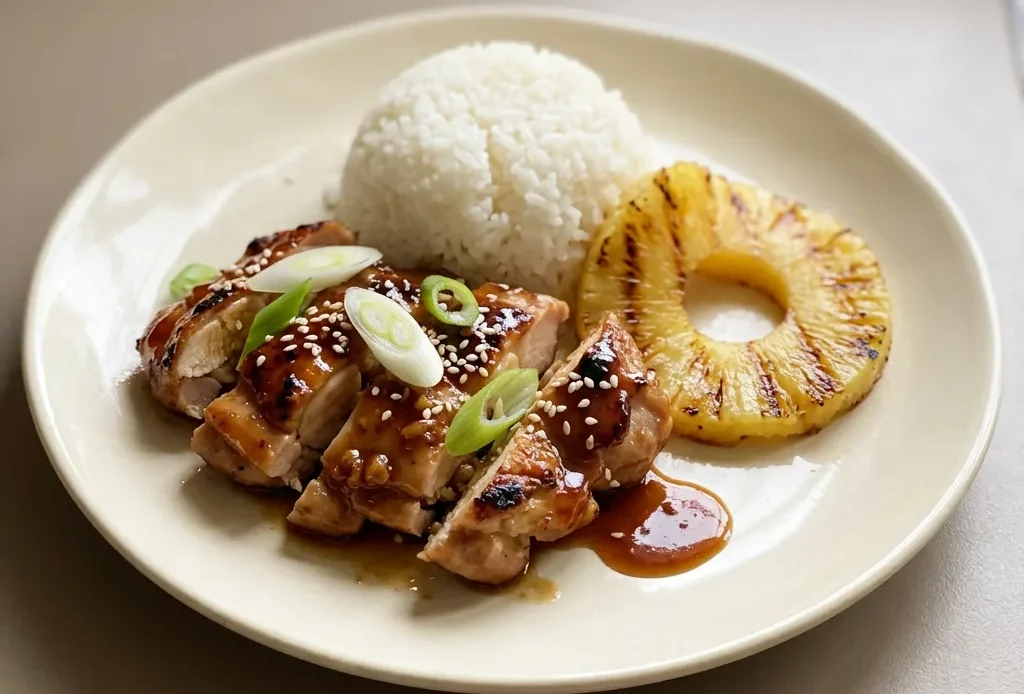
The pineapple in a Hawaiian teriyaki chicken marinade does more than add sweetness, it actually breaks down proteins in the meat, so thighs come out noticeably more tender in just a few hours. Push it past 24, though, and you’ll feel the texture go soft, almost mushy, when you slice.
That’s the margin. The real trick is splitting the marinade: half for soaking, half held back to boil into a clean, concentrated sauce. Once you’ve tasted how that cooked sauce clings to the charred edges of grilled chicken, you’ll understand why this version hits different than a straight soy-and-sugar glaze.
I once dumped cornstarch slurry into cold reserved marinade and ended up with a cloudy, watery sauce that never thickened no matter how long I boiled it.
Why does pineapple juice tenderize chicken without turning it to mush?
Pineapple juice contains an enzyme that breaks down protein, which softens the meat. That’s why a marinade with it makes chicken thighs more tender. But the same enzyme can overdo it.
Marinate longer than 24 hours and the texture goes from tender to mushy, you’ll feel it when slicing. Two hours to overnight hits the sweet spot: the meat is noticeably more tender but still has structure. The acidity also cuts the sweetness of the brown sugar and honey, so the finished dish tastes balanced, not cloying.
You can taste that contrast in every bite.
How does splitting the marinade create a better sauce?
If you used all the marinade for soaking, the leftover liquid would be raw chicken juice, unsafe to serve without boiling. Splitting it solves that.
Half goes into the bag with the chicken, infusing flavor. The other half stays reserved. Later you boil that reserved portion, which kills any bacteria, then thicken it with a cornstarch slurry.
The result is a glossy, clingy sauce that tastes clean and concentrated. Now I always bring the reserved marinade to a full boil before whisking in the cornstarch slurry to get that glossy, thick sauce.
Grill or skillet: which gives better caramelization?
Grilling adds a smoky char you can’t replicate on the stovetop. The direct heat caramelizes the sugars in the marinade quickly, creating dark grill marks and a faint campfire note.
Skillet cooking gives you more control: you can flip the chicken at the right moment and let the pan juices reduce into a sticky glaze right there in the pan. Both methods hit 165°F internally, but grilling requires oiling the grates first or the skinless thighs will stick.
A skillet won’t stick as badly if you use a little oil. Choose based on whether you want that smoky layer or a more uniform, glossy finish.
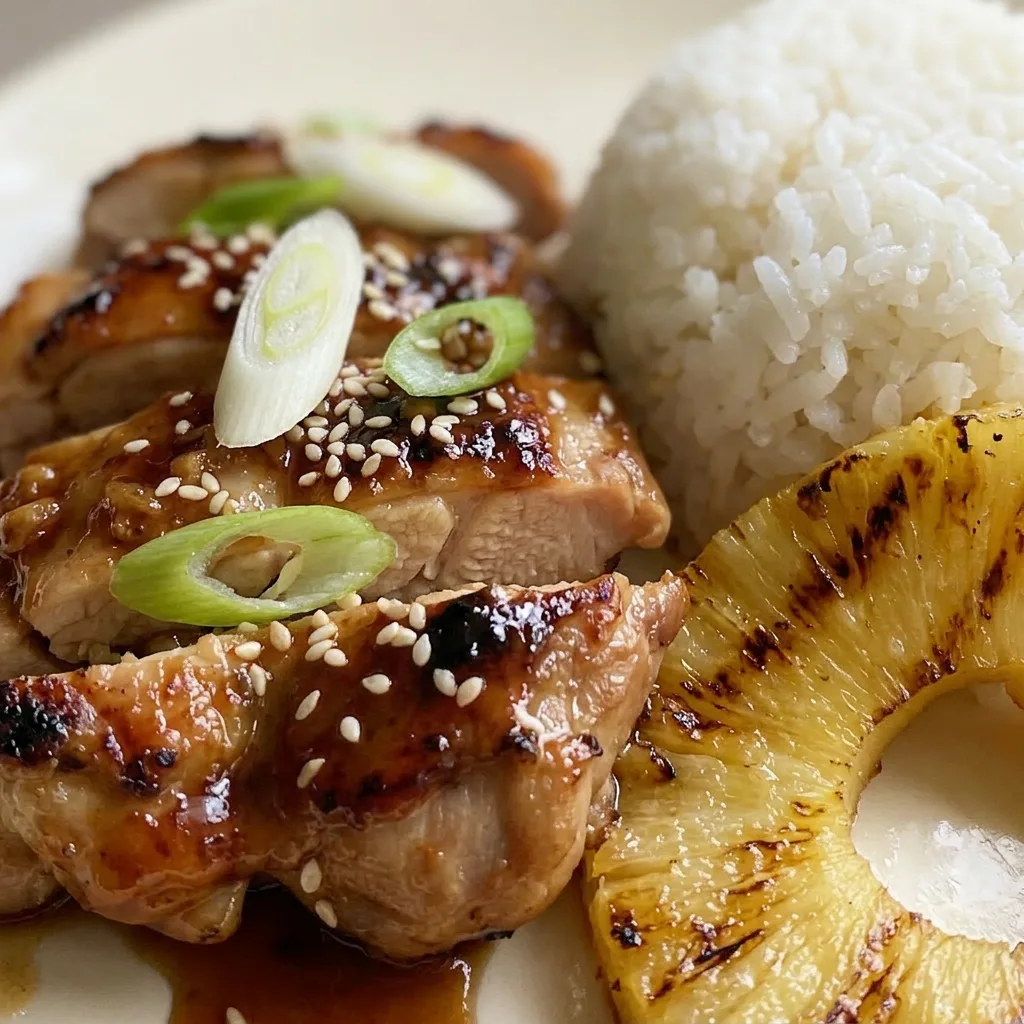
Prep: 15 min · Cook: 20 min · Total: 35 min · Servings: 6
Choose the right pineapple juice and soy sauce for balanced flavor
Pineapple juice: Use unsweetened juice from a can or fresh pineapple; sweetened juice will make the dish too sugary.
Soy sauce: Low sodium soy sauce keeps the salt level in check since the brown sugar and honey add sweetness.
Brown sugar: Pack it firmly when measuring to get the full sweetness that balances the soy and vinegar.
Fresh ginger: Grate it on a microplane so it melts into the marinade instead of leaving fibrous bits.
Cornstarch: Use it only if you want a thicker sauce; skip it for a thinner, more pourable glaze.
Marinate, then cook: timing and heat make this dish work
Whisk the marinade and split it
Stir pineapple juice, soy sauce, brown sugar, honey, rice vinegar, sesame oil, garlic, ginger, and pepper flakes until the sugar dissolves. Taste it, the balance should be sweet, salty, and tangy.
Marinate the chicken
Pour half the marinade over the chicken in a bag, reserve the rest. Seal and refrigerate at least 2 hours. After 2 hours the meat feels firmer but tender; overnight gives more flavor, but don’t go past 24.
Grill or pan-sear the chicken
Grill: oil the grates, cook 5 to 7 minutes per side until char marks appear and the thickest part hits 165°F. Skillet: use a little oil over medium heat, cook 6 to 8 minutes per side until the surface turns deep brown and glossy.
Thicken the reserved sauce
Bring the reserved marinade to a full boil in a small saucepan, then reduce to a simmer. Whisk in the cornstarch slurry and stir until the sauce turns clear, glossy, and coats the back of a spoon in about 1 minute.
Slice and glaze
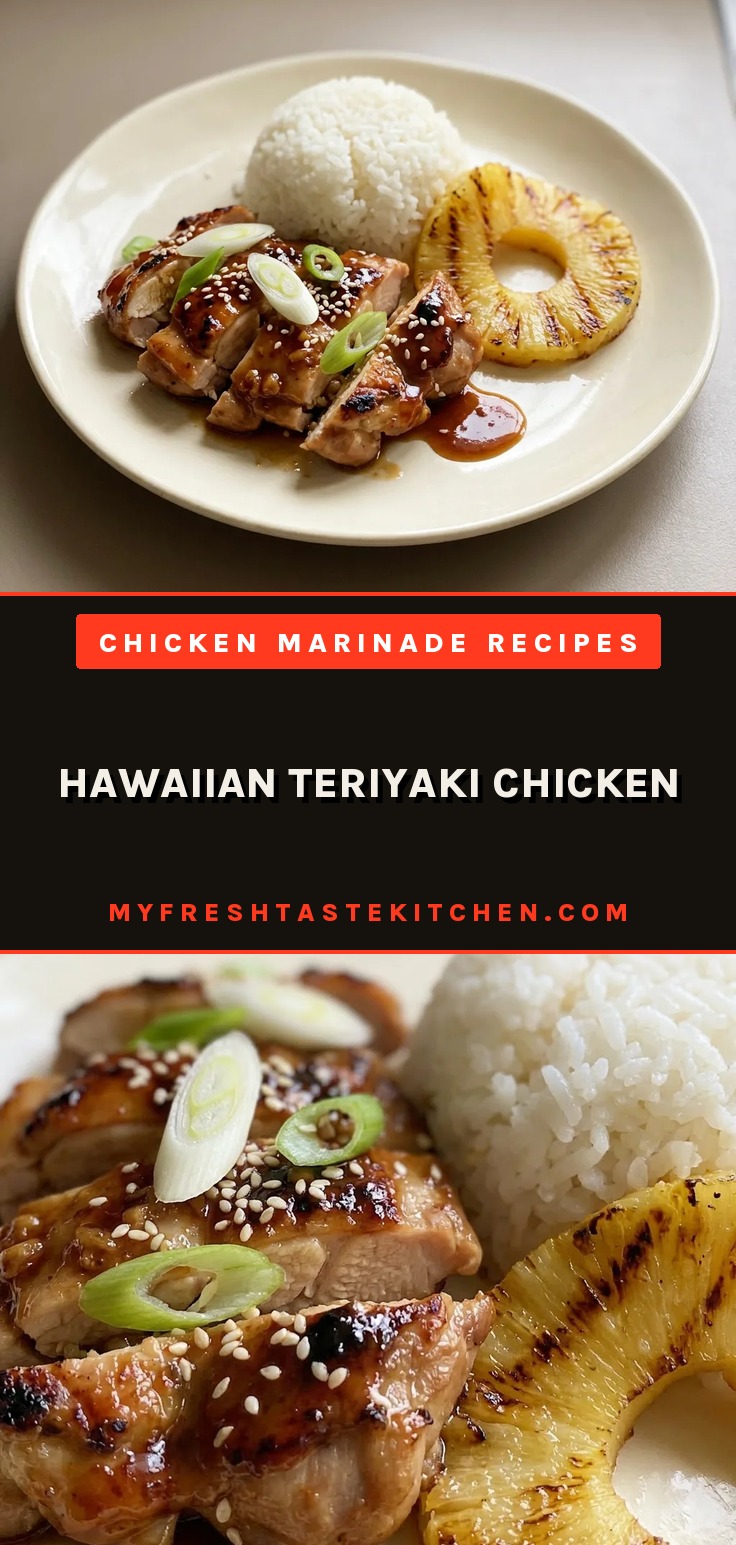
Let the chicken rest 5 minutes, then slice against the grain. Pour the thickened sauce over the slices, each piece should be coated but not swimming. Top with green onions, sesame seeds, and optional pineapple.
Hawaiian Teriyaki Chicken
Ingredients
- 2 lbs boneless skinless chicken thighs
- 1 cup pineapple juice (from can or fresh)
- 1/2 cup soy sauce (low sodium preferred)
- 1/4 cup brown sugar (packed)
- 2 tbsp honey
- 2 tbsp rice vinegar (or apple cider vinegar)
- 1 tbsp sesame oil
- 3 cloves garlic (minced)
- 1 tbsp fresh ginger (grated)
- 1/2 tsp crushed red pepper flakes (optional for heat)
- 1 tbsp cornstarch + 2 tbsp water (for thickening sauce, optional)
- 2 green onions (sliced (for garnish))
- Sesame seeds (for garnish)
- Pineapple slices or chunks (grilled or fresh, optional serving)
Instructions
Whisk marinade ingredients:
Combine pineapple juice, soy sauce, brown sugar, honey, rice vinegar, sesame oil, minced garlic, grated ginger, and red pepper flakes in a medium bowl; whisk to create the marinade.Marinate chicken thighs:
Put chicken thighs into a resealable bag or shallow dish. Add half the marinade, reserving the rest. Seal and refrigerate for at least 2 hours (overnight for more intense flavor).Grill or pan-sear chicken:
Grill: Heat grill to medium-high. Cook chicken 5–7 minutes per side until internal temp reaches 165°F (75°C). Skillet: Warm oil in a large skillet over medium heat. Cook chicken 6–8 minutes per side until fully cooked and caramelized.Thicken reserved marinade:
Bring reserved marinade to a boil in a saucepan, then lower heat. For a thicker sauce, whisk in cornstarch slurry (1 tbsp cornstarch + 2 tbsp water) and simmer until glossy and thickened.Slice and serve with sauce:
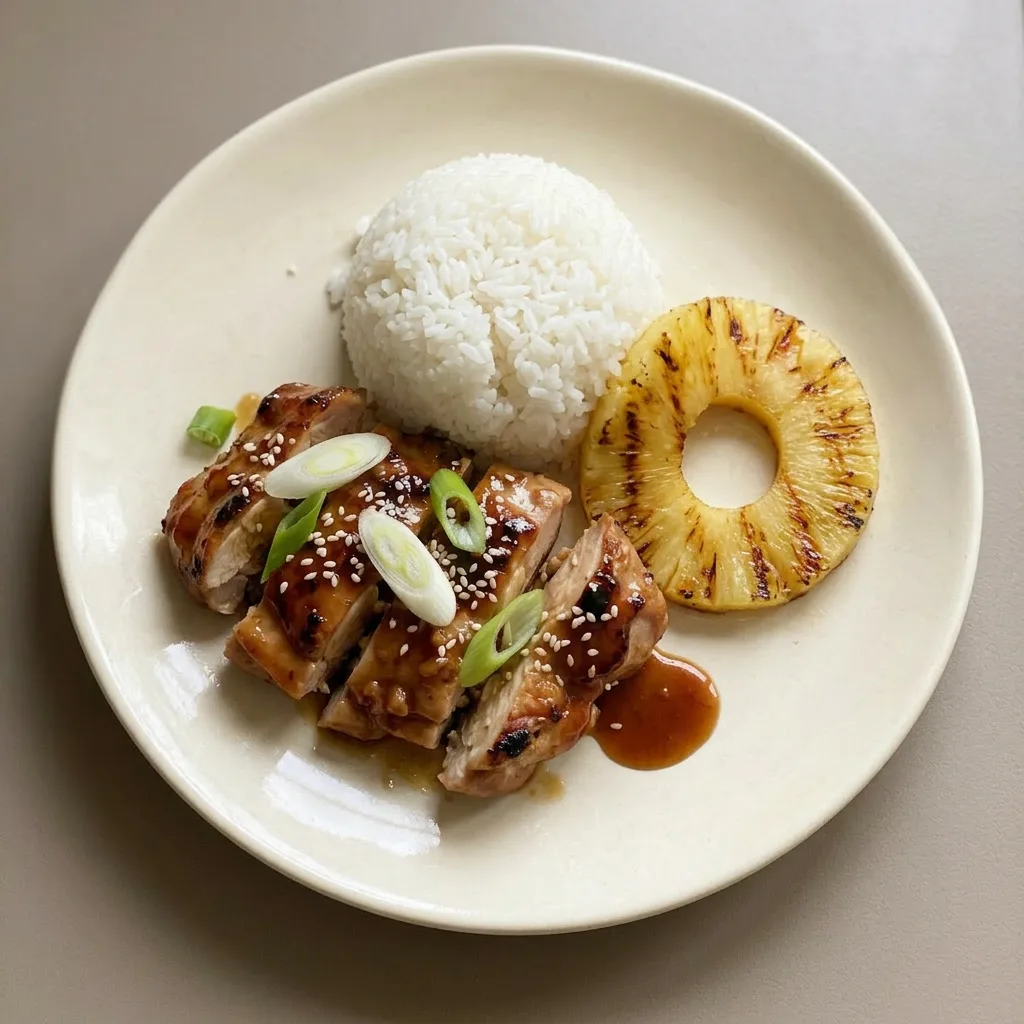
Slice chicken, coat with teriyaki sauce, top with green onions, sesame seeds, and optional grilled pineapple. Serve alongside steamed rice or stir-fried vegetables.
These swaps work without breaking the marinade balance
Chicken thighs: Boneless skinless chicken breasts. Start with the same 2 lbs. Thighs stay juicy under the acidic marinade; breasts cook faster and dry out more easily.
Grill or pan-sear until 160°F (carryover will take it to 165°F), about 4 to 5 minutes per side. The meat will be leaner and less rich, but the sauce still carries the dish.
Soy sauce: Coconut aminos (for gluten-free) or tamari. Use the same ½ cup.
Coconut aminos are thinner and sweeter, so the marinade will taste milder and less salty. Tamari works one-for-one and maintains the umami punch. With either, the sauce may need a pinch of salt at the end, taste before serving.
Honey: Maple syrup or agave nectar. Use the same 2 tbsp. Maple syrup adds a distinct woodsy note; agave is neutral and slightly thinner.
Both keep the sweetness level similar. The final color will be a shade darker with maple.
No change to how the sauce thickens.
Tips
- Pat the chicken dry with paper towels before cooking to remove surface moisture from the marinade, which allows the meat to brown and caramelize faster without steaming.
Storage and Serving
For the best texture, serve this chicken within 30 minutes of glazing. The sauce is at its glossiest right after you slice and coat the meat, and the garnish stays crisp and bright.
If you’re making it ahead, stop after step 2 (marinating) or after step 3 (cooking). Cooked chicken holds up better than glazed chicken. Refrigerate leftover chicken and sauce separately in airtight containers.
The chicken stays moist and tender for up to 4 days. The sauce will thicken as it chills; thin it with a splash of water when reheating.
To reheat, warm the chicken in a covered skillet over low heat with a little water or additional sauce until the internal temperature reaches 165°F. You can freeze the cooked chicken (without sauce) for up to 3 months, but the texture softens a bit. The pineapple in the marinade makes the meat more delicate; freezing and thawing will make it slightly more tender but not mushy.
Thaw overnight in the fridge, then reheat gently. The sauce does not freeze well due to the cornstarch; it becomes grainy when thawed. Make fresh sauce when you serve frozen chicken.
Add the green onions, sesame seeds, and optional pineapple just before serving, whether fresh or reheated.
Frequently Asked Questions
Can I make this Hawaiian teriyaki chicken ahead of time?
Yes, but stop after cooking, not after glazing. The sauce is glossiest right after you slice and coat; made ahead, the garnish wilts and the sauce loses its sheen. Refrigerate cooked chicken and sauce separately for up to 4 days.
Reheat chicken in a covered skillet with a splash of water until it hits 165°F, then glaze fresh.
How do I prevent the chicken from burning on the grill due to the sugar in the marinade?
Oil the grates well and keep the heat at medium-high, not high. The sugar in the marinade caramelizes fast, so watch for dark char marks after 5 to 7 minutes per side. If the flame flares up, move the chicken to a cooler part of the grill and finish indirectly.
What’s the difference between Hawaiian teriyaki chicken and Japanese teriyaki chicken?
Hawaiian teriyaki uses pineapple juice, which adds a tangy sweetness and tenderizes the meat. Japanese teriyaki typically relies on sake and mirin for balance, without fruit enzymes. The result here is brighter and more acidic, with a thicker, gloopier sauce from the cornstarch slurry.
Can I use chicken breasts instead of thighs, and how does that affect cooking time?
Yes, but breasts cook faster and dry out more easily. Grill or pan-sear until 160°F (carryover takes it to 165°F), about 4 to 5 minutes per side. The meat will be leaner, but the sauce still carries the dish.
Why is my sauce not thickening even after adding cornstarch slurry?
Most likely the sauce wasn’t at a full boil when you added the slurry. Cornstarch needs a vigorous boil to activate; if the liquid is just simmering, it won’t thicken properly. Bring it to a rolling boil first, then whisk in the slurry and watch it turn glossy in about a minute.