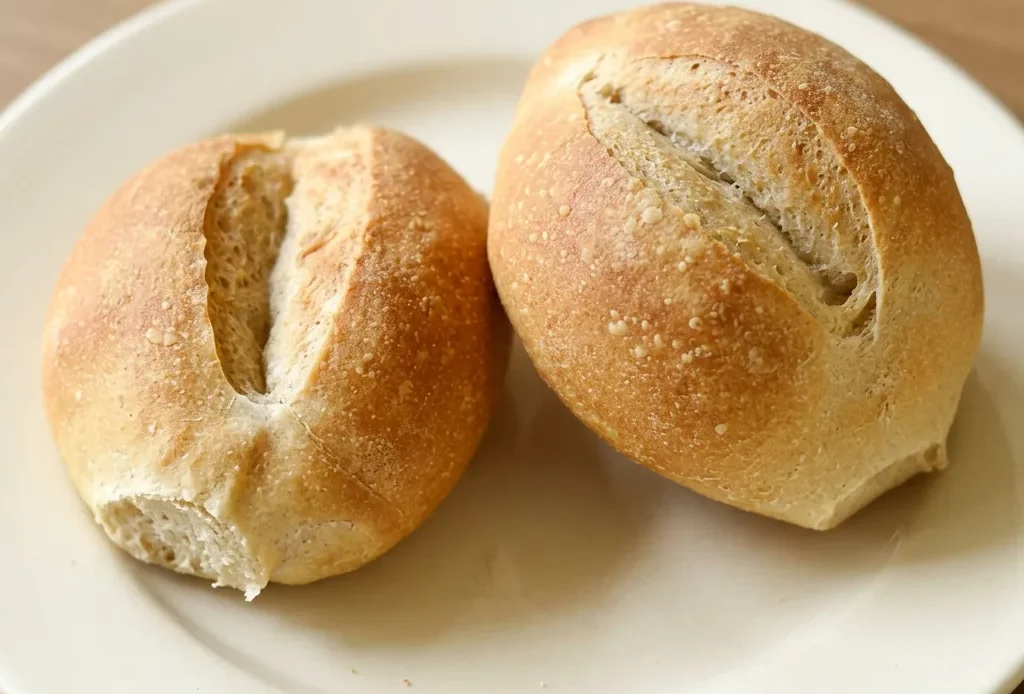
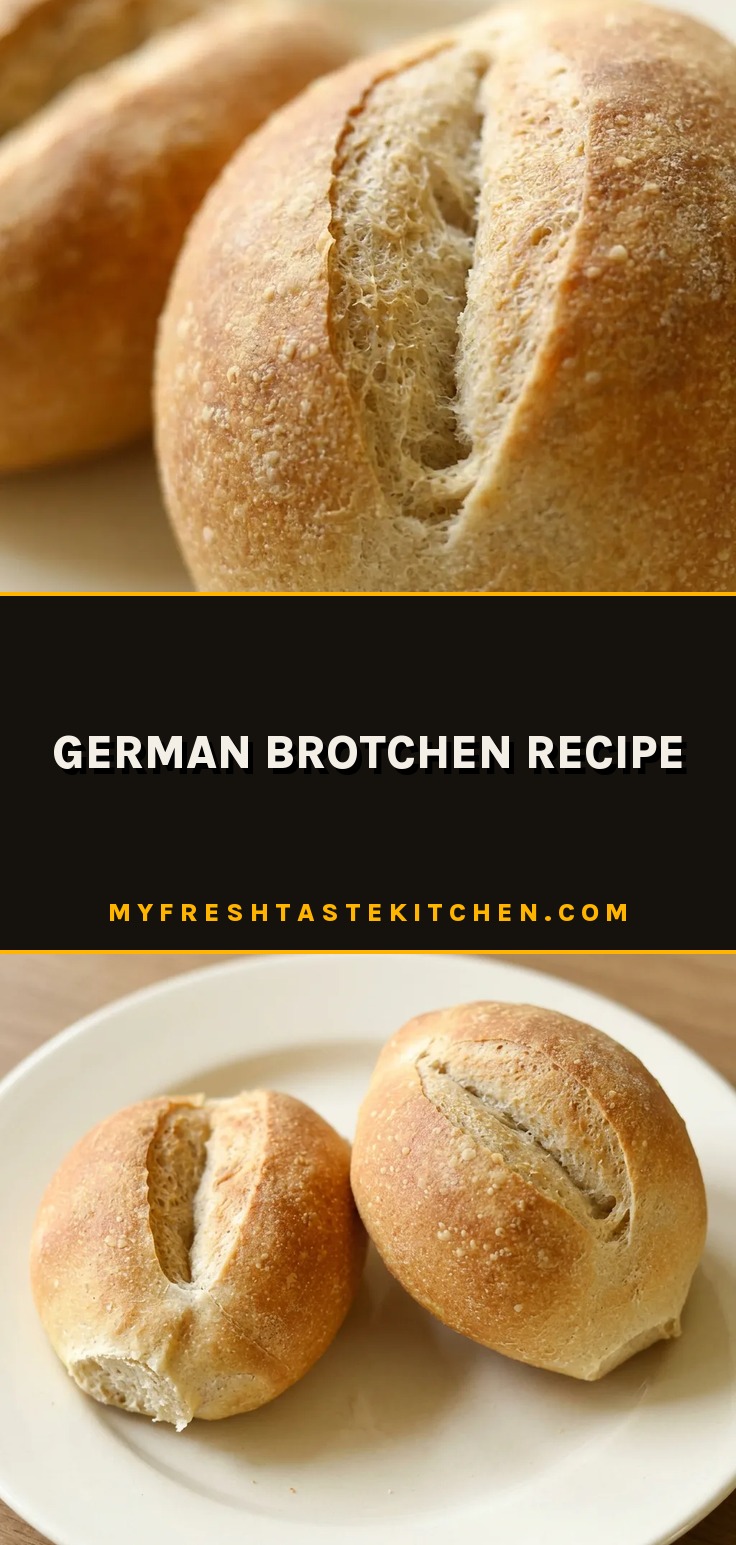
Getting a crust that shatters and a crumb that’s airy, not dense, is the whole point of a german brotchen recipe. The trick isn’t a fancy oven, it’s a cold, slow fermentation that builds flavor over 12 hours and a blast of steam at the start of baking. Without both, you end up with a pale, tight roll that tastes like bread, not Brotchen.
This method delivers that crackly shell and open interior, but only if you respect the resting time and the steam. The margin for error is small; skip either and the result falls flat.
People think they can rush the 12-hour rest and bake same day, then wonder why their rolls turn out like hockey pucks.
Why does cold fermentation matter for Brotchen?
The 12-hour refrigeration isn’t just convenience, it’s what gives these rolls their authentic character. During that long, cold rest, the yeast works slowly, developing complex fermentation byproducts that translate into a deeper, more bread-like flavor.
You can’t rush that with a warm rise. The diastatic malt boosts both fermentation and browning, but the cold temp keeps the yeast from exhausting itself too fast. That controlled activity builds a stronger gluten network, so the rolls hold their shape and develop a chewy, open crumb instead of turning dense.
After baking, the crust crackles with a deep golden color the fridge alone can’t produce. You taste the difference: a nuttiness, a slight tang, nothing like a quick yeast roll.
What does steam do to the crust?
Steam is what changes the exterior from ordinary bread into that glossy, crackling shell you expect from a bakery roll. When you toss ice cubes into a hot pan at the start of baking, the water instantly vaporizes, coating the dough’s surface.
That moisture gelatinizes the starch on the outer layer, creating a thin, shiny film that later hardens into a crisp crust. At the same time, steam delays the setting of the crust, allowing the rolls to expand fully, oven spring, before the structure firms up. Without steam, the crust would set too early, limiting rise and leaving a dull, thick shell.
The contrast is stark: one tray gives you a brittle, audible crunch; the other, a soft, pale top.
Why this dough handling for a light crumb?
The hydration, 300 ml water to 500 g flour, lands around 60%, a lean dough that’s firm enough to shape but wet enough to keep the crumb open. Overworking would tighten the gluten and kill airiness. Instead, you mix just until cohesive, then finish with a few folds and stretches by hand.
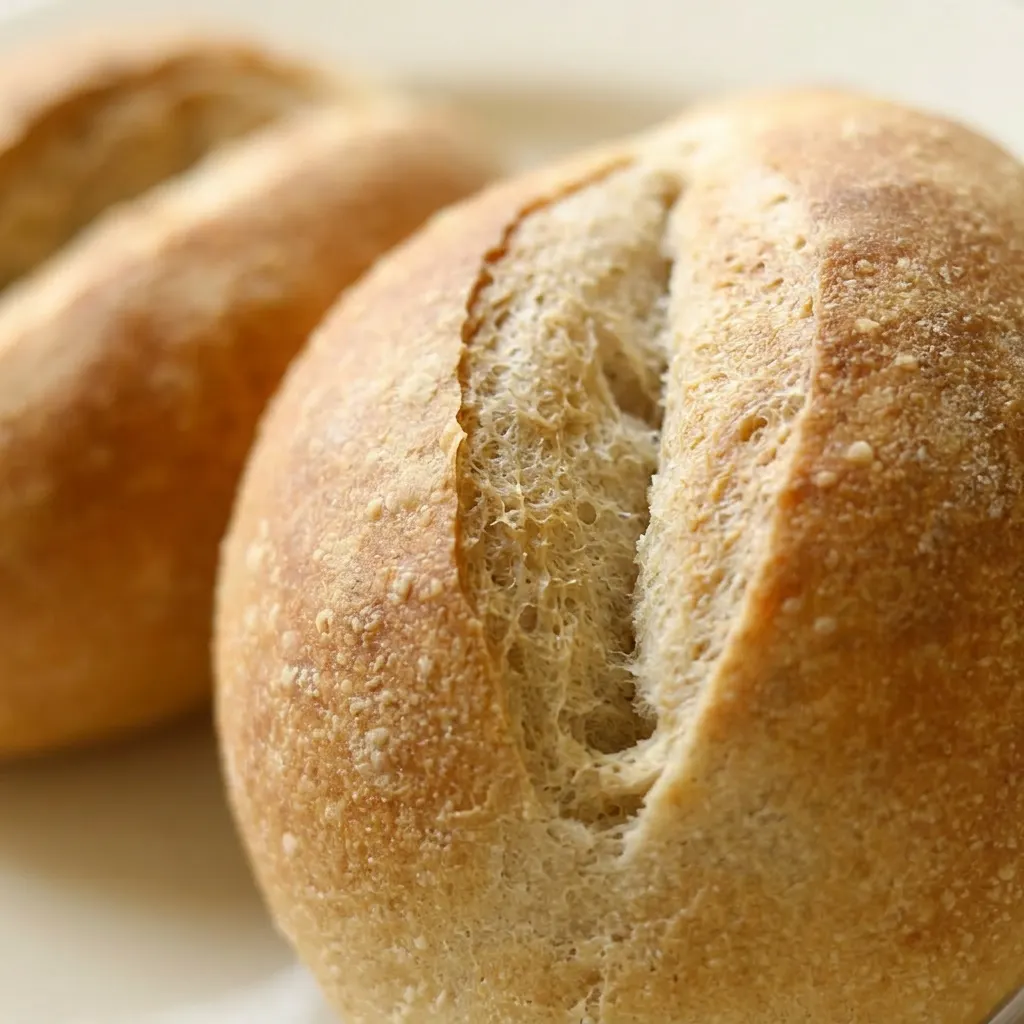
That gentle development builds elasticity without toughness, trapping gas pockets that expand during proofing and baking. The folding also aligns the gluten strands evenly, so the crumb is uniform, not dense at the bottom. When you pull the baked roll apart, you see irregular holes, not a tight, sandwich-bread texture.
It’s the difference between a roll that feels substantial but light and one that’s heavy and bready. The technique delivers exactly that airy, resilient interior.
Prep: 20 min · Cook: 20 min · Total: 14 hr 40 min · Servings: 8 · Calories: 220 kcal
Ingredient Notes for Brotchen
Instant yeast: Active dry works but needs proofing in warm water first; instant goes straight in with the flour.
Diastatic barley malt: This is not sweet malt syrup; it’s a powder that boosts browning and fermentation. Don’t skip it.
Butter: Use a soft, not melted, butter so it creams into the flour without greasing the dough.
Working the Dough for Open Crumb
Mix until cohesive
Run the mixer on low for a full 5 to 10 minutes. The dough should climb the hook and clean the bowl sides. If it stays shaggy or sticky, let it rest 5 minutes then mix again.
Hand-knead briefly
Turn the dough out and fold it over itself a few times, maybe 8 to 10 folds. You’ll feel it tighten and smooth. Stop when it resists stretching; overworking here makes the crumb tight.
Cold ferment
Refrigerate the covered bowl for 12 hours. The dough should double in volume, not triple. If it hasn’t doubled, let it sit on the counter an extra hour before shaping.
Shape the rolls
Divide into 8 equal pieces, about 100g each. Cup each piece and drag it across the counter to create surface tension. The outer skin should be smooth, not torn; if it tears, let the dough rest 10 minutes.
Final proof
Cover with a towel and let rise until nearly doubled, 2 to 3 hours at room temp. Gently press a roll, it should spring back slowly. If it springs back fast, it needs more time.
Slash and steam
Slash each roll with a lame or sharp knife, about 1/4 inch deep. As you close the oven, toss ice cubes into the hot dish. The burst of steam makes the crust glossy; without it, the surface stays dull.
Bake and cool
Bake at 425°F for 20 minutes, rotating halfway. The rolls are done when they’re deep golden and sound hollow when tapped on the bottom. Cool on a wire rack, steam trapped inside softens the crust if you leave them on the tray.
German Brotchen Recipe
Ingredients
- 300 ml warm water
- ⅛ tsp sugar
- 7 g instant yeast
- 500 g all purpose flour
- 13 g salt
- 1 TBSP diastatic barley malt
- 15 g soft butter
- 1 tsp oil for the bowl
Instructions
Activate yeast mixture:
Combine sugar and instant yeast in warm water; let sit.Mix dry ingredients:
In a stand mixer bowl or large bowl, mix together flour, salt, diastatic malt, and softened butter.Add yeast mixture:
Fit the dough hook, set mixer to low, and pour in the yeast mixture.Knead dough:
Continue mixing on low until the dough forms a cohesive mass, about 5 to 10 minutes.Hand-knead and shape:
Turn the dough out onto a counter and hand-knead by folding and stretching several times. Shape into a ball by pulling the top surface taut and tucking the edges underneath.Oil the bowl:
Coat a large bowl with the reserved oil.Oil dough ball:
Set the dough ball into the bowl, seam side down, then flip to oil all surfaces.Refrigerate overnight:
Wrap the bowl with plastic wrap and refrigerate for 12 hours or overnight.Preheat oven with steam pan:
Preheat oven to 400-450°F (200-230°C) when ready to bake. Set a heatproof dish on the oven’s bottom rack.Divide and shape rolls:
Split the dough into 8 equal pieces and form each into a round or oval shape.Arrange on baking sheet:
Arrange the rolls on a baking sheet lined with parchment or a silicone mat.Proof until doubled:
Drape a towel over the rolls and allow them to proof until nearly doubled in size, roughly 2 to 3 hours depending on room temperature.Slash roll tops:
Lightly slash the top of each roll using a lame or sharp knife.Add steam and bake:
Put the rolls into the hot oven. Right away, toss a handful of ice cubes or 1 cup (240 ml) of water into the dish to generate steam, then shut the door promptly.Rotate and finish baking:
Bake for approximately 20 minutes until golden brown. For even color, rotate the baking sheet halfway through.Cool on wire rack:
Take the rolls out of the oven and transfer them to a wire rack to cool.
Storing and Serving Brotchen
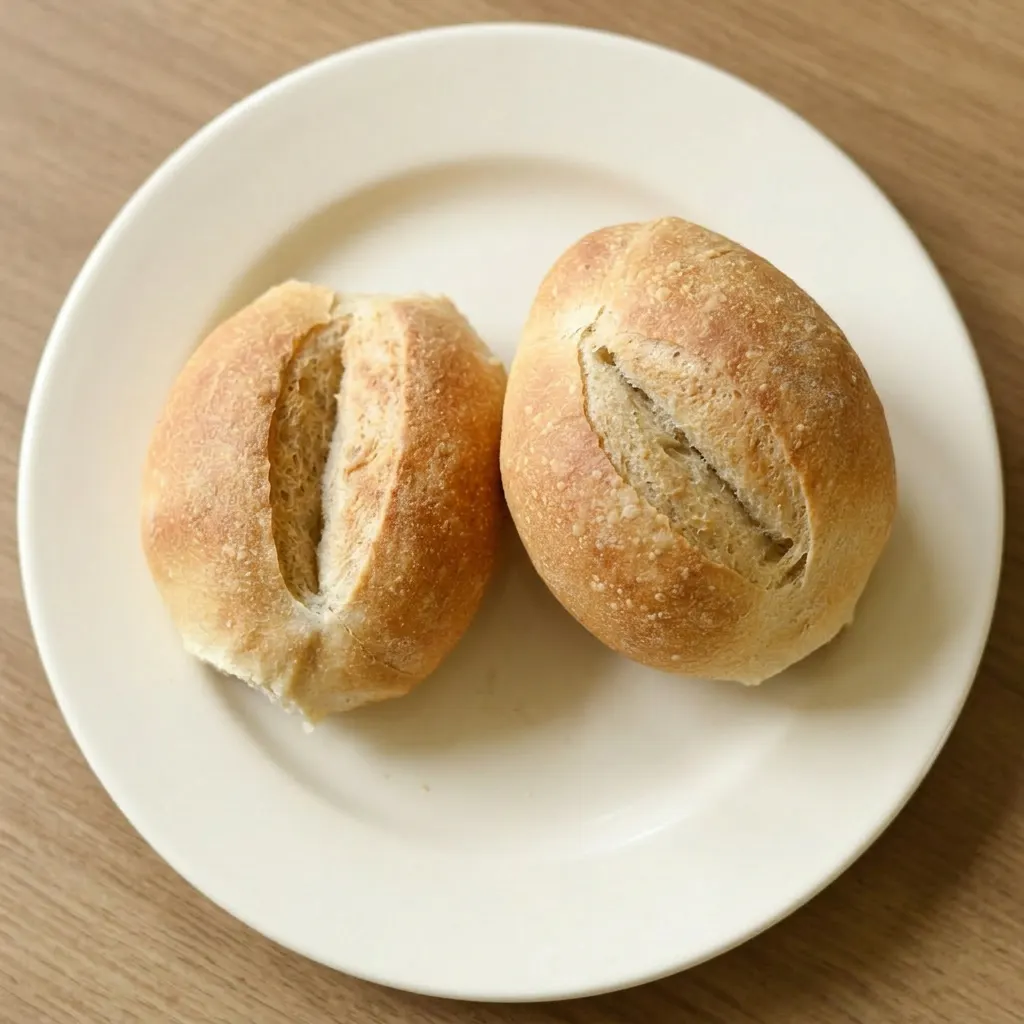
These rolls are best eaten the day they’re baked, within a few hours of cooling. The crust stays crisp, the crumb chewy. Leftovers keep at room temperature in a paper bag for one day; plastic traps moisture and softens the crust.
After that, the crust turns leathery and the crumb dries out. To refresh, mist the roll lightly with water and reheat in a 350°F oven for 5 minutes.
That restores some crunch. Freezing works for up to 3 months: wrap each roll tightly in foil, then in a freezer bag. Thaw at room temperature, then reheat as above.
Do not refrigerate rolls; the fridge accelerates staling. If you make the dough ahead, the 12-hour cold ferment is the only make-ahead step.
Once baked, serve within 4 to 6 hours for the best texture.
Tips
- Weigh the flour and water with a digital scale, not volume measures. Flour density varies wildly by scooping method; 3 cups can range from 360g to 480g. At 60% hydration, a 20g error in flour changes the dough consistency enough to affect crumb openness and crust development.
- If you measure water by volume, use a liquid measuring cup at eye level. But even then, temperature affects volume slightly. The recipe’s 300 ml is critical for the lean dough; too little water makes the dough stiff and the rolls dense, too much makes it sticky and hard to shape without deflating.
Swapping ingredients without losing the crusty, chewy Brotchen
Diastatic barley malt: Non-diastatic malt powder or omit. Diastatic malt provides enzymes that break down starch into sugars, feeding the yeast during that long cold rise and promoting browning. Non-diastatic malt still adds a touch of sweetness and color but lacks the enzymatic boost, so the rolls may brown a bit less and have slightly less oven spring.
If you omit it entirely, reduce the water by 1, 2 tablespoons to account for the missing moisture, and expect a paler, less complex flavor.
Instant yeast: Active dry yeast. Active dry yeast needs proofing: dissolve it in the warm water with the sugar and let it sit for 5 to 10 minutes until foamy. Use the same amount by weight (7g).
The proofing step adds a few minutes, but the yeast performs identically once activated. If you skip proofing, the yeast may not fully hydrate and the rise will be sluggish.
All-purpose flour: Bread flour. Bread flour has higher protein, which builds more gluten.
You’ll notice the dough feels stronger and less sticky during shaping. The baked rolls will be chewier with a more open crumb.
If you prefer a softer, more tender roll, stick with all-purpose; bread flour is a good swap for a heartier texture. No other adjustments needed.
Butter: Vegan butter or omit. The 15g of butter adds a little tenderness and a subtle richness.
Swap with a solid vegan butter (like Earth Balance) that handles similarly, soft, not melted. If you omit it entirely, the rolls will be slightly leaner and drier, but still workable.
No need to add extra liquid. For dairy-free, check that your vegan butter is unsalted.
Frequently Asked Questions
Can I skip the overnight rest and bake the same day?
You can, but you’ll lose the depth of flavor and the open crumb. The 12-hour cold ferment is what develops the nutty, slightly tangy taste and the chewy texture. A same-day warm rise produces a blander, denser roll.
If you’re short on time, start the dough early in the morning and bake that evening, 8 hours is better than none.
Why are my Brotchen dense and not airy?
Most likely the dough didn’t develop enough gluten during mixing. The mixer needs a full 5 to 10 minutes on low until the dough climbs the hook and cleans the bowl.
If it was still shaggy, the gluten couldn’t trap gas. Also, check your final proof: the rolls should nearly double and spring back slowly when pressed. Underproofed dough bakes up tight.
Can I freeze the baked rolls and reheat them?
Yes, freeze them for up to 3 months. Wrap each roll tightly in foil, then in a freezer bag.
To serve, thaw at room temperature, then mist lightly with water and reheat in a 350°F oven for 5 minutes. That brings back some crunch.
Don’t refrigerate, the fridge speeds up staling.