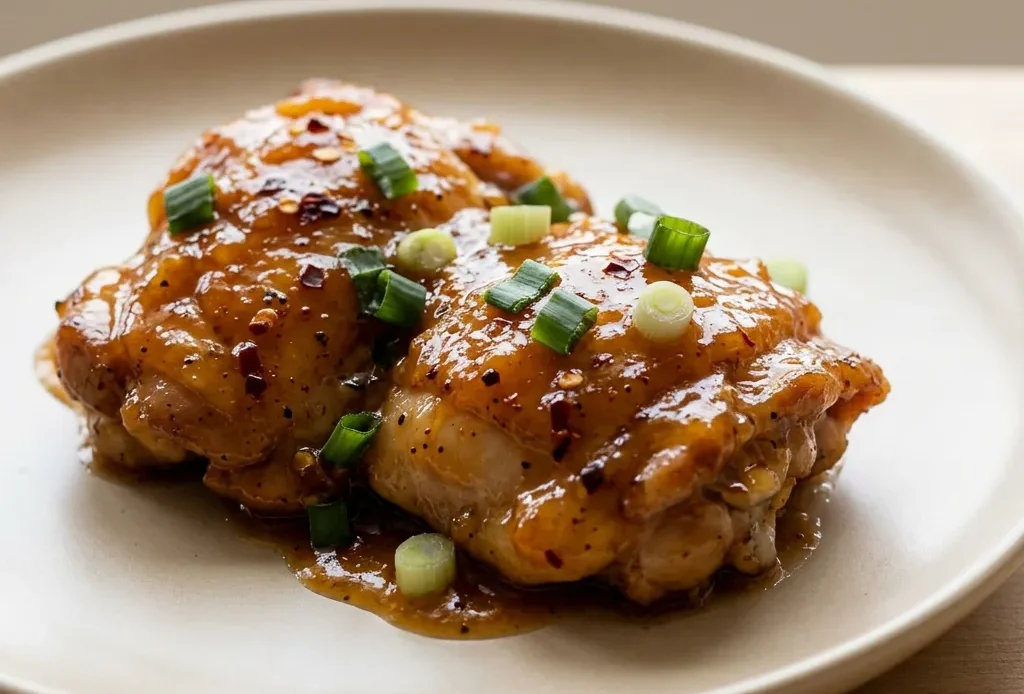
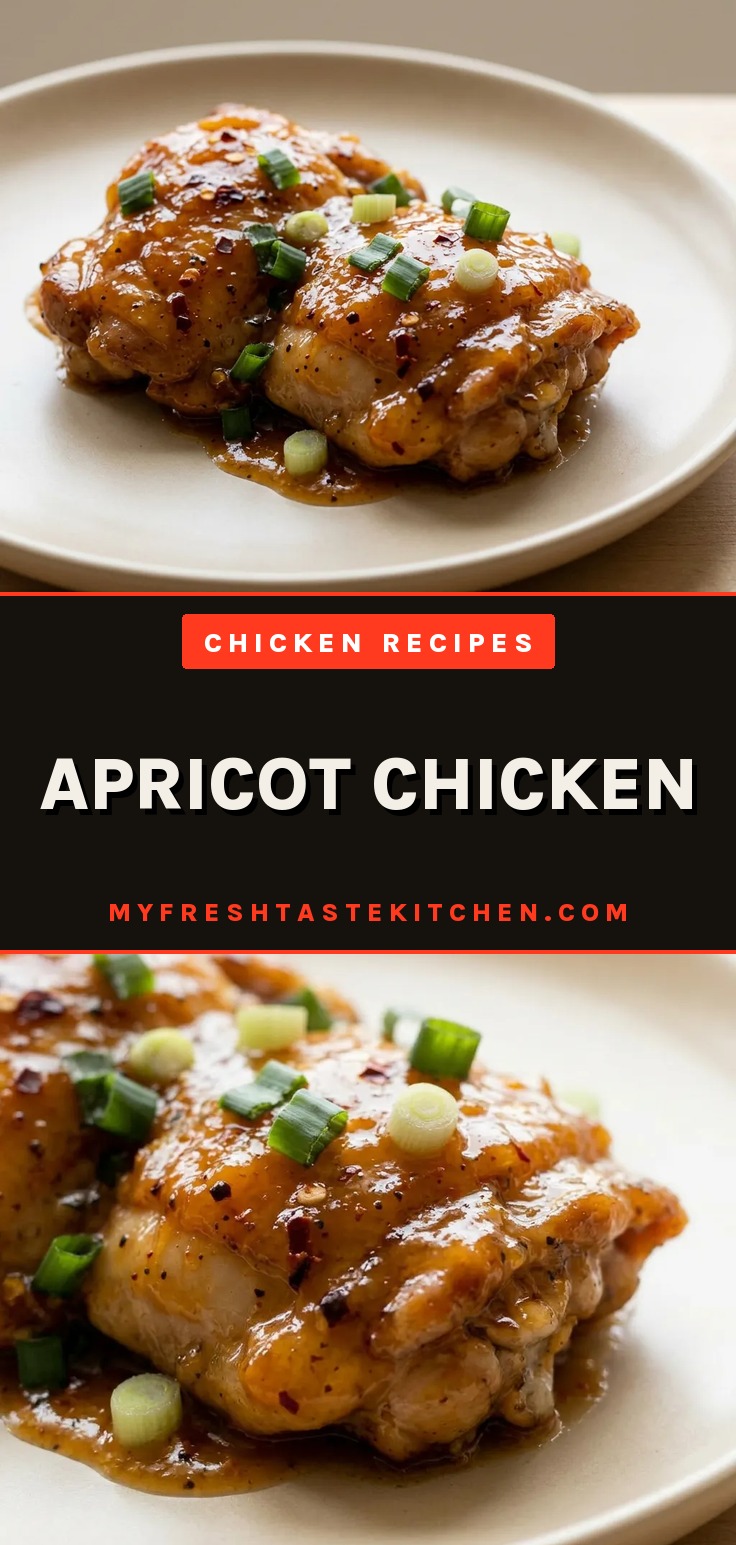
The trick to apricot chicken thighs isn’t the sweetness, it’s getting a sauce thick enough to cling without turning syrupy. Preserves do that work, but only if you let the sauce simmer down until it coats a spoon and holds a line. Lean into the tang from orange juice and vinegar; that acidity keeps every bite from tasting like jam on meat.
I always let the baked chicken rest while I simmer the sauce, then toss them together off the heat so the sauce stays glossy.
Sweet and tangy sauce that clings to chicken
Apricot preserves do double duty: they bring concentrated sweetness and a thick, sticky body that coats the chicken without needing a slurry. Orange juice cuts through that sweetness with fresh citrus brightness, you feel it on the front of your tongue.
Apple cider vinegar and Worcestershire sauce add acidity and savory depth further back, making the sauce taste round and layered, not jammy. The result is a glaze that tastes of fruit first, then pulls into something more complex, all while sticking to each thigh.
Thighs stay moist, soak up flavor best
Boneless skinless chicken thighs are forgiving. Their higher fat content means they stay tender through a 20-minute bake, even if you go a minute over.
Because they’re thin and even in thickness, they cook through without drying, and the lack of skin means the sauce hits the meat directly, nothing blocks it. Each bite is juicy, and the apricot glaze seeps into the surface rather than sliding off. If you want a cut that cooperates and absorbs flavor, thighs are the choice.
For chicken recipes that need a reliable texture, they deliver.
Spices that back up fruit without taking over
This blend is designed to support, not compete. Paprika and garlic powder bring a savory base that keeps the dish from reading as dessert, they’re familiar, earthy, and subtle. Chili powder and a pinch of red pepper flakes add a prickle of heat that registers only after the sweetness fades, enough to make you notice but not enough to call it spicy.
Salt and pepper are measured to season the chicken itself, not the sauce; they keep the meat tasting like meat. The fruit stays forward, the spices sit underneath.
Bake first, sauce later, why that order works
Baking the chicken on its own lets it develop a light, dry crust from the heat of the oven. That crust gives the sauce something to grip when you toss it later, so the coating stays thick and even rather than sliding off. If you simmered raw chicken in the sauce, it would release moisture and thin the glaze before it set.
Baking first also means the sauce can be reduced independently to exactly the right cling, without worrying about undercooked meat. The chicken stays firm-skinned and saucy, not stewed.
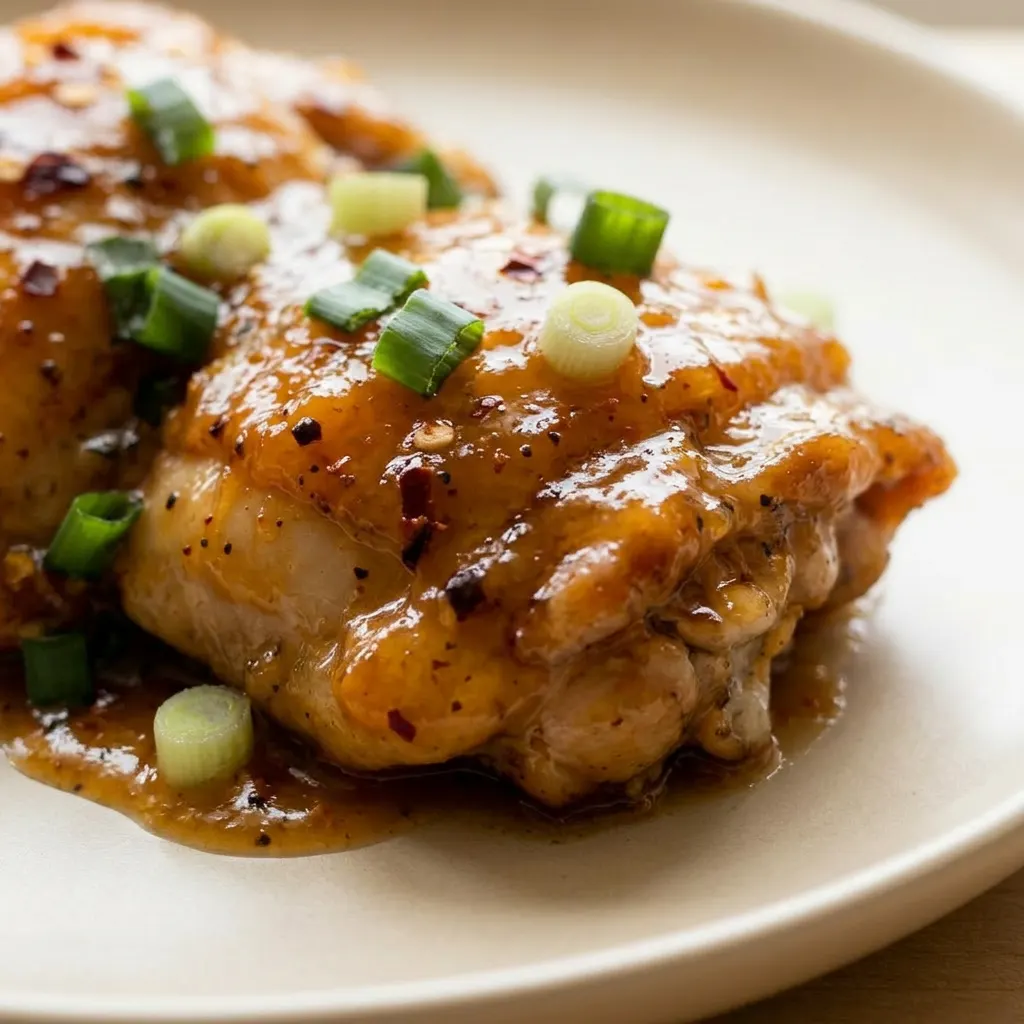
Prep: 10 min · Cook: 20 min · Total: 30 min · Servings: 4 · Calories: 610 kcal
Ingredient picks that matter
Apricot preserves: Use preserves, not jam or jelly. Preserves have fruit pieces that add texture and concentrated flavor.
Boneless skinless chicken thighs: Thighs stay juicier than breasts and the missing skin lets the sauce stick directly to the meat.
Orange juice: Fresh squeezed orange juice gives bright acidity. Bottled juice can taste flat and overly sweet.
Dijon mustard: Dijon adds tang and helps the sauce emulsify. Yellow mustard is too harsh and sweet mustard won’t work.
Crushed red pepper flakes: A pinch adds warmth that builds after the sweetness. Adjust up or down to your heat tolerance.
Bake and toss for a glaze that sticks
Season and bake the thighs
Toss the dried chicken with the oil-spice mix until every surface is covered. Bake at 375°F until they read 165°F, the edges will look lightly browned and the meat will feel firm when pressed.
Simmer the apricot sauce
Whisk all sauce ingredients in a skillet over medium-high. Once it bubbles, drop the heat and let it simmer. It’s ready when it coats the back of a spoon and a streak holds its shape when you drag a finger through.
Toss and coat
Slide the baked thighs into the skillet and turn them in the sauce until each piece is glazed. The sauce should cling thickly, not pool, if it seems thin, let it bubble another minute before serving.
Apricot Chicken Thighs
Ingredients
Chicken
- 8 boneless skinless chicken thighs about 2 lb
- 1 tbsp olive oil
- 2 tsp kosher salt
- 1/2 tsp freshly ground black pepper
- 1/2 tsp garlic powder
- 1/2 tsp paprika
Apricot Sauce
- 2/3 cup apricot preserves
- 1/2 medium orange, juiced about 1/4 cup
- 2 tbsp apple cider vinegar
- 1 tbsp ketchup
- 1 tbsp honey
- 1 tbsp Dijon mustard
- 2 tsp Worcestershire sauce
- 1/2 tsp onion powder
- 1/2 tsp garlic powder
- 1/2 tsp kosher salt
- 1/4 tsp black pepper
- 1/8 tsp chili powder
- 1/8 tsp crushed red pepper flakes
- scallions, sliced, for garnish
Instructions
Chicken
Preheat oven and line sheet:
Set oven to 375°F (190°C). Cover a large baking sheet with parchment paper.Mix oil and spices:
In a big bowl, mix olive oil, 2 tsp kosher salt, 1/2 tsp black pepper, 1/2 tsp garlic powder, and paprika. Stir thoroughly.Coat chicken with oil blend:
Dry chicken thighs with paper towels. Put chicken into the oil blend and mix to cover uniformly.Roast chicken until done:
Place chicken onto the lined sheet. Roast for 15-20 minutes, until internal temp hits 165°F (75°C). Meanwhile, make the apricot sauce.
Apricot Sauce
Simmer apricot sauce ingredients:
In a large skillet over medium-high heat, put apricot preserves, orange juice, apple cider vinegar, ketchup, honey, Dijon mustard, Worcestershire sauce, onion powder, 1/2 tsp garlic powder, 1/2 tsp kosher salt, 1/4 tsp black pepper, chili powder, and crushed red pepper flakes. Stir often until it starts to bubble.Thicken sauce over low heat:
Lower heat to low and cook gently for 4-6 minutes, until sauce thickens.Toss chicken in sauce:
Add baked chicken to the skillet and stir to coat evenly with sauce.Serve with scallions and sides:
Serve immediately, topped with sliced scallions, alongside rice or vegetables.
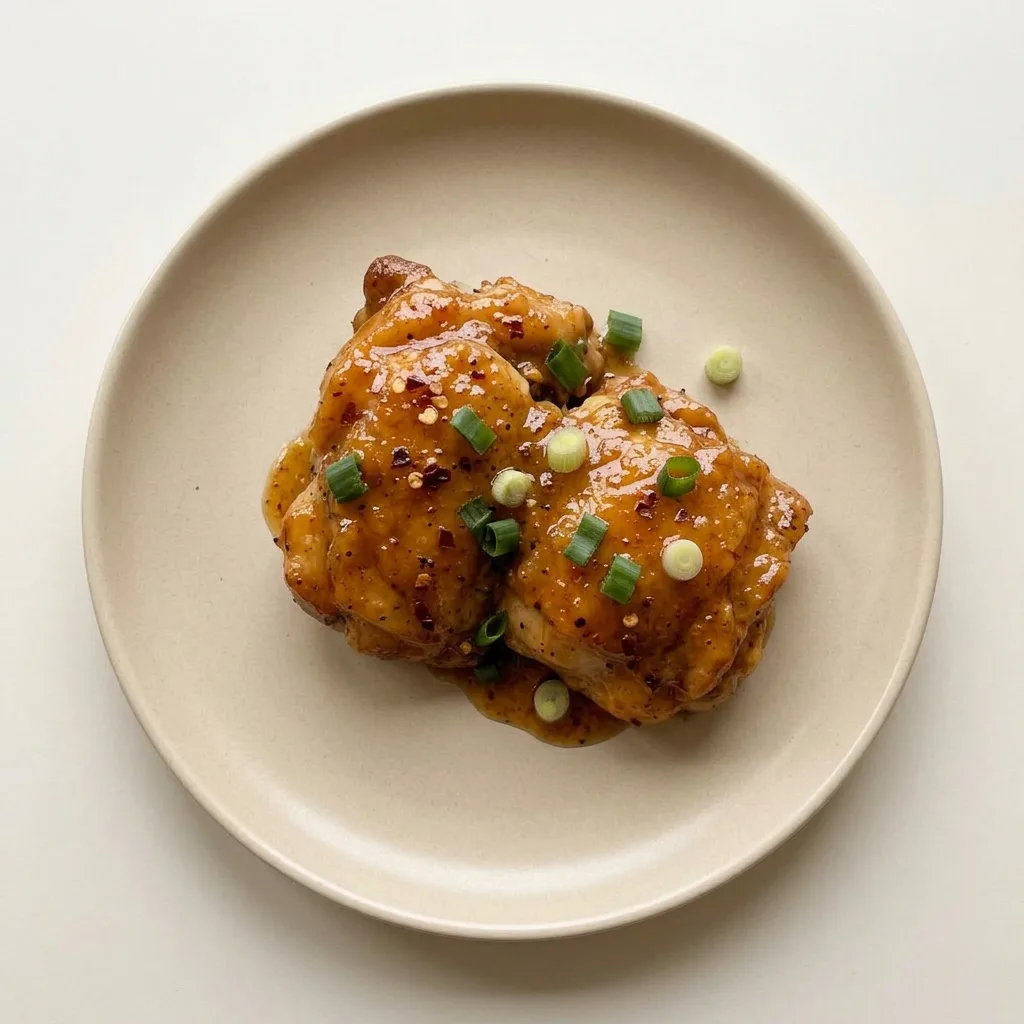
Swap the citrus or vinegar, but keep the preserves
Apricot preserves: Do not replace. The preserves provide the body and sweetness that make the sauce cling.
No other fruit spread (jam, jelly, marmalade) has the same balance of fruit pieces and pectin. If you must avoid sugar, use a sugar-free apricot preserve, but expect a thinner, less sticky glaze. Jam gives a smoother texture but less structure; jelly slides off the chicken.
The sauce won’t coat as thickly.
Orange juice: Replace with lemon juice. Use the same amount (1/4 cup).
Lemon juice is more sour and less sweet, so the sauce will taste sharper and less fruity. Add a pinch of sugar if you want to balance it.
Apple cider vinegar: Substitute rice vinegar or white wine vinegar. Use the same amount (2 tbsp).
Rice vinegar is milder; the sauce loses some tang. White wine vinegar is closer but still slightly less fruity.
Either works, but the sauce won’t have cider’s distinct apple-like acidity.
Chicken thighs: Use boneless skinless chicken breasts. Bake at 375°F for 18 to 22 minutes (depending on thickness) to 165°F.
Pound to even thickness if needed. Breasts are leaner and dry out faster.
They won’t absorb the sauce as deeply, and the texture will be firmer, less juicy. For best results, check temp early and pull at 160°F, carryover cooking brings it to 165°F. For more chicken breast recipes, this swap works but requires attention.
Storage and Serving
Serve the chicken immediately after tossing with the sauce and garnishing with scallions. The glaze clings best when hot; after 20 minutes the sauce starts to tighten, so eat within an hour for the ideal texture. Leftovers keep in an airtight container in the fridge for up to 4 days.
The sauce thickens as it chills but reheats well. Reheat gently in a skillet over medium low with a splash of water or orange juice, stirring until the chicken is hot and the sauce loosens. You can freeze the cooked chicken in the sauce for up to 3 months; thaw overnight in the fridge and reheat as above.
The scallions are best added fresh after reheating, not frozen.
Tips
- Use paper towels to pat the chicken thighs dry, then let them sit uncovered on a plate in the fridge for 10 minutes. This further dries the surface, helping the oil-spice mixture adhere and promoting better browning in the oven.
- When tossing the chicken with the oil and spices, use your hands to rub the mixture into every crevice. This ensures the seasoning sticks evenly, which is crucial since the thighs have irregular surfaces that a spoon or spatula might miss.
Frequently Asked Questions
Can I make the apricot sauce ahead of time?
Yes, the sauce can be made up to 4 days ahead and stored in the fridge. Reheat it gently in a skillet with a splash of water or orange juice to loosen it before tossing with the baked chicken.
How do I prevent the chicken from drying out?
Use an instant-read thermometer and pull the thighs at 165°F. The bake time in the recipe is short enough that thighs stay juicy, their fat content keeps them tender even if you go a minute over.
Can I use bone-in chicken thighs instead of boneless?
Yes, but bone-in thighs take longer to cook, expect 25 to 30 minutes at 375°F to hit 165°F. The sauce will still coat well, but the meat won’t absorb it as deeply since the bone blocks some surface area.
What’s the difference between this and classic chicken teriyaki?
This sauce relies on apricot preserves and orange juice for sweetness and body, while teriyaki uses soy sauce, mirin, and sugar. The result is fruit-forward and tangy rather than salty-savory, with a thicker glaze that clings without cornstarch.