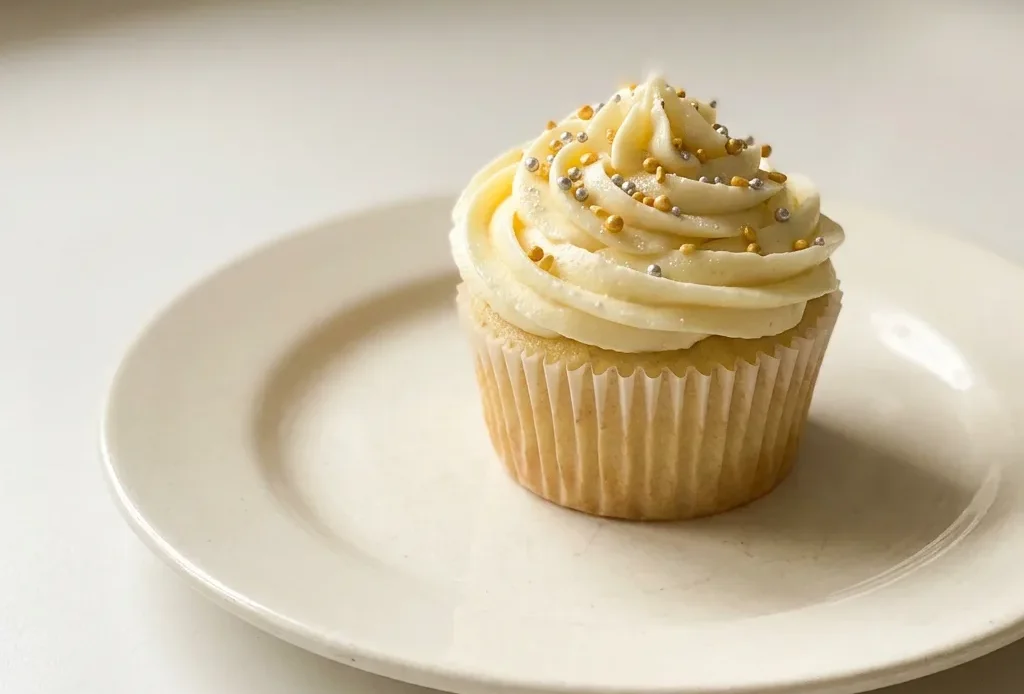
The critical window for creaming butter and sugar is the make-or-break moment here. Beat for a full 3 to 4 minutes, and you’ll see the mixture turn from dense yellow to pale and airy, that trapped air is what gives these graduation cupcakes their even rise and soft crumb. Skip that time, and the texture turns tight, with an uneven dome.
The rest of the method is forgiving: the sour cream-milk combo keeps the batter tender without being fragile, and the buttercream pipes stiff enough to hold a cap topper. But the creaming step? That’s where the structure is won or lost.
Sour cream and milk
Full-fat sour cream and whole milk aren’t just for richness. Watch how the batter comes together: it’s thick but not stiff, with a slight tang from the sour cream. That acidity does something you can taste: it softens the gluten, so the crumb turns out tender, never tough.
The fat from both dairy ingredients keeps the cupcakes moist even after cooling, but without making them greasy. You’ll notice the structure is sturdy enough to hold a piped swirl of buttercream without crumbling.
The tang doesn’t scream “sour cream”, it just rounds out the sweetness, leaving a clean finish. This liquid-to-fat ratio hits a sweet spot: a cupcake that’s both delicate and resilient.
Creaming for lift
You’re not just mixing butter and sugar here. When you beat them for a full 3 to 4 minutes, you’re forcing air into the fat. The mixture will go from a dense yellow paste to a pale, fluffy cloud.
That trapped air is what gives these graduation cupcakes their even rise. Skip the time, and the crumb turns dense, with a tight, uneven texture. You can see the difference in the bowl, once it’s light and fluffy, you’ve built the foundation for lift.
The eggs go in after, one at a time, to keep the emulsion stable. The payoff? A cupcake that bakes up with a domed top and a soft, uniform crumb, ready for piping.
Buttercream that holds a cap
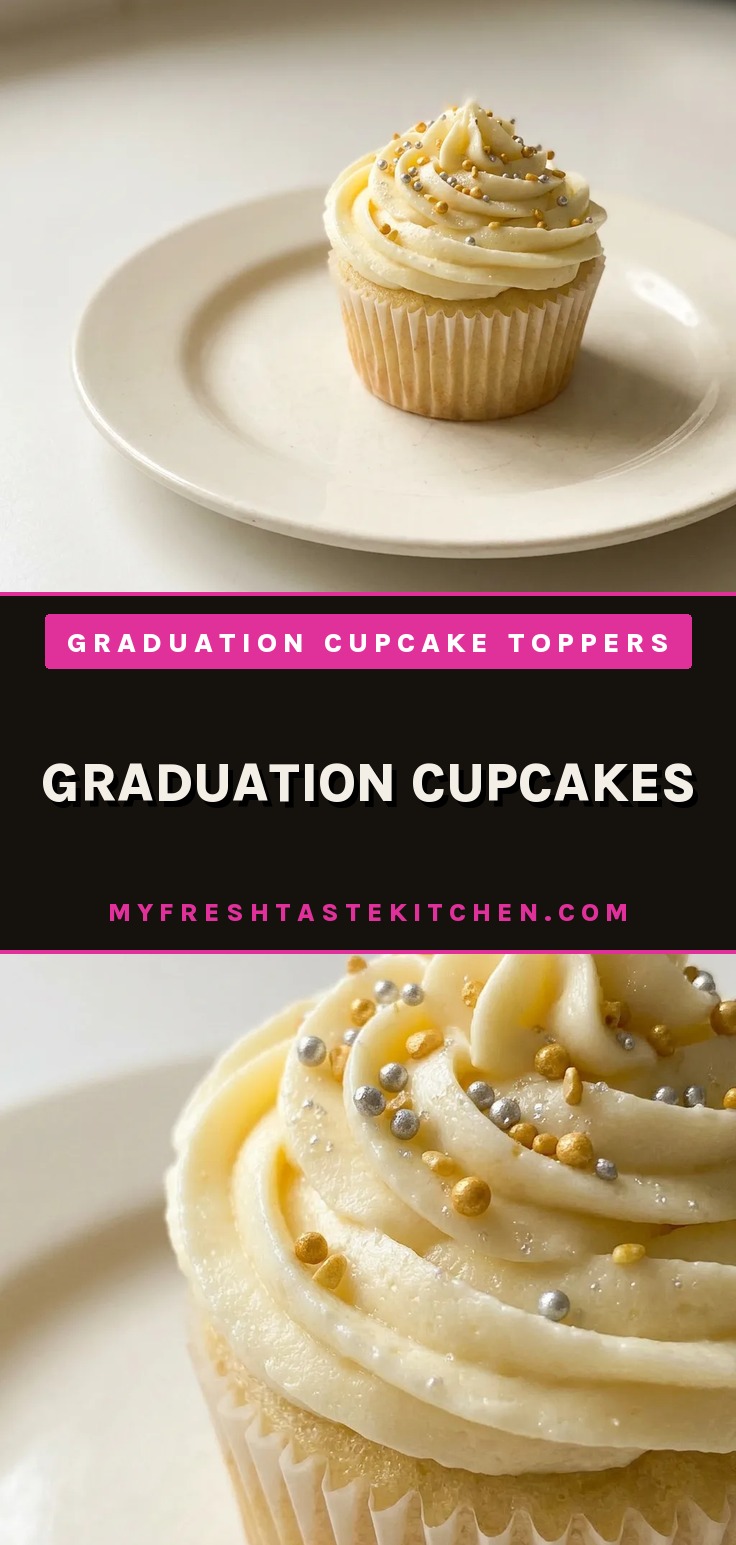
That graduation cap topper needs a stable landing. The buttercream has to be silky enough to pipe smoothly but stiff enough to hold its shape, not droop or slide.
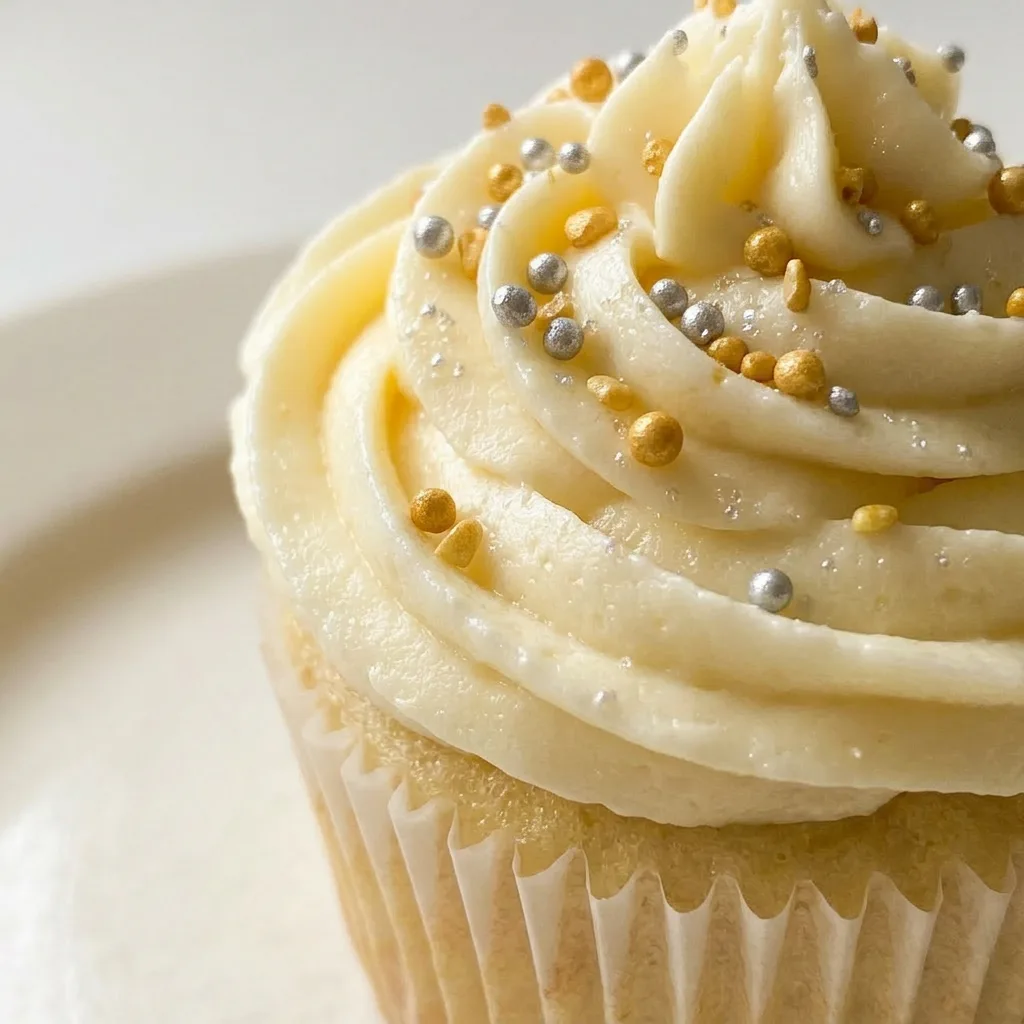
After beating, you’ll feel it: the frosting should be thick and glossy, with no grittiness. Gel food coloring is the right call here; liquid coloring would thin it out, and you’d lose the structure. When you pipe a star tip swirl, the ridges create a natural pedestal for the cap.
The swirl itself has to be firm enough to support the weight without flattening. One taste test: the frosting should be rich but not greasy, with a clean vanilla finish, no butter slick on your tongue.
Prep: 30 min · Cook: 20 min · Total: 50 min · Servings: 24 · Calories: 380 kcal
What to look for at the store
Sour cream, milk: Full fat only; low fat thins the batter and won’t give the same tender crumb.
Butter: Use unsalted to control salt; soften to room temp, not melted, for proper creaming.
Gel food coloring: Skip liquid colors; they add water and thin the frosting so it can’t hold a swirl.
Graduation cap toppers: Look for sturdy plastic or fondant caps; flimsy paper ones will wilt in the frosting.
First batch I rushed the creaming step, gave it a measly minute; second batch I let the mixer run a full four minutes until the mixture was pale and fluffy. That patience turned flat hockey pucks into domed beauties.
Graduation Cupcakes Step by Step
Prep the pans and dry mix
Line two 12-cup muffin pans with paper liners. Whisk flour, baking powder, baking soda, and salt together, you’re just distributing the leaveners and salt evenly so the batter rises uniformly.
Cream butter and sugar
Beat butter and sugar on medium-high until pale and fluffy, 3 to 4 minutes. Scrape the bowl halfway; the mixture should look lighter in color and feel airy, like a thick paste that holds its shape.
Add eggs and vanilla
Add eggs one at a time, beating well after each. The batter should look smooth and glossy, not curdled.
If it looks separated, beat a bit longer until it comes back together. Then mix in vanilla.
Alternate dry and wet ingredients
Add the dry mix in three additions and the sour cream-milk in two, starting and ending with dry. Mix just until no streaks remain, overmixing toughens the crumb. The batter will be thick, almost like a soft dough.
Fill and bake
Divide batter among cups, filling each about two-thirds full. Bake at 350°F for 18 to 20 minutes, rotating pans halfway. The tops should spring back when touched, and a toothpick inserted in the center should come out clean.
Cool completely
Cool cupcakes in pans for 5 minutes, then transfer to a wire rack. They need to be fully cool before frosting, otherwise, the buttercream will melt into a greasy mess.
Make the buttercream
Beat softened butter until pale and fluffy. Gradually add sifted powdered sugar, then heavy cream, vanilla, and a pinch of salt. Beat on medium-high for 2 minutes until silky smooth and thick enough to hold a peak.
Tint and decorate
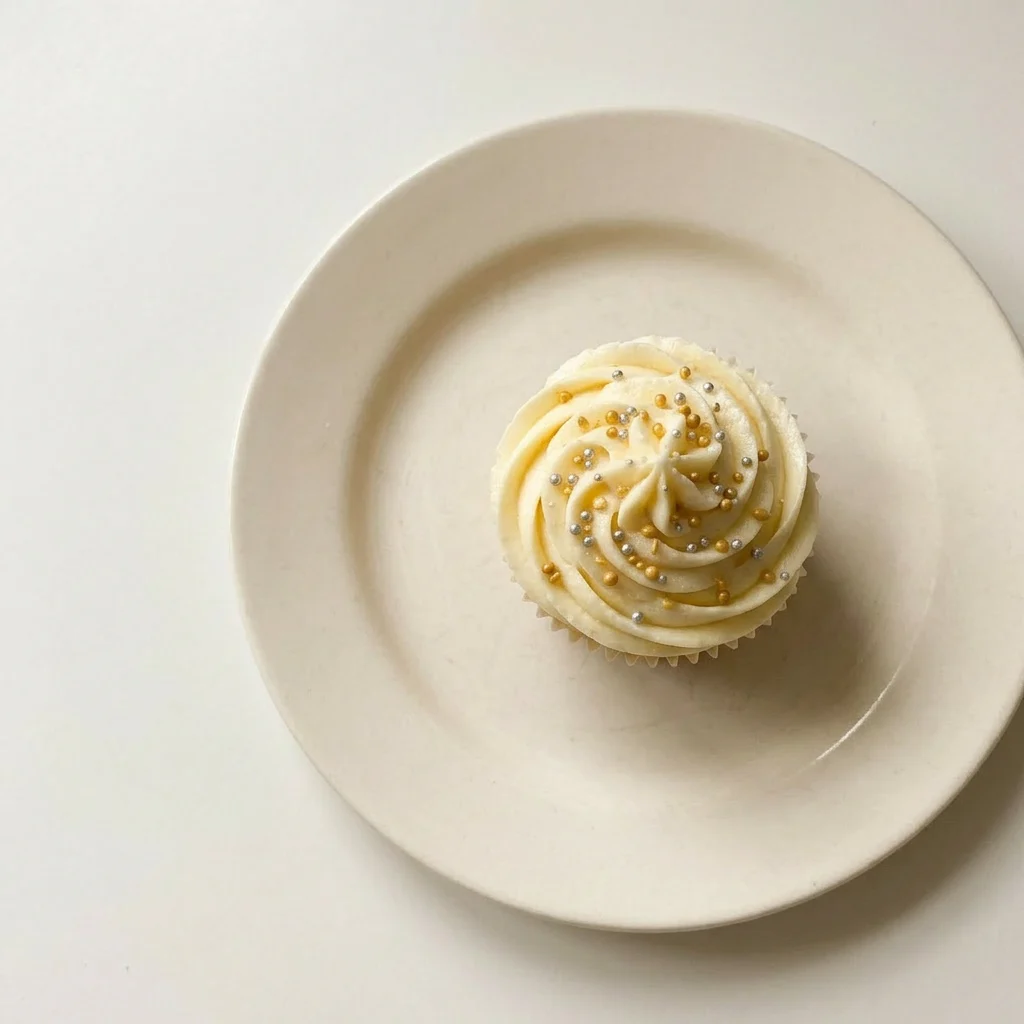
Add gel food coloring a little at a time until you reach the desired shade. Pipe a swirl onto each cooled cupcake using a star tip. Press a mini graduation cap topper into the swirl, add sprinkles, and optional glitter or fondant diplomas.
Graduation Cupcakes
Ingredients
Cupcakes
- 2 ½ cups all-purpose flour 313g
- 2 teaspoons baking powder
- ½ teaspoon baking soda
- ½ teaspoon salt
- 1 cup unsalted butter 227g, softened
- 1 ¾ cups granulated sugar 350g
- 4 large eggs room temperature
- 2 teaspoons pure vanilla extract
- 1 cup full-fat sour cream 240g
- ½ cup whole milk 120ml
Frosting and Decoration
- 1 cup unsalted butter 227g, softened (frosting)
- 4 cups powdered sugar 480g, sifted
- 3 tablespoons heavy cream 45ml
- 2 teaspoons pure vanilla extract (frosting)
- Pinch of salt (frosting)
- Gel food coloring
- 24 mini graduation cap toppers
- Gold or silver edible sprinkles
- Edible glitter or pearl dust (optional)
- Small diploma scrolls made from white fondant (optional)
Instructions
Cupcakes
Preheat Oven and Prep Pans:
Set oven to 350°F (175°C). Insert cupcake liners into two 12-cup muffin tins.Whisk Dry Ingredients:
Combine 2 ½ cups (313g) flour, 2 teaspoons baking powder, ½ teaspoon baking soda, and ½ teaspoon salt in a medium bowl; whisk and reserve.Cream Butter and Sugar:
In a large bowl, cream 1 cup (227g) softened butter with 1 ¾ cups (350g) sugar on medium-high for 3-4 minutes until pale and fluffy.Beat in Eggs and Vanilla:
Beat in 4 eggs one by one, fully incorporating after each, then stir in 2 teaspoons vanilla.Alternate Dry and Wet Mixtures:
Add dry mixture and a blend of 1 cup (240g) sour cream plus ½ cup (120ml) milk in alternating portions, starting and ending with dry; mix only until combined.Fill Cupcake Liners:
Portion batter into lined cups, filling each about two-thirds full.Bake Cupcakes Until Done:
Bake 18-20 minutes, turning pans halfway, until a toothpick inserted in center emerges clean.Cool Cupcakes Completely:
Cool cupcakes in pans for 5 minutes, then move to a wire rack and cool entirely.
Frosting and Decoration
Make Buttercream Frosting:
For frosting: Beat 1 cup (227g) softened butter until light. Slowly incorporate 4 cups (480g) sifted powdered sugar, 3 tablespoons (45ml) heavy cream, 2 teaspoons vanilla, and a salt pinch; beat on medium-high for 2 minutes until smooth.Color, Pipe, and Garnish:
Color frosting with gel food coloring as preferred. Using a star tip, pipe onto cooled cupcakes. Garnish each with a mini graduation cap, gold or silver sprinkles, and optionally edible glitter or pearl dust and small fondant diplomas.
Storage and Serving
These graduation cupcakes are best eaten within 24 hours of frosting, when the cake is moist and the buttercream is smooth. For the best texture, serve at room temperature. To store unfrosted cupcakes, keep them in an airtight container at room temperature for up to 2 days; they’ll stay tender, but the crumb will firm slightly.
You can freeze unfrosted cupcakes for up to 3 months. Wrap each individually in plastic wrap, then place in a freezer bag. Thaw at room temperature before frosting.
Frosted cupcakes should be refrigerated in a covered container for up to 3 days. The buttercream will stiffen when cold, so let them sit at room temperature for 30 minutes before serving.
Don’t freeze frosted cupcakes: the buttercream can weep when thawed, and the toppers may slide. Add the graduation cap toppers and any edible glitter or fondant diplomas just before serving, not ahead, or the colors may bleed into the frosting.
What you can swap (and what to leave alone)
Sour cream: Full-fat plain Greek yogurt. Use the same amount.
The yogurt is thicker, so the batter may feel slightly stiffer, add a splash of milk if needed to reach that soft-dough consistency. The tang is milder, the crumb still tender.
Milk: Whole milk is best; 2% works but expect a marginally drier crumb. Lower-fat milk makes the batter looser and the cupcakes less moist. They’ll still bake, but the texture gets a touch firmer, not as rich.
Don’t swap for skim or non-dairy without also adjusting sour cream, too much liquid change risks a flat top.
Butter (cupcakes and frosting): Vegan butter sticks (like Country Crock Plant Butter), not margarine spreads. Use the same weight. Vegan butter creams similarly but may not hold as much air, expect a slightly denser crumb.
The frosting will pipe but won’t be as stable; chill the piped swirls for 10 minutes before adding cap toppers so they don’t slump.
All-purpose flour: Gluten-free 1-to-1 flour blend (with xanthan gum). Same amount by weight. The batter will be less elastic, so don’t overmix; expect a more tender, slightly crumbly cupcake.
The frosting stays as is, no swap needed there. Bake time may shift by a minute or two; test with a toothpick.
Tips
- Use an ice cream scoop (#20 or #24 size) to portion the batter; it ensures uniform size and even baking across all 24 cupcakes.
- Rotate the pans front to back and swap top and bottom racks at the halfway mark; your oven likely has hot spots, and this prevents some cupcakes from browning faster than others.
Frequently Asked Questions
Can I make these cupcakes a day ahead?
Yes, but only the unfrosted cupcakes. Bake and cool them fully, then store in an airtight container at room temperature for up to 2 days, the crumb will stay tender, though it firms slightly. Frost the day you plan to serve, and add the cap toppers just before serving to keep colors from bleeding.
Why did my cupcakes dome or crack on top?
A domed or cracked top usually means the oven ran a bit hot or the batter was overmixed. The recipe bakes at 350°F; if your oven runs hot, the outside sets too fast while the inside keeps rising, cracking the crust. Next time, check with an oven thermometer and mix the batter only until no streaks remain, overmixing builds extra gluten that can cause uneven rising.
How do I get the frosting to be smooth and not grainy?
Grainy frosting comes from undissolved powdered sugar. Sift the sugar before adding it to the butter, and beat on medium-high for the full 2 minutes after all ingredients are in, you’ll feel it shift from gritty to silky. If it’s still grainy, a final mix by hand with a spatula can break down any remaining lumps.