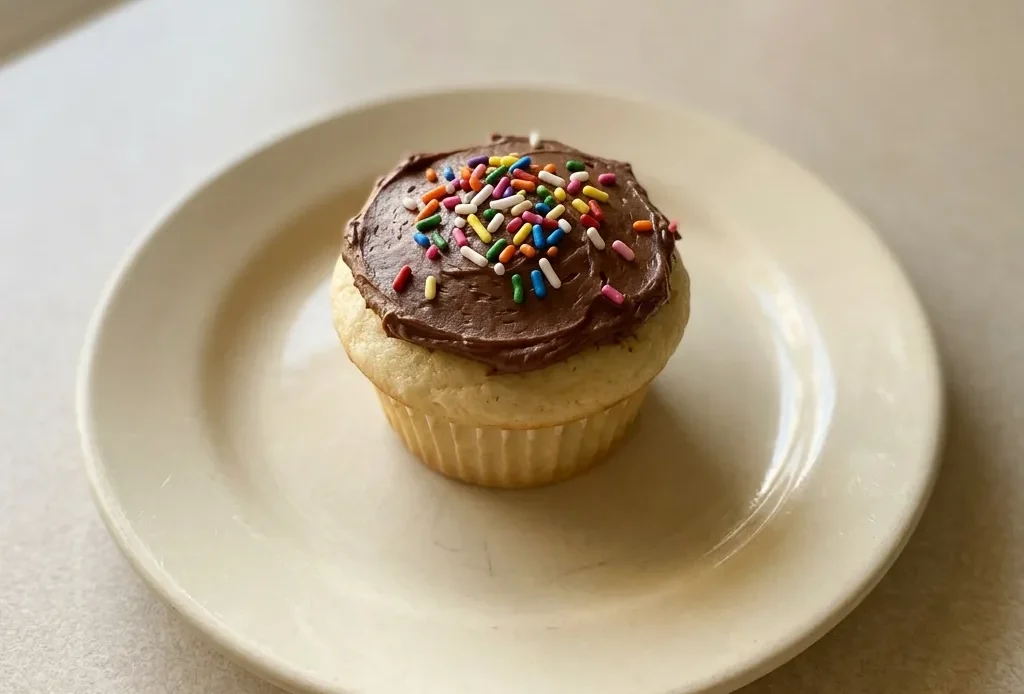
Overmixing is the most common mistake with vegan vanilla cupcakes. The batter comes together fast, stir until the dry streaks disappear, then stop.
A few lumps are fine. Overworking the flour developes gluten that makes the crumb tough and bready instead of tender and cakey. The vinegar and baking powder start producing lift as soon as they meet, so you want that reaction in the oven, not in the bowl.
Keep the mixing gentle and quick, and you’ll get a light, fluffy crumb that doesn’t need eggs or dairy.
Vinegar gives lift without eggs
Vegan cupcakes need a different leavening strategy. Eggs aren’t there to trap air and set structure, so we rely on a chemical reaction.
The vinegar and baking powder produce bubbles when they meet moisture and heat. That gas expands in the oven, pushing the batter up. Without the acid, the baking powder wouldn’t fully activate, and you’d get dense, flat tops.
The reaction starts as soon as you mix the wet and dry ingredients, so don’t let the batter sit long before baking. You’ll see small bubbles forming right in the bowl, that’s the lift working. The vinegar also helps tenderize the crumb by slightly limiting gluten development, but its real job here is the rise.
Use a neutral vinegar like apple cider or white; flavored vinegars can affect the taste.
Cornstarch softens the crumb
All-purpose flour gives structure, but without eggs and butter the crumb can turn tough. Cornstarch steps in to soften it. It’s a pure starch with no gluten-forming proteins, so it dilutes the gluten network.
That means less chew and a more tender bite. It also absorbs moisture from the batter and releases it slowly during baking, keeping the cupcakes from drying out. You won’t taste it, but you’ll feel it in the texture, a finer, more delicate crumb that crumbles evenly.
The 1 tablespoon per 1¾ cups flour is enough to change the mouthfeel without making the cake fragile. This trick works because oil already keeps things moist, and cornstarch prevents the flour from overdeveloping. The result is a cupcake that’s soft and cakey, not bready.
Oil keeps them tender and moist
Butter hardens at room temperature, so butter-based vegan cupcakes can turn stiff once cool. Oil stays liquid, which means the crumb stays soft from the moment they come out of the oven to the next day. There’s no creaming step either, oil mixes easily with liquid ingredients, so the batter comes together in seconds.
That simplicity avoids overmixing, which would develop gluten and toughen the cake. The oil coats the flour particles, limiting gluten formation just enough to keep the structure tender.
You won’t taste it if you use a neutral oil like canola or grapeseed; coconut oil would add flavor and change texture at cooler temps. For this vegan cupcake recipe, oil delivers consistent moisture without fuss.
Cool fully before you frost
Frosting a warm cupcake is a mess waiting to happen. Buttercream will slide off into a puddle, and even thick glazes will run. The heat from the cake melts the fat in the frosting, breaking its structure.
So let the cupcakes cool in the pan for 5 minutes, then transfer them to a rack. Wait at least an hour, until they’re completely cool to the touch. If you’re in a hurry, you can speed things up in the fridge, but room-temperature cooling produces a more even texture.
The crumb sets fully as it cools, too; cutting into a warm cupcake can squish the tender interior. Once cool, the surface is dry and stable, ready for piping.
Patience here pays off: a neat, professional-looking finish.
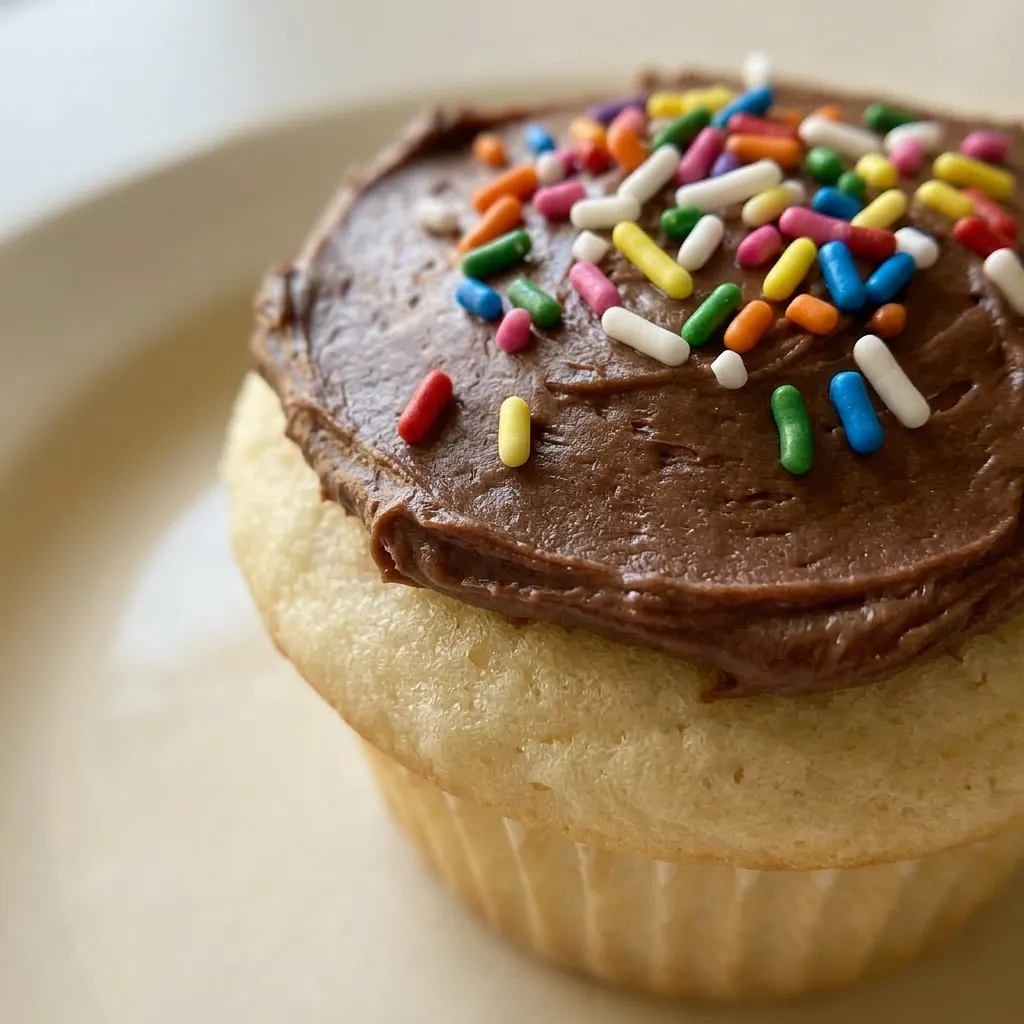
Prep: 10 min · Cook: 20 min · Total: 30 min · Servings: 12 · Calories: 220 kcal
Grab the right milk and oil
dairy-free milk: Use plain, unsweetened milk like oat or soy; the vinegar will curdle it, which helps the rise.
vinegar: Apple cider or white vinegar both work; skip balsamic or flavored ones that would change the taste.
oil: Pick a neutral oil like canola or grapeseed; strong flavored oils will come through in the finished cupcake.
Watch for bubbles as you mix
Preheat and prep
Set oven to 350°F and line a 12-cup pan. Do this first so the oven is ready when the batter is, waiting lets the leavening reaction fade.
Whisk dry ingredients
In a big bowl, whisk flour, cornstarch, sugar, baking powder, and salt. Break up any lumps; you want an even distribution so the rise is uniform.
Combine wet ingredients
In another bowl, whisk milk, vinegar, vanilla, and oil. The vinegar will curdle the milk slightly, that’s fine. You’ll see tiny bubbles from the acid reaction starting.
Mix wet into dry
Pour the wet into the dry and stir gently until just combined. Stop as soon as no dry streaks remain. Overmixing toughens the crumb; a few small lumps are okay.
Fill the liners
Spoon batter into each liner about two-thirds full. The batter will be thin, that’s normal.
Use an ice cream scoop for even portions. You should see small bubbles on the surface.
Bake until done
Bake 20 to 24 minutes. At 20 minutes, insert a toothpick into the center; it should come out clean or with a few crumbs. If it’s wet, bake 2 more minutes and check again.
Cool completely
Let the pan cool on a wire rack for 5 minutes, then transfer cupcakes to the rack. Cool at least 1 hour until room temperature. Any warmth will melt your frosting.
Frost and finish
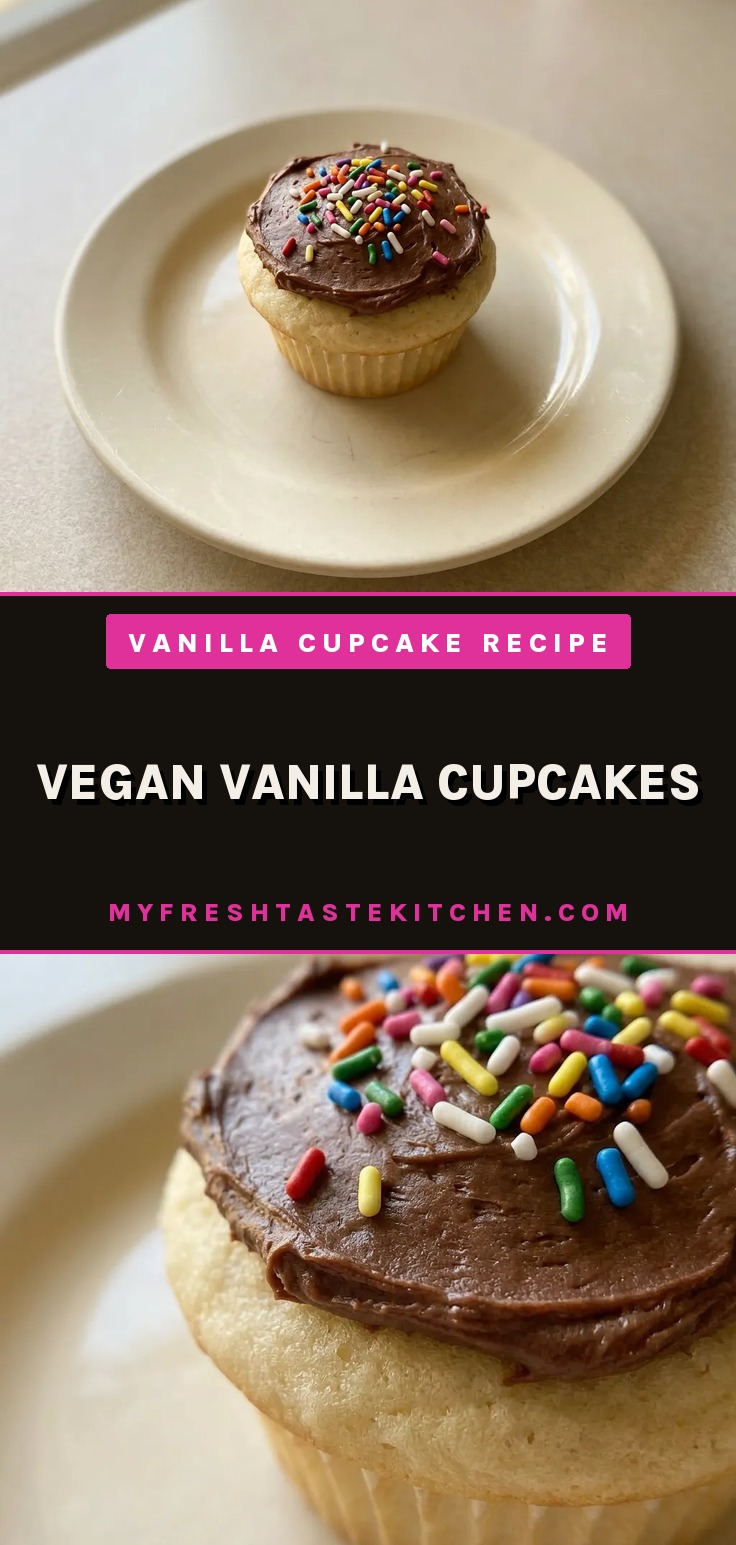
Once completely cool, pipe or spread your favorite frosting. I used chocolate buttercream and sprinkles. The surface should be dry and stable, not tacky.
Vegan Vanilla Cupcakes (Dairy-Free, Egg-Free)
Ingredients
- 1 ¾ cup all-purpose flour 250 g
- 1 tablespoon cornstarch 8 g
- 1 cup + 2 tablespoons granulated sugar 225 g
- 1 ½ teaspoon baking powder 9 g
- ¾ teaspoon salt 3 g
- 1 cup + 2 tablespoons dairy-free milk 270 ml
- 1 tablespoon vinegar (apple cider vinegar or white vinegar) 15 ml
- 2 teaspoons pure vanilla extract 10 g
- 1/3 cup neutral-tasting oil 80 ml
Instructions
Preheat oven and line pan:
Set oven to 350°F (175°C). Insert liners into a cupcake pan.Whisk dry ingredients together:
In a big bowl, whisk the flour, cornstarch, sugar, baking powder, and salt together. Reserve.Combine wet ingredients:
In another bowl, combine the milk, vinegar, vanilla, and oil with a whisk.Mix wet into dry:
Pour the wet mixture into the dry mixture and stir until just incorporated.Fill cupcake liners:
Spoon the batter into the lined cups, filling each about two-thirds of the way.Bake and cool cupcakes:
Bake for 20–24 minutes; a toothpick inserted in the center should emerge clean. Let the pan cool on a wire rack for 5 minutes, then transfer cupcakes to the rack and let cool completely, roughly 1 hour, before frosting.Garnish as desired:
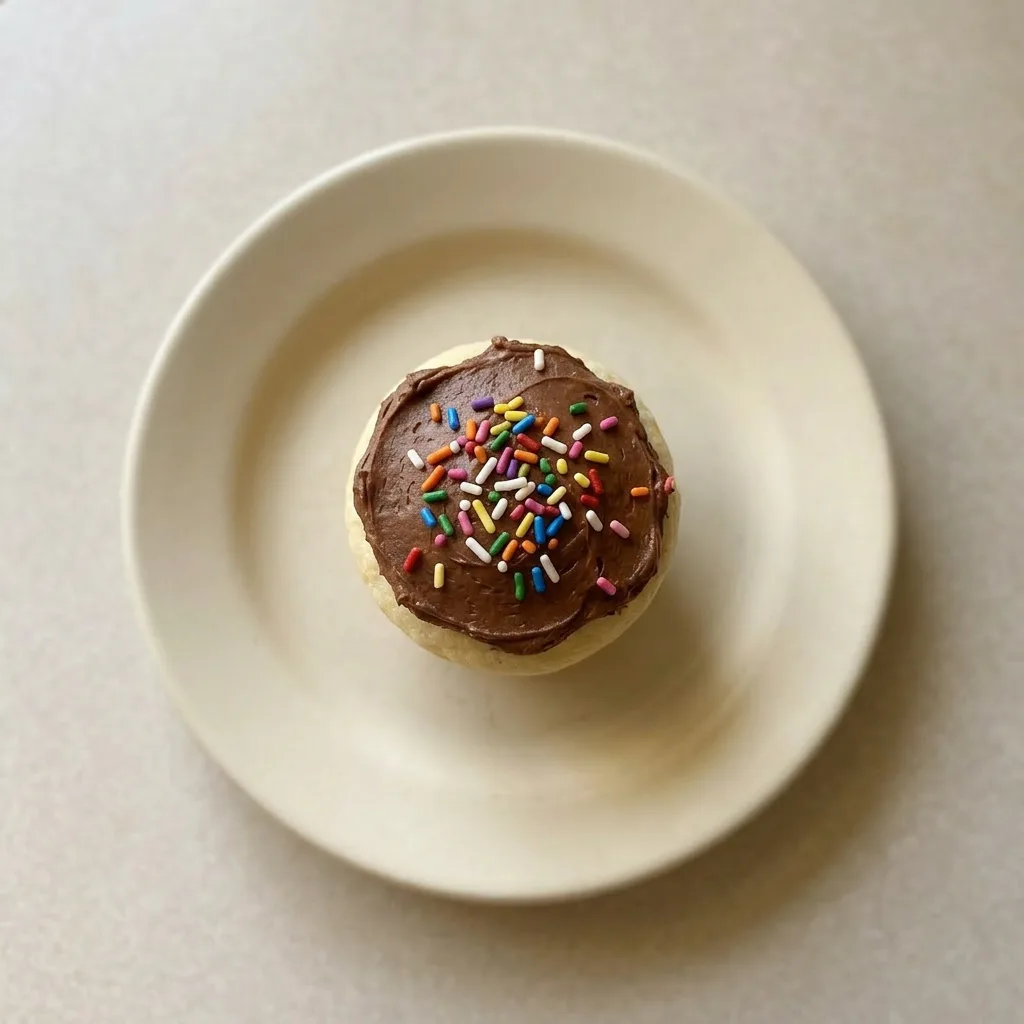
Garnish as preferred. I topped with chocolate frosting and sprinkles.
Flour and oil swaps change crumb and flavor here
all-purpose flour: 1:1 gluten-free baking blend. Swapping in a 1:1 gluten-free blend that contains xanthan gum works directly at the same weight.
The crumb will be slightly more tender and less chewy; the cupcakes may dome a bit less. Avoid blends without a binder, they’ll make the cake crumble. Start with 1 ¾ cups (250 g) of the blend, same as the flour.
oil: melted coconut oil. Replace the 1/3 cup neutral oil with the same amount of melted coconut oil. The cupcakes will taste faintly of coconut and the crumb will be firmer when cool because coconut oil solidifies at room temp.
If your kitchen is warm, they’ll stay soft; if cool, the texture firms up noticeably. Use refined coconut oil for less flavor.
dairy-free milk: any plain unsweetened plant milk. Oat, soy, almond, or cashew all work fine at the same volume (1 cup + 2 tablespoons). The key is unsweetened and plain; vanilla or sweetened versions add extra sugar and flavor you didn’t account for.
The vinegar will curdle oat and soy milk most visibly, but any will react with baking powder for lift. Avoid canned coconut milk, it’s too thick and fatty for this batter.
Tips
- Use a cookie scoop to portion batter into liners; this ensures uniform size and consistent doneness across all cupcakes.
- Rotate the pan halfway through baking to promote even browning and rise, as oven hot spots can cause uneven results.
Storage and Serving
Store unfrosted cupcakes in an airtight container at room temperature for up to 2 days. The crumb stays moist and tender because of the oil; refrigeration dries them out faster. For longer storage, refrigerate unfrosted cupcakes for up to 5 days.
Bring to room temperature before serving, about 30 minutes, so the texture softens. You can freeze unfrosted cupcakes for up to 3 months. Wrap each tightly in plastic wrap, then foil, and place in a freezer bag.
Thaw at room temperature still wrapped to avoid condensation. Frost only after thawing. Frosted cupcakes don’t freeze well; the frosting’s texture changes and can weep.
Serve frosted cupcakes within a day for the best look and feel. If you must refrigerate frosted cupcakes, let them sit out for 20 minutes before serving to take the chill off.
I see people beat the batter like they’re punishing it, and then wonder why their vegan cupcakes come out dense as hockey pucks. It’s not egg whites, you don’t need to whip it.
Frequently Asked Questions
Can I make these cupcakes gluten-free?
Yes, swap the all-purpose flour by weight with a 1:1 gluten-free baking blend that includes xanthan gum. The crumb will be slightly more tender and the tops may dome a bit less. Use the same 250 g weight as the original flour amount.
How long do these vegan cupcakes stay fresh?
Unfrosted cupcakes keep at room temperature in an airtight container for up to 2 days. For longer, refrigerate unfrosted for up to 5 days, then let them sit out 30 minutes before serving to soften. You can also freeze unfrosted cupcakes for up to 3 months.
Why did my cupcakes sink in the middle?
Most likely, they were underbaked. Check at 20 minutes with a toothpick inserted in the center: it should come out clean or with a few crumbs, not wet batter. Overfilling the liners past two-thirds can also cause sinking, as can opening the oven door too early before the structure sets.
Can I use this recipe to make a cake instead of cupcakes?
Yes, you can bake the batter in a greased 8-inch round cake pan. The bake time will be longer, roughly 30 to 35 minutes, until a toothpick comes out clean. Keep an eye on it after 30 minutes.
The texture will be similar, just a larger format.