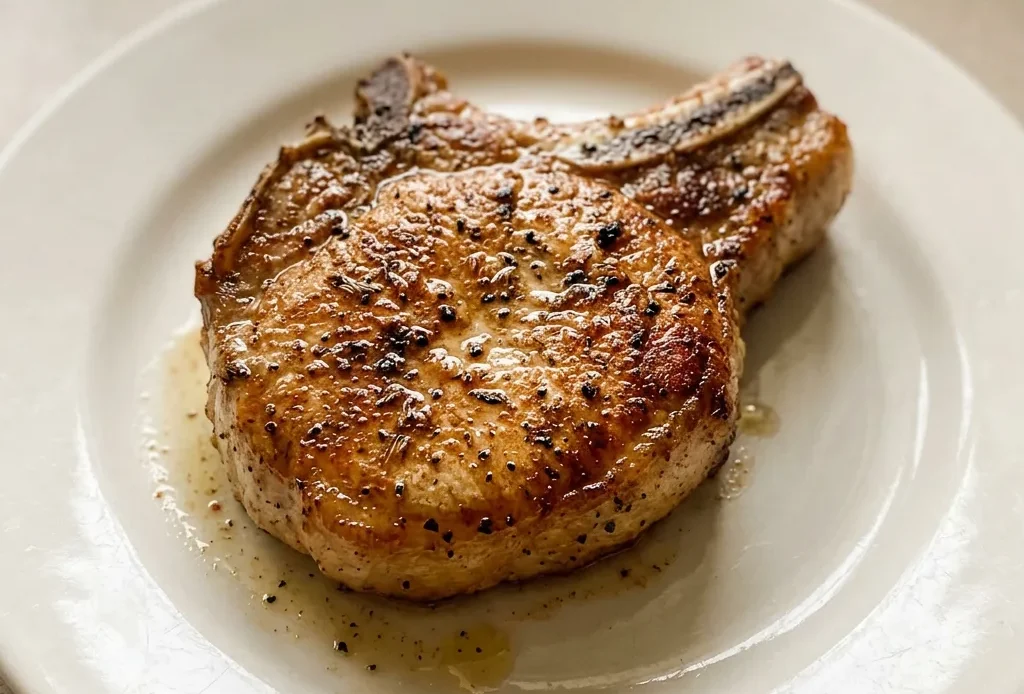
A wet brine, just salt and brown sugar dissolved in warm water, makes the difference between dry, chalky pork and meat that stays moist through a hot oven. Thirty minutes is all it takes, and you’ll feel the chops firm up as they absorb the brine. That’s the foundation for these juicy baked pork chops, where a quick sear and a caramelized rub lock in the rest.
A quick brine locks in moisture
A wet brine, just salt and brown sugar dissolved in warm water, draws moisture into the pork. Thirty minutes at room temperature is enough for thick chops to absorb seasoning deep into the meat. You’ll notice the chops feel plumper after brining.
Pat them thoroughly dry afterward; any leftover moisture on the surface will steam instead of sear.
A balanced dry rub for crust and depth
Brown sugar in the rub caramelizes in the oven, creating a tacky, browned crust. Smoked paprika contributes a subtle smokiness that reads as cooked-over-wood, not grill-like.
Garlic and onion powder round out the savory base, while thyme and black pepper add an aromatic lift. The rub should coat the chops evenly; you want every bite seasoned.
Searing first seals in the juices
A quick sear in a hot skillet with olive oil and butter builds a deep golden-brown crust. That browning isn’t just for looks, it locks in juices and adds nutty, savory flavor.
Two to three minutes per side over medium-high heat is enough; you want color, not a cooked-through chop. An oven-safe skillet lets you transfer straight to the oven without losing heat.
Bake then rest to finish
Finishing in a 400°F oven ensures the center reaches a safe 145°F without the exterior overcooking. The bake time runs ten to fifteen minutes; start checking early. Resting five to ten minutes on a cutting board lets juices redistribute, cut too soon and they’ll pool on the board, leaving the meat dry.
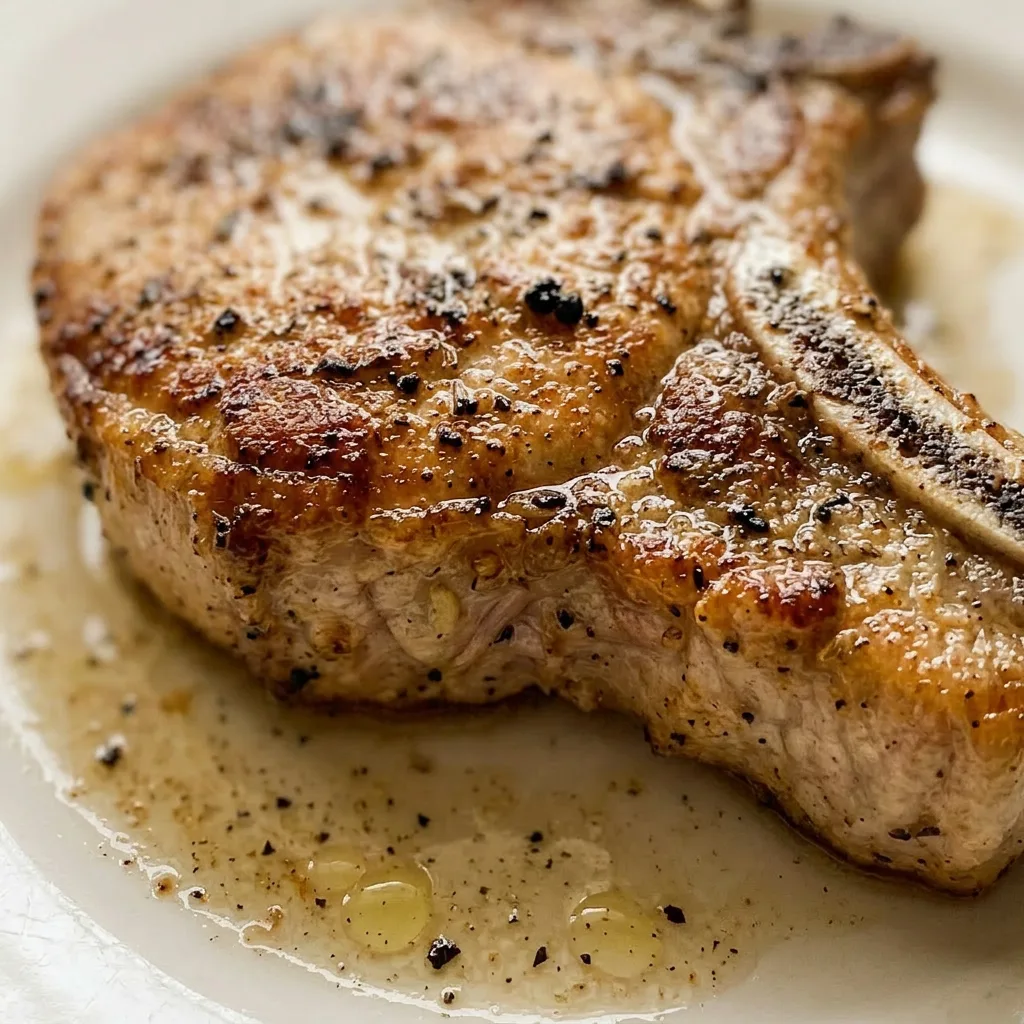
Prep: 10 min · Cook: 20 min · Total: 30 min · Servings: 4 · Calories: 380 kcal
Ingredient Notes for Juicy Baked Pork Chops
Bone-in, thick-cut pork chops (1 to 1.5 inches thick): Thick bone-in chops stay juicier than thin or boneless cuts; look for chops with even thickness.
Smoked paprika: Smoked paprika adds a subtle wood-fired flavor; use sweet or hot based on preference.
Kosher salt: Kosher salt dissolves cleanly in brine; table salt is too fine and can over-salt.
Brown sugar: Brown sugar caramelizes for a tacky crust; dark or light both work, dark gives deeper color.
I once pulled them after 12 minutes in the oven, and they were like hockey pucks. Then one time I forgot to set a timer and they came out, turns out my oven runs hot.
How to make juicy baked pork chops, step by step
Brine the chops
Submerge the pork chops in the salt-sugar brine for 30 minutes at room temperature. The chops will feel firmer and look plumper. If they are not fully submerged, weight them with a plate.
Mix the dry rub
Stir together the brown sugar, smoked paprika, garlic powder, onion powder, thyme, and pepper. The rub should smell aromatic and look evenly blended. Clumps of brown sugar are fine, they’ll melt in the oven.
Dry and season the chops
Remove the chops from the brine and pat them thoroughly dry with paper towels. Any dampness left will cause steaming instead of browning. Coat each chop with the rub, pressing it onto all surfaces.
Sear in a hot skillet
Heat olive oil and butter in an oven-safe skillet over medium-high heat until the butter stops foaming. Add the chops and cook 2 to 3 minutes per side. The crust should be deep golden brown, not pale.
If the pan smokes, reduce heat slightly.
Bake to temperature
Transfer the skillet directly to a 400°F oven. Bake 10 to 15 minutes, checking at 10.
Insert an instant-read thermometer into the thickest part; it should read 145°F. The chops will feel firm but still give slightly when pressed.
Rest before serving
Move the chops to a cutting board and let them rest 5 to 10 minutes. The internal temperature will rise a few degrees during this time. If you cut too soon, juice will run out onto the board and the meat will be dry.
Juicy Baked Pork Chops (Fail-Proof Method)
Ingredients
- 4 bone-in, thick-cut pork chops (about 1 to 1.5 inches thick)
- 4 cups warm water
- 1/4 cup kosher salt
- 2 tbsp brown sugar (packed)
- 1 tbsp smoked paprika
- 2 tsp garlic powder
- 1 tsp onion powder
- 1 tsp dried thyme
- 1/2 tsp black pepper (freshly ground)
- 1 tbsp olive oil
- 1 tbsp unsalted butter
Instructions
Brine the Pork Chops:
In a large bowl, combine 4 cups warm water with 1/4 cup kosher salt, stirring until dissolved. Place 4 bone-in, thick-cut pork chops into the brine, ensuring they are fully submerged, and allow to stand at room temperature for at least 30 minutes.Mix Dry Seasoning:
Set the oven to 400°F (205°C). In a small bowl, stir together 2 tbsp packed brown sugar, 1 tbsp smoked paprika, 2 tsp garlic powder, 1 tsp onion powder, 1 tsp dried thyme, and 1/2 tsp freshly ground black pepper.Pat and Season Chops:
Take the pork chops out of the brine and pat them thoroughly dry using paper towels. Coat each chop evenly on all sides with the seasoning mixture.Sear Chops in Skillet:
In a large oven-safe skillet set over medium-high heat, warm 1 tbsp olive oil and 1 tbsp unsalted butter. Once the fat is hot, add the pork chops and cook for 2-3 minutes per side until a golden-brown crust develops.Bake Until 145°F:
Move the skillet to the preheated oven and bake for 10-15 minutes, or until a meat thermometer inserted into the thickest part registers 145°F (65°C).Rest Before Serving:
Remove the pork chops from the oven, transfer them to a cutting board, and let them rest for 5-10 minutes before serving.
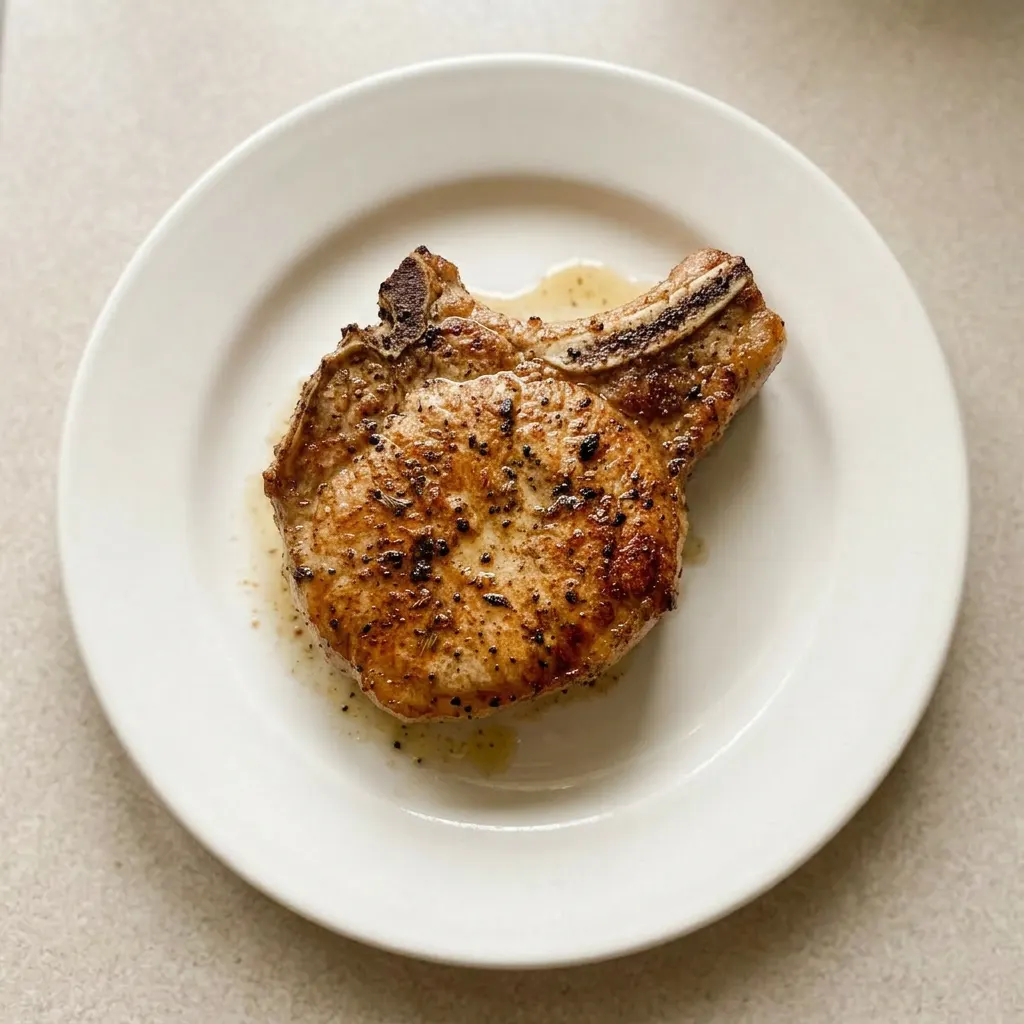
Three swaps that work, one that doesn’t
Smoked paprika: Chipotle powder. Chipotle adds heat and a deeper, earthier smoke. Use half the amount, 1/2 teaspoon, then taste the rub and add more if you want more kick.
The crust will be darker and spicier.
Brown sugar: White sugar. White sugar caramelizes just as well for a tacky crust, but the color will be lighter and you lose the molasses note. Use the same amount.
The crust will still be golden, just less complex.
Kosher salt: Sea salt (fine or coarse). Fine sea salt is denser; use about 3 tablespoons instead of 1/4 cup. Coarse sea salt can be swapped 1:1 by volume.
Either dissolves fully in the warm brine. Table salt is too fine and salty, avoid it.
Storage and Serving
These pork chops are best served right after the 5 to 10 minute rest. The crust stays crisp, and the interior is juiciest within the first hour. If you need to hold them longer, tent loosely with foil and keep warm in a 200°F oven for up to 30 minutes.
Beyond that, the crust softens.
For leftovers, store the chops in an airtight container in the fridge for up to 3 days. The meat will firm up as it chills, and the crust loses its crunch.
To reheat, place the chops in a 300°F oven on a wire rack set over a baking sheet for 8 to 10 minutes, or until warmed through. Covering them traps steam and makes the crust soggy.
Reheating in the microwave is not recommended; it toughens the meat.
Freezing cooked chops is possible but affects texture. Wrap each chop tightly in plastic wrap, then foil, and freeze for up to 2 months. Thaw overnight in the fridge before reheating.
Expect the meat to be slightly drier after freezing. The brine helps, but some moisture loss is unavoidable.
Tips
- Let the pork chops rest at room temperature for 15 minutes after brining and drying, before searing. A cold chop will lower the pan temperature, slowing crust formation and potentially overcooking the exterior before the center reaches 145°F.
- Use a heavy stainless steel or cast iron skillet for searing. Nonstick pans don’t generate the same deep browning because they limit the Maillard reaction, and the crust will be paler and less flavorful.
Frequently Asked Questions
Can I use boneless pork chops instead of bone-in?
You can, but they won’t be as juicy. Bone-in chops cook more evenly and the bone insulates the meat, so boneless chops tend to dry out faster. If you swap, choose chops at least 1 inch thick and reduce the bake time, check for doneness at 8 minutes instead of 10.
The crust will still develop, but the meat won’t have the same plumpness.
How do I know when the pork chops are done without a thermometer?
Look for a firm but still slightly springy feel when pressed in the center, it should resist like the fleshy part of your palm when you make a fist. The juices should run clear, not pink, when you nick the thickest part with a knife. But a thermometer is more reliable; 145°F is the safe target.
Can I prepare these pork chops ahead of time and reheat them?
You can cook them fully, then reheat in a 300°F oven on a wire rack for 8 to 10 minutes. The crust will soften slightly, and the meat won’t be as juicy as fresh. For best texture, serve within an hour of cooking, tenting with foil in a 200°F oven keeps them warm up to 30 minutes without drying out.
Why are my baked pork chops dry even though I followed the recipe?
Most likely they were overbaked, the window is tight, especially if your chops are thinner than the 1 to 1.5 inches called for. Check at 10 minutes; if you missed the brine step, that also removes a big moisture buffer. Patting the chops dry before searing is critical too: any dampness left causes steaming, which prevents the crust from forming and locks in less juice.