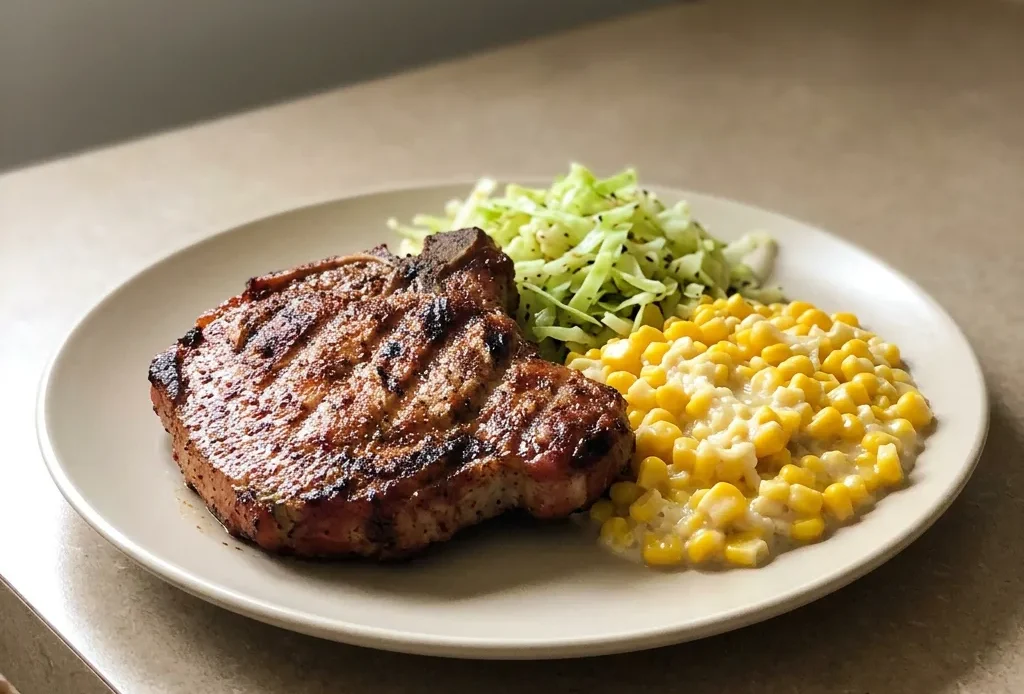
This isn’t a quick grill-and-eat chop. It’s a slow-smoked, reverse-seared pork chop that builds a smoke ring and a crackly crust in sequence, not all at once. The margin for error is tighter than a steak’s because pork dries out faster, but the payoff is a juicy interior and a caramelized exterior that tastes like you spent all day tending the smoker.
For Traeger smoked pork chops, the low heat does the flavor work; the high heat just finishes the crust.
I still pull the chops out at 135°F even though I know they’ll climb, because I’ve ruined too many by waiting until 140°F.
Why Reverse Sear Works
Low and slow smoking at 225°F coaxes smoke flavor deep into the meat without drying it out. The gentle heat lets the pork’s fat render slowly, keeping the interior moist.
Then the high-heat sear, after smoking, creates a caramelized crust that adds texture and flavor. That crust forms quickly because the meat’s surface is dry from the long smoke, so browning happens fast without driving the internal temperature past the target. Resting after searing lets carryover cooking nudge the temperature up to a safe 145°F without overshooting.
Without that rest, the juices would run out when you cut the chop. A single high-heat sear, not a dual-zone grill setup, gives you the best of both smoke and crust.
Balancing the Dry Rub
This rub hits sweet, salty, and savory in a way that complements pork’s natural flavor. Salt ratio matters: 1 teaspoon of sea salt for two chops hits the right spot, but if you use kosher or table salt, cut it to 1/2 teaspoon. Those salts pack differently, so the same volume would oversalt.
Brown sugar brings sweetness that caramelizes during the sear, adding a rich crust. Paprika, mustard powder, and garlic powder give savory depth, smoky, slightly pungent, and earthy, without competing with the meat.
The blend is subtle enough that you taste the pork first, then the rub layers in. On a bbq pork chop, that balance keeps you coming back for another bite.
Bone-In Makes the Difference
A bone-in chop resists overcooking better than a boneless one. The bone acts as a heat sink, slowing cooking near it so the meat there doesn’t dry out while the thicker parts come up to temp.
Bone-in chops also carry more fat and connective tissue, which renders during the long smoke and keeps the meat juicy. Thickness matters too: a 1-inch chop takes the low heat evenly and still leaves enough surface area for a good sear.
For smoked bone in pork chops, that structure is what gives you a tender, moist result rather than a dry, stringy one. When you bite into a chop near the bone, you’ll notice it’s just as succulent as the center.
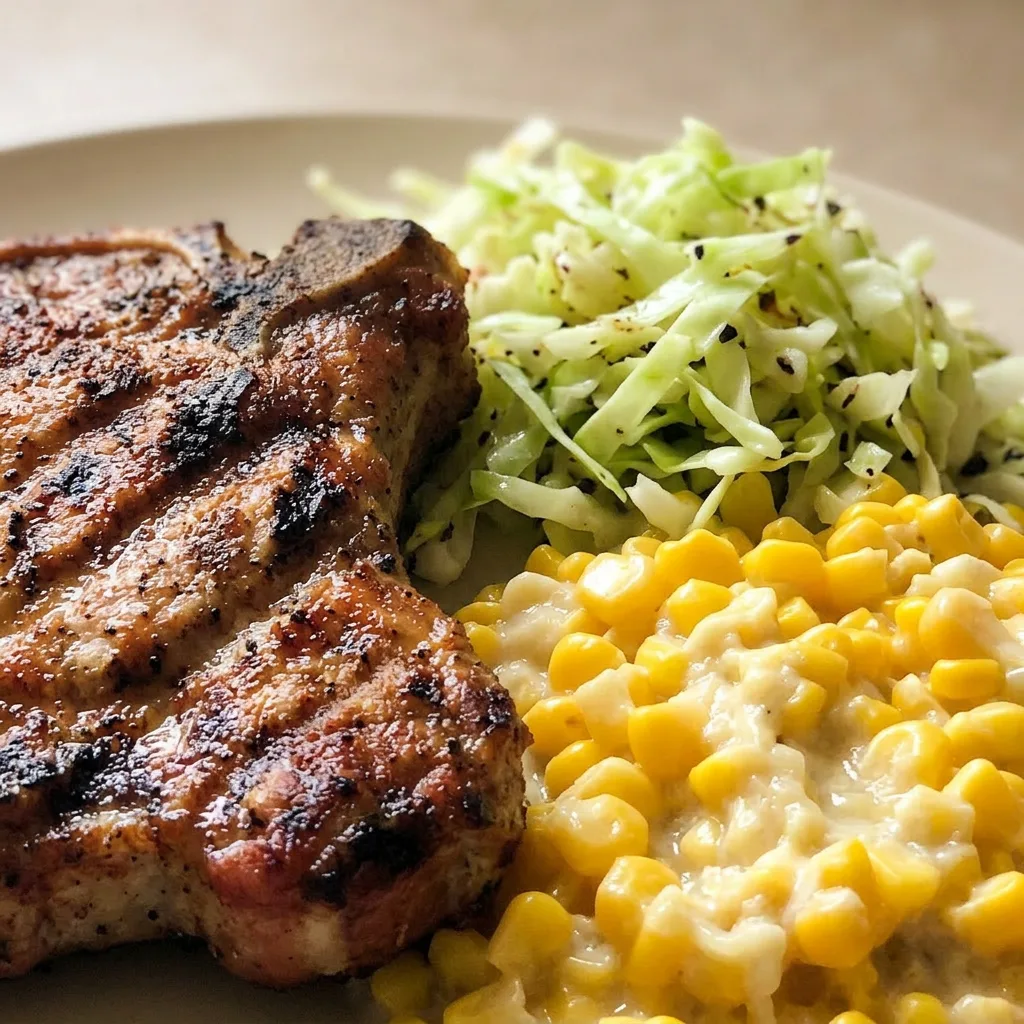
Prep: 15 min · Cook: 1 hr 40 min · Total: 2 hr · Servings: 2 · Calories: 300 kcal
What to Look For in These Smoked Pork Chop Ingredients
Bone-in pork chops: Buy chops about 1 inch thick so they smoke evenly and don’t dry out before the sear.
Sea salt: Use fine sea salt for the rub; if swapping with kosher or table salt, reduce to 1/2 tsp.
Brown sugar: Light or dark brown sugar works the same; it caramelizes during the sear for a rich crust.
Paprika: Standard paprika, not smoked or hot, gives color and mild sweetness without overpowering the pork.
Ground mustard: Yellow mustard powder adds a gentle tang that brightens the rub without heat.
Garlic powder: Use garlic powder, not granulated garlic, as it dissolves more evenly into the rub.
Dialing In the Smoke and Sear
Heat the Smoker to 225°F
Get your smoker settled at 225°F. A steady low heat is key, if you see heavy white smoke, wait for it to thin to a blue haze before loading the chops.
Mix the Dry Rub
Combine salt, brown sugar, pepper, paprika, mustard powder, and garlic powder in a small bowl. Stir until evenly blended, no clumps of sugar or spice pockets left.
Coat the Pork Chops
Sprinkle the rub generously over both sides of each chop, then pat it on. Every surface should look evenly speckled; bare patches mean missed flavor and uneven crust.
Smoke Low and Slow
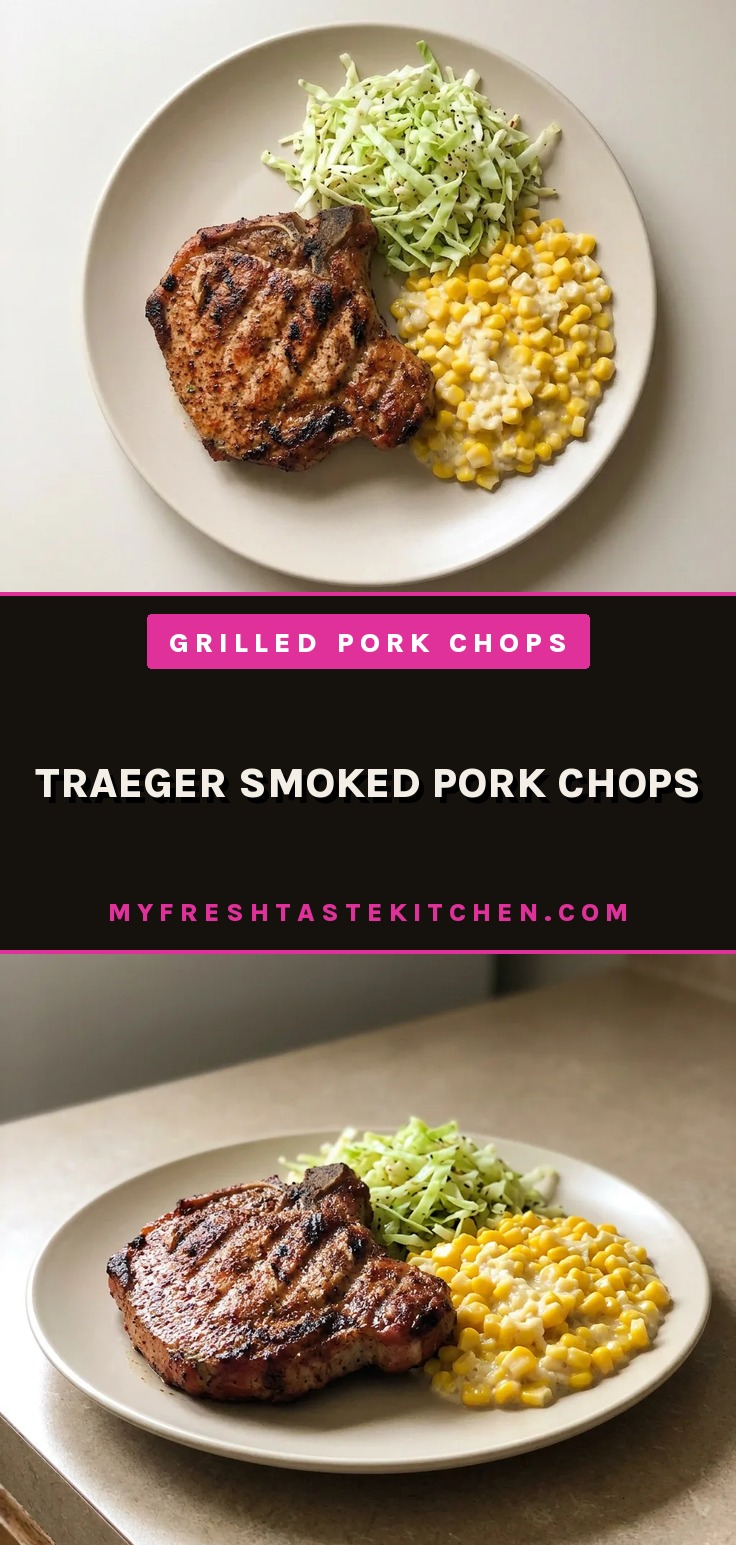
Place the chops on the smoker grate and close the lid. Let them smoke undisturbed for 90 minutes. You’ll see a rosy smoke ring forming and the surface turning a deep mahogany.
Crank the Heat for Searing
Remove the chops and increase the smoker to 450°F. Wait until the thermometer reads high and the grill is ripping hot, about 10 to 15 minutes. A drop of water should sizzle on contact.
Reverse Sear Each Side
Return the chops to the hot grill and sear each side quickly, about 1 to 2 minutes per side. Flip when the crust is deeply browned and crackly; pull at an internal temp of 140°F.
Rest Before Serving
Transfer the chops to a cutting board and let them rest for 10 minutes. During that time, carryover heat will nudge the internal temp to 145°F, and the juices will redistribute so every slice stays moist.
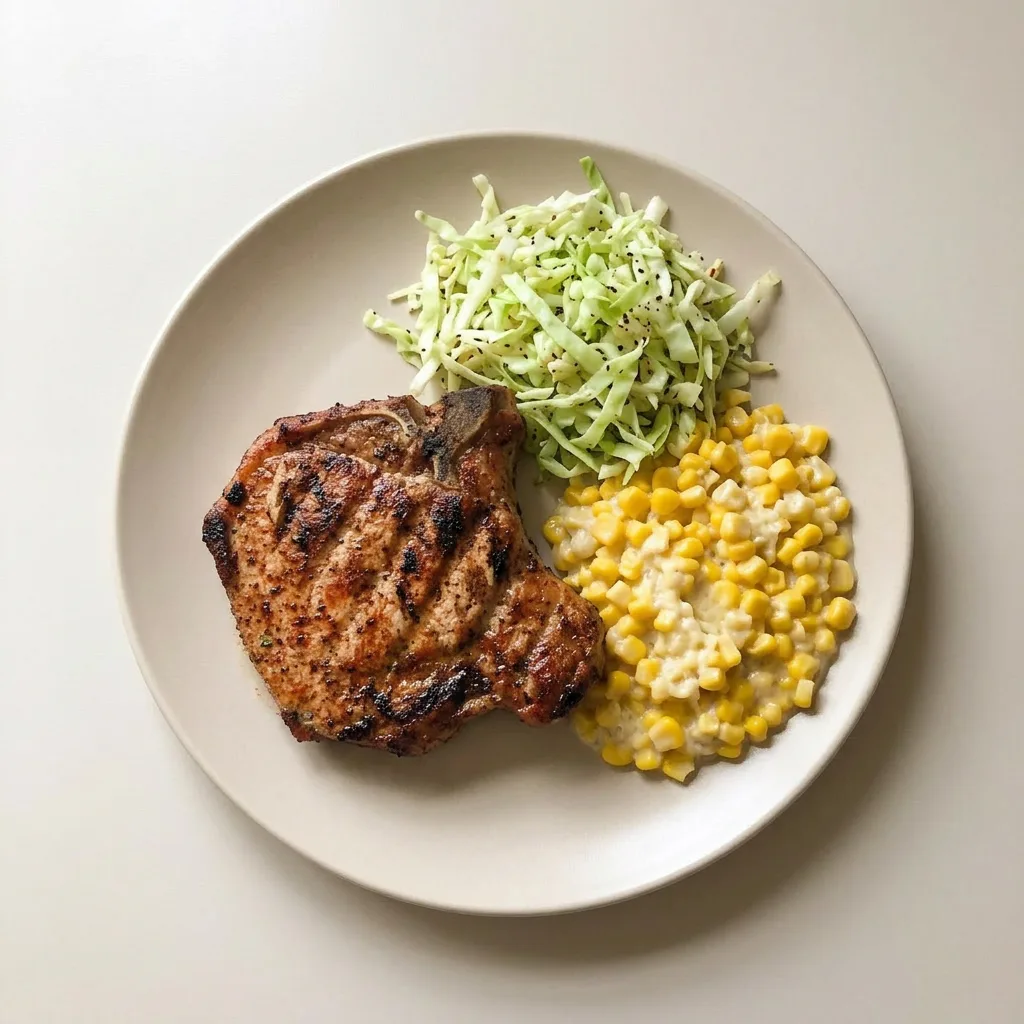
Traeger Smoked Pork Chops
Ingredients
- 2 bone-in pork chops (roughly 1 inch thick)
- 1 tsp sea salt reduce to 1/2 tsp if swapping with kosher or table salt
- 1 tsp brown sugar
- 1/2 tsp ground black pepper
- 1/2 tsp paprika
- 1/2 tsp ground mustard
- 1/4 tsp garlic powder
Instructions
Preheat smoker to 225°F:
Heat smoker to 225°F (105°C).Mix dry rub ingredients:
Mix the pork chop rub: in a small container, combine sea salt, brown sugar, ground pepper, paprika, ground mustard, and garlic powder until evenly blended.Season pork chops evenly:
Coat each pork chop thoroughly on both sides with the seasoning mix.Smoke chops for 90 minutes:
Place pork chops in the smoker and cook for 90 minutes. (For chops 1 inch or thicker; for thinner cuts, smoke around 60 minutes then proceed.)Increase smoker to high heat:
Take pork chops out of the smoker; raise temperature to high (approximately 450°F (230°C) / 232°C). Allow the smoker to come up to that heat, about 10-15 minutes.Reverse sear each side:
Reverse sear: once the smoker grill is hot, return the pork chops and sear each side quickly until the internal temperature hits at least 140°F (60°C).Rest chops before serving:
Pull pork chops from the smoker and let them rest for 10 minutes prior to serving. Carryover cooking will bring them to 145°F (65°C).
Which Ingredients You Can Swap, and Which You Shouldn’t
Sea salt: Kosher or table salt, reduced to 1/2 tsp. Kosher salt’s larger flakes and table salt’s denser crystals pack differently by volume. Same volume oversalts; cut to half, then taste the rub before applying.
Brown sugar: Coconut sugar or omit. Coconut sugar caramelizes similarly but with a milder sweetness and a slightly less sticky crust. Omitting sugar loses the caramelized crust’s depth and some browning, the rub leans more savory.
Paprika: Smoked paprika. Smoked paprika amplifies the smoky flavor, which can compete with the smoke from the smoker itself. Use it if you want a double-smoked punch, but know it can overwhelm the pork’s natural taste.
Ground mustard: Dry mustard or omit. Dry mustard powders (like Colman’s) work in the same amount, adding the same gentle tang. Omitting loses that bright note, the rub becomes rounder, more one-dimensional.
Storing and Serving Leftover Smoked Pork Chops
For the best texture, serve smoked pork chops within 30 minutes of the rest. The crust stays crisp, and the meat remains juicy. Leftovers should be cooled to room temperature within 2 hours, then stored in an airtight container.
Refrigerated, they keep for 3 to 4 days. The crust softens over time, but the meat stays moist if sealed. To reheat, warm gently in a 300°F oven or a covered skillet with a splash of water until the internal temperature reaches 120°F.
Avoid the microwave: it toughens the meat and turns the crust rubbery. Freezing is not recommended for cooked chops: thawing and reheating dry them out and wreck the crust. If you must freeze, wrap individually in plastic, then foil, and use within 2 months.
Reheat from frozen in a low oven, but expect a softer crust and drier texture.
Tips
- Use an independent oven thermometer placed near the chops to verify the smoker stays at 225°F, since built-in gauges can be off by 25°F or more, which would throw off the cook time and texture.
Frequently Asked Questions
Can I use boneless pork chops instead of bone-in?
You can, but the result won’t be as forgiving. Boneless chops cook faster and dry out more easily because they lack the bone’s heat sink and the extra fat that bone-in chops carry. If you swap, expect to pull them earlier from the smoker and sear more briefly, start checking internal temp at 60 minutes of smoke instead of 90.
How do I know when the pork chops are done without a thermometer?
It’s risky without a thermometer because the window between juicy and dry is narrow. Look for the meat to pull away slightly from the bone and feel firm but still springy when pressed with a finger, if it feels hard, it’s overdone. The best safety net is to use a thermometer; guessing leaves too much to chance.
Can I prepare the dry rub ahead of time and store it?
Yes, the dry rub stores well in an airtight container at room temperature for up to a month. Just make sure the brown sugar doesn’t clump by stirring it before use. The flavors stay stable, so you can mix a bigger batch and have it ready for your next smoke.
What’s the difference between smoking and grilling pork chops?
Smoking at 225°F slowly renders fat and infuses smoky flavor deep into the meat over 90 minutes, while grilling hits high heat fast for a quick crust but little smoke penetration. This recipe combines both: a long smoke for tenderness and flavor, then a reverse sear at 450°F for a caramelized crust. Grilling alone gives a different texture, firmer, less smoky, and easier to overcook.