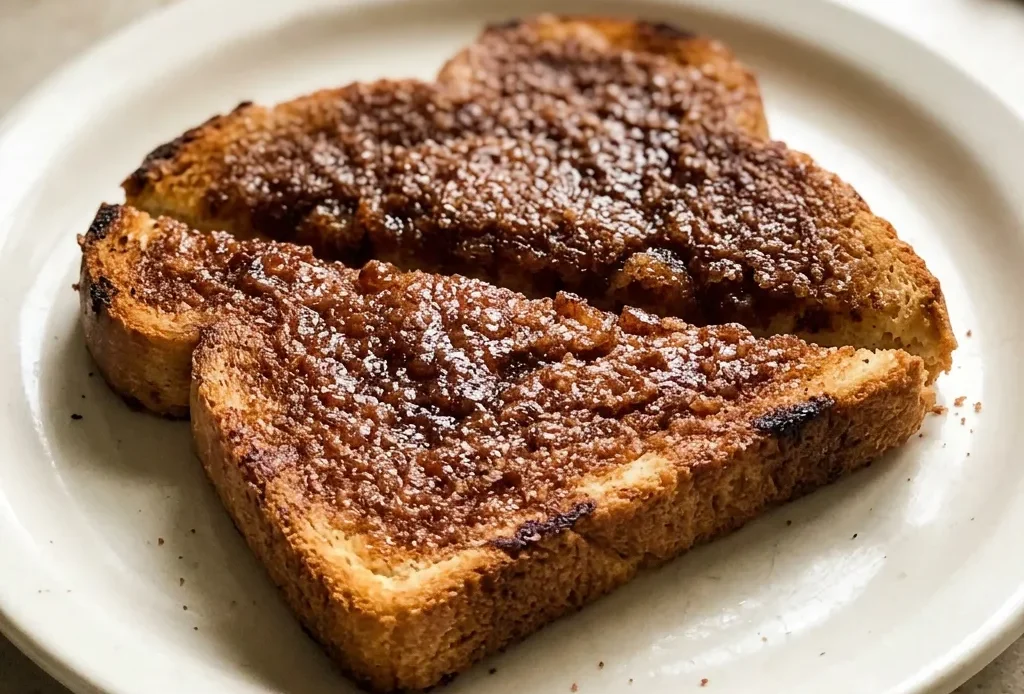
Cinnamon toast isn’t a quick sprinkle of sugar under the broiler. It’s a two-step bake-and-broil method that turns a humble breakfast into something with a crackly, caramelized topping and a crisp base that actually stays crunchy. The margin for error is narrow: underbake and the bread stays soft, overbroil and the sugar turns bitter.
But done right, it’s the kind of toast you eat standing at the counter, still warm, the sugar shell shattering with each bite.
The first time I made this, I used melted butter because I was in a hurry. The sugar mixture soaked right into the bread, and after baking it was still floppy instead of crisp.
Room-temperature butter makes a real paste
Softened butter is the only way to get a spreadable, cohesive paste that coats the bread from edge to edge. Melted butter?
It soaks right into the crumb before you can even spread it, leaving bare patches and a soggy base. With softened butter, every grain of sugar and cinnamon stays suspended, so the topping sits on the surface where it belongs. Now I always make sure the butter is softened to room temperature, so the paste stays on top and the bread gets properly crunchy.
You can feel the difference when you smear it on; the paste holds together without dripping or pooling.
Baking first, then broiling
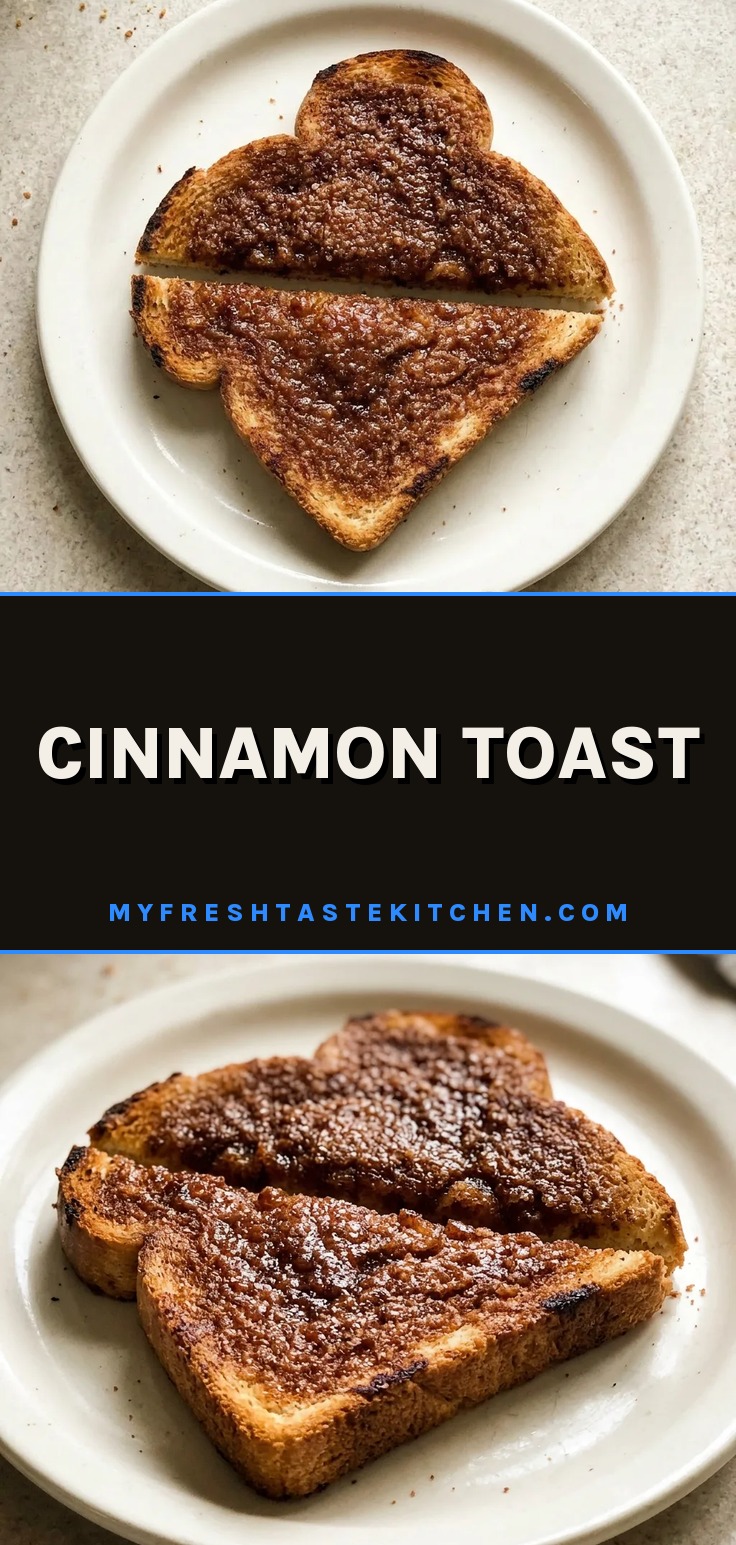
Direct broiling from the start would char the sugar long before the bread has any crunch. Baking at 350°F first dries out the bread, setting the topping into a thin, even layer. When you finally hit it with high heat, the sugar bubbles and caramelizes on a firm, crisp base.
No sogginess, no burnt edges. A toast recipe breakfast that actually stays crunchy through the first bite.
The broiler just finishes it; the oven does the real work.
Watch that sugar, it goes fast
Under the broiler, sugar can turn from glossy to black in seconds. The bread needs to sit at least 5 inches below the heating element, otherwise the sugar chars before it even has a chance to bubble. You have to stand there and look, no walking away.
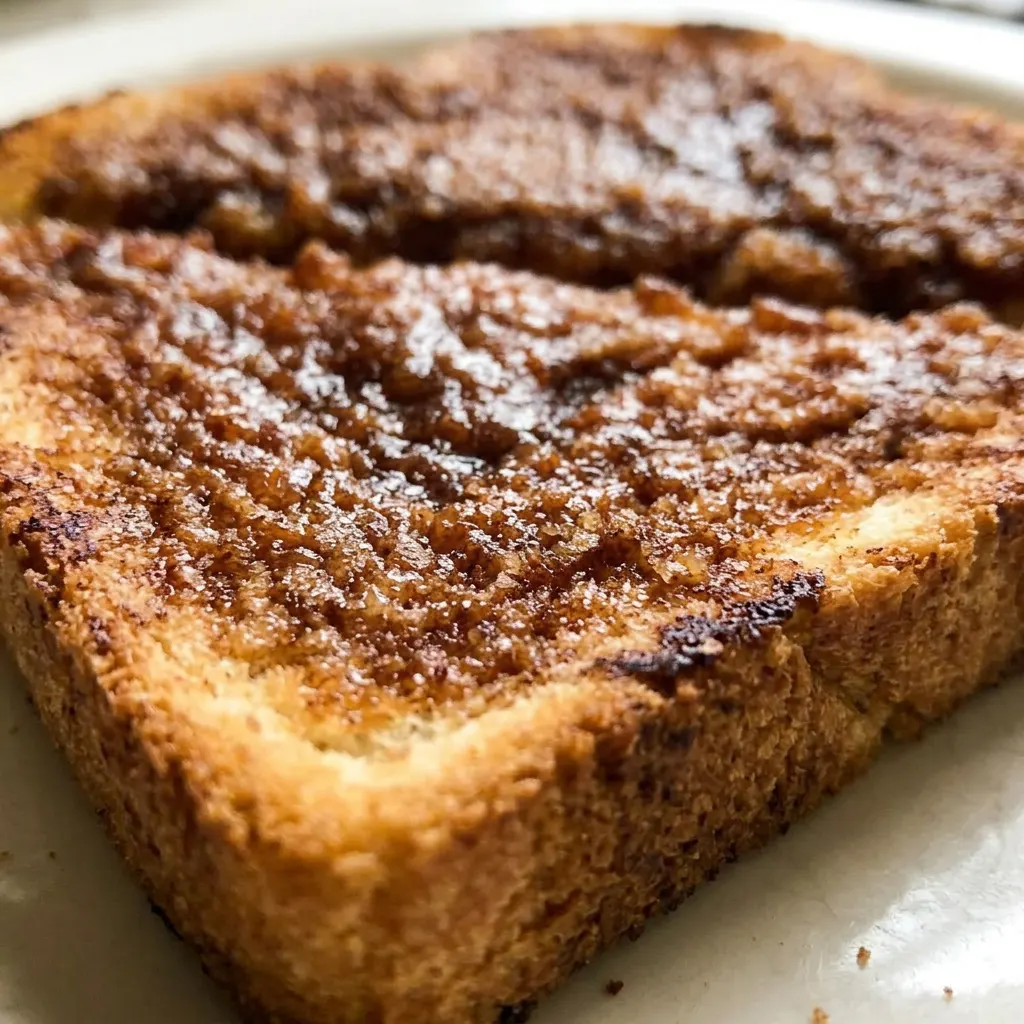
The moment the cinnamon sugar starts to bubble and darken around the edges, it’s done. That’s the window for toast that’s crisp on the bottom and crackly on top, without any bitter scorch lines.
Prep: 5 min · Cook: 11 min · Total: 16 min · Servings: 4 · Calories: 220 kcal
What to look for in the ingredients
Salted butter: Use real salted butter, not margarine; it gives a clean, rich taste that unsalted can’t match.
Granulated sugar: Standard white granulated sugar; its fine crystals dissolve and bubble evenly under the broiler.
Ground cinnamon: Fresh cinnamon smells pungent, not flat; stale cinnamon makes the toast taste dusty.
Vanilla extract: Pure vanilla extract, not imitation; a half teaspoon rounds out the cinnamon without dominating.
Sandwich bread: A sturdy white or whole wheat sandwich loaf, not airy artisan bread; it holds the topping without collapsing.
Why this toast stays crunchy
Make the paste with soft butter
If the butter is too firm, the sugar and cinnamon won’t blend into a smooth paste, you’ll get streaks. Press a fork into the butter; it should give easily. Mix until no dry sugar remains; the paste should feel spreadable, not crumbly.
Spread edge to edge
A bare corner burns under the broiler. Drag the paste right to the crust.
You want an even, thin layer, if it’s too thick in spots, the sugar will bubble unevenly. The bread should look fully coated, no bare patches.
Bake until the bread firms up
After 10 minutes at 350°F, the bread should feel dry and slightly crisp on the surface, not soft or flexy. Press the center; it should spring back. If it still feels doughy, give it another minute before broiling.
Broil until the sugar bubbles
Watch constantly. The sugar will first turn glossy, then small bubbles appear. The moment you see bubbles across the surface and the edges start to brown, pull it out.
If you see smoke or black spots, you waited too long.
Cool slightly before cutting
Hot sugar is molten and will burn your mouth. Let the toast sit on the baking sheet for about a minute. The topping will set into a crackly shell.
Cut with a sharp knife; a dull blade will shatter the sugar crust.
Cinnamon Toast
Ingredients
- 4 slices sandwich bread
- 1/4 cup salted butter 56g, softened
- 1/4 cup granulated sugar 50g
- 1 teaspoon ground cinnamon
- 1/2 teaspoon vanilla extract
Instructions
Preheat oven and arrange bread:
Heat oven to 350°F (175°C). Lay bread slices on a broiler-safe baking sheet that is ungreased and unlined.Mix cinnamon butter paste:
In a medium bowl, mix together softened butter, sugar, cinnamon, and vanilla using a fork until a smooth paste forms.Spread butter on bread:
Evenly distribute the cinnamon butter across all bread slices, spreading it edge-to-edge to fully cover each slice.Bake bread until crisp:
Position the baking sheet on the top or center rack (upper third of oven, at least 5 inches below broiler to avoid scorching). Bake for 10 minutes until the bread turns lightly crisp.Broil until bubbling:
Switch broiler to high and broil until the cinnamon sugar bubbles, about 1 to 2 minutes. Keep a close eye; if edges start to char, take out at once.Cool and serve:
Allow toast to cool a bit, then cut into pieces and serve.
Storage and Serving
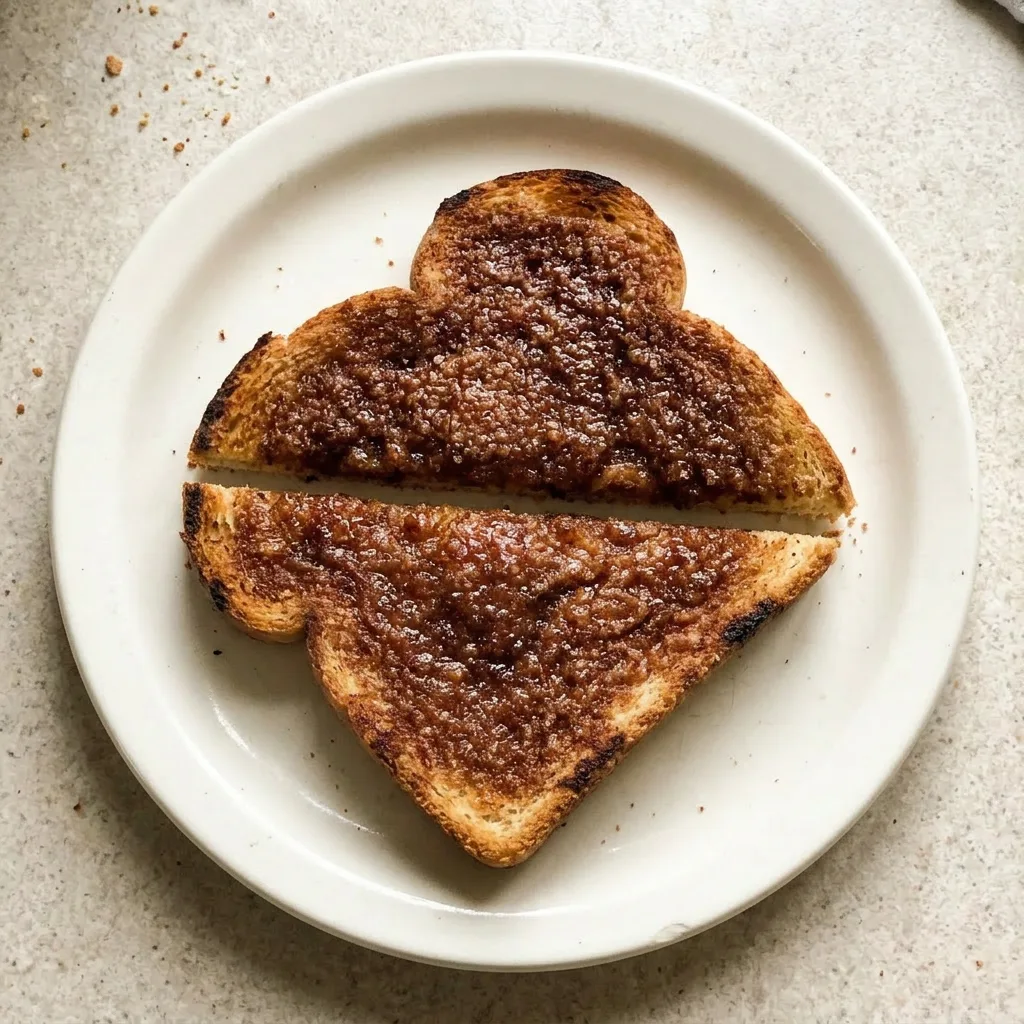
Serve cinnamon toast within 15 minutes of broiling, while the sugar crust is crisp and the bread is firm. After that, moisture from the air softens the topping.
Store leftovers in an airtight container at room temperature for up to 2 days. The sugar will turn tacky and the bread will lose its snap. To restore crispness, reheat in a 350°F oven for 3 to 5 minutes, watching closely so the sugar doesn’t burn.
Do not refrigerate; the cold will make the bread stale faster. Freezing is not recommended because the sugar crust becomes sticky and the bread turns soggy upon thawing.
For make-ahead, prepare the cinnamon butter paste up to 3 days in advance and refrigerate in an airtight container. Bring to room temperature before spreading and baking.
Do not assemble the toast ahead; the butter will soak into the bread and prevent crisping.
Swap the sugar, keep the butter soft
Granulated sugar: Brown sugar, packed (same volume). Brown sugar adds molasses notes and a deeper caramel flavor.
The toast will bubble more aggressively under the broiler and the topping may stay slightly tacky rather than shatter-crisp. Watch the broiler closely; brown sugar burns faster than white.
Salted butter: Vegan butter (room temperature, same weight). Most stick-style vegan butters (like Miyoko’s or Earth Balance) work here. The paste will spread similarly, though some brands feel softer and can soak into the bread a bit more.
The toast will still crisp, but the final flavor lacks the dairy richness. If your vegan butter is unsalted, add a pinch of salt to the paste.
Sandwich bread: Gluten-free sandwich bread (same thickness). Gluten-free breads are often denser and more fragile. They need the full 10-minute bake to dry out; skip the broiler if the bread is very delicate, or broil just 30 seconds.
The texture will be less airy, more compact. Avoid artisanal gluten-free loaves with large holes, the paste drips through.
Tips
- Use bread that is a day old; fresher bread compresses under the paste and turns gummy, while day-old bread stays firm and crisp.
- If your bread is very fresh, toast it in the oven for 2 minutes before spreading the paste to dry the surface and prevent sogginess.
Frequently Asked Questions
Can I make cinnamon toast ahead of time and reheat it?
Yes, but only if you reheat in a 350°F oven for 3 to 5 minutes. The toast loses its crunch within 15 minutes of broiling, so reheating is the only way to get it back.
Store leftovers in an airtight container at room temperature for up to 2 days; the refrigerator will stale it faster. Do not assemble the toast ahead, the butter soaks in and prevents crisping.
Why does my cinnamon toast sometimes come out soggy instead of crispy?
Most likely the butter was too warm or melted, soaking into the bread before it could crisp. Softened butter forms a paste that sits on the surface; melted butter creates bare spots and a soggy base. Another cause: skipping the 10-minute bake at 350°F.
That step dries the bread and sets the topping, so the broiler only caramelizes without sogging the crumb.
Is there a difference between cinnamon toast and cinnamon sugar toast?
In this recipe, they’re the same, cinnamon sugar is the topping, and the method makes it toast. Some versions skip the butter or use a dry sprinkle, which won’t give you the same crackly sugar crust. Here, the butter-sugar paste ensures the topping adheres and bubbles evenly under the broiler, producing a crisp, caramelized finish.