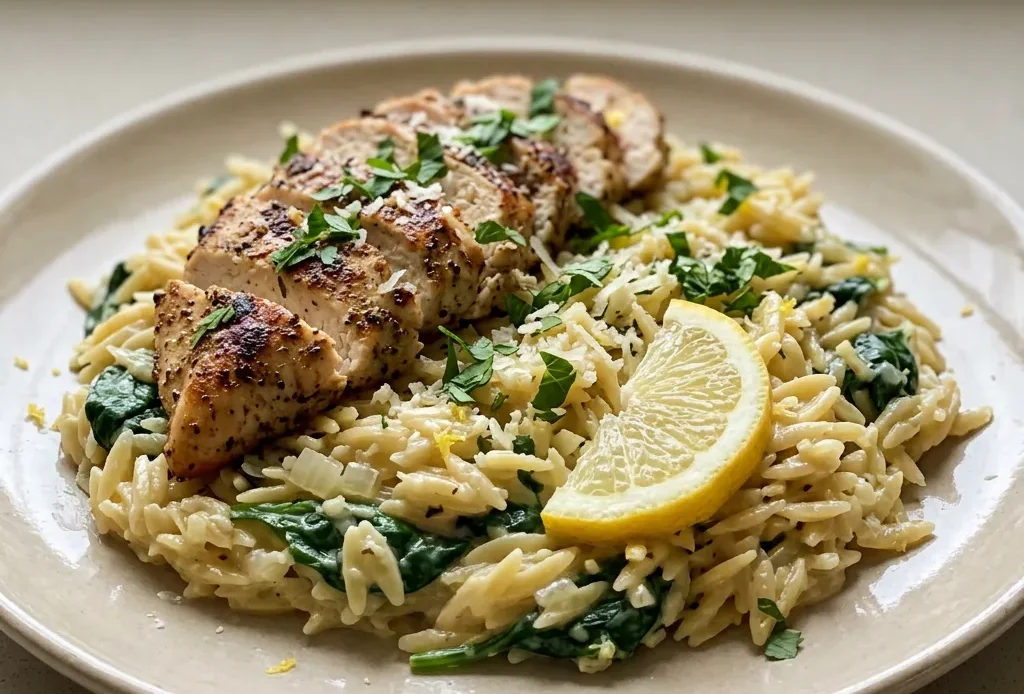
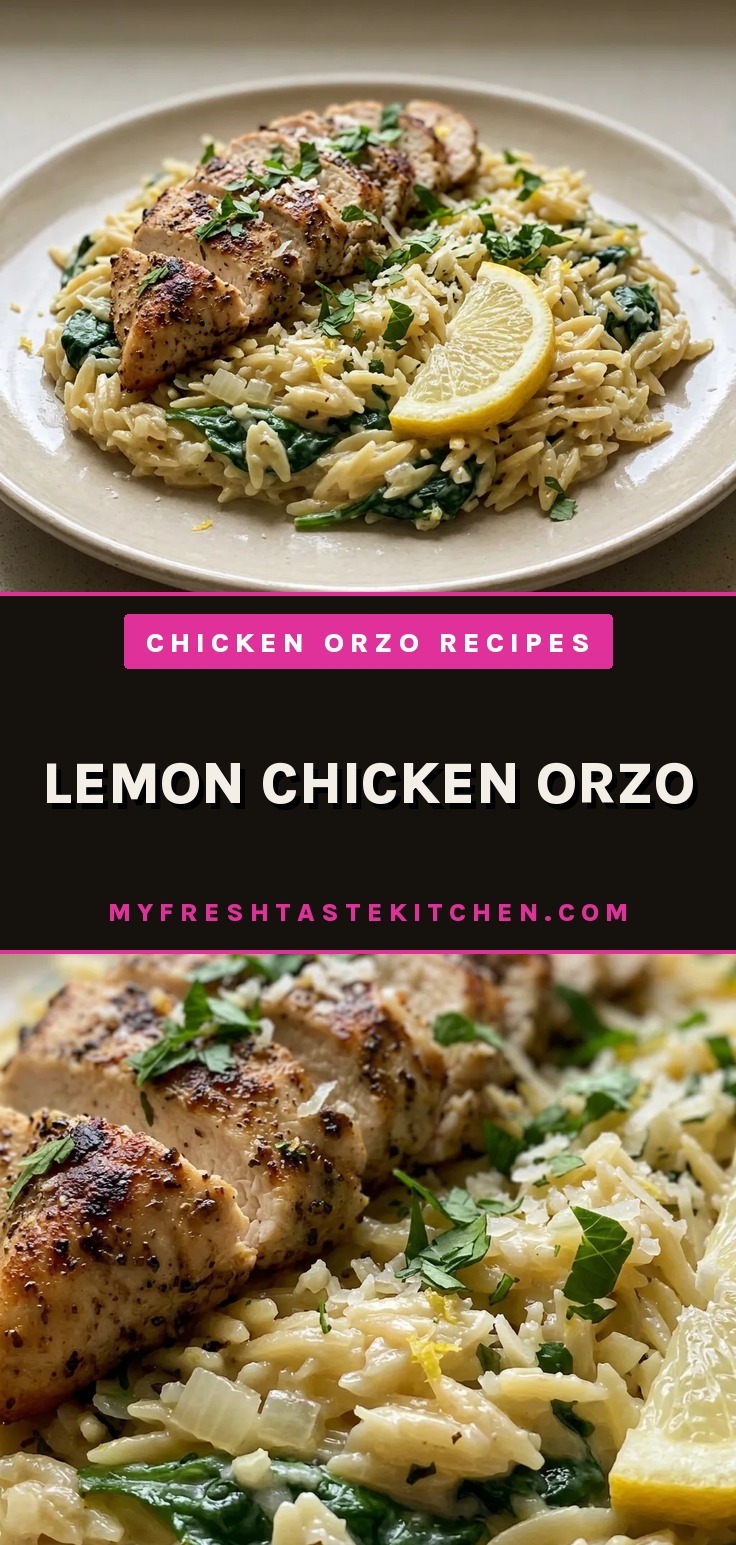
Creamy orzo clings to each piece of chicken, with lemon cutting through the richness just enough to keep every bite bright. That balance, rich but not heavy, tangy but not sharp, is what makes this lemon chicken orzo work. The trick isn’t layering flavors; it’s knowing when to add each one.
The pan does most of the work, so timing matters more than technique. Sear chicken, toast orzo, build sauce, finish with lemon.
Miss the order and the dish turns flat or greasy. Hit it and you get a skillet meal that tastes like more effort than it is.
Why does pounding chicken to an even thickness matter?
When the chicken breast is a uniform 1/2 inch thick, every part cooks at the same rate. No thin edges drying out while the thick center stays underdone.
You get a consistent doneness throughout, so the center reaches safe temperature right as the surface finishes browning. And that rest after cooking?
It lets the juices redistribute back into the meat, so slicing doesn’t leave a puddle on the board. The result is juicy, tender chicken that doesn’t taste overcooked or dry.
The reason you toast orzo in butter first
Dropping dry orzo into simmering liquid gives you a soft, bland pasta. Toasting it in butter for a couple minutes changes that. The grains take on a warm, nutty flavor that becomes the backbone of the dish.
More important: the butter coats the starch, so the orzo holds its shape through the simmer instead of turning into a sticky clump. You get distinct, tender pieces that still have bite, not mush.
How heavy cream and Parmesan make a creamy sauce that clings
Heavy cream brings a rich richness that coats each orzo grain without feeling greasy. Parmesan does double duty: its salty edge seasons the sauce, and the fine grated particles thicken it slightly as they melt. Together they create a silky sauce that sticks to the pasta, not a thin broth.
And when you fold in spinach, it wilts into the sauce, adding color and a mild earthy note without releasing enough water to thin things out.
Why lemon gets added at the very end
Lemon zest and juice are here to cut through the cream and butter, keeping the dish bright instead of heavy. If you add them early and let them cook, the heat dulls the citrus aroma and brings out a bitter edge from the zest. Stirred in after the sauce comes together, the lemon stays sharp and lively.
You taste a clean, fresh pop that balances the richness without any cooked bitterness.
Prep: 10 min · Cook: 20 min · Total: 30 min · Servings: 4 · Calories: 530 kcal
Key ingredients for lemon chicken orzo
Chicken breasts: Pound to an even half inch so every part cooks at the same rate.
Orzo pasta: Toast it in butter first for a nutty flavor and to keep grains separate.
Heavy cream: Brings rich richness that coats each grain without feeling greasy.
Parmesan cheese: Freshly grated only; pre shredded won’t melt smoothly into the sauce.
Lemon: Add zest and juice at the very end so the citrus stays bright, not bitter.
Watch for visual and textural cues to nail the Lemon Chicken Orzo
Pound and season the chicken
Pound the chicken to an even 1/2 inch so the thickest part matches the thin edges. Season both sides. You want the seasoning to cling, not slide off.
Sear the chicken until golden
Cook over medium heat, about 6 minutes per side. The surface should be deep golden brown with crispy edges. If it sticks, it’s not ready to flip.
Rest the chicken
Let the cooked chicken rest for 10 minutes before slicing. During rest, the pan will cool slightly, ready for the next step.
Sauté aromatics in the same pan
Melt butter, then cook onion until translucent, about 3 minutes. Add garlic and Italian seasoning; stir until fragrant, about 1 minute. The butter should smell nutty.
Toast the orzo in butter
Add dry orzo and stir constantly for 2 minutes. The grains will turn from pale to light golden. Stop when you smell a toasty, nutty aroma.
Simmer the orzo
Pour in broth, season with salt and pepper. Bring to a gentle boil, then cover and simmer for 12 minutes. The liquid should be mostly absorbed and orzo tender but not mushy.
Build the creamy sauce
Uncover and stir in spinach until wilted, then add heavy cream and Parmesan. The sauce will thicken slightly as the cheese melts. It should coat the orzo, not pool.
Finish with lemon
Add lemon zest and juice to taste. The sauce should brighten noticeably.
If it tastes flat, add more lemon. The citrus should cut the richness without overwhelming it.
Top and serve
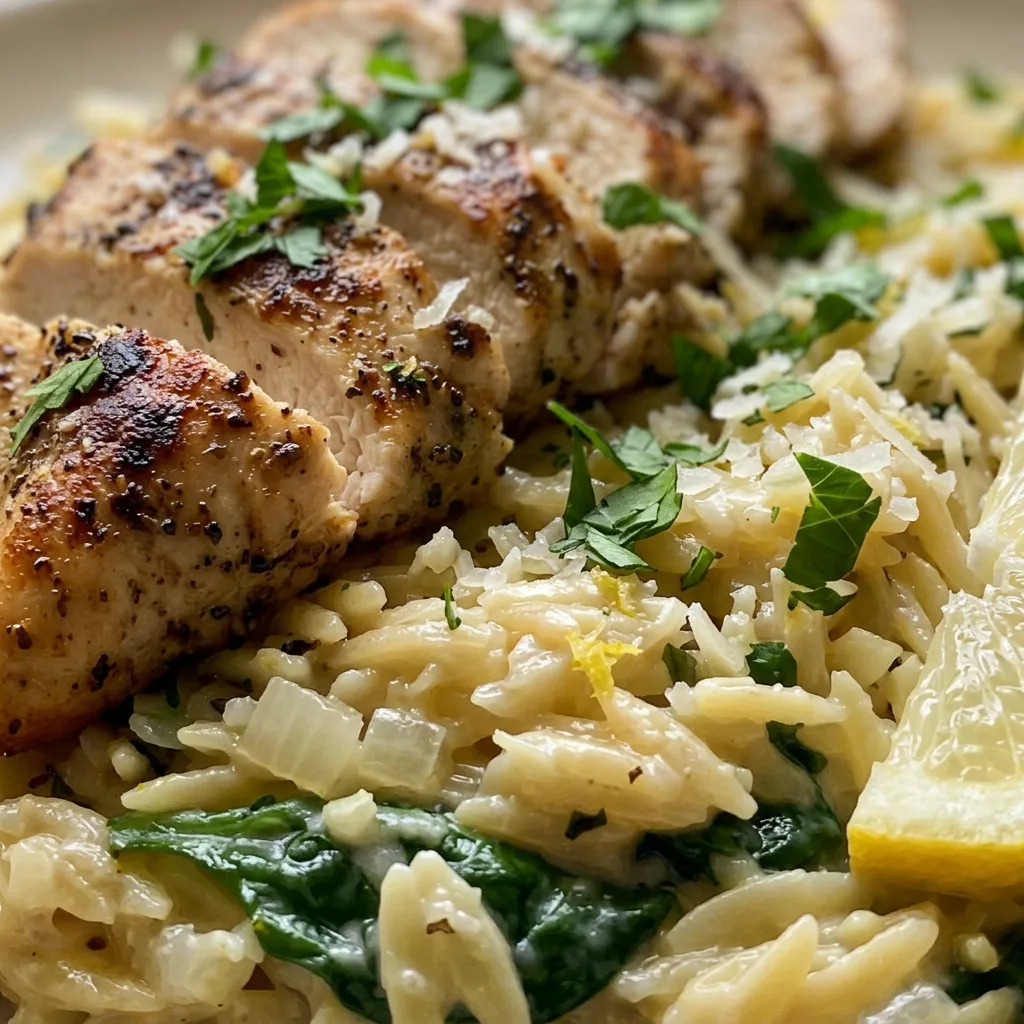
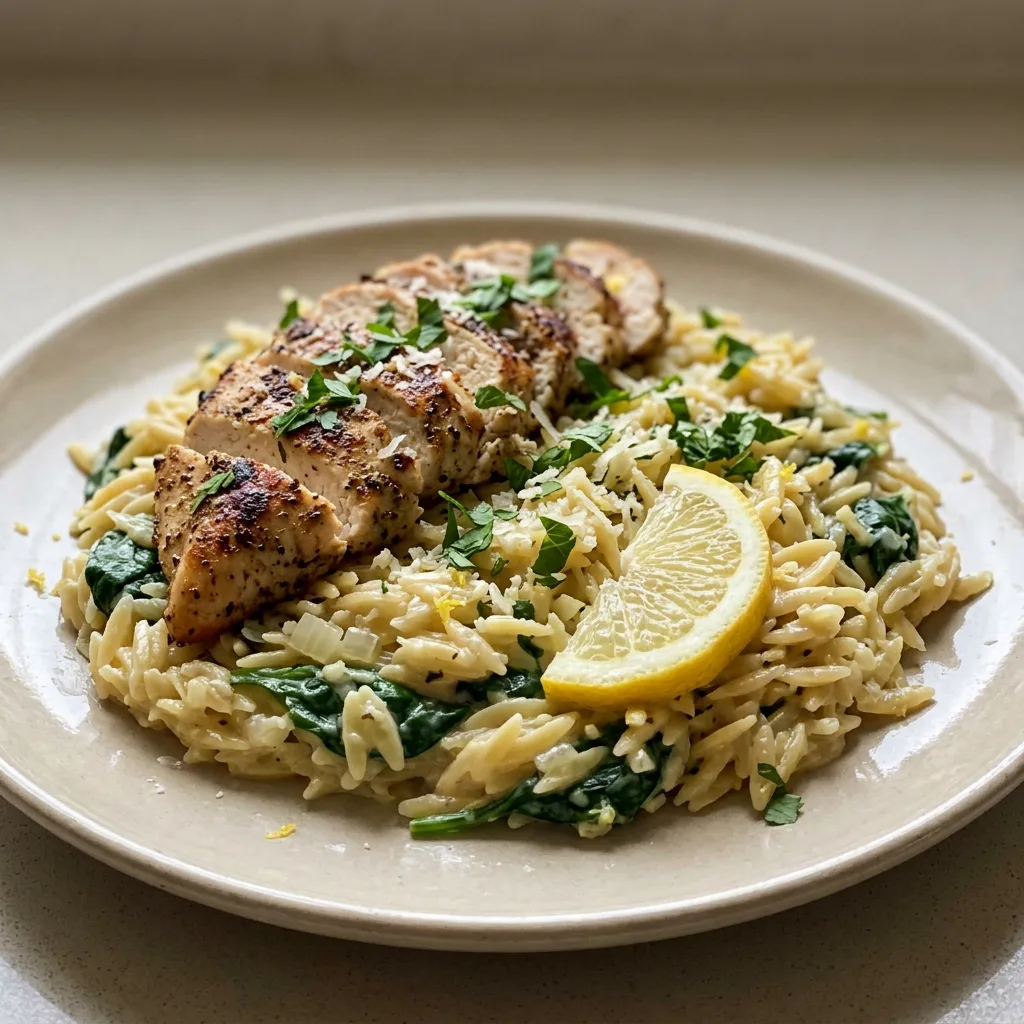
Slice the rested chicken, place on top of the orzo, garnish with lemon slices and parsley. The chicken should be juicy, not dry.
Lemon Chicken Orzo
Ingredients
Method
Season Chicken Breasts:
Coat the chicken breasts with a drizzle of olive oil, 1 teaspoon garlic powder, 1 teaspoon Italian seasoning, roughly 1/2 teaspoon kosher salt per breast, and black pepper.Cook and Rest Chicken:
Over medium heat, warm a generous amount of olive oil in a large skillet. Cook the chicken for about 6 minutes per side until the center is fully cooked. Take the chicken out and let it rest for 10 minutes before slicing.Sauté Onion and Garlic:
In the same skillet, melt the unsalted butter. Cook the onion until softened, then add the minced garlic and the remaining 1 teaspoon Italian seasoning; sauté for 1 minute until aromatic.Cook Orzo in Broth:
Add the orzo pasta and stir for about 2 minutes, then pour in the chicken broth. Adjust salt and pepper as needed. Bring to a gentle boil, lower to a simmer, cover, and cook for 12 minutes.Add Spinach and Cream:
When the orzo is tender, uncover and mix in the spinach, heavy cream, and parmesan cheese.Add Lemon Zest and Juice:
Add lemon zest and fresh lemon juice to taste.Top with Chicken and Garnish:
Top with sliced chicken, garnish with lemon slices and Italian parsley, and serve.
How to store and reheat Lemon Chicken Orzo
This dish is best served within 30 minutes of adding the lemon and garnishes. The orzo continues to absorb sauce as it sits, so leftovers will be drier. Store in an airtight container in the fridge for up to 3 days.
To reheat, add a splash of chicken broth per serving and warm gently on the stovetop or in the microwave, stirring occasionally. The cream sauce may separate slightly; stirring in a little extra broth or cream will bring it back. The chicken will dry out if reheated too aggressively; slice it thin and reheat just until warm.
Freezing is not recommended because the cream sauce will break and the orzo will turn mushy upon thawing. If you must freeze, freeze the cooked chicken separately and make fresh orzo and sauce when you’re ready to serve.
What you can swap in lemon chicken orzo, and what to leave alone
Heavy cream: Half-and-half or whole milk. The sauce will be thinner and less rich.
To avoid curdling, use only whole milk. Start with the same amount the recipe calls for, then simmer uncovered an extra minute or two to thicken slightly. The coating won’t be as rich, but the dish still works.
Chicken breasts: Boneless skinless chicken thighs. Thighs stay juicier and tolerate a bit of overcooking.
Pound them to 1/2 inch as well, but expect a slightly darker color and richer flavor. Cooking time may vary by a minute or two; check for 165°F internal temp. The orzo and sauce remain unchanged.
Orzo pasta: Gluten-free orzo or another small pasta like ditalini. Gluten-free orzo often needs less cooking time, check the package.
Ditalini or risoni (another rice-shaped pasta) work, but skip large shapes like penne because they change the texture of the dish. The toasting step still adds flavor, but gluten-free pasta may toast faster and can stick more; stir constantly.
Parmesan cheese: Pecorino Romano or Grana Padano. Pecorino is saltier and sharper, so cut the added salt in the broth slightly. Grana Padano is milder and closer to Parmesan.
Both grate and melt similarly. Avoid pre-shredded cheeses, they contain anti-caking agents that turn the sauce grainy.
Tips
- Check the orzo a minute before the recommended simmer time to ensure it’s al dente, as different brands may cook faster and overcooked orzo turns mushy.
- When searing the chicken, pat the pounded breasts dry with paper towels before seasoning; this removes surface moisture that would otherwise steam the meat and prevent a golden crust.
Frequently Asked Questions
Can I make lemon chicken orzo ahead of time?
This dish is best served fresh, the orzo keeps absorbing sauce and the cream can separate on standing. If you have to prep ahead, cook the chicken and orzo separately, then combine and add lemon just before serving. Leftovers keep in the fridge up to 3 days; reheat with a splash of broth to restore moisture.
Why did my orzo turn out mushy?
Most likely you didn’t toast the orzo in butter first. That step coats the starch so the grains hold their shape through the 12-minute simmer.
Another cause: you simmered too long or used too much liquid. The orzo should be tender but still distinct when you uncover it.
How do I keep the chicken from drying out?
Pound the breasts to an even 1/2 inch so the thin parts don’t overcook while the thick part catches up. Sear 6 minutes per side over medium heat, then rest 10 minutes before slicing, that lets juices redistribute back into the meat. Slicing too early lets the juices run out.
What’s the difference between this and a classic Greek lemon chicken soup?
This is a creamy, thick pasta dish, not a broth-based soup. The orzo is simmered in chicken broth and finished with heavy cream and Parmesan, while avgolemono uses eggs and lemon to thicken a clear broth. Here the lemon goes in at the end for a bright pop; in the soup it’s cooked into the broth for a mellow tang.
