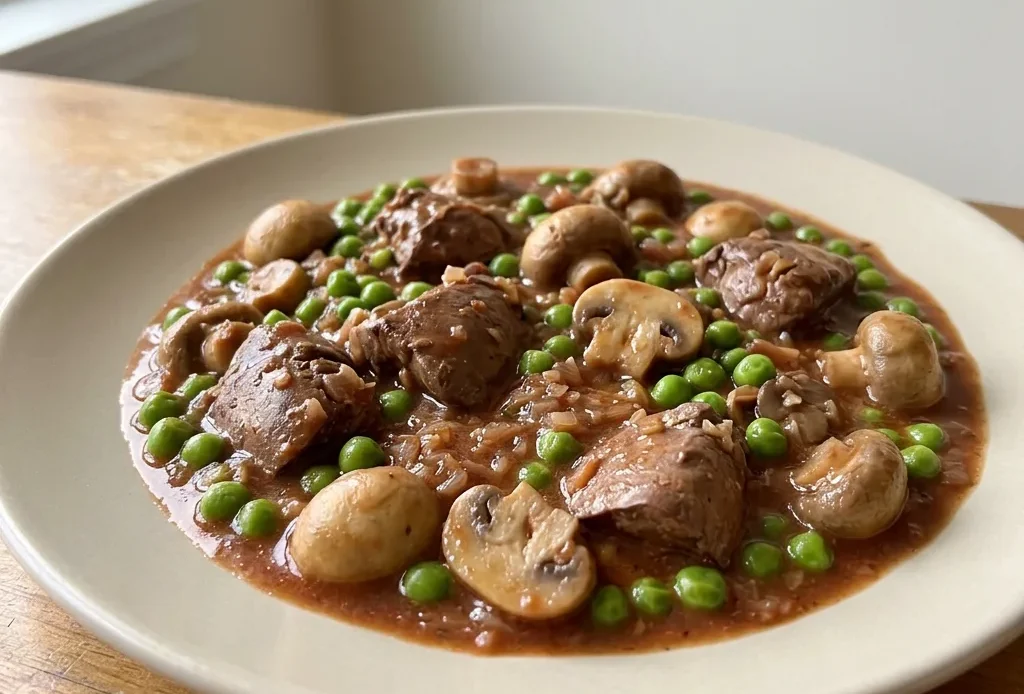
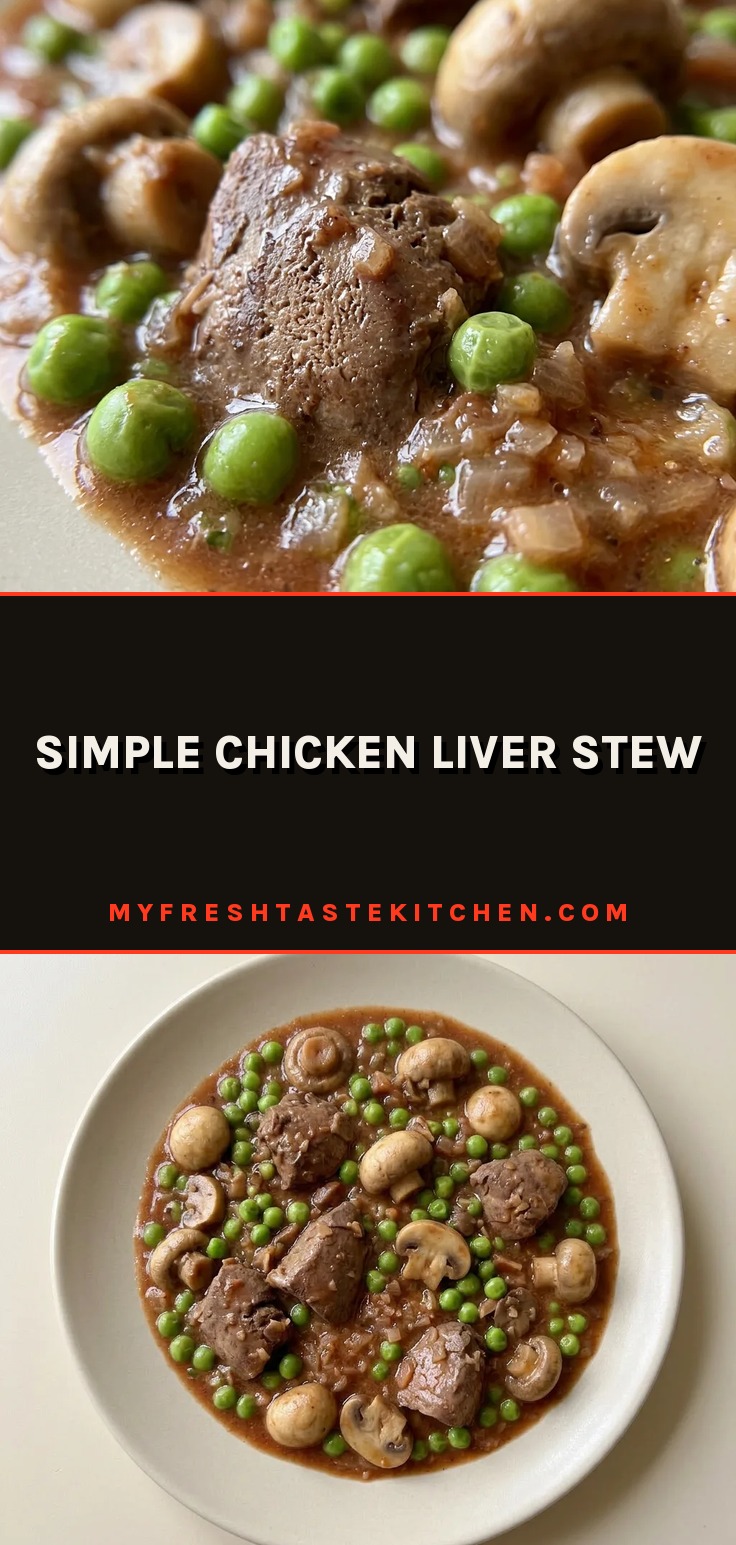
The hardest part of this chicken liver stew isn’t the liver, it’s getting the sauce right. Too thin and it slides off the mushrooms; too thick and it turns pasty. A simple chicken liver stew like this one walks that line with a single pan and 25 minutes, relying on red wine reduction and a cornstarch slurry for control.
The livers sear fast over high heat, the mushrooms brown alongside them, and the peas go in last to keep their snap. No fuss, just a rich, glossy sauce that clings to every bite.
Why sear chicken livers over high heat?
High heat is important here. A quick sear forms a crust that traps moisture inside, so the livers stay tender rather than turning tough or grainy. That browning, the Maillard reaction, also creates savory notes that the red wine sauce picks up and carries through the dish.
If the pan is overcrowded, the livers steam instead of sear, you’ll see them releasing grayish liquid rather than browning. So use a large skillet or work in batches. The result is livers with a firm exterior and a creamy interior, not a dry, crumbly texture.
How do red wine and tomato paste build the sauce?
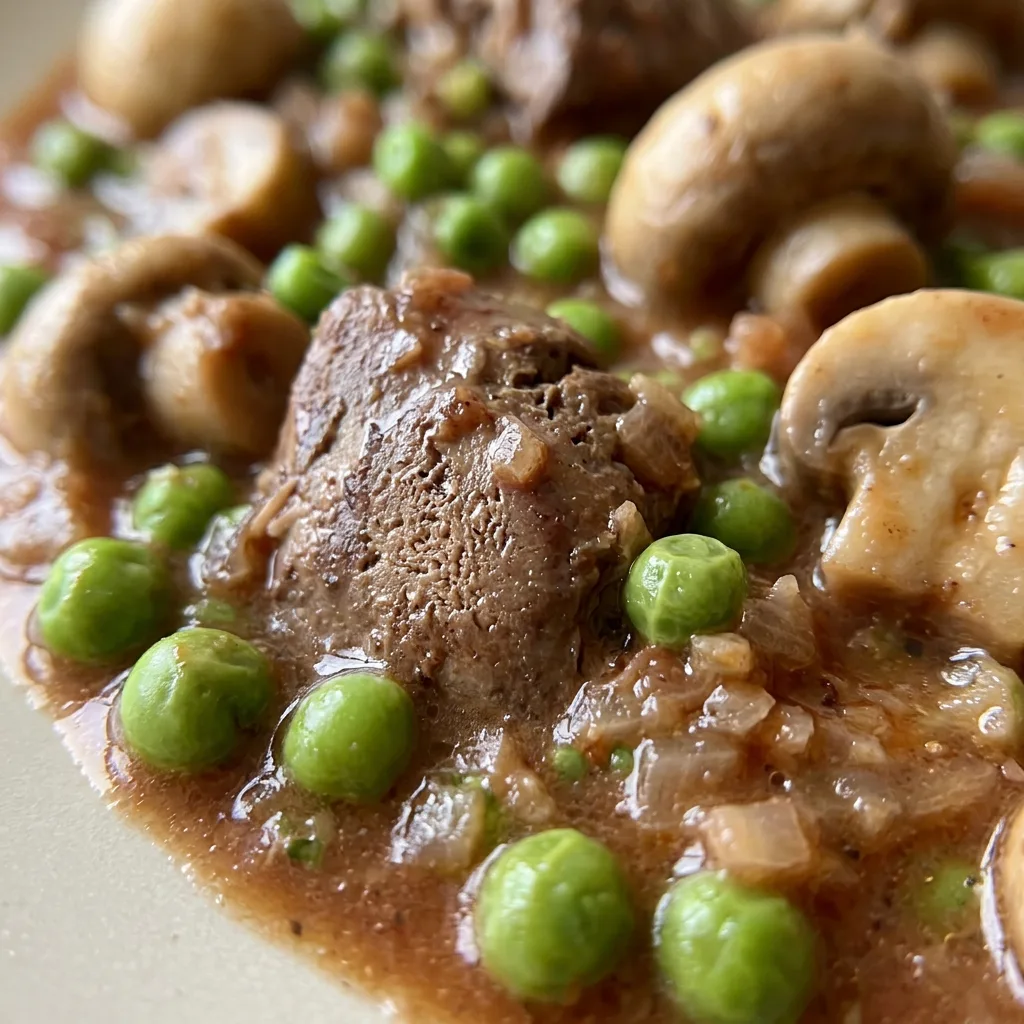
Red wine brings acidity and fruitiness that cut through the richness of the livers, keeping each bite balanced. Tomato paste adds umami and body, helping the sauce thicken as it reduces. When the wine reduces by half, its alcohol cooks off, leaving concentrated depth, you’ll taste it in the glossy, slightly tacky sauce that clings to the livers and mushrooms.
The combination doesn’t overpower the liver; it complements it, making the sauce savory without being heavy.
Why add frozen peas at the very end?
Frozen peas are already blanched, so they only need a brief warm-up to thaw and heat through. Dropping them in early would turn them mushy and dull that bright green color. Their sweetness provides a counterpoint to the savory liver and the acidic wine sauce, so you get a pop of sweetness in each spoonful.
Add them right before serving, stir just until heated, and they’ll stay plump and bright.
Prep: 5 min · Cook: 20 min · Total: 25 min · Servings: 2 · Calories: 570 kcal
A few ingredients need your attention before you start
Chicken livers: Look for plump, pinkish livers with no green spots (bitter) and trim any sinew before cutting.
Red wine: Use a dry red you’d drink; the wine’s acidity cuts the liver’s richness and builds the sauce.
Button mushrooms: Small whole ones hold shape; quarter any larger than a bite so they cook evenly with the livers.
Echalion (banana) shallot: A single medium shallot gives mild sweetness without the sharp bite of a regular onion.
Frozen peas: Add straight from the freezer; they only need a minute to heat through so they stay bright and sweet.
Build the stew in a single pan, layering flavors from shallot to wine.
Sweat the shallot
Melt butter over medium-high until it foams, then add diced shallot. Stir often; if it browns, the heat is too high. You want it translucent, not colored, in 2 minutes.
Add garlic and mushrooms
Stir in garlic for 1 minute until fragrant. Then add mushrooms and season. They should release liquid and start to brown at the edges after 2 to 3 minutes, not steam in a puddle.
Sear the livers
Crank the heat to high, stir in tomato paste and liver chunks. You want a sizzle on contact.
If the pan looks crowded and livers release gray liquid, remove some. After 2 to 3 minutes, they should have brown edges.
Deglaze with wine
Pour in red wine. It should bubble vigorously.
Let it reduce by half, about 3 to 4 minutes. The sauce will darken and coat the back of a spoon, that’s your cue to stop.
Thicken and finish
Lower heat to medium. Stir in frozen peas and cornstarch slurry.
The sauce will thicken in 1 to 2 minutes of stirring. Taste for salt and pepper.
The peas should stay bright green and plump.
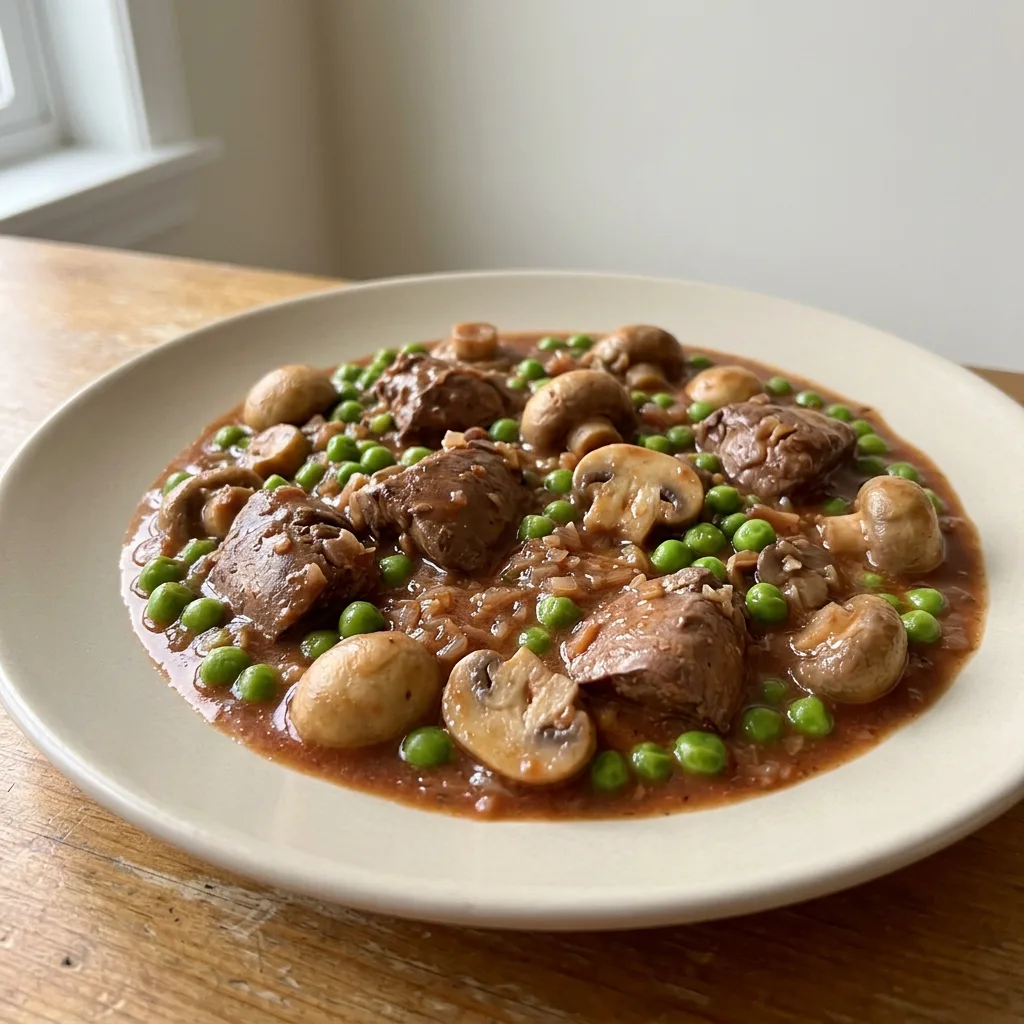
Simple Chicken Liver Stew
Ingredients
Method
Dice Shallot:
Halve the shallot, remove the peel, and dice it finely.Mince Garlic:
Peel the garlic cloves and mince them finely.Cut Mushrooms:
Rinse the mushrooms; cut any that are bigger than a single bite into halves or quarters.Trim Chicken Livers:
Prepare the chicken livers by trimming off sinew and cutting into 3/4-1 inch (2-2.5 cm) chunks.Cook Shallot in Butter:
Set a 12-inch (30 cm) skillet over medium-high heat and melt the butter. Once it starts foaming, add the diced shallot and cook for 2 minutes, stirring now and then, without letting it brown.Cook Garlic:
Add the minced garlic and cook for 1 minute while stirring.Sauté Mushrooms:
Add the mushrooms, season with salt and pepper, and cook for 2-3 minutes, stirring from time to time.Cook Livers with Tomato Paste:
Raise the heat to high, stir in the tomato paste and chicken liver pieces, and cook for 2-3 minutes.Reduce Red Wine:
Pour in the red wine and let it reduce by half, which takes about 3-4 minutes.Make Cornstarch Slurry:
Combine 1 tablespoon water with the cornstarch to create a slurry.Add Peas and Slurry:
Lower the heat to medium. Put the frozen peas and the cornstarch slurry into the pan and cook for 1-2 minutes, stirring constantly.
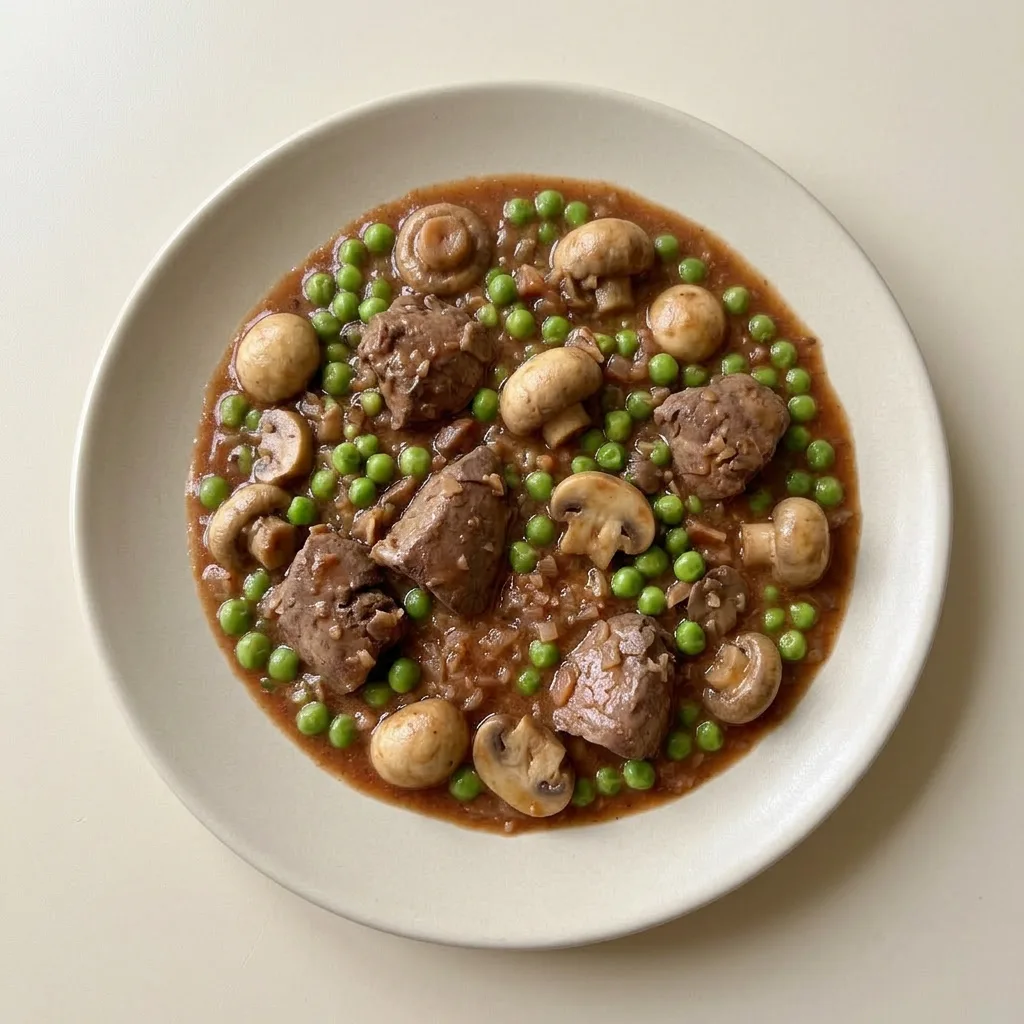
Storage and Serving
This stew is best eaten right after cooking, while the livers are still tender and the peas are bright. Leftovers keep in the fridge for up to 3 days in a sealed container. The sauce will thicken as it sits; reheat gently in a skillet or microwave, adding a splash of water or wine to loosen it back to a saucy consistency.
The livers will firm up a bit on reheating, so try not to boil them. Freezing is not recommended: the livers turn grainy and the peas lose their texture. If you must freeze, do so before adding the peas and slurry, then finish fresh when reheating.
Tips
- Pat the chicken livers dry with paper towels before trimming and cutting. Any surface moisture will steam instead of sear, preventing the brown crust that locks in tenderness.
Swap the livers or wine, but keep the peas and mushrooms close to what’s listed
Chicken livers: Duck or turkey livers. Duck livers are richer, almost buttery; turkey livers are leaner and slightly milder. Both work with the same prep and cook time, but they’ll change the stew’s character, duck makes it more rich, turkey a bit lighter.
You won’t need to adjust amounts.
Red wine: Dry marsala or dry sherry. Marsala brings a nutty sweetness; sherry adds a sharper, oxidized note.
Both are less acidic than red wine, so the sauce will be rounder and less tangy. Use the same volume and let it reduce by half as directed.
Frozen peas: Fresh peas or frozen edamame (shelled). Fresh peas need a minute or two longer to cook through; edamame are firmer and more savory, leaning the dish earthier.
Both add that pop of green and sweetness, but edamame won’t be as sweet. Start with the same amount, then taste and adjust.
Button mushrooms: Cremini or shiitake. Cremini are just browner button mushrooms, swap one for one with no change.
Shiitake are meatier and more umami; their caps hold up well, but discard the tough stems. The flavor shifts deeper, almost woodsy.
Frequently Asked Questions
Can I make this chicken liver stew ahead of time?
Yes, but it’s best within 3 days in the fridge; the livers firm up on reheating, so warm gently with a splash of water or wine. Freezing is not recommended, the livers turn grainy and the peas lose texture. If you must freeze, do so before adding the peas and slurry, then finish fresh when reheating.
How do I know when the chicken livers are cooked through without overcooking?
Look for brown edges and a firm but still springy feel when pressed; the interior should be creamy, not chalky. Overcooking happens if they release gray liquid instead of browning, so use high heat and don’t crowd the pan.
What should I serve with this stew to soak up the sauce?
Crusty bread, mashed potatoes, or egg noodles work well, anything that soaks up the glossy red wine sauce. The sauce is intentionally thin enough to coat but not watery, so a starchy side is ideal.
Why did my chicken livers turn out tough and rubbery?
Most likely the pan was overcrowded, causing them to steam instead of sear, you’d see gray liquid pooling. Next time use a large skillet or cook in batches. Overcooking is another cause; they should have brown edges but still feel springy after 2 to 3 minutes on high heat.
Is this recipe similar to a classic French liver stew?
It shares the same technique of searing livers and deglazing with wine, but it’s a quicker sauté, not a long braise. The addition of mushrooms and peas gives it a modern, weeknight-friendly twist, while the red wine and tomato paste keep it savory and balanced.
