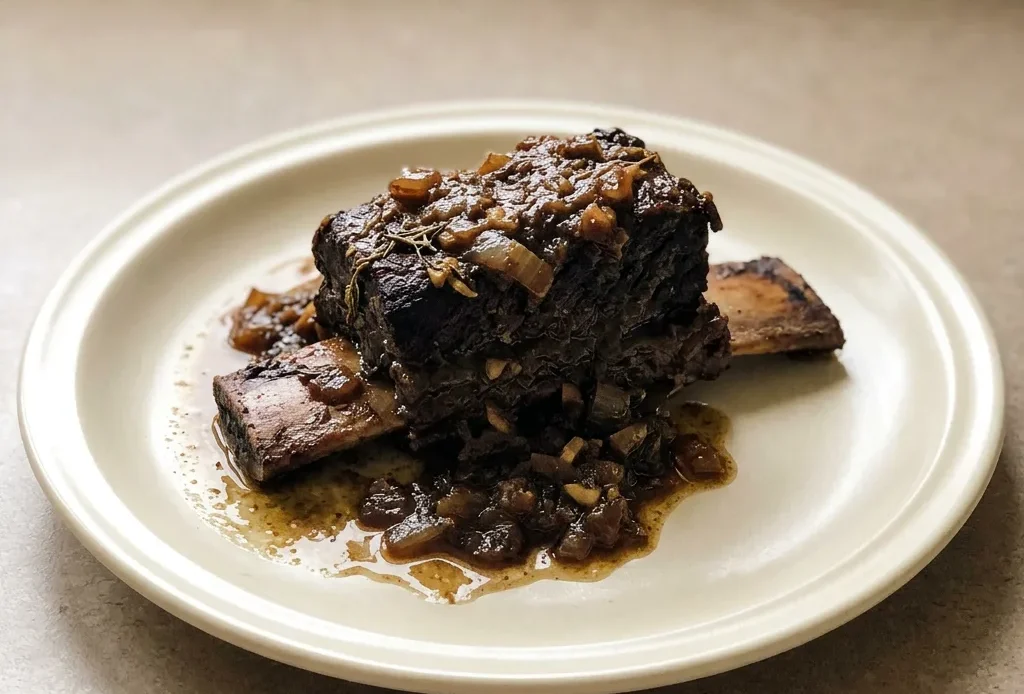
Most people skip browning the short ribs, then wonder why the braise tastes flat. That sear is where the deep, savory flavor lives, the crust that forms in the pan is what separates a memorable dish from a pot of wet meat. These crockpot beef short ribs build richness from the first sizzle, and the slow cooker does the rest, turning tough collagen into spoon-tender beef.
The braising liquid picks up the browned bits, the wine cuts the fat, and the result punches far above the few minutes of hands-on work. If you want maximum return from the least effort, this is it.
I once set the crockpot to high thinking it would speed things up, but after 8 hours the ribs were still tough and had to be shredded with a knife.
Browning depth
Searing the short ribs before they hit the crockpot is important for deep flavor. The heat triggers the Maillard reaction, browning the surface and creating rich, savory compounds that no amount of slow cooking can replicate. When you deglaze the skillet with broth and wine, those browned bits dissolve into the braising liquid, carrying that roastiness through the whole dish.
Skip this step and you’ll end up with beef that’s cooked, sure, but one-note. The flavor that comes from browning is what separates good short ribs from memorable ones.
Wine and broth partnership
Red wine and beef broth form the backbone of the braising liquid. The wine’s acidity cuts through the fat and adds complexity, while the broth provides a savory base and body that clings to the meat.
Tomato paste and Worcestershire sauce push the umami further, deepening the beefy character without overwhelming it. Together, they create a liquid that tastes like more than the sum of its parts, balanced, rich, and exactly what these ribs need to shine.
Low-and-slow tenderness
Eight hours on low is what changes tough short ribs into fork-tender meat. Low heat gently breaks down collagen into gelatin, which makes the meat moist and gives the sauce body. Now I always use low heat for the full 8 hours, letting collagen break down into gelatin for that tender bite.
Crank the heat and you’ll get chewy, dry ribs every time. That slow, patient cook is the only way to get that fall-off-the-bone texture.
Sweet and smoky balance
Brown sugar adds a touch of sweetness that rounds out the acidity from the wine and salt. Smoked paprika brings a subtle smokiness that echoes the char from browning without dominating.
Thyme and bay leaf contribute herbal notes that lift the dish, keeping it from feeling heavy. All of these work together so the first bite hits rich beef first, then the sweetness and smoke bloom in the background.
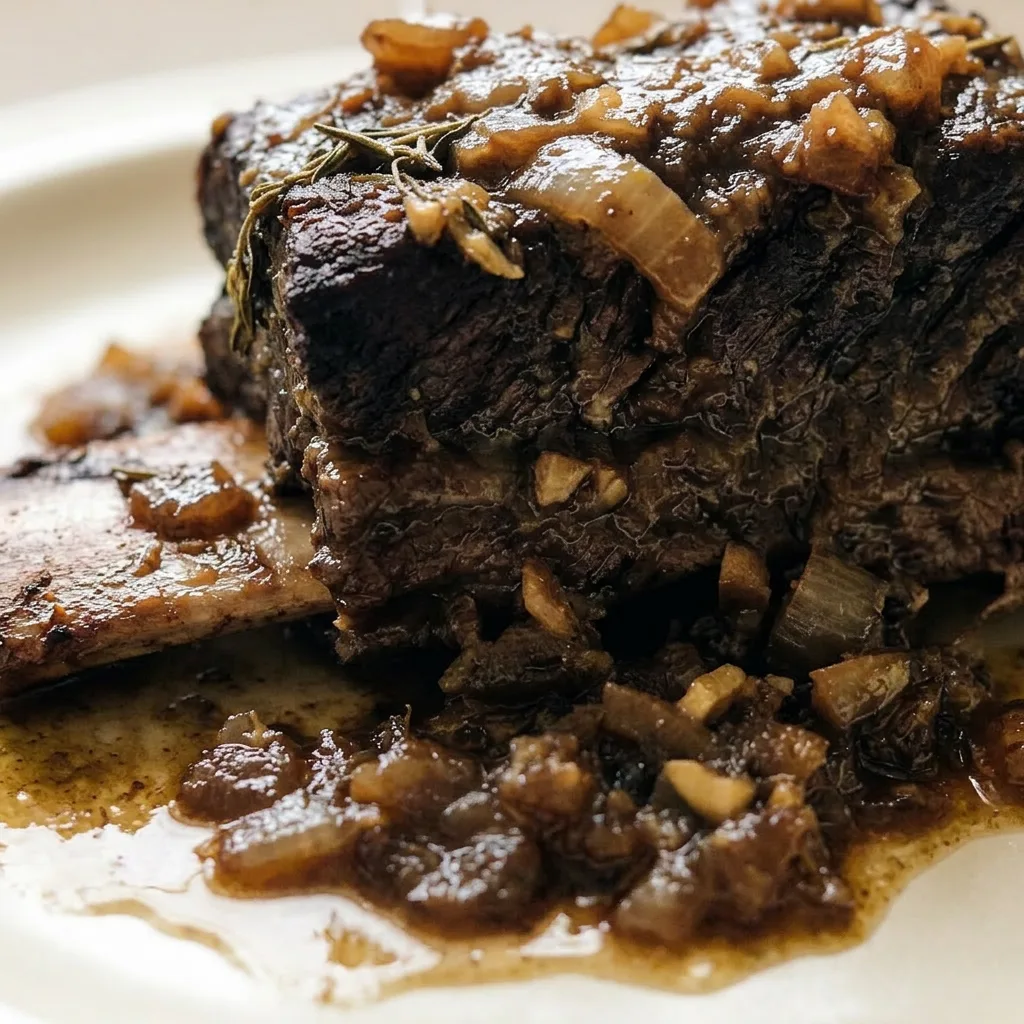
Prep: 20 min · Cook: 8 hr · Total: 8 hr 20 min · Servings: 6 · Calories: 450 kcal
What to look for at the store
Beef short ribs: Look for well-marbled ribs; the fat renders during cooking and keeps the meat moist.
Red wine: Use a dry red you’d drink; the wine’s acidity and tannins balance the rich beef.
Beef broth: Low sodium broth lets you control the salt level; full sodium can make the final sauce too salty after reduction.
Smoked paprika: Buy sweet smoked paprika, not hot; you want gentle smokiness, not heat.
Building flavor from the first sear to the last ladle
Season and sear
Pat the ribs dry first so the seasoning sticks. A dry surface also means a better crust.
When they hit the hot skillet, listen for a steady sizzle, if it fades, you overcrowded. Work in batches.
Deglaze the skillet
After browning, the pan should have a dark fond. Pour in the wine and broth while scraping with a wooden spoon.
If the fond stays stuck, the pan wasn’t hot enough. You want it dissolved, not floating in specks.
Layer the crockpot
Tuck the seared ribs in a single layer if possible. Pour the deglazed liquid over them so the meat is partially submerged. Watch that the bay leaf isn’t buried, it’ll be easier to remove later.
Cook low and slow
Set the crockpot to low and leave it for 8 hours. Don’t lift the lid.
At 6 hours, the meat should resist a fork. At 8, it should pull apart with almost no effort.
If it still clings to the bone, it needs more time, check in 30-minute increments.
Finish the sauce
Once the ribs are out, skim the fat from the surface with a spoon. For a cleaner sauce, pour through a fine-mesh strainer. Taste and adjust salt, the reduction may have concentrated the seasoning.
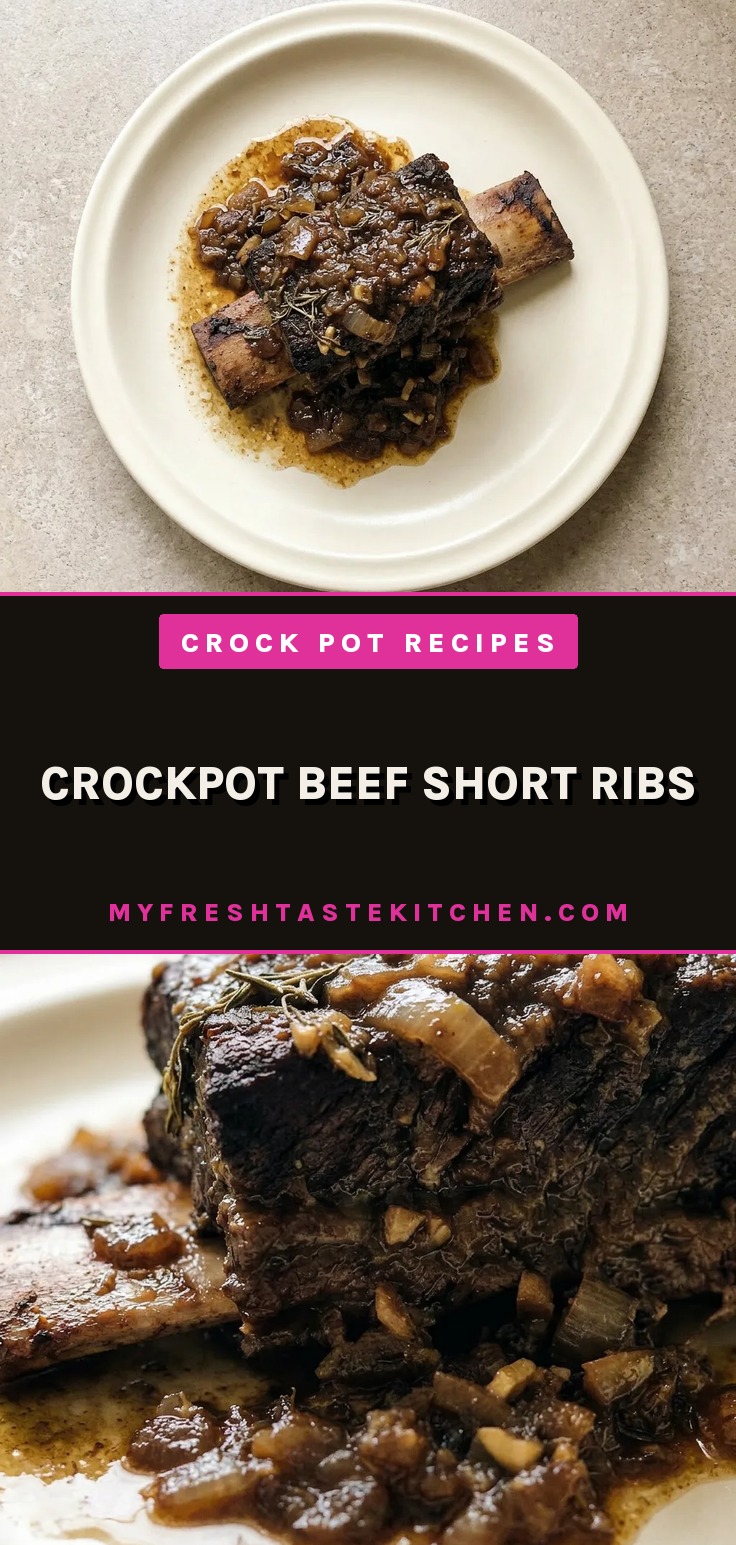
Crockpot Beef Short Ribs
Ingredients
- 4 lbs beef short ribs
- 1 cup beef broth
- 1 cup red wine
- 1 onion, chopped
- 4 cloves garlic, minced
- 2 tablespoons tomato paste
- 2 tablespoons Worcestershire sauce
- 1 tablespoon brown sugar
- 1 teaspoon salt
- 1 teaspoon black pepper
- 1 teaspoon smoked paprika
- 1 teaspoon dried thyme
- 1 bay leaf
Instructions
Season Short Ribs:
Coat the beef short ribs with salt, pepper, and smoked paprika.Brown Short Ribs:
In a large skillet, brown the short ribs on all sides. Move them to the crockpot.Cook Aromatics and Sauce:
Using the same skillet, cook the onion and garlic until they become tender. Then add beef broth, red wine, tomato paste, Worcestershire sauce, brown sugar, thyme, and the bay leaf. Mix thoroughly.Slow Cook Ribs:
Pour this mixture over the short ribs in the crockpot. Put the lid on and cook on low for 8 hours, until the meat is tender and separates from the bone.Serve with Sauce:
Take out the short ribs and, if you like, strain the sauce. Serve the ribs with the sauce poured over the top.
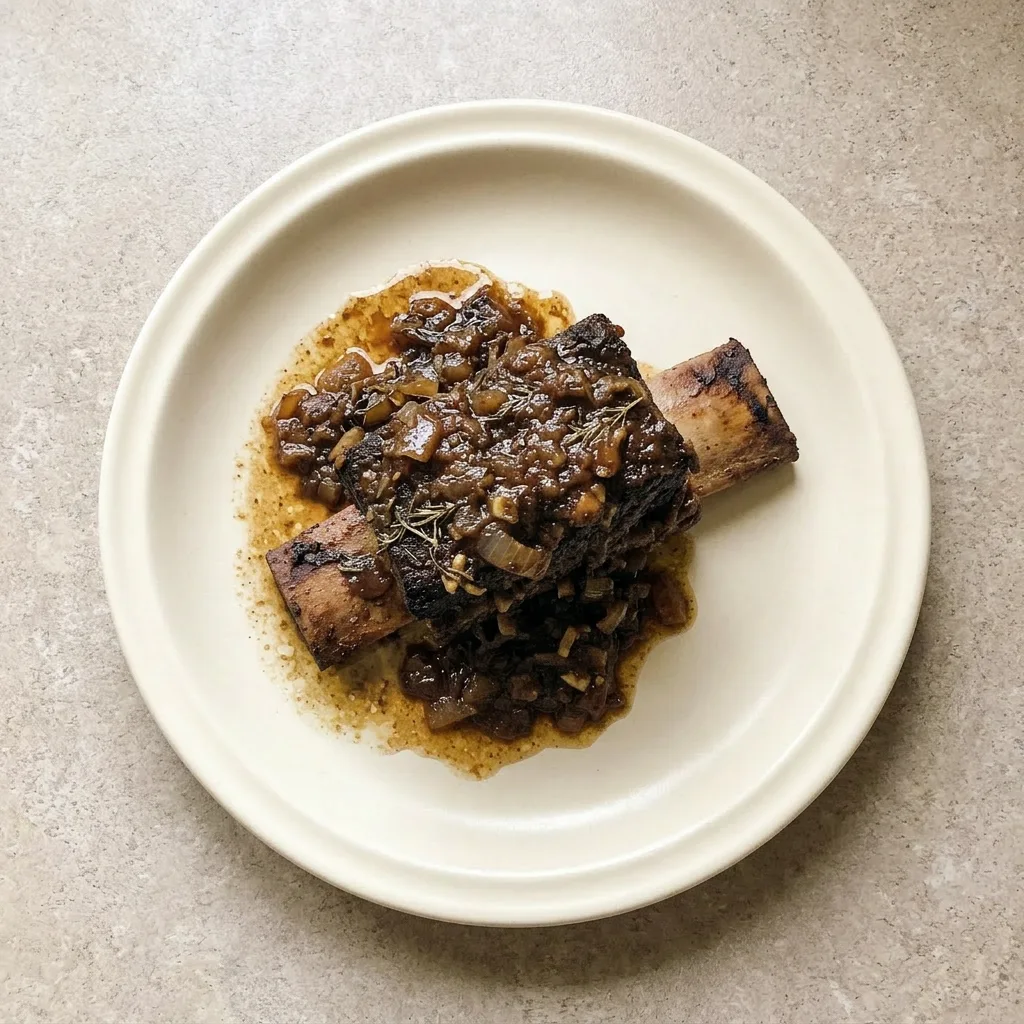
What to swap and what to leave alone in these short ribs
Red wine: Substitute with additional beef broth or non-alcoholic red wine. The broth version will be less complex and slightly less acidic, leaning more savory. Non-alcoholic wine keeps the acidity and fruitiness closer to the original.
Beef broth: Use chicken broth or vegetable broth. Chicken broth makes the sauce lighter and less beefy; vegetable broth even more so. The ribs themselves still taste beefy, but the sauce won’t have that deep, meaty backbone.
Worcestershire sauce: For gluten-free, use tamari or coconut aminos in equal measure. Tamari adds similar umami and salt; coconut aminos are sweeter and milder. The sauce will be slightly less savory and a touch sweeter with aminos.
Smoked paprika: Skip it or use a pinch of chipotle powder or liquid smoke. Omit it and you lose the subtle smokiness, but the dish still works, just less layered. Chipotle adds heat too; start with 1/4 teaspoon.
Liquid smoke is potent; 1/4 teaspoon is plenty.
Storage and Serving
These ribs taste even better the next day. Refrigerate leftovers in their sauce for up to 4 days.
Make ahead by cooking, cooling, and storing in the fridge; reheat gently. The sauce thickens as it sits, so add a splash of broth when reheating.
Freeze for up to 3 months in a sealed container. Thaw overnight in the fridge. Serve within 2 hours of reheating for best texture.
If you strain the sauce, do it just before serving. The ribs are best eaten within 3 days; after that, the meat can dry out slightly.
Warm on the stovetop over low heat, covered, until heated through.
Tips
- Look for short ribs cut flanken style with at least 2 inches of thickness; thinner ribs cook faster and can dry out before the collagen fully breaks down.
Frequently Asked Questions
Can I cook these on high instead of low?
You can, but the meat won’t be as tender. High heat cooks faster but doesn’t give collagen enough time to break down into gelatin.
At 8 hours on low, the ribs pull apart easily; on high in 4 hours, they’ll be chewy. Stick with low for that fall-off-the-bone texture.
Can I make this dish ahead of time and reheat?
Yes, and it actually tastes better the next day. Refrigerate the ribs in their sauce for up to 4 days, or freeze for up to 3 months. Reheat gently on the stovetop over low heat, covered, adding a splash of broth if the sauce has thickened.
The texture holds well within that time.
How do I prevent the ribs from being greasy?
The marbling is what keeps them moist, so some fat is inevitable. After cooking, let the sauce sit for a few minutes, then skim the fat from the surface with a spoon. For a cleaner finish, strain the sauce through a fine-mesh strainer.
That removes most of the grease without losing flavor.
What’s the difference between this and classic braised short ribs?
Classic braised short ribs are usually done on the stovetop or in the oven, often taking 2 to 3 hours. This version uses a crockpot for 8 hours on low, which is more hands-off. The crockpot’s gentle heat mimics a low oven but requires no monitoring, and the longer time fully renders the fat and collagen.