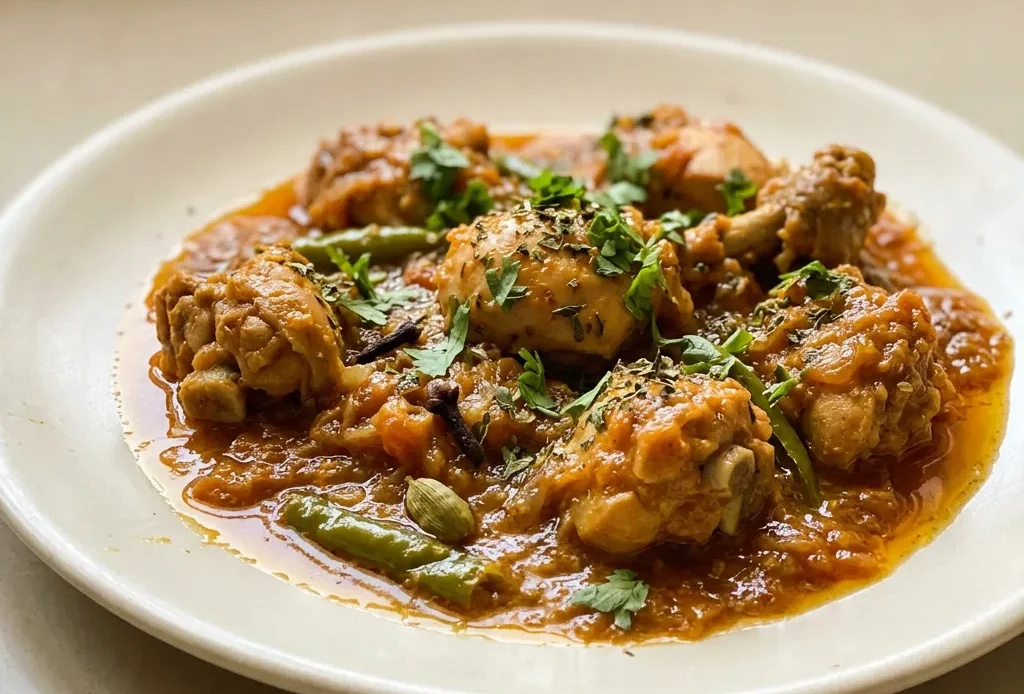
The gravy clings thick and glossy to each piece of chicken, with a faint bitterness from dried fenugreek that keeps every bite interesting. This chicken handi recipe builds flavor step by step, bloom whole spices first, reduce the tomato puree until oil separates, and add cream and garam masala at the very end.
The margin for error is generous, but skipping the marinate or rushing the masala will leave you with a thin, flat curry. Kasuri methi is important here; without it, you’ve got a generic cream gravy. The final touch of crushed fenugreek leaves makes this Handi unmistakable.
The first time I added the chicken right after the tomatoes looked cooked, the gravy turned out watery and bland. The second time, I waited patiently for the oil to separate at the edges, and the difference was night and day.
Yogurt marinade
Yogurt does two jobs here. The lactic acid gently tenderizes the chicken, so you get succulent meat even after simmering. The yogurt also acts as a binder for the spice rub, without it, the dry spices would just fall off.
Thirty minutes is enough; go longer and the chicken can turn mushy on the surface, losing that pleasant bite. You’ll see the yogurt clinging to each piece after marinating, coating it evenly. That coating will later help build a thick, creamy gravy.
Whole spices first
Dropping cloves, cardamom, and cinnamon into hot oil isn’t just for fragrance. Blooming whole spices releases their essential oils into the fat, creating a flavor foundation that seeps into every ingredient added later.
If you add them after the onions, they won’t infuse as deeply. You’ll smell them become aromatic in seconds, that’s your cue the oil is ready. This step matters more than you’d think for a curry chicken recipes where depth comes from layering, not just quantity of spices.
Oil separation in the masala
When you cook the tomato puree, keep going until you see oil glistening at the edges of the pan. That’s not just a visual trick, it means the water has cooked off and the masala has emulsified with the fat. At that point, the flavors are concentrated and the base won’t dilute the chicken later.
If you rush this, the gravy will taste raw and thin. You’ll feel the masala getting thicker as you stir, and the oil beads up like small pools. That’s when it’s ready for the meat.
The final flourish
Cream, garam masala, and kasuri methi go in at the very end for a reason. Cream rounds out the tang from yogurt and tomatoes without dulling the spice heat. Garam masala is volatile, its aromatics fade if cooked long, so stirring it in off-heat keeps that warm, complex scent.
Kasuri methi adds an earthy, slightly bitter note that defines Handi; rub it between your palms to crush it before adding. You’ll taste the difference: a creamy, fragrant finish that ties all the earlier layers together.
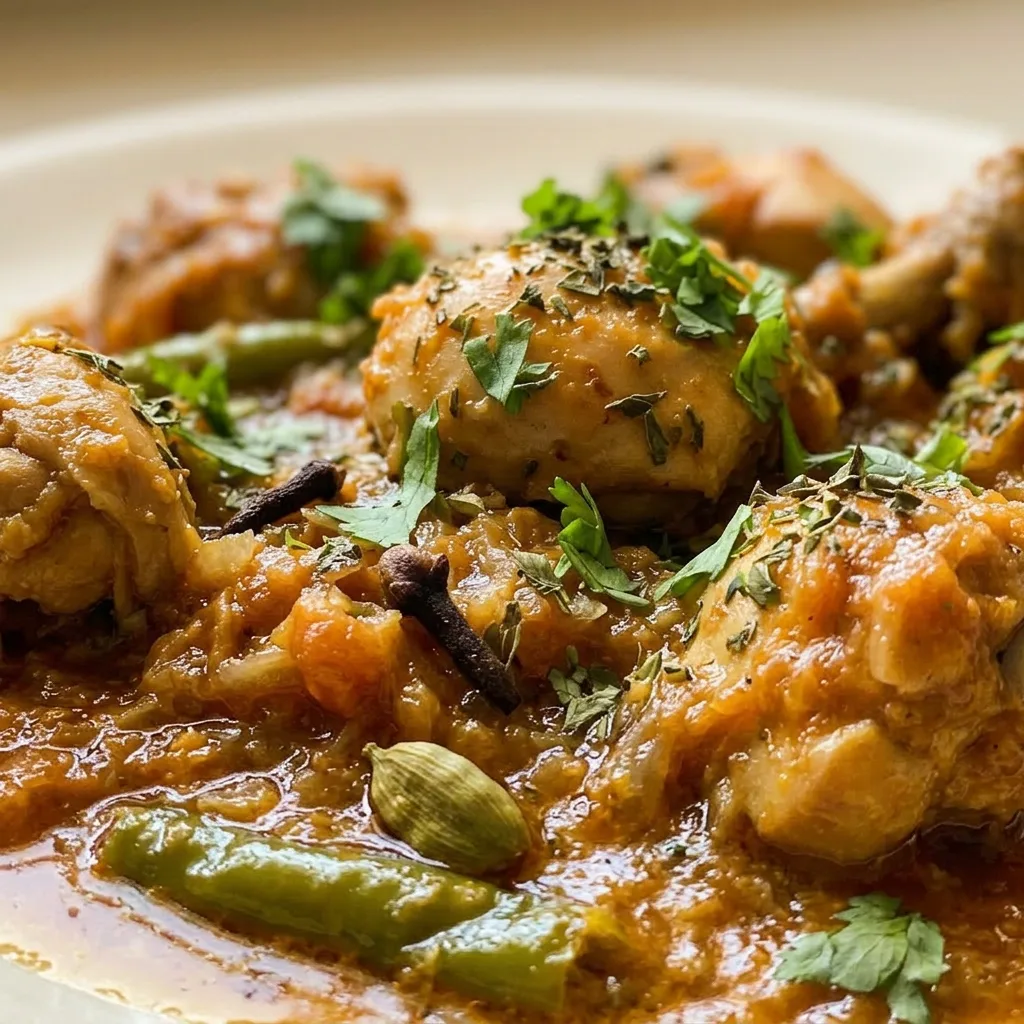
Prep: 10 min · Cook: 5 hr 35 min · Total: 45 min · Servings: 4 · Calories: 330 kcal
Ingredient Notes for Chicken Handi
Yogurt: Use full fat yogurt. Low fat will curdle during the long simmer and make the gravy grainy.
Kasuri Methi (dried fenugreek leaves): Buy the whole dried leaves, not powder. Rub them between your palms to crush before adding.
Tomatoes: Use ripe, red tomatoes for puree. Canned whole tomatoes work too, but drain some juice first.
Green cardamom pods: Use whole pods, not ground. The seeds inside release aroma when bloomed in oil.
The Method: From Marinade to Handi
Marinate the chicken
Mix chicken with salt, pepper, and yogurt until each piece is coated. Let it sit 30 minutes. You’ll see thick yogurt clinging to the meat, that’s a sign it will stay juicy and help the gravy turn creamy later.
Bloom the whole spices
Warm oil over medium-low, then drop in cloves, cardamom, and cinnamon. They’ll sizzle and become fragrant in seconds, that’s your cue the oil is hot enough to extract their oils. Don’t let them darken.
Cook the onions
Add finely chopped onions and cook over medium heat, stirring often, until deep golden brown. This takes patience; pale onions won’t build the sweet, savory base this curry needs. You’ll see them shrink and turn translucent first.
Sauté the ginger-garlic
Stir in ginger-garlic paste and cook for 2 minutes, stirring constantly. The raw smell will fade and a nutty aroma takes over. If it sticks, the heat is too high, lower it slightly.
Toast the dry spices
Add turmeric, cumin, coriander, and red chili powder. Stir for 1 minute. The spices will darken a shade and smell fragrant.
If they burn, the pan is too hot; pull it off heat briefly.
Reduce the tomato puree
Pour in tomato puree and cook over medium heat, stirring occasionally, until oil pools at the edges of the masala. The mixture thickens and turns glossy. This concentrates flavor and prevents a raw tomato taste.
Cook the chicken
Add marinated chicken with any leftover marinade. Stir until the chicken turns from pink to opaque white. Then pour in water to your desired gravy consistency, cover, and simmer on low for 15 to 20 minutes.
Check the doneness
After simmering, the chicken should be tender and oil will float on the surface. Taste and add salt if needed. If the gravy is too thin, simmer uncovered a few minutes; if too thick, splash in a little hot water.
Finish with cream and aromatics
Stir in cream, garam masala, slit green chilies, chopped coriander, and crushed kasuri methi. Cover and cook on low for 2 to 3 minutes. The cream mellows the heat; garam masala stays bright because it’s added late.

Chicken Handi Recipe
Ingredients
- 1 lb 1.6 oz boneless chicken (bone-in also works) 500 g
- 1/2 tsp black pepper powder
- salt to taste
- 1/2 cup thick yogurt/curd
- 2 tbsp oil
- 4 cloves
- 2 green cardamom pods
- 1-inch cinnamon stick
- 2 onions, finely chopped
- 2 tsp ginger garlic paste
- 1/4 tsp turmeric powder
- 1/2 tsp cumin powder
- 2 tsp coriander powder
- 1 tsp red chili powder
- 4 tomatoes, pureed (or canned tomatoes)
- 1/4 cup fresh cream
- 1/2 tsp garam masala powder
- 2 green chilies, slit
- 2-3 tbsp finely chopped coriander leaves
- 1 tsp Kasuri methi (dried fenugreek leaves)
Instructions
Marinate Chicken:
In a bowl, mix chicken with salt, pepper, and yogurt. Let it marinate for 30 minutes.Temper Spices:
Warm oil in a wok or pan over medium-low heat. Add cloves, cardamom, and cinnamon; cook until aromatic.Sauté Onions:
Add onions and cook over medium heat until golden. Stir in ginger-garlic paste and sauté for 2 minutes, stirring constantly.Add Spices:
Add turmeric, cumin, coriander, and red chili powder. Sauté for 1 minute.Cook Tomato Puree:
Pour in tomato puree and cook over medium heat until the masala separates oil at the edges.Cook Chicken:
Add marinated chicken along with any leftover marinade. Stir and cook until chicken changes from pink to white.Simmer Curry:
Pour in water to reach desired consistency. Cover and simmer on low heat for 15-20 minutes until chicken is fully cooked; oil will surface.Adjust Seasoning:
Check seasoning and add more salt if needed.Finish with Cream:
Mix in cream, garam masala, green chilies, coriander leaves, and Kasuri methi. Cover and cook on low heat for 2-3 minutes to meld flavors.Serve Dish:
Take off heat. Serve with naan, tandoori roti, or steamed rice, accompanied by sliced onions, lime wedges, and raita.
Storage and Serving
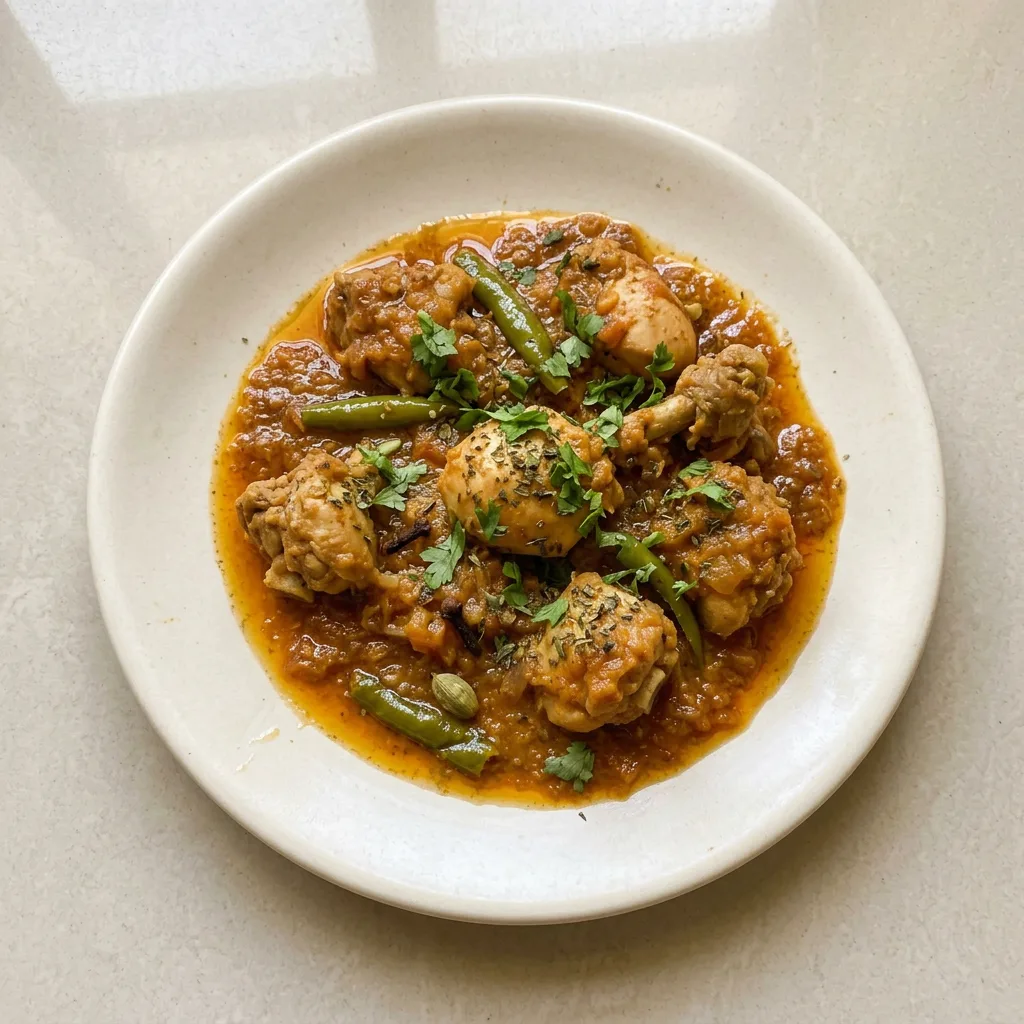
This chicken handi is best eaten within 30 minutes of adding the final cream and garam masala, while the gravy is still glossy and the aromatics are bright. Leftovers keep in an airtight container in the fridge for up to 3 days.
As it chills, the yogurt and cream thicken the gravy considerably; don’t mistake that for dryness. To reheat, add a splash of water and warm gently on the stove or in short bursts in the microwave, stirring occasionally.
The texture won’t be quite as silky as fresh, but the flavor deepens overnight. Freezing is not recommended; the dairy in the gravy will separate and turn grainy upon thawing, and the chicken will lose its tender bite.
Serve reheated handi with hot naan or rice, and if you like, a squeeze of fresh lime to brighten the stored flavors.
Tips
- Blend the tomatoes fresh for puree: canned tomatoes often have a tinny taste and lower acidity that dulls the gravy’s color. Fresh puree gives a brighter red hue and a cleaner tang that lifts the spices.
What to Swap (and What Not to) in Chicken Handi
Chicken: Bone-in chicken or paneer. Bone-in chicken adds more flavor to the gravy and stays juicier; increase cook time by 10 minutes.
For paneer, skip the yogurt marinade (paneer doesn’t need tenderizing) and add it after the gravy is done, just to warm through. The dish becomes vegetarian but loses the meaty depth.
Yogurt: Don’t swap it. Yogurt tenderizes the chicken and binds the spice rub. No good alternative works here, coconut cream or dairy-free yogurt will curdle or turn grainy during simmering.
If you must go dairy-free, skip the yogurt entirely, marinate the chicken with lemon juice instead, and expect a thinner, less creamy gravy.
Kasuri methi: Don’t swap it. This dried fenugreek leaf gives Handi its signature earthy, slightly bitter note. No substitute comes close.
If you omit it, the dish will taste like a generic curry, missing that finishing touch. Buy it online or at an Indian grocer; it keeps for months.
Cream: Full-fat coconut milk. Use the thick part from a can of coconut milk (not the watery part). It adds richness similar to cream, with a faint coconut flavor that works with the spices.
Start with the same amount as cream (1/4 cup) and adjust after tasting. The gravy will be slightly less silky but still satisfying.

Frequently Asked Questions
Can I use bone-in chicken instead of boneless?
Yes, bone-in chicken works and adds more flavor to the gravy. Increase the simmer time by 10 minutes, and the meat will stay juicier. Watch for oil surfacing as a doneness cue, just like with boneless.
How do I prevent the gravy from becoming too watery?
Cook the tomato puree until oil separates at the edges of the pan, that means water has evaporated and the masala is concentrated. If the gravy is still thin after simmering the chicken, uncover and simmer a few extra minutes to thicken.
Can I make this dish ahead of time and reheat it?
You can make it ahead, but the gravy thickens as it chills. Add a splash of water when reheating and warm gently on the stove or microwave. The flavor deepens overnight, though the texture won’t be as silky as fresh.
Freezing is not recommended, dairy separates and chicken loses tenderness.
What is the difference between Chicken Handi and Butter Chicken?
Chicken Handi uses whole spices bloomed in oil and a yogurt marinade, then simmers with tomato puree and finishes with cream, garam masala, and kasuri methi. Butter Chicken typically has a sweeter, creamier tomato gravy with fenugreek but no whole spices in the base, and the chicken is often grilled first. The Handi’s flavor is earthier and more aromatic from the cardamom, cloves, and cinnamon.
Why did my chicken turn out dry and tough?
Overcooking is the most likely cause, the recipe simmers for 15 to 20 minutes, not longer. Leaving the chicken on heat beyond that, especially at high temperature, squeezes out moisture. Also, check that you marinated for the full 30 minutes; skipping or shortening the marinade means less tenderizing from the yogurt.