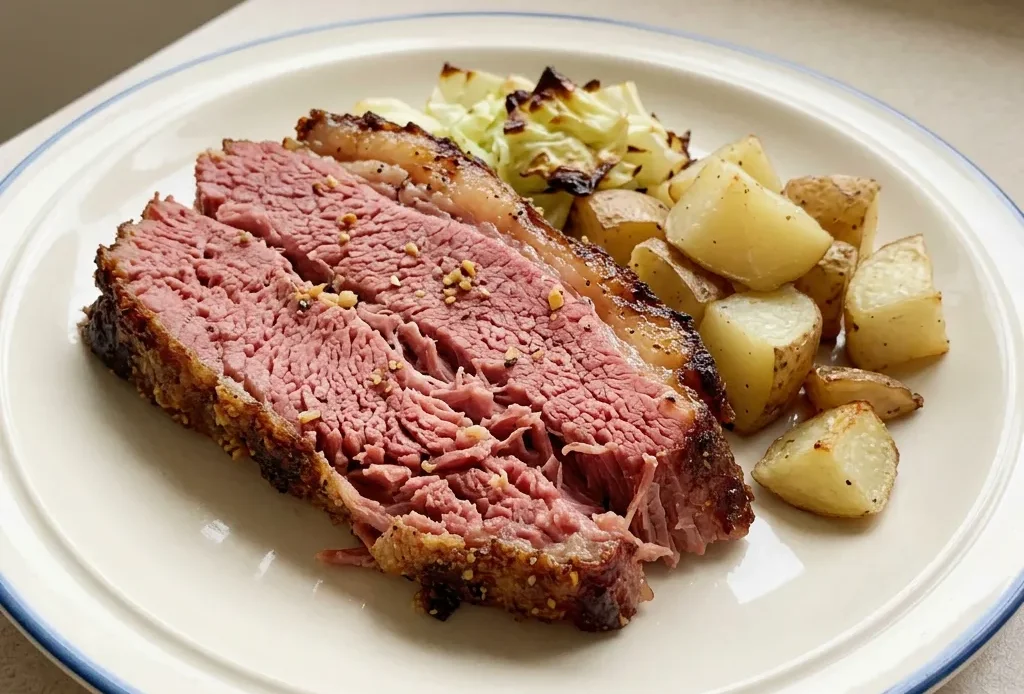
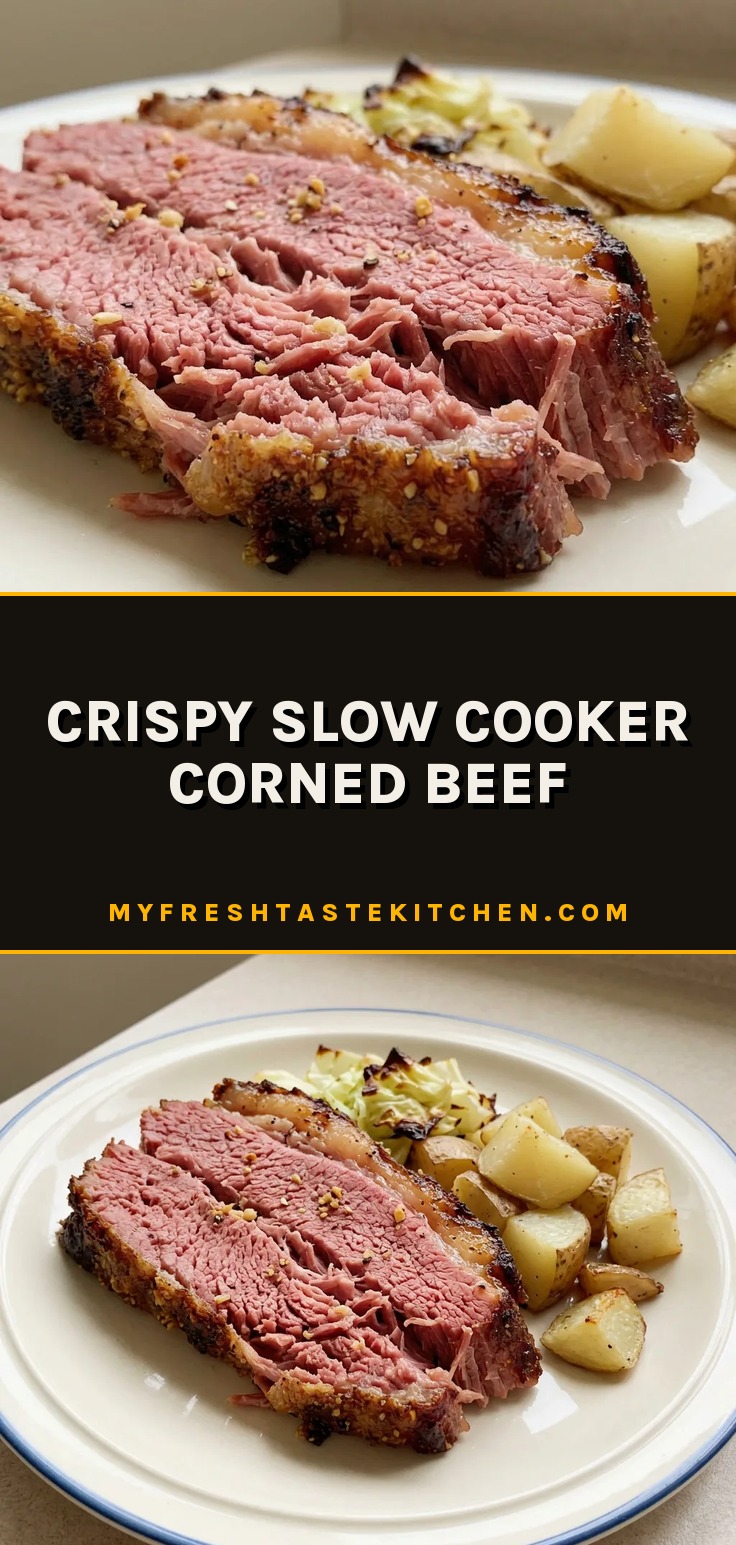
Most slow cooker corned beef comes out tender but pale and soft, with none of the contrast that makes brisket memorable. This one gets a brief broiler blast after braising, so you get a crisp, caramelized crust on the outside while the inside stays fork-tender.
The sweet-tangy rub cuts through the saltiness of the meat, and the fat cap renders into a layer that crackles when it hits the heat. It’s a small extra step, but it’s what turns a good slow cooker meal into a crispy slow cooker corned beef worth planning around.
The broth left behind is packed with flavor, too, save it for soup or lentils.
Low heat breaks down brisket
Corned beef comes from the brisket, a tough cut packed with connective tissue. Low heat over hours unwinds that collagen into gelatin, giving you meat that pulls apart with a fork.
The moist environment, water and vinegar steam the meat, keeps it from drying out while that happens. Meanwhile, the fat cap on top renders slowly, basting the brisket as it cooks. The result: slices that stay juicy, never stringy or dry, no matter how long they sit.
That’s the payoff for letting the slow cooker do the work.
Vinegar and sugar tame the salt
Corned beef is brined, so salt dominates. Apple cider vinegar cuts through that saltiness with acidity, brightening the beef without making it sour.
Sugar does something else: as it heats, it caramelizes on the surface. That browning under the broiler creates a thin, sweet crust that balances the savory, salty meat. Together, they don’t mask the corned beef flavor, they sharpen it, letting the spices from the packet come through.
You taste beef, not just salt.
Broiler finish for crust
A slow cooker traps steam, so the meat braises, never browns. The surface stays pale and soft. That’s where a quick broiler blast comes in.
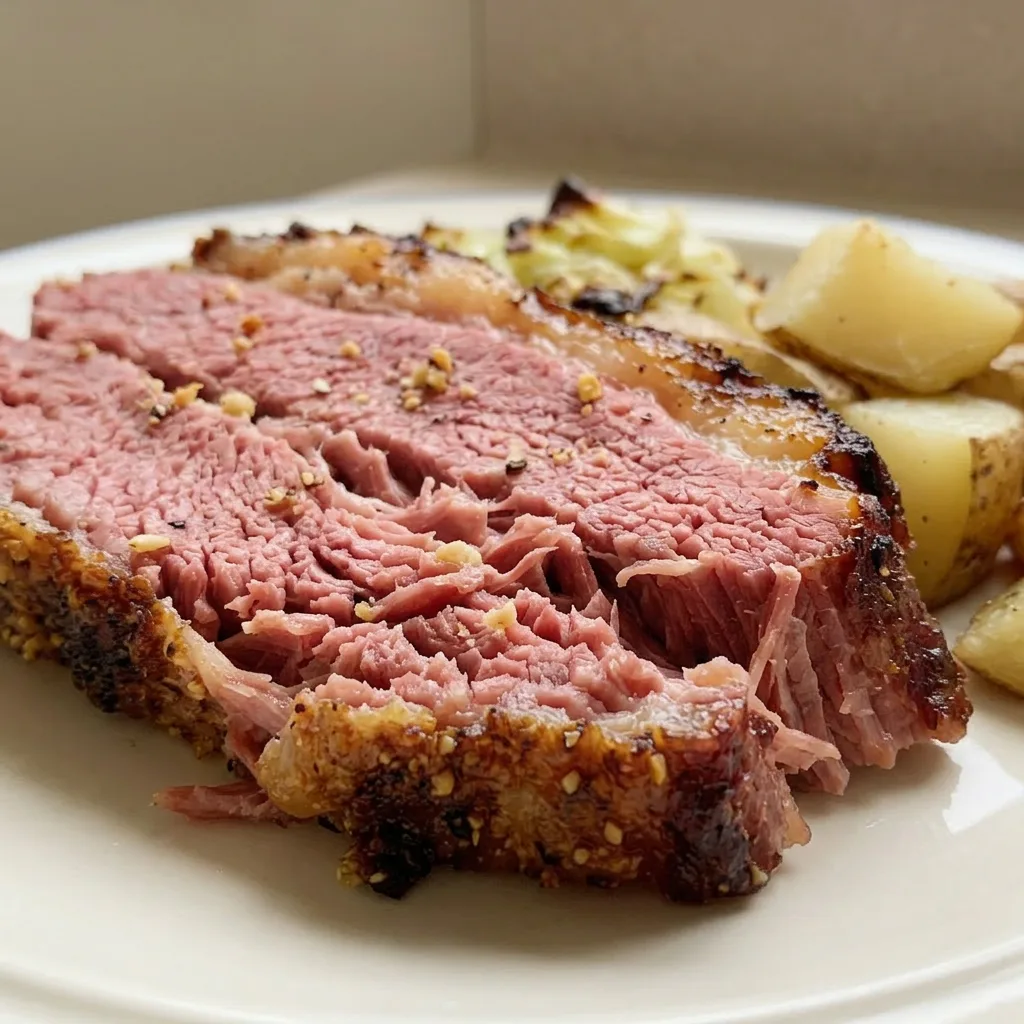
One to two minutes under high heat, fat side up, turns the top into a crisp, caramelized layer. The fat sizzles, the sugar from the rub darkens, and you get a contrast between crunchy exterior and tender interior.
Leaving the oven door cracked keeps it from scorching. It’s a small step, but it changes the texture.
Prep: 5 min · Cook: 9 hr · Total: 9 hr 5 min · Servings: 8 · Calories: 350 kcal
Ingredient Notes
Corned beef: Buy a flat cut for even slices; the point cut works but shreds more.
Seasoning packet: Use it as is; it’s already balanced for the brine strength of the meat.
Apple cider vinegar: Standard grocery store vinegar is fine; avoid aged or raw varieties with sediment.
Sugar: White granulated sugar caramelizes cleanly; brown sugar adds a deeper molasses note.
Build the braise, then blast it
Layer the flavors
Set the corned beef fat side up in the slow cooker. Rub the garlic, spice packet, sugar, and pepper into the fat and meat. You want the rub clinging, not clumping.
Add liquid sparingly
Pour vinegar around the meat, tuck in the bay leaf, then add water until it reaches a quarter of the meat’s height. Too much water and the meat boils instead of braises; the fat should stay above the liquid.
Cook low and slow
Cover and cook on low for 8 to 9 hours. The meat is ready when a fork slides in with little resistance. If it resists, give it another 30 minutes.
Broil for crunch
If the top looks pale after cooking, transfer the corned beef to a foil-lined sheet pan fat side up. Broil 6, 7 inches from the heat for 1 to 2 minutes with the oven door cracked. Watch closely: the sugar can burn fast.
Stop when the fat bubbles and the surface darkens in spots.
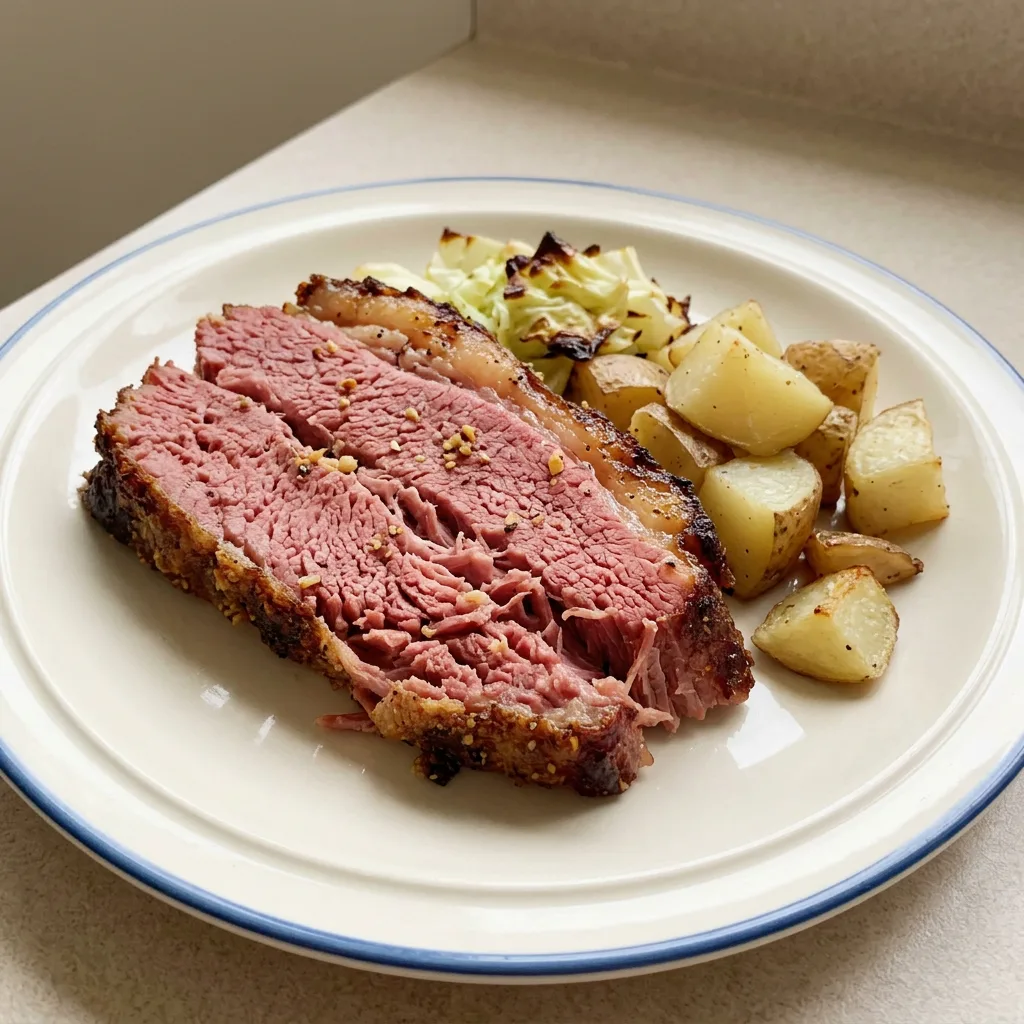
Crispy Slow Cooker Corned Beef
Ingredients
Method
Place corned beef:
Place the corned beef into the slow cooker with the fat side facing upward.Season with spices:
Season the meat by sprinkling the minced garlic, spice packet, sugar, and pepper over the top and rubbing them in.Add liquids and bay leaf:
Pour the vinegar and add the bay leaf beside the corned beef, then add just enough water so that it reaches about 25% of the meat’s height.Cook on low:
Set the slow cooker to low and cook for 8-9 hours.Broil if needed:
If the top of the corned beef is not sufficiently browned after cooking, place it under a broiler positioned 6-7 inches away for 1-2 minutes. Keep the oven door slightly ajar to monitor; do not leave unattended.
Storage and Serving
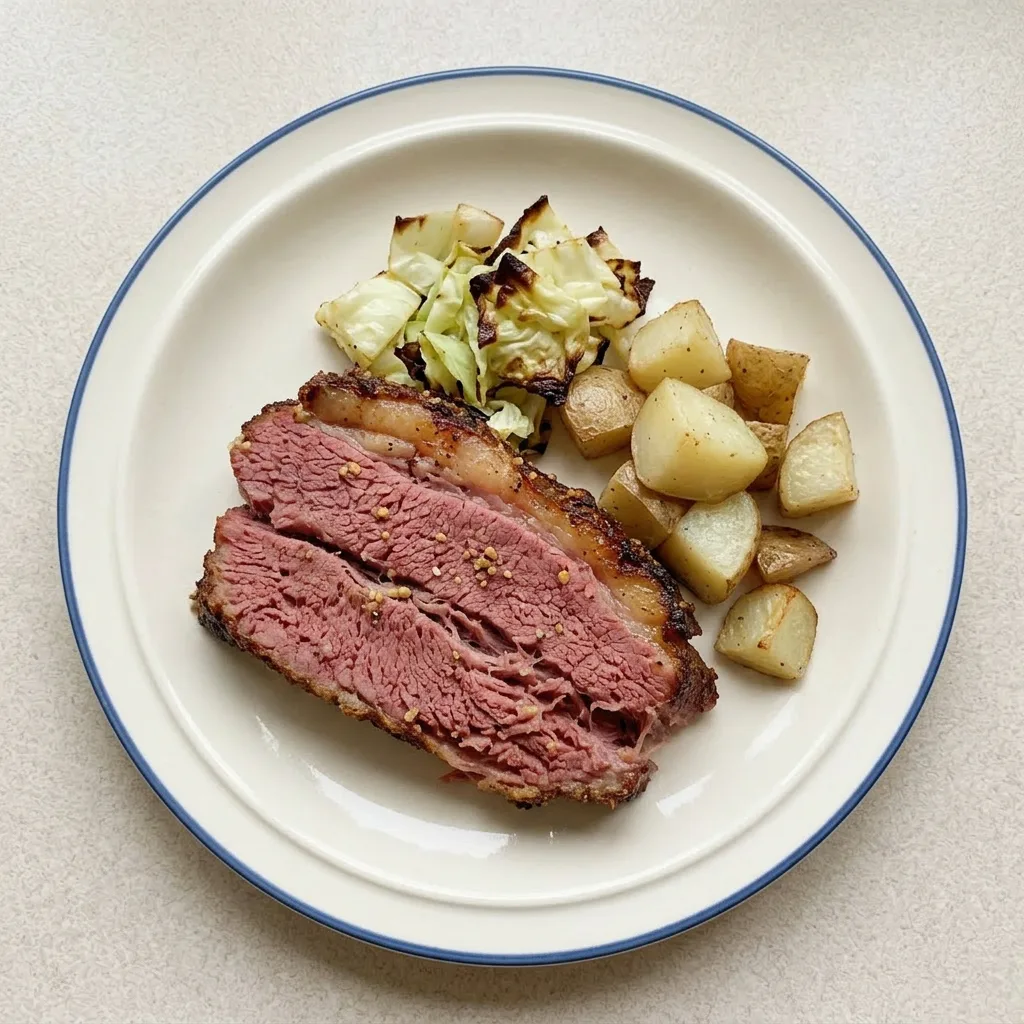
Eat the corned beef within 30 minutes after broiling for the crispiest crust. The fat cap firms as it cools, and the crackling texture fades.
Leftovers keep in the fridge for up to 4 days. Slice only what you plan to eat; whole chunks stay moister. To reheat, wrap slices in foil with a splash of water and warm in a 300°F oven for 10 to 15 minutes.
Skip the microwave, it toughens the meat. The broth from cooking freezes well for soups, but the meat itself turns mealy after thawing.
For best texture, don’t freeze the cooked brisket. If you must, shred it first and use it in hash or sandwiches, where the softer bite won’t matter.
Tips
- Trim the fat cap to about 1/4 inch before cooking. Too much fat leaves greasy broth and slick meat, but a thin layer keeps the brisket moist during the long cook.
Swap the sugar and vinegar, not the meat
Sugar: Honey or maple syrup. Honey adds floral sweetness; maple syrup brings woodsy notes. Both contain water, so the crust won’t caramelize as evenly under the broiler, watch closely to avoid burning.
Use the same 2 tablespoons.
Apple cider vinegar: White wine vinegar. White wine vinegar is milder and slightly fruitier. The acidity level matches, so it’ll cut the salt just as well.
Swap 1:1.
Corned beef: Do not substitute. The meat is brined and packaged with a specific salt level; a plain brisket lacks the seasoning and won’t behave the same in the slow cooker. Stick with corned beef.
Seasoning packet: Do not substitute. The packet’s spice blend is calibrated to the brine strength of the meat.
Making your own risks throwing off the salt balance or clashing with the vinegar. Use the packet.
Most people pull the corned beef out of the slow cooker and think it’s done, then wonder why it tastes like wet roast beef.
Frequently Asked Questions
Can I cook corned beef on high instead of low?
You can, but the texture won’t be the same. Low heat over 8 to 9 hours lets the brisket’s connective tissue break down into gelatin, giving you fork-tender slices.
On high, the meat tightens up and turns chewy, and the fat cap doesn’t render as evenly. Stick with low for the best result.
How do I prevent the corned beef from being too salty?
The vinegar and sugar in this recipe are already doing that work, the acid cuts the salt, and the sugar balances it with sweetness. If you’re still worried, you can soak the raw corned beef in cold water for an hour before cooking, but that also pulls out some of the spice. For this recipe, just use the packet as-is and don’t add extra salt.
Can I make this recipe ahead of time and reheat?
Yes, but the crust is best right after broiling. Cook the corned beef up to 4 days ahead, then slice only what you need and reheat wrapped in foil with a splash of water at 300°F for 10 to 15 minutes. The microwave will toughen it.
Don’t freeze the cooked brisket, it turns mealy; if you must, shred it first for hash or sandwiches.
What’s the difference between slow cooker corned beef and boiled corned beef?
Boiling submerges the meat in liquid, which leaches flavor and keeps the surface pale and soft. This slow cooker method uses only enough water to reach a quarter of the meat’s height, so the fat cap stays above the liquid and renders slowly. Then a quick broiler blast caramelizes the sugar rub into a crisp, sweet crust that boiling never achieves.
How do I know when the corned beef is done?
A fork should slide into the thickest part with little resistance, no sawing needed. If it resists, cook another 30 minutes and check again. The meat will also feel tender when you press it, and the fat cap will be soft and translucent.
Don’t rely on temperature; brisket is done by feel, not a number.
