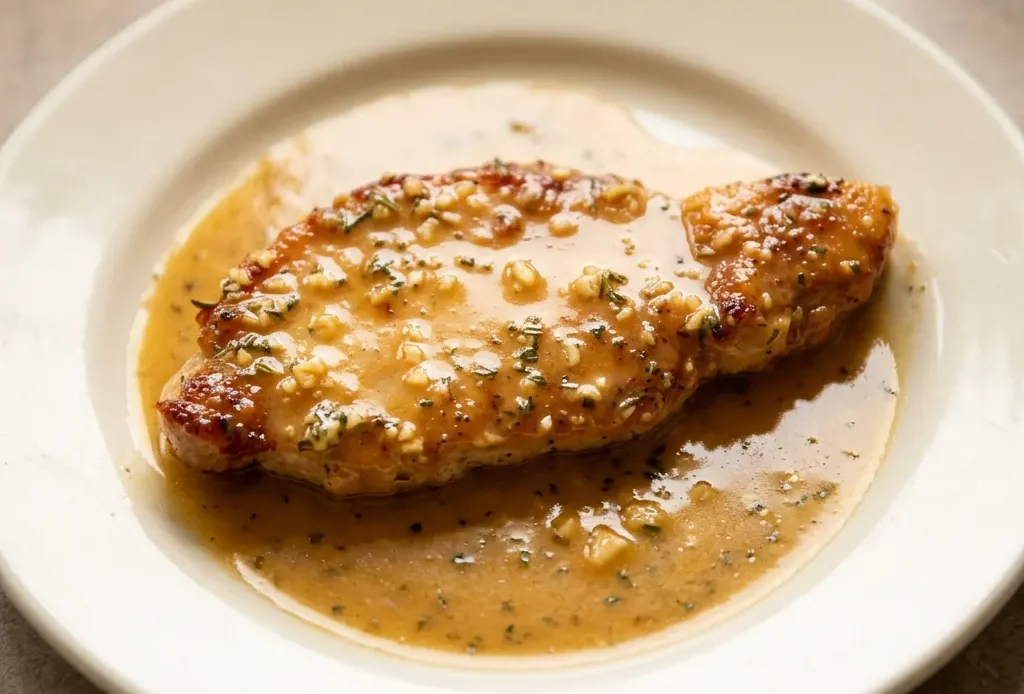
A quick pan sauce is the difference between a dry pork chop and one you’d actually order at a restaurant. The trick isn’t technique, it’s the flour.
Coat the chops lightly, and that same flour thickens the rosemary garlic butter sauce in the pan, no cornstarch or roux needed. Most weeknight pork chops end up with a sad, watery pan juice. These don’t.
The garlic and rosemary bloom fast, the butter emulsifies into a glossy, clingy sauce, and the whole thing comes together in the same skillet you seared the meat in. For rosemary garlic butter pork chops that taste like you fussed, you only need to nail the order: sear, deglaze, whisk, finish.
Season the crust, thicken the sauce
The flour coating does double duty. Mixed with salt, garlic powder, and pepper, it seasons the pork’s surface evenly, no need to season each chop separately. During searing, that flour layer browns into a crisp, golden crust that traps juices inside.
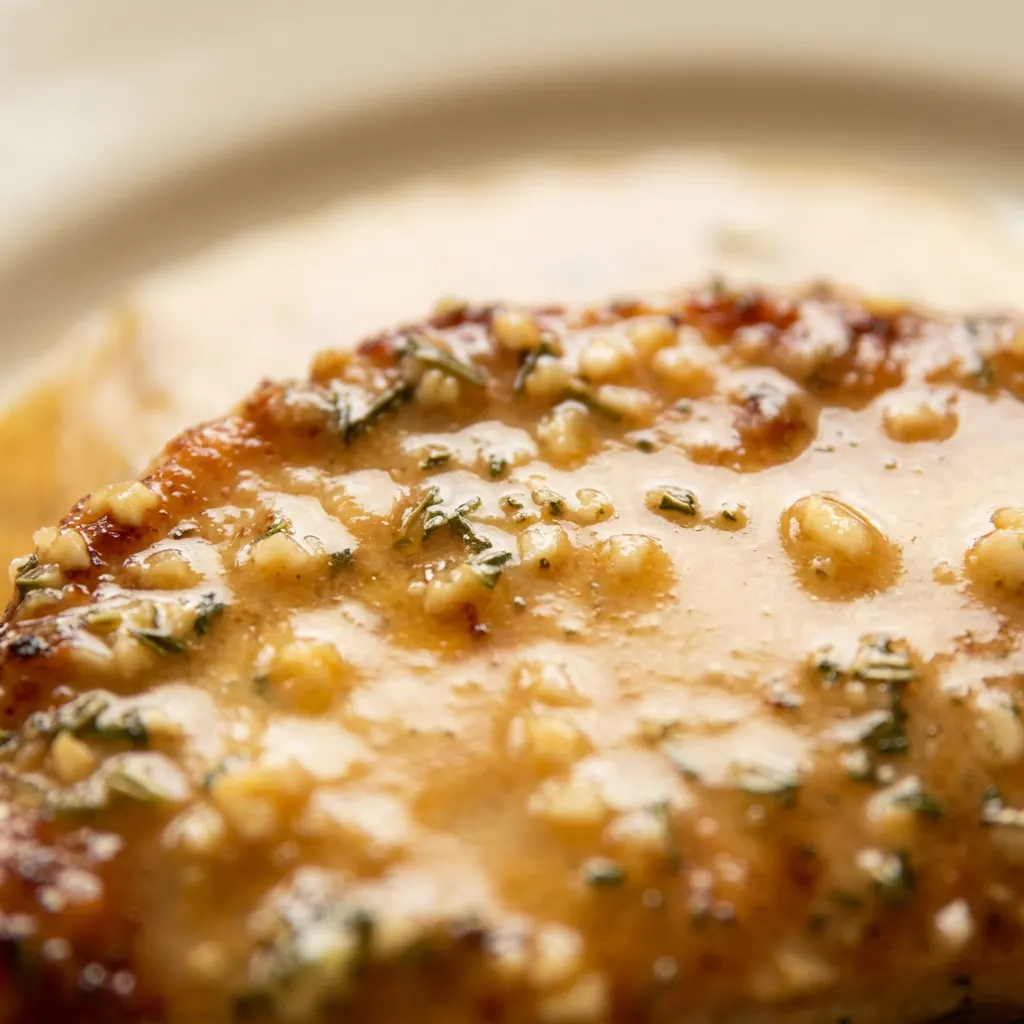
What’s left in the pan after you pull the chops out becomes the sauce’s backbone. As the stock and butter simmer, the residual flour releases starches that thicken the liquid naturally, giving you a silky, clingy sauce without a slurry or roux. You’ll see the sauce turn opaque and feel it coat a spoon.
That’s the flour at work, no extra thickeners needed.
Sauté aromatics in the right order
Garlic burns fast, and burnt garlic turns bitter. That’s why you add rosemary and garlic to the pan only after the chops are out and the heat is lowered.
The residual fat is enough to bloom their flavors without scorching. Next comes the chicken stock, pouring it in before the butter deglazes the pan, lifting up the browned bits. That acidity and liquid keep the garlic from darkening further.
Then you whisk in cold butter cubes over low heat; the butter emulsifies into the stock, creating a creamy, cohesive sauce. If you added butter first, it’d separate or burn. Watch the sauce come together smooth and glossy, that’s the emulsion holding.
Rest, then finish in the sauce
Pork chops straight from the pan are tense with heat. Resting them on a plate for a few minutes lets the juices redistribute through the meat, so every bite stays moist. While they rest, the sauce finishes reducing.
When you return the chops to the pan, just one minute of spooning the sauce over is enough. Any extra flour on the chops from the initial dredge will be long gone, but the sauce has already thickened.
The accumulated juices from the resting plate get stirred in too, adding back pork flavor that would otherwise be lost. The result: tender chops with sauce that clings, not slides off.
Prep: 10 min · Cook: 15 min · Total: 25 min · Servings: 4 · Calories: 400 kcal
Choose butter for the sauce, not the sear
unsalted butter: Cut into small cubes so it emulsifies quickly into the stock without melting unevenly.
boneless pork loin chops: 6 oz each, about 1-inch thick, so they cook through in the same time the sauce reduces.
fresh rosemary: Finely dice the leaves; whole sprigs won’t release flavor fast enough in the brief sauté.
all-purpose flour: A light dredge is all you need; too thick and the crust gets gummy instead of crisp.
I see so many people toss garlic in with the pork or right after, and then wonder why their sauce tastes acrid instead of sweet.
Build a crust that doubles as a thickener
Dredge the chops
Coat each chop in the seasoned flour, pressing lightly so it sticks. You want an even, thin layer, patchy spots will brown unevenly, leaving pale streaks.
Sear over medium-high heat
Lay the chops in hot oil and leave them. You’ll hear a steady sizzle; if it drops off, the pan isn’t hot enough.
Flip when the edges turn golden and the crust releases easily. About 3 minutes per side.
If there’s a fat cap, hold the chop sideways with tongs to render it crisp.
Rest and reserve the fat
Transfer the chops to a plate. Keep about a tablespoon of the browned fat in the pan; pour off the rest. Too much fat will make the sauce greasy, too little and the aromatics will scorch.
Bloom rosemary and garlic
Drop the rosemary and garlic into the warm fat. Stir until the garlic just starts to tan, about 30 seconds.
If it browns fast, the pan’s too hot; pull it off the burner for a moment. Burnt garlic turns bitter and there’s no fixing it.
Deglaze and build the sauce
Pour in the chicken stock and scrape up any browned bits. Then whisk in butter cubes a few at a time. The sauce will look broken at first; keep whisking until it turns opaque and coats the back of a spoon.
That’s the emulsion forming. Simmer 2 to 3 minutes, stirring often.
Finish the chops in the sauce
Lower the heat, return the chops with their accumulated juices, and spoon the sauce over them for about 1 minute. The sauce will tighten slightly as it mingles with any flour residue. Serve with a lemon wedge to cut the richness.
Rosemary Garlic Butter Pork Chops
Ingredients
- 4 boneless pork loin chops 6 oz each
- 1/4 cup all-purpose flour 35g
- 1 tsp salt
- 1 tsp garlic powder
- 1/2 tsp black pepper
- 1 tbsp olive oil
- 2 tsp fresh rosemary finely diced
- 2 garlic cloves finely diced
- 1/2 cup chicken stock 120ml
- 6 tbsp unsalted butter cut into small cubes, 90g
- 1 lemon cut into 4 wedges (for serving)
Instructions
Dredge Pork Chops:
In a wide, shallow bowl, mix the flour with salt, garlic powder, and black pepper. Dredge each chop on both sides, then set aside.Sear Chops:
Heat 1 tbsp oil in a large skillet over medium-high heat. Once hot, add the chops and cook about 3 minutes per side until golden and just cooked through. If chops have a fat cap, arrange them fat-side together and sear that side to render. Transfer chops to a plate and reduce heat to medium. Keep about 1 tbsp of fat in the pan; pour off the rest.Make Rosemary Sauce:
Add rosemary and garlic to the pan and sauté in the residual fat until the garlic just starts to color (do not burn, or it becomes bitter). Pour in chicken stock, then whisk in butter until melted and emulsified into a sauce. Simmer for 2-3 minutes, stirring often, until the sauce becomes opaque and thickens. Stir in any accumulated juices from the pork. Season with extra salt and pepper if needed.Finish with Sauce:
Reduce heat, return the chops to the pan, and spoon sauce over them for about 1 minute (the excess flour will further thicken the sauce). Serve each chop with a lemon wedge.
Storage and Reheating
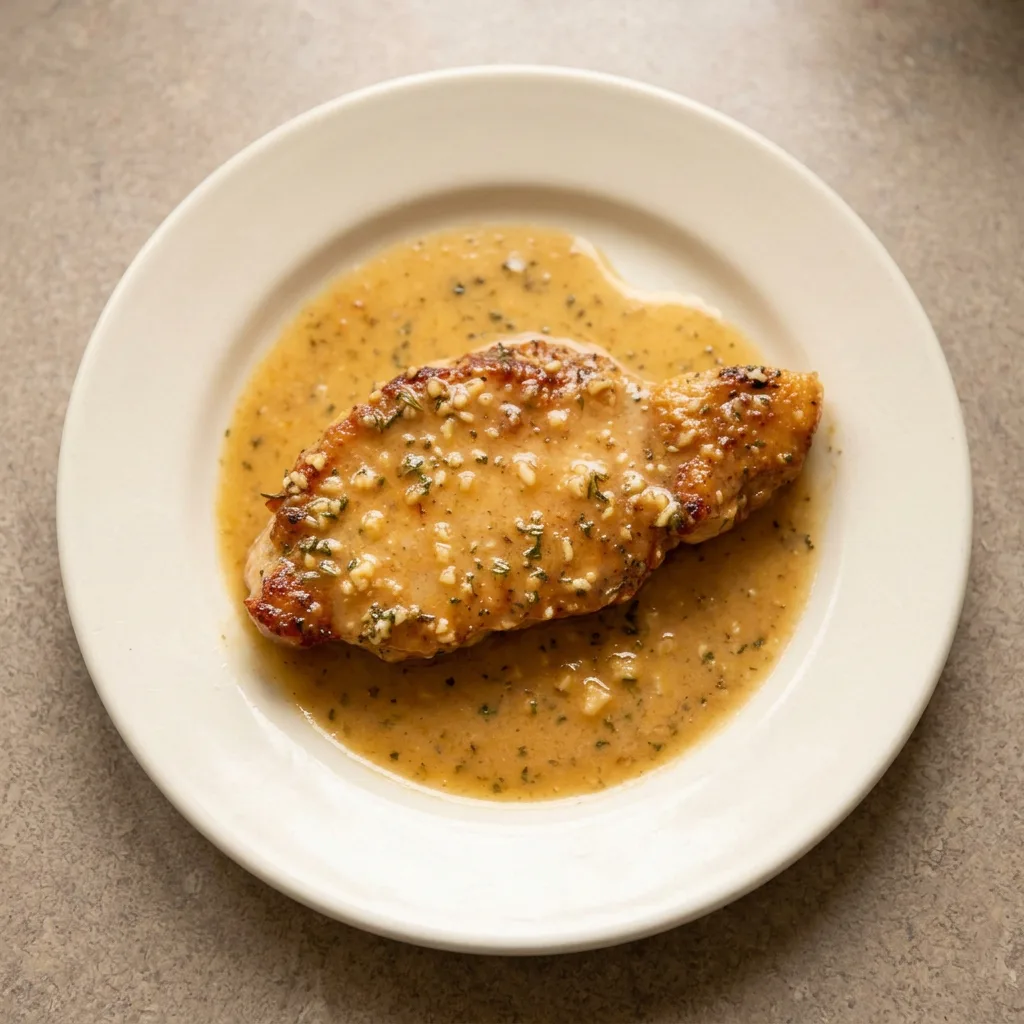
The sauce thickens significantly as it cools, turning into a spreadable consistency. Refrigerate leftovers in a shallow container within 2 hours, with the sauce spooned over the chops to keep them moist.
They hold for up to 3 days, but the texture is best within 24 hours: the pork stays tender and the sauce remains creamy. After that, the sauce tightens further and the chops may dry out slightly. To reheat, warm the chops and sauce together in a covered skillet over low heat, adding a splash of chicken stock or water to loosen the emulsion.
Stir gently to redistribute the sauce without breaking it. Avoid the microwave, which can make the sauce grainy and the pork tough. Freezing is not recommended: the butter-based sauce breaks upon thawing, and the pork’s texture suffers.
Serve the lemon wedge fresh each time; squeeze it over the reheated chops just before eating to brighten the richness.
Pork, butter, stock: which swaps break the sauce
boneless pork loin chops: Bone-in chops (same thickness). Adds about 2 to 3 minutes per side to the sear because bone conducts heat slower.
The meat near the bone will be slightly less done if you stick to the recipe’s timing. Otherwise, the coating and sauce work the same.
unsalted butter: Salted butter. Reduce the added salt in the flour coating to 1/2 teaspoon, or skip it entirely. The butter’s saltiness will carry into the sauce; too much and you’ll taste it before the rosemary.
chicken stock: Vegetable stock. The sauce will be slightly less savory, with a more neutral backbone. To compensate, stir in a tiny pinch of onion powder (about 1/8 tsp) along with the rosemary, not enough to taste as onion, just enough to replace the depth you lost.
Tips
- Use an instant-read thermometer inserted sideways into the thickest part of the chop, avoiding the bone; pull at 140°F because carryover cooking will bring it to 145°F during the rest.
- If you don’t have a thermometer, press the center of a chop with your fingertip: it should feel firm with a slight give, like the base of your thumb when you make a fist.

Frequently Asked Questions
Can I use bone-in pork chops instead of boneless?
Yes, but you’ll need to sear them about 2 to 3 minutes longer per side because bone conducts heat slower. The meat near the bone will be slightly less done if you stick to the recipe’s timing. Otherwise, the coating and sauce work the same.
How do I know when the pork chops are cooked through without a thermometer?
Look for a firm feel when pressed, the meat should spring back slightly, not feel squishy. Also, the juices should run clear when you cut into the thickest part. The recipe’s 3 minutes per side on medium-high heat is your timing guide for 1-inch thick boneless chops.
Can I make the rosemary garlic butter sauce ahead of time?
The sauce thickens significantly as it cools and turns spreadable, so it’s best made fresh. If you must, refrigerate it separately, but reheating will require a splash of stock to loosen the emulsion. The texture is best within 24 hours, but the sauce can hold for up to 3 days in the fridge.