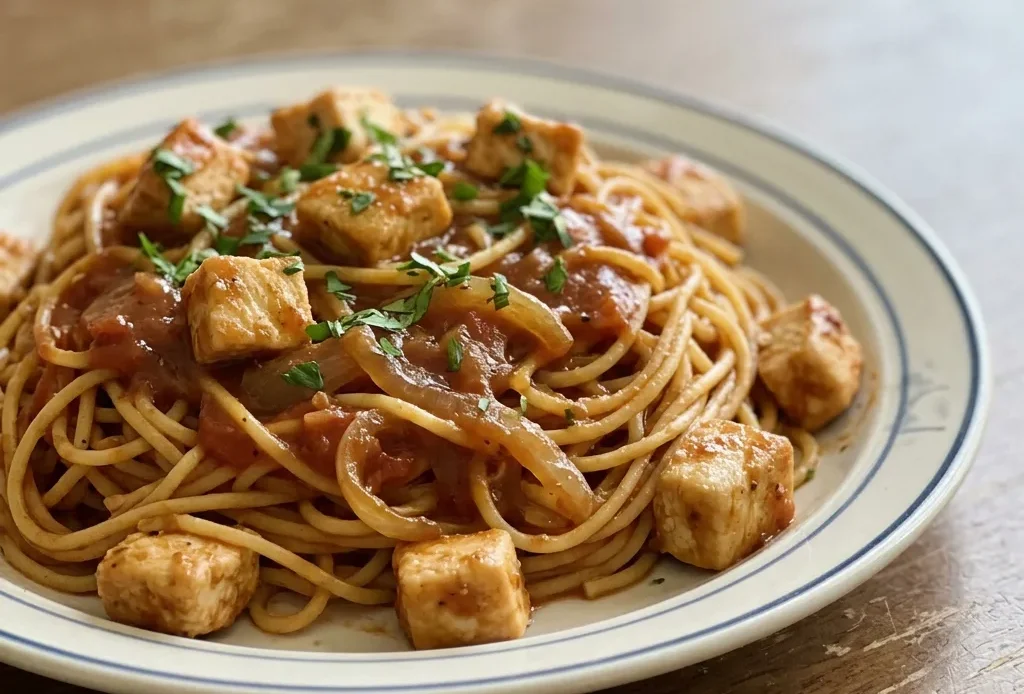
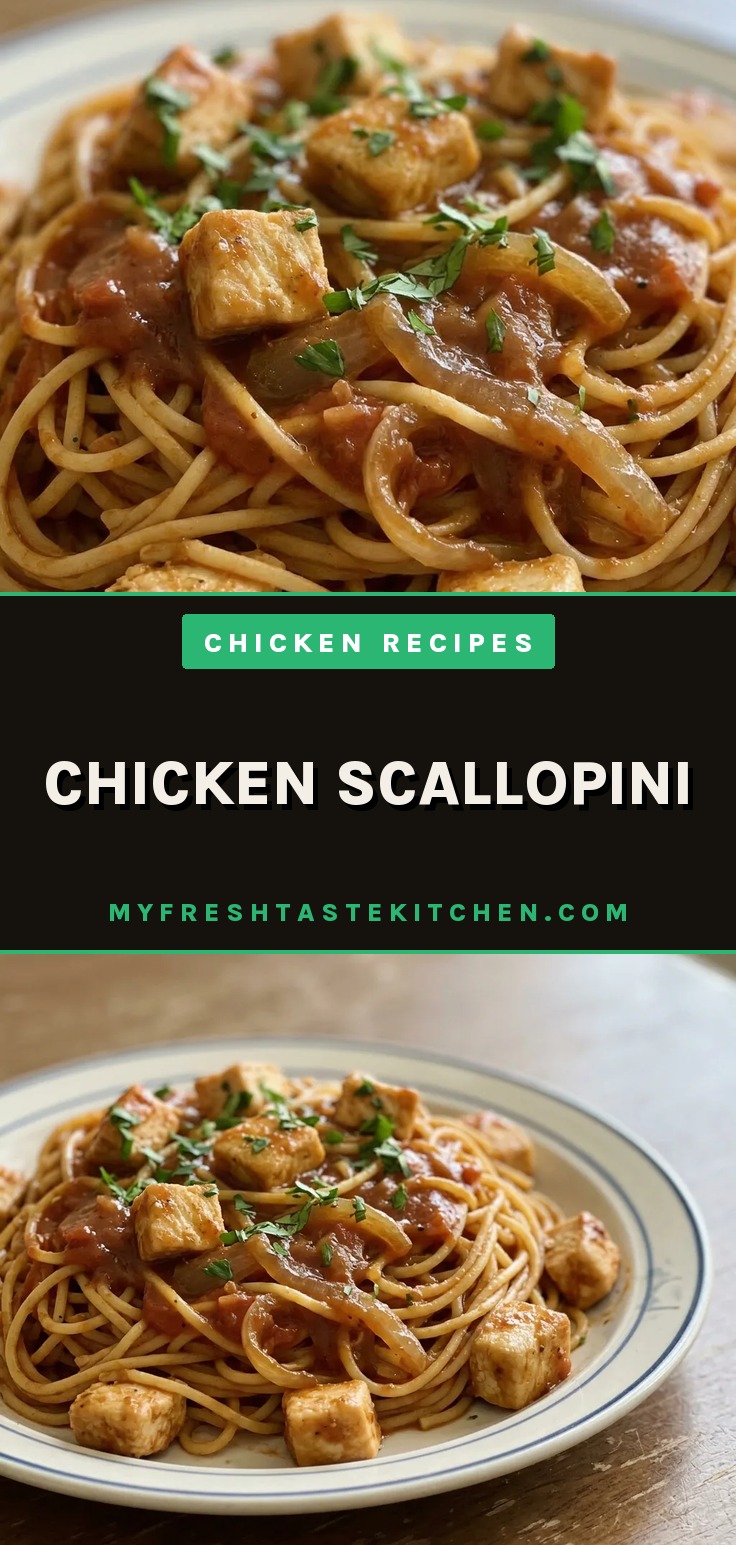
Most quick chicken pasta recipes end up with a thin, watery sauce that slides off the noodles instead of coating them. That won’t happen here, the gravy mix and tomato sauce thicken instantly, but only if you let the mixture boil for a full 30 seconds before reducing the heat. Miss that window and you’ll be ladling soup over spaghetti.
The real trick, though, is getting the onions soft enough to melt into the gravy; twenty minutes of slow cooking turns them jammy and sweet, so they disappear into the sauce rather than leaving crunchy bits. That patience, plus deglazing the pan with wine to lift the fond, makes this chicken scallopini taste like it simmered for hours.
The Fond That Makes the Gravy
Searing the chicken does more than cook it. The intense heat triggers browning, creating deep savory notes that a gravy packet alone can’t deliver. Those browned bits stuck to the pan, the fond, are pure flavor.
Deglazing with wine lifts them into the sauce, dissolving that concentrated taste. Without this step, the gravy would taste flat, relying only on the mix. The fond and wine together add complexity, making the sauce taste slow-cooked.
Even with a quick gravy mix, this technique gives chicken recipes real depth.
Slow Onions, Sweet Sauce
Caramelizing the sliced onion for twenty minutes changes it. The heat slowly breaks down the onion’s natural sugars, drawing out sweetness that balances the tomato sauce’s acidity.
The onion softens so thoroughly it nearly melts into the gravy, lending body without crunch. Rushing this step leaves you with harsh, undercooked onion bits that clash with the smooth sauce. Taking your time here is essential for chicken breast recipes where you want a cohesive, mellow flavor.
Quick Sauce, No Roux Needed
The gravy mix does double duty: it thickens the sauce instantly and provides a seasoned base, so you skip the flour-and-butter roux. Tomato sauce adds acidity and a bit of body, playing off the wine and caramelized onions. Together they yield a rich, brown gravy, like consistency in minutes, no long simmering.
It’s a practical shortcut that still delivers a savory coating for the pasta. For chicken pasta recipes, this is a reliable way to get a hearty sauce fast.
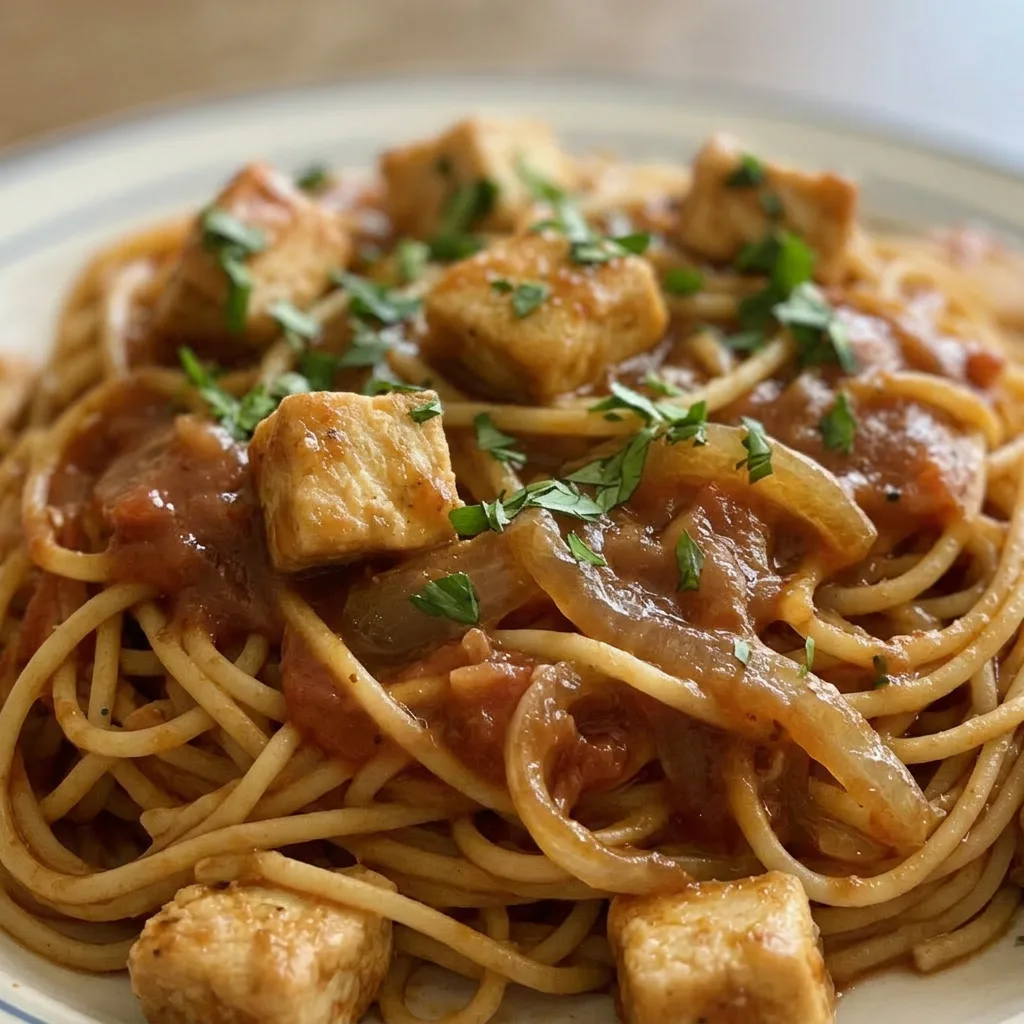
Prep: 10 min · Cook: 35 min · Total: 45 min · Servings: 4 · Calories: 620 kcal
What to Buy and How to Prep
Boneless skinless chicken breasts: Small ones (about 6 oz each) cook quickly and stay tender; big ones can dry out before browning.
Brown gravy mix: Standard.87 oz packet works fine; no need for a fancy brand here.
Dry white wine: Use something you’d drink; the wine’s acidity balances the gravy and tomato sauce.
Yellow onion: One small onion yields enough slices to caramelize into the sauce without overwhelming it.
Thin spaghetti: 3/4 lb is less than a standard box; cook it all or the sauce-to-pasta ratio will be off.
Build the Sauce Step by Step
Sear the Chicken
Heat olive oil in a large skillet over medium-high. Add floured chicken cubes in a single layer. Sear until deep golden on one side, about 3 minutes, if it sticks, it’s not ready to flip.
Turn and cook until no longer pink inside, about 3 more minutes. Transfer to a plate.
Deglaze and Cook the Onions
Off heat, pour in 1/4 cup wine, scraping up every browned bit with a silicone spatula. Add butter and sliced onion.
Cook over medium, stirring often, until onions are very soft and lightly caramelized, about 20 minutes. They should be jammy, not crisp.
Finish the Sauce
Add garlic for 1 minute until fragrant. Pour in remaining wine; let it simmer until reduced by half, about 5 minutes.
Stir in the gravy mixture and tomato sauce combo. Bring to a boil, it will thicken in 30 seconds, then lower to a simmer. Return chicken to the pan.
Cook and Combine the Pasta
Boil spaghetti in salted water until al dente. Drain, reserving 1/4 cup pasta water if you want a looser sauce.
Add pasta to the skillet with the sauce and toss to coat. The sauce should cling to each strand, if too thick, splash in pasta water a tablespoon at a time.
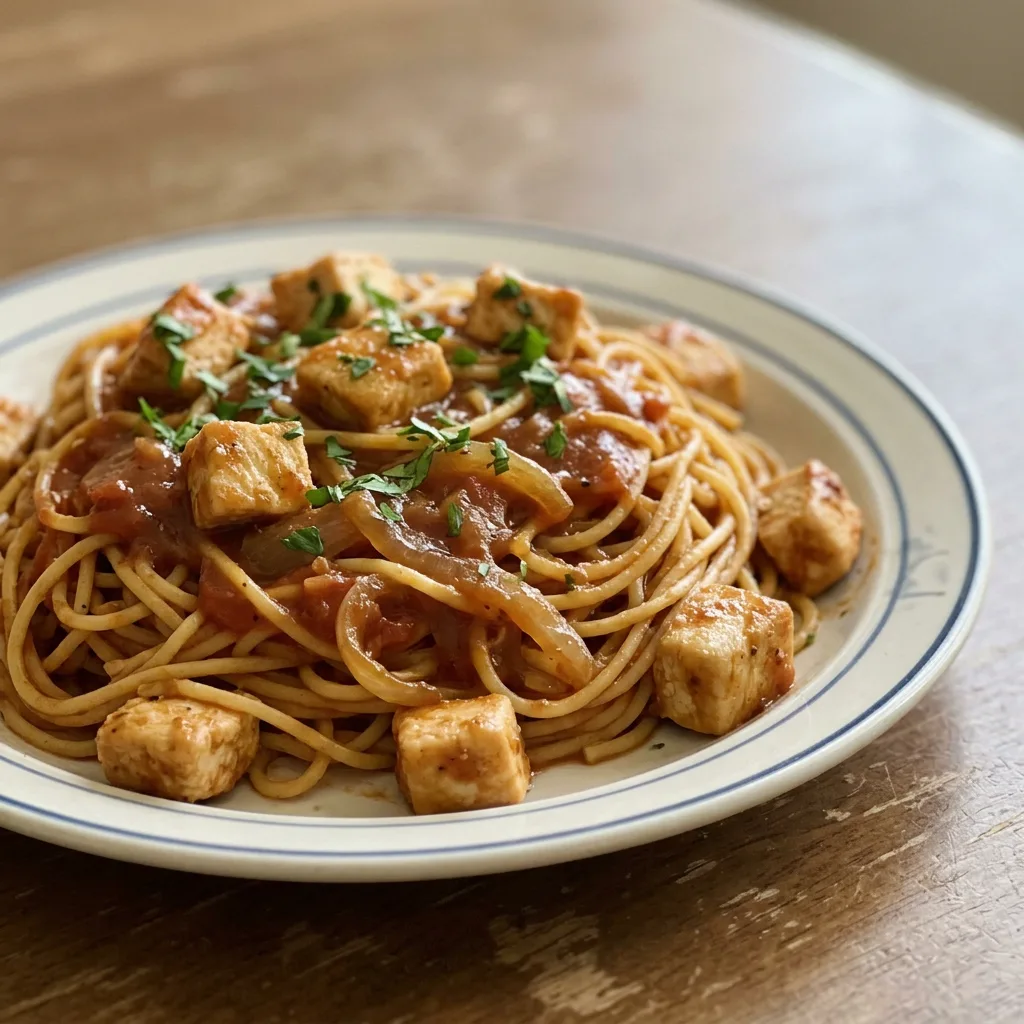
Chicken Scallopini with Pasta
Ingredients
Method
Prepare Gravy Mixture:
In a large spouted measuring cup, whisk the gravy mix with 1 cup cold water until smooth. Stir in the tomato sauce, Italian seasoning, parsley, mustard powder, and 1/4 teaspoon salt. Reserve.Season and Coat Chicken:
Dice the chicken into uniform cubes; season with salt and pepper. Dust with flour and toss to coat evenly.Sear Chicken:
Heat olive oil in a large skillet over medium-high heat. Add chicken and sear for 3-4 minutes until golden brown. Flip and cook the other sides until fully cooked, about 3 more minutes. Remove chicken and set aside.Deglaze Skillet:
Turn off the heat. Pour in 1/4 cup of the wine, then return heat to medium. Using a silicone spatula, deglaze the skillet by scraping up browned bits from the bottom and sides.Caramelize Onions:
Add butter and sliced onion. Cook over medium heat, stirring frequently, until very soft and nearly caramelized, about 20 minutes.Add Garlic:
Add minced garlic and cook for 1 minute.Reduce Wine:
Pour in the remaining wine; let it simmer and reduce for 5 minutes.Simmer Sauce with Chicken:
Add the gravy mixture to the skillet. Bring to a boil and let thicken for 30 seconds, then reduce to a simmer. Return the chicken to the skillet.Cook Spaghetti:
Partially cover the skillet while you bring a pot of water to a boil for the spaghetti. Once boiling, salt the water (about 1/4 tablespoon). Cook spaghetti until al dente, then drain, reserving some pasta water if desired.Toss Spaghetti with Sauce:
Add the cooked spaghetti to the sauce and toss to coat. Garnish with parsley and serve with Garlic Bread with Cheese.
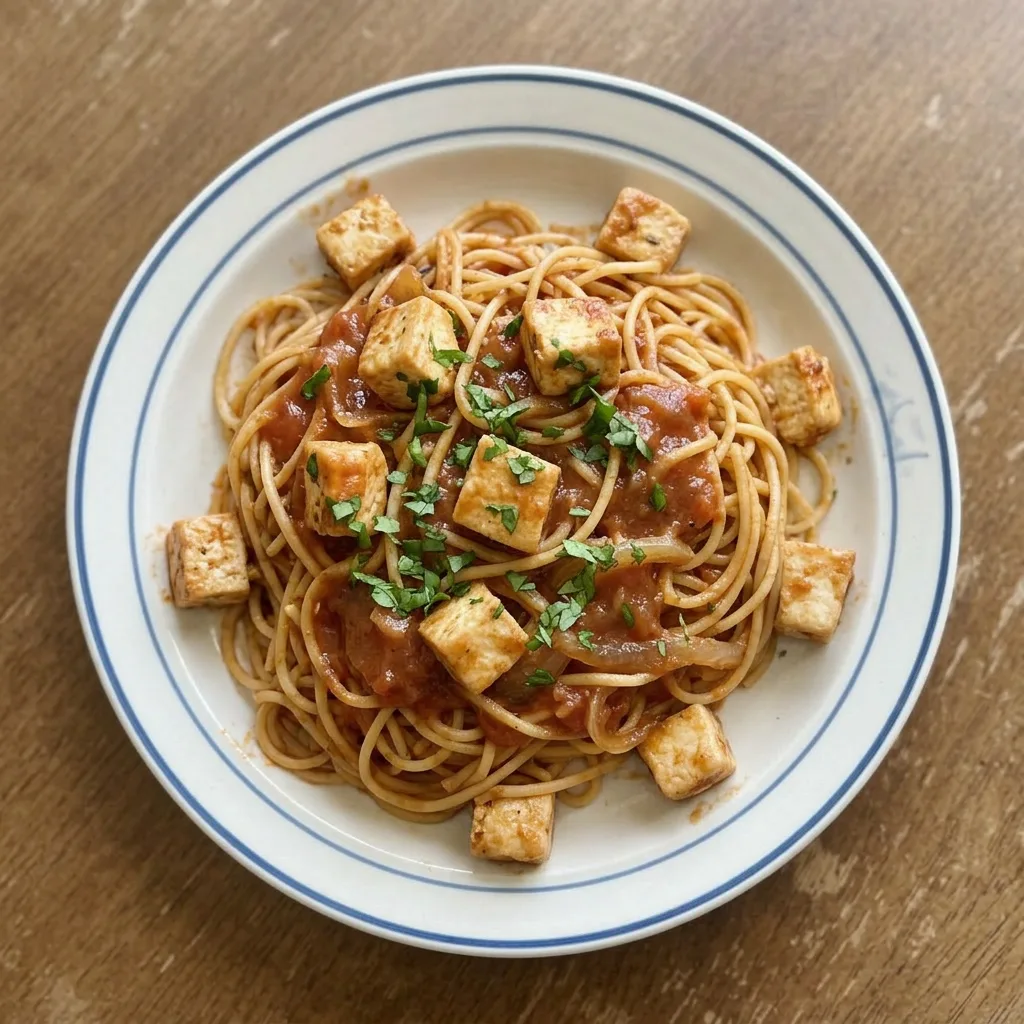
When You Want to Change the Wine or the Pasta
Dry white wine: Chicken broth. Use the same amount as the wine. The sauce will be a little less tangy and the fond may not lift as cleanly; add a squeeze of lemon at the end if you miss the acidity.
Thin spaghetti: Gluten-free spaghetti. Cook according to package directions and drain well. The sauce clings fine, but the pasta may be more delicate; avoid overcooking.
Also check that your gravy mix is gluten-free.
Brown gravy mix: Gluten-free brown gravy mix. Substitute packet for packet.
The thickening power and seasoning vary by brand, so taste the sauce before adding salt. If the sauce seems thin, let it simmer a minute longer.
Storage and Serving
Serve Chicken Scallopini right after tossing the pasta with the sauce. The spaghetti is at its best when just coated, still firm and separate.
Leftovers keep in an airtight container in the fridge for up to 3 days, but the pasta will soak up the gravy, turning softer and drier. To reheat, add a splash of chicken broth or water and warm gently on the stovetop or in the microwave, stirring to redistribute the sauce. The chicken will stay tender, but the onions lose their jammy texture.
Freezing is not recommended: the cooked spaghetti and dairy in the sauce break down, becoming mushy and grainy after thawing. If you must freeze, do so with the sauce alone (before adding pasta) for up to 2 months, then cook fresh spaghetti when serving.
Tips
- Use a microplane to grate the garlic instead of mincing; the paste dissolves into the sauce without leaving any harsh bits.
- Reserve the pasta water even if you think you won’t need it; the starch helps the sauce cling to the spaghetti if it starts to separate.
Frequently Asked Questions
Can I make the chicken scallopini ahead of time?
Not really, this dish is best served right after tossing the pasta with the sauce. Leftovers keep up to 3 days in the fridge, but the spaghetti soaks up the gravy, turning softer and drier. To reheat, add a splash of broth or water and warm gently, stirring to redistribute the sauce.
Freezing is not recommended; the cooked spaghetti and dairy break down, becoming mushy and grainy after thawing.
Why did my sauce turn out watery or too thin?
Most likely you didn’t let the gravy mixture boil and thicken for a full 30 seconds before reducing the heat, that rapid boil sets the thickener. Another cause: the onions released too much moisture if they weren’t caramelized long enough; they should be jammy, not crisp. If the sauce is thin after adding pasta, toss in a splash of reserved pasta water only if it’s too thick; otherwise, let it simmer a minute longer to reduce.
Is this dish similar to traditional chicken scallopini, and how does it differ?
It shares the same quick-cook, wine-and-pan-sauce approach, but traditional scallopini uses thin pounded cutlets dredged in flour and sautéed in butter, served with a lemon-caper sauce. This version uses diced chicken breasts, a brown gravy mix base with tomato sauce, and tosses everything with spaghetti for a one-dish meal. The technique of searing for fond and deglazing with wine is the same, but the gravy mix shortcut and pasta make it a different, heartier dish.
