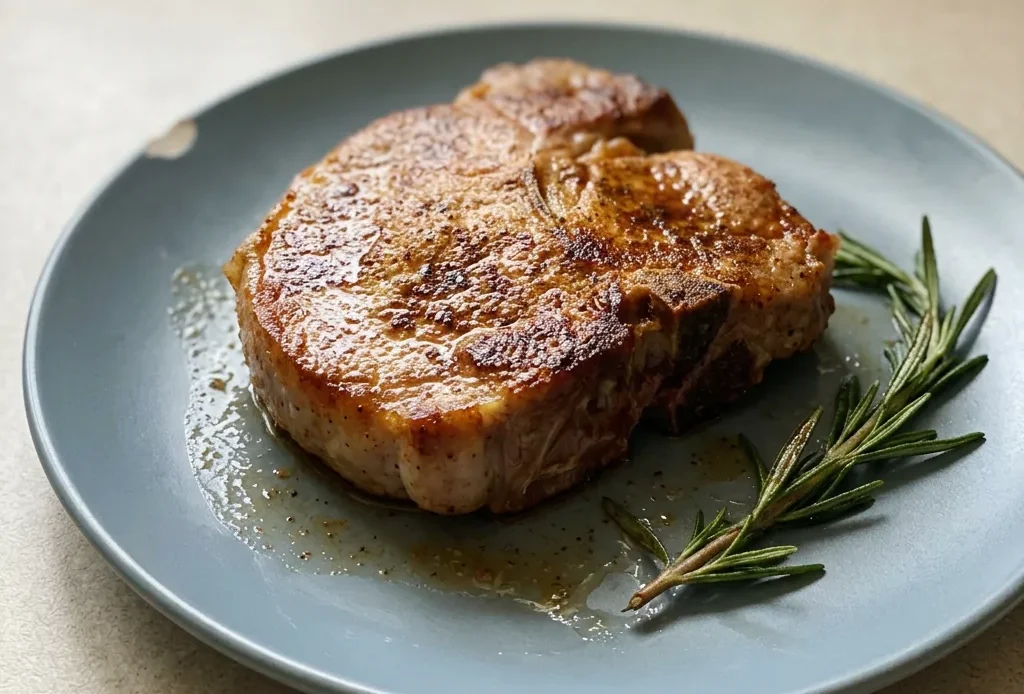
A golden-brown crust and a juicy center aren’t mutually exclusive, even on a Tuesday night. The trick isn’t a long marinade or a complex pan sauce, it’s about managing heat and moisture.
These pan-seared pork chops prove that with a hot skillet and a dry surface, you can get a restaurant-quality sear in under 20 minutes. The contrast between the crisp, seasoned exterior and the tender, pink-centered meat is what keeps you coming back to this quick weeknight staple.
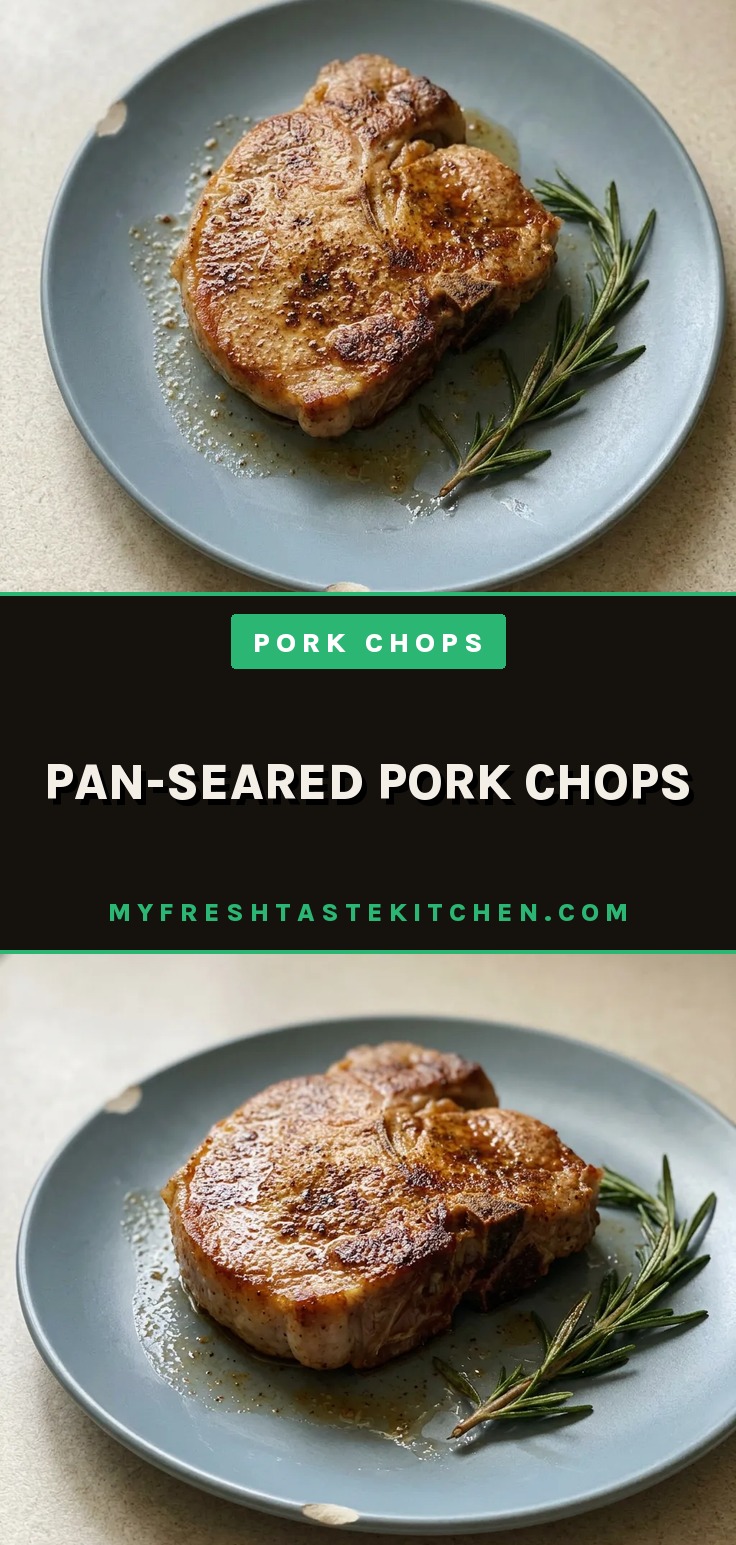
Once I rushed and seared chops in a cold pan, got a pale crust and dry meat. Next time I heated low then high, the crust was and the center stayed juicy.
Pat the chops dry for a proper crust
Surface moisture is the enemy of browning. Water on the meat turns to steam in the hot pan, which creates a barrier between the pork and the oil. That steam layer prevents the surface from reaching the temperature needed for browning, the Maillard reaction just won’t happen.
A dry surface, on the other hand, makes direct contact with the hot oil, so the sugars and proteins can brown quickly. Use a paper towel to blot both sides, and you’ll see a deep golden crust form in minutes. That crust is where most of the savory flavor comes from.
Preheat the skillet gradually for even searing
Throwing pork into a cold pan guarantees uneven cooking and a spotty crust. Start the pan over low heat, this lets the metal expand slowly, so the entire cooking surface reaches the same temperature. Once the pan is evenly warm, crank the heat to high.
Now you get an immediate, aggressive sear the moment the meat hits the pan. Cast iron and stainless steel are ideal here: they hold that heat steady instead of cooling down when the cold chops go in. The result is consistent browning across the entire chop.
Choose bone-in chops for better flavor and texture
The bone does more than look impressive. It conducts heat more slowly than the surrounding meat, which means the area nearest the bone stays slightly cooler as the chop cooks. That subtle delay helps prevent the interior from overcooking before the exterior is seared.
The bone also releases gelatin and other compounds into the meat during cooking, adding richness to the flavor. A 1-inch thickness gives you enough time to build a good crust without drying out the center.
Stovetop pork chops like these benefit from that extra margin.
Rest the cooked chops before slicing
Straight out of the pan, the juices inside the chop are pushed to the center by the heat. If you cut into it then, those juices run out onto the cutting board, leaving the meat dry. Resting for a few minutes lets the muscle fibers relax and reabsorb that liquid evenly throughout the chop.
For 1-inch cuts, 5 minutes is long enough to redistribute the moisture but not so long that the meat cools to lukewarm. You’ll notice the difference when you slice: the interior stays moist and the color is uniform. That’s what gives you juicy pork chops on stove.
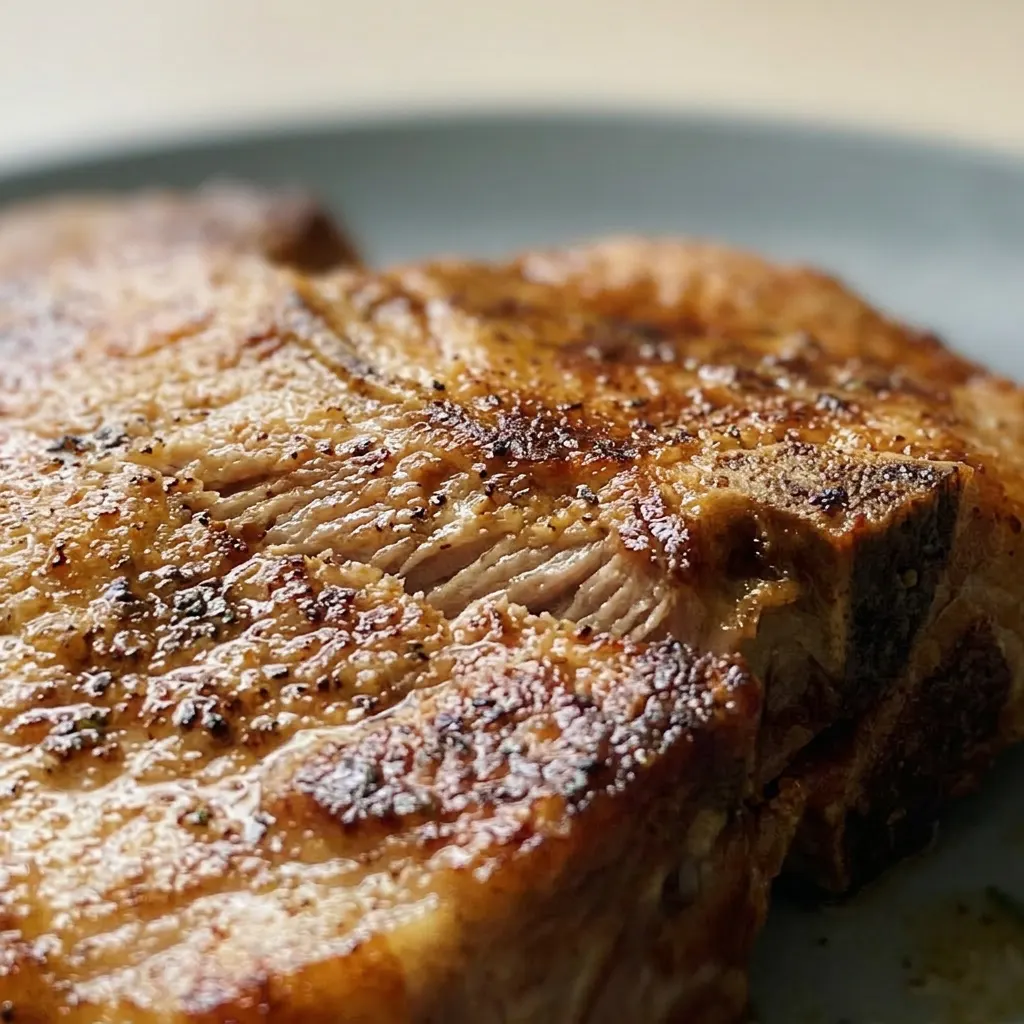
Prep: 5 min · Cook: 16 min · Total: 21 min · Servings: 4 · Calories: 380 kcal
Bone-in chops bring more than just looks
bone-in pork chops: The bone slows heat conduction near it, so the meat stays juicier while the crust forms.
smoked paprika: Use smoked paprika, not sweet or hot, for a subtle wood-fired flavor under the crust.
olive oil or vegetable oil: You need a high smoke point oil; olive oil is fine for pan searing, but don’t use extra virgin.
fresh rosemary: Fresh rosemary sprigs hold up to basting without burning; dried rosemary will scorch.
Get the surface moisture off and the pan hot before the chops go in
Season the chops
Mix salt, pepper, garlic powder, onion powder, and smoked paprika. Coat both sides evenly, you want the seasoning to stick to the dry surface.
Heat the skillet slowly, then fast
Set the pan over low heat for 7 minutes to warm evenly, then crank to medium-high for 3 minutes. A drop of water should sizzle on contact.
Add oil and sear the first side
Pour in the oil and swirl. Lay the chops in away from you, if they don’t sizzle immediately, the pan isn’t hot enough. Sear without moving for 3 to 4 minutes until the bottom is deep golden.
Flip and sear the other side
Turn the chops and sear another 3 to 4 minutes. The crust should be evenly brown, not patchy. If it’s burning in spots, your heat was too high.
Baste with butter and rosemary
Reduce heat to medium. Add butter and rosemary; as the butter melts, tilt the pan and spoon it over the chops for 1 to 2 minutes. Stop when the internal temp hits 145°F.
Rest before serving
Transfer the chops to a plate and let them rest 5 minutes. You’ll see the juices settle back into the meat, cut too soon and they’ll pool on the plate.
Pan-Seared Pork Chops
Ingredients
- 4 bone-in pork chops (about 1 inch thick, patted dry)
- 1 teaspoon salt
- 1/2 teaspoon black pepper
- 1/2 teaspoon garlic powder
- 1/2 teaspoon onion powder
- 1/2 teaspoon smoked paprika
- 2 Tablespoons olive oil or vegetable oil
- 1 Tablespoon unsalted butter
- 2 sprigs fresh rosemary
Instructions
Mix Seasoning Blend:
Combine the salt, black pepper, garlic powder, onion powder, and smoked paprika in a small bowl. Evenly coat both sides of the pork chops with this seasoning blend.Preheat Skillet:
Warm a large skillet (preferably cast iron or stainless steel) over low heat for about 7 minutes to ensure even heating. Then raise the heat to medium-high and continue heating for another 3 minutes.Add Olive Oil:
Pour the olive oil into the skillet and swirl to cover the bottom.Sear Pork Chops:
Lay the pork chops in the hot skillet and sear without moving for 3–4 minutes until a golden-brown crust forms on the bottom. Turn the chops and sear the opposite side for an additional 3–4 minutes.Baste with Butter:
Lower the heat to medium, then add the butter and rosemary sprigs to the skillet. Once the butter melts, slightly tilt the skillet and spoon the rosemary-infused butter over the chops for 1–2 minutes, cooking until the internal temperature reaches 145°F (65°C).Rest Pork Chops:
Take the pork chops out of the skillet and let them rest on a plate for 5 minutes to let the juices redistribute.
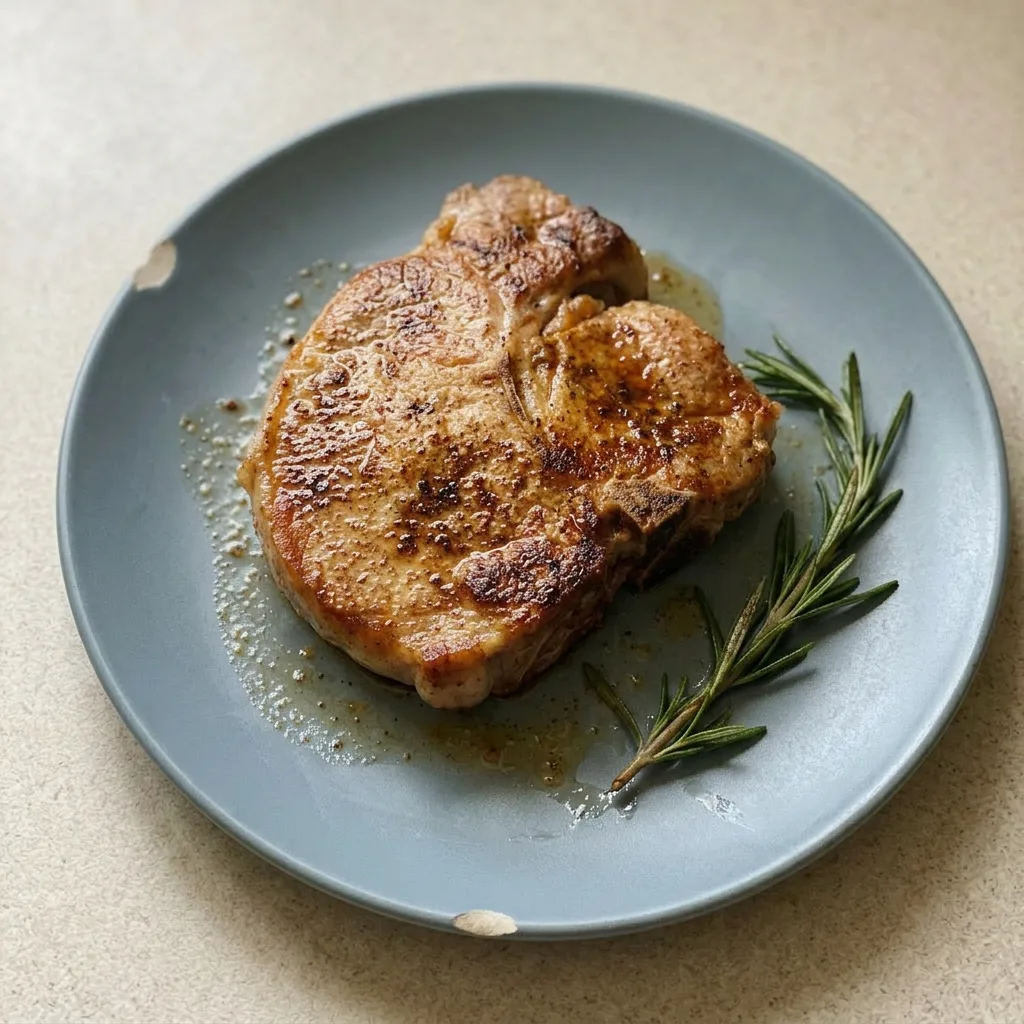
How to Store and Reheat Leftover Pork Chops
Leftover pork chops dry out fast if you just throw them in the fridge. Cool them to room temperature within 2 hours of cooking, then wrap each chop tightly in foil or plastic wrap. Place them in an airtight container.
They’ll keep in the fridge for 3 to 4 days. The texture shifts: the crust softens, and the meat loses some moisture over time.
To reheat, unwrap the chops and warm a skillet over medium heat with a splash of broth or water. Cover and heat for 2 to 3 minutes per side until just warmed through. The liquid creates steam that rehydrates the meat without steaming the crust off.
You can also slice the meat off the bone and reheat it gently in a covered pan. Freezing is not recommended because the texture suffers noticeably. Serve leftovers within 4 days for the best moisture and flavor.
Tips
- Let the pork chops sit at room temperature for 15 to 20 minutes before seasoning. A cold chop straight from the fridge lowers the pan temperature too much, which slows browning and can lead to uneven cooking. Bringing them closer to room temperature helps the sear start immediately and the interior cook more evenly.
- If your chops are thicker than 1 inch, increase the basting time by 1 to 2 minutes and check the temperature at 145°F. Thicker cuts need more gentle heat to reach the center without burning the crust. Basting helps transfer heat gradually, so the extra time ensures the interior is cooked without overdoing the exterior.
Stick with bone-in chops, swap the paprika without worry
bone-in pork chops: boneless pork chops. Boneless chops cook faster and have less margin for error.
They’ll be done before the crust sets, so reduce heat slightly and pull them at 140°F, carryover will bring them to 145°F. The meat won’t be as juicy as bone-in, and you lose the bone’s flavor contribution.
smoked paprika: sweet paprika or omit. Swap smoked for sweet and you lose the subtle wood-fired note, but the crust still forms and seasons the meat. Omit paprika altogether and you’ll miss that mild warmth and color, but the salt-pepper-garlic-onion base still carries the dish.
fresh rosemary: dried rosemary. Dried rosemary scorches quickly in the hot butter. If that’s all you have, add it only during the basting step and keep the heat low, or skip it.
The butter basting still works without the herb.
butter: ghee or more oil for dairy-free. Ghee works because its milk solids are removed, it won’t brown and burn like butter. Use 1 tablespoon ghee or just skip the butter and baste with the pan oil alone; you lose the nutty richness but the crust stays crisp.
Frequently Asked Questions
Can I use boneless pork chops instead of bone-in?
Yes, but you’ll need to adjust. Boneless chops cook faster, so reduce the heat slightly after searing and pull them at 140°F, carryover cooking will bring them to 145°F. The meat won’t be as juicy and you lose the bone’s flavor, but the crust will still form.
How do I know when the pork chops are done without a thermometer?
Look for a firm feel when pressed with your finger, the chop should spring back like the base of your thumb when your hand is relaxed. Also, the juices should run clear, not pink. But a thermometer is more reliable for hitting 145°F exactly.
Can I prepare the seasoning ahead of time?
Absolutely. Mix the salt, pepper, garlic powder, onion powder, and smoked paprika in a small container and store it airtight at room temperature for up to a month. You can also season the chops up to 24 hours ahead and refrigerate uncovered, the salt will help the seasoning penetrate deeper.
Why did my pork chops turn out tough and dry?
Most likely they were overcooked, pork chops dry out fast past 145°F. Next time, pull them at 145°F and rest for 5 minutes. Another possible cause: the pan wasn’t hot enough when you added the chops, so they steamed instead of searing, losing moisture before a crust formed.