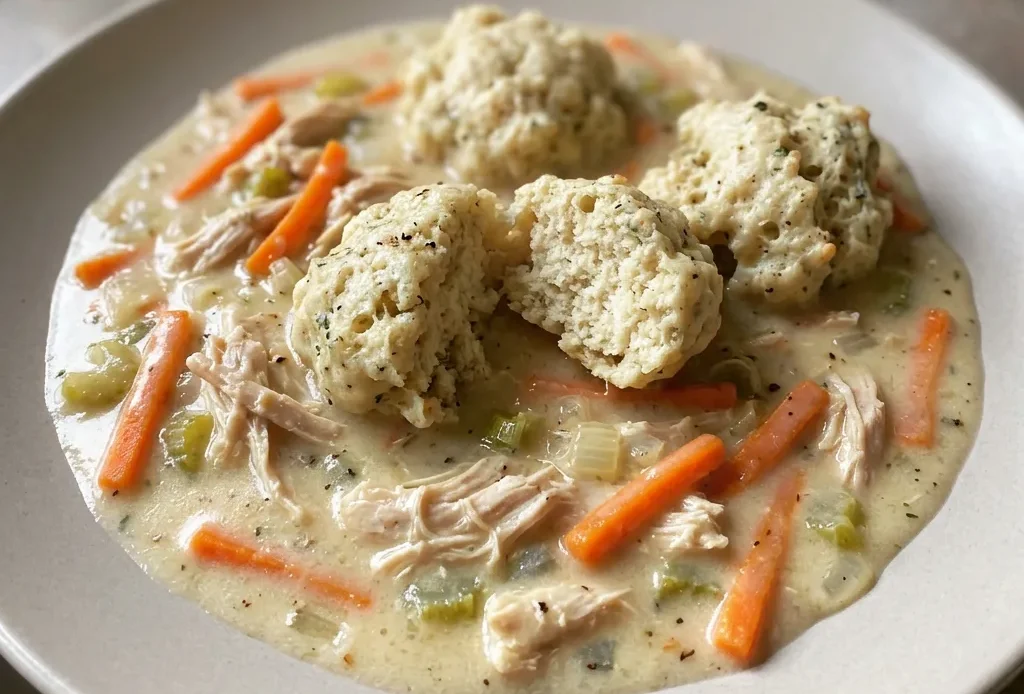
The most common mistake with chicken and dumplings is winding up with a gluey, pasty broth, a roux that clumps or a dumpling dough that dissolves into the soup. That happens when the flour doesn’t get a proper head start.
Sautéing the butter and flour together for a full minute kills the raw taste and lets the starch swell without turning to paste when you add the liquid. The dumplings need a different kind of care: too much stirring and they go tough, too little and they’re wet in the center. This chicken and dumplings recipe walks that line with a creamy, spoon-coating broth and light drop dumplings that actually puff up.
Why is a roux essential for thickening and flavor?
A roux, butter and flour cooked together, is what gives the broth body without turning starchy or gluey. You’ll feel it: the raw flour smell disappears after a minute of stirring, and the mixture turns into a smooth paste. That paste then disperses evenly into the liquid, thickening it from the start.
Evaporated milk adds richness and helps keep the emulsion stable; unlike cream, it won’t curdle under steady heat. The result is a soup that coats the back of a spoon but still flows freely.
Skip the roux, and you’ll have a thin, watery broth that never feels substantial.
Drop dumplings for a tender, fluffy texture
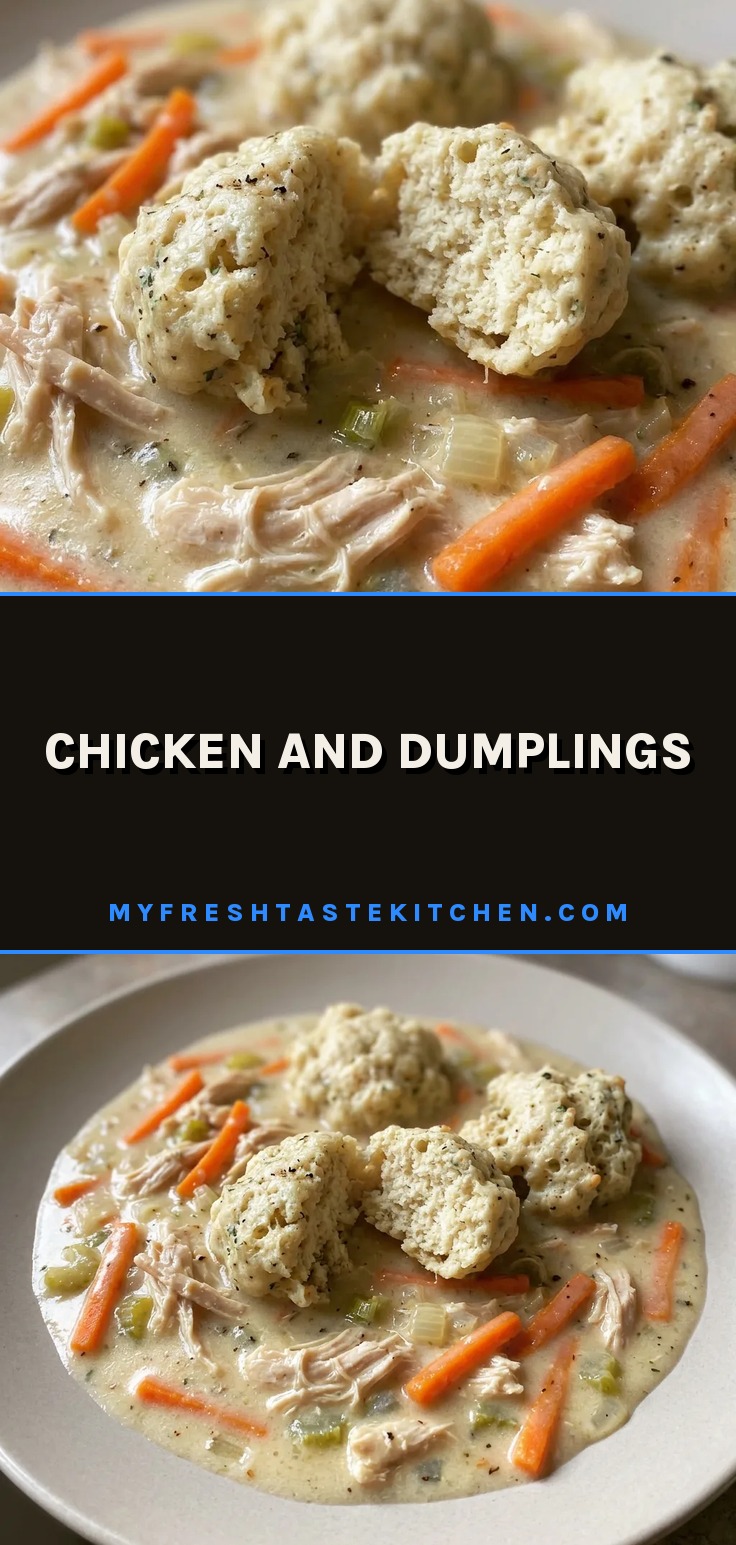
Drop dumplings take less handling than rolled ones, and that matters. The less you mix the dough, the less gluten develops, so the dumplings stay light. Dropping them directly into the simmering broth means they absorb flavor from the start, and the steam trapped under the lid makes them puff up without turning dense.
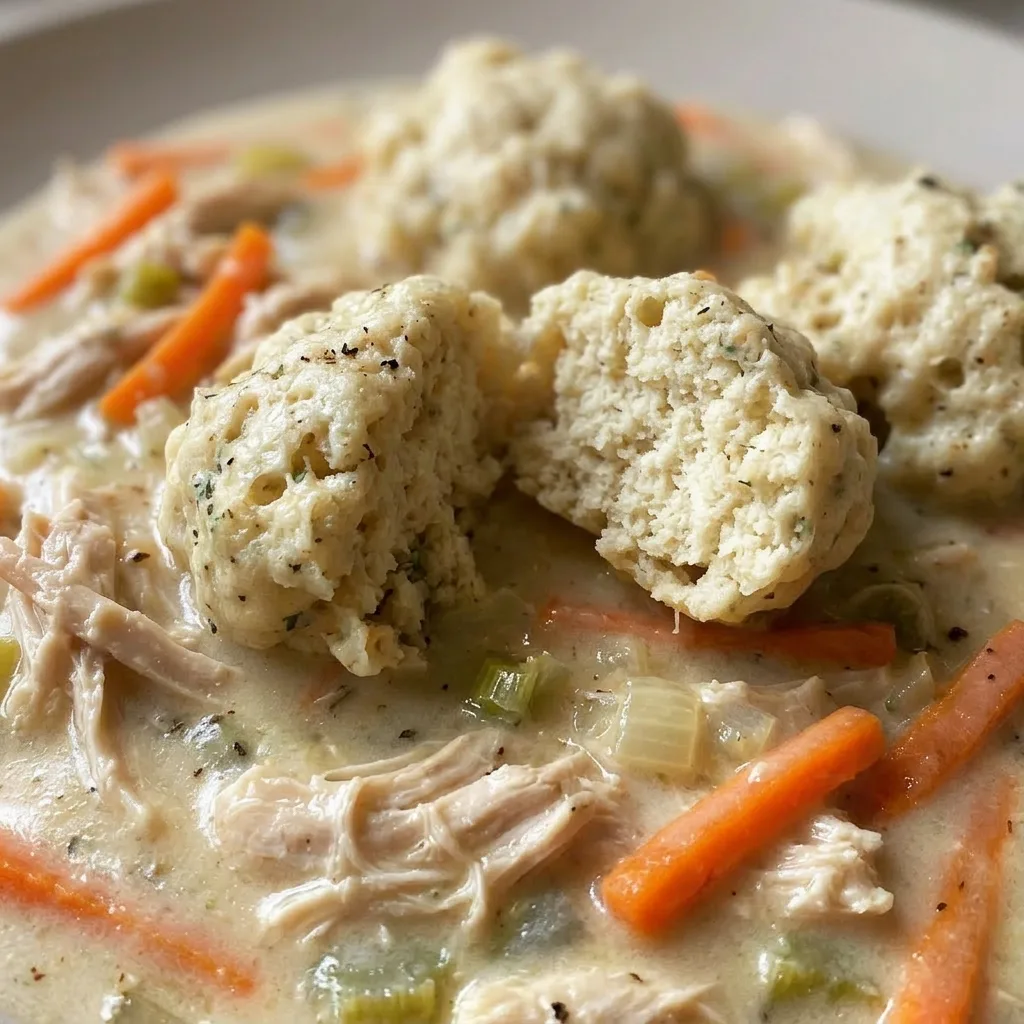
You’ll see them rise and double in size, and when you cut one open, the interior should be tender, not tough. Rolled dumplings, by contrast, end up more like boiled pasta, dense and chewy. This is one case where minimal effort gives the better texture.
Does the choice of chicken affect the broth?
Yes. Using raw chicken means you simmer it directly in the broth, which extracts deeper chicken flavor into the liquid.
You’ll need an extra cup of broth or water to compensate for what the chicken absorbs, and the cook time stretches by about 20 minutes to ensure it’s fully cooked through. After shredding and returning it, the broth tastes noticeably more savory. Pre-cooked chicken saves time, you just stir it in, but the broth won’t have that same layered richness.
If you’re in a rush, it still works; the dumplings and creamy base carry plenty of flavor on their own.
Prep: 15 min · Cook: 35 min · Total: 50 min · Servings: 6 · Calories: 670 kcal
Ingredient Notes for Chicken and Dumplings
Evaporated milk: Buy evaporated milk, not sweetened condensed milk. It adds richness without curdling under steady heat.
Chicken stock: Use 32 oz quart, plus an extra cup if starting with raw chicken to account for absorption.
Fresh thyme: Fresh thyme gives a brighter flavor; if using dried, use 1 teaspoon for the soup and 1 teaspoon for the dumplings.
Baking powder: Make sure your baking powder is fresh for proper lift. Old powder won’t give fluffy dumplings.
Make the Chicken and Dumplings in One Pot
Sauté the aromatics
Melt 6 tablespoons butter over medium-high heat. Add onion, carrots, and celery; cook until they soften and the onion turns translucent, about 5 minutes. Stir in garlic and cook 1 minute more until fragrant.
Build the roux
Sprinkle 3 tablespoons flour over the vegetables and stir constantly for 1 minute. The mixture should look like a thick paste and smell toasted, not raw. Gradually pour in evaporated milk and stock, stirring to avoid lumps.
Cook the chicken
If using raw chicken, add an extra cup of broth and the raw meat. Simmer for 20 minutes until the chicken is cooked through and shreds easily. If using pre-cooked chicken, add it now along with thyme, pepper, and salt.
Make the dumpling dough
Whisk together 2 cups flour, baking powder, pepper, salt, and thyme. Make a well, pour in milk and melted butter, then stir just until a dough forms. Stop mixing as soon as it comes together, overworking makes dumplings tough.
Drop and simmer dumplings
Drop rounded tablespoons of dough into the simmering soup. Gently press each so the broth covers the top.
Lower heat, cover, and cook 15 minutes. Halfway through, press dumplings back under and separate any stuck ones.
Check for doneness
Cut one dumpling in half. The interior should be fluffy and cooked through, not doughy. If still raw, cover and cook 3 to 4 more minutes, then test again.
Serve immediately once done.
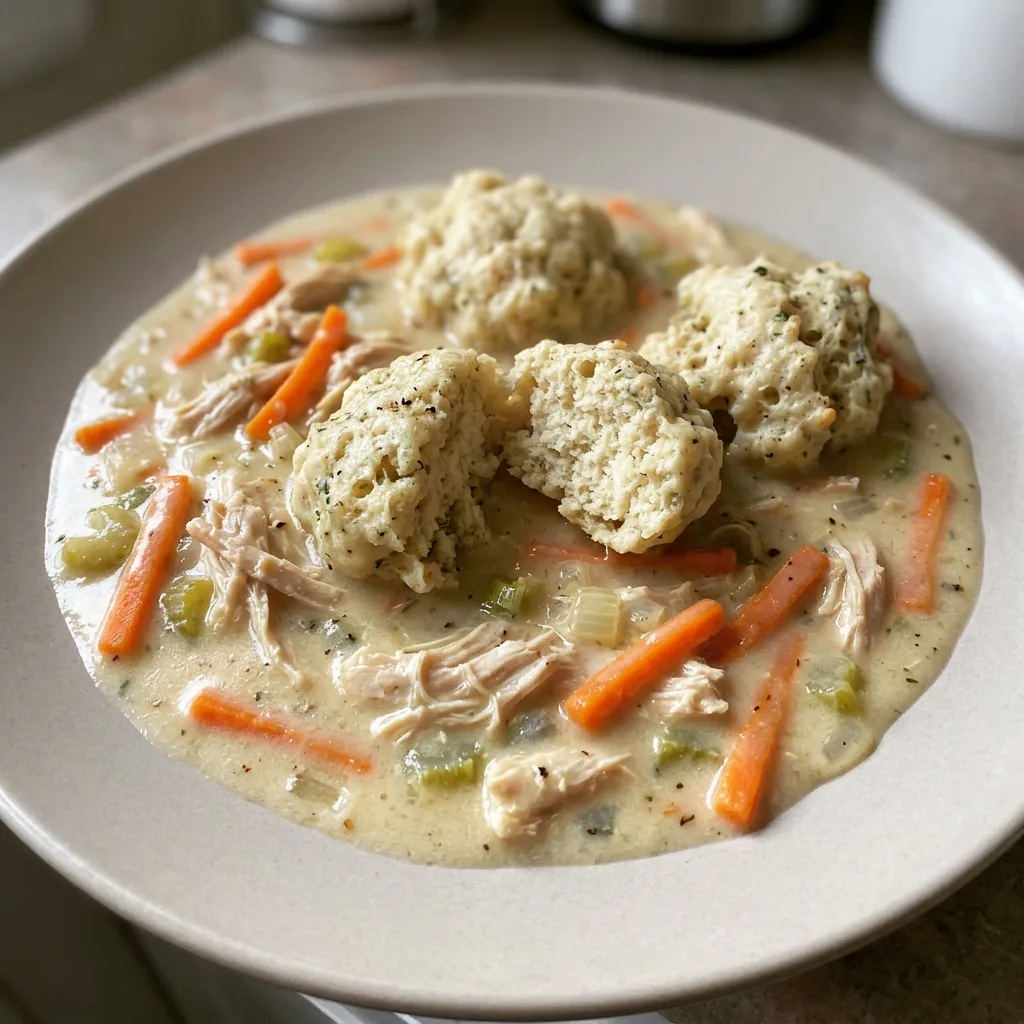
Chicken and Dumplings
Ingredients
Method
Sauté Vegetables with Butter:
In a large, heavy-bottomed pot such as a Dutch oven, heat butter over medium-high heat until melted. Sauté onion, carrots, and celery for 5 minutes until they start to soften. Stir in minced garlic and cook an additional 1 minute.Make Creamy Roux:
Sprinkle flour over the vegetables and stir to coat. Cook for 1 minute while stirring constantly. Gradually pour in evaporated milk and chicken stock, stirring continuously to create a creamy roux. Keep stirring to avoid scorching or lumps.Cook and Shred Chicken:
If using raw chicken: Add an extra cup of chicken broth or water along with the raw chicken. Simmer for 20 minutes until the chicken is fully cooked. Remove chicken, shred it, then return to the pot. Reduce heat and let simmer uncovered while preparing dumplings. If using pre-cooked chicken: Bring soup to a boil, then add chicken, thyme, black pepper, and salt. Reduce heat and let simmer uncovered while making dumplings.
Mix Dry Ingredients:
In a medium bowl, whisk together flour, baking powder, black pepper, salt, and thyme. Form a well in the center, then pour in milk and melted butter.Form Dumpling Dough:
Using a wooden spoon or rubber spatula, mix just until a dough forms. If the dough is too dry, add an extra tablespoon of milk. Avoid over-mixing to keep dumplings light.Drop Dumplings into Soup:
Using a medium cookie scoop, drop dough balls directly into the simmering soup, spacing them around the pot. Gently press each dumpling so the broth covers the tops. Alternatively, use two spoons: scoop 2 tablespoons of dough with one spoon and push it into the pot with the other. Keep dumplings uniform in size for even cooking.Simmer Dumplings Covered:
Reduce heat to low, cover the pot, and simmer dumplings for 15 minutes. The soup should maintain a gentle bubble. Halfway through, press dumplings back under the broth and separate any that are sticking together.Check Dumpling Doneness:
Gently stir the soup and dumplings. Cut one dumpling in half to check for doneness. If cooked through, serve immediately. If not, cover and cook for another 3 to 4 minutes, then recheck.
Storage and Serving
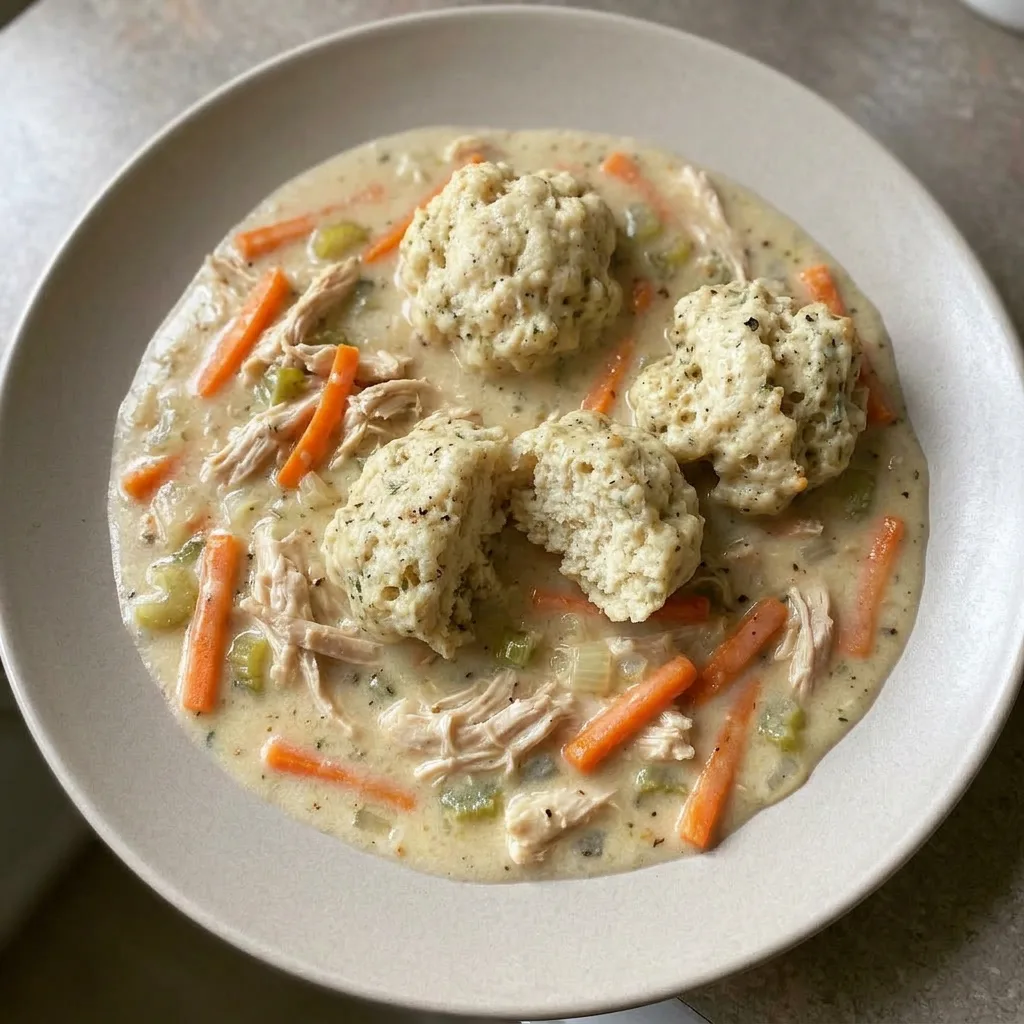
Serve chicken and dumplings right after cooking. The dumplings are lightest and fluffiest fresh from the pot. Leftovers keep in an airtight container in the fridge for up to 3 days.
As they sit, the dumplings soften and absorb broth, becoming more like thick noodles. To reheat, warm gently on the stovetop over medium-low heat, stirring occasionally. Add a splash of broth or water if the soup has thickened too much.
The broth may separate slightly; a quick stir brings it back together. Freezing is not recommended.
The dumplings turn mealy and the creamy broth can curdle when thawed. If you must freeze, portion the soup without dumplings and add fresh dumplings after reheating. Reheated leftovers won’t have the same light texture, but the flavor deepens as the thyme and pepper meld overnight.
How to swap the dairy and the flour without wrecking the texture
Evaporated milk: Half-and-half. Half-and-half makes a lighter, less creamy broth. The soup won’t coat the spoon as thickly, but it still thickens fine because the roux does most of the work.
Use the same amount.
All-purpose flour (in roux and dumplings): Gluten-free 1-to-1 flour blend. A blend with xanthan gum works for both the roux and the dumplings. The roux will thicken normally.
The dumplings turn out denser and more crumbly, not as fluffy, because gluten-free flours lack elasticity. Measure by weight if possible: 250g for the dumplings, 3 tablespoons for the roux. Do not substitute coconut or almond flour, they won’t thicken and the dumplings fall apart.
Butter: Do not substitute. Butter is essential for the roux: it carries the flour and adds richness.
Margarine or oil will separate or leave a greasy mouthfeel. The dumplings also rely on melted butter for tenderness; any replacement makes them tough or dry.
Baking powder: Do not substitute. Baking powder is the only leavener here. Without it, the dumplings will be flat, dense, and doughy, like wet rocks.
No other ingredient can replicate the lift.
Tips
- For fluffier dumplings, use a light hand when mixing the dough and drop them into simmering broth immediately after mixing. Overmixing develops gluten, making dumplings dense; dropping them right away ensures they start cooking before the gluten tightens, trapping steam for a light texture.
Frequently Asked Questions
Can I make chicken and dumplings ahead of time?
You can, but the dumplings won’t stay fluffy. They soften and absorb broth as they sit, turning more like thick noodles.
Leftovers keep in the fridge for up to 3 days; reheat gently on the stovetop with a splash of broth. Freezing is not recommended, the dumplings turn mealy and the creamy broth can curdle.
Why are my dumplings dense and heavy instead of fluffy?
Most likely you over-mixed the dough. Stir just until it comes together, overworking develops gluten, making dumplings tough. Another cause is old baking powder; it won’t provide enough lift.
Check that your baking powder is fresh, and drop dumplings into simmering broth, not a hard boil, so they steam properly.
How is this chicken and dumplings different from the classic Southern version?
Classic Southern dumplings are usually rolled and cut, then simmered in a thin broth. This version uses drop dumplings, which are lighter because they’re handled less. The broth is thickened with a roux and enriched with evaporated milk, giving it a creamy, spoon-coating body instead of a clear, brothy consistency.
