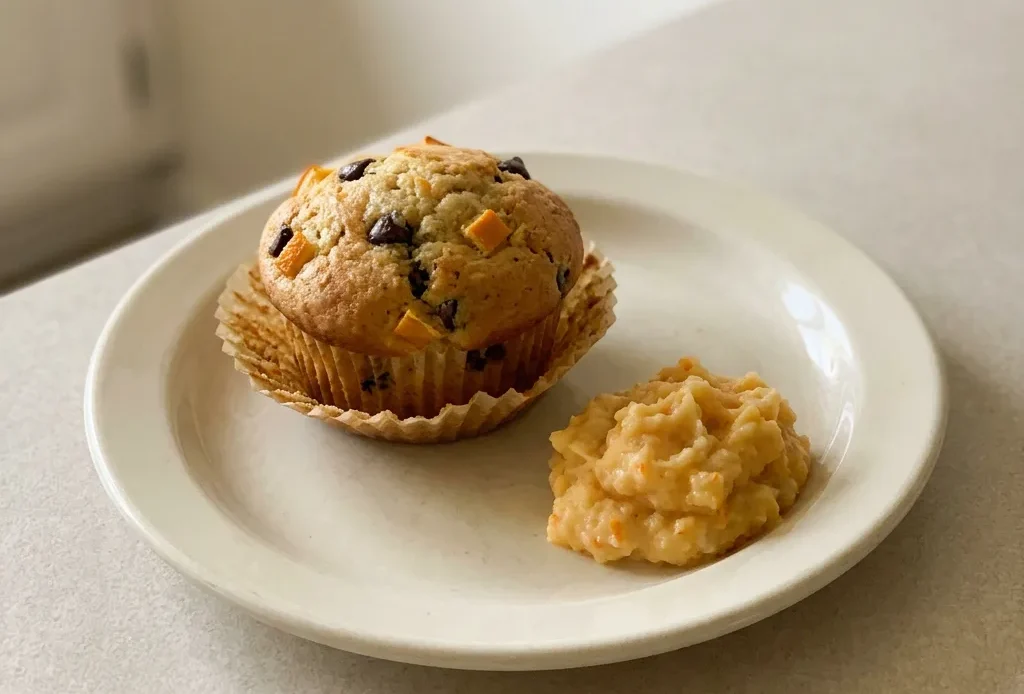
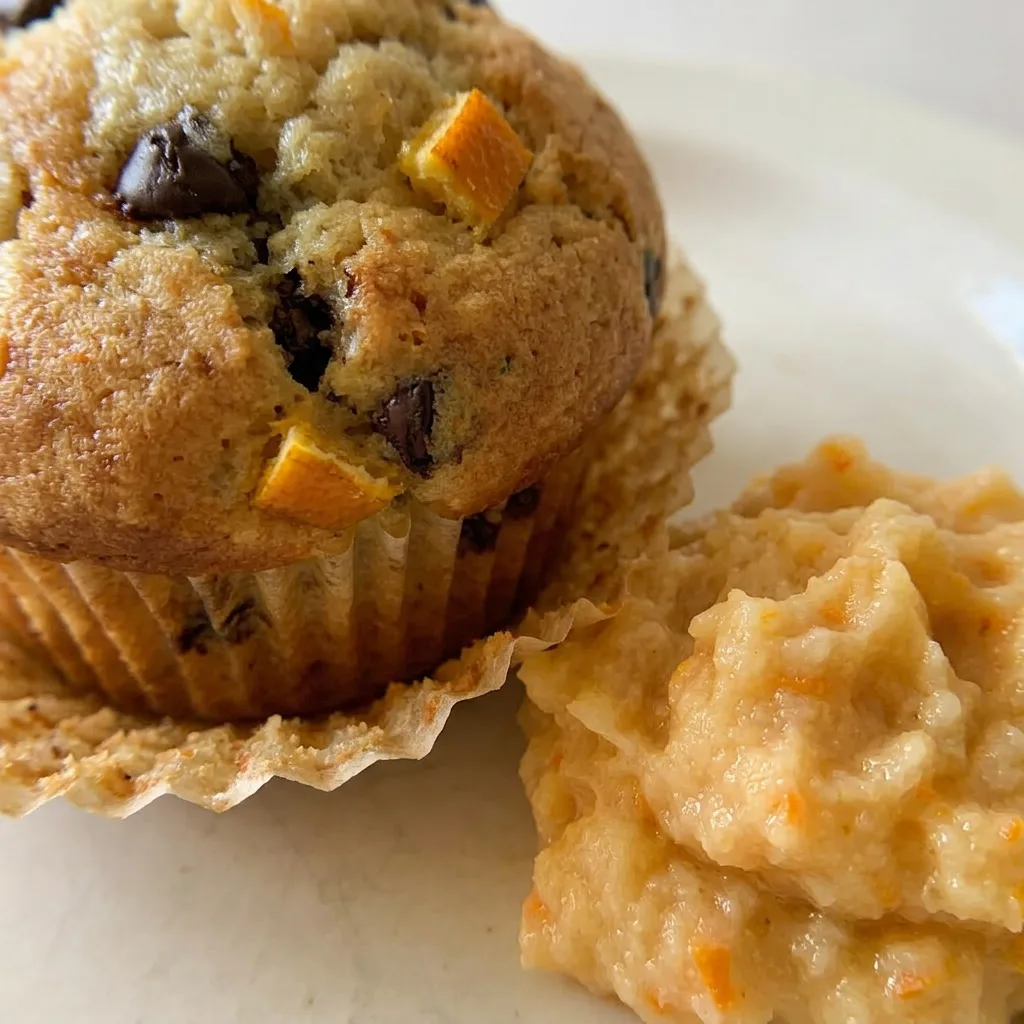
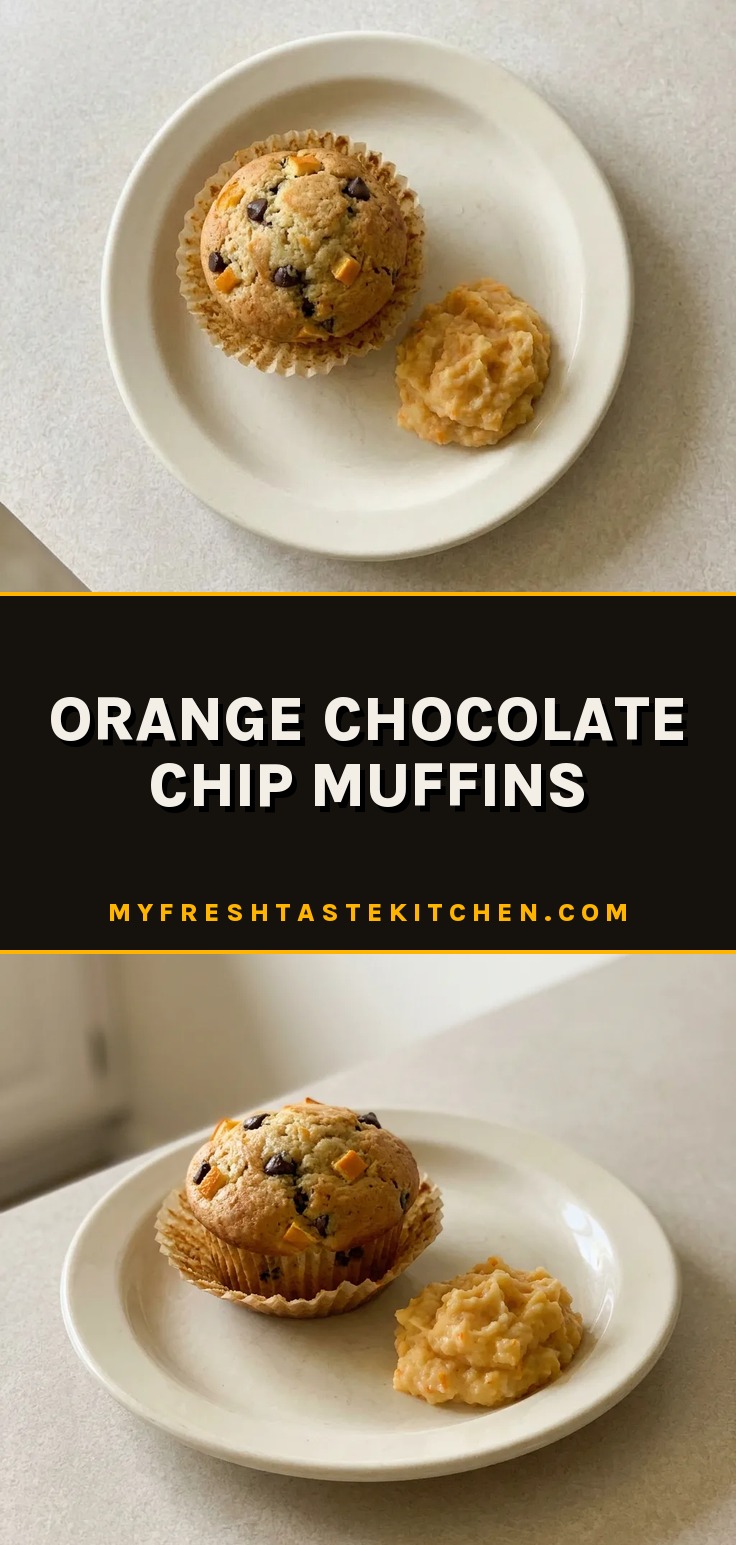
Orange chocolate chip muffins live or die on one thing: actual orange presence, not just zest. The recipe uses whole orange chunks and fresh juice, which means the batter has a real fruity acidity that balances the chocolate instead of hiding behind it.
Most orange muffins taste like vanilla with a whiff of citrus; these don’t. The margin for error here is wider than you’d think, too, the batter can look alarmingly lumpy and still bake up tender, as long as you stop stirring the second the flour disappears.
Why both orange juice and chunks instead of just zest?
Zest gives you aroma, but it dries out in the oven and can’t deliver moisture. Orange chunks break down during baking, releasing juice into the batter while leaving soft, citrusy bits throughout. That texture matters, each bite has a little burst of fruit.
The juice itself does double duty: it thins the batter to the right consistency and, because it’s acidic, it tugs at the sweetness of the chocolate chips. Without the juice, the muffins would lean bland, not bright. With zest alone, you get perfume but no real fruit presence.
Why stir minimally? What does “just comes together” look like?
Grainy lumps are fine. A shaggy, uneven batter with visible dry patches is exactly what you want.
Stirring more would develop gluten, and gluten makes muffins tough and dense instead of tender and domed. When the dry streaks disappear and the batter looks homogenous but still thick and lumpy, stop. Overmixed batter turns satiny and elastic, that’s your cue you’ve gone too far.
The crumb will come out tight, not open. Trust the lumps.
How does the orange juice interact with baking powder for lift?
Baking powder needs both moisture and an acid to activate its full leavening power. Orange juice supplies that acid.
When the batter hits the oven, the reaction releases carbon dioxide gas, creating tiny air pockets that lift the crumb. The result is a muffin that rises well and stays tender, not flat or dense.
The ratio of flour to liquid also matters, too much liquid would weaken the structure, causing the muffin to collapse. Here, the juice is part of a balanced liquid amount, so the batter holds its shape as it bakes.
Folding chocolate chips in: why not just stir?
Stirring is too aggressive. It forces the batter against the bowl, deflating the air you just built up. Folding, a gentle, scoop-and-turn motion, keeps the batter aerated, so the muffins stay light.
It also prevents the chips from sinking to the bottom. Heavy chips want to fall; folding traps them in suspension.
If you stir, the chips clump and settle unevenly. A few swift folds done by hand, not a whisk, give you chocolate in every bite without wrecking the crumb.
Prep: 25 min · Cook: 25 min · Total: 50 min · Servings: 12 · Calories: 250 kcal
What to know about the oranges and chocolate chips
Oranges: Use two whole oranges: one for juice, the other with pith and all, cut into chunks.
Chocolate chips: Semi-sweet chips keep the muffins from being cloying; dark or milk both work.
Butter: Melted butter gives a tender crumb; no need to brown it, just melt and cool slightly.
Flour: All-purpose is fine; spoon and level for accuracy since you cannot weigh on a phone.
How to make Orange Chocolate Chip Muffins step by step
Prep the dry ingredients
Sift the flour, baking powder, and salt together into a bowl. Sifting removes clumps and aerates the flour, you’ll get a lighter crumb. Set aside.
Prepare the oranges
Halve one orange and squeeze out the juice. Remove the peel from the second orange, then cut the flesh into small chunks. Leave the white pith on; it adds bitterness that balances the sugar.
Mix the wet ingredients
In a separate bowl, whisk together the egg, sugar, milk, orange chunks, reserved juice, and melted butter until blended. The mixture will look thin and slightly curdled from the citrus, that’s fine.
Combine wet and dry
Pour the wet mixture into the dry ingredients and stir with a spatula just until no dry streaks remain. The batter should be thick, lumpy, and shaggy, stop as soon as it comes together. Overmixing makes muffins tough.
Fold in the chocolate chips
Add the chocolate chips and fold gently with a spatula using a scoop-and-turn motion. Fold just until distributed, no more than 10 strokes. This keeps the batter aerated and prevents chips from sinking.
Fill and bake
Divide the batter evenly among 12 lined muffin cups. Each cup should be about 3/4 full. Bake at 380°F (195°C) for 25 minutes, until golden brown and a toothpick inserted into the center comes out clean.
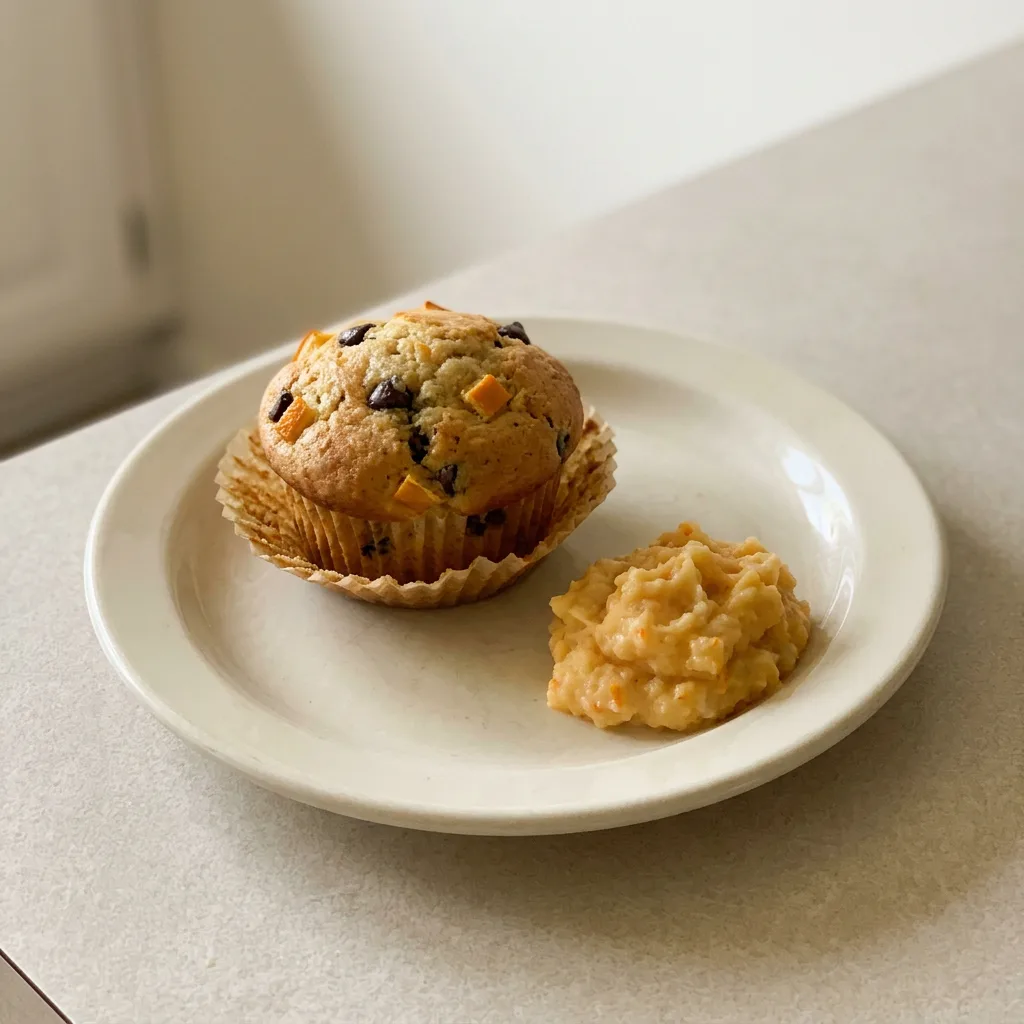
Orange Chocolate Chip Muffins
Ingredients
Method
Sift dry ingredients:
Sift the flour, baking powder, and salt together in a bowl; set aside.Prepare orange components:
Halve one orange and squeeze out the juice; set aside. Remove the peel from the second orange and cut it into chunks.Whisk wet mixture:
In a separate medium bowl, whisk together the egg, sugar, milk, orange chunks, reserved orange juice, and melted butter until thoroughly blended.Combine wet and dry:
Add the liquid mixture to the dry ingredients, stirring minimally until a moist batter just comes together.Fold in chocolate chips:
Carefully fold the chocolate chips into the batter.Fill muffin cups and bake:
Divide the batter among silicone or paper-lined muffin cups. Bake at 380°F (195°C) for approximately 25 minutes.
Storage and Serving
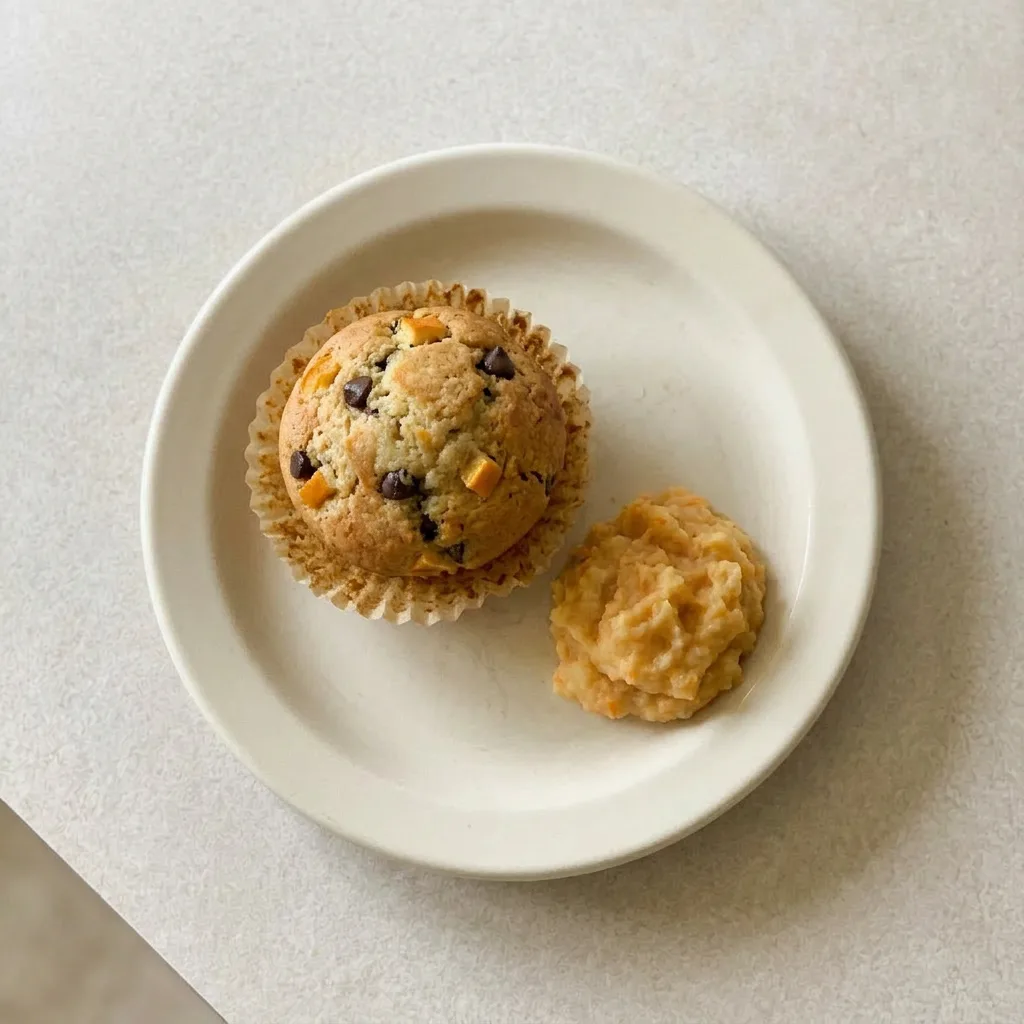
Serve these muffins within two hours of baking for the softest crumb and brightest orange flavor. After that, the top loses some crispness and the citrus aroma fades.
Store leftovers in an airtight container at room temperature for up to 3 days. The crumb will tighten slightly, but a 10 second zap in the microwave or 5 minutes in a 300°F oven restores much of the moisture and warmth.
For longer storage, freeze muffins in a single layer on a baking sheet, then transfer to a zip top bag; they keep for up to 2 months. Thaw at room temperature or reheat directly from frozen. Do not refrigerate: the cold dries out the crumb and hardens the chocolate chips.
If you plan to serve these over several days, freeze half immediately and reheat as needed.
What you can swap (and what you shouldn’t) in these orange-chocolate muffins
Fresh oranges (juice and chunks): Bottled orange juice plus orange zest. Use 1/3 cup bottled juice and the zest of 2 oranges.
The chunks add moisture and soft citrus bits; without them, the muffins will be less fruity and lack those tender bursts. The zest gives aroma but won’t replicate the texture.
Semi-sweet chocolate chips: Dark or white chocolate chips. Dark chips (60-70%) make the muffins less sweet with a deeper cocoa flavor.
White chips make them noticeably sweeter and creamier. Both melt similarly, so texture stays the same. Do not reduce sugar in the batter, it’s needed for structure, not just sweetness.
All-purpose flour: Gluten-free 1:1 flour blend (with xanthan gum). Use the same volume, but the texture will be more tender and slightly crumbly.
The batter may also spread more, so fill cups only 2/3 full. Do not use single-grain flours like almond or coconut, they lack structure and will make dense, greasy muffins.
Milk: Buttermilk or plain yogurt thinned with water. Buttermilk (same amount) adds tang and a slightly more tender crumb.
For yogurt, whisk 1/3 cup yogurt with 2 tbsp water to equal 1/2 cup. The batter will be thicker; do not overmix.
Both are fine swaps and won’t change the rise.
Tips
- When you roll the oranges on the counter, do it with steady pressure for about 10 seconds each. This breaks internal membranes and releases more juice. After rolling, you should feel the orange yield slightly to pressure. If it still feels firm, roll another 5 seconds. This step ensures you get enough juice from the first orange for the recipe. Without it, you might end up with too little liquid.
- If your oranges are small or you are unsure about the juice yield, squeeze the first orange into a measuring cup after rolling. You need 1/4 cup juice. If you have less, supplement with bottled orange juice. Do not squeeze the second orange because you need its chunks intact. This check prevents a dry batter that would make dense muffins.
Frequently Asked Questions
Can I use bottled orange juice instead of fresh?
You can, but the muffins will lose the soft citrus bits from the chunks and the brightness of fresh juice. Bottled juice often tastes flat and lacks the acid that helps the baking powder lift the batter. If you must, use 1/3 cup bottled juice and add the zest of 2 oranges for aroma.
Why did my muffins turn out dry?
Most likely you overmixed the batter, which developed gluten and made the crumb tight and dry. You might also have baked them a few minutes too long, check at 23 minutes. The batter itself has plenty of moisture from the orange juice and milk, so the culprit is almost always handling, not ingredients.
Can I make the batter ahead and bake later?
Baking powder starts reacting as soon as it gets wet, so the batter loses lift the longer it sits. If you hold it, the muffins will come out dense and flat. Better to bake the full batch, then freeze the extras; they keep for up to 2 months and reheat well.
How do I get a domed top on my muffins?
A hot oven, 380°F, creates a quick burst of steam that pushes the top up into a dome. Also, fill the cups 3/4 full; too little batter won’t dome, too much will spill over. And stop mixing the moment the dry ingredients are just incorporated, overmixing deflates the batter and leaves you with flat tops.
Are these muffins more like cake or bread?
They lean toward cake, tender, soft, and sweet from the sugar and chocolate. But the orange chunks keep the texture more substantial than a delicate cake crumb. The ratio of butter and milk to flour gives a moist, open crumb that’s closer to a muffin than a quick bread, which tends to be denser.
