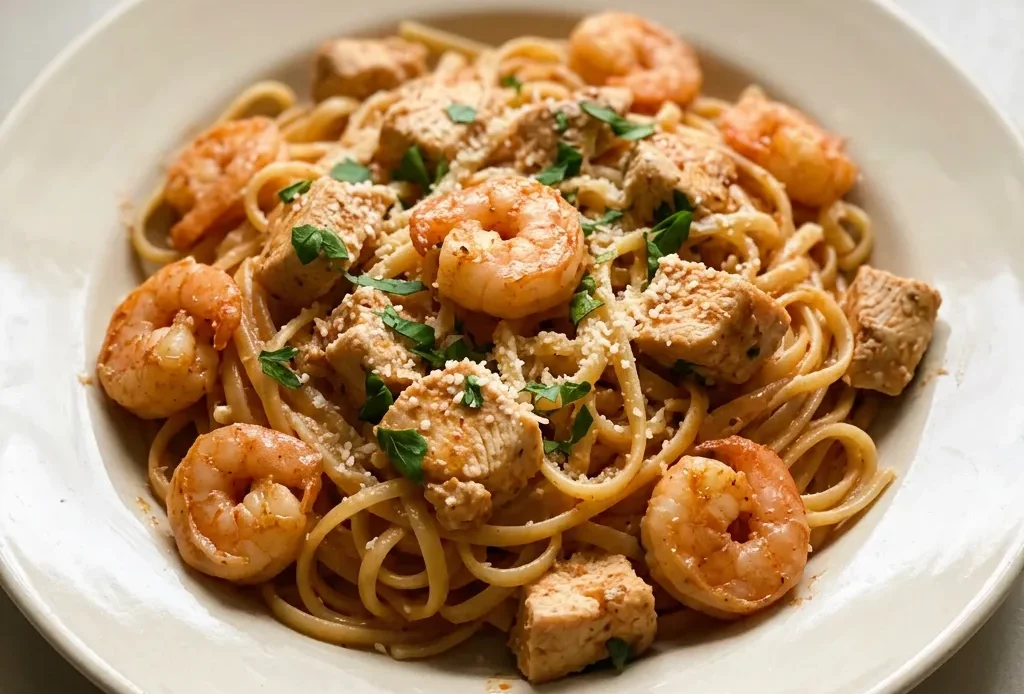
The biggest mistake with this cajun chicken and shrimp pasta is pouring the cream straight from the carton and hoping for a silky sauce. That glossy finish doesn’t come from the cream alone, it takes the starch in reserved pasta water to bind everything together.
Without it, the sauce either runs thin or tightens into a greasy mess as it cools. The same pan that sears the shrimp and chicken builds the sauce, so those browned bits become savory depth instead of waste. It’s a 25-minute dish where the payoff depends on one simple pause before you drain the linguine.
Starchy pasta water, the sauce’s secret
The reserved pasta water does more than prevent a dry sauce. Its starch acts like a bridge between fat and liquid, helping the cream and Parmesan cling to each strand rather than pooling at the bottom of the bowl. You’ll see the sauce turn glossy as you toss, not greasy or broken.
This same starch also adds a subtle body, think of it as a light thickener that keeps the sauce silky without needing more cream or butter. Without it, the sauce can tighten up as it cools or separate on the plate.
A splash or two, added gradually, lets you dial in exactly the consistency you want.
Season each protein on its own
Dusting shrimp and chicken separately with Cajun seasoning ensures every bite carries the same heat and depth. If you seasoned both together or added spice only to the sauce, one protein would likely end up bland while the other dominates.
The shrimp needs just a light coating, it cooks fast and sheds seasoning easily in the pan. The chicken, with more surface area and longer contact with heat, holds onto its spice better. By seasoning individually, you also avoid washing off the rub when proteins are added at different times.
The result: each piece tastes intentionally spiced, not patchy or muted.
White wine deglazing adds savory depth
After cooking the chicken, the pan holds browned bits packed with flavor. A splash of white wine lifts them off the surface, turning those concentrated solids into the sauce’s base.
You’ll notice the aroma shift as the alcohol cooks off in about a minute, leaving only a subtle fruitiness that balances the richness of cream and cheese. The acidity cuts through the fat, keeping the sauce from feeling heavy. Without deglazing, those browned bits stay stuck and wasted, and the sauce can taste flat.
A dry white wine works best, its acidity is the point, not sweetness.
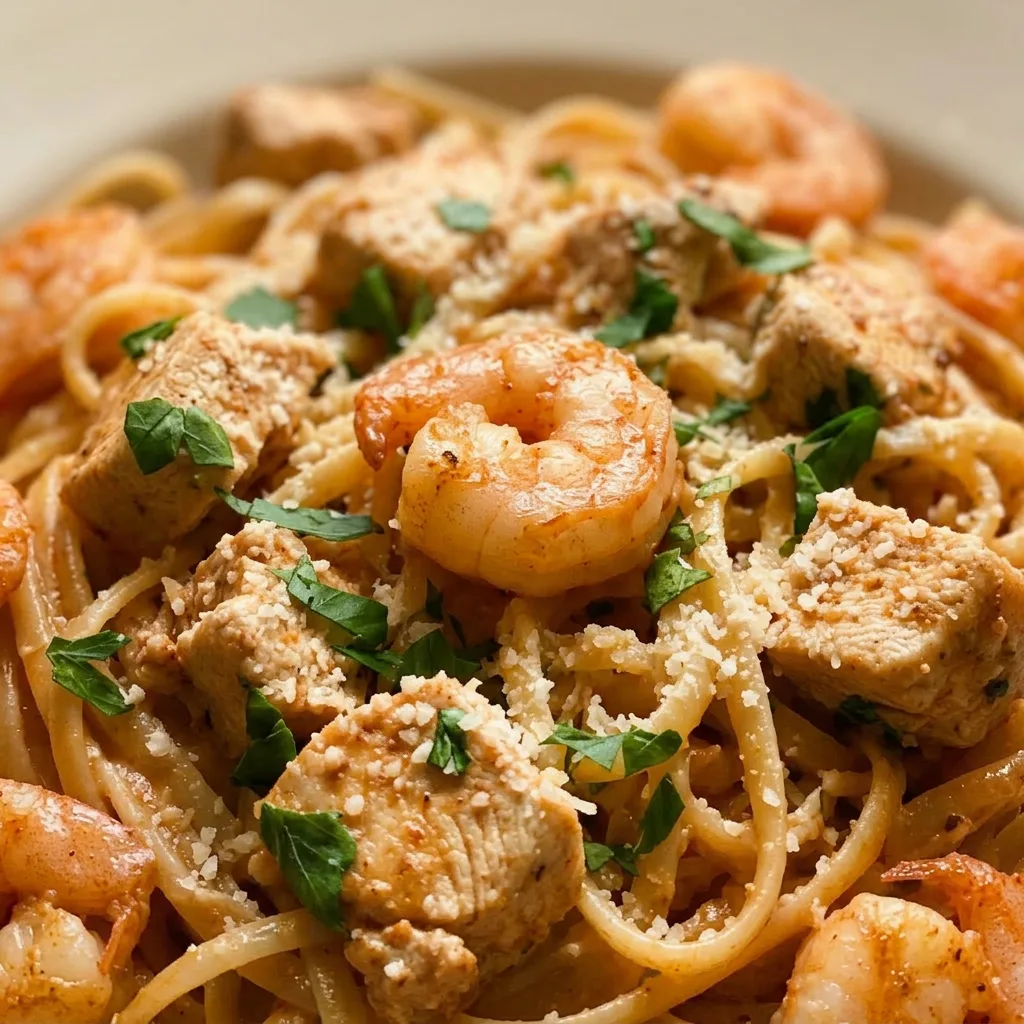
Prep: 5 min · Cook: 20 min · Total: 25 min · Servings: 4 · Calories: 660 kcal
A few ingredients worth attention
Cajun seasoning: Store bought Cajun blends vary wildly in salt, so taste your brand before adding extra salt.
Linguine: A long, flat noodle like linguine catches the creamy sauce better than a thin spaghetti.
White wine: Use a dry white wine you’d drink, not cooking wine; the acidity brightens the cream.
Heavy cream: Heavy cream (35% fat) is key; lower fat creams can separate when simmered.
Parmesan: Buy a block of Parmigiano Reggiano and grate it yourself; pre shredded won’t melt as smoothly.
Uncooked shrimp: Look for 21-25 count shrimp, peeled and deveined, with tails off for easy eating.
Building the creamy Cajun sauce in the same pan
Cook the pasta
Boil the linguine in salted water until al dente. Before draining, scoop out 1 cup of the pasta water, you’ll see it look cloudy, that’s the starch you need.
Season and sear the proteins
Dust the shrimp and chicken separately with Cajun seasoning. Sear the shrimp first until pink and curled, about 3 to 4 minutes; transfer out. Then cook the chicken until browned and cooked through, 5 to 6 minutes.
Deglaze and build the sauce
Melt the remaining butter, add garlic until fragrant. Pour in white wine, scraping up the browned bits, you’ll see them dissolve. Stir in cream and the last tablespoon of Cajun seasoning; let it bubble gently until it thickens enough to coat a spoon.
Finish with cheese and pasta water
Turn off the heat, stir in Parmesan until melted. If the sauce looks too tight, add pasta water a splash at a time, the sauce should turn glossy and flow slowly off the spoon.
Combine everything
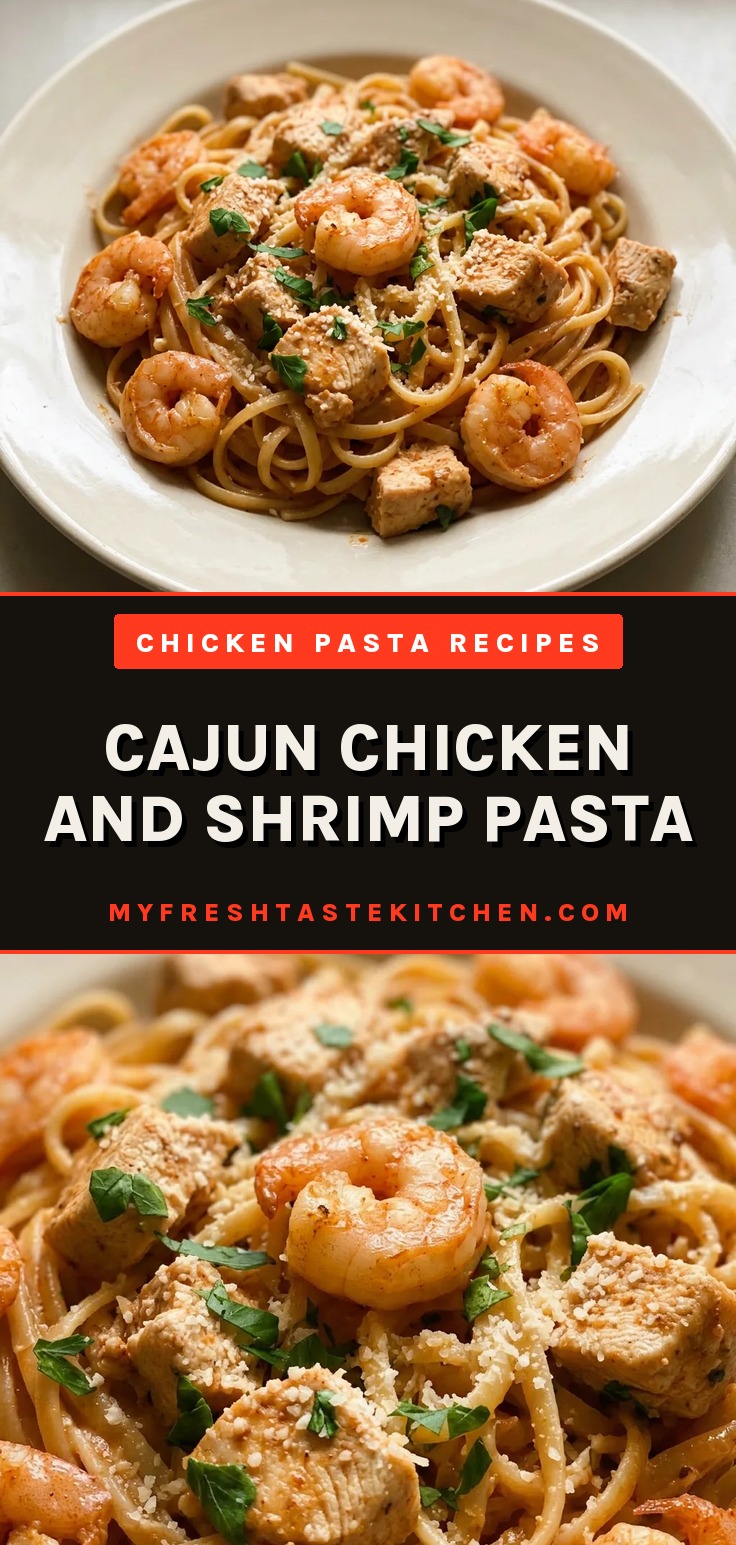
Return the shrimp and chicken to the pan, then add the drained pasta. Toss well so every strand is coated, you’ll see the sauce cling evenly, not pool at the bottom.
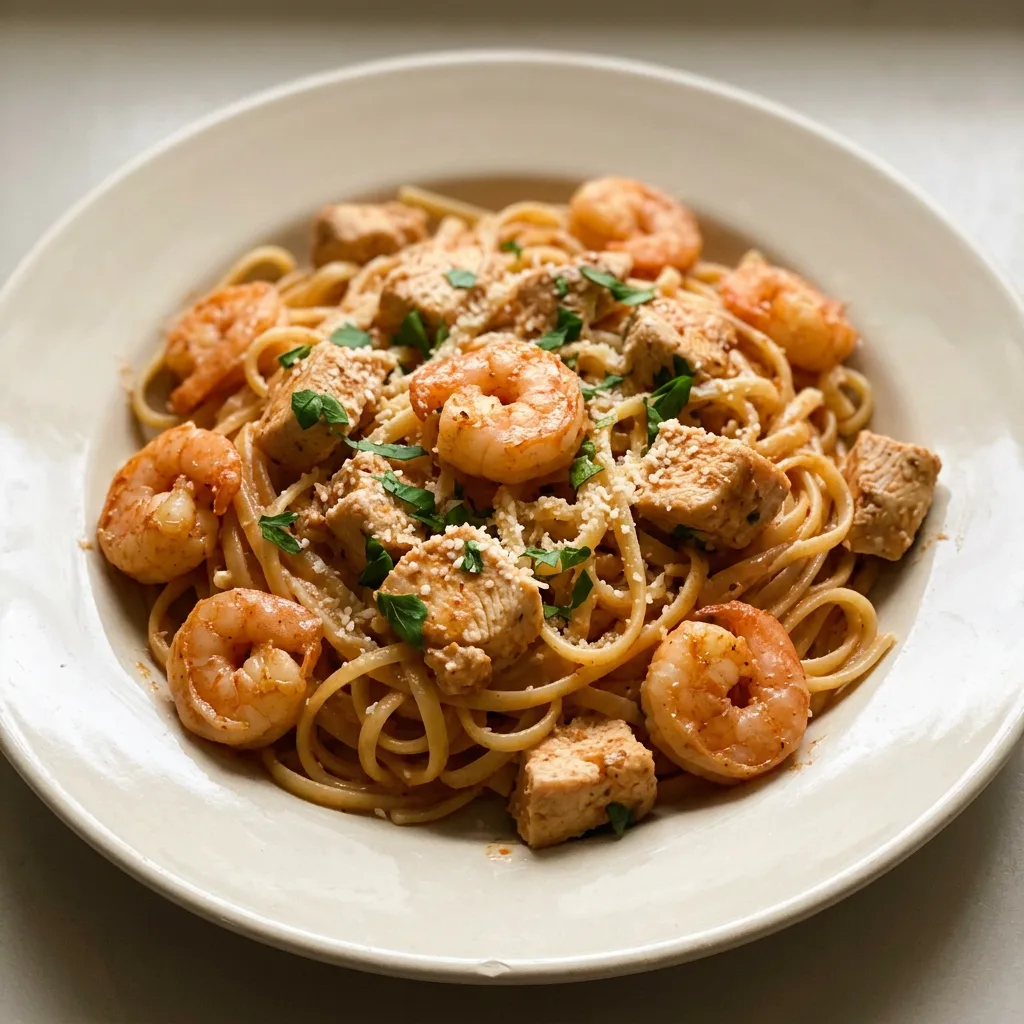
Cajun Chicken and Shrimp Pasta
Ingredients
Method
Cook Pasta Al Dente:
Fill a large pot with water, bring to a boil, add salt generously, and cook the pasta until al dente following package instructions. Set aside 1-2 cups of pasta water before draining.Season Shrimp and Chicken:
While the pasta cooks, dust the shrimp and chicken each with 1 tablespoon of Cajun spice.Sauté Shrimp in Butter:
In a large pan or Dutch oven, heat the olive oil and melt half the butter. Add the shrimp and sauté over medium heat for 3-4 minutes, turning once halfway. Use tongs to transfer the shrimp to a plate.Cook Chicken Thoroughly:
Place the chicken in the pan and cook for 5-6 minutes until fully done. Remove the chicken and set aside.Make Creamy Cajun Sauce:
Add the remaining butter and garlic to the pan; cook for 1 minute until aromatic. Pour in the white wine to deglaze, then add the last tablespoon of Cajun seasoning. Reduce the heat and stir in the cream. If the sauce appears dry, incorporate some reserved pasta water. Let it simmer for 1-2 minutes until thickened, then turn off the heat and mix in the grated Parmesan.Combine and Serve:
Return the shrimp and chicken to the pan, stirring to combine. Add the drained pasta and toss thoroughly to coat. Adjust seasoning to taste and serve right away.
Heavy cream, white wine, and Parmesan: the three swaps that matter most
Heavy cream: Half-and-half or whole milk with a tablespoon of butter melted in. Half-and-half works but makes a thinner sauce that may not coat the pasta as richly. Whole milk alone can curdle when simmered; adding butter helps stabilize it, but the sauce stays looser and less silky.
Start with the same volume as cream and simmer a minute less.
White wine: Chicken broth plus a squeeze of lemon juice. You lose the wine’s fruity brightness, but the broth and acid still deglaze the pan and cut the cream’s richness. Use the same amount of broth and add lemon juice to taste, it won’t replicate the wine’s complexity, but the sauce won’t taste flat.
Parmesan: Pecorino Romano. Pecorino is saltier and sharper, so use about three-quarters the amount and skip extra salt elsewhere.
It melts similarly but leaves a more pungent, sheepy finish. The sauce will taste bolder, not milder.
Tips
- Pat the shrimp and chicken dry with paper towels before dusting with Cajun spice. Moisture on the surface makes the seasoning slide off rather than stick, so the meat sears without a wet, steamed exterior. Dry proteins develop a deeper crust and hold onto the spice through cooking.
- Cook the shrimp and chicken in a single layer without crowding the pan. If the pan is too full, the proteins steam instead of sear, and the Cajun coating can slough off. Work in batches if necessary; the browning is worth the extra minute.
Storage and Reheating
This pasta is best eaten right away, while the sauce is glossy and coats each strand. As it cools, the cream sauce thickens and tightens, so leftovers will have a heavier, less fluid texture. Store in an airtight container in the fridge for up to 3 days.
To reheat, add a splash of pasta water or milk and warm gently in a skillet over medium low, stirring often. The added liquid loosens the sauce and restores some of its original silkiness. You can also microwave in 30 second bursts, stirring between, with a wet paper towel over the bowl to add steam.
Freezing is not recommended; the cream sauce will separate and turn grainy upon thawing, and the pasta becomes soft. Instead, freeze the cooked chicken and shrimp separately, then make fresh sauce and pasta when you’re ready.
For best texture, eat within 2 hours of cooking.
Frequently Asked Questions
Can I make this pasta ahead of time?
This dish is best eaten within 2 hours of cooking. The sauce thickens and tightens as it cools, so leftovers won’t be as glossy. If you must prep early, cook the chicken and shrimp ahead, then make fresh pasta and sauce when you’re ready to serve.
How do I prevent the cream sauce from curdling?
Use heavy cream with at least 35% fat, lower-fat creams break when simmered. Also, add the Parmesan off the heat and stir just until melted; high heat can cause it to separate. If you see the sauce turning grainy, pull the pan off the burner immediately and whisk in a splash of reserved pasta water.
What’s the best way to reheat leftovers without drying out the pasta?
Add a splash of pasta water or milk and warm gently in a skillet over medium-low, stirring often. The added liquid loosens the thickened sauce and restores silkiness. In a microwave, use 30-second bursts with a wet paper towel over the bowl to add steam, stirring between bursts.
Is this dish very spicy? Can I tone down the heat?
The heat level depends on your Cajun seasoning brand; some are mild, others fiery. To reduce spice, use only 1 tablespoon of Cajun seasoning total instead of the 3 called for (1 per protein, 1 in sauce). You can also substitute half the Cajun seasoning with smoked paprika for color without heat.
How is this different from a classic shrimp and chicken Alfredo?
Classic Alfredo relies on butter, cream, and Parmesan for a mild, nutty sauce. Here, Cajun seasoning and white wine add heat and acidity, cutting the richness. Deglazing the pan with wine after searing the proteins also builds a savory depth that plain Alfredo lacks.
