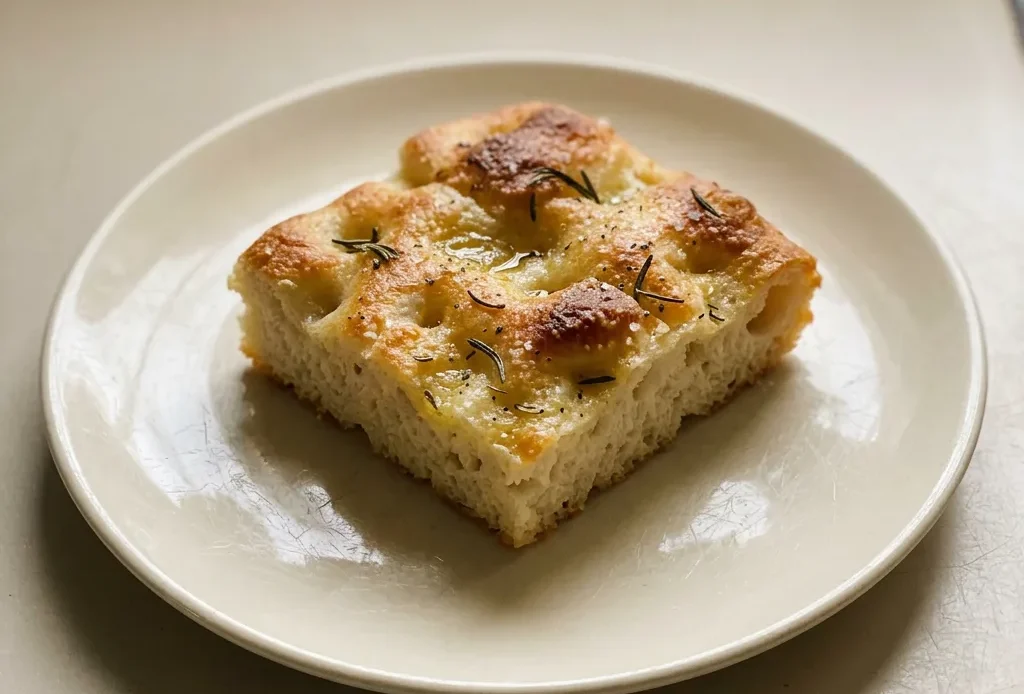
The most common mistake with focaccia is shorting the water. That dough looks alarmingly wet, stickier than any bread dough you’ve handled. Most people instinctively add more flour to make it behave, which kills the open crumb you’re after.
This easy focaccia bread recipe works because it leans into that wetness: oiled hands, no extra flour, a long proof that builds structure without fighting the dough. You get a crisp, dimpled crust and an airy interior that pulls apart in soft sheets, not dense chunks. The patience pays off in texture you can’t fake.
I once kneaded that sticky dough for 20 minutes, desperate for it to come together, and ended up with a brick that barely rose.
Use a wet dough for an airy crumb
This dough uses an 83% hydration ratio, 1 3/4 cups water to 4 cups flour. That’s a lot of water.
The dough feels sticky and loose, not the firm ball you might expect. You handle it with oiled hands and an oiled bowl; no extra flour dusting needed.
That moisture is what gives focaccia its open, airy crumb and crispy crust. A drier dough would yield a denser, bread-like texture.
Now I let the high hydration do the work, oiled hands and a light touch are all it needs. The long proof develops gluten naturally without aggressive kneading.
Look for a dough that’s billowy and soft, not tight.
Dimple after second proof to trap oil
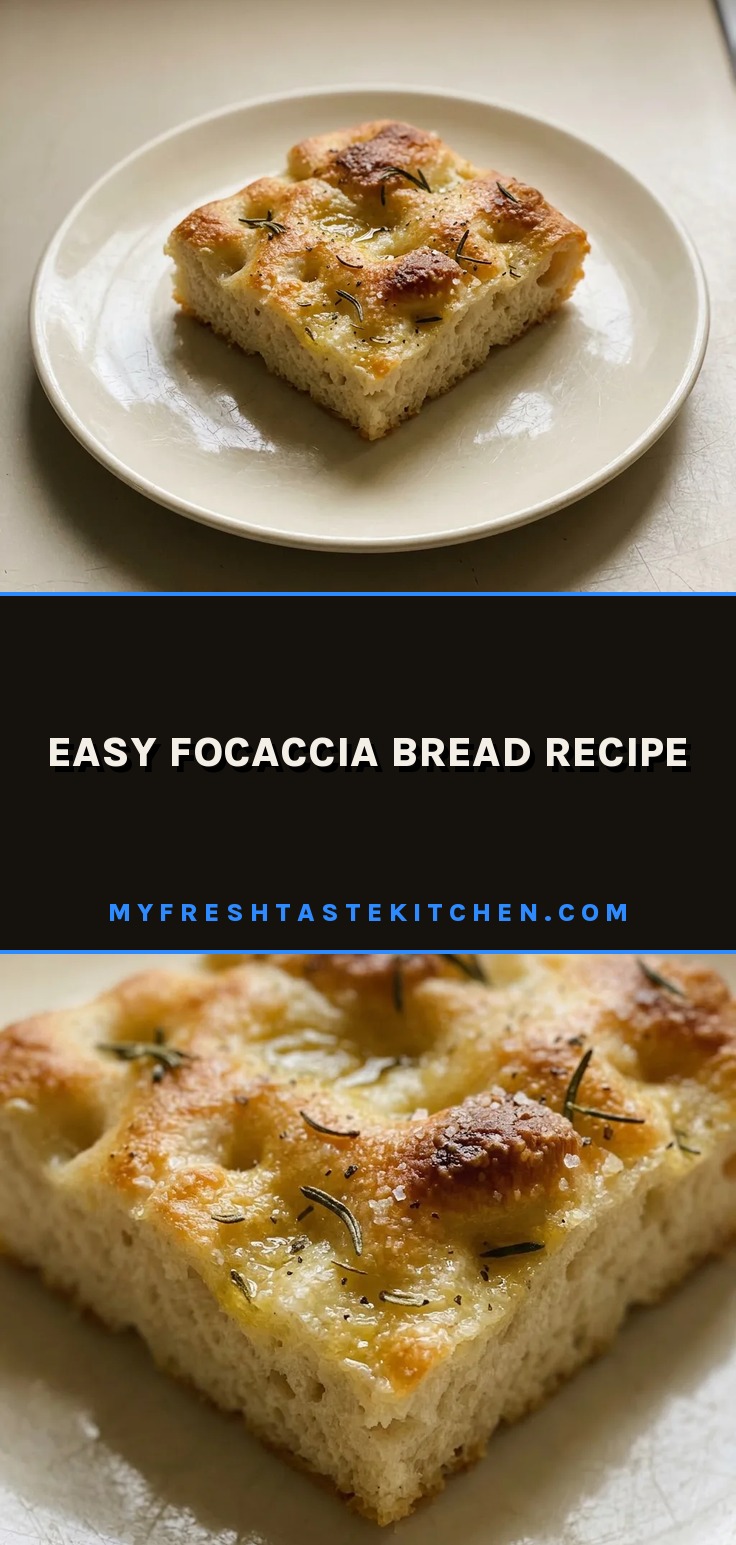
After the second 30-minute proof, press your fingertips firmly into the dough, all the way to the pan. Those dimples serve two purposes: they prevent large air bubbles from forming, keeping the crumb even, and they create pockets that pool olive oil.
The oil in those wells fries the dough during baking, giving you crispy, golden edges. Without dimpling, the oil would just sit on top. You want the oil to puddle in those indentations.
Coarse salt and rosemary go on after the oil, sticking to the wet spots.
Bread flour gives the chewy structure you want
Bread flour has 12-14% protein, compared to all-purpose’s 10-12%. That extra protein means more gluten can form, giving this focaccia its characteristic chew.
The crumb holds its shape without being tough. A lower-protein flour would produce a softer, more cake-like texture. When you tear a piece, you want to feel some resistance, not a crumbly pull.
The structure supports toppings like rosemary and coarse salt without sagging. This is what makes Italian focaccia distinct from, say, a pizza crust.
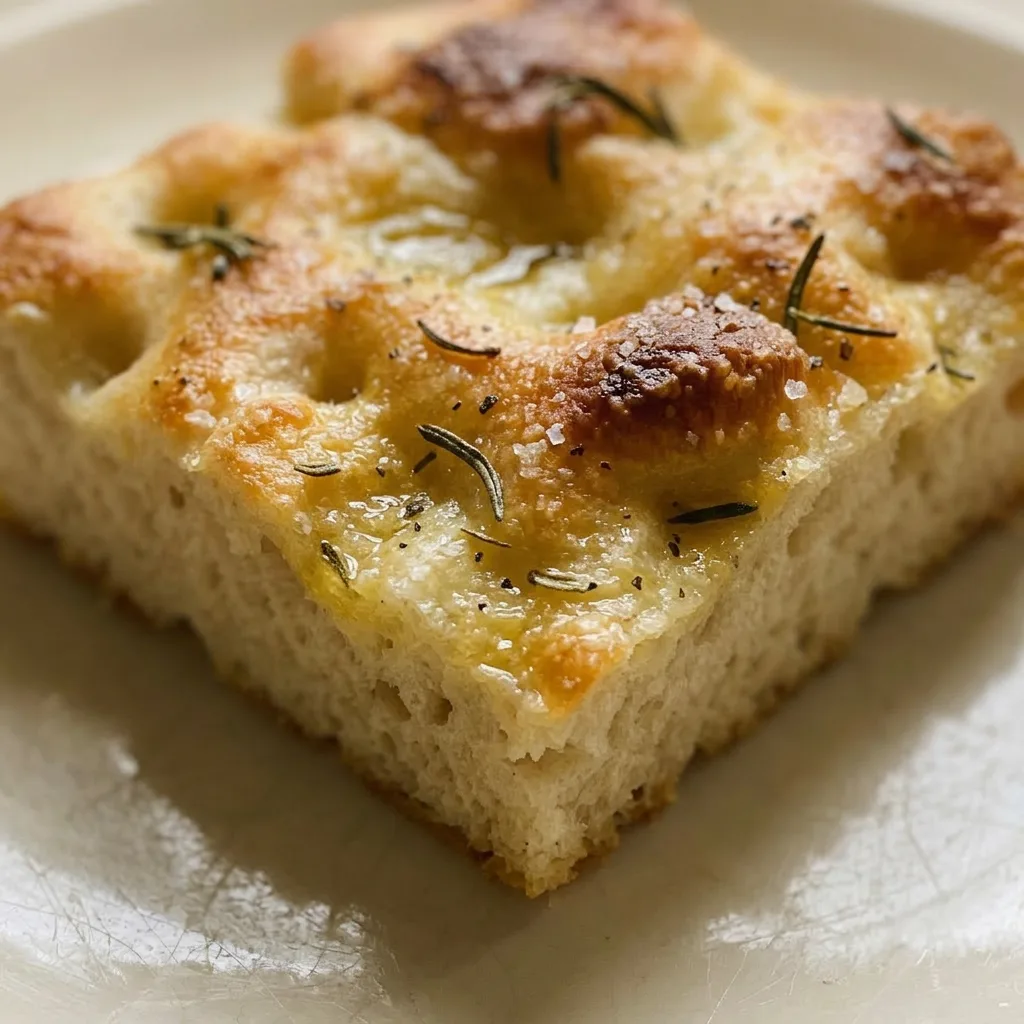
Prep: 15 min · Cook: 25 min · Total: 40 min · Servings: 12 · Calories: 150 kcal
Choose the right olive oil for flavor and texture
Bread flour: Bread flour’s 12-14% protein builds the chewy structure that holds this wet dough together.
Active dry yeast: Check your yeast is fresh by proofing it in warm water until foamy, about 5 minutes.
Extra virgin olive oil: Use a good extra virgin olive oil for flavor; it pools in the dimples and fries the crust.
Fresh rosemary: Fresh rosemary is best; dried won’t soften during the short bake and can be brittle.
Work the dough by feel, not by clock
Proof the yeast
Stir yeast into warm water and let it sit. In 5 minutes you’ll see a foamy head on top. If nothing happens, your yeast is dead, start over with fresh yeast.
Mix the dough
Add the flour-salt mix to the yeast water and stir until no dry bits remain. The dough will be shaggy and wet.
That’s right. Resist adding more flour; the high hydration is what gives focaccia its open crumb.
Knead the sticky dough
Turn it onto a floured surface and knead for 10 minutes. It starts sticky but becomes smooth and elastic.
When you press a finger into it, the dough should spring back slowly. If it tears easily, keep going.
First proof until doubled
Place the dough in an oiled bowl, cover, and let it rise in a warm spot. 5 hours it should double in size.
To check: poke the dough gently. If the indent stays, it’s ready.
If it springs back fast, let it rise more.
Shape and second proof
Deflate the dough, transfer it to an oiled baking sheet, and press it into a rectangle. It will resist and shrink, let it rest 5 minutes, then press again. Cover and let proof 30 minutes.
The dough should puff slightly, looking soft.
Dimple and top
Press your fingertips all the way through the dough to the pan, creating deep dimples. Work across the whole surface. Drizzle olive oil generously; it should pool in the wells.
Sprinkle coarse salt and rosemary over the oiled spots. The oil puddles are what fry the dough for crispy edges.
Bake until golden
Bake at 425°F for 25 minutes. The top should be deep golden brown and the bottom crisp when you lift it. Let it cool on a rack for at least 10 minutes before cutting.
A hot focaccia will compress under a knife.
Easy Focaccia Bread Recipe
Ingredients
- 4 cups bread flour 500g
- 2 1/4 teaspoons active dry yeast 7g
- 2 teaspoons salt 10g
- 1 3/4 cups warm water 415ml
- 1/4 cup extra virgin olive oil 60ml
- 2 tablespoons fresh rosemary leaves
- Coarse sea salt for sprinkling
Instructions
Activate yeast mixture:
In a bowl, stir together warm water and yeast; allow to rest for about 5 minutes until it becomes frothy.Mix dry ingredients:
In a separate bowl, whisk flour with salt. Slowly incorporate this dry mix into the yeast mixture.Knead dough smooth:
Turn the dough onto a floured counter and knead for around 10 minutes until it is smooth and elastic.First proof dough:
Put the dough into a greased bowl, cover with a cloth, and let it proof in a warm spot for roughly 1.5 hours until it has doubled in size.Shape dough rectangle:
Gently deflate the dough, move it to a greased baking sheet, and press it into a rectangular shape.Second proof dough:
Again cover with a cloth and let it proof for an additional 30 minutes.Preheat oven:
Heat the oven to 425°F (220°C).Dimple and top dough:
Press dimples into the top of the dough, then drizzle with olive oil and top with coarse salt and rosemary.Bake until golden:
Bake for about 25 minutes until the top is golden brown.Cool before serving:
Allow to cool a bit before cutting and serving.
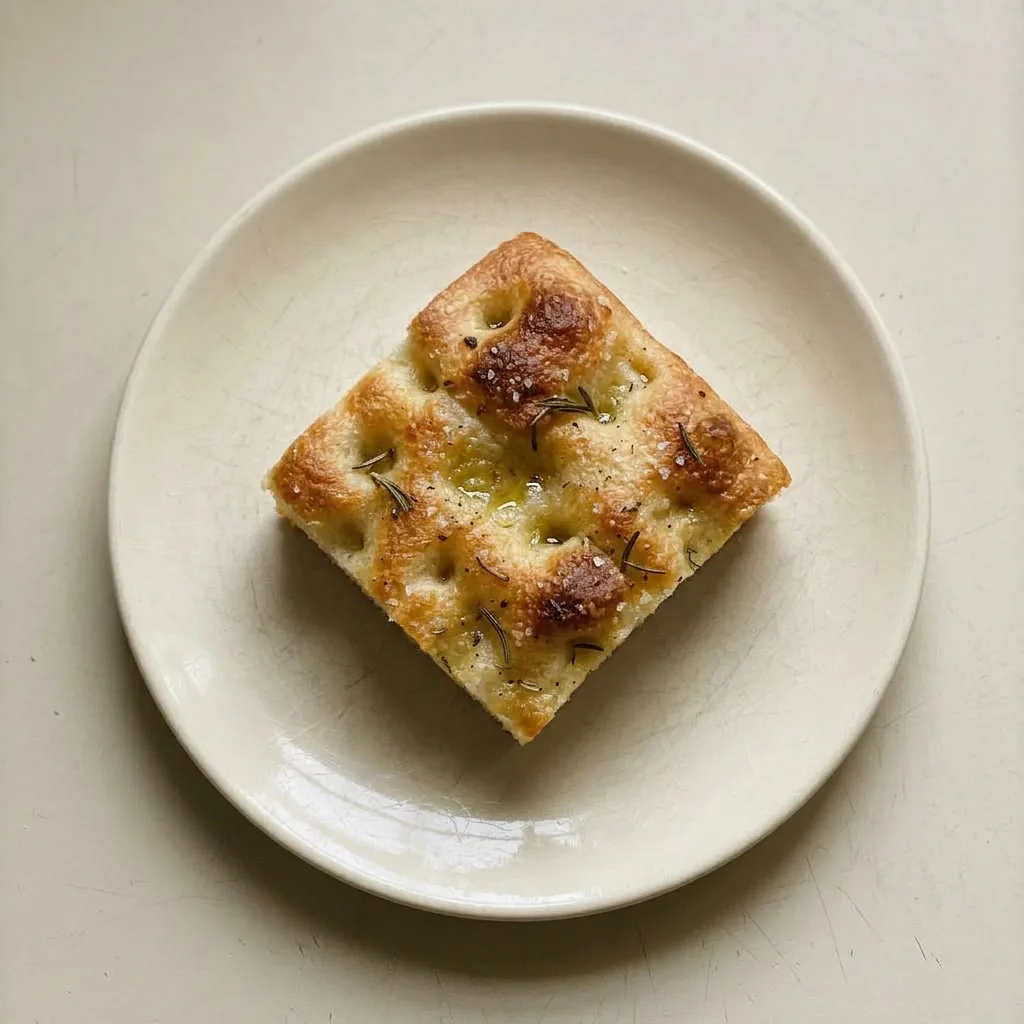
Swap bread flour for all-purpose or whole wheat, but know what you lose
Bread flour: All-purpose flour. All-purpose flour has less protein, so less gluten forms.
The crumb will be softer and less chewy, almost like a dinner roll. The hydration stays the same, but the dough feels slightly looser.
Bread flour: Whole wheat flour. Whole wheat flour absorbs more water, so the dough will feel drier and denser.
Add an extra 2 tablespoons water if it seems stiff. The flavor turns nutty and the crumb tighter, with less rise.
For gf focaccia bread recipes, use a 1:1 gluten-free blend plus 1 teaspoon xanthan gum; the texture will be more cake-like and less chewy.
Active dry yeast: Instant yeast. Use the same amount by weight.
No need to proof in water; mix it directly with the flour. 5 hours.
Storage and Serving
Focaccia is best the day it’s baked, when the crust is crisp and the crumb is tender. Serve within 2 hours of baking for the optimal texture.
For leftovers, store in an airtight container at room temperature for up to 2 days. The crust will soften over time, but you can revive it.
To restore crispness, reheat pieces in a 350°F oven for 5 to 7 minutes. Avoid the microwave, which makes the bread rubbery.
Freeze focaccia for up to 3 months. Wrap tightly in plastic wrap, then foil. Thaw at room temperature, then reheat in the oven.
Freezing works well because the high oil content protects the crumb. Do not refrigerate; the cold stales the bread faster.
If you plan to serve the focaccia later, add the finishing salt and rosemary just before baking, not ahead.
Tips
- Weigh your flour and water on a digital scale for accuracy. Volume measures can vary by 20% or more, which throws off the 83% hydration that gives this focaccia its airy crumb. A consistent weight ensures the dough behaves as intended every time.
Frequently Asked Questions
Can I make the dough ahead and refrigerate overnight?
Refrigerating is not recommended, the cold stales the bread faster. 5-hour first proof, 30-minute second proof.
If you must, you can slow the first proof in the fridge for up to 8 hours, but expect a denser crumb and less oven spring. The dough will be stiffer and harder to dimple when cold. For best texture, bake the day you mix.
Why did my focaccia turn out dense and not airy?
Most likely the dough was too dry. This recipe uses 1 3/4 cups water, that high hydration is what creates the open crumb.
If you added extra flour during kneading or shaping, you cut the hydration. Also check that your yeast was frothy after 5 minutes; dead yeast won’t lift the dough.
5 hours in a warm spot. If it didn’t, the gluten didn’t develop enough structure.
How do I get a really crispy bottom crust?
Bake at 425°F on the bottom rack for the full 25 minutes. The olive oil pooled in the dimples fries the dough against the pan, creating that crispness.
Use a light-colored metal baking sheet, dark pans burn the bottom before the top is golden. Let it cool on a rack for at least 10 minutes so steam escapes; cutting too early traps moisture and softens the crust.