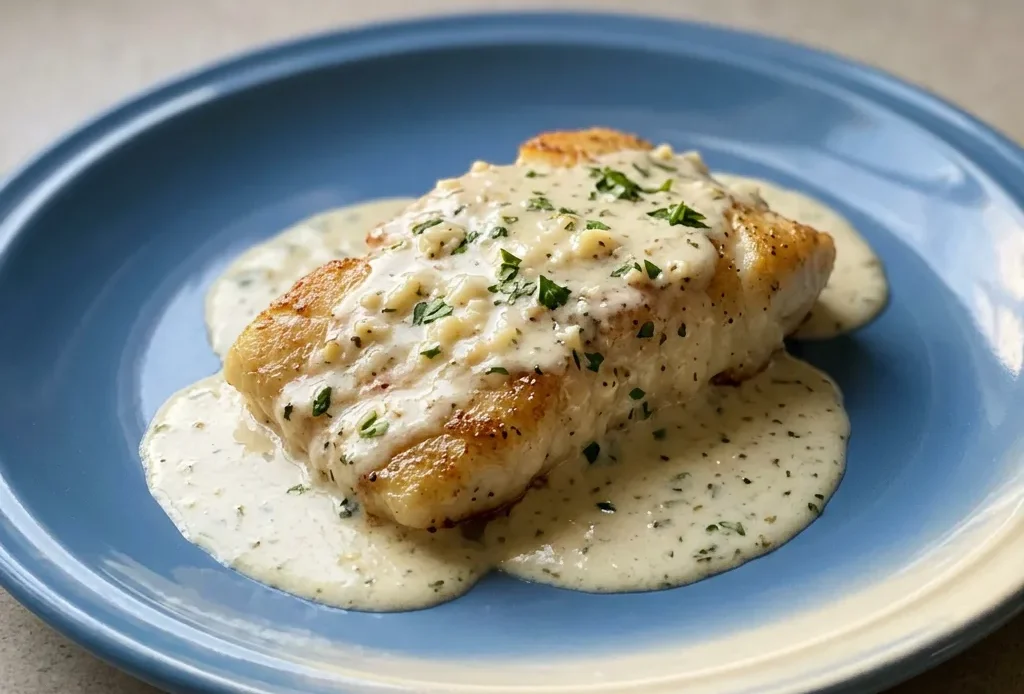
That glossy cream sauce on a weeknight feels like cheating, but the trick is getting the fish to cooperate. Cod is fragile, it flakes apart if you look at it wrong, and it goes from moist to cottony in seconds. The sauce has to be ready before the fish goes back in, because once it hits the pan again, you’re racing the clock.
This creamy lemon parmesan cod works because the sear buys you a golden crust and a few minutes of cushion, and the lemon keeps the richness from turning heavy.
Dust cod with flour before searing
A light flour coating on cod does two things. First, it soaks up surface moisture so the fish browns instead of steams.
You’ll see a golden crust form in the pan. Second, the flour creates a barrier between the delicate fillet and the hot skillet. That’s what stops it from sticking.
Cod is fragile, without that dusting, it tends to tear when you try to flip it. The crust also gives the sauce something to cling to later. Just tap off excess flour; a thin, even layer is all you need.
Lemon juice keeps the sauce from turning heavy
Cream and Parmesan are rich, and without something to cut through, the sauce can feel cloying. Lemon juice adds a sharp, bright note that balances the fat. You taste it as a subtle tang that lifts the whole dish, not as a sour punch.
The acid also keeps the sauce from feeling thick on your tongue. It’s why the sauce coats the cod without weighing it down. A tablespoon is enough to brighten without overpowering the fish.
Fresh Parmesan makes the sauce smooth
Pre-shredded Parmesan contains anti-caking agents like cellulose or starch. Those powders prevent clumping in the bag, but in a cream sauce they turn grainy. You’ll feel a sandy texture on your tongue.
Freshly grated Parmesan melts evenly, releasing its full flavor and emulsifying into the cream. The sauce stays silky, not gritty.
Plus, the flavor is sharper and more complex. It’s one of those steps where the extra minute at the grater pays off in the final texture.
Controlling heat protects both fish and sauce
Cod is lean and flakes easily; overcook it and it turns dry and falls apart. The method handles this by starting high, searing at medium-high for a quick crust, then cooling the pan before adding the garlic. That pause prevents the garlic from burning, which would turn bitter.
After the cream goes in, the heat stays at medium, just enough to simmer. The cod returns only to warm through and finish cooking, so it stays tender. The sauce thickens without curdling because it never gets too hot.
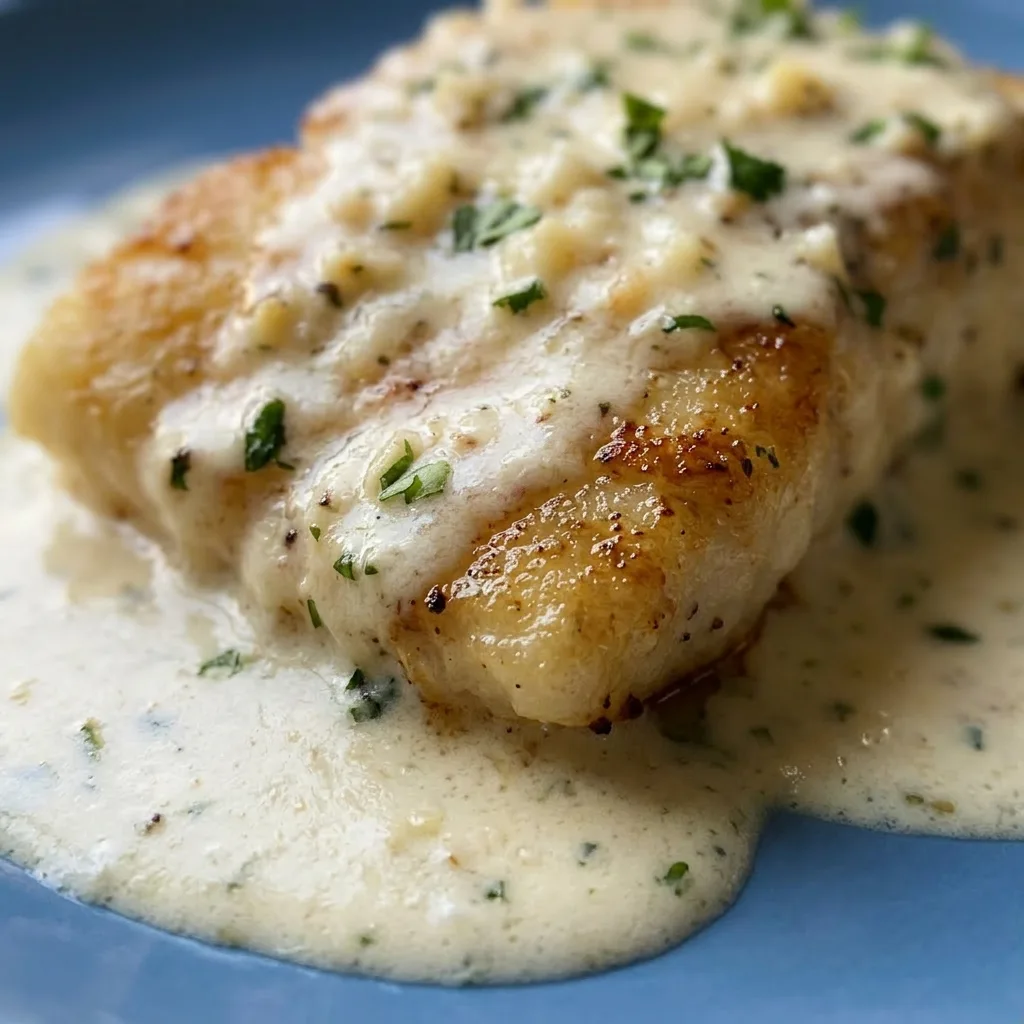
Prep: 10 min · Cook: 20 min · Total: 30 min · Servings: 4 · Calories: 450 kcal
Ingredient notes for this dish
Cod: Buy fresh fillets that are firm and smell like the ocean, not fishy. Frozen works if thawed overnight in the fridge.
Heavy cream: Use heavy cream or whipping cream with at least 36% fat. Anything lighter won’t thicken properly and may curdle.
Parmesan cheese: Grate it yourself from a block. Pre-shredded contains anti-caking agents that make the sauce grainy.
Lemon juice: Fresh squeezed only. Bottled juice tastes flat and can make the sauce bitter.
I see so many people dump in the cheese while the cream is still boiling and wonder why their sauce looks like scrambled eggs.
Sear hot, then let the pan rest
Rest and flour the cod
Let the cod sit at room temp for 15 minutes so it cooks evenly. Pat dry, season, then dust with flour, tap off excess. The flour should look like a light dusting, not a pasty coating.
Sear the fish
Melt 2 tablespoons butter in a skillet over medium-high heat. When the butter stops foaming, add the cod. You should hear a steady sizzle.
Sear 2 minutes per side; the crust should be golden brown, not pale.
Cool the pan briefly
Transfer the cod to a plate. Remove the skillet from the heat for about a minute. If you add garlic to a screaming-hot pan, it burns in seconds.
The brief pause drops the temp enough to avoid that.
Build the sauce
Return the skillet to medium heat, add remaining butter, then garlic and 1/2 tablespoon flour. Stir constantly for 1 minute. The garlic should become fragrant but not brown.
Pour in cream, lemon juice, and Italian seasoning, scraping up browned bits. Simmer 2 to 3 minutes; the sauce should thicken enough to coat the back of a spoon.
Finish with cheese and fish
Stir in freshly grated Parmesan and parsley until the sauce is smooth, no graininess. Return the cod, spoon sauce over it, and cook until the fish flakes easily with a fork, about 2 to 3 minutes. Thin pieces cook faster; check early to avoid dry cod.
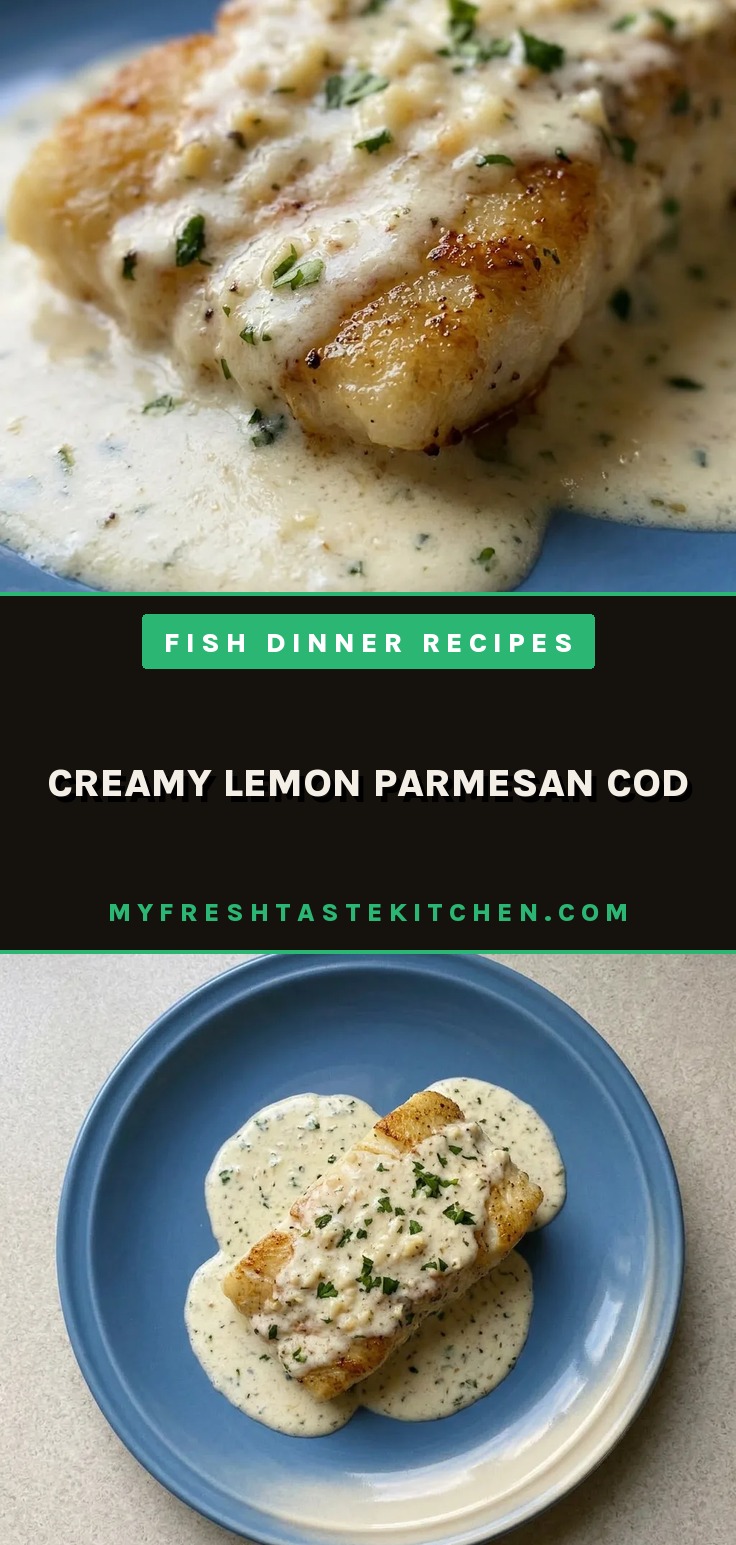
Creamy Lemon Parmesan Cod
Ingredients
- 1 pound cod see note
- Salt & pepper to taste
- 1/2 tablespoon flour extra for dredging
- 3 tablespoons butter divided
- 2 cloves garlic minced
- 1 cup heavy/whipping cream
- 1 tablespoon lemon juice
- 1/4 teaspoon Italian seasoning
- 1/2 cup freshly grated parmesan cheese
- 1 tablespoon chopped fresh parsley
Instructions
Prepare and Flour Cod:
If possible, allow the cod to rest at room temperature for about 15 minutes before beginning. Slice into 4 equal portions. Sprinkle each with salt and pepper, then dust with flour, tapping off excess.Sear Cod in Butter:
Place 2 tablespoons of butter in a skillet over medium-high heat. Heat the pan for several minutes. Once hot, add the cod and sear for 2 minutes on each side. Using a spatula, transfer the fish to a plate (it is delicate and may break).Cool Skillet Briefly:
Remove the skillet from the heat for about a minute to let it cool slightly.Make Garlic Roux:
Return the skillet to medium heat and add the remaining butter. Once melted, add the garlic and 1/2 tablespoon flour, stirring constantly for about 1 minute.Create Cream Sauce:
Pour in the cream, lemon juice, and Italian seasoning. Deglaze the pan by scraping up any browned bits. Cook for 2-3 minutes.Add Parmesan and Parsley:
Mix in the grated parmesan and chopped parsley until combined.Finish Cod in Sauce:
Return the cod to the skillet and cook for a few more minutes until it flakes easily with a fork, being cautious not to overcook, especially if the pieces are thin. Spoon sauce over the fish and adjust seasoning with additional salt and pepper if desired.
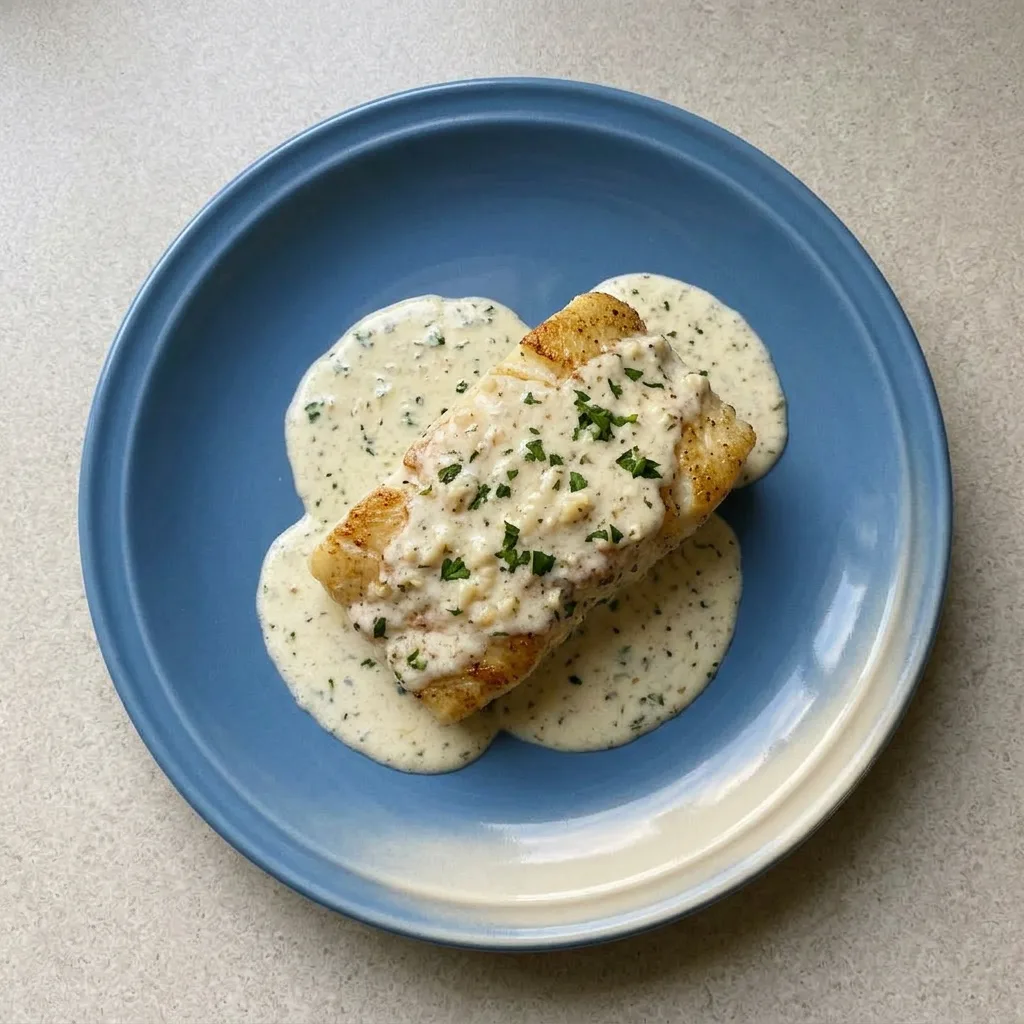
Storage and Serving
This dish is best eaten within an hour of finishing, while the sauce is glossy and the cod is tender. Leftovers keep in an airtight container in the fridge for up to 2 days.
The sauce thickens as it sits, so reheat gently in a skillet over low heat, stirring in a splash of cream or milk to loosen it. Avoid the microwave, which can make the fish rubbery and the sauce separate. Freezing is not recommended because the cream sauce breaks and the cod turns dry and mealy on thawing.
The lemon and fresh flavors fade, too. If you must freeze, do so without the sauce: freeze the seared cod alone, then make fresh sauce when reheating.
To serve a stored portion, warm it just until the sauce is fluid and the fish is hot all the way through, about 5 minutes on low. Garnish with fresh parsley if you have it.
What to swap in this creamy lemon parmesan cod
Cod: Haddock or pollock, same weight. Both are lean white fish with a similar flake. Haddock is slightly sweeter; pollock is milder.
Cook times stay the same, check for flaking, not minutes. Avoid thicker fish like halibut or salmon; they need longer cooking and throw off the timing.
Heavy cream: Half-and-half or whole milk, same volume. The sauce will be thinner and less rich.
Half-and-half works if you simmer it a minute longer to reduce, but it won’t coat the fish as thickly. Whole milk may curdle if the heat is too high, keep it at a gentle simmer, not a boil.
Parmesan cheese: Pecorino Romano or Grana Padano, same amount freshly grated. Pecorino is saltier and sharper; Grana Padano is milder and nuttier. Both melt smoothly like Parmesan.
Do not use pre-shredded or shelf-stable powdered cheese, they’ll turn the sauce grainy.
Flour (for dredging and sauce): Gluten-free all-purpose flour blend (with xanthan gum), same amounts. The dredge will brown a little less deeply but still form a crust.
The sauce thickens the same. Do not use single-grain flours like rice or almond; they lack the binding power and the sauce will separate.
Tips
- Pat the cod dry with paper towels before seasoning. Any surface moisture will steam the fish instead of allowing it to brown, and it also prevents the flour from sticking evenly. A dry surface ensures a thin, even flour coating and a crisp golden crust.
- When returning the cod to the sauce, spoon the sauce over the fish rather than flipping it. Cod is delicate and can break apart easily. Gently spooning the sauce on top warms the fish without disturbing the crust.
Frequently Asked Questions
Can I make the sauce ahead of time and reheat it with the fish?
You can make the sauce ahead, but it’s best to keep it separate from the fish until serving. The sauce thickens as it sits; reheat it gently in a skillet over low heat, stirring in a splash of cream to loosen it. Add the seared cod only at the end, just until warmed through, to avoid overcooking the fish.
How do I know when the cod is cooked without overdoing it?
The most reliable cue is the flake test: prod the thickest part with a fork; if it separates easily into clean flakes, it’s done. The fish will also turn from translucent to opaque white throughout. Since cod is lean, it goes from cooked to dry fast, check at the 2-minute mark after returning it to the sauce, especially if the pieces are thin.
Is this dish supposed to be served immediately, or can it sit for a bit?
Serve it within an hour of finishing, while the sauce is glossy and the cod is tender. The sauce thickens as it sits, so if it needs to wait, keep it over very low heat, stirring occasionally, and add a splash of cream if it gets too thick. After an hour, the texture starts to decline.