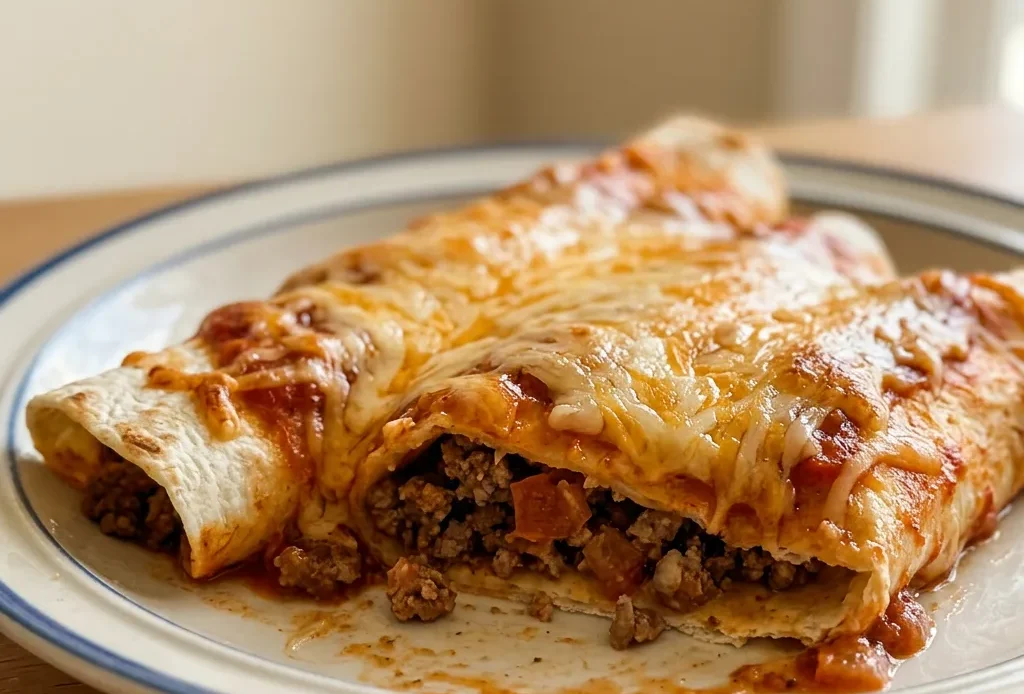
A full tray of enchiladas in under an hour sounds too good to be true, but the real trick is keeping them from turning into a soggy, greasy mess. The lean ground beef and flour tortillas do the heavy lifting, lean meat means less fat to soak the tortillas, and flour holds up better than corn under that sauce load.
Salsa in the filling adds a chunky contrast that smooth sauce alone can’t match, and rolling each tortilla tight keeps everything intact when you cut into it. These 5 ingredient beef enchiladas are the kind of easy dinner that looks like you fussed, without the fussing.
Use lean ground beef to keep enchiladas from turning greasy
Fat from regular ground beef renders during baking and saturates the tortillas, leaving them heavy and slick. Lean ground beef (90% lean) cuts that fat load.
Even after browning and draining, some fat remains in the meat, but it’s a manageable amount. When you bite into a finished enchilada, the filling stays compact and the tortilla holds its structure. If you use a higher-fat blend, the excess grease pools in the dish and soaks into the bottom tortillas.
You’ll see a ring of oil around the edges after baking. Lean beef sidesteps that problem. The step where you drain after browning is still important, it removes the fat that’s already rendered, so the meat mixture isn’t swimming before it even hits the tortilla.
Add salsa to the beef for texture and acidity that sauce alone can’t give
Enchilada sauce is smooth and one-note. Salsa brings chunky tomato, onion, and pepper pieces that pop in the filling. That texture keeps the beef mixture from being a uniform paste.
More important, the acidity from the salsa cuts through the richness of the cheese and beef. You taste brightness instead of just heavy. When you’re looking for easy dinner recipes, this swap does double duty: it adds complexity without extra ingredients.
The salsa doesn’t thin out the filling either, it blends in and warms through, so you still get a cohesive mixture that rolls neatly. Without it, the beef would rely entirely on the enchilada sauce for flavor, and you’d lose that tangy contrast.
Flour tortillas hold up better than corn for this filling and sauce load
Corn tortillas are brittle and prone to cracking as you roll. They also absorb moisture quickly and can turn sodden in the oven. Flour tortillas are more pliable, they bend without splitting, even when you stuff them full.
During baking, they absorb some sauce but stay intact, keeping each enchilada separate and sliceable. You won’t end up with a casserole that falls apart when you lift a piece out.
For quick and easy dinner recipes, the fewer cracked tortillas you have to patch, the smoother prep goes. Flour also has a neutral flavor that lets the beef and cheese come through, rather than competing with corn’s earthy taste.
Cover with foil so the tortillas cook through without drying out
Baking uncovered would brown the cheese and crisp the tortilla tops before the center gets hot. The filling would still be cold in the middle.
Foil traps steam, which transfers heat evenly through the whole dish. The tortillas soften fully, the cheese melts into a cohesive layer, and the sauce warms all the way through without evaporating too much.
When you pull the foil off, you’ll see a bubbly, evenly heated dish. For easy dinner recipes for family, that means you can assemble ahead, cover, and bake straight from the fridge, just add a few extra minutes. No dry edges, no cold spots.
The foil comes off after baking, so you can serve right away.
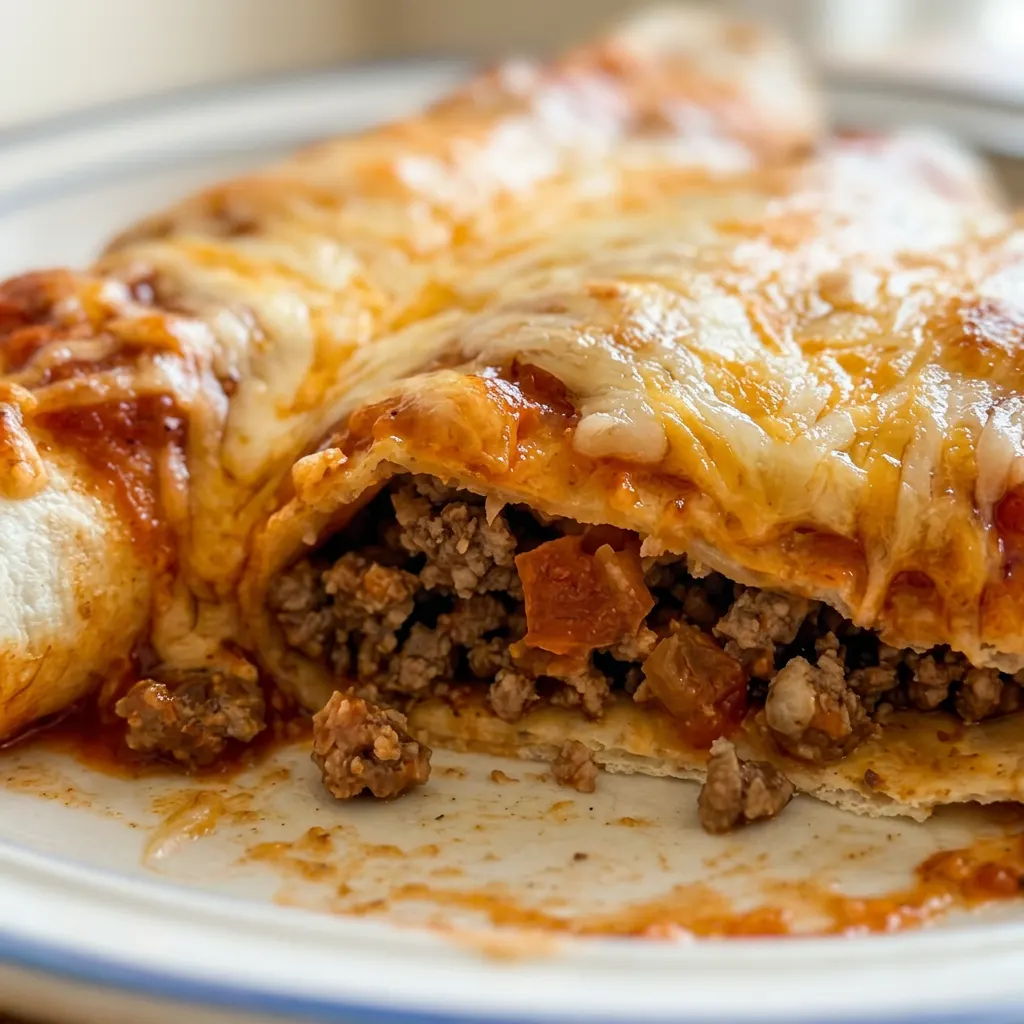
Prep: 20 min · Cook: 35 min · Total: 55 min · Servings: 8 · Calories: 360 kcal
Choose the right beef, salsa, tortillas, and cheese for these enchiladas
ground beef: Lean ground beef (90% lean) keeps the filling from turning greasy when baked.
salsa: Chunky salsa adds texture and acidity that smooth enchilada sauce alone can’t give.
flour tortillas: Flour tortillas stay pliable and hold up better than corn under the sauce and filling.
shredded cheese: A thick cut shred melts evenly without clumping, so every bite gets a good covering.
Roll each tortilla tightly so the filling stays put when you cut into it.
Prep the dish and meat
Spread half the enchilada sauce in the greased baking dish. Cook beef until no pink remains, drain fat, then stir in salsa and warm through. The mixture should look moist but not soupy.
Heat tortillas for easy rolling
Warm tortillas per package instructions, microwave between damp paper towels or in a dry skillet. They should be pliable, not stiff. If a tortilla cracks when you bend it, it’s not warm enough.
Fill and roll each enchilada
Spoon about ¼ cup meat mixture down the center of a tortilla, then add a heaping tablespoon cheese. Roll it snugly, tucking in the sides as you go. Place seam-side down in the dish.
The tortilla should hold its shape without splitting.
Top with sauce and cheese
Pour remaining sauce evenly over the rolled enchiladas. Scatter the leftover cheese on top.
You want every tortilla covered so none dry out. The cheese should blanket the top, not clump in one spot.
Bake covered and check for doneness
Seal the dish with foil and bake at 350°F for 30 to 35 minutes. When it’s done, the sauce bubbles at the edges and the cheese is fully melted. If the center still looks cool when you peek, give it a few more minutes.
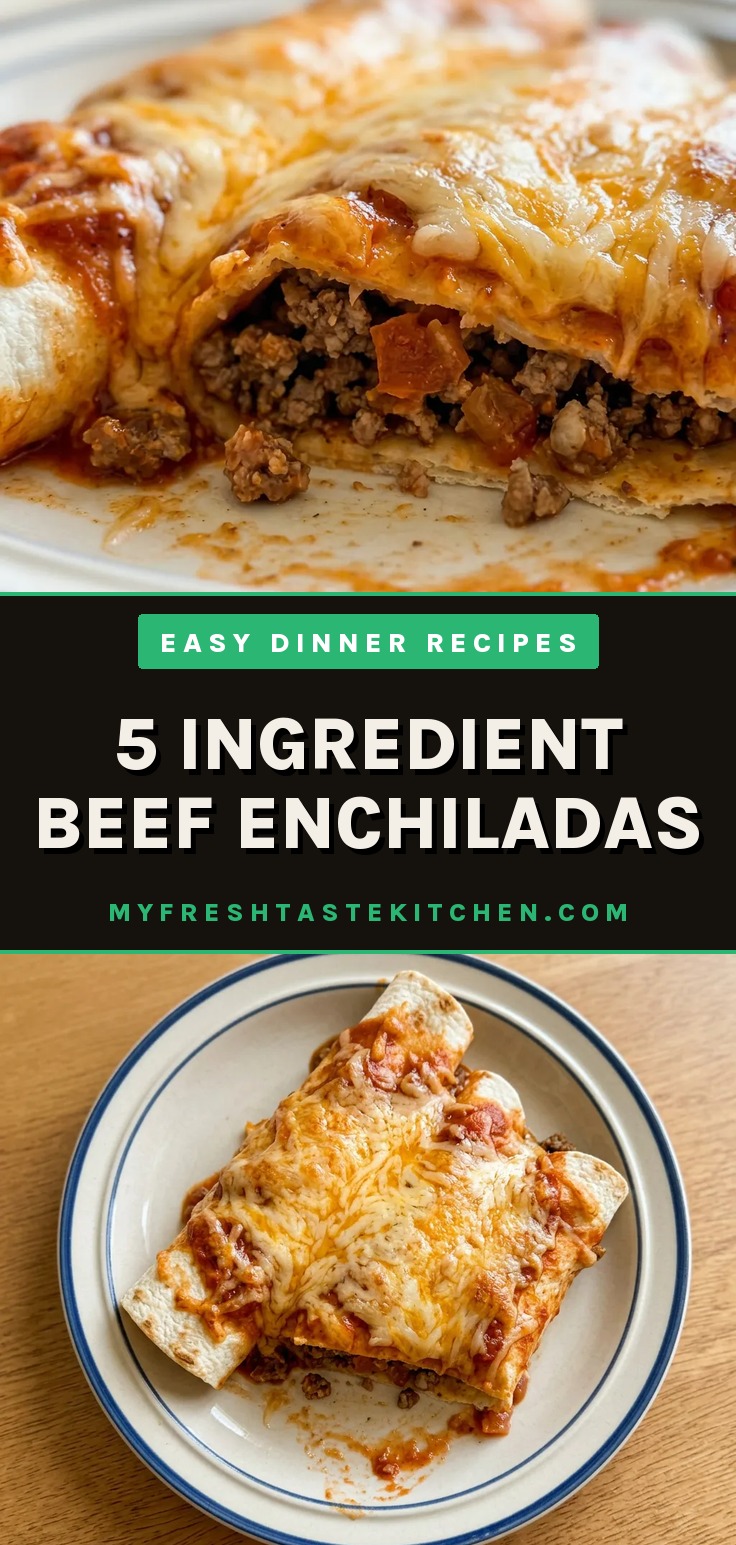
5 Ingredient Beef Enchiladas
Ingredients
- 1 lb lean ground beef
- 1 cup chunky salsa
- 1 (10-oz) can red enchilada sauce
- 8 (8-inch) flour tortillas (or corn, but flour preferred)
- 1 (8-oz) package Borden® Cheese Thick Cut Shredded Four Cheese Mexican (about 2 cups)
Instructions
Preheat oven and grease dish:
Set oven to 350°F (175°C). Coat a 9×13-inch baking dish lightly with nonstick spray.Brown beef and mix salsa:
Cook ground beef in a large skillet over medium-high heat until browned. Pour off excess fat, then reduce heat to medium-low. Mix in salsa and warm through. Take off heat.Layer enchilada sauce:
Spread roughly half the enchilada sauce across the bottom of the greased dish.Fill and roll tortillas:
Heat tortillas per package instructions. Spoon about 1/4 cup meat mixture along the center of each tortilla, then add about 1 heaping tablespoon cheese. Roll tightly and arrange seam-down in the dish. Cover with remaining sauce and scatter leftover cheese on top.Bake covered with foil:
Seal dish tightly with aluminum foil and bake for 30 to 35 minutes.
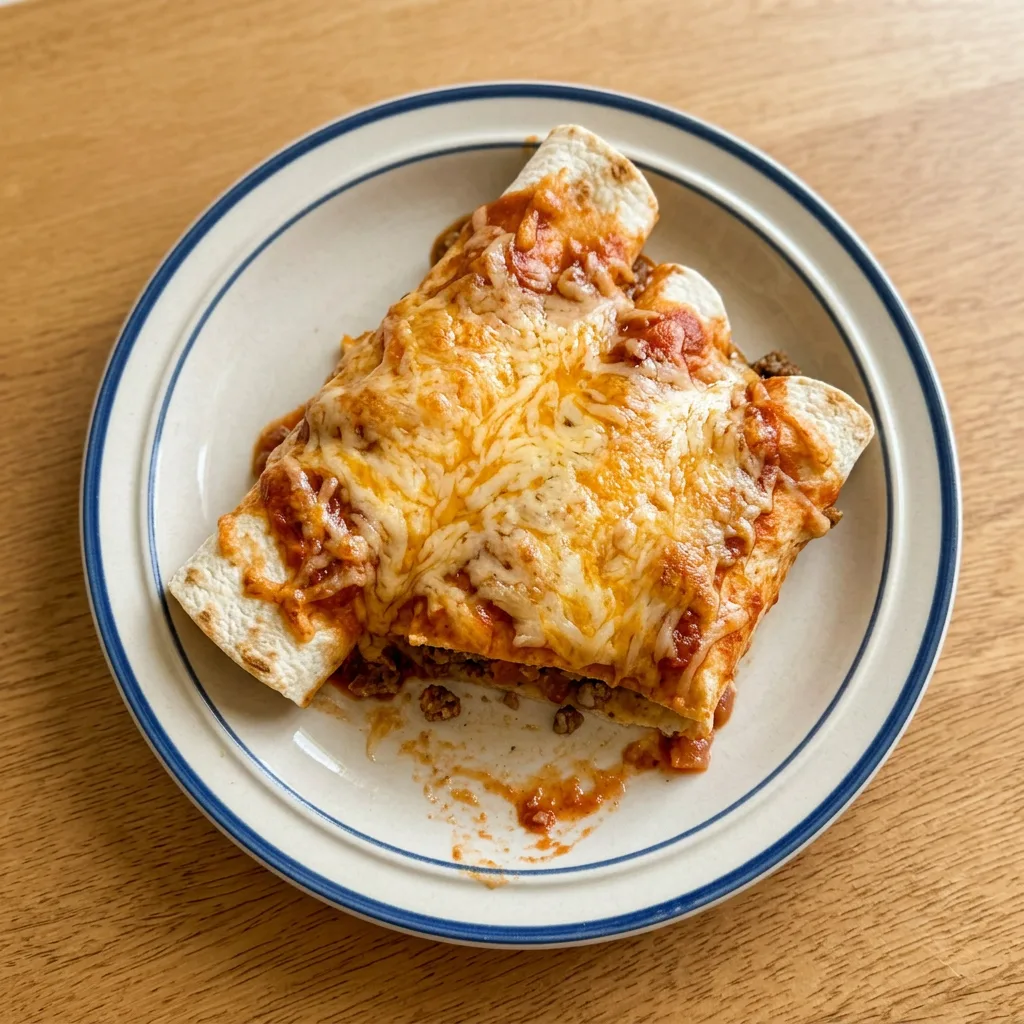
Choose substitutions that match the enchilada’s structure, not just flavor
ground beef: Shredded cooked chicken or canned black beans (rinsed and drained). Chicken swaps straight in by weight; black beans need mashing slightly to mimic ground meat’s texture.
Both make the filling lighter. With beans, the rolled tortillas feel less dense, and the dish leans vegetarian. The salsa and sauce still carry the flavor, so the swap works without adjusting other ingredients.
flour tortillas: Corn tortillas. Corn tortillas crack when rolled cold and turn sodden faster under the sauce.
To use them, warm them thoroughly (microwave between damp towels or fry briefly in oil) and roll gently. Expect some splitting.
The finished enchiladas will be less tidy, and the tortilla flavor competes with the filling. This swap works best if you prefer corn’s taste and don’t mind a more rustic presentation.
shredded cheese (Mexican blend): Monterey Jack, cheddar, or a dairy-free shred. Monterey Jack melts similarly; cheddar adds sharper flavor but can turn greasy if overbaked.
Dairy-free shreds vary: some melt into a cohesive top, others stay granular. Test one brand before committing.
The cheese layer on top is the primary melt; the interior cheese is less exposed, so the swap is more forgiving inside the roll. If using dairy-free, check that it melts at 350°F, some require higher heat or direct contact.
Tips
- Warm tortillas briefly in the microwave or on a dry skillet to make them more pliable and prevent cracking when rolling.
Storage and Serving
These enchiladas are best served within 30 minutes of coming out of the oven, while the tortillas still have a slight chew and the cheese is gooey. Leftovers keep in the fridge for up to 3 days. The tortillas soften further overnight, so expect a more tender, casserole-like texture.
To reheat, cover the dish with foil and warm at 350°F for 15 to 20 minutes, or microwave individual portions covered with a damp paper towel. The sauce and meat filling hold up well, but the tortillas won’t regain their initial structure.
Freezing is not recommended; the tortillas become mushy and the sauce separates upon thawing. If you must freeze, freeze the cooked beef-salsa mixture alone for up to 3 months, then assemble fresh tortillas and cheese when ready to bake.
I once forgot to drain the beef properly and ended up with a greasy, soggy mess on the bottom layer. The next time, I drained it well and it was good.
Frequently Asked Questions
Can I make these enchiladas ahead of time and bake later?
Yes, assemble them fully, cover tightly with foil, and refrigerate up to 24 hours. When ready, bake covered at 350°F for 35 to 40 minutes (add 5 minutes for cold dish). The tortillas will soften more than if baked immediately, but the texture stays intact.
Freezing isn’t recommended, thawing makes tortillas mushy and sauce separates.
How do I prevent the tortillas from getting soggy?
Use flour tortillas (not corn) and lean ground beef. Corn absorbs sauce fast and turns sodden; flour holds up better.
Lean beef means less grease to soak in. Also, don’t oversauce, use just half the sauce on the bottom and the rest on top.
The foil cover traps steam, which keeps everything moist but not waterlogged.
What’s the difference between these and traditional enchiladas?
Traditional enchiladas use corn tortillas briefly fried in oil before filling, which creates a barrier against sogginess and adds crispness. This version skips frying and uses flour tortillas for easier rolling, plus salsa mixed into the beef for extra texture and acidity. The result is a quicker, less fussy dish with a softer, more casserole-like texture.