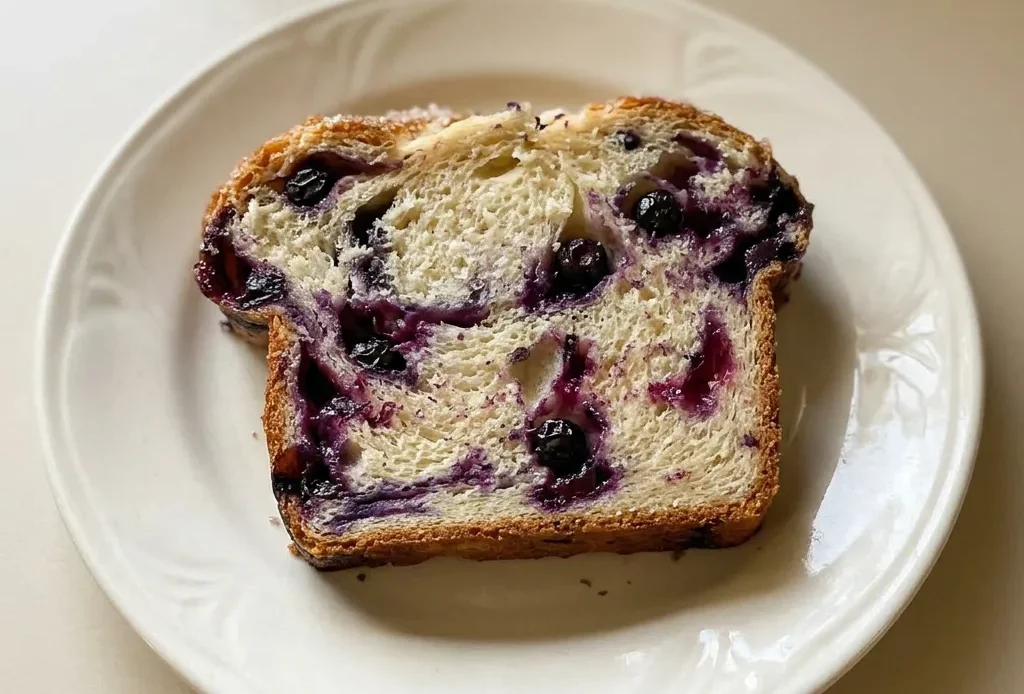
A yeast-risen blueberry bread that holds a spiral of whole fruit through the bake, that’s the trick. Quick breads turn the berries into jammy pockets, but this one uses a dough strong enough to suspend them in a tender crumb.
The double-roll method is the difference between a solid blue stripe and a scattered swirl; it’s simple but precise, and the margin for error is narrower than you’d think. If the dough is too slack, the berries sink. Too tight, and the crumb turns dense.
This blueberry swirl bread (bread machine dough + oven bake) walks that line with a flour blend that gives structure without toughness, and the result is a loaf that looks as good as it tastes, no gummy streaks, no fruit at the bottom.
Bread flour and all-purpose flour together
Neither flour alone would give the right crumb here. Bread flour builds enough gluten to trap gas and hold the blueberries without turning gummy. All-purpose flour keeps the loaf from turning tough or chewy.
You can feel it as you roll the dough: it has enough stretch to seal in the fruit, but it doesn’t snap back hard. The ratio, 1 cup bread flour to about a cup plus two tablespoons all-purpose, tilts just enough toward strength that the berries stay suspended, not sunk at the bottom. If you used only bread flour, the crumb would feel bready, almost rubbery.
Only all-purpose, and the dough might tear under the fruit’s weight. The blend lets you taste the tender interior and still get a slice that holds its shape.
Double-rolling for a true swirl
A single roll leaves the blueberries clustered in one thick band. You’d bite into a pocket of fruit, then a stretch of plain bread.
The double-rolling technique spreads those berries into a spiral that shows in every slice. First roll wraps them in dough; then you flatten that log into a rectangle and roll again.
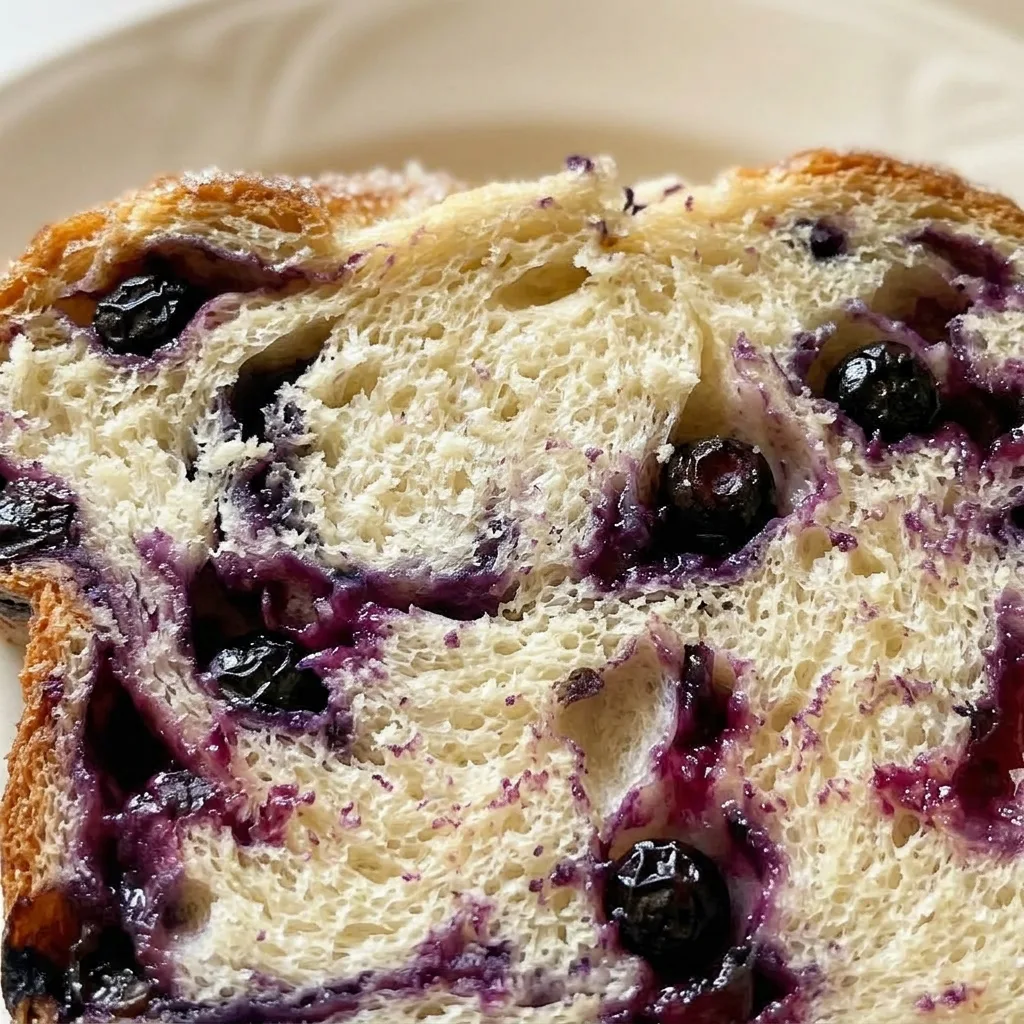
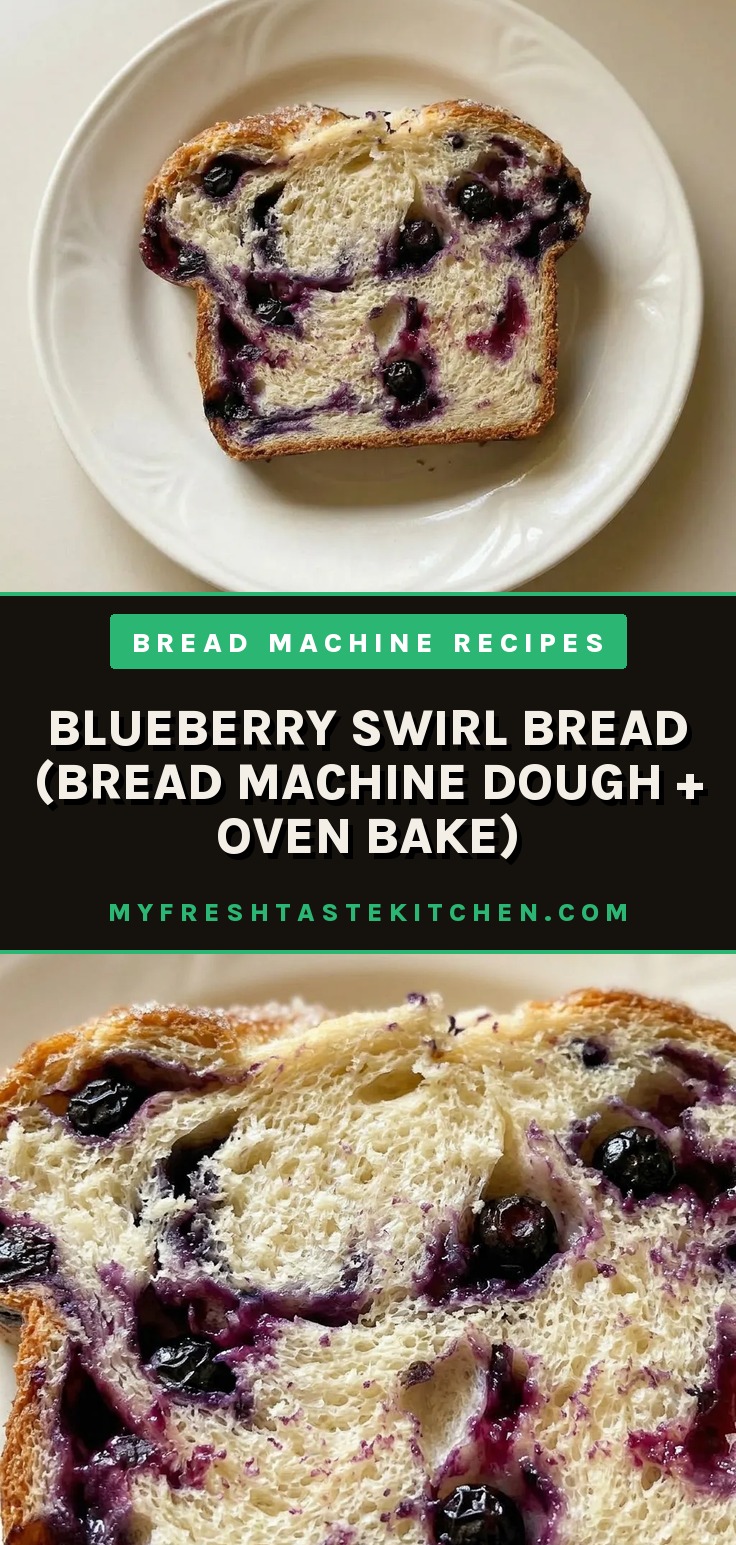
That second pass breaks up any clumps and creates alternating layers of dough and fruit. The sugar dusted on the berries before the first roll pulls out a little juice as the bread bakes, staining the surrounding dough blue. Press them gently, mashing bursts the skins and turns the crumb soggy.
Done right, the pattern is distinct but integrated, and the berries stay whole through the bake. This recipe is straightforward enough to make a quick blueberry bread easy to pull off any morning.
Proofing to the rim
The dough’s final rise sets the crumb structure. Stop too early, say, when the dough barely crests the pan, and the loaf bakes up dense, with a tight grain. Let it climb too high, and the gluten overstretches; the crumb collapses in the oven, leaving caverns or a sunken top.
You want the dough to dome about an inch above the pan rim before it goes in. That’s roughly an hour at room temperature, but watch the dough, not the clock. The top should feel puffy and spring back slowly when you poke it.
Under-proofed dough springs back fast and feels firm. Over-proofed dough deflates at a touch.
This target gives a light, airy crumb that still has enough structure to support the fruit without turning gummy.
Glaze and sugar for a crisp, sweet top
The wash does two things you can see and taste. Egg yolk mixed with cream adds protein that browns faster than the loaf underneath, giving a deep golden crust with a slight sheen.
The sanding sugar sits on top of that glaze, so it doesn’t dissolve into the dough. Instead it stays crystalline through the bake, providing little bursts of sweetness against the soft, mildly sweet crumb.
Brush the glaze on just before baking; if applied too early, it drips or soaks in. The coarse sugar also adds texture, a light crunch that contrasts with the tender interior.
You’ll see the loaf emerge glossy and speckled, and the first bite confirms the top is crisp, not soft or chewy. That’s why the glaze goes on raw, not halfway through.
Prep: 30 min · Cook: 45 min · Total: 3 hr 30 min · Servings: 12 · Calories: 210 kcal
Ingredient picks for a clean blueberry swirl
Blueberries: Choose the smallest fresh berries you can find; they distribute evenly and stay intact during rolling.
Butter: Cold butter cut into small pieces incorporates evenly during the dough cycle without melting too fast.
Sanding sugar: Coarse sanding sugar resists melting in the oven, giving the top a crisp, sugary crunch.
Eggs: Use large eggs at room temperature so they blend smoothly and don’t chill the dough.
Rolling, proofing, and baking the blueberry swirl bread
Prepare the berries
Wash the blueberries and let them dry on paper towels. They need to be at room temperature when you add them, so set them out while the dough cycle runs.
Load the bread machine
Add the dough ingredients in the order listed. Start the DOUGH cycle. After a few minutes, check: the dough should form a shaggy ball.
If it looks more like batter, add flour 1 tablespoon at a time. If it’s dry and crumbly, add water 1 tablespoon at a time.
Adjust during knead
About 15 minutes in, the dough should clean the sides of the pan. Sticky dough that clings needs a little more flour.
A stiff, non-sticky dough needs a splash of water. The goal is soft, supple dough that barely sticks to your finger.
Degas after the cycle
When the DOUGH cycle ends, the dough should have doubled. Restart the cycle and let it knead for 5 seconds to deflate.
Turn onto a floured surface, shape into a ball, cover, and rest for 10 minutes. This relaxes the gluten so you can roll it out.
First roll and berry placement
Roll the dough into a 10×14-inch rectangle. Scatter the blueberries evenly over the surface and press gently, don’t crush them.
Dust with 2 tablespoons sugar. Roll up tightly from the short side like a jelly roll, pinching the seam.
Second roll for the swirl
Flatten the log with your palms into a 9×12-inch rectangle. Roll up again from the short side, pinch the seam, and tuck the ends under. This double-rolling spreads the berries into a spiral visible in every slice.
Shape and proof
Place the loaf seam-side down in a greased 8½x4½-inch pan. Cover and let rise until the dough domes about 1 inch above the rim, roughly an hour. The top should feel puffy and spring back slowly when poked.
Preheat and glaze
When the loaf nears the rim, preheat the oven to 350°F. Whisk the egg yolk, 1 teaspoon cream, and pinch of salt.
Brush the glaze over the risen bread and sprinkle with sanding sugar. The glaze should be applied just before baking, not earlier.
Bake until done
Bake for 40 to 45 minutes. The internal temperature should hit 190, 200°F.
If the top browns too fast, tent with foil halfway through. The loaf should sound hollow when tapped on the bottom.
Cool completely
Cool in the pan for 15 minutes, then transfer to a wire rack. Let it cool at least 1 hour before slicing. Cutting too soon makes the crumbs tear and the berries squish out.
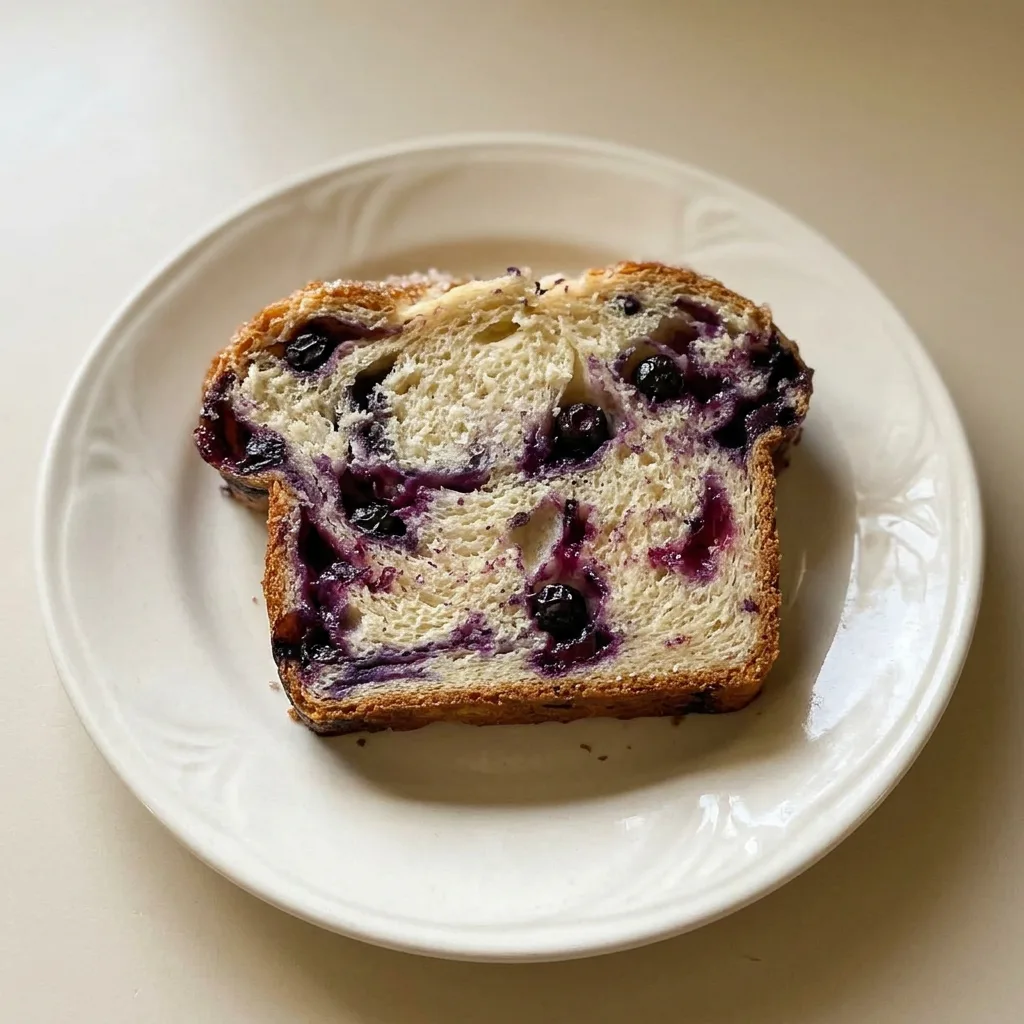
Blueberry Swirl Bread (Bread Machine Dough + Oven Bake)
Ingredients
Method
Prepare Blueberries:
Wash 1 cup fresh blueberries, spread on a paper towel to dry, and allow them to reach room temperature as you prepare the dough.Add Dough Ingredients:
Add all dough ingredients (3 tablespoons heavy cream, 2 tablespoons + 1 teaspoon water, 2 large eggs, 2-3 tablespoons granulated sugar, 3/4 teaspoon salt, 1/4 cup cold butter cut into small pieces, 1 cup bread flour (120g), 1 cup + 2 tablespoons unbleached all-purpose flour (135g), and 2 teaspoons instant yeast) into the bread pan.Knead and Adjust Dough:
Activate the DOUGH cycle and let it run. After a few minutes, inspect the dough: it should form a shaggy ball. If it doesn’t, incorporate water 1 tablespoon at a time. If it resembles pancake batter, gradually add flour until it binds. Around 15 minutes later, check again: the dough should cling to the sides and then release cleanly. If it’s too sticky, add flour 1 tablespoon at a time; if it’s too dry and won’t stick, add more liquid. Dough behavior varies with flour type, humidity, and kitchen temperature—adjust as needed.Degas and Rest Dough:
When the DOUGH cycle finishes, the dough should have doubled in size. If not, allow additional rising time. Restart the DOUGH cycle and knead for 5 seconds to degas. Transfer the dough to a lightly floured surface, form into a smooth ball, cover, and let rest for 10 minutes.Roll and Fill Dough:
Roll the dough into a 10×14-inch rectangle. Distribute blueberries evenly over the surface and gently press them in without crushing. Dust with 2 tablespoons granulated sugar. Starting from the short side, roll the dough like a jelly roll and seal the seams. Flatten the roll with your palms or a rolling pin into a 9×12-inch rectangle. Again starting from the short side, carefully roll up, seal the seams, and tuck the ends underneath.Shape and Rise Loaf:
Place the shaped dough seam-side down into a greased 8½x4½-inch loaf pan. Cover and let rise until the dough rises about 1 inch above the pan’s rim (roughly 1 hour, depending on ambient temperature).Preheat Oven:
When the bread is nearly fully risen, preheat the oven to 350°F (175°C).Make and Apply Glaze:
Whisk together 1 egg yolk, 1 teaspoon heavy cream, and a pinch of salt to create the glaze. Lightly brush the glaze over the risen loaf and sprinkle with 1 tablespoon sanding or coarse sugar.Bake Bread:
Bake at 350°F (175°C) for 40-45 minutes. The internal temperature should read 190-200°F (88-93°C). If the crust darkens too fast, cover loosely with foil halfway through baking.Cool Bread:
Let the bread cool in the pan for 15 minutes, then move to a wire rack. For optimal texture, allow it to cool for at least 1 hour before slicing.
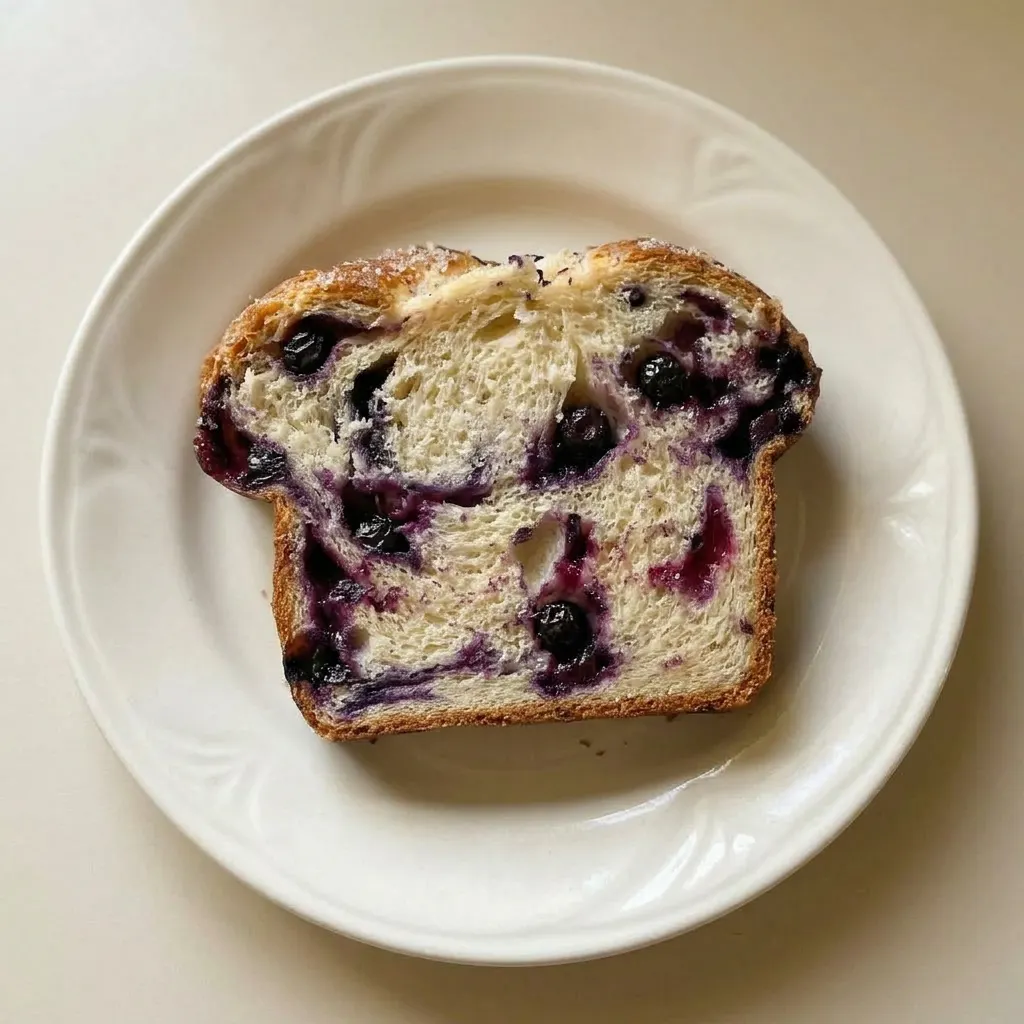
Storage and Serving
This bread is at its best the day you bake it, when the crust is crisp and the crumb is tender. For leftovers, cool the loaf completely, then wrap it tightly in plastic wrap or foil.
Store at room temperature for up to 3 days. The crust will soften over time, but the interior stays moist.
To restore some crust crispness, reheat slices in a 350°F oven for 5 minutes. Do not refrigerate the whole loaf; it dries out faster.
The bread freezes well for up to 1 month. Wrap it in plastic, then foil, and thaw at room temperature before serving.
The blueberry swirl may bleed slightly after freezing, but the texture remains good. The glaze and sugar topping are best applied just before baking; do not add them ahead. For make-ahead, you can prepare the dough through the first rise, refrigerate it overnight, then shape, proof, and bake the next day.
The proofing time will be longer from cold.
Tips
- Dry the washed blueberries on a paper towel-lined plate and gently pat the top with another towel; any surface moisture turns into steam during baking, creating gaps around the berries that let them sink to the bottom of the loaf.
- Let the dried berries sit at room temperature for at least 20 minutes before adding them to the dough; cold berries stiffen the surrounding dough, preventing it from rising evenly around the fruit and causing the berries to settle as the dough warms in the oven.
Swapping ingredients without wrecking the swirl
Blueberries: Frozen blueberries, straight from the bag (do not thaw). Frozen berries hold their shape better during rolling and release less juice, so the crumb stays drier and the swirl stays distinct. You’ll see less blue staining, but the berry flavor is still there.
Use the same amount by volume.
Blueberries: Raspberries or blackberries, fresh and dry. Softer berries break down more during the double roll, creating a more jammy swirl and a slightly wetter crumb.
The bread will still taste good, but the pattern will be less defined. Use the same amount by volume.
Heavy cream: Whole milk or half-and-half. The dough will be slightly less tender and the crust a bit softer. The crumb loses a little richness.
Start with the same amount (3 tablespoons); you may need a teaspoon more water to get the same dough consistency.
All-purpose flour: White whole wheat flour. The loaf will be denser and the crumb more earthy, with a coarser texture.
The swirl may be less visible because the darker dough hides the blue. Use the same weight (135g) but expect a tighter roll and a slightly drier mouthfeel. Do not swap bread flour.
Frequently Asked Questions
Can I use frozen blueberries instead of fresh?
Yes, use them straight from the bag without thawing. Frozen berries hold their shape better during rolling and release less juice, so the swirl stays more distinct and the crumb drier. You’ll see less blue staining, but the berry flavor comes through just fine.
Why did my blueberries sink to the bottom of the loaf?
Most likely the dough was too slack or under-floured, so the berries had no structure to grip. Check that your dough after the first rise is soft but not sticky, if it stuck to your hands when rolling, the gluten wasn’t strong enough to suspend the fruit. Another cause is over-proofing: if the dough rose too high before baking, the gluten weakens and berries drop.
Can I make this bread ahead and freeze it?
Yes, freeze the fully baked and cooled loaf for up to 1 month. Wrap it tightly in plastic wrap then foil; thaw at room temperature before serving. The swirl may bleed slightly after freezing, but the texture stays good.
For a partially made-ahead option, you can refrigerate the dough overnight after the first rise, then shape, proof, and bake the next day.