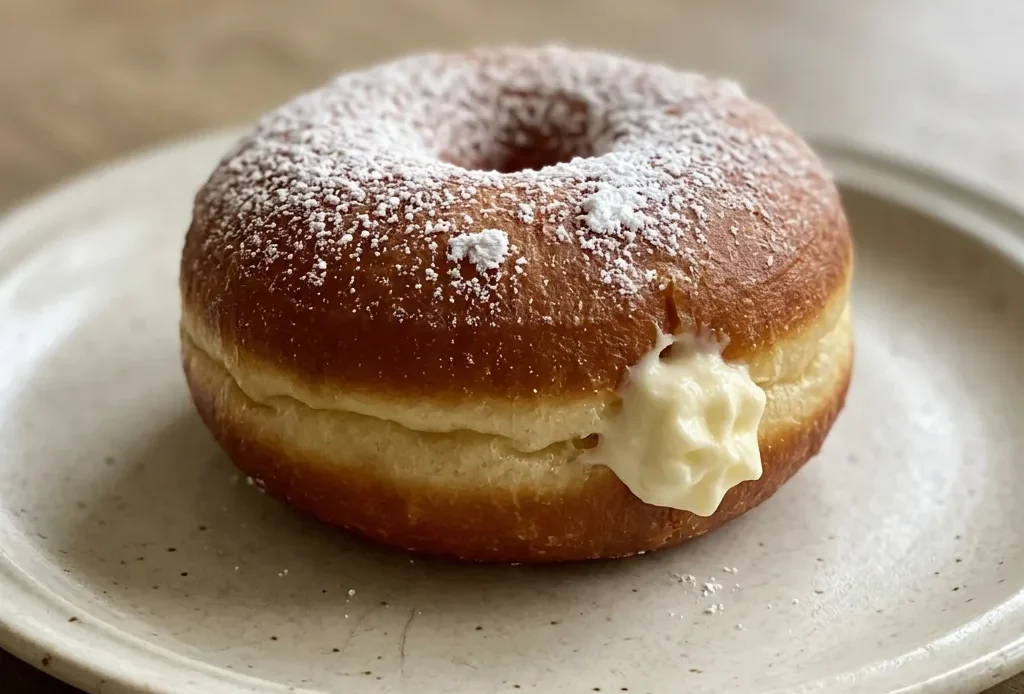
Getting the dough right for fluffy Korean milk cream donuts comes down to reading its feel, not just following a timer. That slightly sticky, shaggy ball after mixing is what you want, it means enough moisture for a tender crumb that puffs into airy pockets during the double rise. Skip the second rest, and the fried shells shrink instead of staying soft.
The cream filling matters, too: stiff peaks hold their shape against the crisp, oily crust, so the contrast between cool, light cream and warm, golden donut doesn’t turn into a soggy mess. The primary keyword: fluffy korean milk cream donut.
Yeast and hydration build air pockets
Instant yeast mixed into the flour wakes up fast when it hits the lukewarm milk. That warmth, not hot, just warm to the touch, gets fermentation going right away, producing gas that creates the network of tiny air bubbles you want. The dough’s stickiness comes from the egg and milk together.
That’s not a flaw. That slight tack means enough water to keep the crumb tender and soft, not dense and bready.
If the dough felt dry and firm, the donuts would turn out heavy. The stickiness tells you the gluten has enough moisture to stretch and hold gas as the yeast works.
You don’t need to fight it; just let it be.
Double rise builds structure and flavor
5 to 2 hours, until the dough doubles. That long rest does two things: gluten develops fully so the dough can stretch without tearing, and fermentation adds a subtle tang to the flavor. Skip it, and you’ll get a flat, bread-like donut.
After shaping, the 30-minute rest relaxes the gluten strands you just worked. That second rest is what keeps the donuts from shrinking or turning tough in the fryer.
They puff evenly instead of fighting the hot oil. You can see the difference when you pick one up after that rest, it feels soft, not tight.
That’s the cue you’re on track.
Stiff whipped cream holds its own against fried dough
Heavy cream beaten with sugar to stiff peaks means the filling stands up inside the donut without weeping. The sugar does more than sweeten: it helps stabilize the foam, giving you a cloud that stays put even at room temp for a little while.
Fold in a drizzle of condensed milk if you want extra sweetness and a richer mouthfeel, it won’t make the cream runny because it’s thick and syrupy. The contrast matters.
You bite through that crisp, oily shell and hit a cool, airy, barely-sweet cream. That’s the whole point.
No one wants a soggy donut or a filling that tastes like butter alone.
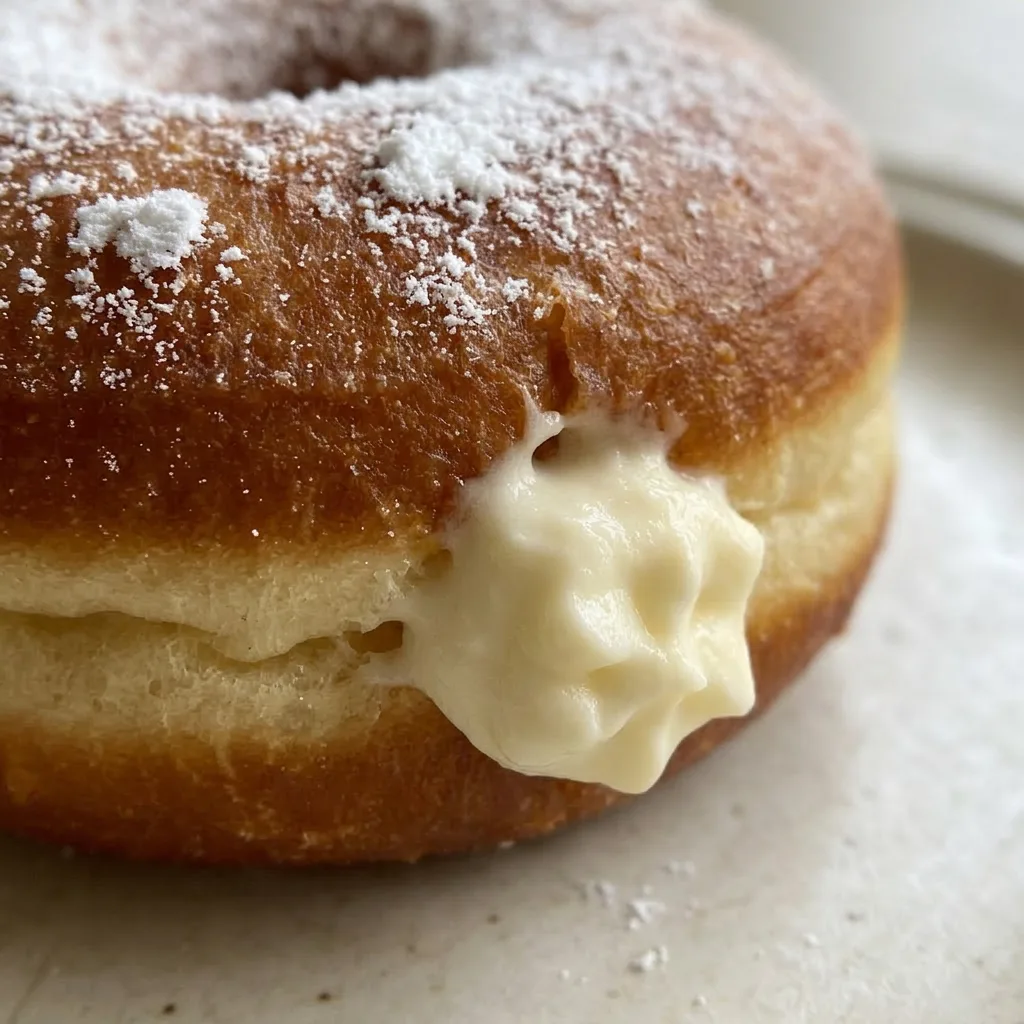
Prep: 45 min · Cook: 30 min · Total: 2 hr 45 min · Servings: 12 · Calories: 250 kcal
Ingredients that matter for fluffy donuts
Instant yeast: Fresh yeast is more reliable than old jars; check the date for a vigorous rise.
Heavy whipping cream: Buy cream with at least 36% milk fat so it whips stiff without weeping.
All-purpose flour: Standard AP flour gives the right chew; bread flour makes them tough.
Watch the dough, not the clock
Mix wet ingredients
Whisk milk, egg, and melted butter until smooth. That creamy look means the fat and liquid are one, skip streaks, they’ll throw off hydration.
Combine dry ingredients
Stir flour, sugar, and instant yeast together. The yeast needs even distribution; if you see clumps of yeast, break them up or the rise will be uneven.
Form the dough
Pour wet into dry and stir until a shaggy mass forms. It’ll look rough at first, then smooth into a slightly sticky ball. That tackiness is right, dry dough makes heavy donuts.
First rise
5 to 2 hours. See a domed top and feel airy when poked? It’s ready.
If it shrinks back, give it more time.
Shape and second rest
Roll dough to 1/4 inch thick, cut into donuts, then rest 30 minutes. After rest, the dough should feel soft, not tight. Tight dough will shrink in the fryer.
Fry the donuts
Heat oil to 340 to 360°F. Fry 2-3 at a time, 2 to 3 minutes per side. The donuts should sizzle gently and turn golden brown.
If they brown too fast, oil is too hot.
Whip the cream
Beat cream with sugar to stiff peaks. Stop when the cream holds a firm peak and doesn’t slide off the whisk. Overbeaten cream turns grainy and will weep inside the donut.
Fill and finish
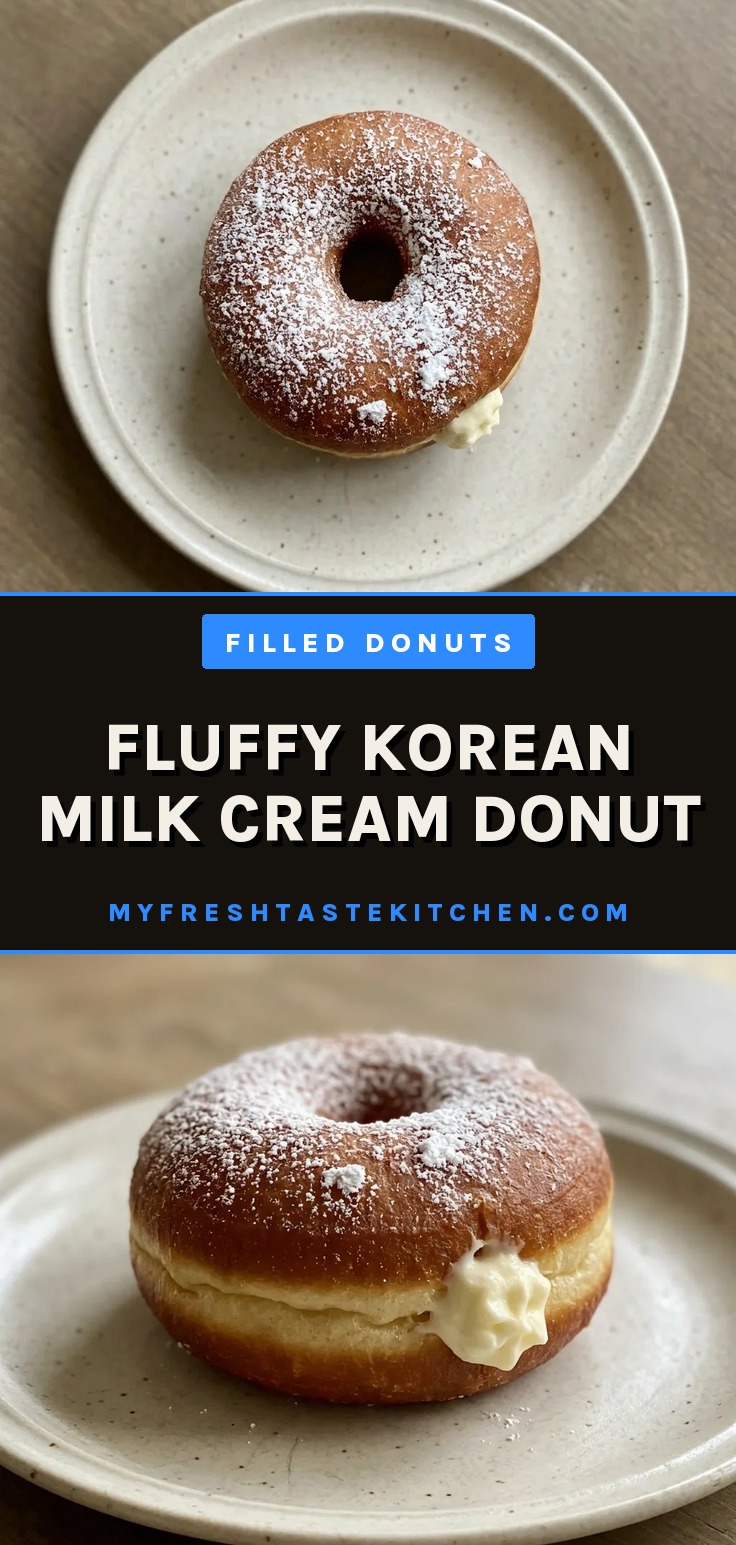
Slit each cooled donut, pipe in whipped cream, then dust with powdered sugar. The cream should stay put, not ooze out. If it oozes, the cream was too soft.
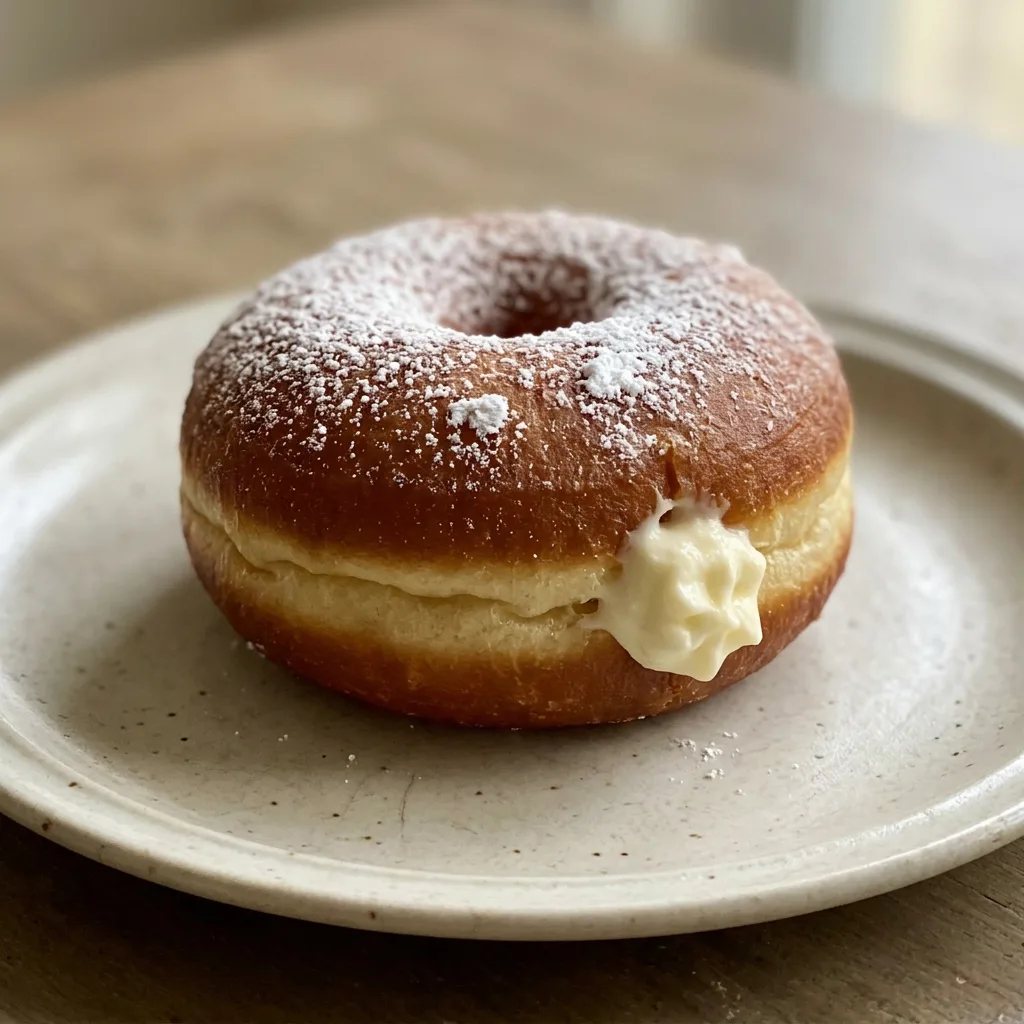
Fluffy Korean Milk Cream Donut
Ingredients
Method
Whisk milk mixture:
Whisk together 1/2 cup (120 ml) lukewarm milk, 1 large egg, and 3 tablespoons (42 g) melted butter in a bowl until smooth and creamy.Mix dry ingredients:
In another large bowl, combine 2 cups (250 g) all-purpose flour, 1/4 cup (50 g) sugar, and 2 teaspoons instant yeast, mixing until well incorporated.Combine wet and dry:
Slowly add the wet mixture to the dry ingredients, stirring until a slightly sticky dough forms, about 3-4 minutes.Let dough rise:
Cover the dough and let it rise in a warm spot for 1.5 to 2 hours until it doubles in size.Roll and cut donuts:
On a floured surface, roll the risen dough to 1/4 inch (6 mm) thickness, then cut into donut shapes. Allow them to rest for 30 minutes.Heat frying oil:
Heat vegetable oil to 340-360°F (170-180°C) for frying.Fry donuts golden:
Fry 2-3 donuts at a time for 2-3 minutes per side until golden brown. Let them cool completely.
Whip cream with sugar:
Beat 1 cup (240 ml) heavy whipping cream with 2 tablespoons (25 g) sugar until stiff peaks form.Fill donuts with cream:
Make a small slit in each cooled donut, optionally add condensed milk, then fill with whipped cream.Sprinkle with powdered sugar:
Sprinkle filled donuts with powdered sugar before serving.
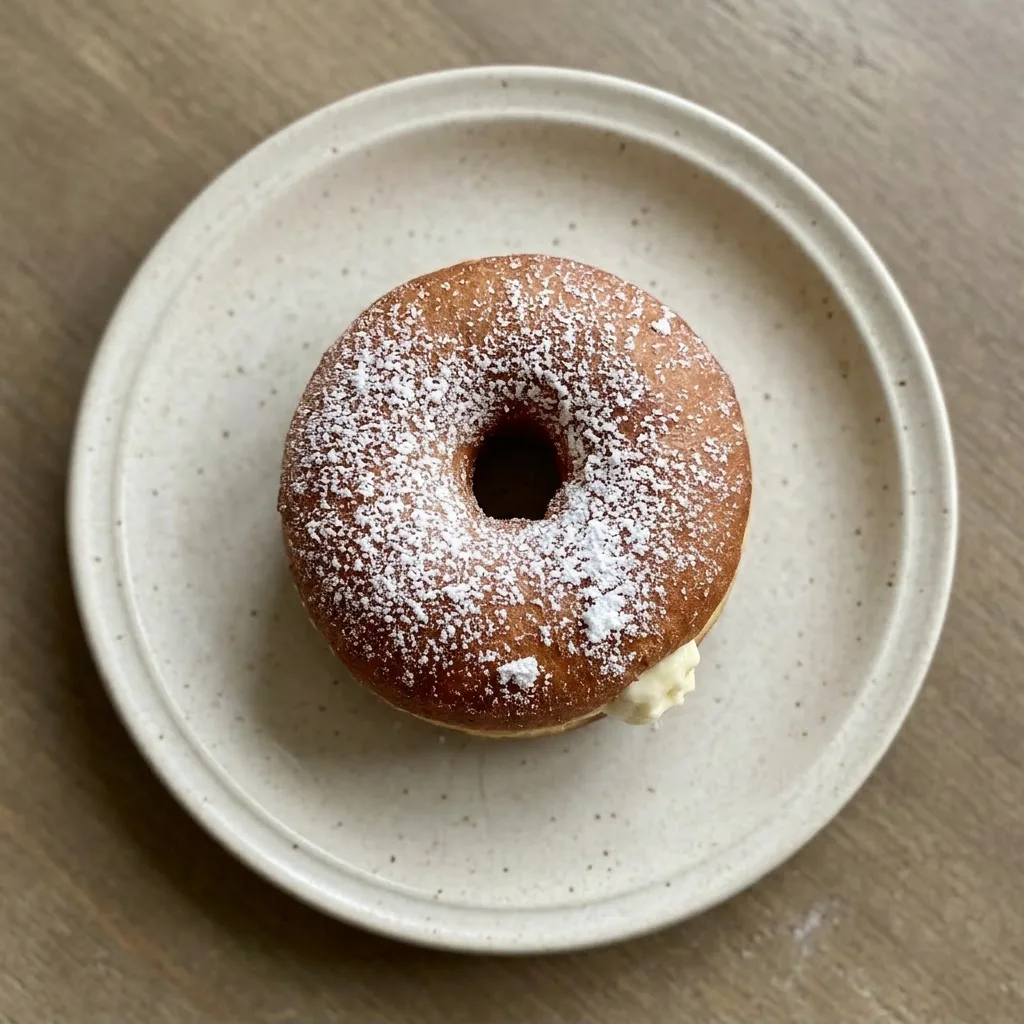
Storage and Serving
Fill and dust donuts just before serving. The cream stays cool and firm for about 2 hours at room temp; after that, the donut softens and the filling can weep.
For leftovers, store filled donuts in the fridge for up to 2 hours to keep the cream set. Beyond that, the fried shell loses its crispness and the cream starts to separate.
Unfried dough can be refrigerated overnight after the first rise. Punch it down, wrap tightly, then let it come to room temp and proceed with shaping and second rise the next day.
Freezing is not recommended for filled donuts: the cream breaks when thawed, and the fried texture turns soggy. You can freeze unfried, shaped dough after the 30-minute rest. Freeze on a tray until solid, then bag them.
Fry straight from frozen, adding 1 minute per side. Powdered sugar goes on after frying, right before serving; don’t dust ahead or it will dissolve into the crust.
Keep the yeast, swap the milk or flour
All-purpose flour: Gluten-free all-purpose flour blend. The dough will be stickier and harder to handle; expect a denser, more cake-like donut. Don’t overwork it, and let the first rise go a bit longer, it may not double as dramatically.
Milk: Unsweetened almond or oat milk. The dough will be slightly less tender because the lower fat and protein reduce browning and richness. The donuts will still rise, but the crumb won’t be as soft.
Add 1 tablespoon melted butter or oil to compensate for the missing fat.
Instant yeast: Active dry yeast. Use the same amount but dissolve it in the lukewarm milk with a pinch of sugar first and let it sit 5 to 10 minutes until frothy. The rise may take 10 to 20 minutes longer; watch for the dough to double in size rather than the clock.
Tips
- Use a clip-on thermometer to maintain oil at 340 to 360°F; if the oil drops below 325°F after adding donuts, the dough soaks up fat and becomes greasy.
- Fry in small batches and let the oil come back to temperature between batches; overcrowding drops the oil temp too fast and leads to uneven cooking.
Frequently Asked Questions
Can I make the dough ahead and fry later?
Yes, after the first rise, punch the dough down, wrap it tightly, and refrigerate overnight. The next day, let it come to room temp, then shape and do the 30-minute second rest before frying.
Unfried shaped dough can be frozen after the 30-minute rest; fry straight from frozen, adding about 1 minute per side. But don’t fill or dust ahead, the cream weeps and the powdered sugar dissolves into the crust.
Why did my donuts turn out dense or greasy?
Most likely the dough was too dry or under-risen. The dough should feel slightly sticky after mixing, dry dough makes heavy donuts.
5 to 2 hours), the crumb stays tight. Greasiness usually means the oil was too cool; fry at 340 to 360°F so the donuts puff quickly without absorbing excess oil.
If they browned fast but were greasy inside, the oil was too hot and the crust set before the inside cooked.