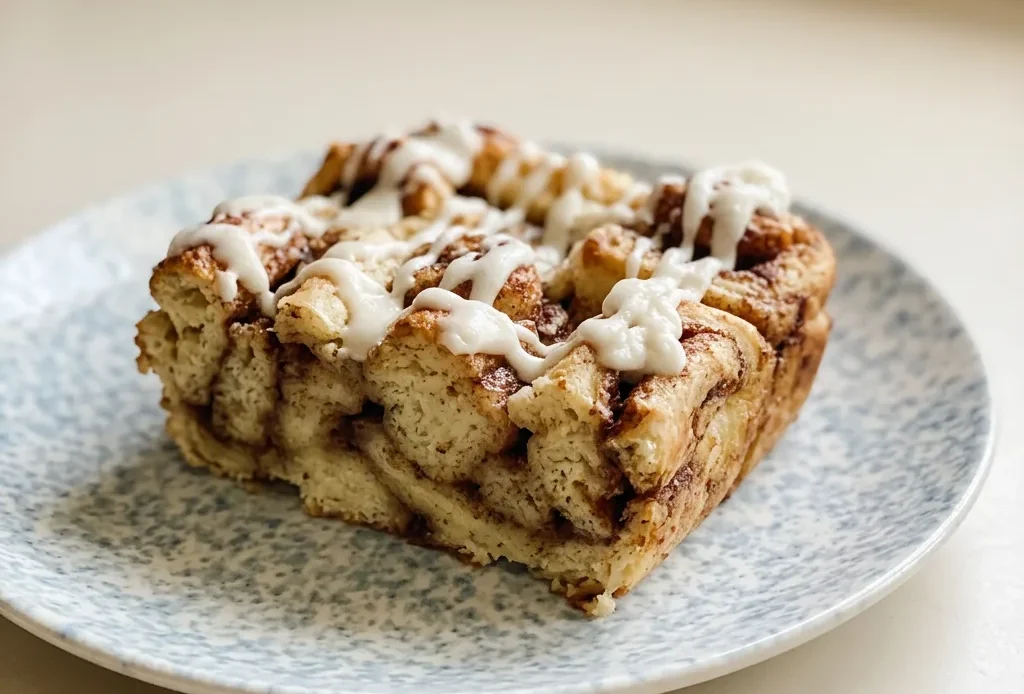
You know the problem with overnight breakfast casseroles: by morning the bread has turned to paste, and the top is either burnt or soggy. This one sidesteps both traps. The cinnamon roll chunks, already sturdy from the bakery, hold their shape even after a long soak, so the finished casserole has actual structure.
And because the custard uses maple syrup instead of sugar, it caramelizes into a golden crust without ever scorching. That’s the trick: real maple brings moisture and browning in balance, so you get a puffed, glossy top and a tender interior that slices cleanly.
It’s an easy cinnamon roll casserole that works for a holiday brunch or a lazy Saturday, and it’s forgiving enough that you can assemble it the night before without ruining the texture.
Slicing rolls for better texture
Cutting refrigerated cinnamon rolls into chunks dramatically improves the casserole’s texture. Those chunks create far more surface area for the custard to soak into, so every bite turns out moist and tender instead of doughy. Whole rolls tend to form dense pockets that never fully absorb the liquid, leaving a sad, gluey center.
With sliced pieces, the custard penetrates evenly, and the casserole puffs up uniformly in the oven. You’ll see a light golden brown across the top rather than pale spots where whole rolls blocked heat.
This technique makes a easy breakfast casserole that’s consistent from edge to center.
Why maple syrup works best
Maple syrup brings more than sweetness here. Its rich, distinct flavor deepens the cinnamon’s warmth, something granulated sugar can’t match. The natural sugars in maple syrup caramelize during baking, creating that appetizing golden top without needing extra sugar or butter.
And because it’s a liquid, it adds moisture to the custard, which keeps the casserole soft and tender rather than dry. This approach makes for easy sweet breakfast ideas that feel rich but aren’t complicated.
One taste and you’ll notice the difference between this and a plain sugar-sweetened version.
Frosting after, not before
Drizzling the reserved frosting over the baked casserole instead of adding it before the oven makes sense. If you put it on pre-bake, the frosting melts into a sugary puddle, losing its creamy, spreadable texture entirely. You’d end up with a sticky mess rather than a glossy glaze.
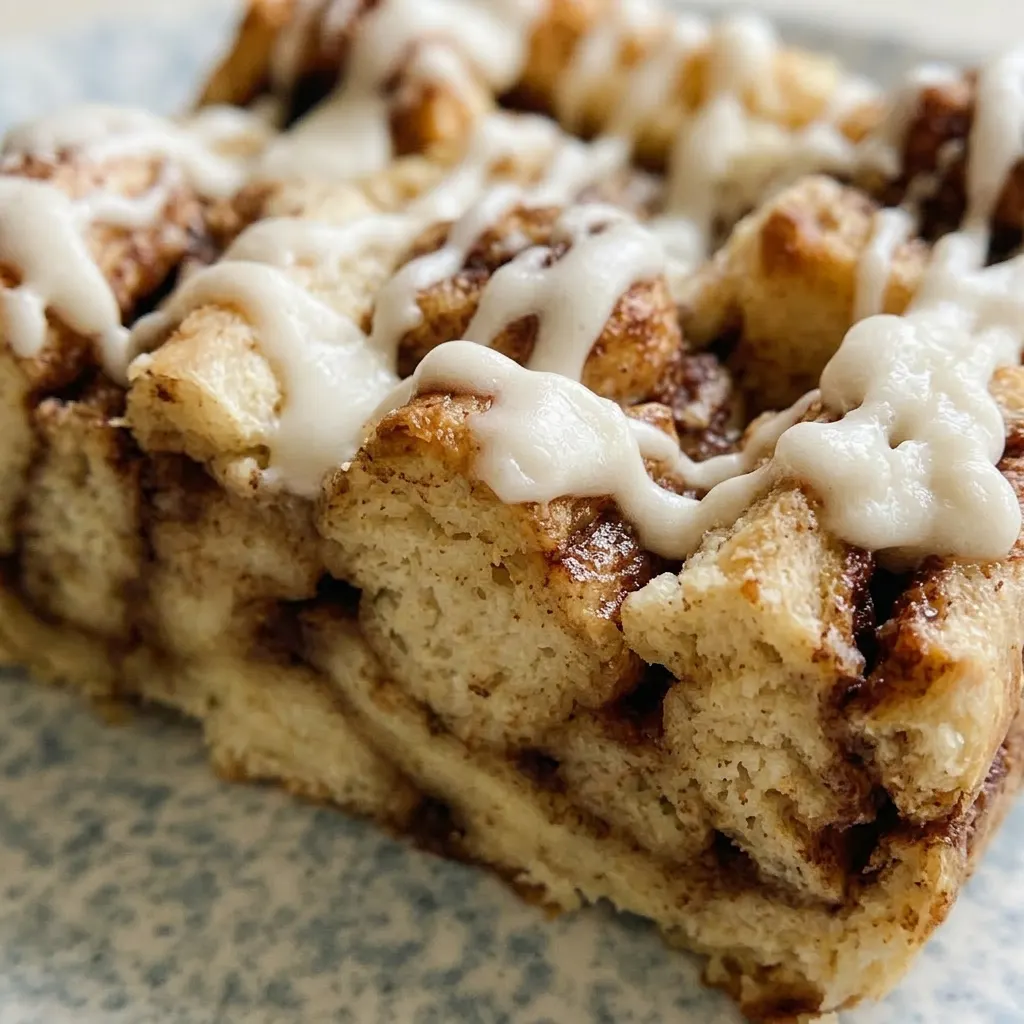
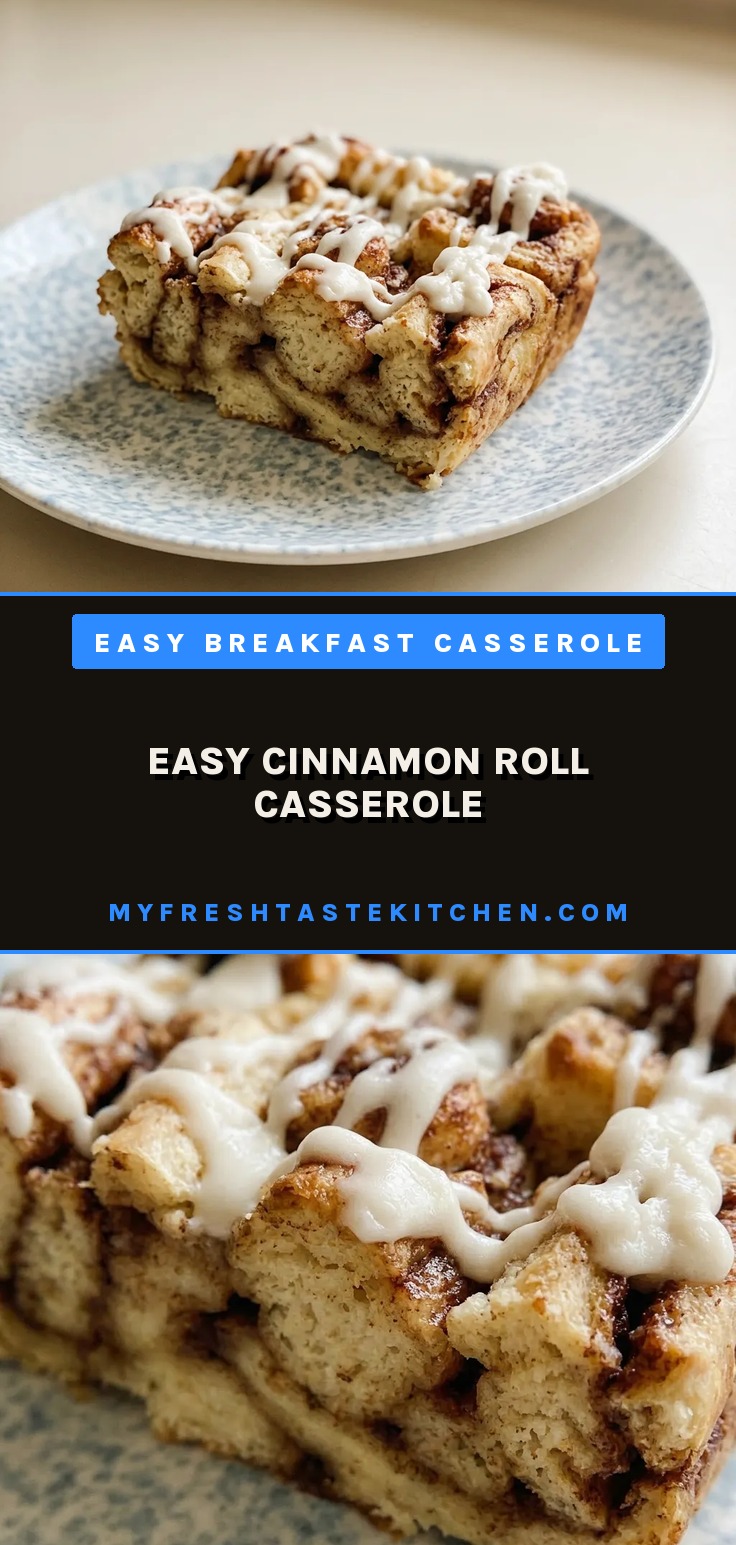
After baking, while the casserole cools, the frosting stays thick and visible, creating contrast against the golden surface. The brief cooling also lets the casserole firm up slightly, so the frosting sits on top rather than soaking in. That’s the look and texture you want from a easy breakfast for a crowd.
Custard turns chunks into one dish
The mixture of milk, eggs, and maple syrup does more than just wet the rolls, it changes them. As it bakes, the eggs set around the cut pieces, binding them into a cohesive casserole that slices cleanly.
The maple syrup’s sweetness and moisture help the custard set without turning watery. Vanilla and cinnamon weave through the whole thing, so every forkful tastes like a classic cinnamon roll but in a shareable format.
You’ll see the top puff slightly and turn golden, while the inside stays soft and custardy. That contrast is what makes this more than the sum of its parts.
Prep: 10 min · Cook: 25 min · Total: 35 min · Servings: 8 · Calories: 470 kcal
The four ingredients that matter
Refrigerated cinnamon rolls: Two tubes of 8 rolls each, any brand; the included frosting gets reserved for after baking.
Pure maple syrup: Use real maple syrup, not pancake syrup; its liquid sweetness and caramelizing properties are key.
Eggs: Three large eggs bind the custard; make sure the mixture is fully whisked to avoid tough white flecks.
Salted butter: A quarter cup melted; if you use unsalted, add a tiny pinch of salt to the custard.
Building the casserole step by step
Prep the pan
Melt butter in the 9×13 dish in the oven while it heats, or melt it first and pour in. Swirl to coat, if the butter solidifies before you add rolls, that’s fine, it’ll melt during baking.
Cut and scatter the rolls
Slice each cinnamon roll into 3/4-inch chunks, don’t stress about pieces. Scatter them evenly. If some chunks overlap a bit, that’s okay; they’ll puff and fill gaps.
Whisk the custard
Whisk milk, maple syrup, eggs, vanilla, and cinnamon until the eggs are fully incorporated and no streaks remain. If you see egg white threads, keep whisking, they’ll set into tough spots if left.
Pour and soak
Pour custard evenly over the roll chunks. Gently press down with a spatula so liquid reaches the bottom. You’ll see some liquid pool between pieces, that’s fine; the rolls will absorb as they bake.
Bake until puffed and golden
Bake 35 to 45 minutes. At 35 minutes, check: the top should be puffed and light golden brown, and the center should feel set when jiggled, not liquid. If still wobbly, give it 5 more minutes.
Cool and frost
Cool 10 to 15 minutes. The casserole will settle slightly and pull away from the pan edges. Drizzle the reserved frosting over the top while warm, it’ll soften but stay visible, not melt away.
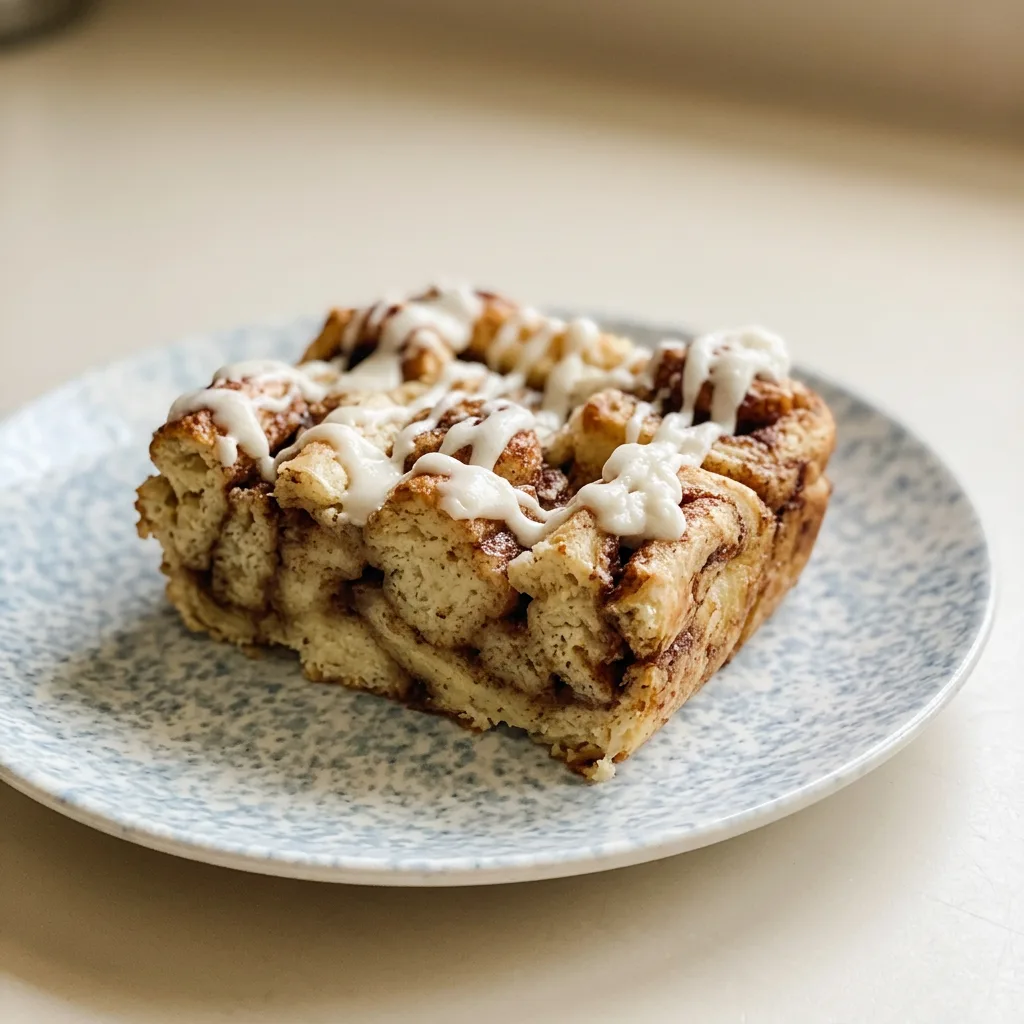
Easy Cinnamon Roll Casserole (7 ingredients!)
Ingredients
Method
Preheat and Butter Dish:
Heat oven to 350°F (175°C). Mist a 9×13-inch baking dish with nonstick spray. Add the melted butter (or melt a stick of butter in the dish in the oven).Chop and Scatter Rolls:
Unpack the cinnamon rolls, setting aside the included frosting for later. Slice each roll into 3/4-inch chunks and scatter them in the greased dish.Whisk Custard Mixture:
In a bowl, combine milk, pure maple syrup, eggs, vanilla extract, and cinnamon, whisking thoroughly until the eggs are fully blended. Pour this mixture evenly over the cinnamon roll pieces.Bake Casserole:
Bake for 35-45 minutes, until the casserole is puffed and light golden brown.Cool and Frost:
Allow to cool for 10-15 minutes, then drizzle the reserved frosting over the top and serve.
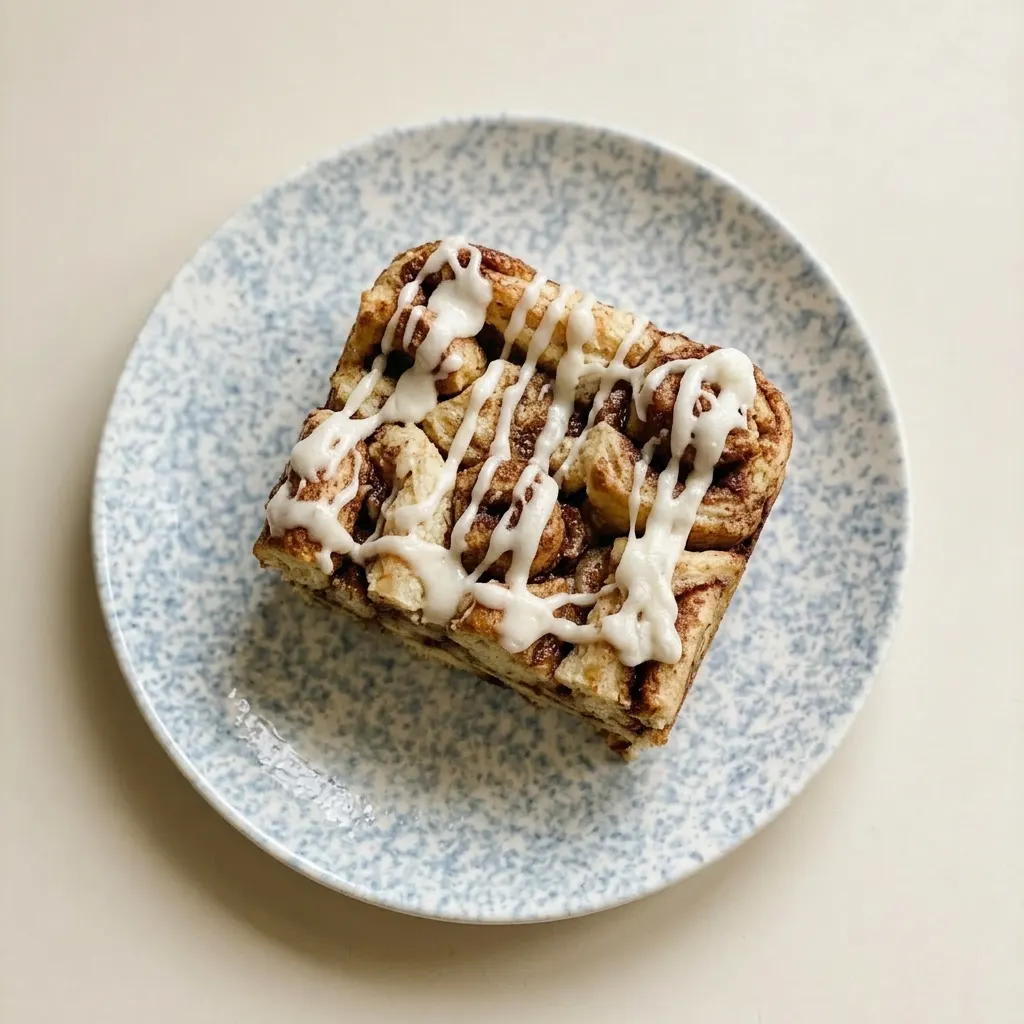
Swapping the syrup, the milk, and the rolls, what works and what doesn’t
Pure maple syrup: Honey or packed brown sugar. Honey substitutes cup for cup; brown sugar use 1/2 cup packed plus 2 tablespoons extra liquid (milk or water). Honey stays liquid; brown sugar needs the extra moisture to match the custard’s consistency.
Both caramelize similarly, but honey’s flavor is floral, brown sugar’s more molasses-like.
Milk: Any milk or non-dairy milk (almond, oat, soy). Substitute same amount. Oat milk yields the creamiest texture; almond milk may make the custard slightly thinner but still sets.
Avoid coconut milk from a can, too rich, can make casserole greasy. The custard will still puff and set with any of these.
Refrigerated cinnamon rolls: Gluten-free or vegan cinnamon rolls. Use any brand that comes in tubes with frosting.
Gluten-free rolls often bake up a bit denser and may not fluff as high; check at 40 minutes. Vegan rolls (dairy-free, egg-free) work fine, the custard provides the richness they lack. The frosting included may be dairy-based; if vegan, reserve that or make a quick glaze from powdered sugar and plant milk.
Tips
- Let the casserole rest the full 10 to 15 minutes before frosting; if you frost too soon, the glaze will slide off the puffed top and pool in the pan, wasting the frosting.
Storage and Serving
This casserole is best eaten within 15 minutes of frosting, while the top is slightly crisp and the custard is tender. Leftovers keep covered in the fridge for up to 3 days, but the texture changes: the custard sets firmer and the cinnamon roll pieces soften as they absorb moisture. To restore some crispness, reheat individual portions in a 350°F oven for 5 to 7 minutes, or an air fryer at 350°F for 3 to 4 minutes.
The microwave makes it soggy, so avoid it if you can. You can assemble the dish (without frosting) a night ahead: cover and refrigerate, then bake straight from the fridge the next morning, adding 5 to 10 minutes to the bake time. Freezing is not recommended; the custard breaks down and turns watery when thawed.
Frequently Asked Questions
Can I assemble this casserole the night before and bake it in the morning?
Yes, you can assemble it (without frosting) the night before, cover and refrigerate, then bake straight from the fridge the next morning. Add 5 to 10 minutes to the bake time since the dish starts cold. The custard will soak into the rolls overnight, making every bite tender.
How do I know when the casserole is fully baked and not undercooked in the center?
Check at 35 minutes: the top should be puffed and light golden brown, and the center should feel set, not liquid, when you gently jiggle the dish. If the center still wobbles like loose custard, bake 5 more minutes. A knife inserted near the center should come out clean or with just a few moist crumbs.
What’s the difference between this casserole and traditional cinnamon rolls?
This casserole turns individual rolls into a shareable, custard-soaked dish. Slicing the rolls into chunks creates more surface area, so the custard penetrates evenly, resulting in a moist, tender interior with a puffed golden top. Traditional cinnamon rolls stay dense and layered, while this one bakes up cohesive and sliceable.
