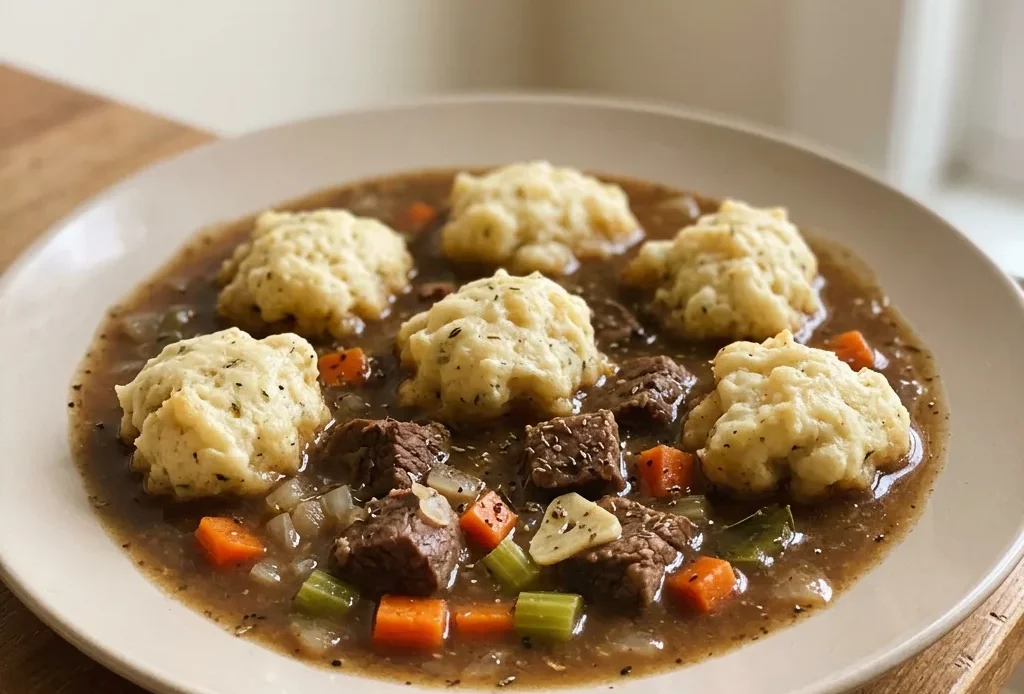
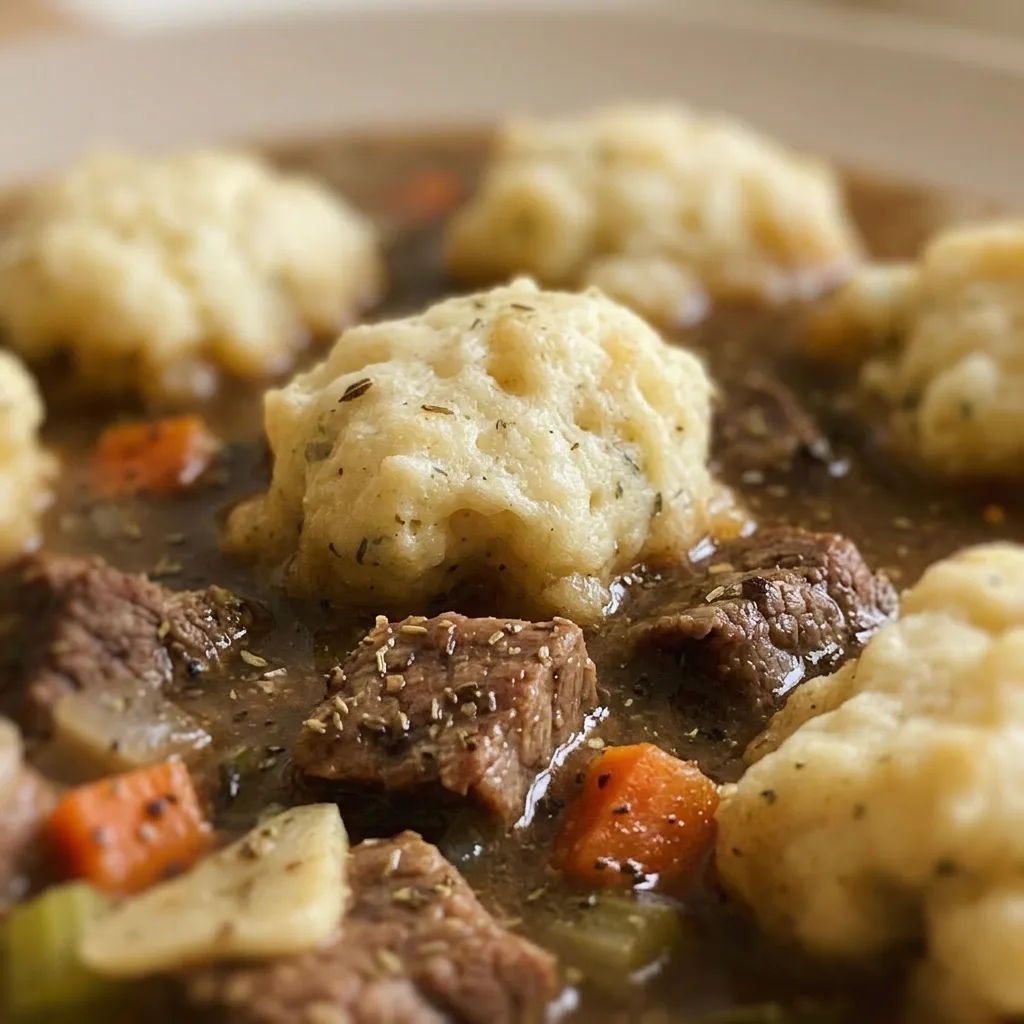
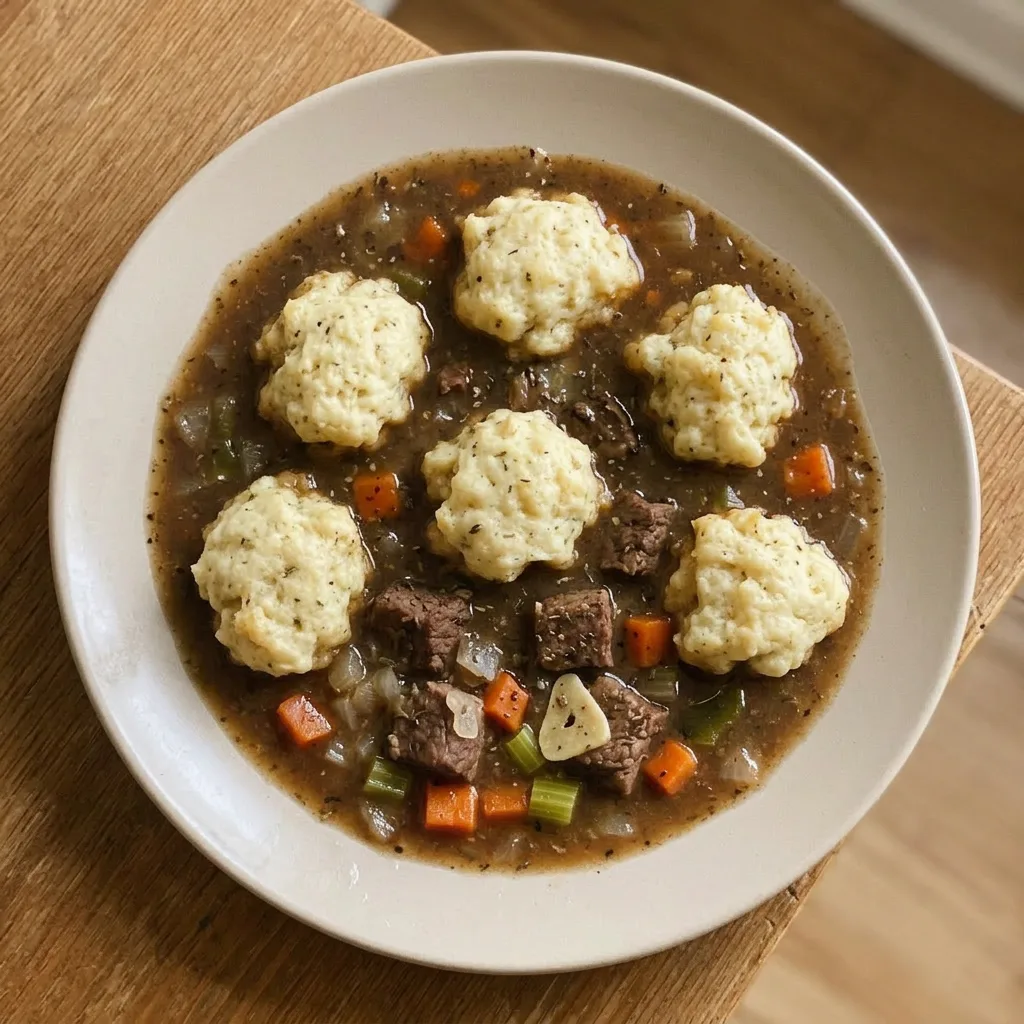
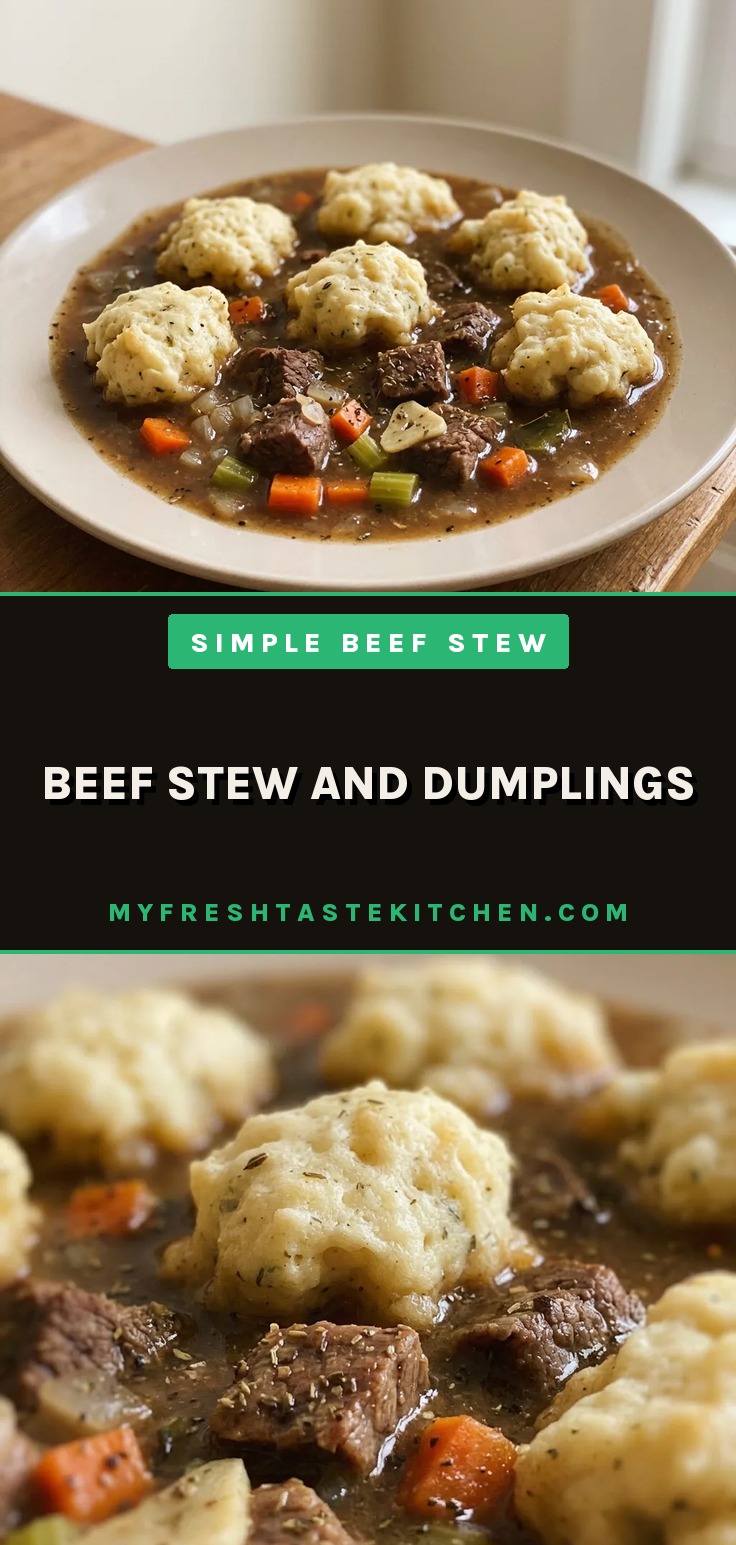
Those dumplings, perched on a dark, wine-laced broth, puff up into pale, tender clouds that soak up just enough of the beefy liquid without turning sodden. The stew itself is a weeknight shortcut: the beef browns fast, the vegetables soften in minutes, and the whole thing comes together in less than an hour.
You get a rich, savory broth with a hint of tomato and Worcestershire, chunks of tender chuck, and dumplings that cook right on top, absorbing flavor as they steam. For a one-pot meal that feels like it simmered all day, this beef stew and dumplings delivers a surprising amount of depth from a short cook.
I still catch myself wanting to stir the dumpling dough until it looks smooth, but I force myself to stop the moment the flour is just barely wet.
Why brown the beef in batches?
Browning the beef in batches is about getting a deep, savory crust on each cube. When meat hits a hot pan, the surface undergoes a Maillard reaction, that browning creates rich, meaty flavor you can’t get any other way.
But if you crowd the pot, the meat releases moisture and steams instead of sears. You end up with gray, boiled-tasting beef.
Seasoning before browning helps the salt draw moisture to the surface, which evaporates quickly, leaving a better crust. You’ll see the difference when you pull the first batch: dark brown edges, a fond building on the pan bottom. That fond is pure flavor waiting to be dissolved into the stew.
What makes dumplings light and fluffy?
The key lies in how the dough is handled. A sticky dough, mixed just until combined, means minimal gluten development. Overmixing would make them tough and dense.
Dropping spoonfuls directly into the simmering stew ensures they cook evenly from all sides without being disturbed. The baking powder reacts with heat and moisture to produce carbon dioxide, and the steam trapped inside each dumpling helps them puff up. You’ll see them roughly triple in size after 10 minutes.
The result is a tender, airy dumpling that absorbs some stew flavor without turning gummy.
Why cover the pot after adding dumplings?
Covering the pot traps the steam, which is essential for cooking the dumplings through. Without a lid, the tops would dry out and remain doughy while the bottoms simmer. The gentle simmer, not a rolling boil, keeps the dumplings intact; too much agitation would break them apart.
You’ll know they’re done when they’ve puffed up and a skewer inserted into the center comes out clean. The short 10-minute cook is enough for the dumplings to cook through without turning the stew too thick.
The steam also helps the dumplings develop a soft, slightly moist texture that complements the hearty stew.
Prep: 20 min · Cook: 30 min · Total: 50 min · Servings: 8 · Calories: 500 kcal
What to look for when buying beef and tomatoes for this stew
Beef: Chuck or round are best; they have enough fat and connective tissue to stay tender during the short simmer.
Crushed tomatoes: Use fire roasted if you want a deeper flavor without extra work; they add a subtle smokiness.
Red wine: Pick a dry red you’d drink; the alcohol cooks off leaving fruit and tannin that deepen the broth.
Butter: Unsalted butter lets you control the salt level; if using salted, skip the extra salt in the dumplings.
Thyme: Dried works fine here; fresh would need to be added later to keep its brightness from fading.
How to build the stew and drop dumplings without overworking either
Sear the beef in batches
Add beef in a single layer. You want a deep brown crust, not gray. If the pan is crowded, moisture pools and the meat steams.
After 3 minutes per side, the pieces should release easily from the pan.
Sauté the aromatics
Cook onion, carrot, and celery until the onion turns translucent, about 3 minutes. You’ll see the veggies soften and smell them sweeten. Add garlic and seasonings for 1 minute, it should become fragrant, not burnt.
Build the stew base
Stir in tomato paste until it darkens slightly, about 30 seconds. Then add the browned beef, bay leaves, Worcestershire, crushed tomatoes if using, wine if using, and stock. Cover and bring to a boil, then reduce to a simmer.
Mix the dumpling dough
Combine flour, butter, milk, salt, sugar, baking powder, and thyme. Stir just until no dry flour remains.
The dough will be sticky, that’s right. Overmixing develops gluten and makes them tough.
Drop dumplings into simmering stew
Use a spoon to drop 2-tablespoon portions onto the stew surface. Don’t submerge them; they’ll sink slightly.
Immediately cover the pot. The steam is what cooks the tops through.
Simmer covered for 10 minutes
Keep the stew at a gentle simmer, small bubbles, not a roiling boil. After 10 minutes, the dumplings should have puffed up to about triple their original size. A skewer inserted into the center should come out clean.
Beef Stew and Dumplings
Ingredients
Beef Stew
- 2 tablespoons butter or olive oil
- 1 onion, diced diced
- 4 carrots, diced diced
- 2 stalks celery, diced diced
- 4 cloves garlic, sliced sliced
- 2 lb beef, cut into 1-inch cubes cut into 1-inch cubes
- Salt and pepper, to taste to taste
- 2 teaspoons thyme
- 2 bay leaves
- 1 tablespoon tomato paste
- 1 tablespoon Worcestershire sauce
- 8 cups beef stock
- 2 cups crushed tomatoes optional
- 1 cup red wine optional
Dumplings
- 1 cup all-purpose flour 125 g
- 1 tablespoon butter
- 1/2 cup milk
- 1 teaspoon salt
- 1 teaspoon sugar
- 2 teaspoons baking powder
- 1/2 teaspoon thyme
Instructions
Beef Stew
Heat butter in pot:
In a stock pot over medium heat, add 1 tablespoon of butter or olive oil.Season beef cubes:
Season the beef cubes with half the salt, pepper, and thyme (plus extra seasonings if desired).Brown beef cubes:
Brown the beef on all sides, roughly 3 minutes per side. Transfer to a small bowl.Add remaining butter:
Add the remaining 1 tablespoon of butter to the stock pot.Sauté vegetables:
Sauté the onion, carrots, and celery in the hot butter until the onion turns translucent, about 3 minutes.Cook garlic and seasonings:
Add the garlic and the rest of the seasonings, cooking for 1 minute.Add tomato paste and liquids:
Mix in the tomato paste, then add the beef, bay leaves, Worcestershire sauce, crushed tomatoes (if using), red wine (if using), and beef stock.Bring stew to boil:
Cover the pot and bring the stew to a boil.Simmer while making dough:
Lower the heat to medium-low and let it simmer while you make the dumpling dough.
Dumplings
Combine dumpling ingredients:
In a medium bowl, combine the dumpling ingredients: flour, 1 tablespoon butter, milk, salt, sugar, baking powder, and 1/2 teaspoon thyme. Stir until just combined; the dough will be quite sticky.Drop dough into stew:
Drop the dough by 2-tablespoon portions into the simmering stew. Cover the pot with a lid.Simmer until dumplings puff:
Simmer for 10 minutes, until the dumplings have puffed up and roughly tripled in size.
What to swap (and what not to) in this stew
Red wine: Extra beef stock. You lose the acidity and subtle tannic structure that brightens the broth.
The stew will taste flatter, more one-dimensional. Add a tablespoon of red wine vinegar at the end to bring back some of that lift.
Crushed tomatoes: Tomato paste thinned with water. Use 2 tablespoons tomato paste whisked with 2 tablespoons water per cup of tomatoes.
The stew will be less chunky and slightly more concentrated in tomato flavor. Start with less liquid and adjust.
Thyme: Rosemary or oregano. Rosemary is more piney and assertive; use half the amount, crushed. Oregano is more pungent and works well with beef, but it can dominate, add it with a light hand.
Both change the herb profile noticeably from the original.
All-purpose flour: Gluten-free 1-to-1 blend. Dumplings will be denser and less fluffy because gluten structure is missing.
They hold together but don’t puff as high. Do not overmix or they’ll turn gummy. Use a blend with xanthan gum for best results.
Storage and Serving
This stew is best served within 2 days. The dumplings soften as they sit, so eat them the day you make them for the fluffiest texture. Leftover stew (without dumplings) keeps in the fridge for up to 4 days in an airtight container.
The stew thickens overnight as the starches from the vegetables and the gelatin from the beef release. Reheat gently on the stovetop over low heat, stirring occasionally to prevent scorching.
If you’ve stored the stew with dumplings, they’ll absorb liquid and turn tender but not mushy; just warm through without boiling. To freeze, transfer the stew (without dumplings) to a freezer-safe container and freeze for up to 3 months.
Thaw overnight in the fridge, then reheat. Add freshly made dumplings after reheating, as frozen dumplings turn dense and soggy.
Dumplings don’t freeze well.
Tips
- When mixing the dumpling dough, use a fork to stir until just combined; the dough will look shaggy and slightly lumpy. Overmixing with a spoon or whisk develops gluten, making dumplings tough instead of tender.
Frequently Asked Questions
Can I make the stew ahead of time and add dumplings later?
Yes, the stew itself keeps well for up to 4 days in the fridge, but hold off on the dumplings until just before serving. They’re best fresh: dropped into the simmering stew and cooked for 10 minutes until puffed and tender. If you add them ahead, they’ll soften and lose their airy texture as they sit.
Why did my dumplings turn out dense and heavy?
Most likely the dough was overmixed. Stir just until the dry flour disappears; a few lumps are fine. Overworking develops gluten, which makes dumplings tough instead of fluffy.
Another culprit: the stew wasn’t simmering gently when you dropped them in. A too-quick boil can break them apart, while a too-low heat won’t generate enough steam to puff them up.
How do I know when the beef stew is done?
The beef should be fork-tender after the 30-minute simmer. Pierce a cube with a fork; it should slide in with little resistance. The broth will have darkened and thickened slightly from the tomato paste and Worcestershire, and the vegetables will be soft but not mushy.
If the beef still feels tough, give it another 10 minutes, the short cook time works because you’re using chuck or round, which are naturally tender cuts.
Is this stew supposed to be thick or soupy?
It’s meant to be a hearty, brothy stew, thicker than soup but not gloppy. The broth has body from the tomato paste and crushed tomatoes, but no flour or roux is added beyond what’s in the dumplings.
As it sits, the starches from the vegetables and gelatin from the beef will thicken it overnight. If you want it thicker, you can mash a few of the cooked vegetables against the pot side.