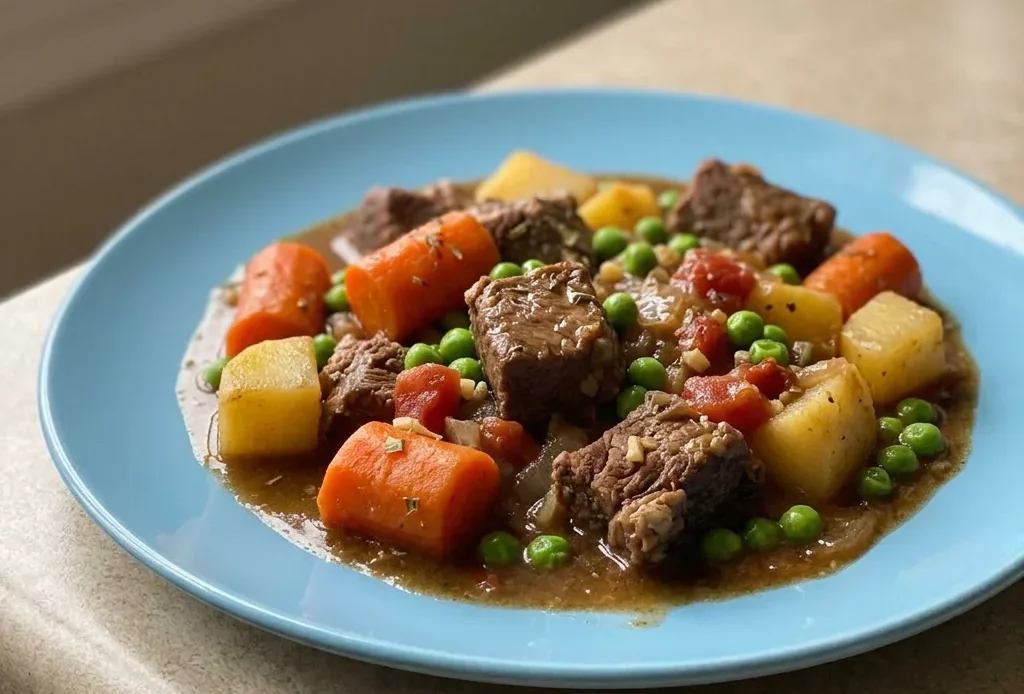
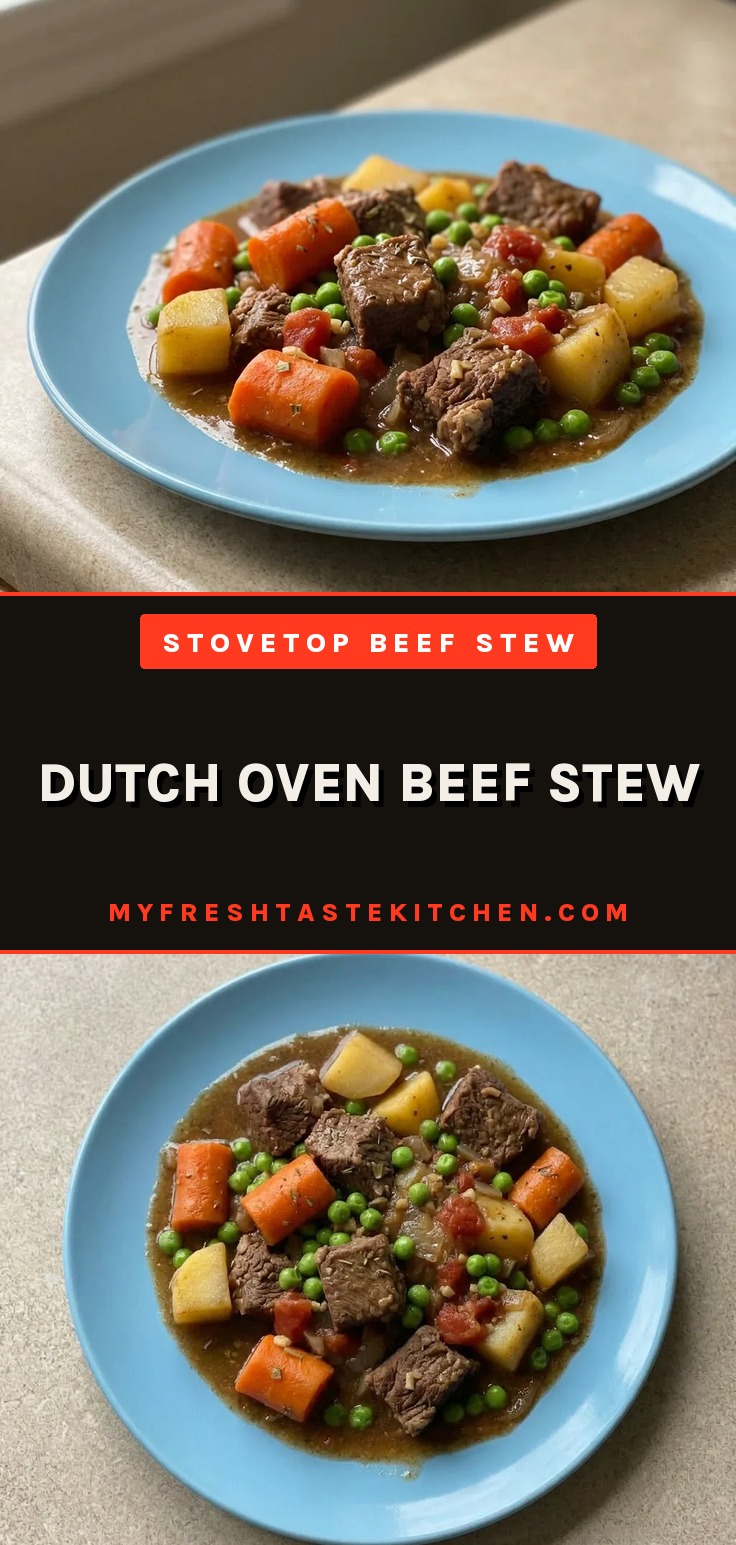
This isn’t a stovetop stew you have to babysit. It’s an oven-braised Dutch oven beef stew that builds deep flavor from a proper sear and a long, gentle simmer, all with minimal hands-on work.
The real trick is knowing that the oven’s steady heat does the hard part, no hot spots, no scorching, just fork-tender beef and a gravy that clings to the spoon. You get a rich, comforting one-pot meal that tastes like it took all day, but most of that time is hands-off.
Sear the beef in batches to build deep flavor
Browning isn’t just for color, it’s where flavor starts. When meat hits a hot pan, its surface undergoes the Maillard reaction, creating hundreds of aromatic compounds.
That dark crust on each chunk translates directly into a richer stew. Crowding the pan drops the temperature, and instead of browning, the meat steams.
You get gray, boiled-tasting beef and none of that fond stuck to the pot bottom. Fond is concentrated flavor that later dissolves into the broth.
Batch searing gives each piece direct contact with the hot surface, so every side browns properly. Yes, it takes a few extra minutes, but those minutes are what separate a deep, savory stew from a flat one.
Cook flour and tomato paste together for a silky, savory base
Flour and tomato paste do more than just sit in the pot, they change. Sprinkling flour over the cooked onions and garlic and stirring it for a minute coats everything.
That cooking step eliminates the raw, chalky taste of uncooked flour. Then tomato paste goes in.
It’s concentrated umami, adding both color and a deep, almost meaty savoriness. When you cook the paste for another minute, it darkens slightly and its sugars caramelize, which rounds out acidity. Together, the flour and paste form a roux-like base that thickens the stew as it simmers, giving it body without a pasty texture.
You’ll taste the difference: a stew that clings to the spoon, with a layered richness no single ingredient can deliver on its own. For a stovetop beef stew, this step is what pulls the flavors together.
Braise in the oven for even, gentle heat
Stovetop simmering works, but hot spots on the burner can make parts of the stew boil while others barely bubble. The oven solves that.
At a steady 350°F, the heat surrounds the Dutch oven from all sides, creating a consistent, gentle simmer. That even temperature means the meat cooks at the same rate throughout, no scorched bottom or undercooked pieces.
A gentle simmer, not a rolling boil, is key for tender beef. Boiling toughens meat by squeezing out moisture and hardening proteins. Slow, moist heat does the opposite: it breaks down collagen into gelatin, which gives the stew that silky richness.
The result is beef that yields under a fork but still holds its shape. That’s the hallmark of the best beef stew ever: tender meat, not shredded strings.
Add potatoes and carrots later for ideal texture
Root vegetables take less time to soften than beef does. If you add them at the start, they’ll going soggy by the time the meat is tender.
By waiting an hour, the beef has already begun to break down, releasing collagen and flavor into the broth. Then in go the potatoes and carrots.
They cook for the remaining hour, just enough to become tender but still hold their shape. Cutting them into uniform 1-inch chunks is what makes this work, smaller pieces would overcook, larger ones would stay crunchy.
You want a simple beef stew where every component is at its peak: tender beef, creamy potatoes that haven’t fallen apart, carrots with a little bite left. That’s the balance.
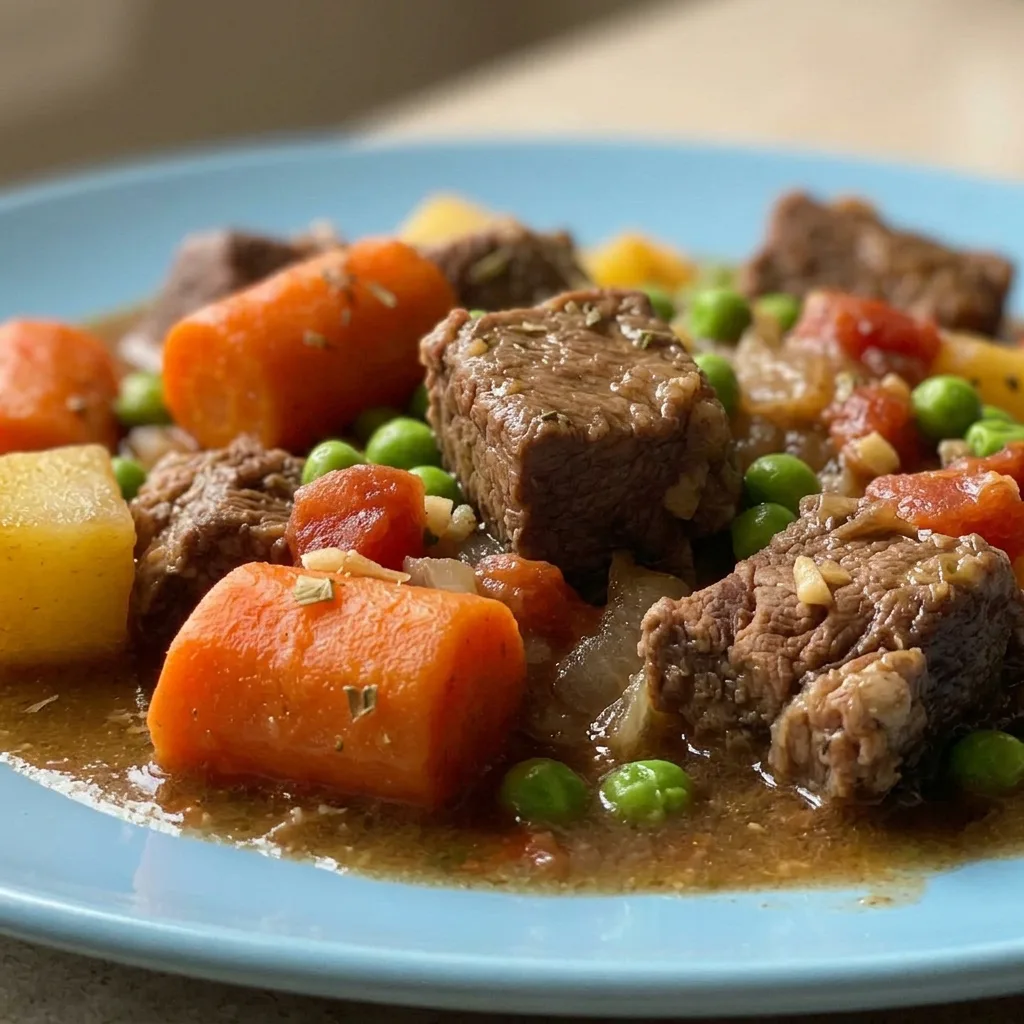
Prep: 10 min · Cook: 2 hr 20 min · Total: 2 hr 30 min · Servings: 6 · Calories: 600 kcal
Choose stew beef and prep vegetables for even cooking
Stew beef: Buy pre cut 1 ½ inch chunks for consistent searing and tenderness.
Yukon gold potatoes: They hold shape better than russets; cut into 1 inch cubes for even cooking.
Carrots: Cut into 1 inch chunks so they soften but don’t fall apart during braising.
Frozen peas: Stir in at the end; they only need 5 10 minutes to warm through.
Tomato paste: Cook it with the flour for a minute to deepen its savory, concentrated flavor.
Make the richest beef stew in 2 ½ hours, from sear to oven braise
Dry the beef and sear in batches
Pat the chunks dry with paper towels, moisture steams, not browns. Sear in a single layer, 1 to 2 minutes per side, until a deep brown crust forms. If the pot looks crowded, you’ll see gray meat instead; stop and do fewer pieces per batch.
Cook the onions and garlic
After setting the beef aside, reduce heat to medium and add another tablespoon of oil. The onions should sizzle gently; if they brown too fast, turn down the heat. Cook until softened and just starting to turn golden, about 5 minutes, then add the garlic for 1 minute until fragrant.
Build the roux with flour and tomato paste
Add a final tablespoon of oil, let it warm 30 seconds, then sprinkle the flour over the onions. Stir continuously for 1 minute, the flour should coat everything without clumping. Stir in the tomato paste and cook another minute; it will darken slightly and smell richer, signaling the raw edge is gone.
Deglaze and combine
Pour in the beef broth slowly while stirring to prevent lumps. The mixture should smooth out immediately. Add the tomatoes, Worcestershire, seared beef, thyme, oregano, and bay leaves.
Bring to a simmer, you’ll see small bubbles breaking the surface, not a hard boil.
Braise in the oven
Cover the Dutch oven and transfer to a 350°F oven. The liquid should barely bubble, if it’s boiling vigorously, your oven runs hot.
Cook for 1 hour, then add the carrots and potatoes, stir, cover, and return for another hour. The beef should be fork-tender but not falling apart.
Finish with peas and adjust seasoning
Remove the pot from the oven and discard the bay leaves. Stir in the frozen peas, they’ll warm through in the residual heat. Let the stew sit covered 5 to 10 minutes; the peas will turn bright green.
Taste and add salt and pepper if needed. The broth should be thickened enough to coat the spoon.
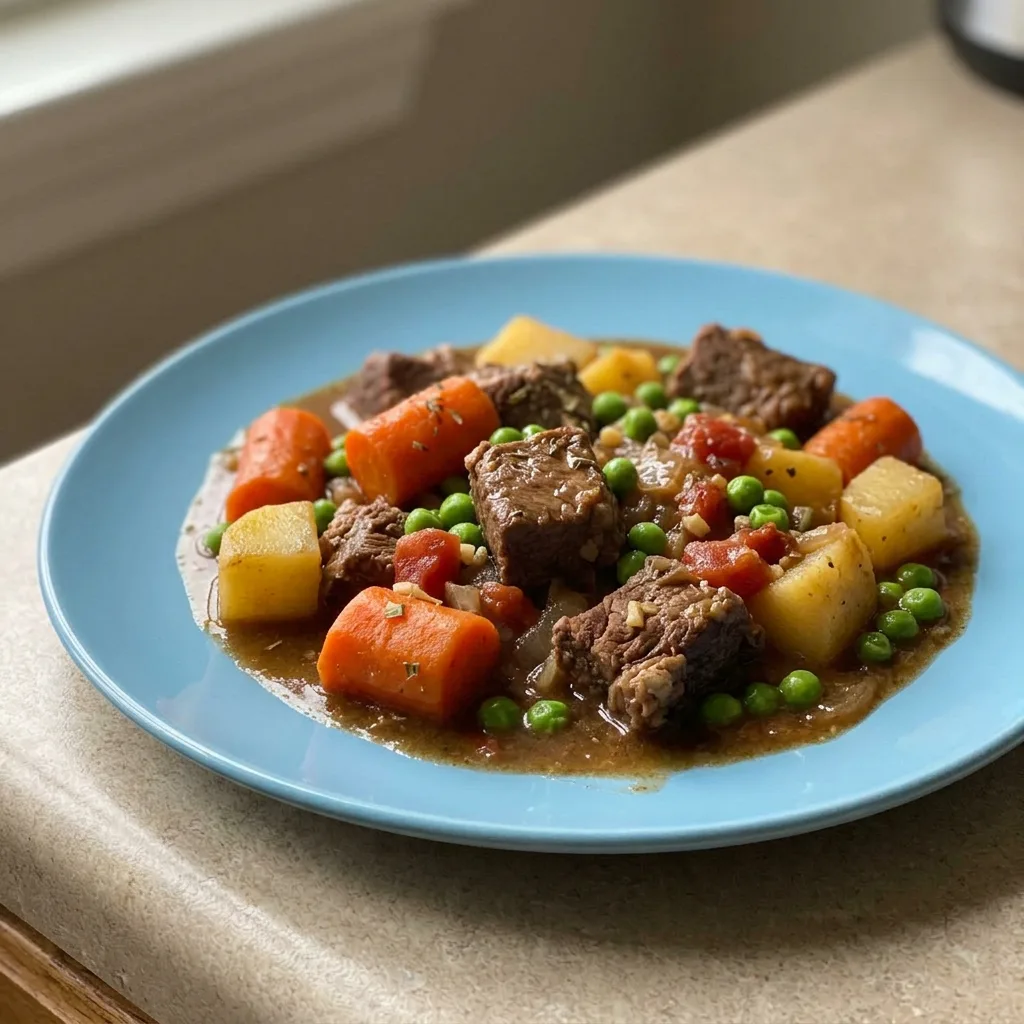
Dutch Oven Beef Stew
Ingredients
Method
Preheat oven to 350°F:
Set the oven to 350°F (175°C) to preheat.Dry and season beef:
Use a paper towel to dry the beef, then sprinkle with salt and pepper.Heat oil in Dutch oven:
In a large Dutch oven over medium-high heat, warm 1 tablespoon of olive oil.Sear beef in batches:
Sear the beef in batches, cooking each side for about 1-2 minutes. Between batches, add extra oil as required. Avoid crowding the pan to ensure proper browning.Remove browned beef:
After all beef is browned, take it out of the pot and reserve.Reduce heat, add oil:
Turn the heat down to medium and put another 1 tablespoon of olive oil into the pot.Cook onions until golden:
Cook the sliced onions for 5 minutes, until they soften and begin to turn golden.Sauté minced garlic:
Add the minced garlic and sauté for 1 minute, until aromatic.Add more oil:
Pour in an extra 1 tablespoon of olive oil and let it heat for 30 seconds.Cook flour with mixture:
Dust the flour over the onion-garlic mixture and cook for 1 minute while stirring continuously.Stir in tomato paste:
Stir in the tomato paste and cook for another minute, stirring constantly.Add stock slowly:
Slowly add the beef stock while stirring to prevent lumps and fully incorporate the flour.Add tomatoes, beef, herbs:
Put the tomatoes, Worcester sauce, browned beef, thyme, oregano, and bay leaves into the pot. Bring everything to a simmer.Bake covered for 1 hour:
Put the lid on the pot and place it in the oven. Bake for 1 hour.Add potatoes and carrots:
Add the potatoes and carrots to the pot, stir well, then cover and return to the oven for another 1 hour.Remove bay leaves:
Take the pot out of the oven and discard the bay leaves.Mix in frozen peas:
Mix in the frozen peas, cover, and let stand for 5-10 minutes until the peas are heated through.Season with salt and pepper:
Adjust seasoning with salt and pepper if needed.Serve and enjoy:
Serve and enjoy!
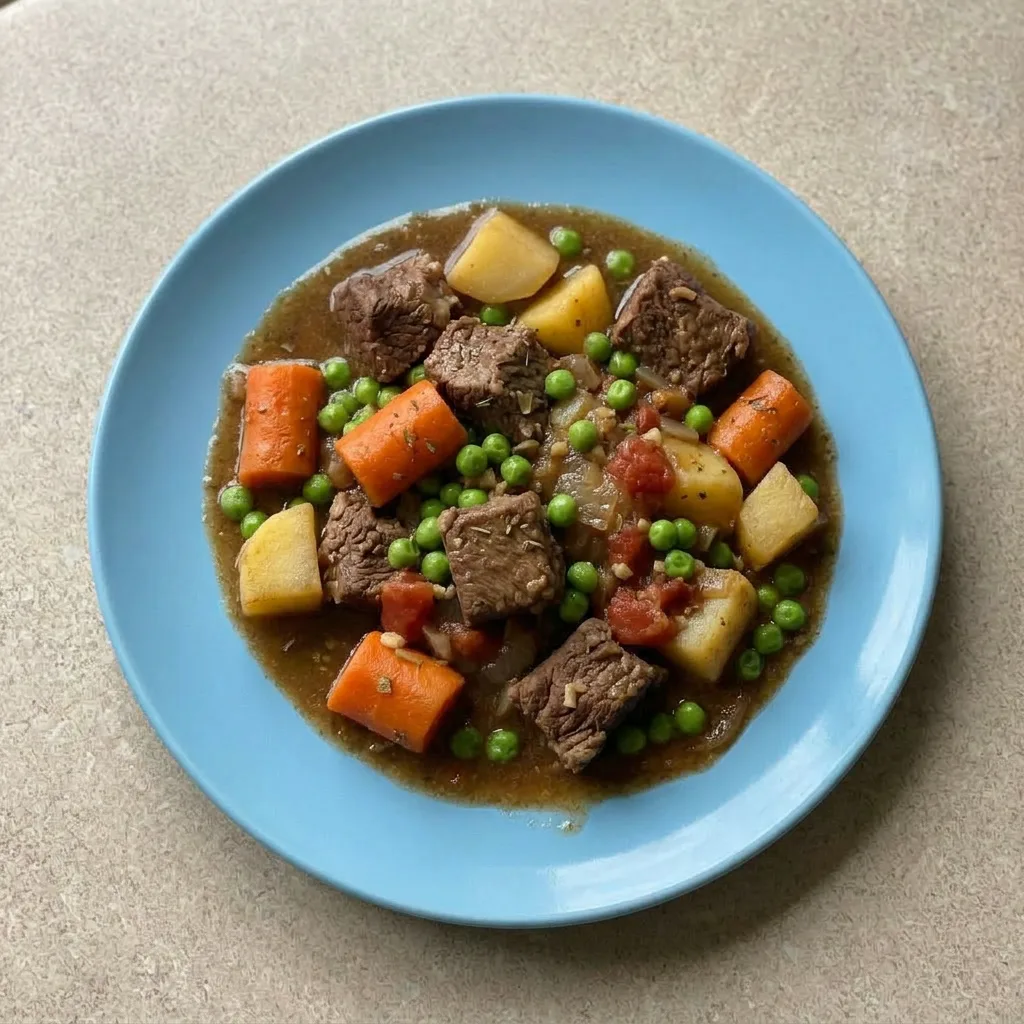
Storage and Serving
The stew thickens as it cools. Let it cool completely, then transfer to an airtight container.
Refrigerate for up to 4 days. The potatoes will continue to absorb liquid, making the stew even thicker over time. Reheat gently on the stovetop over low heat, stirring occasionally, to avoid toughening the meat.
Add a splash of beef broth if needed to loosen the gravy. For longer storage, freeze for up to 3 months.
Thaw overnight in the fridge before reheating. The peas will lose their bright color and become softer after freezing, but the overall flavor remains. Serve within 30 minutes of reheating for the best texture.
Tips
- Use a heavy-bottomed pot like enameled cast iron to maintain steady heat during browning and braising, preventing scorching.
- Cut the potatoes and carrots into 1-inch pieces for even cooking; measure against the beef chunks to ensure uniformity.
Which ingredients you can swap in this beef stew, and which you shouldn’t
Stew beef: Beef chuck or round, cut into 1 ½-inch chunks. These cuts have enough connective tissue to break down during the long braise. Lean cuts like sirloin will turn dry and chewy, not tender.
Yukon gold potatoes: Red potatoes or russets. Red potatoes hold shape similarly; russets break down more, thickening the broth but giving a softer potato texture. Cut russets into slightly larger chunks (1 ¼ inch) to compensate.
Frozen peas: Fresh peas or skip them. Fresh peas need 2 to 3 minutes more simmering. Omit them entirely; the stew is still hearty without.
No other veggie replaces peas’ pop of sweetness.
Worcestershire sauce: Soy sauce or balsamic vinegar. Soy sauce adds saltiness and umami but lacks the tang; balsamic adds sweetness and acidity.
Use half the amount of soy sauce, or the same amount of balsamic. The stew’s flavor shifts noticeably.
Frequently Asked Questions
Can I make this stew ahead of time and reheat it?
Yes, you can make it ahead. The stew thickens as it cools, so expect a denser texture the next day. Reheat gently on the stovetop over low heat, stirring occasionally, and add a splash of beef broth if it’s too thick.
Don’t boil it, that can toughen the meat. The stew keeps in the fridge up to 4 days, or frozen for 3 months.
Why is my beef tough instead of tender?
Most likely the oven temperature was too high or the braise was too short. At 350°F, the liquid should barely bubble; if it boiled, the proteins tightened. Also check that you used stew beef or chuck, lean cuts like sirloin won’t break down.
Next time, make sure the beef is fork-tender after the full 2 hours in the oven.
How do I prevent the stew from being too watery or too thick?
Cook the flour and tomato paste for a full minute each to build the base. If it’s too watery after braising, let it simmer uncovered on the stovetop for 5 to 10 minutes to reduce. If too thick, stir in beef broth a tablespoon at a time until it coats the spoon.
The potatoes will also absorb liquid as the stew sits.
What’s the difference between this oven-braised stew and a stovetop version?
The oven gives steady, all-around heat at 350°F, so the stew simmers evenly without scorching on the bottom. Stovetop versions often have hot spots that require more stirring and attention. You’ll notice the meat is more uniformly tender, and you don’t have to babysit the pot for the full 2 hours.