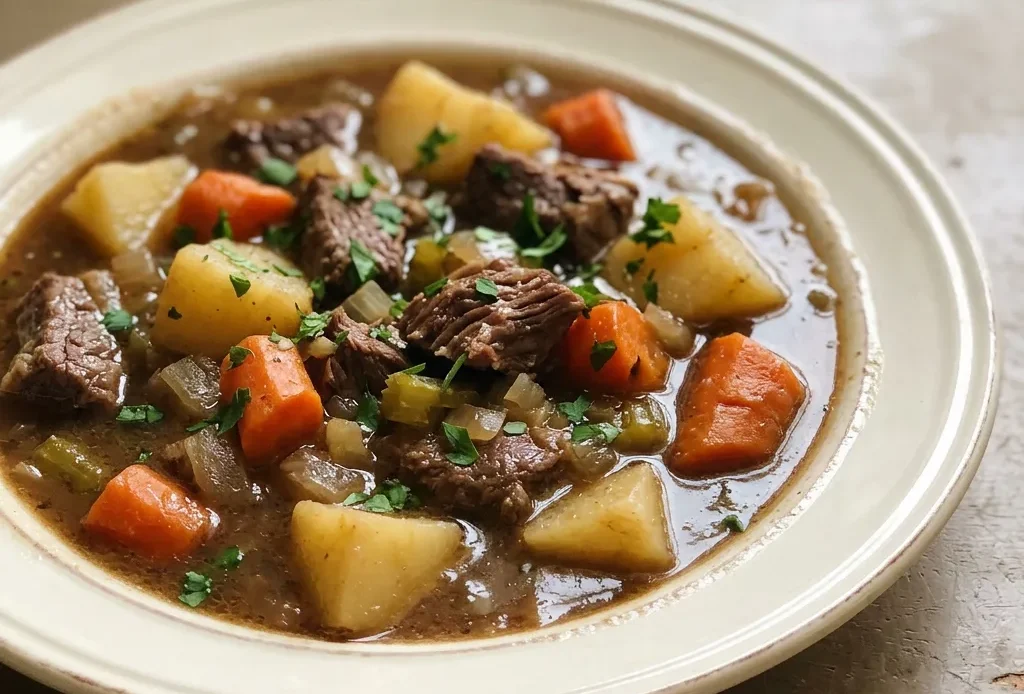
A fork slides through a cube of beef with almost no resistance, the meat fibers separate into tender strands that hold onto a glossy, savory broth. That transformation, from tough stew meat to something that melts apart, is what makes this crockpot beef stew worth the long cook. The trick is searing the beef in batches before it ever touches the slow cooker, building a dark crust that carries into the final dish.
Skipping that step leaves the broth thin and flat, no matter how long you cook it. The vegetables stay intact because they’re cut large enough to survive ten hours, and the tomato paste with Worcestershire sauce work quietly in the background, giving the liquid a fullness that plain broth can’t match. You can taste the difference in every spoonful.
Why sear the beef before slow cooking?
Searing browns the exterior of the beef cubes, creating the deep, savory crust from the Maillard reaction. That browning is where most of the stew’s rich flavor comes from.
If you skip it, the meat will be tender but the broth will be flat. Browning in batches is crucial, crowding the pan drops the temperature and steams the meat instead. After the beef is out, the same pan holds the fond (the browned bits stuck to the bottom).
Sautéing the onion and garlic in that pan deglazes it, pulling that concentrated flavor into the slow cooker. You can smell the difference as the onion hits the pan.
What to make with beef stew meat: right vegetables and cut size
Yukon Gold potatoes keep their shape after 10 hours in the slow cooker, unlike russets that break down into mush. Cutting them and the carrots into large bite-size pieces, about 1-inch chunks, gives them enough bulk to stay distinct. Carrots and celery add their own structure and natural sweetness that balances the savory beef.
If you cut them too small, they’ll disappear into the broth. The texture contrast between tender beef and still-intact vegetables is what makes a good stew satisfying. You want to see each piece when you scoop it out.
What makes the beef stew recipe taste so meaty?
Tomato paste and Worcestershire sauce are the two ingredients that push the savory depth past plain beef broth. Tomato paste is concentrated tomato, cooked down to a thick, dark umami bomb that dissolves into the liquid. Worcestershire sauce brings fermented complexity, a little tang, a little sweetness, and that anchovy-based savoriness that rounds out the meatiness.
Neither overpowers; they work in the background. Taste the broth after 10 hours and you’ll notice a fullness that plain broth alone can’t deliver. The beef stew recipe relies on that combination for its deep, layered flavor.
Cornstarch slurry: why it’s optional
After 10 hours on low, the stew’s liquid is flavorful but thin. Stirring in a cornstarch slurry (cornstarch whisked with cold water) thickens it without changing the taste. You add it at the end because long cooking would break down the starch, leaving the broth thin again.
The slurry coats the meat and vegetables, giving the stew a glossy, silky body. It’s optional because some people prefer a brothy stew, and if you don’t mind the thinner consistency, you can skip it.
For a gluten-free thickener, cornstarch works without the cloudiness flour can cause.
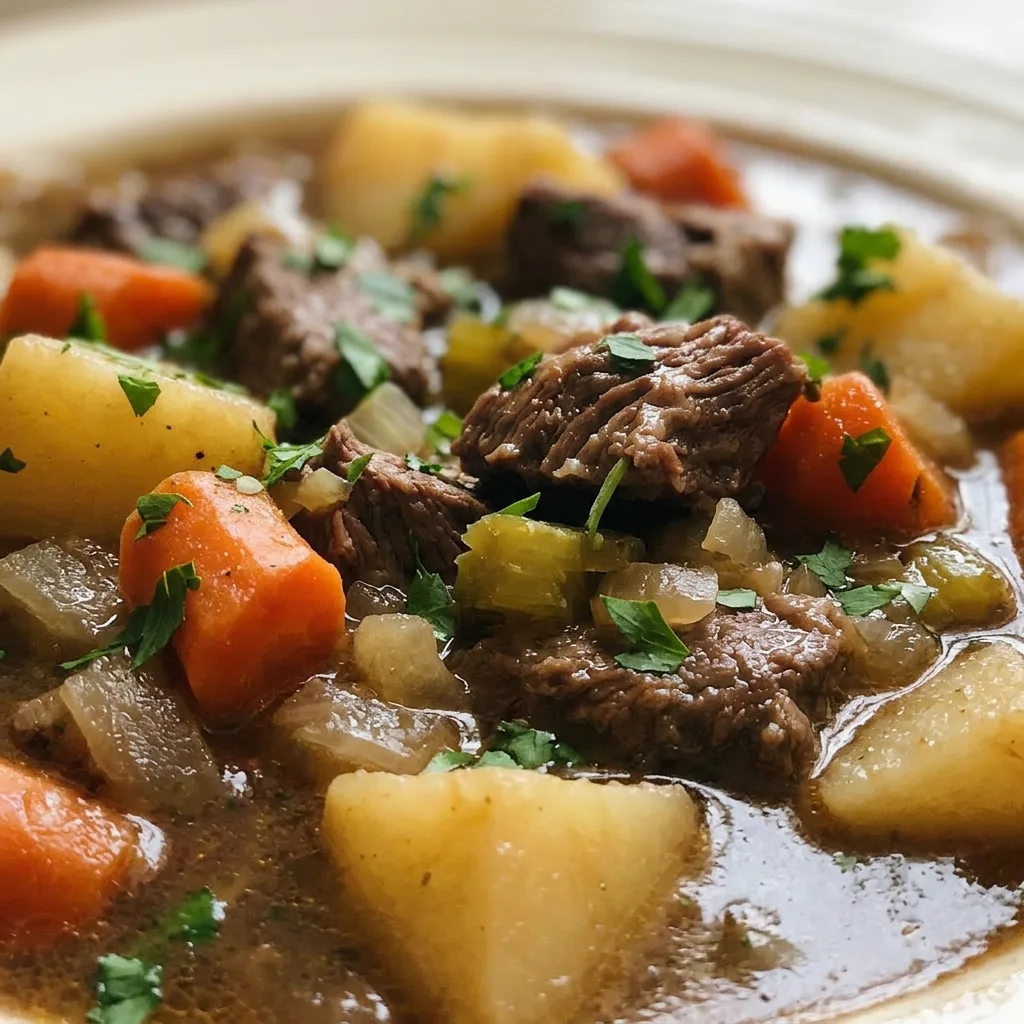
Prep: 20 min · Cook: 10 hr · Total: 10 hr 20 min · Servings: 6 · Calories: 380 kcal
Ingredient picks that matter for this stew
Stewing beef cubes: Chuck or stew meat with good marbling stays tender after 10 hours. Lean cuts turn dry and stringy.
Yukon Gold potatoes: Yukon Golds hold their shape. Russets break down into mush during long cooking.
Tomato paste: Buy a tube not a can. You only need 6 ounces. Tubes keep in the fridge for later.
Worcestershire sauce: This is the secret to meaty depth. Skip it and the broth tastes flat.
Sear in batches, then deglaze the pan
Sear the beef in two batches
Add half the cubes to hot oil, leaving space between them. When they release easily and have a dark brown crust, flip. Overcrowding steams instead of browns, you’ll see gray meat and little sizzle.
Sauté the aromatics
After removing beef, the pan bottom should have browned bits (fond). Add onion and stir, scraping up the fond. The onion will soften and brown slightly in 3 to 4 minutes; the smell turns rich and savory.
Layer everything in the slow cooker
Put potatoes, carrots, and celery directly on the bottom so they cook in the liquid. Add beef, onion mixture, broth, tomato paste, Worcestershire, salt, pepper, and bay leaves. Stir until tomato paste dissolves completely, no streaks remain.
Cook on low for 10 hours
Set the slow cooker to low and let it run undisturbed. After 10 hours, the beef should pull apart with a fork. If it’s still tough, let it go another 30 minutes and test again.
Thicken with cornstarch (if desired)
Whisk 2 tablespoons cornstarch with 2 tablespoons cold water until smooth. Stir into the stew and cook on high for 10 minutes. The liquid will turn glossy and cling to the meat and vegetables instead of pooling.

Crockpot Beef Stew
Ingredients
Method
Sear Beef Cubes:
Heat 1 tablespoon olive oil in a skillet over medium-high heat. Sear half the beef cubes until browned on all sides, then transfer to a plate. Add the remaining oil and brown the second batch. Place all beef and accumulated juices into the slow cooker.Sauté Onion and Garlic:
Sauté the onion in the same skillet for 3-4 minutes, then add garlic and cook for 30 seconds. Transfer this mixture to the slow cooker.Combine Remaining Ingredients:
Combine all remaining ingredients except bay leaves and cornstarch in the slow cooker. Mix thoroughly.Add Bay Leaves and Cook:
Carefully add bay leaves. Cook on low for 10 hours, until the beef is fork-tender.Thicken with Cornstarch:
For a thicker consistency, whisk cornstarch with 2 tablespoons cold water, stir into the stew, and continue cooking until thickened, about 10 minutes.
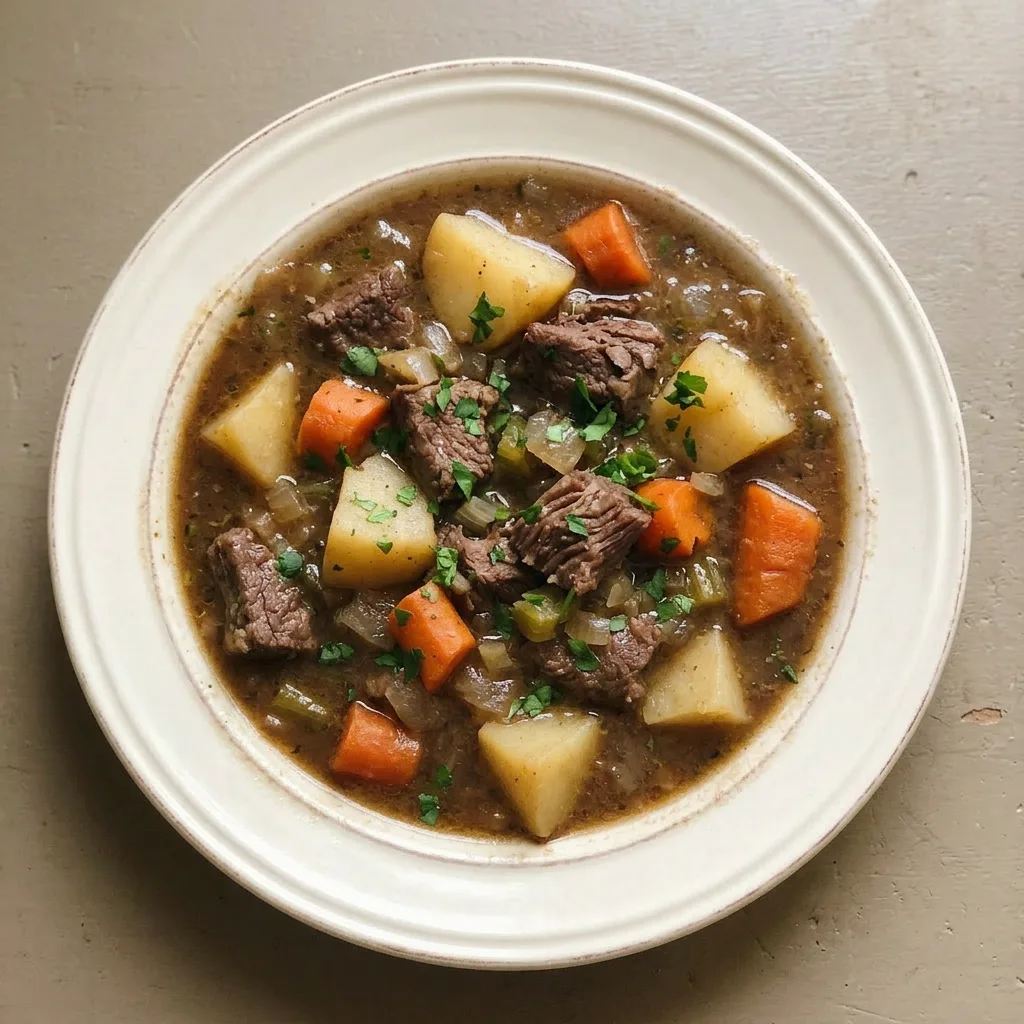
What to swap (and what to leave alone) in this beef stew
Beef: Beef chuck or brisket, cut into cubes. Both have enough marbling to stay tender after 10 hours. Lean cuts like round or sirloin dry out and turn stringy.
Potatoes: Red potatoes or fingerling potatoes. Waxy potatoes hold their shape. Russets will disintegrate into the broth, making the stew starchy and cloudy.
Cornstarch: Arrowroot powder, equal amount. Arrowroot thickens at a similar ratio and won’t turn cloudy. It works the same way: whisk with cold water, stir in, and simmer a few minutes.
Tips
- Check the beef for fork-tenderness at 9 hours to avoid overcooking, as slow cookers vary. If it’s already tender, switch to warm to prevent the meat from drying out.
- Use a tube of tomato paste instead of a can; you can squeeze out exactly 6 ounces and refrigerate the rest for later use without waste.
Storage and Serving
This stew is best served within 30 minutes of adding the cornstarch slurry. The thickened broth coats the meat and vegetables best when hot and fresh.
For leftovers, cool the stew completely, then transfer to an airtight container. Refrigerate for up to 4 days. Overnight, the flavors deepen and the broth thickens slightly from the starch in the potatoes.
The potatoes and carrots soften more as they sit; they’ll be tender but not mushy after a day or two. Reheat gently on the stovetop or in the microwave, adding a splash of broth or water if the stew thickens too much. Freezing is not recommended: the potatoes and carrots become grainy and the broth may separate.
If you must freeze, remove the vegetables first; freeze the broth and beef separately, then add fresh vegetables when reheating. For make ahead, assemble all ingredients in the slow cooker insert (without the cornstarch slurry) and refrigerate overnight. Start cooking the next morning, adding 30 minutes to the cook time to account for the cold start.
Add the slurry at the end as directed.
Frequently Asked Questions
Can I cook this stew on high instead of low, and how long would it take?
Yes, but it’s not a straight swap. Cooking on high for 4 to 5 hours may work, but the beef won’t be as fork-tender as with low. Low heat gives the collagen time to break down slowly.
If you’re pressed for time, check the beef at 4 hours, if it’s still tough, switch to low and let it go longer.
Why is my beef stew tough after cooking?
Most likely the beef cubes were too lean or cut too large. Chuck or stew meat with good marbling needs that fat to stay tender after 10 hours.
If you used a lean cut like round, it will dry out and stay tough. Next time, look for well-marbled chuck, and make sure your slow cooker stays on low for the full time.
Can I make this stew ahead of time and reheat it?
Yes, and the flavor deepens overnight. Cool the stew completely, then refrigerate in an airtight container for up to 4 days. Reheat gently on the stovetop or microwave, adding a splash of broth if it thickens too much.
The potatoes and carrots will soften a bit more but stay intact. For make-ahead, assemble everything in the slow cooker insert (without the cornstarch slurry) and refrigerate overnight; cook the next morning on low, adding 30 minutes to the time.
Is this stew supposed to be thick or soupy?
That’s up to you. After 10 hours, the liquid is flavorful but thin.
Stirring in the cornstarch slurry at the end gives it a glossy, silky body that clings to the meat and vegetables. If you prefer a brothy stew, skip the slurry.
The recipe includes it as an option, so decide based on how you like the texture.