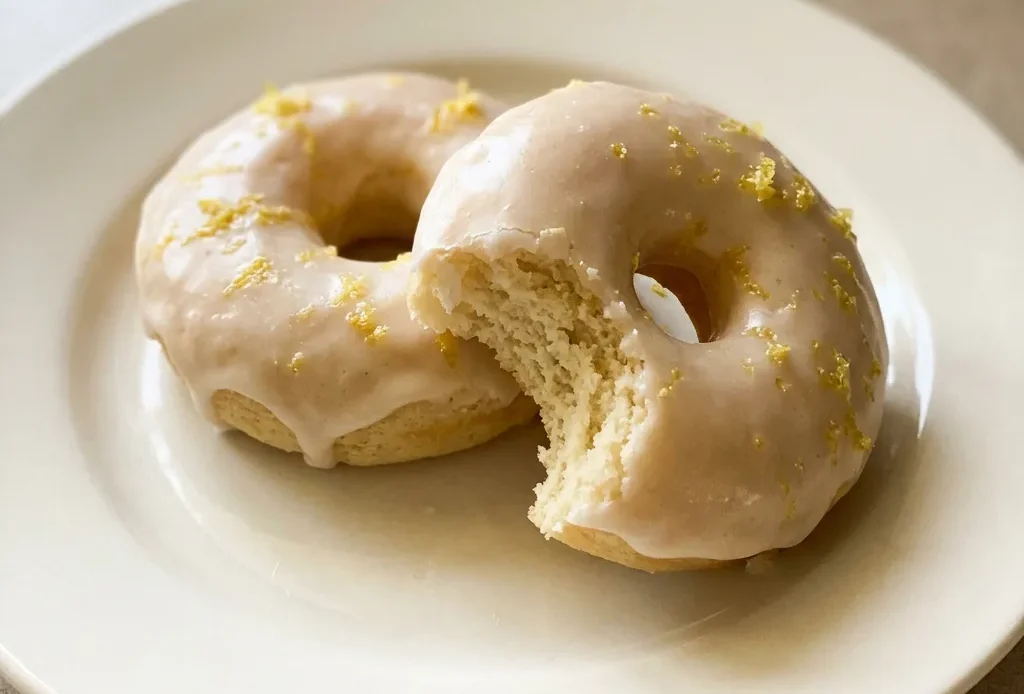
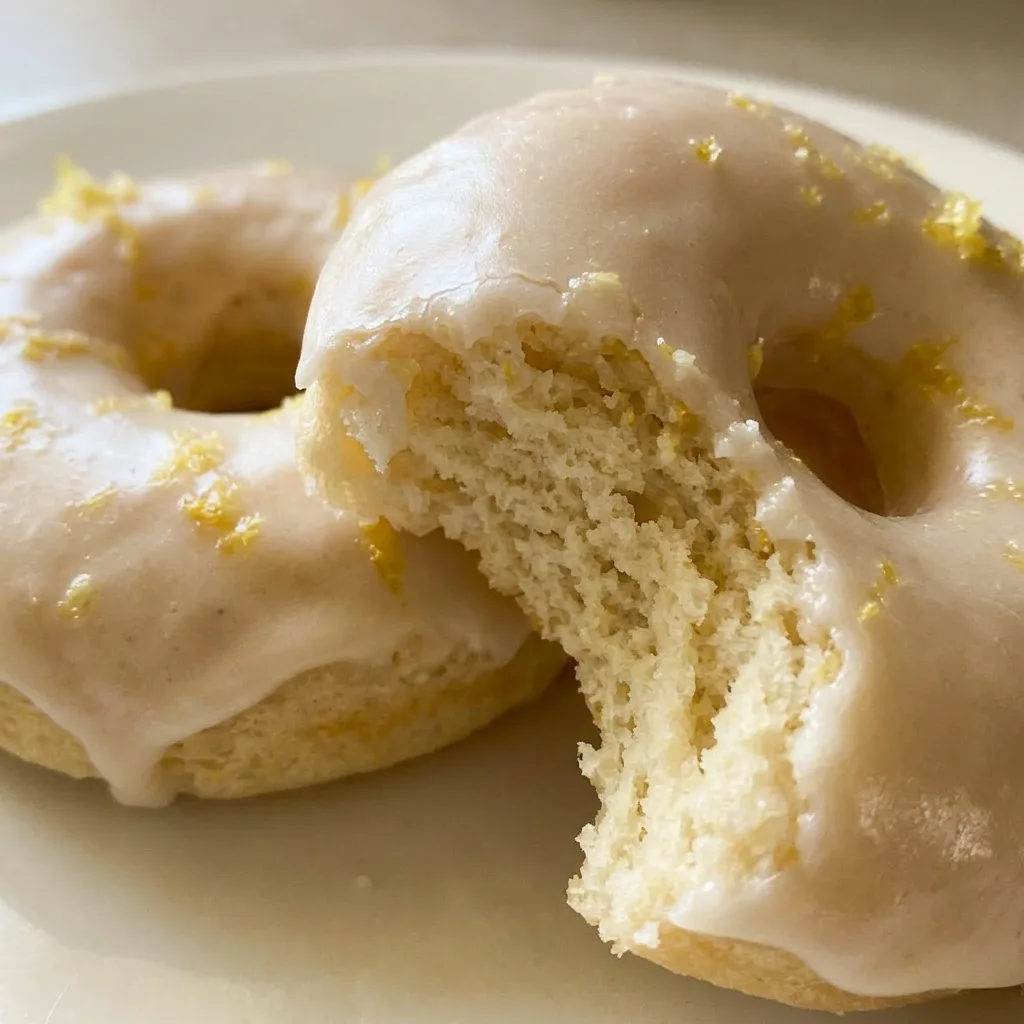
The crumb is tender, almost soft, with a bright citrus tang that cuts right through the glaze’s sweetness. These lemon donuts taste like a cross between a sunny cake and a classic glazed donut, but without the greasy fingers.
They’re baked, not fried, so the texture is soft and cakey rather than crisp and oily, a trade-off that works because the glaze soaks in just enough to mimic that rich richness. The batter comes together fast, but you have to handle it gently: overmix, and the crumb turns tough.
And because the acidity from buttermilk and lemon juice does double duty, both for lift and for that puckery finish, there’s no missing the fryer.
Why confectioners’ sugar works for creaming
Confectioners’ sugar contains cornstarch, which inhibits gluten formation. That keeps the donuts tender even though you’re creaming a fine sugar.
The creaming itself aerates the batter, trapping air for lift. Despite using confectioners’ sugar instead of granulated, you still get a light, open crumb. The batter stiffens enough to pipe cleanly into the pan cavities, holding its shape without spreading.
You’ll notice a soft, cakey texture after baking, not dense or tough.
Buttermilk and lemon juice team up
Buttermilk reacts with baking powder for lift, giving the donuts a good rise. Lemon juice adds extra acidity, which brightens the flavor and further activates the leavening.
The combination ensures a moist, tender donut, no dry crumb here. You taste the tang from both, cutting through the sweetness. Baked donuts rely on this acidity for tenderness, and it works.
Baking keeps it lighter
Baking yields a cake-like texture instead of an oily, crispy exterior. The glaze compensates, adding moisture and sweetness that mimic fried donut richness. Baked donuts are lower in calories and fat, but they still satisfy.
The glaze soaks in slightly, creating a soft top that contrasts with the tender crumb. You get a lighter treat without missing the indulgence.
Prep: 20 min · Cook: 10 min · Total: 30 min · Servings: 18 · Calories: 80 kcal
Picking ingredients for bright, tangy donuts
Butter: Use unsalted butter at room temperature so it creams easily and evenly.
Confectioners’ sugar: Sift it for the glaze to avoid lumps; no need to sift for the batter.
Buttermilk: Shake well before measuring; if you can’t find it, see the substitutions section.
Lemon juice: Freshly squeezed gives the cleanest tang; bottled juice tastes flat.
Lemon zest: Zest the lemon before juicing; avoid the white pith, which adds bitterness.
Working the batter for light, tender donuts
Cream the butter and confectioners’ sugar
Beat until pale and fluffy, about 2 minutes. The mixture lightens noticeably, that’s air being trapped. Stop when it looks like soft, spreadable frosting.
Add the wet ingredients
Mix in buttermilk, egg, lemon juice, and zest until combined. The batter may look a little curdled, that’s fine, the fat and liquid haven’t emulsified fully yet.
Fold in the dry ingredients
Add flour and baking powder, folding by hand just until no streaks remain. Overmixing develops gluten and toughens the crumb; stop as soon as it comes together.
Pipe the batter into the pan
Fill each cavity two-thirds full. The batter should be thick enough to hold a peak, if it spreads flat, your donuts won’t dome. Use a large round tip for clean piping.
Bake until done
Bake 10 to 12 minutes. A toothpick inserted near the center comes out clean, and the tops spring back when lightly pressed. Cool in the pan 10 minutes, then turn out.
Glaze the donuts
Whisk confectioners’ sugar with 2 tablespoons lemon juice until smooth. Dip the tops; the glaze should coat thickly but drip slowly.
Add more juice if it’s too stiff. Sprinkle zest on top before it sets.
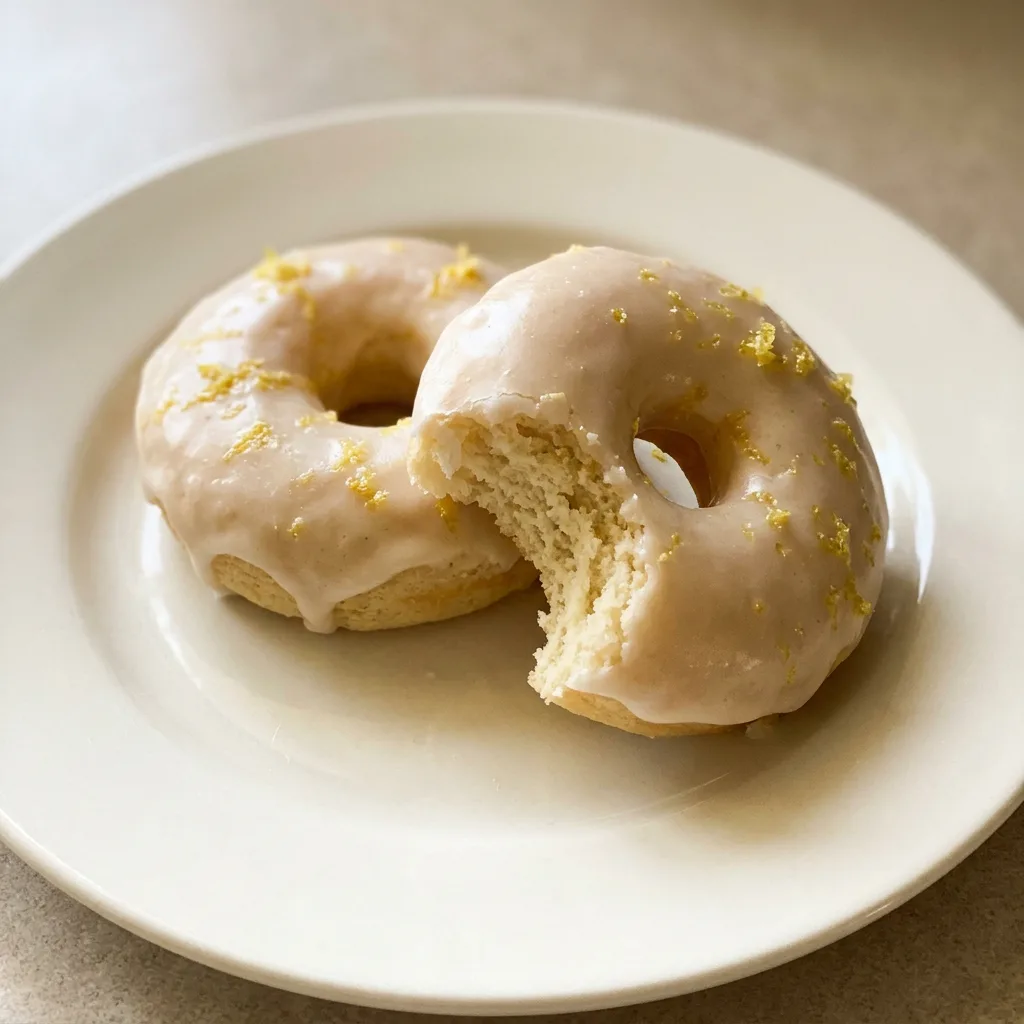
Lemon Donuts
Ingredients
Method
Preheat oven:
Heat oven to 350°F (180°C / gas mark 4).Prepare donut pan:
Butter a donut pan or coat with nonstick spray, then dust with flour to prevent sticking.Cream butter mixture:
In a large bowl, use an electric mixer to cream butter and confectioners’ sugar until pale and fluffy, roughly 2 minutes. Mix in buttermilk, egg, lemon juice, and lemon zest until fully combined.Fold in dry ingredients:
Add flour and baking powder; fold by hand just until a thick batter forms.Pipe batter into pan:
Fill a pastry bag fitted with a large round tip with batter. Pipe into the prepared pan, filling each cavity 2/3 full.Bake and cool donuts:
Bake 10-12 minutes, until a toothpick inserted near the center emerges clean. Let cool in the pan for 10 minutes, then turn out onto a wire rack.
Make lemon glaze:
As donuts cool, prepare glaze: In a shallow bowl, whisk sifted confectioners’ sugar with 2 tbsp lemon juice until smooth. If needed, add more lemon juice to thin the glaze.Glaze and garnish donuts:
Dip the tops of cooled donuts into the glaze, turn over, and return to the rack. Optionally, sprinkle with lemon zest. Allow glaze to set.
Storage and Serving
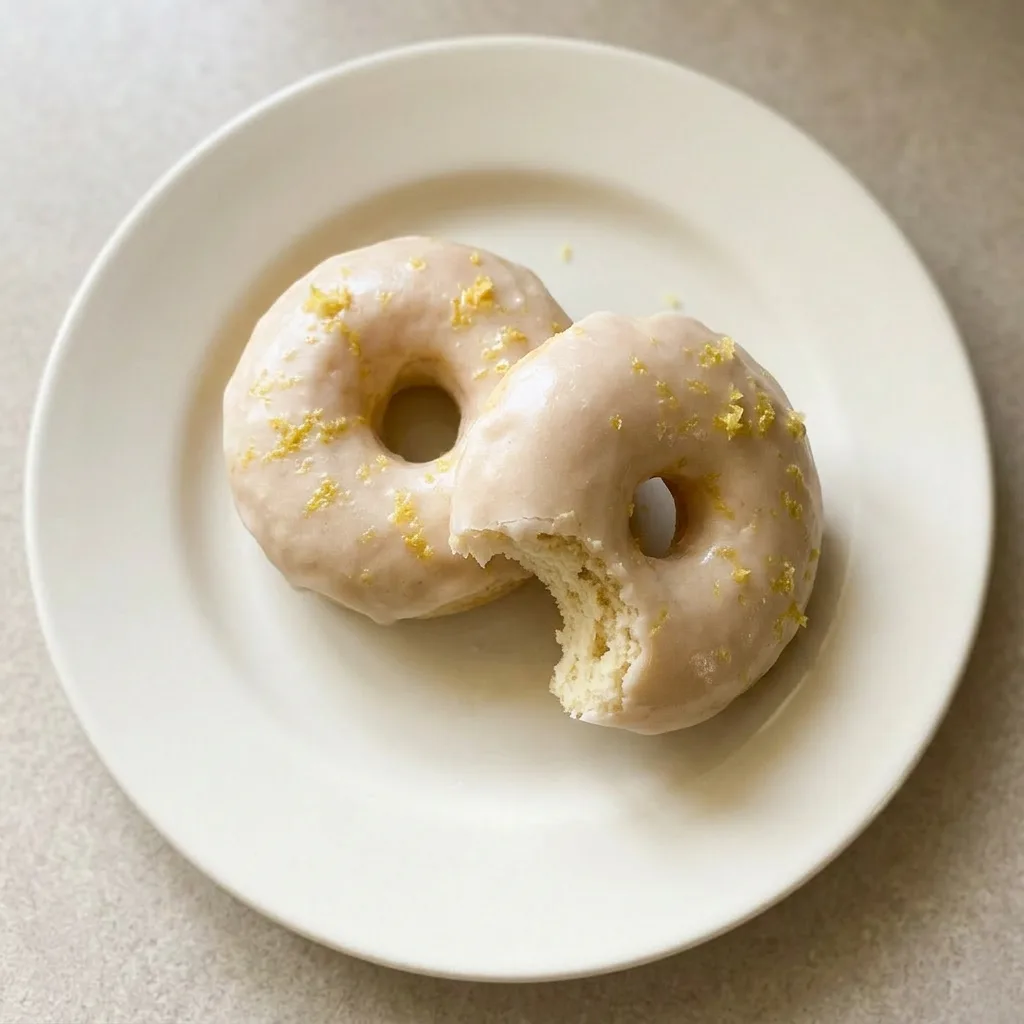
These donuts are best the day they’re made: the glaze stays glossy and the crumb is softest. Within 12 hours, the glaze begins to absorb into the cake, losing its distinct top layer. Store glazed donuts in a single layer in an airtight container at room temperature for up to 2 days.
After day one, the texture turns denser and slightly drier. Do not refrigerate: the cold speeds staling.
To revive a day-old donut, microwave it for 10 to 15 seconds; the glaze will soften and the crumb will regain some moisture. These donuts do not freeze well; the glaze weeps and the cake turns gummy upon thawing. If you must freeze, do so before glazing: wrap unglazed donuts tightly in plastic wrap and freeze for up to 1 month.
Thaw at room temperature, then glaze and serve immediately. The lemon zest garnish is best added just before serving, as it dries out and loses aroma within a few hours.
Tips
- When adding the lemon juice to the glaze, start with 2 tablespoons and add more drop by drop: the glaze should be thick enough to coat the back of a spoon but thin enough to drip slowly off the donut. Too thin, and it will run off and leave a bare top.
- If your donut pan has deep cavities, use a pastry brush to butter every nook, then tap in flour and knock out the excess. This prevents the batter from sticking to the crevices, which can tear the donuts when you unmold them.
Swapping buttermilk and flour for lemon donuts
Buttermilk: Whole milk plus 1 tablespoon lemon juice or white vinegar (let sit 5 minutes to curdle). For dairy-free, use plain unsweetened almond or oat milk with the same acid.
Buttermilk’s acidity activates baking powder for lift and tenderizes gluten. Milk with acid mimics that reaction; without acid, donuts rise less and turn dense. Dairy-free milks work but yield a slightly softer crumb, they lack buttermilk’s thickness.
Start with the same volume the recipe calls for (300 g) and adjust tang after tasting.
All-purpose flour: Gluten-free 1-to-1 baking blend (with xanthan gum). Do not use single flours like almond or coconut, they lack structure and won’t pipe or hold shape.
Gluten-free blends produce a more delicate, slightly sandy crumb. The batter may be thinner, so pipe gently and don’t overfill.
Baked donuts won’t dome as much. Sift the blend before measuring to avoid lumps.
Use the same weight (250 g) for best results.
Butter: Vegan butter sticks (like Miyoko’s or Earth Balance) at room temperature. Do not use margarine spreads with high water content, they make batter slack and donuts greasy.
Vegan butter creams similarly but may not get as fluffy. The donuts turn out slightly less tender but still acceptable.
Use the same amount (1 stick). Chill the batter briefly if it seems too soft to pipe.

Frequently Asked Questions
Can I make the donut batter ahead of time and bake later?
No, the batter should be baked right after mixing. The baking powder starts reacting with the buttermilk and lemon juice as soon as they combine; waiting makes the donuts fall flat. If you need to prep, bake them off and store unglazed donuts in the freezer for up to a month, then glaze after thawing.
Why did my donuts turn out dense instead of light and fluffy?
Most likely you overmixed the batter after adding the flour. Fold just until no streaks remain, overworking develops gluten, turning the crumb tough. Another cause is undermixing the creamed butter and confectioners’ sugar; if it wasn’t pale and fluffy (about 2 minutes), not enough air was trapped for lift.
How do I get the glaze to set without becoming sticky?
Let the donuts cool completely before glazing; residual heat melts the glaze into a sticky mess. Use sifted confectioners’ sugar and whisk with exactly 2 tablespoons lemon juice first, the glaze should coat thickly but drip slowly. If it’s too thin, add more sifted sugar; if too thick, add lemon juice a teaspoon at a time.
The glaze sets as the sugar crystallizes; give it 15 to 20 minutes uncovered at room temperature.
Are these donuts supposed to be as sweet as traditional glazed donuts?
No, they’re less sweet. The batter uses only 1/2 cup confectioners’ sugar, and the tang from buttermilk and lemon juice balances the sweetness. The glaze adds a concentrated sugar hit, but overall the donut is brighter and more tart than a traditional yeast-raised glazed donut.
That’s intentional, the recipe leans into the lemon flavor.
