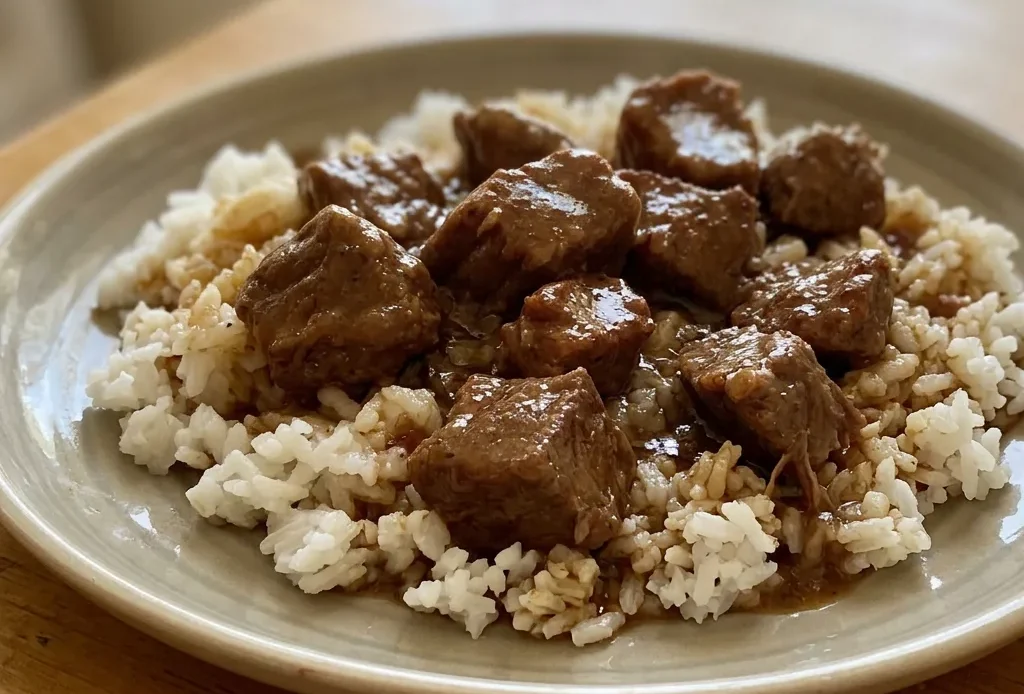
The most common mistake with stewed beef (beef tips) with gravy is rushing the sear. Crowded meat steams, turning gray instead of mahogany, and you lose the crust that builds real beef flavor in the gravy.
Two batches, high heat, no touching for the first couple minutes, that’s the difference between a rich, savory dish and a pot of bland, tough bites. Even after an hour and a half simmer, that initial browning is what makes the gravy taste like more than just thickened broth.
Searing in Batches
Browning the beef in batches over high heat is important. When meat hits a hot pan, the surface temperature stays high enough to trigger browning, that dark crust is pure beefy flavor.
Crowd the pan and the meat releases moisture, steaming instead of searing. You end up with gray, soggy pieces. Batch searing also lets you develop fond on the pan bottom, those browned bits that dissolve into the broth later.
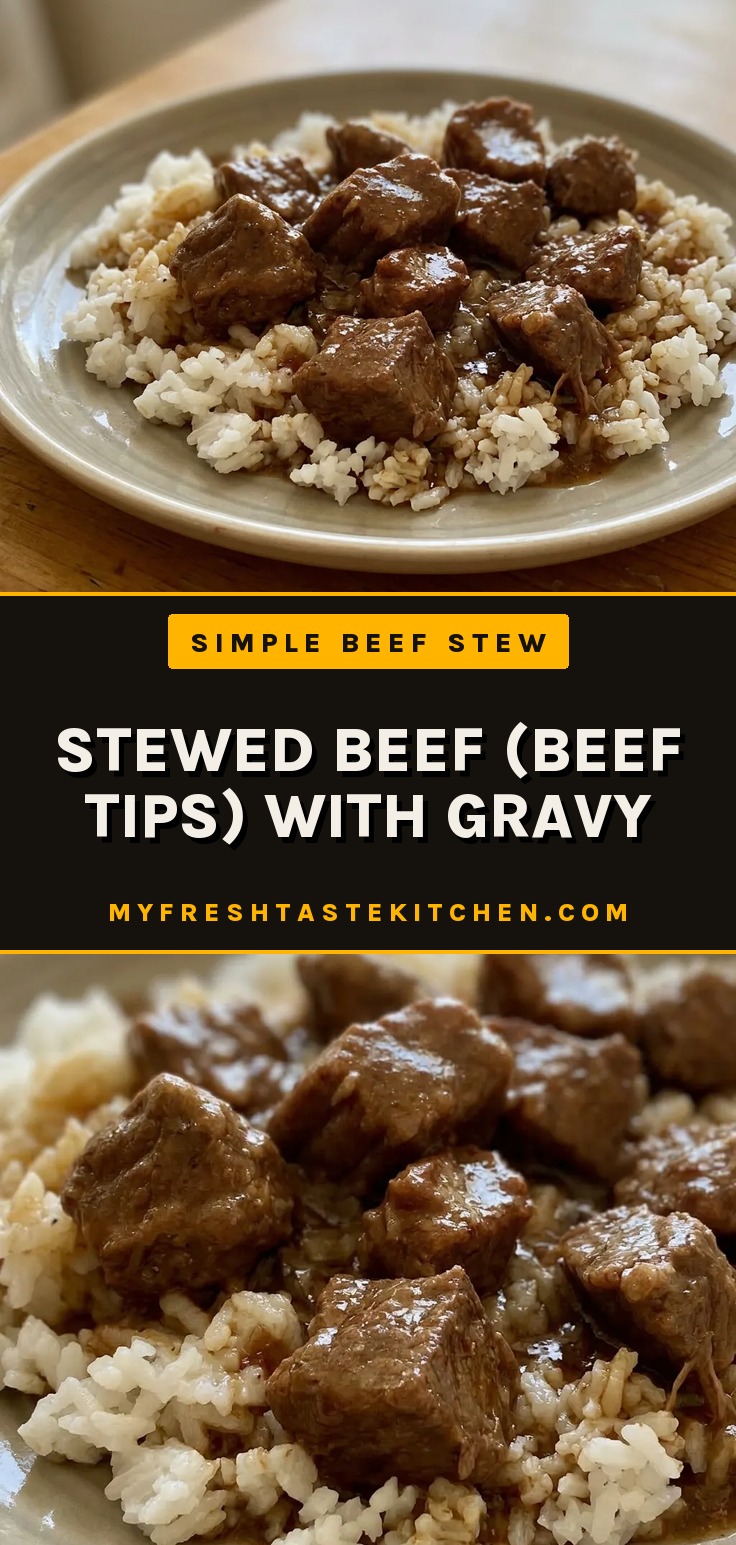
You can see the difference: seared meat looks mahogany, not pale. The smell shifts from raw to rich and roasty.
That’s the foundation of deep flavor.
The Gravy Base
Beef broth alone is thin and one-note. Combined with onion soup mix and Worcestershire sauce, the gravy base gains complexity. The soup mix brings concentrated onion flavor plus salt and starches that help body the liquid.
Worcestershire adds tang and umami, you taste it as a subtle savory depth that rounds out the beefiness. Taste the broth before simmering: it’s salty, onion-forward, with a faint Worcestershire kick. After cooking, those flavors settle together into a cohesive, savory gravy that doesn’t taste like any single ingredient.
It just tastes like beef stew.
Low and Slow Simmer
Tough stew meat is full of collagen, which only breaks down under gentle heat over time. A covered pot at a low simmer, just occasional bubbles, gives that collagen time to convert to gelatin, making the meat tender.
Crank the heat to a rolling boil and the proteins tighten, squeezing out moisture. The meat turns dry and chewy. You can feel the difference when poking with a fork: properly simmered meat yields easily; boiled meat resists.
The lid traps steam, keeping the temperature steady. That steady warmth, over hours, changes tough chuck into fork-tender bites.
Slurry for a Glossy Finish
Adding cornstarch directly to hot liquid guarantees lumps. First, mix it with cold water into a smooth slurry.
When you stir that into the simmering broth, the starch granules swell and thicken evenly. Watch for the liquid to go from thin to slightly glossy, coating the back of a spoon.
That sheen tells you it’s done. Let it cook just a few minutes, overcooking can thin it out again. The result is a gravy that clings to the beef and doesn’t slide off.
No lumps, no raw starch taste, just a silky finish.
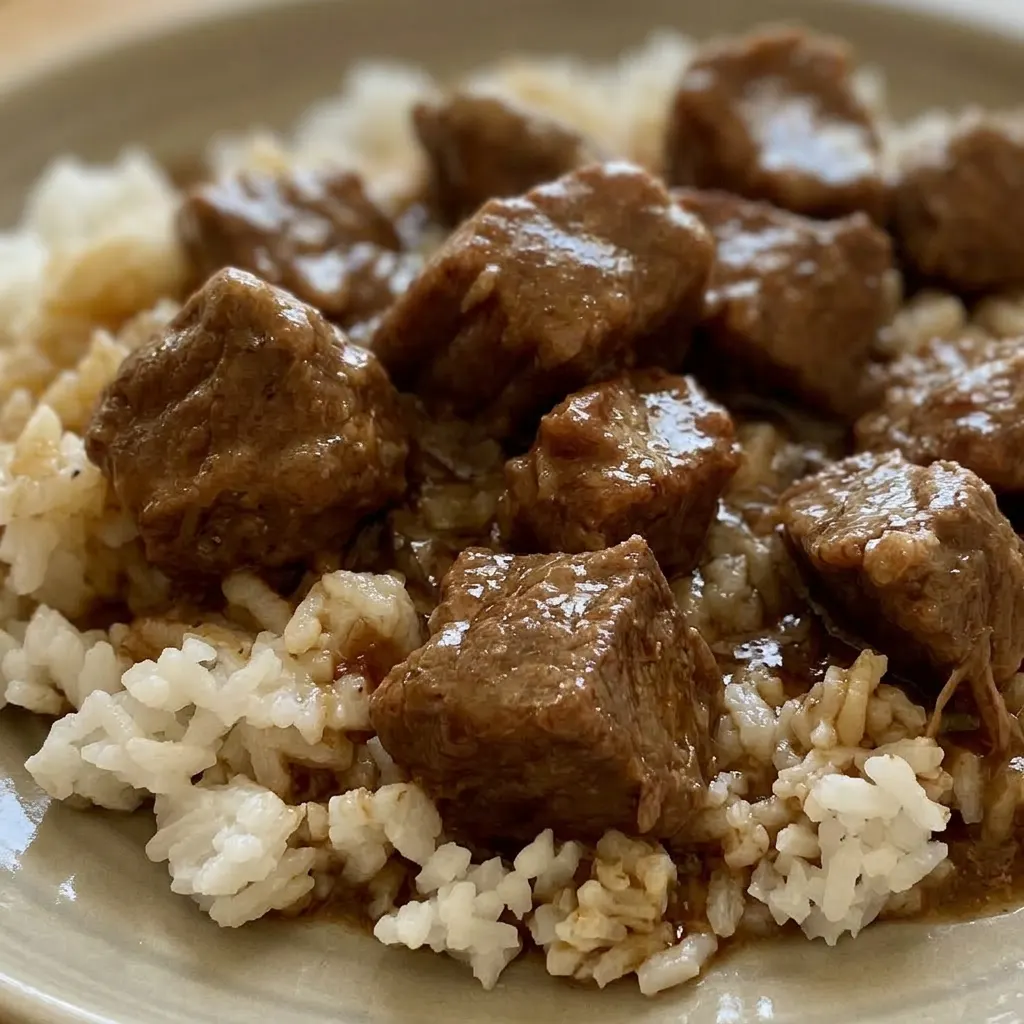
Prep: 5 min · Cook: 1 hr 40 min · Total: 1 hr 45 min · Servings: 6
Ingredient Notes for Beef Tips Gravy
Beef stew meat: Buy chuck or round; pre-cut stew meat works but check for large, even chunks.
Beefy onion soup mix: One envelope, not a whole box; use the standard 2-ounce size like Lipton.
Vegetable oil: Use a neutral oil with high smoke point; canola or avocado oil works fine.
Worcestershire sauce: Lea & Perrins is standard; avoid off-brands that can taste thin or vinegary.
Cornstarch: Not flour; cornstarch gives a glossy, clear gravy that doesn’t taste raw.
How to Build Stewed Beef with Gravy, Step by Step
Sear in Batches
Pat the meat dry, season with salt and pepper. Heat oil in a wide pan over high until it shimmers.
Add half the beef in a single layer, listen for a steady sizzle. If the sizzle drops off, the pan’s too cold. Sear 2 minutes undisturbed, then stir and sear another 2 to 3 minutes until all sides are mahogany.
Remove and repeat. Crowding makes gray, steamed meat.
Build the Gravy Base
Reduce heat to low. Pour in beef broth, onion soup mix, Worcestershire, and 1/2 cup water. Scrape up the browned bits from the pan bottom, those dissolve into deep flavor.
The liquid will look thin and salty now, but it concentrates as it simmers. Stir until the soup mix dissolves.
Simmer Low and Slow
Return all beef to the pan, cover, and set heat to the lowest setting. You want occasional bubbles, not a rolling boil. Check after 5 minutes: if steam escapes aggressively, uncover and lower heat further.
5 to 2 hours. Poke a piece with a fork, properly cooked meat yields easily; tough meat resists.
Thicken with Slurry
In a small bowl, whisk cornstarch into remaining 1/2 cup water until smooth. Pour the slurry into the simmering broth while stirring. Cover and cook 10 minutes.
Watch the liquid turn from thin to glossy and coat the back of a spoon. Stop there, overcooking thins gravy again. Serve over rice, mashed potatoes, or noodles.
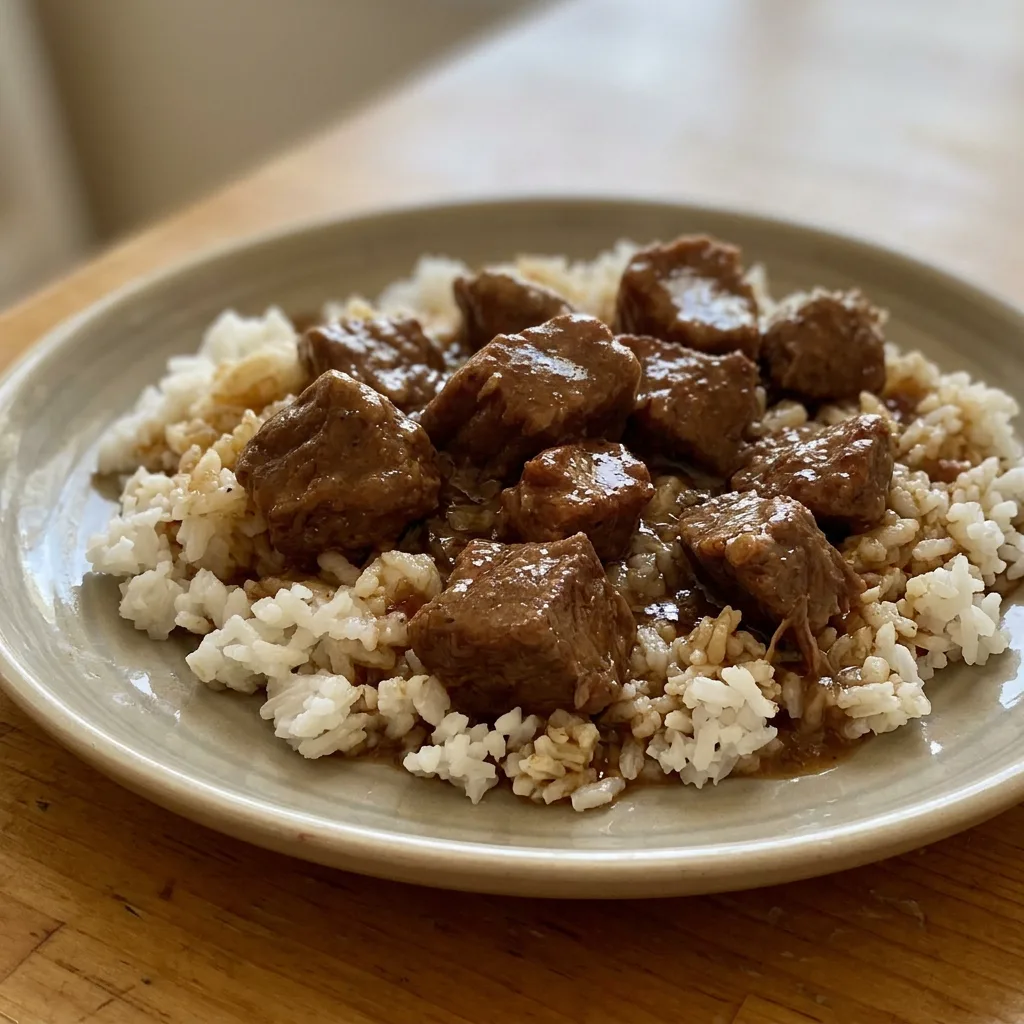
Stewed Beef (Tips) with Gravy
Ingredients
Method
Season and heat oil:
Sprinkle salt and pepper onto the stew meat. In a wide pan, warm the oil over high heat.Sear beef in batches:
Place half the beef in the hot pan and sear for 2 minutes. Stir the meat and sear for another 2-3 minutes to brown other sides. Take the meat out and repeat with the rest, removing all meat from the pan.Make broth mixture:
Lower the heat to low. Pour in the beef broth, onion soup mix, 1/2 cup water, and worcestershire sauce. Stir to loosen any browned bits from the pan bottom.Simmer meat until tender:
Put the seared meat back into the pan with the broth mixture. Cover and simmer for 1.5-2 hours. Avoid a full rolling boil as it will toughen the meat. If the liquid starts to boil on the lowest heat, take off the lid and continue cooking.Thicken gravy with slurry:
In a small bowl, mix the cornstarch with the remaining 1/2 cup water until smooth. Stir this slurry into the broth, cover, and cook for another 10 minutes until the broth thickens into a gravy. Serve over white rice, mashed potatoes, or egg noodles.
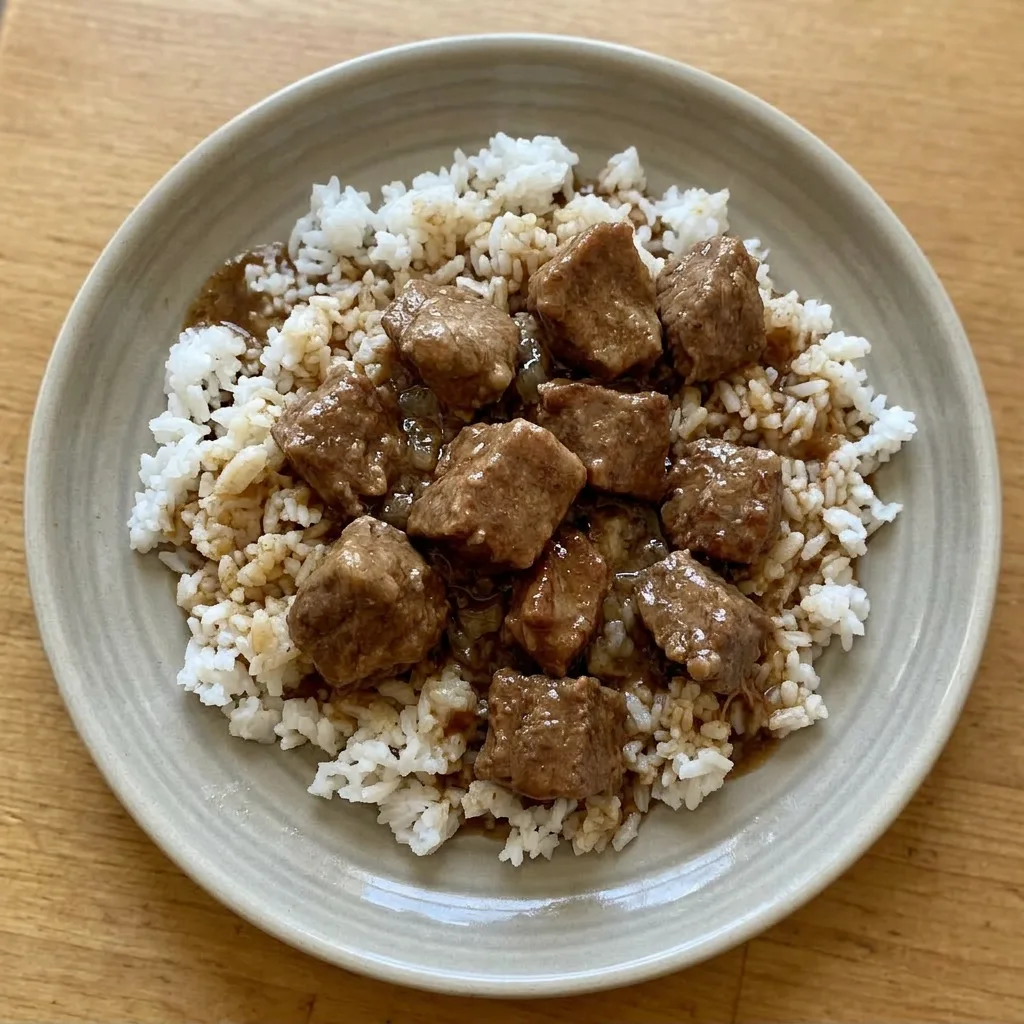
Swapping the Beef and Adjusting the Broth
Beef stew meat: Chuck roast or brisket, cut into 1-inch cubes. Both cuts have enough collagen to tenderize over the long simmer. Lean cuts like sirloin will turn dry and chewy.
Beef broth: Low-sodium beef broth. The onion soup mix is salty. Using regular broth can make the gravy overseasoned.
Low-sodium lets you control the salt.
Beefy onion soup mix: Gluten-free onion soup mix (like Simply Organic) plus 1/2 teaspoon beef bouillon powder. Many soup mixes contain wheat starch. A GF version swaps it out; the bouillon compensates for lost beefy depth.
The gravy may be slightly less thick, so whisk in an extra teaspoon of cornstarch if needed.
Tips
- If your pan isn’t wide enough to sear all pieces in two batches, do three batches. Crowding the pan drops the oil temperature, and the meat steams instead of browning. A single layer with space between pieces is the goal.
- When adding the cornstarch slurry, stir it in slowly while stirring the broth constantly. Pouring it all in one spot can create a gelatinous blob that takes longer to disperse. A steady stream with continuous stirring gives even thickening.
Storage and Serving
This stew is best eaten within 30 minutes of finishing the gravy, while the meat is most tender and the gravy coats well. Leftovers keep in the fridge for up to 4 days in a sealed container. The gravy thickens as it sits, so when reheating, add a splash of beef broth or water to restore the consistency.
For longer storage, freeze the stew without the starchy side (rice, noodles, or potatoes) for up to 3 months. Thaw overnight in the fridge and reheat gently on the stove, adding broth as needed.
The meat remains tender, but the gravy may separate slightly; a good stir brings it back together. The final 10 minute simmer after adding the slurry is the last cooking step; serve immediately for the best texture.
Frequently Asked Questions
Can I cook this in a slow cooker or Instant Pot instead of on the stovetop?
You can, but the stovetop method is better for developing fond, those browned bits that build the gravy’s depth. In a slow cooker, you lose the high-heat sear that creates a mahogany crust, and the liquid won’t reduce enough for a concentrated flavor. If you must use a slow cooker, sear the beef in a pan first, then transfer everything to the slow cooker and cook on low for 6 to 8 hours.
For an Instant Pot, sear using the sauté function, then pressure cook on high for 35 minutes with a natural release; the texture will be tender but the gravy may be thinner, thicken with extra cornstarch slurry at the end.
Why did my beef turn out tough even after simmering for 1.5 hours?
Most likely the heat was too high, causing a rolling boil instead of a gentle simmer. Proteins tighten and squeeze out moisture when boiled, leaving dry, chewy meat.
Check your burner: the lowest setting should produce only occasional bubbles. If steam escapes aggressively from under the lid, uncover and lower the heat further.
Another possibility is using a lean cut like sirloin instead of chuck or round, those lack enough collagen to break down into tender gelatin, so they stay tough no matter how long you simmer.
Can I make this ahead of time and reheat it?
Yes, but the texture is best within 30 minutes of finishing the gravy, as the meat is most tender then. Leftovers keep in the fridge for up to 4 days; the gravy thickens as it sits, so add a splash of beef broth or water when reheating to restore consistency. For longer storage, freeze the stew without any starchy side for up to 3 months, thaw in the fridge overnight and reheat gently on the stove, stirring to recombine any separated gravy.
What’s the difference between beef tips and regular beef stew?
Beef tips are typically smaller, more uniform chunks cut from sirloin or tenderloin, cooked quickly to retain tenderness, often served as a steakhouse-style dish with gravy. This recipe uses stew meat from chuck or round, which has more connective tissue and requires a long, gentle simmer to break down into fork-tender bites.
The result is a richer, thicker gravy and melt-in-your-mouth meat, while beef tips stay firmer and cook in minutes. 5-hour simmer.
